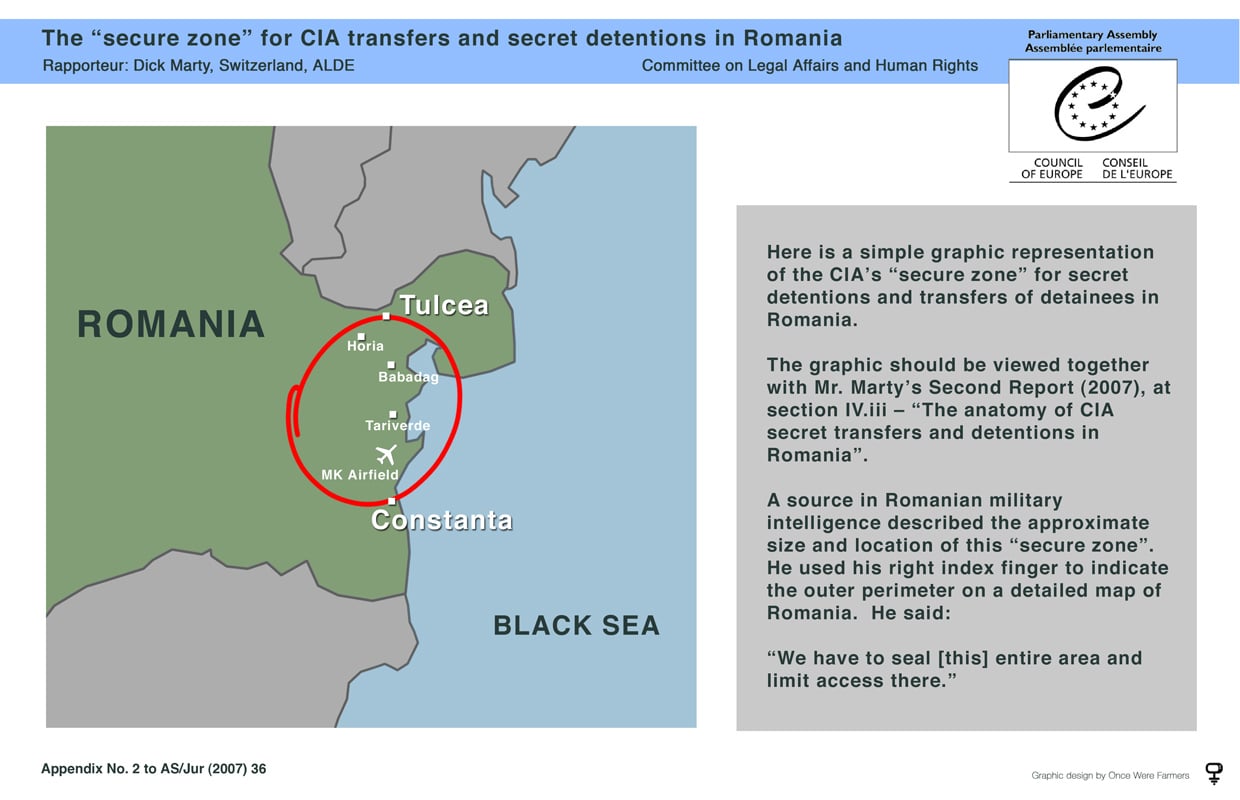
The House Oversight Committee released the following text exchange as part of its investigation into Jeffrey Epstein. It captures a conversation between Steve Bannon and Epstein after Bannon’s appearance before the Senate Intelligence Committee during its probe into Russian interference in the 2016 election. The messages span two days, November 19 and November 21.
The long, strange fall of Jacob Bogatin, a onetime partner of the “Brainy Don” Semion Mogilevich, now accused of murder in Virginia.
Once upon a time, Semion Mogilevich was one of the biggest gangsters in the world. The “Brainy Don” had his fingers in virtually every criminal activity imaginable, including murder, extortion, sex trafficking, weapons trafficking, money laundering, and even a stock fraud occurring right under the FBI’s nose.
In 2003, federal prosecutors unsealed an indictment charging Mogilevich in a $150 million stock fraud scheme involving YBM Magnex, a purported manufacturer of bicycles and magnets based outside Philadelphia. Also indicted was the company’s CEO, Jacob Bogatin.
Semion Mogilevich, FBI photo
The case drew attention from those of us investigating Donald Trump’s Russia ties because Jacob’s brother, David Bogatin, had bought five apartments in the newly opened Trump Tower in 1984 for $5.8 million. The money came from a gasoline-tax scam he was running in Brooklyn with the Colombo crime family. According to one of Bogatin’s partners in that scheme, Trump himself persuaded Bogatin to purchase the apartments “as an investment.”
Trump didn’t merely broker the sale. As investigative reporter Wayne Barrett reported in Trump: The Deals and the Downfall, Trump personally attended the closing—an unusual move for a developer, and one that suggested this was no ordinary real-estate transaction.
The Bogatin deal carried classic money-laundering red flags. Of the five condos, only one was in David Bogatin’s name; the other four were held by shell companies created the same day by attorney Marvin E. Kramer, who specialized in forming shelf corporations from his Coney Island office. “We didn’t think he was living in five apartments,” former New York assistant attorney general Ronda Lustman told me. Prosecutors quickly concluded that the purchases were intended to launder cash and conceal assets.
Bogatin wasn’t alone. From its earliest days, Trump Tower attracted Russian organized crime figures. Roughly a third of its units were owned by foreign corporations, many of which were registered in Panama or the Netherlands Antilles. It was one of only two buildings in New York that allowed anonymous buyers. “Trump Tower allowed people who wanted to hide their money to buy there because their names were never really published,” said Jim E. Moody, former deputy assistant director of the FBI.
Among its early residents was Vyacheslav Ivankov, one of Russia’s most feared vory v zakone—“thieves-in-law.” The FBI tracked him to a Trump Tower apartment while he directed Russian Mafia operations in the United States. Years later, another mobster, Vadim Trincher, ran a multimillion-dollar gambling ring from a Trump Tower apartment just floors below Trump’s own penthouse.
Another figure often mentioned in connection with Mogilevich is Felix Sater, a Russian-born stockbroker-turned-government-informant and real estate developer who became one of Donald Trump’s more controversial business partners, scouting property deals in Moscow. While some have speculated about ties between Sater and Mogilevich’s network, any link appears to run through Sater’s father, Michael Sheferofsky. In Putin’s People, journalist Catherine Belton reported that two former Mogilevich associates said Sheferofsky had “become an ‘enforcer’ for some of Mogilevich’s interests” in Brighton Beach, where he ran protection rackets with the Genovese crime family.
Whether Trump knew about the Bogatins’ mob ties in 1984 remains unclear. The FBI never questioned him about David Bogatin. “In retrospect, we should have been looking in that direction,” said Ronald Noel, a former FBI agent on the case. What’s certain is that Trump was eager to make the sale, so eager he showed up in person at the closing.
David Bogatin fled the country, settling first in Austria and later in Poland, where he launched one of the country’s first private banking chains. When a Warsaw newspaper exposed his past in 1992, he was arrested and extradited to New York, where he served eight years in Attica.
His brother was more fortunate. The YBM case never reached trial. Mogilevich remains a fugitive despite years on the FBI’s Ten Most Wanted list and a $5 million reward for his capture. Jacob Bogatin remained free on bail ever since.
Until this week.
Jacob Bogatin, booking photo
On October 28, Jacob Bogatin, now 78, was arrested and charged with murder and arson for a blaze that killed a 36-year-old woman and destroyed three townhomes in Sterling, Virginia.
According to the Loudoun Times-Mirror, Bogatin lived in the complex with his girlfriend, Valeria Gunkova, the listed owner, in a unit under foreclosure. One day after the October 24 fire, Bogatin filed an insurance claim for more than twice what was owed on the property.
Investigators say surveillance footage showed a man resembling Bogatin walking away from the scene moments after the fire began. A search of his car turned up a bottle of lighter fluid and a grill lighter.
Bogatin had been free on a $1 million bond since 2003 in the YBM Magnex case. His home-monitoring restrictions were lifted a year later, and he was permitted to travel abroad on the condition that he not commit any crime.
After the Loudoun County fire, pretrial-services officer Keri Foster asked the court to revoke Bogatin’s bail. In her report, Foster noted that Bogatin had dutifully called in to report his home had burned down—without mentioning that he might have been the one who struck the match.
Large crowds gathered in Moscow Friday as Russian opposition leader Alexei Navaly was laid to rest.
Navalny’s aides claimed that he was on the verge of being freed in a prisoner exchange with the West when he died Feb. 16 in an Arctic penal colony. Early-stage discussions had begun to swap Navalny, Wall Street Journal reporter Evan Gershkovich, and ex-Marine Paul Whelan for Vadim Krasikov, who was convicted of killing a former Chechen separatist fighter in Berlin in 2019, according to The New York Times.
Meanwhile, President Biden still hasn’t delivered on his promise of “devastating” consequences if Navalny died.
To mark the second anniversary of Russia’s invasion of Ukraine and punish Russia for Navalny’s death, the Biden administration unveiled a sweeping package of sanctions on more than 500 people and companies, including some officials linked to the prison where Navalny died. But behind the scenes, administration officials were quietly downplaying the potential impact of the new measures, the Wall Street Journal reported.
The most effective punishment would be direct U.S. military aid to Ukraine, but a measure approving $60 billion in funding remains hopelessly tied up in the House of Represtatives.
That’s not to say the White House doesn’t have options.
Another devastating blow would be using some or all of the $300 billion in Russian assets frozen by the United States after the invasion to help Ukraine. On Tuesday, White House spokesman John Kirby said the administration was “exploring the option,” but cautioned that U.S. allies need to be on board. Public bickering at this week’s G20 meeting showed they aren’t behind it.
The administration has also held off on another powerful measure—a full embargo on the sale of Russian oil. The administration instead imposed an oil price cap that is increasingly unenforceable and allows billions of dollars to fund Moscow’s war machine. A full embargo on Russian oil would almost certainly unleash economic turbulence that the White House would rather avoid in an election year.
Finally, the United States could add Russia to the official list of state sponsors of terrorism along with Cuba, Iran, North Korea and Syria. Such a declaration would open the U.S. courts to lawsuits by victims of Russian aggression and allow them to claim damages from frozen Russian assets. There’s no doubt some reason why White House hasn’t pulled the trigger, but we don’t know what it is. Kirby has ducked questions on this subject in recent days.
To be sure, all of these options carry risk. But slapping Putin’s wrist with more ineffective sanctions only emboldens him.
The White House could use a good dose of Navalny’s courage.
Trump with Tamir Sapir (center) and Sapir’s son, Alex.
It will never cease to amaze me that America elected a president with so many links to Russian organized crime.
There was Vyacheslav Ivankov whose FBI file contained numerous references to Donald Trump that the bureau refused to release to me. There was David Bogatin who spent $6 million to buy five separate units in Trump Tower. There was Anatoly Golubchik and Vadim Trincher, who went to prison for running an illegal sports betting ring in Trump Tower that catered primarily to Russian oligarchs.
Add another name to the list: The FBI’s file on Tamir Sapir, a Georgian developer who financed the construction of Trump Soho in Manhattan in 2008, shows he was under investigation for links to Russian organized crime.
A memo in the FBI file states that C-24, the FBI’s Russian Organized Crime squad in New York, was investigating Sapir for money laundering and extortion:
“NYO squad C-24 is currently involved in a money laundering and extortion investigation of TAMIR SAPIR, a naturalized Armenian citizen who immigrated from the former Soviet Republic of Georgia through Israel. SAPIR has residences in New York City, Long Island, and Mexico and he frequently travels to Moscow and other Eastern European countries.”
“SAPIR has approximately 12 companies incorporated in New York including ZAR REALTY which owns commercial and residential buildings in New York City. [Note: One of those residences was a condo on the 58th floor of Trump Tower.]”
“Additionally, SAPIR is believed to own a 150-foot pleasure yacht, the MYSTERE, registered in the Cayman Islands and three private jets, one being a Boeing 727 also registered in the Cayman Islands.”
“It is believed that SAPIR is a front for Russian organized crime money including activity for the President of Tartarstan.
Another FBI notes that Sapir allegedly paid a $5 million bribe to an employee of the New York Transit Authority to get employees to move into a building he owned.
The file lists numerous FBI investigations involving Sapir, some dating back to 1977.
Another FBI investigation involved Joy-Lud, a Manhattan electronics store that Sapir ran with Sam Kislin, a Ukrainian immigrant who was a major donor to Rudy Giuliani’s mayoral campaigns.
Joy-Lud catered to a Soviet clientele—with one notable exception. Donald Trump purchased 200 televisions on credit from Sapir and Kislin’s electronics store in the 1970s for his newly acquired Commodore Hotel.
I’ve asked the FBI to process these other files and will post them here when I receive them.
In The Godfather, Part II, mobster Hyman Roth is asked by reporters why he moving to Israel.
“I’m a retired investor living on a pension, and I wished to live there as a Jew in the twilight of my life,” Roth explains.
Sergey Kopytov
Sergey Kopytov is a retired Ukrainian politician living out the twilight of his life in eastern Europe. Like the fictional Hyman Roth, Kopytov invests in hotels. Except Kopytov’s hotels are not located in Cuba, but rather in the Crimean Peninsula, where he served briefly as finance minister in the pro-Russia Ukraine Party of Regions.
The Hyman Roth of the Godfather Part II was looking for a man who wants to be president of the United States. Roth had the cash to help elect him. “We’re bigger than U.S. Steel,” Roth says.
The very real Sergey Kopytov may been looking for a man who wanted to be the UK Prime Minister. And like Roth, Kopytov had the cash to help make it happen.
A $630,225 donation to the UK’s Conservative Party in February 2018—money helped install Boris Johnson in the prime minister’s office at 10 Downing Street—came from Kopytov, according to a bank alert sent to the National Crime Agency.
The bank alert, which tracked the flow of funds from Russia to Britain, was first obtained by The New York Times. It also was detailed in the latest issue of the UK magazine, Private Eye.
“We were able to trace a clear line back from this donation to its ultimate source,” an official at Barclays Bank wrote on January 2021. That “ultimate source” was Sergei Nikolaevich Kopytov.
If true, this raises troubling questions about Russian influence in UK elections. As in the United States, UK political parties are barred from accepting contributions from foreigners. The Conservative Party donation, however, was given a sheen of respectability. It was made in the name of Kopytov’s son-in-law, Ehud Sheleg. The Israeli-born Sheleg is a UK citizen and owner of a posh London art gallery, and a former treasurer of the Conservative party.
“I believe that the flow of funds which began with a $2.5 million payment from Kopytov to his daughter Liliya, and which ended with the $630k donation to the Conservative party was designed to conceal its origins from an impermissible donor and therefore the people responsible for designing the flow of funds committed an offense which potentially qualifies as a criminal offense,” the Barclays banker wrote in the alert. Sheleg’s wife, the former Liliya Kopytova, is a former Miss Ukraine 30 years his junior.
Ehud Sheleg
“Kopytov can be stated with considerable certainty to have been the true source of the donation,” the alert states. It adds: “Kopytov is a Russian resident and there is no indication that he has a UK passport or is on the UK electoral roll.”
It’s part of a pattern of Russian money and influence flowing into the UK Conservative Party. Boris Johnson played tennis in 2014 with Lubov Chernukhin, the wife of a Russian former minister, in exchange for a £160,000 donation. Chernukhin donated almost £2 million to the Conservatives.
Even as the Kremlin meddled in UK elections and sent assassins to kill two former Russian spies living in England, Boris Johnson defended his decision to take questionable money connected to Russia. “It’s very important that we do not allow a miasma of suspicion about all Russians in London—and indeed all rich Russians in London—to be created,” Johnson told the BBC. The future prime minister made those remarks in March 2018, one month after Sheleg’s donation to Johnson’s party and mere days after the poisoning of retired military intelligence officer Sergei Skripal.
A lawyer for the Shelegs told The New York Times that the couple received millions from Kopytov in the weeks before the 2018 donation. But that was “entirely separate” from the campaign contribution. The explanation given was that Kopytov’s money, which derived from a property sale, repaid a loan made to Sheleg by his family’s trust.
Liliya Kopytova
In May 2018, Ehud Sheleg gave another £750,000 donation to the Conservative party. (That donation was not covered in the bank alert.) He was named co-treasurer of the party three months later, and took over sole responsibility for the job the following year. Sheleg stepped down as the Conservative treasurer in 2021, a few months after Barclays filed its suspicious activity report. His representatives say there was no connection between the two events.
Sheleg was one of the biggest single donors to the Conservative party. In total, he gave £3.6 million to the Conservative Party, which got him knighted by the queen.
It remains unclear why nearly three years elapsed before Barclays filed its suspicious activity report about Sheleg’s 2018 contribution.
The $2.5 million that made its way to Sheleg began its journey in Kopytov’s Russian bank account. It then passed through Austria’s Raffeisen Bank, according to Private Eye. Raffeisen has the greatest exposure to Russia of any foreign bank, with €22.9bn of assets at risk. Readers of my book, Trump/Russia, will not be surprised to hear this as there’s a long history of dirty Russian money flowing through Raiffeisen. An infamous 2006 US State Department cable released by Wikileaks stated that that Raiffeisen served as a front for the Russian gangster Semion Mogilevich.
It took weeks for the $2.5 million to land in the Shelegs joint bank account in Britain. The day after it arrived, Sheleg made his contribution to the Conservative party.
The Barclays bank alert that sounded the alarm about Sheleg’s contribution states “that sources, including a Private Eye article note Ehud Sheleg’s close relations with Moscow… [and] connections with organized crime figures.”
Sheleg’s connections with Moscow including hosting the Russian ambassador to the UK in 2015. His organized crime ties relate to a franchise of his Halcyon art gallery in Cyprus. One of the men involved, Rustem Magdeev, is accused in UK court documents of having connections to organized criminals, a charge he denies.
The role of treasurer of the Conservative Party is often a springboard to the House of Lords, the upper house of British parliament. Seven of the last 10 treasurers were made barons.
An elevation to life peer may now be out of Sheleg’s reach. Questions have arisen in parliament about Sheleg and Kopytov. “Exactly what current and former links do the Sheleg-Kopytov family hold with key actors in the Russian state? Finally, has electoral law been broken and, relatedly, has our national security been compromised?” the chair of the Labour Party asked on the floor of the House of Commons last month. Stephen Kinnock, a Welsh MP who was threatened with a libel lawsuit for questioning Sheleg’s ties to Russia, asked when the former Conservative Party treasurer should be labeled a foreign agent.
In The Godfather, Part II, Hyman Roth’s plans to take over Cuba were foiled by Fidel Castro. Exposing Sergey Kapytov as the “ultimate source” of a Conservative Party donation may have foiled his plans as well.
Not long ago, Italian authorities raided a sumptuous villa in the northern Italian town of Roncadelle. Inside, the Guardia di Finanza seized a world-class art collection: paintings by Picasso, Cezanne, Kandinsky, Modigliani, Miro, and Chagall. Some 143 works in all. Outside, there was a large Botero cat statue. In the nearby town of Montichairi, authorities also seized a Eurocopter EC130, worth an estimated 2 million Euros.
The artworks, the helicopter, and the Roncadelle villa all belong to Lanfranco Cirillo, the 63-year-old architect who has designed homes for Russian President Vladimir Putin and 44 other Russian oligarchs. Cirillo is perhaps best known as the architect of Putin’s $1.4 billion palace on the Black Sea—which earned him the nickname of “Putin’s architect.” (Cirillo didn’t deny his work on the project, but would not confirm the palace’s links to the Russian president.)
A lifetime of living large off the oligarchs has caught up with Cirillo. He faces charges in Italy of income tax evasion, money laundering, and violating laws for the protection of cultural assets. According to investigators, Cirillo failed to pay some 50 million euros in taxes from 2013 to 2019 and is said to have laundered the proceeds. But he’s unlikely to ever be held to account. Cirillo lives in Russia, where he was granted citizenship under a 2014 decree granted by President Putin.
For years, Cirillo accumulated a fortune in obscurity. In 2014, he told La Repubblica that he had thousands of employees and invoiced in the hundreds of millions of dollars. “I arrived from Italy 20 years ago with a suitcase as a representative of furniture from Mascagni of Bologna. Today 42 of the 116 Russian billionaires in the Forbes list are my clients,” Cirillo said. He had done dachas and banks, plane interiors and 20,000-square-foot mansions. Once, he said, he saw an oligarch’s wife slap her husband at a dinner. But Cirillo couldn’t name names. His wealth was built on discretion.
Not surprisingly, Cirillo was a great admirer of Vladimir Putin. “Like 92–93 percent of Russia’s population, I love our president and I think he is the right man in the right place in the current world situation,” Lanfranco said in a 2016 interview. A picture of Putin hung on the wall of his office and could be found on his now-defunct website, abitalia.com. Does he still sing the praises of his hero? Sitting in his luxurious home on the Black Sea, does Cirillo cheer as Russian soldiers lay waste to Ukraine? Or does he worry that Russia’s president has brought his new home to the brink of ruin?
Cirillo was a bridge, one of many that existed between the Russia’s ultrawealthy elite and the West. He allowed Russia’s oligarchs to live in an illusion. Yes, they were in Russia, but they were surrounded by the luxuries of the West. He stuffed the oligarch’s homes and planes with the finest furniture and kitchen cabinets from Europe and the United Kingdom. The tentacles of this operation even reached into America. One of the main suppliers of materials for Putin’s Palace was a company Cirillo controlled called Medea Investment LLC, registered in Washington DC., according to a Russian whistleblower, Sergey Kolesnikov.
Compared to the obscene wealth that surrounded and enriched him, Cirillo saw himself as a bit player. His job was to help the obscenely rich live in the baronial splendor to which they felt their corruption had entitled them. He was just a simple, poor architect, as he famously recounted in a 2009 conversation with oligarchs that was obtained by the Russian publication New Times. “I’m an architect, a simple person, I’m poor, very poor, I spent 50 million today, getting 25 (illegible), I have minus 25 million 800 (thousand) euros, for me it’s a lot of money, almost everything earned,” Cirillo said. No doubt these were trivial sums for his clients.
The bridges that people like Cirillo built between Russia’s ultrawealthy and the West now lie in ashes. The flow of luxury goods has ended. There are no more artisans carving rococo ornaments. No more consultants installing dream kitchens with Viking ranges and Subzero fridges. The meticulously-designed megayachts are being seized. The Versailles-style ballrooms he designed now stand empty. The glittering illusion Cirillo once sold to the oligarchs has been swiftly replaced by the darkness of the Soviet days from which they had all sought to escape.
This post has been updated to reflect that neither Putin nor his daughters are listed as partners of a company that owns a Biarritz home where Igor Stravinsky once lived.
The Biden administration is going after the children of Russia’s oligarchs.
Among those sanctioned in recent days were the wealthy sons of Putin’s former judo sparring partner; the son of the Kremlin chief of staff; and the brother and sister whose dad runs the Kremlin-backed Wagner mercenary group.
“The aid of these individuals, their family members, and other key elites allows President Vladimir Putin to continue to wage the ongoing, unprovoked invasion of Ukraine,” the White House said.
But one pair of names is absent from the list: Katerina Tikhonova and Maria Vorontsova. These are the adult daughters of Vladimir Putin.
If the Biden administration is going after the children of the oligarchs, aren’t the children of Putin fair game?
Putin has always been extremely protective of his daughters. “I never discuss my family with anyone,” Putin said in 2015. It’s taken years just to learn the most basic facts about them.
Katerina, a dancer-turned-mathematician, and Maria, a pediatric endocrinologist, have stayed out of the spotlight and taken on different surnames to obscure their connection to the most powerful man in Russia. At the same time, they have reaped the benefits of the corrupt system that keeps their father in power.
An investigation by Alexei Navalny’s Anti-Corruption Foundation found Katerina headed a foundation that developed lands owned by Moscow State University. Her foundation, Innopraktika, collected $7.8 million from Russian-state owned companies and $7.3 million from unknown sources in 2015-2016.
Maria Vorontsova in Japan (New Times)
Her older sister Maria also lived a life of luxury. Photos on social media showed her traveling the world, riding on expensive yachts, and hiring teachers abroad, according to an investigation by the Russian publication New Times.
Maria married a Dutch citizen named Jorrit Faassen, who worked at subsidiary of Gazprom. In 2010, while driving in Moscow, Faassen got into a confrontation with bodyguards of a Russian banker. Seven bodyguards forced Faassen’s BMW to stop, beat him with baseball bats, and damaged his car. The banker, Matvey Urin, had fucked with the wrong person. Faassen, described in media reports as a Putin family friend, remembered the license plate numbers of the bodyguards that attacked him. The next day, police arrested the businessman and the bodyguards. Weapons and drugs were found in their vehicles. Urin was sentenced to prison and his banks went out of business.
There are rumors that Putin had a “secret” third daughter with a cleaning woman-turned-multimillionaire, but Putin has never acknowledged the girl as his child.
Sanctioning the daughters would put Putin family assets in the West under the reach of sanctions.
One place to go looking for Putin’s assets in the West is in the French town of Biarritz, 15 miles up the coast from the Spanish border. This seaside resort town holds a special place in the hearts of the Putin family. In the summer of 1999, Putin was vacationing in Biarritz with his wife and daughters when he learned that President Yeltsin had anointed him as his chosen successor.
According to a report published February 26 by the French radio station Europe 1, Putin purchased a home on Rue de la Fregate in Biarritz where the Russian composer Igor Stravinsky once lived. Putin reportedly paid around $400,000 for the home in 1996, at which time he worked in the St. Petersburg mayor’s office on a pittance salary. The radio station says the French secret services confirmed the report. Europe 1 says the property is held in the name of one of Putin’s daughters.
Update: I spoke with Michael Anthony, who is listed as an officer of SCI Chalet les Rochers, the French company that controls the property on Rue de la Fregate. Anthony heads Anthony & Cie, a private wealth management advisory firm in France that serves ultra-wealthy clients. Anthony checked his records and tells me that neither Putin nor his daughters are partners of SCI Chalet les Rochers. He declined to name the listed partner(s), citing client confidentiality.
Katerina and her ex-husband, Kirill Shamalov, owned a different home in Biarritz. The seaside house was acquired for 4.5 million Euros in 2012 from one of Putin’s old friends, Gennady Timchenko. It’s not clear who owns the house on Avenue du General MacCroskey today. The French company that owns the house is in turn owned by a Monaco company, SCP Alta Maria, whose beneficiaries cannot be revealed, even on request.
The home on Avenue de General MacCroskey
Lyudmila Putin, Katerina’s and Maria’s mother, also spends time in Biarritz. Lyudmila was married to Putin for three decades before they divorced in 2013.
Putin’s ex-wife has come almost every year to Biarritz to “take the waters,” both before and after her divorce, Alexandre de Miller de La Cerda, Russia’s honorary consul in Biarritz, told TIME. “She stops either at the Miramar” – one of the town’s most luxurious hotels – “or in the house that belongs to our mutual friend from Putin’s St. Petersburg circle.”
Lyudmila acquired a $7.46 million home in Anglet, next to Biarritz, six months after divorcing Putin, OCCRP reported. The Anglet home is in the name of her second husband, a St. Petersburg businessman almost 20 years her junior. In recent days, the gate of the Anglet home was marred with graffiti reading ‘Putin suka!’ (a vulgar insult in Russian), ‘Putin’s mafia’ or ‘Slava Ukraíne’ (Glory to Ukraine).
Meanwhile, the US Treasury keeps noting how the Russians it is sanctioning are close to Putin’s daughters. Kirill Dimitriev, the head of Russia’s sovereign wealth fund who was sanctioned last week is close to Katerina and her ex-husband, the US Treasury noted in its release. It’s clear that being close to Putin’s daughters is part of being in the inner, inner Kremlin circle.
So why sanction the oligarchs’ children, and not Putin’s daughters? Is the US worried that it will be too much of a provocation for an already unstable man?
This was a bad week for the Russian oligarch Alisher Usmanov.
First, Usmanov had his $600 million yacht, the Dilbar, seized by German authorities. Now, Usmanov, a reputed gangster and early Facebook investor, will have to say goodbye to his luxurious English properties after the UK joined the Americans and the European Union in sanctioning him. He will also have to give up his years-long quest to own a British football club. Usmanov ended the week on the sanctions lists of the US, UK, and the European Union.
It was a different story his fellow oligarch Roman Abramovich, who shares Usmanov’s taste for megayachts and storied English football franchises. Abramovich has somehow managed to avoid any sanctions at all.
Abramovich describes himself “a successful Israeli-Russian entrepreneur and businessman.” Alexei Navalny, the jailed Russian opposition leader, puts him at the top of the list of 35 kleptocrats and human rights abusers primarily responsible for looting the Russian state and repressing human rights.
“It is a mystery to me why Roman Abramovich has not yet been sanctioned,” remarked British MP Chris Bryant, who has been bringing this issue up every chance he gets. Bryant told the House of Commons that Abramovich “is terrified of being sanctioned.” Rumors are swirling that Abramovich is selling the 15-bedroom mansion in London’s Kensington Palace Gardens he bought for £90m in 2009.
Bryant read earlier from a leaked Home Office document from 2019:
“As part of [Her Majesty’s Government]’s Russia strategy aimed at targeting illicit finance and malign activity, Abramovich remains of interest to HMG due to his links to the Russian state and his public association with corrupt activity and practices. An example of this is Abramovich admitting in court proceedings that he paid for political influence. Therefore, HMG is focused on ensuring individuals linked to illicit finance and malign activity are unable to base themselves in the UK and will use the relevant tools at its disposal (including immigration powers) to prevent this.”
UK Prime Minister Boris Johnson slipped up last month when he told Parliament that Abramovich “is already facing sanctions.” He later said he “misspoke.”
Abramovich earned his massive fortune by acquiring Russian state resources at bargain-basement prices during the vicious “aluminum wars” of the Yeltsin era. He and his partners acquired a majority stake in the oil giant SIbneft in 1995 for $100 million. Abramovich sold Sibneft a decade later to the state-owned gas giant Gazprom for $13 billion in cash. He also acquired a 50 percent stake in the aluminum giant Rusal, which he sold to Oleg Deripaska.
In court papers filed in London, Abramovich admitted agreeing to pay billions of dollars for political favors and protection fees to obtain his stakes in the former Soviet Union’s mineral wealth, the Times of London reported.
Abramovich insists he’s not, as he has been described, “Putin’s cashier.” Journalist Catherine Belton wrote in her indispensable book, Putin’s People, that Putin directed Abramovich to buy England’s Chelsea football club in 2003 for $240 million to build a beachhead into British society. That earned Belton a libel lawsuit from Abramovich. (The case was settled after the book’s publisher agreed to amend the text to include the oligarch’s denials and make clear that the claim that the oligarch bought Chelsea on Putin’s orders was not a statement of fact.) Abramovich announced this week that he will be selling Chelsea FC.
The UK has always been slow to take action against Russian oligarchs. But there’s no sense of urgency in the United States either to sanction such a tempting target.
President Biden, in his State of the Union address Tuesday, warned oligarchs that America was coming for their ill-gotten gains. “We are joining with our European allies to find and seize your yachts your luxury apartments your private jets,” Biden said.
Abramovich owns a fleet of yachts, including the $500 million Eclipse, one of the world’s biggest. The Eclipse has two helicopter pads, 24 guest cabins, two swimming pools, and a disco hall. It also features a German-built missile defense system, which has led to speculation that the yacht really belongs to Putin. But as I write this, the Eclipse is sailing the Caribbean unmolested.
The Eclipse
Abramovich also owns a fleet of private plans. His Boeing 787 Dreamliner is in Dubai today.
Nothing is stopping Abramovich from flying to New York where he is combing three adjacent buildings to build the biggest single-family home in Manhattan. Or he can head to Colorado where he owns nearly $50 million worth of properties around Aspen. He has an 11-bedroom house on 200 acres of land in Snowmass purchased in 2008 for $36.375 million, according to property records. Abramovich also purchased a 5,492-square-foot ski-in, ski-out house on 1.8 acres of land in Snowmass Village for $11.8 million.
Wherever he goes, Abramovich smartly gives to charities to buy goodwill. If you stroll past the Jewish Community Center in Aspen, you’ll see Abramovich’s name proudly displayed on the front of the sandstone facade. Israel’s Channel 12 reported that, before Russia invaded Ukraine, the chairman of the Yad Vashem Holocaust Memorial Museum, the Ashkenazi chief rabbi of Israel, and representatives of several other major Israeli organizations and charities appealed to the US ambassador to Israel, urging Washington not to impose sanctions on Abramovich. In late February, Yad Vashem, Israel’s Holocaust authority, announced a donation from Abramovich, said to be in the eight figures. This may be why the sanctions on Abramovich have been slow in coming.
I understand why Israeli charities want to protect a major source of funds. But as the investors now holding worthless shares of Sberbank know all too well, corrupt money should never be trusted.
Editor’s note: Post has been updated to replace photo of DC property misidentified as the Haft mansion.
Sometimes you go looking for one thing and you find something else. I have a theory that’s what happened on December 13, 2018, when authorities in Britain served a search warrant on a London storage unit leased by a company connected to the Russian aluminum tycoon, Oleg Deripaska.
The warrant, made at the request of the U.S. Justice Department, was executed in search of evidence of crimes committed by Deripaska’s one-time business partner, Paul Manafort. It doesn’t appear that there was much on Manafort in that London storage unit, but U.S. authorities had obtained something else – 11 boxes and 100,000 pages of documents from the company that controls the billionaire’s global property empire.
The target of the 2018 UK raid, London-based Terra Services, controls Deripaska’s luxury properties around the globe through a network of subsidiary companies. These homes include stunning villas in St. Tropez and Sardinia, a mansion in London’s Belgrave Square estimated at £50 million, a home in Paris near the Seine, and an estate with two marble palaces in Montenegro.
Oleg Deripaska
On Tuesday, FBI agents raided two properties connected to Deripaska in Washington and New York. Agents conducted simultaneous searches at the Haft mansion near DC’s Embassy Row and at 12 Gay Street in Manhattan’s Greenwich Village.
A spokeswoman for Deripaska told The New York Times that the searches were “being carried out on the basis of two court orders, connected to U.S. sanctions.” The U.S. Treasury Department sanctioned Deripaska in April 2018, for “having acted or purported to act for or on behalf of, directly or indirectly, a senior official of the government of the Russian Federation.”
That senior official of the Russian government may be none other than Vladimir Putin. The U.S. government received reports that Deripaska held assets and laundered funds on behalf of Russian President Vladimir Putin.
“I would like to ask: did you find Putin’s money in those abandoned houses?” Deripaska asked on Telegram the day after the FBI raided the New York and DC properties, an intemperate comment that was later edited out.
The sanctions on Deripaska mean that banks must steer clear of him and his money cannot enter the United States. According to Deripaska’s spokeswoman, the properties raided Tuesday were ultimately owned by the billionaire’s relatives.
But someone was paying the bills at the Haft mansion and 12 Gay Street. The property tax bill for the Haft mansion runs more than $132,000 a year.
Did the documents seized in the 2018 London raid provide evidence that Deripaska was violating sanctions with respect to the NY and DC properties?
I have a hunch they did.
First, whatever documents were in those 11 boxes seized by officers National Crime Agency, Britain’s version of the FBI, Deripaska did not want the U.S. authorities to see them. Over the course of 15 months, Terra Services challenged the warrant in five separate hearings. One of Terra’s arguments was that the materials in the boxes had little to do with Manafort, and the few pages that did involve him were already in the possession of the U.S. Justice Department. A British judge rejected Terra Services’ arguments for judicial review in March 2020, clearing the way for the documents to be sent to America.
Second, a previously-unreported court filing contended that Deripaska takes an extremely hands-on role in running his U.S. residences — down to the location of electric sockets. According to an affidavit filed in 2016 New York Superior Court, “Deripaska exercises dominion and control over NY properties.” The document cites emails Deripaska wanted kept secret that were obtained during discovery in a lawsuit filed against him by Alexander Gliklad, former chairman of a Russian coal company.
Gliklad’s lawyers cited an email from a U.S. realtor working for Deripaska that references the oligarch’s preferences for electronics and electrical outlets near his bed in 12 Gay Street. Other emails suggest Deripaska was involved in negotiating a price in a proposed sale of a $42.5 million townhome on the Upper East Side. (The document summarizing those and other emails was improperly redacted, allowing its contents to be read by selecting and pasting them.)
Third, and finally, the person in charge of Terra Services was involved in the purchase and management of the NY and DC properties. A few months before he was sanctioned by the U.S. Treasury, Deripaska handed control of Terra Services over to Pavel Ezubov, his 46-year-old cousin.
And Ezubov’s name showed up on a New York city building permit for a $42.5 million Upper East Side Manhattan townhome connected to Deripaska. On the permit, Ezubov listed his address at a rented mailbox, located a short walk from 12 Gay Street, where property tax bills for all of Deripaska’s New York properties are sent.
It would make sense if Ezubov is managing these properties because his name shows up elsewhere in connection with properties connected to Deripaska that are being run by Terra Services. This includes Hamstone House, a 10-bedroom English mansion that was reportedly the Duchess of Windsor’s favorite property.
Euzbov’s name also shows up in connection with what may be the most expensive piece of property connected to his billionaire cousin. Villa Herakles in St. Tropez includes a 15,000-square foot main house, a guest house, a 345-acre park, two swimming pools, a tennis court, and a helipad.
Villa Herakles
Renovations on Villa Herakles cost 17.9 million Euros, according to the contractor’s website. The same contractor also worked on another home controlled by a Terra Services subisidary, Villa Walkirie, on the Italian island of Sardinia.
In a French court decision, an unidentified gardener who worked on Villla Heracles in St. Tropez from 2006 to 2009 said that his “real employer” was Basic Element – Deripaska’s holding company that comprises, Rusal, the world’s No. 2 aluminum maker.
Admittedly, the connection between Terra Services and the U.S properties raided Tuesday is not as strong as it is with the homes Terra Services controls in Europe. But what better place to sort this out then the 11 boxes of company documents that Deripaska did not want the U.S. to see?
In 2017, while I was writing my book Trump/Russia, I put in a Freedom of Information request for the FBI file of a deceased Russian mobster. I foolishly thought I might be able to get a response in time to include it in my book.
Instead, it turned out to be the start of a four-year odyssey that drew to a close recently.
My FOIA request, which became a FOIA lawsuit, boiled down to a simple question: What was Donald Trump’s name doing in the file of a Russian gangster?
A few weeks ago, a federal judge declined my request to force the FBI to release 150 pages that might have shed some light on that.
The end result will do little to clarify the ongoing debate over Trump and Russia. The Russiagate deniers can continue to claim, correctly, there was no proof of any conspiracy, while those who believe that Trump successfully covered up his ties to Russia remain equally correct when they say we still don’t have all the answers.
Some of those answers may have been in the FBI file I was seeking. It belonged to Vyacheslav Kirillovich Ivankov, a top Russian mobster or vor y zakone (“thief who follows the code”), who arrived in America in 1992. He was arrested three years later and was sentenced to prison for conspiring to extort $3.5 million from two Russian emigres who ran an investment advisory in Manhattan. Ivankov served nine years. Upon release, he was deported to Russia where he was later assassinated.
While researching my book, I learned that during his time in New York, Ivankov kept popping up in Trump’s properties. First, sources told me that agents tracked him to Trump Tower. Next, he turned up at Trump’s new casino, the Taj Mahal.
Upon his arrest, FBI agents seized Ivankov’s phone book. According to author Robert I Friedman, who obtained a copy of Ivankov’s phone book, it included a working number for the Trump Organization’s Trump Tower Residence, and a Trump Organization office fax machine.
In response to my initial 2017 FOIA request, the FBI sent me 875 previously-released pages that confirmed that agents had tracked Ivankov to the Taj Mahal.
I wondered what other secrets might be buried in the file.
The FBI’s file on Ivankov ran to nearly 38,000 pages. Processing that large a file for public release would take years and cost more than $1,000 in duplication fees, so I agreed to reduce the scope of my request.
All I was interested in, I told the FBI, were the portions of the file that dealt with Donald Trump.
In January 2018, an FBI FOIA specialist told me over the phone that what I wanted could be found in a 528-page section of the file. There would be some privacy hurdles to clear first, she told me.
This was progress and it amounted to a confirmation of sorts that Trump’s name was in the file. How many other future U.S. presidents have appeared in the FBI file of a gangster?
But this bit of information, tantalizing as it was, meant little and only raised fresh questions.
Was Trump merely an innocent third-party mentioned in passing? Did Ivankov’s gambling at the Taj Mahal result in scrutiny of Trump? Or, as some have speculated, was Trump providing information to the FBI as a confidential source?
To answer those questions, I filed a FOIA lawsuit in federal court in Washington, DC. Mark Zaid and Bradley Moss, two well-known FOIA and whistleblower attorneys, took on my case pro bono.
The case was assigned to Judge Amy Berman Jackson, who was intimately familiar with Trump and Russia. Judge Jackson had presided over the trials of Paul Manafort and Roger Stone.
This was my first time filing a FOIA lawsuit and I was surprised to see the FBI, after months of no activity, switfly handed over 378 pages. But Trump’s name was not mentioned once anywhere on those pages.
That left the 150 pages the FBI wouldn’t let me see. The Freedom of Information Act allows the government to exempt information from disclosure on a variety of grounds. Some of these exemptions, such as the names of FBI agents involved in the case, were irrelevant.
There were a few exemptions, however, that could potentially be hiding Trump’s name. The most commonly cited exemption on about 90 of the pages withheld in full was one protecting confidential FBI sources. That was followed by names of people of “investigative interest” to the FBI, an exemption cited on 76 of the pages withheld.
Even though Trump was president, he hadn’t surrendered his privacy rights. To force the FBI to disclose any of that information, we needed to show that this information was already in the public domain.
There was a precedent for disclosing this information. An FBI memo released more than 20 years ago under a FOIA request by The Smoking Gun revealed that in 1981, Trump had offered to “fully cooperate” with the bureau over a casino he was trying to build in Atlantic City, New Jersey. “Trump stated in order to show that he was willing to fully cooperate with the FBI, he suggested that they use undercover Agents in the casino,” the memo states.
With that 1981 memo, we argued, the government had already revealed that Trump was willing to cooperate with the FBI to provide information on organized crime at his casino in Atlantic City, so there was no reason to hold back when Vyacheslav Ivankov showed up at the Taj Mahal 12 years later.
The FBI responded with what’s known as a “Glomar response.” What this means is the FBI was telling us it couldn’t confirm or deny whether Trump was a confidential FBI informant but, hypothetically, if he was, the FBI still couldn’t confirm it because “doing otherwise jeopardizes the FBI’s confidential source program.” The FBI couldn’t even tell us if Trump wasn’t a CI because that could potentially reveal who the real informant was.
Furthermore, the government claimed that we couldn’t show that the 1981 FBI memo had been officially released by the bureau’s Record/Information Dissemination Section (RIDS).
RIDS was unable to confirm whether the record was officially placed in the public domain via an authorized FBI records release. The FBI does not routinely release third party informant records to the public. Therefore, RIDS did not consider this record as an authorized official disclosure by the agency that would trigger a FOIA waiver. Second, even if the FBI were to consider the record submitted by plaintiff, which it is not, the record failed to impart informant status to Mr. Trump.
Franz Kafka would have smiled at that one.
And that, pretty much, was that. Judge Jackson was left with no issue of dispute to rule on. On August 20, the case was dismissed.
While the FBI was telling us how carefully it protects the private information of future U.S. presidents, Trump’s former deputy attorney general, Rod Rosenstein admitted that he had made the decision to release the intimate personal texts between FBI agent Peter Strzok and FBI attorney Lisa Page because it would not violate their rights to privacy. Trump used these texts to mock and deride Strzok and “his lover” Page, complete with fake orgasms.
It’s an old story: Where there’s an executive will, there’s a legal way. What the president wants to keep secret stays secret.
Whatever you think of Julian Assange — hero or villain, journalist or thief, high-tech revolutionary or paranoid narcissist — there is no denying his commitment to the cause of transparency.
Assange has paid a steep price for revealing the U.S. government’s hidden history. As I write this, he continues to battle extradition to the United States where he faces criminal charges of disclosing classified material — a case that could set a dangerous precedent for investigative journalism in the most powerful country on earth.
But the story of Assange and Russia reveals another history he prefers to keep private: his own.
The story begins well before the 2016 U.S. presidential election, when WikiLeaks’ served as a conduit for the emails Russian intelligence officers had hacked out of the Democratic Party and the Clinton campaign. By that time, Assange already had a years-old relationship to Russia.
It was Russia that Assange would often look to as a place to escape his mounting legal problems, something he would later advise Edward Snowden to do. It was Russia that offered him much-needed funds to keep his organization afloat. It was Russia that alternately terrified him and fascinated him.
Given how much we do know about WikILeaks activities during the 2016 presidential election, we still know relatively little about the origins of Assange’s relationship with Russia.
When did WikiLeaks’ relationship with Russia begin? And how did it start?
We have compromising materials on Russia
It may come as a surprise that Julian Assange — a man the U.S. government considers the Kremlin’s most useful idiot — once announced that his next target was Russia.
The year was 2010. Assange and WikiLeaks were riding a wave of notoriety after publishing thousands of secret US government documents that it had obtained from Chelsea Manning. First came the disclosure of a classified military video of a US Apache helicopter killing 18 people, including two journalists working for Reuters. That was followed by the disclosure of thousands of classified documents on the wars in Afghanistan and Iraq.
Everyone seemed to be wondering who or what WikiLeaks would expose next, and in July 2010, Assange showed his hand in an interview with Russia’s Izvestia newspaper.
Izvestia: Do you have compromising materials on Russia? Assange: Yes, your government and businessmen. But not as much as we would like. The fact that most of your sites only post information in Russian limits our options. However, the Americans are helping us, they transmit a lot of materials about Russia. Izvestia: Do you trust them in this matter? Assange: Yes. Although, of course, we double-check all the information. Izvestia: On which of the Russians has WikiLeaks already “opened a case”? Assange: I will not name them. You will know them when we post the relevant content.
So did the Kremlin. An anonymous representative of the FSB, the successor agency to the KGB, said there was no cause for concern, but then warned that Russia could shut the WikiLeaks site down for good if it so chose.
In the end, WikiLeaks’ next target wasn’t Russia.
Instead, Julian Assange sought its help.
Seeking Russia’s help
At the same time as journalists were asking whether the Kremlin was about to get WikiLeaked, Assange was coming under tremendous pressure from law enforcement authorities in Sweden.
Prosecutors accused the WikiLeaks founder of raping and molesting two Swedish women during an August trip to Stockholm. In November 2010, a warrant was issued for his arrest. (In 2019, prosecutors dropped the charges, citing insufficient evidence)
With his options dwindling, Assange turned to an unlikely source for help.
In letter dated Nov. 30, 2010 that was obtained by The Associated Press, Assange asked the Russian consulate in London for a visa.
WikiLeaks claimed, without evidence, that the document was a forgery.
Mr. Assange did not apply for such a visa at any time or author the document. The source is document fabricator & paid FBI informant Sigurdur Thordarson who was sentenced to prison for fabricating docs impersonating Assange, multiple frauds & pedophilllia. https://t.co/xzMfhctFx4
There’s good reason, however, to believe that Assange isn’t telling the truth.
For one, Israel Shamir, the man Assange named as his “friend” in the letter, told Russian News Service radio, that he had personally brokered a Russian visa. But by the time it was approved in January 2011, Shamir said, it was too late. Assange was in British custody.
Russia “would be one of those places where he and his organization would be comfortable operating,” Shamir explained, according to the AP’s report. Asked if Assange had friends in the Kremlin, Shamir smiled and said: “Let’s hope that’s the case.”
A Russian-Israeli journalist and citizen of Sweden, Shamir is best known as an anti-Semitic writer. He has argued that the Jewish “blood libel” myth has a historical basis in fact and likened Jews to a virus. “I think it is every Muslim’s and Christian’s duty to deny the Holocaust,” he said.
Born a Jew in Siberia, Shamir claims to be Greek Orthodox Christian convert. Once a Zionist, he says he’s now an anti-Zionist. Once a spokesman for Israel’s left-wing Mapam party, he now travels in Russian right-wing circles. Shamir was a member of Florian Geyer, a group that wasco-founded by the far-right ideologue Aleksandr Dugin, who had longstanding ties to Russia’s military, government and the security services. (The group shared its name with a Nazi SS cavalry division.)
Aleksandr Dugin, left, and Israel Shamir at a Florian Geyer meeting
Searching the Hebrew-language press, I found that Shamir’sown mother couldn’t understand what happened to her son. “He received a Zionist education. He was a Zionist activist. He did great things,” Esther Schmerler-Lomovski told Makor Rishon in 2003. “It pains me, what happened to him. I would like to understand it myself. I think it’s a disease. It’s a mental illness. He seems sane. He’s not disturbed. He seems smart. But there’s something unhealthy.”
Maybe Israel Shamir did go insane, or maybe he built quite a legend for himself. More than one reporter has pointed out Shamir’s ties to Russia’s security services. “From the late 1960s, people who knew him wondered if he were a KGB plant; at the BBC, while some found him charming, others considered he spent too much time at the Soviet Embassy,” Private Eye reported in 2011. Former Wikileaks staffer James Ball wrote in The Daily Beast that Shamir had “ties and friends in Russian security services.”
For former WikiLeaks staffer James Ball and Assange’s close friend, Daniel Domscheit-Berg, Shamir was a step too far. Both men left the group.
Assange, however, would brook no criticism of his friend. Instead of banishing Shamir back to the freezing expanses from whence he came, he had invited him to join his nascent operation in 2007:
Dear Israel/Adam:
Someone wrote saying they ‘refused to associate with an organization that would work with an anti-Semite like Israel Shamir.’ From a brief sampling of your writing … I did not find the allegation borne out. I found these samples to be strong and compassionate. I suspect the name ‘Israel Shamir’ is a realpolitik deadweight we are not yet big enough to carry … Writing under another name in the interim … may be an option.
What was Assange’s response when Private Eye published this email? Private Eye was part of a conspiracy led by journalists from the Guardian who “are Jewish.”
Друзья (Friends of) WikiLeaks
A Russian visa was only one way Shamir was using his ties to Russia to help get his friend out of trouble.
He would also help establish a “Friends of WikiLeaks” foundation in Russia, ostensibly to raise money for an Assange visit to Moscow that never took place.
The Russian Friends of WikiLeaks has received no attention in the United States. It got a lot of attention in Russia because it was backed by the weekly magazine, Russian Reporter, which billed itself as WikiLeaks’ “official partner” in Russia.
One of the founders of Friends of WikiLeaks was Vitaly Leibin, the editor of Russian Reporter, a Putin-friendly publication owned by one of Russia’s most notorious oligarchs.
According to Leibin, Yandex, the Russian search giant, approached him with an offer to help WikiLeaks at a time when PayPal, MasterCard, and VISA were severing their ties to WikiLeaks. “Yandex.Money said that they were ready to guarantee that this will not happen and you can collect donations for WikiLeaks on their site,” Leibin told Vesti Radio. (Yandex denied this.)
Israel Shamir. Source: Russian Reporter
Russian Reporter was an interesting partner for Shamir and WikiLeaks for another reason: Oleg Deripaska, the aluminum tycoon sanctioned by the U.S. Treasury for his close connection to the Kremlin, owned 30 percent of the Expert group that included Russian Reporter through his holding company, Basic Element.
(In 2017, Deripaska’s longtime U.S. lobbyist, Adam Waldman, would meet nine times with Assange in the Ecuadorian Embassy in London, according to the Guardian. Waldman was trying to broker a deal with the U.S. Justice Department about the investigation into Assange and Assange’s leaks of documents detailing the CIA’s cyberweapons known as “Vault 7.”)
How much money did Friends of WikiLeaks raise? Did Deripaska give money? What happened to the money raised by the fund?
Shamir wouldn’t say. “Dear Seth,” he wrote me in an email. “I suffered a micro-insult last year, and I hardly remember anything of the things you asked me about. Sorry, can’t be of help.”
Shamir Gets the Cables
Most revealing was the way Shamir used one of WikILeaks’ greatest coups — the release of thousands of secret U.S. State Department cables.
Before her arrest, Chelsea Manning had passed WikiLeaks 250,000 cables from U.S. embassies around the globe offering unvarnished commentary on countries and leaders.
According to emails obtained by the Swedish magazine, Expo, Shamir had expressed interest in the U.S. State Department cables in June, months before WIkiLeaks began publishing them in bulk.
“I have a lot of good guys who can help to analyze the treasure and it would be good to start spreading the news. I am now in Paris, and people want to know more! Tuesday I go to Sweden, and there is a whole operation for your benefit!” Shamir wrote.
Assange replied, “There certainly is! Tell the team to get ready. Give them my best. We have a lot of work to do.”
Later that year, Shamir had shown up at WikiLeaks’ HQ in Ellingham Hall in the north of England. Introduced to the team as “Adam,” Shamir quickly aroused suspicion among staff when he asked for the as yet unpublished cables concerning “the Jews.”
Cables in hand, Shamir traveled to Moscow in early December.
Shamir reportedly asked Kommersant for $10,000 to write articles based on the cables, sources told Russian journalist Julia Latynina and the Guardian. (A Kommersant representative told Latynina a fee was not discussed.)
Russian Reporter, the Putin-friendly outlet partly owned by Oleg Deripaska, took Shamir up on the offer and started calling itself “the official partner of the Wikileaks website in Russia.”
Shamir’s articles for Russian Reporter contained a mix or both true and false information — a classic KGB disinformation tactic. His reports claim that the cables showed United States was a puppet master controlling global affairs and blamed Georgia’s then president for starting a war with Russia. In fact, the cables said the opposite.
It was a clever way to deal with the fallout from the cables.
“Unable to refute the compromising information contained in U.S. diplomatic cables, Russia’s intelligence services are trying to minimize the damage by distorting their content, using Russian Reporter as a conduit,” The Moscow Times reported, citing Andrei Illarionov, a former economic adviser to then-President Vladimir Putin.
Next stop, Belarus
Shamir next headed to Belarus. He arrived in Minsk in time to observe the Dec. 19 presidential election as WikiLeak’s “only Russian-speaking accredited journalist.” Lukashenko would declare himself the winner of the election with nearly 80 percent of the vote.
Shamir, outside the administration building in Minsk
On Election Day in Belarus, the news service, Interfax, published an interview with Shamir in which he claimed that the cables contained a “Belarus dossier” and hinted at “black cash” being paid to undisclosed recipients. Interfax also reported that Lukashenko’s chief of staff, Vladimir Makei, met with Shamir.
Two days later President Lukashenko said the following:
“We’re simply going to publish certain documents. We’ll see how those who are published on the Belarusian WikiLeaks site — the supporters [of the opposition] and those who are working behind the scenes — react to this.”
In January 2011, Soviet Belarus, a state-run newspaper, began publishing extracts from the cables. Among those “exposed” as recipients of foreign money was the leading dissident, Andrei Sannikov, whom Lukashenko defeated for reelection, and Sannikov’s press secretary, who died under suspicious circumstances months before the election. (Sannikov was beaten by police in an Election Day protest, arrested on the way to the hospital, and then held in an undisclosed location, with no communication, for two months. He was ultimately charged with inciting protests and sentenced to five years in prison.)
“Because virtually every opposition leader was already under arrest at the time Shamir leaked the cables, the publication of these documents served to bolster, rather than prompt, the regime’s crackdown in the immediate aftermath of the presidential elections,” Kapil Komireddi wrote in Tablet magazine.
The relationship blossoms
Despite the damage he had done to WikiLeaks’ reputation, Shamir had somehow opened a door for Assange in Moscow.
In January 2012, Assange announced he would be hosting a show on Russia’s state-backed TV network, RT.
“The World Tomorrow” would be filmed in the Ecuadorian Embassy in London where Assange had taken refuge to avoid extradition to Sweden.
Once again, Russia was supplying Assange with much-needed cash. RT‘s purchase of a broadcasting license for Assange’s show came shortly after funding for WikiLeaks reportedly began “drying up.”
The following year, WikiLeaks personnel would help Edward Snowden take refuge in Russia. In an interview with DemocracyNow!, Assange said that he “advised Edward Snowden, that he would be safest in Moscow.”
FLASH: WikiLeaks has assisted Mr. Snowden's political asylum in a democratic country, travel papers ans safe exit from Hong Kong. More soon.
RT’s editor-in-chief, Margarita Simonyan, visited Assange at the Ecuadorian Embassy in August 2013, where they discussed renewing his broadcast contract. Russian media subsequently announced that RT had become “the only Russian media company” to partner with WikiLeaks and had received access to “new leaks of secret information.”
Then came the DNC and Clinton campign hacks. “WikiLeaks actively sought, and played, a key role in the Russian campaign and very likely knew it was assisting a Russian intelligence influence effort,” the Senate Intelligence Committee concluded in the fifth volume of its multi-year inquiry into Russia’s efforts to interfere in the U.S. election. Assange received multiple visits at the Ecuador Embassy in London from RT employees during the summer of 2016.
As for Shamir, the nature of his relationship to Assange is unclear. (His son, Johannes Wahlstrom, remained part of Assange’s inner circle for years.) But there’s no denying that his association with WikiLeaks greatly benefited him. He writes a column for Russia’s largest daily, Komsomolskaya Pravda, and a blog on the ultra-nationalist newspaper, Zavtra.
Shamir remained an uncomfortable subject for Assange. It was a reminder of Assange’s own anti-Semitic leanings and his disastrous decision to hand over cables that were used to justify repression in Belarus. What’s more, Assange didn’t like discussing anything about himself other than his fame.
The man who dedicated his life to exposing government secrets didn’t want to reveal any of his own. Assange saw enemies everywhere, but he failed to see (or maybe he didn’t care to see) how his “friends” were using him to serve their own ends.
I found some interesting things in National Security Agency newsletters that were leaked by Edward Snowden and published online by The Intercept.
These relate to the NSA’s little-known work in tracking transnational organized crime.
The NSA, which collects massive amounts of signals intelligence, has a unit called S2F dedicated to international crime and narcotics. A unit within S2F (S2F21) is tasked with monitoring mob bosses from Russia and elsewhere.
A 2006 memo revealed how this unit helped thwart the sale of a refinery to an Israeli organized crime figure via a front energy company.
The Israeli organized crime figure isn’t named. If you have any ideas about who this is, please contact me.
A 2003 memo revealed that NSA was tracking a Russian organized crime boss, Vladimir Kumarin, at the request of the State Department. State wanted to know if there were links between Kumarin’s Tambov gang, based in St. Petersburg, and Vladimir Putin.
The indispensable Catherine Belton writes in Putin’s People that in the 1990s, Kumarin, “with the help of Putin,” began taking control of St. Petersburg’s entire fuel and energy business. Putin also granted Kumarin an exclusive contract to supply fuel for the city’s ambulances, buses, and police cars. Kumarin became so powerful he became known as “the night governor.”
In 2006, NSA expanded its relationship with Spain’s Centro Nacional de Inteligencia (CNI) to target Russian organized crime bosses. There were numerous targets of mutual interest to both countries, including Zakhar Kalachov who was arrested in Dubai in 2006.
The NSA’s powerful tools tipped the Spanish police to a company called Vera Metalurgica, linked to Russian crime bosses. One of those crime bosses, according to Spanish authorities, was Oleg Deripaska.
Finally, in 2006, the NSA let its employees know of a interagency intelligence blog devoted to the latest bank accounts and other information collected on Semion Mogilevich, “the U.S. government’s top Russian organized crime target.”
Tech investor Masha Drokova took an unusual path to Silicon Valley. First, she was a true believer in Vladimir Putin. Then she went to work did PR for Jeffrey Epstein.
There are numerous Russian women who are making substantial contributions in Silicon Valley. Only one can claim to have kissed Vladimir Putin, as Drokova famously did in 2009, and to have received a medal from Putin himself for “contributions to the fatherland.”
The 31-year-old Drokova has been very open about this and many other aspects of her life with one glaring exception: She will not discuss her work as a PR consultant for convicted sex offender Jeffrey Epstein. (Drokova did not respond to a request for comment for this article.)
Update: After this post was published, Drokova told me she did some PR work for Epstein as a favor but was never paid by him. See note at the end of this story.
But the secret was spilled by Jeffrey Mervis, a writer for Science magazine, who received an email from Drokova in August 2017 asking whether he wanted to interview Epstein, her client. No doubt there are others who received similar pitches who have not been so forthcoming.
It’s this Epstein-Putin connection — and Drokova’s ties to a figure of interest to the Senate’s Russia investigation — that has me wondering whether her life is following the whims of fate or someone’s directions. Because let’s face it, Epstein was an intelligence goldmine. He collected dirt on his rich and powerful friends, who over the years have included Bill Clinton, Donald Trump, Prince Andrew, Bill Gates, and Apollo Global founder Leon Black, who has his own connections to both Trump, Epstein and Russia. He had cameras in his house monitoring private moments. From an intelligence officer’s point of view, Epstein presented endless opportunities for blackmail.
Is Drokova’s life just a series of astonishing coincidences? Or might she be another Maria Butina or Anna Chapman, the sort of Russian woman who uses sex and charm to cozy up to powerful and connected American men in pursuit of information or influence? As I’ve written before, there’s a rich tradition of this Russia, going back to the KGB’s red sparrows.
It’s impossible to say for certain, but what is clear is that Drokova has a knack for showing up in places she doesn’t quite belong. First, she was the Putin superfan who befriended Putin’s critics. Then, she stunned many in her home country when she revealed that she is a proud permanent resident of the United States. She did public relations for Jeffrey Epstein and others despite a poor to middling command of English. Now, people entrust her with millions of dollars to invest in Silicon Valley based despite an investing philosophy — and I’m not making this up — that involves love and sex.
Putin’s Kiss
Let’s start at the beginning. In 2005, then 16-year-old Drokova joined Nashi, the Kremlin-sponsored youth group and rose to the rank of commissar, or core activist. Her spontaneous decision to plant a kiss on Putin’s cheek caught the eye of Danish filmmaker Lise Pedersen who chronicled Drokova’s time in the organization in the 2012 film, Putin’s Kiss.
Drokova was the softer face of an ugly movement. The writer Peter Pomerantsev described Nashi as “the Russian equivalent of the Hitler Youth, who are trained for street battles with potential pro-democracy supporters and burn books by unpatriotic writers on Red Square.”
Drokova didn’t beat people up but she did call for burning books and organized a campaign to throw shoes at then President Bush. (“A stupid action,” she told the Wall Street Journal years later, and one that led to her leaving the group.)
Her mentors included Vladislav Surkov, Nashi’s creator and the Kremlin’s former top political strategist. Drokova attended a 2009 conference organized by Surkov to work out a strategy for information campaigns on the Internet, Jeffrey Carr writes in Inside Cyber Warfare. In Putin’s Kiss, Drokova quotes Surkov’s famous line: “Putin was sent to Russia by God.”
She also worked closely with Konstantin Rykov, who went on to become the Kremlin’s “chief troll” as well as a figure of interest in the Senate’s investigation of Russian interference in the U.S. election. Drokova became a producer and presenter on Rykov’s Internet channel, Russia.ru. (More on him later)
Drokova’s departure from Nashi in 2010 came after she befriended a group of liberal journalists, the kinds of people Nashi marched through the streets to publicly denounce.
Opposition journalist Oleg Kashin, the film’s narrator, praises her bravery for supporting him in a protest after he is beaten within an inch of his life.
Others in Kashin’s circle, however, remained wary of “the girl with the big breasts [who] was sent to talk to liberals,” as one put it in Putin’s Kiss.
After leaving Nashi, Drokova put her propaganda skills to use in PR. Within a few years, she moved to the United States and began investing in Silicon Valley. It was a path that, as I’ve written, had been trailblazed by Russian oligarch Alisher Usmanov and Yuri Milner.
“Is She A Traitor? Nyet”
In 2017, the new and improved Drokova revealed on Instagram that she was a permanent resident of the United States. The news of Drokova’s U.S. green card caused a sensation in Russia, with many blasting her as a turncoat.
If you look closely at the photo of her visa above, you’ll see Drokova was granted an E16 visa. This is meant for “aliens of extraordinary ability” — aka the “Einstein visa.” (This is the same pathway through which Trump’s wife, Melania, gained U.S. citizenship.) It’s a category that, in theory, is reserved for people who are highly acclaimed in their field; the government cites Pulitzer, Oscar, and Olympic winners as examples.
Tech investor Esther Dyson, who sits on the board of Russian search engine giant Yandex NV, supported her visa application, according to Drokova. (Dyson also has a connection to Epstein. She traveled to Russia in the 1990s with Epstein where they posed for a photo outside the home of Soviet dissident Andrei Sakharov. She also attended the “Billionaire’s Dinners” that Epstein attended and helped pay for. )
While many in Russia mocked and derided Drokova, one notable figure rose to her defense: Konstatin Rykov, her former boss and the Kremlin’s “chief troll.”
One has to wonder whether Rykov was speaking for himself only. In Vol. 5 of its report on Russia, the Senate Intelligence Committee found that “Rykov has played a significant role in the Kremlin’s foreign and domestic influence efforts.” He also has ties to people outside the Kremlin who are associated with Russian intelligence services or pro-Kremlin political parties, the report noted.
Rykov was an early supporter of Trump and featured prominently in a Washington Examiner story headlined: “Putin loves Donald Trump.” (Trump tweeted out a link to this story in 2015, saying “Russia and the world has already started respecting us again!”) After Trump’s surprise victory, Russian elites congratulated Rykov, the Senate’s report notes.
On Election Day, Rykov hosted a party in Moscow that was attended by pro-Kremlin propagandist Maria Katasonova, and Jack Hanick, an American media consultant who is associated with U.S.-sanctioned oligarch Konstantin Malofeev and his pro-Kremlin propaganda media outlet Tsargrad TV.
NtechLab was the first in a string of investments that Drokova started making in 2016 in early-stage tech companies. (The size of her investment has never been disclosed.) Another early stage investor in the company was Impulse VC, a firm based in Moscow that was backed by the Russian oligarch Roman Abramovich.
It’s yet another mystery how she came to invest millions at the same time she did PR work for Epstein and others. Why would a successful VC investor do PR? Whose money was she investing?
Not your typical VC photo. (Source: dayoneventures.com)
But it was only the start.
In 2017, Drokova started raising money for a Silicon Valley venture capital fund she founded, Day One Ventures. She has raised more than $70 million to date.
SEC filings show that Day One Ventures is backed by a small group of high-net-worth individuals, most likely from Russia.
Day One Ventures, SEC filing
Drokova had professional and expensive help setting up her fund, such as her New York lawyer from the firm of Willkie Farr. But it all seemed out of step for a carefree, almost childlike woman who said things like “Meditation is my Netflix.”
“Everyone is more productive when they fall in love,” Drokova explained. Really?
The article noted she sometimes recommends “sexual energy retreats,” or sets founders up on dates.
“It’s not necessarily matchmaking,” Drokova told the reporter, Zoe Bernard. “I just introduce them to my friends.”
Why anyone would entrust large sums of money to a person who says things like this is beyond me, but people have.
Twenty-five people invested more than $19 million in Day One Ventures Fund I. A total of 33 people have invested more than $52 million in her latest fund, Day One Ventures Fund II, according to a November 2020 filing.
One company receiving Day One Ventures money is a legal app called Do Not Pay. Its founder is Joshua Browder, the son of Bill Browder, one of Putin’s fiercest critics.
It’s one of the many absurd coincidences in Drokova’s life that render the word coincidence itself meaningless.
Drokova: “I never worked for Epstein”
Not long after this story ran, I called up Masha Drokova. To my surprise she answered.
Drokova told me she met Epstein once and agreed to do some work for him as a favor, without knowing about his sordid past. “I quickly find out I shouldn’t be connected with this person,” Drokova told me over the phone. “I didn’t do research in the beginning, which I very much regret.”
“I met him and he asked me, ‘I need connections with the media,'” Drokova told me. “I introduced him to some people. I dig deeper. Oh fuck, it’s a very bad story.”
She admitted she did send a pitch to Jeffrey Mervis, the writer for Science magazine. She also sent similar pitches to some of her friends. “Some of my friends told me: Do you know this person?” she said.
But Drokova was insistent that she was never paid by Epstein. There are bank statements that will show this, she told me. She added that she asked about hiring a lawyer to correct the record about the nature of her work for Epstein. She was told it would cost $50,000 and there was no guarantee of success so she gave up.
Drokova got off the phone before I could ask her a report that banking regulators in New York published about Epstein’s relationship with Deutsche Bank.
The report notes that the Deutsche Bank team monitoring Epstein’s accounts received an alert “about payments to a Russian model andRussian publicity agent.” (The bank’s monitoring team ignored the alert after a member of the team stated “[s]ince this type of activity is normal for this client it is not deemed suspicious.”)
If this wasn’t Drokova, then who was it? How many Russian publicity agents were working for Epstein?
It turns out the answer is more than one. In a follow-up conversation, Drokova tells me that there was yet another Russian publicity agent who was being paid by Epstein. But Drokova wouldn’t tell me the name of this Russian PR agent because she says it would ruin her life.
Vladimir Putin meets Alisher Usmanov in 2015. Source: Kremlin.ru
Much has been written about how Russia used Facebook to influence U.S. voters in the 2016 election. Few people realize that Facebook was built with the help of Russian money.
Alisher B. Usmanov, an Uzbek-born mining magnate and one of the world’s richest men, poured nearly $900 million into Facebook before it went public in 2012. For a time, he was one of the social media giant’s biggest investors.
CEO and founder Mark Zuckerberg said at the time that Facebook carried out “extensive due diligence” on this investment. That means the company would have had to have known that that its biggest outside investor was a man viewed in business, diplomatic, and intelligence circles as a gangster.
Such information wasn’t hard to come by. In 2007, two years before Usmanov invested in Facebook, Craig Murray, a controversial former UK ambassador to Uzbekistan, denounced the metals tycoon as a “vicious thug, criminal, racketeer, heroin trafficker and accused rapist.” Murray made these charges in a blog post on his website (see copy here), that was subsequently removed under legal threat from the UK firm Schillings. Similar allegations were made a few days later on the floor of the European Parliament.
Facebook’s crack due diligence team clearly didn’t see Usmanov as a risk. But Megafon, a Russian mobile phone company in which Usmanov had invested, did. Take a look at this disclosure in Megafon’s initial public offering in 2012:
Gafur Rakhimov was sanctioned by the U.S. Treasury in 2012. “Rakhimov is one of the leaders of Uzbek organized crime with a specialty in the organized production of drugs in the countries of Central Asia. He has operated major international drug syndicates involving the trafficking of heroin,” the Treasury Department stated.
Rakhimov, a man Usmanov has known for years, is a heroin kingpin. Sorry, an alleged heroin kingpin.
Usmanov’s ties to Rakhimov were no secret. The Observer of London reported in 1998 that Usmanov “admitted that he had known Rakhimov for 20 years, and had met him regularly in Tashkent and London, but denied that they have a business relationship and that Rakhimov was involved in drugs.” In 2007, Usmanov gave The Guardian another explanation of his Rakhimov ties. “I only knew him since he was a neighbor of my parents,” he said.
Alexander Litvinenko, a former Russian spy who defected and was famously poisoned with radioactive polonium, did some digging into Gafur Rakhimov. This is from a file made public during an official UK inquiry into Litvinenko’s death.
Komsomol was a Soviet Communist youth league. (When the Soviet union fell, former Komsomol bosses like Mikhail Khodorkovsky used their connections to acquire ex-Soviet assets.) The Solntsevo gang is Moscow’s most powerful organized crime group. (Usmanov has long denied any ties to organized crime groups.)
Litnvinenko goes on to note that Usmanov has connections with three former KGB officers, one of whom “saved” Usmanov from a “violent confrontation with Chechnian crime bosses.”
Testimony given in a German criminal case in 2007 identified Usmanov as a representative of the Solnestsevo Mafia.
Even so, Usmanov shrewdly assessed that, in the West, even a reputed gangster can buy respectability. “Putin’s Kremlin had accurately calculated that the way to gain acceptance in British society was through the country’s greatest love, its national sport,” Catherine Belton writes in her excellent book, Putin’s People. In 2007, Usmanov did just that by acquiring a large stake in London’s Arsenal football club.
If buying a football club was a ticket into British society, investing in a Silicon Valley unicorn like Facebook may have been a way for Usmanov to gain respectability in the United States.
Usmanov told Forbes that he got a call in 2009 from his associate, Yuri Milner, who asked him whether he had ever heard of Facebook.
“No,” Usmanov replied. “[But] my nephews know it.”
Born in Moscow, Milner attended the Wharton School of Business in the 1990s. After a stint at the World Bank, he returned to Russia to work at Bank Menatep, which was founded by former Komsomol boss Mikhail Khodorkovsky. Milner ran Menatep’s investment banking division, Alliance-Menatep, and rose to the position of deputy chairman.
Menatep rang alarm bells at the CIA in the 1990s because the bank was said to be “one of the main conduits for the transfer of Communist Party wealth abroad,” Belton wrote in Putin’s People. A leaked CIA report obtained by The Washington Times in 1994 stated that senior Moscow officials believed that Menatep was “controlled by one of the most powerful crime clans in Moscow.”
The bank collapsed in 1998 and Milner began investing in Russian Internet companies. Milner founded Digital Sky Technologies in 2005.
Usmanov acquired a large stake in DST in 2008 and helped finance investments in major Internet companies in Russia, including VKontakte, Russia’s version of Facebook. “Usmanov is interpreted as a person who, on the Kremlin’s instructions, buys up various Russian [Internet] properties,” a Russian executive told The Atlantic’s Julia Ioffe.
In 2008, Milner came calling in Silicon Valley looking for a place to invest Usmanov’s money. Goldman Sachs introduced him to Mark Zuckerberg and a deal was struck.
“We were not asking for board seats and even assigned our voting rights to Mark, which sent a strong message that we are not seeking any influence over Facebook’s operations,” Milner told Forbes. “We started to invest in Facebook in 2009 and continued through 2011.”
Milner and Zuckerberg in 2009.
It was an offer than would have been hard for Zuckerberg to refuse. Milner’s offer valued Facebook at $10 billion, above what other investors were willing to pay at the time. And Milner demanded little in return, something he has pointed to when reporters started to question Russia’s investment in Facebook. “If this had all been an influence operation,” Milner wrote later, “we would surely have sought some control over the companies.”
Milner sold off all of his firm’s Facebook holdings after the IPO. Usmanov also invested his own money in Facebook, and it remains unclear whether he has completely closed his position. (A 2014 Bloomberg article noted Usmanov made a “gradual reduction” in his Facebook holdings.)
Perhaps Usmanov’s Facebook investment was just a shrewd, well-researched bet. In 2017, however, new information surfaced that suggested there were other factors at play.
The Paradise Papers, a secret trove of documents leaked from an offshore law firm, revealed that Kremlin cash was financing Usmanov’s investments.
The money came from Gazprom Investholding, a subsidiary of the Russian gas giant, Gazprom, which has been sanctioned by the U.S. Treasury Department. Usmanov was CEO of Gazprom Investholding from 2000 until 2014.
In his censored blog post, Craig Murray, the former UK ambassador to Uzbekistan, wrote that Gazprom Investholding was a main conduit to export Russian corruption:
Alisher Usmanov had risen to chair of Gazprom Investholdings because of his close personal friendship with Putin. He had accessed Putin through Putin’s long time secretary and now chef de cabinet, Piotr Jastrzebski. Usmanov and Jastrzebski were roommates at college. Gazprom Investholdings is the group that handles Gazprom’s interests outside Russia. Usmanov’s role is, in effect, to handle Gazprom’s bribery and sleaze on the international arena, and the use of gas supply cuts as a threat to uncooperative satellite states.
Murray claimed in another 2007 blog post that “It was Usmanov who engineered the 2005 diplomatic reversal in which the United States was kicked out of its airbase in Uzbekistan and Gazprom took over the country’s natural gas assets. Usmanov, as chairman of Gazprom Investholdings paid a bribe of $88 million to Gulnara Karimova [the daughter of Uzbekistan’s president] to secure this.”
Russian opposition leader Alexei Navalny also has accused Usmanov of bribing Dmitry Medvedev, a former Russian president and prime minister with an $83 million mansion. (Usmanov succesfully sued Navalny for libel.) Navalny’s representatives recently called for the West to sanction Usmanov.
Remember that $880 million Usmanov said he invested in Facebook?
Well, in 2009, Gazprom Investholdings loaned $920 million to Kanton Services Ltd., Usmanov’s British Virgin Islands-registered firm. A large chunk of that money arrived three months before Facebook announced its deal with Milner. (Usmanov has denied using state funds to invest in Facebook.)
Two years later, Kanton took a majority stake in DST USA II. When Facebook went public in 2012, DST USA II sold 25 million shares of Facebook for more than one billion dollars.
Did Usmanov’s influence over Facebook end there?
We can only hope. But consider what happened to VKontakte, Russia’s version of Facebook. In 2014, Usmanov forced the founder of VKontakte, Pavel Durov, to resign. Durov said he believed he was forced out because he refused to cooperate with the FSB, the successor agency to the KGB. VKontakte is now a tool of Russian government influence operations, according to the Senate Intelligence Committee.
Interestingly, Volume 5 the Senate Intelligence Committee’s report on Russia noted that VKontakte reached out to the Trump campaign in 2016, asking whether Trump wanted to put a campaign page on the site. The ensuing discussion is heavily redacted, although Usmanov’s name lights up a few footnotes.
Facebook is many times more powerful than VKontakte. Alisher Usmanov should never have been allowed anywhere near it.
Lennart Hultman-Boye, a reporter with Sweden’s largest nightly news show at TV4, contacted me about a post I’d written years ago about the strange case of Mohdar Abdullah.
Abdullah, the former San Diego man who befriended two 9/11 hijackers, now lives in Sweden. He was called as a witness there in an ongoing lawsuit filed by families of 9/11 victims against Saudi Arabia.
Abdullah has so far avoided Swedish police trying to serve him with a legal demand to testify. He did not show up for a hearing two weeks ago.
Abdullah has admitted helping Nawaf al-Hazmi and Khalid al-Midhar — two al-Qaida operatives who lived in San Diego in 2000. Abdullah helped the two Saudis obtain state identification, contacting flight schools on their behalf and translating for them. Abdullah knew the pair had extremist leanings and sympathized with them, according to the 9/11 Commission’s final report. After Hazmi left San Diego, Abdullah remained in contact with him.
The question that has frustrated investigators is whether Abdullah knew in advance of the 9/11 attacks.
On the morning of Sept. 10 at the Texaco station where Abdullah worked, an FBI source reporting hearing Abdullah saying something like, “It’s finally going to happen.” That night, Abdullah married a young woman he had met a few months earlier, according to FBI Special Agent Daniel Gonzales.
Ten days after the 9/11 attacks, Abdullah was arrested as a material witness. Prosecutors considered charging him along with Zacarias Moussaoui, who is serving life in prison for conspiring to kill Americans in the 9/11 attacks, but ultimately decided not to.
While he was being held in jail, Abdullah allegedly bragged to fellow inmates that he had advance knowledge of the attacks, but authorities couldn’t substantiate the reports.
Abdullah was subsequently convicted of visa fraud and deported to his native Yemen.
He denied knowing about the attacks in advance.
Also of interest was how Abdullah crossed paths with two men with close ties to the Saudi government who lawyers for the 9/11 families want to talk to. Saudi Arabia has repeatedly denied any connection to the 9/11 hijackers.
The person who gave Abdullah the job of taking care of Hazmi and Midhar in San Diego was a mysterious Saudi-linked figure named Omar al-Baymoumi. Al-Bayoumi helped the al-Qaida operatives find an apartment in San Diego and co-signed the lease. He may even have paid their first month’s rent and security deposit. After the two future hijackers moved in, al-Bayoumi threw a party to welcome them to San Diego.
A 28-page section of the 9/11 Commission’s report that was declassified in 2016 quotes testimony from a former San Diego FBI agent. According to the agent, al-Bayoumi “acted like a Saudi intelligence officer, in my opinion. And if he was involved with the hijackers, which it looks like he was, if he signed leases, if he provided some sort of financing or payment of some sort, then I would say that there’s a clear possibility that there might be a connection between Saudi intelligence and UBL [Osama bin Laden].”
Abdullah told agents about a car trip he took to Los Angeles in June 2000 to drop Mihdhar at the airport before he flew back to Yemen to see his wife and daughter.
They went to the King Fahad Mosque in Culver City, California for the evening prayer and met an imam — Fahad al-Thumairy — who also met privately that evening with the hijackers.
Thumairy reportedly led an extremist faction at the mosque, which had been built with funding providing provided by the former Saudi Crown Prince, Abdulaziz, according to the 9/11 Report.
“Thumairy was the primary point of contact for Hazmi and Mihdhar in Los Angeles,” Steven Moore, a former assistant special agent in charge in Los Angeles in a statement given in support of the 9/11 families in their lawsuit. “Thumairy was aware in advance of their arrival and, through the King Fahad Mosque, had already provided a place for them to stay in Los Angeles.”
In a 2012 FBI report, agents noted that there was evidence that Thumairy and al-Baymoumi had been tasked with helping the hijackers by a third man — Mussaed Ahmed al-Jarrah, a mid-level Saudi Foreign Ministry official who was assigned to the Saudi Embassy in Washington, D.C., in 1999 and 2000. Yahoo News reported that FBI agents were unable to provde at al-Jarrah knew Hazmi and Midhar were members of al-Qaida.
A former New York City Mob underboss says that investigators questioned him in recent years about Trump’s ties to a Russian Mobster who purchased five condos in Trump Tower in the 1980s.
Michael Franzese, who left the Mafia after a stint in prison and became a born-again Christian, made the disclosure in a YouTube video posted to his channel on February 8.
In the video, Franzese says he was questioned — although he wouldn’t say by whom — “during the Mueller investigation.” Franzese says investigators wanted to know about his former business partner, a convicted Russian Mobster named David Bogatin.
In the 1980s, Franzese was a capo in the Colombo crime family when he partnered with Bogatin in a massive gasoline tax scam that generated as much as $9 million in cash, per week, according to Franzese’s 1996 testimony before the Senate.
David Bogatin
Franzese revealed in his YouTube video that he had been a silent partner with Bogatin when Bogatin purchased the Trump Tower condos for $5.3 million in 1984. Franzese said Bogatin paid for the condos in cash.
“As a result of that, I got questioned — I’m not gonna tell you by who — during the Mueller investigation because it came out that my friend David was the front guy buying them at that time,” Franzese said.
David Bogatin, center
“They came to me and they tried to establish a Trump connection with Russia as a result of him selling those condos to me and David Bogatin,” he continued.
Franzese said the investigators wanted to know why Trump took cash for the apartments. He says he did not know the answer.
I emailed both Franseze and the Department of Justice to to see if I could find out more. If I get a response, I’ll update this post here.
In his YouTube video, Franzese claimed that Bogatin had a family member in the KGB. This is unlikely given that Bogatin was Jewish. Jews were usually targets of Soviet intelligence, not employees.
Jacob Bogatin
What is certain is that Bogatin had a brother, Jacob, who got indicted in 2002 in a massive stock fraud along with Russian Mob boss Semion Mogilevich.
Mogilevich remains a fugitive and, as a result, Jacob Bogatin, his co-defendant, was never brought to trial.
Last I checked, both Jacob and David Bogatin continue to live in the United States.
Franzese also doesn’t mention some other facts I uncovered while reporting my book: First, it was Trump who convinced Bogatin to invest in Trump Tower. And second, Trump insisted on attending the condo signing.
But if Franzese is telling the truth about the investigators who questioned him about Bogatin and the Trump Tower condos, it’s a sign that, nearly 40 years later, Trump’s shady dealings with Russian Mobsters still haunt him.
Leon Black, wearing sunglasses, watches the 2016 U.S. Open tennis tournament with Jared Kushner
Leon Black, co-founder of the private equity giant Apollo Global Management, has agreed to step down from his duties as CEO after an independent review found he had paid $148 million to the convicted pedophile Jeffrey Epstein over a period of four years.
The New York Times notes that Black’s millions bankrolled Epstein after he pleaded guilty in 2008 to a prostitution charge involving a teenage girl. Black’s payments to Epstein were made between 2013 and 2017.
Why would a sophisticated man like Leon Black, a billionaire with a reputation to protect, associate with and pay millions to Epstein?
Black viewed Epstein as a confirmed bachelor with eclectic tastes, who often employed attractive women. However, Black did not believe that any of the women in Epstein’s employ were underage. Black has no recollection of ever seeing Epstein with an underage woman at any time.
“A confirmed bachelor with eclectic tastes.” OK, sure. And Hannibal Lecter is a erudite psychiatrist with unusual appetites.
The Dechert report notes that Black trusted Epstein and confided in him on “personal matters.” Epstein had intimate knowledge of Black’s personal finances. Black regularly visited Epstein to discuss business or meet “well known businessmen, political figures, diplomats, scientists and celebrities” who gathered at Epstein’s enormous New York townhouse.
And let’s not forget Epstein’s ties to intelligence services. Alex Acosta, Trump’s former labor secretary who led the prosecution of Epstein in Florida said he had been told “Epstein ‘belonged to intelligence’ and to leave it alone,” according to Vicky Ward’s report in The Daily Beast.
No one has yet noted something I pointed out more than a year ago, namely, Black’s numerous ties to Russia, Donald Trump, and Russian money.
Trump’s trip to Moscow was organized by investor Bennett LeBow, who was trying to get Trump to develop a site he owned in Moscow. Not only did he serve up a site for Trump, LeBow lined up financing from Apollo Group, a then six-year-old private equity firm.
Black, drink in hand, and Trump in Moscow in 1996.
Black told the Senate Intelligence Committee that he did not recall any compromising behavior during the trip. He also did not recall the event in the photograph above.
Black did recall going to a concert with Trump, followed by a “discotheque.” Black later added that he and Trump “might have been in a strip club together.”
Moscow strip clubs were well-known as a potential source of kompromat or blackmail.
For years in Russia there were a number of Russian government officials or others who were exposed in these strip clubs doing not very nice things that their wives, if they have wives, probably didn’t know about. I think most of us appreciated that there was that risk in these types of clubs.
Peter O’Brien, CFO of the Russian-government controlled oil firm Rosneft, as quoted in Vol. 5 of the Senate intelligence committee’ Russia report.
It’s worth noting that the Moscow trip was not part of Dechert’s investigation into Black’s dealings with Epstein. The report says it reviewed documents dating back to 1998.
In 2011, Black was back in Russia, this time for a one-on-one meeting with Russian President Vladimir Putin.
Black committed to help Russia set up a $10 billion sovereign wealth fund, the Russian Direct Investment Fund (RDIF).
It was a privilege to help the fund, Black told Reuters, and described Russia’s “strong political leadership” as an advantage for investors at a time of global economic and financial difficulty. Black was named to the advisory board of the RDIF in 2011.
Four years later, after Russia invaded Crimea, the U.S. Treasury imposed sanctions on the RDIF. `
Kirill Dmitriev, CEO of the RDIF, makes numerous appearances in the Mueller Report. After Trump’s election, it was Dmitriev who wrote received an email that read, “Putin has won.” It was also Dmitirev who met in the Seychelles island with Erik Prince after Trump’s election.
Black also knows many Russian oligarchs. He met with the notorious aluminum tycoon Oleg Deripaska in Russia and the United States prior to Deripaska being sanctioned by the United States in 2018. Black knows Allen Vine, whom Black described as “consigliere” to the Russian oligarch Suleiman Kerimov, who was sanctioned by the United States in 2018.
And he does business with Vladimir Potanin, one of the world’s richest men. Unlike Deripaska and Kerimov, Potanin has not been sanctioned the U.S. government.
Potanin is a large investor in U.S. companies, including Apollo Global. In a 2014 court filing in her divorce, Potanin’s wife, Natalia, listed Apollo Global Management LLC as one of the companies in which her husband has had a financial interest.
Why did Black have such close connections to Russia? Did Epstein, who had an intimate knowledge of Black’s personal affairs, know the answer?
Here’s what happened: On December 23rd, I received word that a criminal complaint has been filed against me with the general prosecutor in Bulgaria.
The complaint was filed by Krassimir Ivandjiiski, who registered the Zero Hedge website in Bulgaria and manages the company that owns it.
Krassimir’s son, Daniel, runs Zero Hedge, which publishes a mix of finance, global news and pro-Russia commentary and is popular with right-wingers and people like Donald Trump Jr. and Nigel Farage.
Krassimir Ivandjiiski has accused me of various “crimes.” I should note that Mr. Ivandjiiski did not tell me what crimes I had allegedly committed, nor did he inform what country’s laws I may have violated. He also refused to provide me a copy of the complaint, but he did send me an English translation that I have posted here as a PDF.
According to Mr. Ivandjiiski it’s a crime to reveal public information such as Zero Hedge’s domain registration and corporate filings. He is also upset that I pointed out the blatantly anti-Semitic content he publishes on his Buglarian website, Strogo Sekretno (Top Secret).
Krassimir Ivandjiiski demanded that I take down my blog post by December 31st, which I have refused to do. I have hired a lawyer in Bulgaria, Nikolay Hadjigmenov to represent my interests. It would set a terrible precedent if I am charged with a crime for writing a story someone didn’t like.
I’ve set up a GoFundMe to defray the costs of representation, as I make no money from this site and assume the legal risks myself. So if you support this kind of work and value a free press, please consider making a donation.
You can’t always fit everything into a story. This was one of the loose ends that didn’t make it into my recent Rolling Stone piece on Donald Trump’s connections to the world depicted in the Martin Scorsese film, The Irishman. You can read it here.
Sammy “The Bull” Gravano was an underboss in the Gambino crime family, who admitted a role in 19 murders.
After his arrest in 1991, Gravano agreed to testify against his boss, John Gotti, and dozens of other Mafia stalwarts. In exchange, he received a sweetheart deal from prosecutors: five years in prison.
On March 10, 1993, Gravano testified before the Senate as part of the Permanent Subcommittee on Investigation’s probe into corruption in professional boxing. Trump, who owned several casinos in Atlantic City that staged big fights, comes up several times in Gravano’s testimony.
Here, Gravano tells the Senate how he would “reach” Donald Trump.
Note: On December 23, 2019, I was notified that a criminal complaint (see English summary here) had been filed against me with the Bulgarian prosecutor general’s office by the subject of this piece, Krassimir Ivandjiiski. I was given a deadline of December 31 to take down this piece. I refuse to do so.
For my lastest story in The New Republic magazine, I tried to figure out where conspiracy theories come from. The answer took me on a strange reporting journey that led to the Smoky Mountains of Tennessee. It’s a long read, but a good one, and you can read it here.
The story mentions Zero Hedge, a popular financial blog. There wasn’t room in the TNR piece to get into it, but Zero Hedge and What Does It Mean have a lot in common. They have both found that Russia and conspiracies are good for business.
Zero Hedge, with its mix of gloom-and-doom financial analysis, current events, conspiracies, and pro-Russia commentary, is one of the most popular sites on the Internet. It ranks in the top 2,000 of all Internet sites worldwide, meaning that it pulls in more than a million views every day.
Zero Hedge says its mission is “to widen the scope of financial, economic and political information available to the professional investing public” and it does that by refusing to follow what it calls the “pro-US script.”
Instead it follows the pro-Russia script.
It runs stories that hew the Kremlin line, such as how the poisoning of a double agent in England was staged by British intelligence operation or how the Steele Dossier was created by Internet trolls. Throw in commentary from a self-described “Kremlin troll” and writings from Russia Insider (which the Trump State Department describes as “an English-language publication linked to pro-[Russian] government oligarchs”) and you see how many think Zero Hedge is some kind of Russian disinformation operation.
Despite its pro-Russia leanings, or perhaps because of them, Zero Hedge a critical part of the right-wing conspiracy ecosystem. This became clear when Facebook temporarily blocked Zero Hedge in March, prompting howls of outrage from people in President Trump’s circle like his son, Don Jr., Nigel Farage, and Katie Hopkins. (The ban was lifted, and Facebook told Breibart that it was the result of a “mistake with our automation to detect spam.”)
The censorship continues. How does @zerohedge’s content not “meet community standards?” FB doesn’t agree with them and they hit the platform’s obvious flaws at times. That’s it and it’s disgusting!
The Australian ISP ban had less to do with the site and more to do more with the people who read it.
Zero Hedge readers were sharing links to the shooter’s live-streamed video of the massacre, which many of them thought was a hoax.
Yes, these are people who are so narcissistic that they think the mass slaying of 51 unarmed people in a mosque is all about them.
Who is behind Zero Hedge?
All posts on Zero Hedge are written under the pseudonym of Tyler Durden, the character played by Brad Pitt in the film Fight Club. “Anonymity is a shield from the tyranny of the majority,” reads the Zero Hedge “manifesto.”
Of course, anonymity is also a shield for someone who has something to hide.
In a 2016, a former Zero Hedge employee named Colin Lokey, who wrote much of the site’s political content, told Bloomberg that he felt pressure to frame issues on the site in a way that felt disingenuous.
“I tried to inject as much truth as I could into my posts, but there’s no room for it,” Lokey explained. “Russia=good. Obama=idiot. Bashar al-Assad=benevolent leader. John Kerry= dunce. Vladimir Putin=greatest leader in the history of statecraft.”
Lokey identified the other Durdens at Zero Hedge as Dan Ivandjiiski, a Bulgarian-born financial analyst banned from the industry in 2008 for insider trading, and Tim Blackshall, a credit derivatives strategist in San Francisco. In a telephone interview, Ivandjiiski told Bloomberg that he and Blackshall had been “on the payroll.”
Neither Ivandjiiski nor Blackshall own Zero Hedge directly. The site is owned by ABC Media Ltd. In one lawsuit, ABC Media was identified as a Bulgarian company.
In addition, Zero Hedge’s domain name is registered under Krassimir’s name at an address in Sofia, Bulgaria.
Who is Krassimir Ivandjiiski?
Krassimir Ivandjiiski
Krassimir Ivandjiiski has an interesting background.
Born in Bulgaria in 1947, he was educated at the First English Language School in Sofia and the Warsaw School of Economics.
As a young man, Ivandjiiski worked in the Bulgarian the Ministry of Foreign Trade, before leaving to join the military and begin a career as a journalist. He became a “special envoy before 1990 to the most important political and military conflicts.” He spent more than 12 years abroad as a foreign in Prague, Warsaw and Vienna, then in Africa — Harare and Addis Ababa.
That is an intel operative’s CV with probability 1. Probability 1. Every one of those jobs was a classic cover. There is no doubt in my mind whatsoever—none—that Mr. Ivandjiiski senior was a member of the Bulgarian Committee for State Security (Държавна сигурност or DS for short)—the Bulgarian equivalent of the KGB. And remember that Bulgarian DS was the USSR KGB’s most reliable allied service during the Cold War. It carried out wet work in western countries, notably the “umbrella murder” of Georgi Markov in London. It was linked to the plot to assassinate the Pope; although in the topsy-turvy world of intelligence, it is also alleged that the CIA fabricated the case against the DS. Regardless of the truth about the links to the attempt on John Paul II, it was a very, very, very nasty operation. (The African stops in Ivandjiiski’s resume makes it highly likely that his path intersected that of another charmer, Igor Sechin, who was a “translator” in Africa.)
On his website, Krassimir Ivandjiiski assures us that he had nothing to do with the KGB and he will sue anyone who says otherwise. Zero Hedge has attacked Pirrong as “the world’s favorite finance ‘expert’ for Wall Street hire.”
In 1994, after the Soviet Union collapsed, he began publishing a Bulgarian tabloid, Strogo Sekretno (Top Secret), which describes itself as the country’s only independent newspaper. Strogo Sekretno is published by a separate company, Primex-7 Ltd., also owned by Ivandjiiski, senior.
I found out about Strogo Sekretno because it often runs the fake conspiracy stories created by What Does It Mean. Krassimir Ivandjiiski also published Bulgaria Confidential which has run stories that have nothing to do with Bulgaria such as drug trafficking in Montana.
The site is also filled with pro-Putin, anti-Semitic garbage:
“The US dollar is built on the so-called ‘Jewish Mafia’. This is not some racial prejudice, but a proven truth.” Source
Millions of people in Russia and around the world were stunned to see Israeli Prime Minister Netanyahu in the Victory Parade in Moscow on 9 May. This hideous spectacle let the genie out of the bottle: “What is it? What’s going on with the Zionist Netanyahu and at whose expense?” Source
“Chabad is a “racist, criminal Jewish supremacist doomsday cult.” Source
“It doesn’t take a genius to recognize that Talmudic behavior is the real cause of Anti-Semitism.” Source
Zero Hedge, for the most part, steers clear of such outright anti-Semitism, but is nevertheless very popular with the sort of people who like the hatred Krassimir Ivandjiiski likes to spew.
Just look at the Zero Hedge comments section: a lot of racists and crackpots are reading. Don’t believe me? Do a search for the n-word or “joo” in the Zero Hedge comments section.
What Is This All About?
In a word, money.
“They care what generates page views. Clicks. Money,” Colin Lokey, the former Zero Hedge employee, told Bloomberg.
Zero Hedge says they have nothing to do with the Russian government or any government. “We have also never accepted a dollar of outside funding from either public or private organization – we have prided ourselves in our financial independence because we have been profitable since inception,” the site wrote.
As my story on What Does It Mean shows, this may very well be true. It would be nice if Vladimir Putin were secretly running things, but the sad truth is sites like Zero Hedge don’t need to take marching orders from Russia; they gravitate to it on their own because it keeps the audience happy.
And keeping the audience happy is what really matters. An audience comprised of racists, anti-Semites, extreme right-wingers, and conspiracy wingnuts is a valuable one. They are all credulous fools, and, as all dime-store preachers know, the credulous are easily monetized.
Krassimir Ivandjiiski, who did not respond to emails sent to ABC Media and Strogo Sekretrno, wrote on his site that the only reason his name is connected to Zero Hedge is because “they even did not have $30 for the initial registration.”
That may have been true at one time, but the web domain registration fee is spare change for Zero Hedge today. Dan Ivandjiiksi, who didn’t respond to questions, lives in a multi-million dollar mansion.
It’s possible that Zero Hedge is registered in Bulgaria because it’s somehow connected to a Kremlin disinformation operation. It’s also possible that Zero Hedge is registered in Bulgaria for financial (tax?) reasons.
The bottom here is the bottom line. Conspiracies are big business.
Few people realize that Vladimir Putin was once asked how his past experience as an officer in the KGB helped him as a politician. His answer related to his experience “working with people.” (работы с людьми)
For Fiona Hill, the former National Security Council and Russia expert who delivered powerful testimony last month before the House impeachment inquiry, “working with people” is not as innocent as it sounds.
It is a bit of what she calls “KGB jargon” that reveals a great deal about Putin’s nearly two-decades long hold on power. And it also sheds light on what has befallen our current political order here in the United States.
During Putin’s days as a spy in the 1970s and 1980s, the KGB was all about “working with people,” a euphemism for what might better be described as working on people. Rather than repressing, detaining, or killing critics and opponents of the Soviet regime, Yuri Andropov’s KGB decided it would try to win them over using guile, patience and, most importantly, leverage. “It means studying the minds of the targets, finding their vulnerabilities, and figuring out how to use them,” Hill writes in her insightful 2012 book, Mr. Putin, Operative in the Kremlin.
Hill lays out how Putin has used this skill to great effect in winning over the Russian political elite as well as its citizens, nearly half of whom still approve of his performance as he approaches the 20th anniversary of his election as president. It’s also quite clear that one of the people with whom Putin has been diligently “working” is President Donald Trump.
The Russian leader has had ample opportunity to work with Trump over the course of more than a dozen phone calls and in-person meetings, including the two-hour private meeting in Helsinki that offered the relaxed, informal setting that Putin prefers. “To be able to work with people effectively,” Putin has said, “you have to be able to establish a dialogue, contact.”
While we know when the two leaders have spoken, including a phone call between Trump and Putin shortly after the Ukraine election is of particular interest to House investigators, we know little about what they have discussed. Even Trump’s former director of national intelligence, Dan Coats, said he did not “fully understand” what the two leaders had discussed privately in Helsinki. But Trump has given us some clues about a frequent topic of conversation.
Putin has repeatedly told Trump that Russia did not interfere in the 2016 U.S. presidential election. “He just — every time he sees me, he says, ‘I didn’t do that.’ And I believe — I really believe that when he tells me that, he means it,” Trump told reporters in 2017. The president went even further the following year in Helsinki when he said he didn’t “see any reason why” Russia would have interfered, citing the Russian president’s “strong and powerful” denial.
Putin has called working with people “the most complicated work on the face of the Earth,” but for an experienced KGB case officer Trump isn’t a tough study. The president’s deep insecurity about being perceived as an illegitimate leader is painfully obvious.
This insecurity is at the root of his false claims about the “millions and millions” of illegal ballots that cost him the popular vote in 2016 or his “massive landslide victory.” Trump cannot stomach the fact that he was elected by a minority of the people.
Nor is the president able to accept the U.S. intelligence community’s assessment that Russia interfered in the 2016 election. A former aide, Hope Hicks, told Special Counsel Robert Mueller’s investigators that whether or not Russia had an impact on the election or not didn’t matter to the president because “people would think Russia helped him win.” Hicks astutely described the intelligence assessment as Trump’s “Achilles heel.”
Another leader might let the matter drop, but a former KGB case officer recognizes the issue of election interference – the very same one the U.S. intelligence community found Putin ordered — is a vulnerability he can skillfully exploit. It provides an opportunity for the Russian president to create the shared understanding necessary to “achieve results,” in working with people. “You need to make that person an ally,” Putin has said, “you have to make that person feel that you and he have something that unites you, that you have common goals.”
It’s not hard to see how destructive this shared understanding that Russia didn’t interfere in the election has been to Trump’s presidency. The July 25 phone call with Ukrainian President Volodmyr Zelensky that is at the heart of the House impeachment inquiry was in part an attempt by Trump to cast doubt on Russian interference. Similarly, Trump’s potentially criminal efforts to obstruct his own Justice Department’s investigation into Russian interference are the fruits of the poisoned seeds planted and carefully nurtured by Putin.
After the uproar over Trump’s comments in Helsinki, which he swiftly walked back, the president no longer publicly voices his doubts about Russian interference. He leaves it to surrogates like Republican Senator John Kennedy of Louisiana, who show loyalty to the president by voicing his feelings. Asked recently whether it was Russia or Ukraine that hacked the computer servers of the Democratic National Committee, Kennedy replied, “I don’t know, nor do you, nor do any others.”
Likewise, Hill called out Republican members of the intelligence committee for suggesting that Russia did not attack the election but somehow Ukraine did. “This is a fictional narrative that has been perpetrated and propagated by the Russian Security Services themselves,” she said.
Hill stopped short of accusing the Trump of serving the Kremlin’s interests for fear of creating more fodder that the Russians could use against American democracy in 2020.
At the same time, she made it perfectly clear that anyone who pushes the debunked theory that Ukraine interfered in the 2016 presidential election – as Trump did on Fox & Friends the day after Hill testified — is serving Russia’s interests.
Surely, not even Putin could have imagined the uproar that would flow from his shared understanding with the American president, but the upcoming impeachment vote in Congress is in no small measure a testament to the remarkable power of Putin’s skills at “working with people.”
In last night’s Democratic debate Rep. Tulsi Gabbard was strongly criticized for her trip to Syria when she met with the country’s brutal dictator, Bashar al-Assad
PETE BUTTIGIEG: I’m talking about building up — I’m talking about building up alliances. And if your question is about experience, let’s also talk about judgment. One of the foreign leaders you mentioned meeting was Bashar al-Assad. I have in my experience, such as it is, whether you think it counts or not since it wasn’t accumulated in Washington, enough judgment that I would not have sat down with a murderous dictator like that.
Buttigieg could also have mentioned Gabbard’s bizarre claims that chemical weapons attacks in Syria “may have been staged by opposition forces for the purpose of drawing the United States and the West deeper into the war.” According to Bellingcat, Gabbard’s “evidence” rests on “fake intelligence, dodgy dossiers, and lies.”
Gabbard visited Syria in January 2017. She initially declined to say who paid for the trip, citing “security reasons.” She then said the trip had been paid for a little-known group called the Arab American Community Center for Economic and Social Services (AACCESS) – Ohio.
On Gabbard’s House disclosure form, (here) they are listed as board members of AACCESS; in a story first published by The Daily Beast, the Khawams are officials in the Syrian Social Nationalist Party (SSNP). The Khawams were part of the “Syrian National Socialists of North America,” according to this archived post from SSNP.net.
Critics of the SSNP have long labeled it fascist. The group rejects that characterization, but it’s true the SSNP drew inspiration from European fascism upon its founding in 1932. Members of the SSNP assassinated of Lebanon’s president-elect in 1982 and bombed a TWA jetliner in 1986. According to this U.S. government fact sheet, the first female suicide bomber may have been a member of the SSNP who detonated a car bomb in 1985 in Lebanon, killing two Israeli soldiers and injuring two others.
The late, great Christopher Hitchens recounted in Vanity Fair how was assaulted by SSNP thugs during a 2009 visit to Beirut. Hitchens begins his account saying he was strolling through a neigbhorhood when he recognized the party’s symbol, a modified Swastika.
The SSNP logo
I recognized it as the logo of the Syrian Social Nationalist Party, a Fascist organization (it would be more honest if it called itself “National Socialist”) that yells for a “Greater Syria” comprising all of Lebanon, Israel/Palestine, Cyprus, Jordan, Kuwait, Iraq, and swaths of Iran, Saudi Arabia, Turkey, and Egypt. It’s one of the suicide-bomber front organizations—the other one being Hezbollah, or “the party of god”—through which Syria’s Ba’thist dictatorship exerts overt and covert influence on Lebanese affairs.
Christopher Hitchens, “The Swastika and the Cedar,” Vanity Fair, May 2009
In a statement, Gabbard said that, at first, she had no intention of meeting Assad during her trip to Syria, “but when given the opportunity, I felt it was important to take it. I think we should be ready to meet with anyone if there’s a chance it can help bring about an end to this war, which is causing the Syrian people so much suffering.”
Indeed, the meeting with Assad was not on Gabbard’s proposed itinerary. However, the first thing Gabbard did in Syria was meet with Assad, her revised itinerary shows:
She met again with Assad and Syrian Foreign Minister Walid Muallem before leaving Syria.
It bears repeating: Gabbard said she met with Assad because she believed there was a “chance” it could help end a war. Even so, Gabbard said little about what she and Assad had discussed over the course of two hours of meetings. Interestingly, no photos of Gabbard’s visit with Assad have ever surfaced.
The Al-Akhbar report quoted Gabbard as saying, “This is a question to you coming from President Trump which he asked me to convey to you. So let me repeat the question: If President Trump contacted you, would you answer the call?” Gabbard denied it.
The exchange described in this story never happened. Claims suggesting otherwise are false.
— Former Rep. Tulsi Gabbard (@TulsiPress) April 3, 2017
President-elect Trump asked me to meet with him about our current policies regarding Syria, our fight against terrorist groups like al-Qaeda and ISIS, as well as other foreign policy challenges we face. I felt it important to take the opportunity to meet with the President-elect now before the drumbeats of war that neocons have been beating drag us into an escalation of the war to overthrow the Syrian government—a war which has already cost hundreds of thousands of lives and forced millions of refugees to flee their homes in search of safety for themselves and their families.
The Gabbard/Trump meeting was arranged by Steve Bannon.
“He loves Tulsi Gabbard. Loves her,” a source told The Hill. “Wants to work with her on everything.”
“She would fit perfectly too [inside the administration],” the source added. “She gets the foreign policy stuff, the Islamic terrorism stuff.”
Gabbard’s meeting with Trump caught the eye of former KKK leader David Duke who lavished praise on her on his website:
I call your attention to a quote from the article on Duke’s website:
“In particular, she is unique in being a strong and principled opponent of any intervention in Syria. She wants the United States to stop supporting ISIS and other “rebel” groups and let the Russians, Iranians, and Hezbollah help President Assad defeat the jihadists and end the Syrian Civil War (which is more an armed invasion than a real civil war). This is exactly the right approach.”
Gabbard (and David Duke) would have you believe that Assad, a bloodthirsty ruler who used chemical weapons against his own people, was not an enemy of the United States. Rather, she said Syria was being devastated by terrorists whom the Hawaii Democrat claimed were being armed by the United States.
In other words, she would keep dictators like Assad in power under the guise of counter- Islamic terrorism and peace activism.
President Trump reminds us every chance he gets to “READ THE TRANSCRIPT” of his “perfect” July 25 phone call with Ukraine’s new president.
But there’s another transcript that we can’t see, as we learned during Tuesday’s impeachment hearing. That’s a September 18th phone call between President Volodymyr Zelensky and Vice President Mike Pence.
The news came early in Tuesday morning’s House intelligence committee session featuring Jennifer Williams, a foreign service officer serving as Pence’s special advisor for Europe and Russia.
Justin Shur, Williams’ attorney, interrupted Chairman Adam Schiff to announce that “the office of the Vice President has taken the position that the September 18th call is classified.”
I’d have no objection to that, and we’re discussing that with White House Counsel as we speak.
But when people see the transcripts of my calls and when they hear the reporting of our conversation — President Trump’s focus with Ukraine, from the very beginning, was on enlisting more European support and supporting President Zelensky’s efforts to advance reforms that would end an era of corruption in Ukraine.
White House press gaggle with VP Pence, October 10, 2019
But that was then. With the impeachment inquiry underway, Pence changed his mind.
The timing of the move to classify the call means that “the most transparent president in history” has a vice president with something to hide. It also hints that Pence was more deeply involved in Trump’s effort to use the leader of Ukraine as a political prop.
What’s strange about all this is that as recently as November 7th the Pence-Zelensky phone call wasn’t yet a secret.
The September 18th Phone Call
That’s the day that Jennifer Williams, the Pence aide who testified Tuesday, appeared before the House intelligence committee for her deposition. According to a transcript of the deposition – stamped “UNCLASSIFIED” on every page – Williams described the call in some detail, calling it a “very positive discussion.”
In her deposition, Williams testified that during the now-classified September 18th phone call, Pence had reiterated that the frozen military aid was now being released.
Even though the hold on the aid had been lifted, there were still things that the Ukrainians very much wanted, namely, a visit with the White House with President Trump. It was important for Zelensky, a novice politician, to show Ukrainians that the U.S. president had his back.
In addition, Pence told Zelensky that President Trump was looking forward to meeting him the following week at the United Nations General Assembly in New York.
Williams said that Pence had not provided Zelensky with any specific guidance on what to say to Trump during their upcoming meeting, but did refer to Ukrainian corruption in general terms. The vice president said Trump “would be eager to hear about Zelensky’s progress” on Ukraine’s anti-corruption reforms.
A White House readout of the call stated “The Vice President commended President Zelensky’s administration for its bold action to tackle corruption through legislative reforms, and offered full U.S. support for those efforts.”
Pence didn’t go into specifics, but he did discuss corruption. This is key: Several Trump administration officials have testified in depositions that “corruption” was code for the specific investigations that the president had mentioned in his July 25 call.
Tuesday’s surprise announcement that the Pence-Zelensky phone call was now a secret and it couldn’t even be discussed in a public session of Congress lends credence that testimony.
“In other words, no pressure”
The decision to classify the September 18th phone call also raises the question of whether Vice President Pence played a role in something that unfolded when Presidents Zelensky and Trump met September 25 in New York.
Trump and Zelensky’s meeting in New York came on the heels of Trump’s release of a transcript of the July 25 phone call between the two men that is now at the center of the House impeachment inquiry.
During a joint news conference in
New York, an uncomfortable-looking Zelenskyy was
asked whether he felt pressure during the call with Trump.
“It was normal,” the Ukrainian
leader replied. “We spoke about many things. And I — so I think, and you
read it, that nobody pushed — pushed me.”
Trump jumped in to state, “In other words, no pressure.”
With Pence classifying his call, I can’t help but wonder whether this was another “favor” the White House had asked of Zelensky. Had Pence’s mentions of “corruption” and the fact that the aid was being released sent some signal in his call that the New York meeting was important to the president?
We do know that Pence did play a role in Trump’s efforts to coerce Ukraine into serving up an investigation that would help him politically, as Williams’ testimony Tuesday showed.
In May, Trump “decided” that Pence would not attend Zelensky’s inauguration, even though the vice president had already accepted the invitation, Williams told the House.
The Warsaw Meeting
On September 1, Pence and Zelensky met in Poland at a commemoration of World War II.
Great meeting with President Zelensky of Ukraine today to discuss security, energy, economic growth and progress of his reform agenda. Under the leadership of President @realDonaldTrump, the relationship between Ukraine & the US has never been stronger! pic.twitter.com/nn5UMVM0qZ
Update: On Wednesday, Ambassador Gordon Sondland testified that he briefed Pence about the meeting and the issue of investigations.
“I mentioned to Vice President Pence before the meetings with the Ukrainians that I had concerns that the delay in aid had become tied to the issue of investigations,” Sondland said.
Pence knew what he meant. Sondland agreed that Pence did not ask “Gordon, what are you talking about?’ or “What investigations?’
Pence’s office, now in full damage control mode, denies this.
VP Pence's office says he "never had a conversation" with Sondland about the Bidens, Burisma, or Ukrainian aid.
During that meeting in Warsaw, Zelensky asked the vice president about news articles reporting that $391 million in military aid for Ukraine was being held up. Politico had reported about the hold just a few days earlier. Here’s how Williams described it in her deposition
Once the cameras left the room, the very first question that President Zelensky had was about the status of security assistance. And the VP responded by really expressing our ongoing support for Ukraine, but wanting to hear from President Zelensky, you know, what the status of his reform efforts were that he could then convey back to the President, and also wanting to hear if there was more that European countries could do to support Ukraine.
Deposition of Jennifer Williams
There it is again. Zelensky asks about the security assistance. We support you, Pence responds, but what about the “reform efforts that he could then convey back to the president.” It’s less crude than Trump’s request to “do us a favor” in his July 25 call with Zelensky, but it’s basically the same.
The corruption box is also ticked in the White House readout of the Sept. 1 Pence-Zelensky meeting:
The Vice President met today with President Volodymyr Zelenskyy of Ukraine in Warsaw, Poland, following the Ceremony of the 80th Anniversary of the Outbreak of World War II. The Vice President conveyed the United States’ unwavering support for Ukraine’s territorial integrity and sovereignty. He commended President Zelenskyy for his government’s efforts to introduce bold reform legislation to combat corruption and improve the business climate to encourage foreign investment. The leaders also discussed recent progress toward securing Ukraine’s energy independence.
Williams, who attended the meeting, testified Tuesday in her opening statement, that Zelensky also told Pence that withholding military aid would only help Russia.
“Any signal or sign that U.S. support was wavering would be construed by Russia as potentially an opportunity for them to strengthen their own hand in Ukraine,” Williams said, referring to what the Ukrainian leader told the U.S. vice president.
Williams said that the two men did not discuss specific investigations that Trump had outlined for Zelensky.
“The vice president responded that Ukraine had the United States’ unwavering support and promised to relay their conversation to President Trump that night,” Williams said.
Pence did speak to Trump that night, but Williams said she wasn’t privy to the conversation. The military aid to Ukraine wasn’t unfrozen for another 10 days.
Nikki Haley, the former South Carolina governor and President Trump’s former UN ambassador, is out with a new book this week. Casting her lot with Trump and his base, Haley says she doesn’t think her former boss has done anything to merit impeachment.
“There’s just nothing impeachable there, and more than that, I think the biggest thing that bothers me is the American people should decide this. Why do we have a bunch of people in Congress making this decision?” Haley told CBS’ Norah O’Donnell.
Ralph Reed, the former executive director of the Christian Coalition who was so fond of telling us during the Clinton impeachment hearings that “character matters,” agrees with Haley.
“Let the voters decide who should be president! This impeachment inquiry is a sham and is an attack on our democracy,” Reed tweeted.
“Let the voters decide” is fast becoming the impeachment battle cry of Trump and his band of loyal Republicans who say the president’s only real “crime” was winning the 2016 election.
But Trump’s defenders have it backwards. Impeachment is the only remedy left for a president who has welcomed, solicited, and extorted foreign interference in our elections. Letting the voters decide is a fine idea when elections are free and fair, but there is simply no guarantee that an election will be free and fair as long as Trump’s name is on the ballot.
The framers of the Constitution worried about foreign interference in elections, which they saw as chief among “the most deadly adversaries of republican government.” But the framers surely never anticipated a president like Trump who would make foreign interference in domestic politics an element of his statecraft.
As the impeachment inquiry in Congress has made painfully clear, the scheme that Trump and his personal lawyer, Rudy Giuliani, cooked up in Ukraine took advantage of a beleaguered country’s need for help battling Russian invaders and sought to use it for Trump’s political advantage back home. Congressionally-appropriated money for Javelin anti-tank weapons was held hostage as the White House tried to coerce Ukraine’s new president into announcing an investigation of a company connected to Joe Biden’s son.
To be sure, politics is a dirty business and candidates have been slinging mud in elections for as long as we’ve had them. But using the power of the presidency to coerce a shaky democracy into investigating the family of a political opponent is so breathtakingly corrupt that it manages to undermine American democracy, damage the rule of law, weaken a U.S. ally, and undermine our national security all at the same time.
The cry of “let the voters decide” signals a retreat to safer ground from the earlier, now abandoned position that no such quid pro quo occurred. An anonymous whistleblower followed by a parade of current and former members of the administration who defied the White House told Congress a sordid story about the administration’s shady goings-on in Ukraine. That led Gordon Sondland, a hotelier who serves as Trump’s ambassador to the European Union, to “refresh” his recollection and concede, contrary to his earlier denials, that not only was there an ultimatum given to Ukraine, but he was the one who had delivered it.
Letting the voters decide might be a plausible if Ukraine were the only instance of foreign interference in a Trump election, but it isn’t. Russia interfered in the 2016 election in what Special Counsel Robert Mueller called a “sweeping and systematic fashion” to help elect Trump, and the campaign welcomed some offers of Russian assistance, such as the June 2016 Trump Tower meeting with a Russian attorney whose offer of dirt on Hillary Clinton was described as “part of Russia and its government’s support for Mr. Trump.”
Not much has changed. Offers of help from abroad were still welcome in the Trump campaign, even after Special Counsel Robert Mueller sent Trump’s campaign chairman, his lawyer and a campaign aide to prison for lying about Russia. The president told ABC News’s George Stephanopoulos in June that there was nothing wrong with accepting dirt from foreign governments. “It’s not an interference, they have information — I think I’d take it,” Trump said — a statement that was noted by the anonymous whistleblower in his complaint laying out the details of the president’s efforts to shake down Ukraine.
The trial of Roger Stone, Trump’s longtime political advisor, is a reminder of the lengths the Trump campaign was willing to go in order to benefit from Russian interference in the 2016 election. As early as April 2016, Stone was informing the Trump campaign of upcoming Wikileaks email dumps of emails stolen from the Democratic Party by Russian intelligence. Prosecutors said that Stone repeatedly lied to Congress about his contacts with Wikileaks because “the truth looked bad for the Trump campaign and the truth looked bad for Donald Trump.”
The toxic combination of foreign interference and Trump’s desire to win at all costs also may go a long way to explaining Trump’s strange attraction to tyrants and strongmen like Vladimir Putin. Trump was clearly willing to punish Ukraine because it wasn’t willing to “do us a favor,” as he put it, and help the president politically. Just imagine what Trump would do for a country that did help him win.
As new details emerge, one can’t help but wonder how many other times the Trump White House solicited foreign interference in episodes that we don’t yet know about. How many testimonies collected by Special Counsel Robert Mueller might have been “refreshed” had courageous insiders stood up to Trump’s bullying and blown the whistle? How many witnesses were less than forthcoming because of the intimidation Trump openly directed at those who stood in his way?
In the end, impeachment isn’t about who wins, regardless of what Trump says. It’s about whether Congress believes foreign governments belong in our elections and whether a leader who welcomes help from abroad or tries to extort it is worthy of letting the people cast their votes for him.
“There is a colossal institute of co-opted Soviet girls,” an ex-KGB man told a room full of U.S. senators. “There were many, many co-opted Soviet girls with different appearance, different talents.”
Appearing before the Senate Judiciary Committee that day in 1970 was a KGB defector named Yuri Krotkov, testifying under the alias of George Karlin.
Krotkov, a Soviet screenwriter, playwright and radio correspondent who defected in 1963, called these women “swallows” because like the birds, they are “gentle” and “soft.”
Testimony of George Karlin
Krotkov said he “recommended” — procured, one might say — “swallows” for the KGB. “The swallows are clever girls,” Krotkov continued, “they want all sorts of jobs with foreigners, they dream about them, even if it is risky, because they hope, they would marry them, maybe they would go abroad.”
One of his swallows became a mistress to Sukarno, the president of Indonesia. Another was used to seduce Maurice Dejean the French ambassador to the Soviet Union from 1955 to 1964.
The goal, Krotkov said, was to use these “swallows” to get these foreigners to do something for the KGB.
Today, these sorts of women are better known as “sparrows,” after the best-selling 2013 book Red Sparrow by former CIA officer Jason Matthews (highly recommended, and the way) and film starring Jennifer Lawrence.
The closest thing we have to a real-life “swallow” or a “sparrow” these days is Maria Butina, the redheaded Russian graduate student who went to prison for acting as a clandestine Russian foreign agent. According to the Justice Department, Butina worked at the direction of a high-level official in the Russian government, Alexander Torshin.
Prosecutors initially accused Butina of offering sex in exchange for a job. That allegation was soon withdrawn, with prosecutors saying they had misread a text.
During her time in the United States, Butina did have affairs well-connected older men, such as Paul Erickson, who helped her gain entree into Republican circles. With help from Erickson, Butina infiltrated the National Rifle Association, met with Donald Trump Jr. at an NRA annual meeting, and came very close to a meeting with President Trump. You can read more about that here.
Another man who had a romantic affair with Butina was Patrick Byrne, then the chief executive of Overtstock.com. You can read what Byrne told me about his relationship with Butina and the FBI here.
Maria Butina and former Overstock.com CEO Patrick Byrne.
A few months ago, I met with Byrne at a hotel in downtown San Diego and he told me a story that, I think, reveals a lot about Maria Butina.
Byrne wrote part of the story last month on his blog, Deep Capture, but his account leaves out what I view as the most revealing part.
In the spring 2018, Byrne was visiting Washington, D.C. when he got a message from Butina. She somehow knew that he was in town and asked to come by his hotel room. Butina had received a master’s degree in international relations from American University and she wanted to show him her diploma. She arrived and after a while pulled out her cellphone and showed him a picture of her transcript.
“…. Then she swiped the screen. I was staring at a subpoena she had received from the Senate Intelligence Committee a few weeks earlier. She told me about being questioned by Senate Intel, about how the forces of the [U.S. government] were closing in on her.”
Missing from that account is something Butina told Byrne in that hotel room. According to Byrne, Butina told him that the Senate Intelligence Committee had spent “about a third of their time” asking about him, Patrick Byrne. “They have a stack of every message, every text, every email we every wrote,” Byrne said Butina told him.
It was the last time Byrne saw Butina. A few weeks later she was arrested on charges of being an unregistered foreign agent. Butina pleaded guilty and was sentenced to 18 months in prison. She was released last month and returned home to Russia where she was welcomed as a hero.
There’s a good reason why Byrne left out the part about the Senate Intelligence Committee asking about him: It wasn’t true.
I checked with Butina’s attorney, Robert Driscoll. Butina’s Senate testimony isn’t public but he had a copy and he reviewed it at my request. “No reference to Patrick after a pretty close skim,” he emailed me.
I relayed this to Byrne:
According to Byrne, he told her to go home to Russia. She told him she couldn’t. If she did, she would serve 15 years in prison. As Butina’s heroic welcoming in Moscow shows, this, too, was a lie. He told her to go to the FBI. She said that, as a Russian, she couldn’t.
Some will no doubt say that perhaps Byrne was lying. I don’t think so. When he told me this story, he seemed to believe it. Even so, he encouraged me to go check this account with Driscoll. That’s not something a liar would do.
I think Butina told Byrne a well-crafted lie. Since her testimony was sealed, she knew whatever she told Byrne about would be impossible to verify. Also, it’s no secret that Byrne saw himself at the center of various intrigues. Thus, it was a lie that he would be likely to accept without much fuss.
The question is why. Why would Butina lie to Byrne? Why was she using him and what for? Had someone told her to make this approach Byrne? Did she hope to provoke a reaction? Did she know that Byrne was talking to the FBI?
I wrote Butina several letters in prison to see if she was willing to talk about this. She never responded. As often happens with intelligence-related matters, we are left with more questions than answers.
But it’s a revealing glimpse into the world of woman who was much more than a foreign grad student. A “sparrow” or a “swallow” was a beautiful seductress. Maria Butina was using her brains as well as her body.
As a young journalist, I was taught to write what’s known in the trade as a “nut graf,” a brief summary of what my story was all about.
I regret to inform you that it is beyond my abilities to write a sentence or two that sums up Harry Sargeant III, whose name has surfaced in the congressional impeachment inquiry into Trump and Ukraine.
The best I can do is tell you that it would include the following: Ukraine, President Trump, Rudy Giuliani, CIA, a sex tape, straw donors, prostitutes in a golf cart, “war profiteering,” the CIA, the Jordanian royal family, and overseas bribery allegations.
“Bad news”
Sargeant’s name was mentioned several times in the just-released testimony of Fiona Hill, President Trump’s former top advisor on Russia, who says Sargeant was involved in Giuliani’s Ukraine adventures on behalf of President Trump:
Hill goes on to say she learned that Sergeant was “bad news” after speaking with her colleagues in some organization whose name has been redacted, presumably because it’s related to intelligence or national security. And Sargeant had something to do with Hill’s feeling that the current Ukraine mess is her “worst nightmare.”
Q. Dr. Hill, you sajd in the last segment of your testimony that we’re now living your worst nightmare. Can you unpack that a little bit for us? What do you mean by that?
A Well, I was extremely concerned that whatever it was that Mr. Giuliani was doing might not be legal , especially after, you know, people had raised with me these two gentlemen, Parnas and Fruman. And also they’d mentioned this third individual who, I mean, I guess is actually on the list of names that you had because I didn’t recognize all the others of, Harry Sargeant and when I’d spoken to my colleagues who, you know, were based in Florida, including our director for the Western Hemisphere, and he’d mentioned that these people were notorious and that, you know, they’d been involved in all kinds of strange things in Venezuela and, you know, kind of were just well-known for not being aboveboard. And so my early assumption was that it was pushing particular individuals’ business interests.
Sargeant rarely speaks to reporters, but in a press release he put out last month, the former fighter pilot, oil billionaire, and GOP fundraiser, insisted that he “conducts no business of any kind in the Ukraine and has not visited Ukraine, even as a tourist, in well over a decade.”
Regular meetings with President Trump?
Sargeant was responding to was a report by The Associated Press that placed him inside a plot to install new management at the top of Ukraine’s massive state gas company, Naftogaz, and then steer lucrative contracts to companies controlled by Trump allies.
Also involved in the plan were Igor Fruman and Lev Parnas, two of Rudy Giuliani’s clients who were helping him dig up dirt in Ukraine on Joe Biden and his family. Parnas and Fruman were indicted in Manhattan on campaign-finance violations.
“In early March,” the AP wrote, “Fruman, Parnas and Sargeant were touting a plan to replace Naftogaz CEO Andriy Kobolyev with another senior executive at the company, Andrew Favorov, according to two individuals who spoke to the AP as well as a memorandum about the meeting that was later submitted to the U.S. Embassy in Kyiv, formerly known as Kiev.”
“Sargeant told Favorov that he regularly meets with Trump at Mar-a-Lago and that the gas-sales plan had the president’s full support, according to the two people who said Favorov recounted the discussion to them,” the AP wrote.
Sargeant conceded that he did attend a March 2019 dinner with Favorov, Fruman, and Parnas “to offer his views on the global oil and gas industry.” He denies discussing taking part in any venture in Ukraine. “Attending a single, informal dinner in Houston does not place Mr. Sargeant at the center of any Naftogaz or Ukrainian business plan,” Sargeant’s release states.
And what about his regular meetings with Trump at Mar-a-Lago?
Sargeant concludes his statement with a non-denial denial: “Mr. Sargeant is not a member of Mar-a-Lago and has never met there with Donald Trump since Mr. Trump has been President.”
The Sex Tape
But Ukraine is only the beginning of the intrigues that surround Sargeant, whose life is like something ripped from the pages of a spy novel.
Sargeant currently embroiled in a court case in London that involves “video material of a sexual nature” featuring Sargeant and a “successful businesswoman in a heavily regulated industry that is reputation sensitive,” according to court filings obtained by The Financial Times.
Sargeant has sued his brother, Daniel, for unlawfully obtaining sensitive photos and videos that were stored on a corporate server belonging to Sargeant Marine, a large family-owned asphalt company.
The explicit video found its way into the hands of Daniel Hall, who ran a business tracking down assets for wealthy clients. Hall obtained the sex tape as part of an effort to try and force Sargeant to pay a $28.8 million court judgement he owed to one of his former business partners.
Harry Sargeant is also a major GOP donor and fund-raiser. Or he used to be.
Sargeant, who is close friends with former Florida Gov. Charlie Crist, donated more than $1.5 million for Florida politicians and the state Republican Party, according to campaign finance records. Sargeant raised more than $500,000 for the 2008 Republican presidential campaign of U.S. Sen. John McCain.
After he was elected governor in 2006, Crist asked Sargeant to become finance chair at the Florida Republican Party.
Sargeant resigned from the post in 2009 shortly before one of his employees was indicted for making a $5,000 illegal “straw donation” to Crist and $50,000 in illegal donations to three candidates running for president: McCain, Rudy Giuliani and Hillary Clinton.
The employee, Ala’a al-Ali, a citizen of both Jordan and the Dominican Republic, was a sales coordinator for Sargeant Marine. He remains a fugitive.
Allegations surfaced about a notorious 2009 men-only party in the Bahamas attended by Sargeant and Crist.
“I specifically saw a golf cart with young ladies drive by, the extent of why they were there I did not specifically know,” said the official, Delmar Johnson. “But I could presume they were prostitutes.”
The testimony came in the criminal case against former Florida GOP Party Chairman Jim Greer.
The Jordanian Royal Family
So far this story has mentioned Ukraine, Venezuela and Brazil, but there’s another country where Sargeant has major financial interests: Jordan.
Sargeant had deep ties to the Hashemite Kingdom. In 2007, Sargeant introduced his friend, then-Florida Governor Crist, to the King of Jordan.
Jordan was critical to valuable contracts Sargeant was awarded to supply fuel and oil to with the U.S. military. Not long after U.S.-led forces invaded Iraq, Sargeant emerged quickly set up a business and won a lucrative contract to provide oil, and later, jet fuel, to coalition troops in Iraq. Sargeant hired Marty Martin, formerly a senior CIA operative who ran Alec Station, the unit that hunted Osama bin Laden, for his oil business.
In 2008, not long after he introduced Crist to the King of Jordan, Sargeant was sued by Mohammed Al-Saleh, a member of the Jordanian royal family who is yet another of Sargeant’s disgruntled former business partners.
Al-Saleh, the brother-in-law of the King of Jordan, said he made the whole venture possible by arranging for the Jordanian government to issue a letter authorizing the transport of oil across Jordan.
Sergeant was ordered to pay $28.8 million to Al-Saleh after a nearly three-week trial in 2011 that was “watched by note-taking men who said they worked for the federal government, included allegations of bribery of top Jordanian officials, shadowy work by a former CIA agent and Congressional claims of war-profiteering,” the Palm Beach Post reported.
“War Profiteering”
By 2008, as the U.S. occupation of Iraq wore on, Sargeant’s Florida company, International Oil Trading Co., had earned profits of $210 million off military fuel deliveries in Iraq.
That eye-popping figure and Sargeant’s connection to GOP straw donors attracted the attention of Congressman Henry Waxman, chairman of the House Committee on Oversight and Government Reform.
Between 2004 and 2010, Sargeant’s company won four contracts for the supply of fuel to U.S. troops in Iraq through Jordan valued at $3.1 billion.
An audit by the Defense Department’s Inspector General, initiated at Waxman’s request, found that the Pentagon paid Sargeant’s company “$160 [million] to $204 million (or 6 to 7 percent) more for fuel than could be supported by price or cost analysis.”
That, however, was not the final word. Sargeant sued the Defense Department and emerged with a settlement for $40 million.
The Internet troll factory in St. Petersburg was a surprise to Americans during the 2016 election. In Russia, it was an open secret from its very inception.
Payments Weekly and Free Food!!!
In August 2013, an intriguing posting for jobs in St. Petersburg, Russia appeared on social networks:
“Internet operators wanted! Work in a chic office in OLGINO!!!! (m. Old Village), payment 25,960 rubles per month. Objective: posting comments on specialized Internet sites, writing thematic posts, blogs, social networks. Screenshot reports. The work schedule is selected individually <….> Payment is weekly, 1,180 per shift (from 8:00 to 16:00, from 10:30 to 18:30, from 14:00 to 22:00). PAYMENTS WEEKLY AND FREE FOOD !!! Official or contractual employment (optional). Training offered! ”
Original wanted ad for the Internet Research Agency
Novaya Gazeta, the fiercely independent Russian newspaper, sent one of its correspondents to find out what it was all about.
Their queries took them to an address in Olgino, a historical neighborhood in St. Petersburg.
The Internet Research Agency’s original location in Olgino.
The Novaya Gazeta reporters were told they would be required to write 100 comments a day on specified articles. As an example, the reporters were told to write that the recently concluded G-20 summit in St. Petersburg was a great honor for Russia.
The goal was to increase the visibility of these articles in the same way that writing reviews on Amazon boosted product sales, the reporters were told. Robots could do the job, but the sites often blocked them so it was decided to have humans do the work.
Within a few years it would be wreaking havoc in elections around the world, but even in its early days, the group had bigger plans.
It was in the process of recruiting people for an even bigger project that would begin in 2014.
The name of the business was the Internet Research Agency.
“Masha Hari”
Maria Kuprashevich
The Novaya Gazeta reporters were able to figure out who was behind the Internet Research Agency almost immediately because they recognized a former colleague.
Her name was Maria Kuprashevich (Марию Купрашевич).
Prigozhin was a convicted criminal whose connections ran all the way to the top chain of Russian command. Prigozhin had been found guilty of robbery and was a member of an organized crime group that practiced fraud and involved “minors in prostitution,” as I wrote in Trump/Russia:
Yevgeny Prigozhin
He served nine years in prison and was released in 1990, opening a hot dog stand as the Soviet Union collapsed around him. He then managed a chain of grocery stores and in 1997 opened a restaurant in an old ship called New Island that became one of St. Petersburg’s hottest restaurants. And it was through that restaurant that Prigozhin not only became wealthy, but fell into Putin’s inner circle.
Russian president Vladimir Putin dined at New Island with French president Jacques Chirac in the summer of 2001. Prigozhin personally served the two heads of state. Putin not only became a regular at New Island, but Prigozhin became the Russian president’s favored caterer, which earned him his derisive nickname. He was awarded lucrative contracts to provide lunches to Moscow schoolchildren and feed Russian soldiers.
In return, the Kremlin called on him to perform jobs that it did not want attributed to the state.
Facing West
The first Western journalist to take note of the Internet Research Agency was Max Seddon, then writing for Buzzfeed (now with The Financial Times).
Seddon got hold of internal organization documents posted online by anonymous hackers.
Seddon’s June 2014 story in Buzzfeed showed that the organization was reaching far beyond Russia’s borders. In the internal documents were guidelines on posting in the comments sections of Fox News,The Huffington Post, The Blaze, Politico, and WorldNetDaily.
Few, however, were paying attention.
By the time Seddon’s story ran, the Internet Research Agency had upgraded to a four-story office building on Savushkina Street in St. Petersburg and the troll factory was in full operation.
IRA employees known as “specialists” were expected to create false online personas on these sites known as “sock puppet” accounts complete with fake names and photos.
Specialists had to maintain six Facebook accounts publishing at least three posts a day and discussing the news in groups at least twice a day. By the end of the first month, they were expected to have won 500 subscribers and get at least five posts on each item a day. On Twitter, the were expected to manage 10 accounts with up to 2,000 followers and tweet 50 times a day.
“We had to write ‘ordinary posts’, about making cakes or music tracks we liked, but then every now and then throw in a political post about how the Kiev government is fascist, or that sort of thing,” one former employee told The Guardian of London. For this, she was paid 45,000 rubles ($790) a month. English-language trolls could earn up to $1,000 a month.
Working conditions were miserable. Employees were fined for being a few minutes late or not reaching the required number of posts each day. Editors imposed fines if they found posts had been cut and pasted or were ideologically irrelevant.
Another cache of internal documents smuggled out by IRA employees and published by the St. Petersburg publication Moi Region included the following job description:
TROLL. The purpose of the troll is to produce a quarrel which offends his interlocutor. It is worth remembering that trolling is not writing articles to order. It is a deliberate provocation with the goal of ridiculing your opponent.
Cited in Information Wars by Richard Stengel
The organization’s paid trolls were being given specific themes to write about that included the United States.
The USA
US policies are aimed at achieving a unipolar world. They are ready to destroy any country to achieve their goal.
The EU and NATO act on the orders of the United States. Because of this, Europe cannot establish relations with Russia.
The internal problems of the United States are violence, terrorism, obesity—but they try to teach the whole world how to live!
The only thing America ever gave the world was Coca-Cola and that turned out to be poison.
Stengel, Information Wars
Employees told the Russian news site MR-7 that training was provided by a “bearded, intelligent man” who printed out particularly illiterate posts, passed them around and sighed.
Another journalist even managed to film surreptitiously inside the IRA, which looks like any modern office anywhere:
A Troll Abroad
What Seddon other Russian journalists had caught a glimpse of was a much larger story that would only become clear when Special Counsel Robert Mueller indicted the Internet Research Agency and its top officials.
According to the special counsel’s indictment, the Internet Research Agency was already planning on interfering with the 2016 U.S. presidential election by May 2014.
The Internet Research Agency had formed a department that was called, among other things, the “translator project.” Its stated goal was “spread[ing] distrust towards the candidates and the political system in general.”
The translator project focused on the U.S. population and conducted operations on social media platforms such as YouTube, Facebook, Instagram and Twitter.
Anna Bogacheva
Two employees traveled to the United States to “gather intelligence” in June 2014, according to an indictment filed by the special counsel’s office. Aleksandra Krylova, the organization’s third-highest ranking employee, and Anna Bogacheva, director of the translator project’s data analysis group, made stops in Nevada, California, New Mexico, Colorado, Illinois, Michigan, Louisiana, Texas, and New York.
Prior to the trip, the two women had worked with their colleagues to plan itineraries and purchase equipment, including “cameras, SIM cards, and drop phones.” They also worked on various “evacuation scenarios” and other security measures for their trip.
Another employee traveled to Atlanta, Georgia in November 2014.
A memo distributed inside troll factory shows how they had used the intelligence gathered from the U.S. trip to formulate angles of attack that were sure to produce a deliberate provocation:
Main idea:
The ongoing series of accidents in the United States, caused by the lack of American authorities concern for the safety of their citizens.
We are forming a negative post condemning the policy of the American authorities.
News:
In Texas, a three-year-old boy died by accidentally shooting himself with a pistol found in a bag.
Theses:
In Houston, a three-year-old boy found a loaded pistol in his mother’s bag and accidentally shot himself in the head. The child was taken to the hospital by helicopter, but it was not possible to save his life.
According to police, the woman left an open bag with weapons on a shelf and for several minutes went into another room. The child somehow took out a bag and found a gun. So far, no charges have been brought in this case, TASS reports.
In the United States, several similar tragedies have recently occurred. So, in January, in the state of Florida, a two-year-old child died by shooting himself in the chest with a pistol, which he found in the interior of the parent’s car. And a few days earlier in Missouri, a five-year-old boy shot his nine-month-old brother from a revolver found at home.
Output:
The irresponsibility of the American authorities, not paying attention to such incidents, leads to accidents. The weapons that every US citizen has (practically) are in the public domain and, as a result, fall into the hands of children.
Instead of protecting the country’s citizens from weapons and drugs, US authorities continue to develop aggression around the world, not paying attention to what is happening inside the country.
A Terrorist Attack in Louisiana?
On September 11, 2014, residents in St. Mary Parish, Louisiana got a disturbing text message: “Toxic fume hazard warning in this area until 1:30 PM. Take Shelter. Check Local Media and columbiachemical.com.”
Twitter accounts were lighting up with reports of an explosion at a Columbia Chemicals plant.
There was even a screenshot of what looked like CNN’s home page, with the plant explosion leading the news.
There was a Wikipedia page, a YouTube video of a man showing his TV screen with masked ISIS fighters next to footage of an explosion. But if anybody bothered to check, there was no explosion; the CNN page, the Wikipedia page, the YouTube video were all fakes.
This was a modern twist on an old spy game, one that was very familiar to the Office of Strategic Services, the OSS, the World War II predecessor of the Central Intelligence Agency, as I wrote in Trump/Russia:
The OSS didn’t have the benefit of social media, but the operatives in its Morale Operations branch used what they called “rumors” as weapons of war against Nazi Germany. According to a now-declassified 1943 field manual, the OSS developed a special class of gossip called “subversive rumors.”
This form of scuttlebutt could be used “to cause enemy populations to distrust their own news sources” and “to create division among racial, political, [and] religious” groups within a country. Subversive rumors could be used to “create confusion and dismay with a welter of contradictory reports.” The OSS believed that the best fake gossip was simple, plausible, and vivid, the more “strong emotional content” the better. “Rarely can [rumors] by themselves change basic attitudes,” the OSS field manual declared in highlighting the limits of their new word-of-mouth weapon. “Their function is to confirm suspicions and beliefs already latent; to give sense and direction to fears, resentments, or hopes that have been built up by more materialistic causes; to tip the balance when public opinion is in a precarious state.”
The Soviet KGB also understood the nature of rumors. The KGB’s Service A was the unit tasked with running aktivnye meropriiatiia—covert “active measures” designed to sow distrust against the West. One example included developing fraudulent info about FBI and CIA involvement in the assassination of President John F. Kennedy. Another was Operation Infektion, a KGB-planted rumor that the AIDS virus had escaped from a biological weapons lab in Fort Detrick, Maryland. Thousands of people were involved in the active measures operations, which were integrated into the whole of the Soviet government, and they surely would have been familiar to Vladimir Putin, who was just beginning his KGB career in 1980, a time when the CIA estimated that the annual cost of the Soviet Union’s active measures program was no less than $3 billion a year. In the 1990s, the United States asked Russia to stop these rumor campaigns, but Sergei Tretyakov, a high-ranking Russian spy who defected to the United States in 2000, said nothing changed. “Russia is doing everything it can today to embarrass the U.S.,” Tretyakov said in a 2008 book, Comrade J. “Let me repeat this. Russia is doing everything it can today to undermine and embarrass the U.S.”
What the Internet Research Agency really represented was a modern Russian version of the old OSS rumor factory and KGB active measures division. Social media gave the St. Petersburg operatives a power the likes of which neither the OSS nor the KGB could have imagined. The OSS had to send operatives into enemy territory to plant rumors; the KGB planted the AIDS rumor in a newspaper in India. The modern influence operative didn’t have to leave his or her desk in St. Petersburg. In the hands of a spy, Facebook, Twitter, and YouTube were machines for the rapid transmission of rumors. But one needed to flip through the musty pages of the OSS field manual to see how well their creed holds up today, and just how accurately the St. Petersburg troll factory was able to wreak havoc on the American public during the 2016 presidential election.
In February 2016, an outline of themes for future content was circulating inside the Internet Research Agency. The organization’s “specialists” were instructed to post content that focused on “politics in the USA” and to “use any opportunity to criticize Hillary and the rest (except Sanders and Trump—we support them).”
The Internet Research Agency’s sock puppet accounts would produce pro-Trump social media postings, pro-Trump Twitter accounts, pro-Trump rallies, pro-Trump political ads.
By September, the IRA was spending $1.25 million a month on operations on “Project Lakhta,” which involved Russian domestic audiences as well as foreign audiences in the United States and elsewhere.
More than 80 people were working in the American part of the translator project by July 2016 and employees were posting more than 1,000 pieces of content per week, reaching between 20 and 30 million people in the month of September alone.
Conclusions
When you hear of foreign actors making big plans to influence the West, believe them. Information operations are cheap, and they work.
It’s fairly easy to figure out who is behind these operations, but in Russia it doesn’t matter which oligarch is behind it. They are proxies for the Kremlin.
Russian information operations test out strategies and themes and spend years refining them.
Read critically. Verify everything before you trust it.
The Trump Justice Department has decided to open a criminal investigation into the origins into the FBI’s investigation into the links between the Trump campaign and Russia. Leading this investigation is a veteran federal prosecutor named John Durham.
John Durham
The New York Times reports that Durham wants to interview former officials who ran the CIA in 2016. Some CIA officials have retained criminal lawyers in anticipation of being questioned.
Durham has investigated the CIA before in a case that I know very well. And the outcome of that investigation tells us a lot about what justice means when it comes to the actions of the U.S. intelligence community.
Charles Graner poses with Al-Jamadi’s corpse in Abu Ghraib prison
In 2009, Durham was tapped to investigate the homicide of an Iraqi prisoner named Manadel al-Jamadi. Al-Jamadi’s corpse appears in the gruesome photos taken by U.S. soldiers in Abu Ghraib prison. Grinning soldiers flash thumbs up over his decomposing body.
Al-Jamadi was a “high-value target,” suspecting of supplying explosives in the October 2003 bombing of a Red Cross facility in Baghdad that killed 12 and a group of Navy SEALs was sent out to go and get him. The SEALs captured al-Jamadi in his home the following month in a nighttime raid. They had returned to their base. There, the SEAL and CIA team that captured ai-Jamadi took turns punching, kicking and striking him with their rifles after he was detained in a small area in the Navy camp at Baghdad International Airport known as the “Romper Room.”
A CIA interrogator threatened him, saying: “I’m going to barbecue you if you don’t tell me the information.” A government report states that another CIA security guard recalled al-Jamadi saying he was dying. “You’ll be wishing you were dying,” the interrogator replied.
Al-Jamadi was handed over to the CIA. The next day, he was dead.
A group of
Navy SEALs was being prosecuted for abusing al-Jamadi – but, critically, not for
killing him. Exactly how al-Jamadi died was shrouded in mystery and the CIA was
working very hard to keep it that way. A team of young CIA lawyers sat with us
journalists during the courtroom proceedings in a San Diego Navy base. When one
of the SEALs’ defense lawyers asked a curious question – “what position was
al-Jamadi in when he died?” – a CIA lawyer stood up and objected. “That’s
classified,” he said.
Back then, when I working for The Associated Press, I found out that al-Jamadi had died in the shower room at Abu Ghraib a position known as a “Palestinian hanging” – a position that human rights groups condemn as torture.
His arms, which were handcuffed behind his back, were attached by a chain to the wall behind him. If he tried to sit or lie down his arms would be wrenched up painfully behind his back. And that’s how he died, with his arms wrenched behind his back. One Army guard, Sgt. Jeffery Frost, told investigators he was surprised al-Jamadi’s arms “didn’t pop out of their sockets.”
This was a crucifixion. “Asphyxia is what he died from — as in a crucifixion,” said the military pathologist who ruled the case a homicide.
Mark Swanner
There were only two people in the room with al-Jamadi when he died, a CIA interrogator and a translator. The interrogator’s name, I found out later, was Mark B. Swanner.
Swanner told guards that al-Jamadi was “playing possum” — faking it — and then watched as guards struggled to get him on his feet. But the guards realized it was useless.
“After we found out he was dead, they were nervous,” Spc. Dennis E. Stevanus said of the CIA interrogator and translator. “They didn’t know what the hell to do.” Blood was cleaned up. Evidence was disposed of and al-Jamadi was spirited out of the prison with an IV attached to his lifeless arm to make it appear that he was still alive.
But years later, all that had come of it was that a bunch of Navy SEALs were spending their life savings hiring defense attorneys. Of the 10 who were accused, nine ended up with nonjudicial punishment. A SEAL officer was acquitted at trial.
In August 2009, U.S. Attorney General Eric Holder directed Durham to review roughly a dozen cases of alleged abuse against “war on terror” suspects that had gone dormant. He narrowed the cases down to two: Al-Jamadi and an Afghani named Gul Rahman.
Durham convened a grand jury in the Eastern District of Virginia and began calling witnesses. TIME magazine obtained a subpoena signed by Durham that stated “the grand jury is conducting an investigation of possible violations of federal criminal laws involving War Crimes (18 USC/2441), Torture (18 USC 243OA) and related federal offenses.”
Once again, the Navy SEALs who captured al-Jamadi were called up to testify. One SEAL called me after he received a subpoena. He was angry and upset that he had to go through the whole ordeal all over again. I put him in touch with a DC attorney I knew who agreed to help him out.
Three years went by. In 2012, Holder announced that “based on the fully developed factual record concerning the two deaths, the department has declined prosecution because the admissible evidence would not be sufficient to obtain and sustain a conviction beyond a reasonable doubt.”
The word “admissible” is doing a lot of work in that sentence.
Durham had looked at whether Swanner had used “unauthorized” interrogation techniques. “The approach taken in the inquiry was not to prosecute anyone who acted in good faith and within the scope of the legal guidance given by the justice department’s Office of Legal Counsel regarding the interrogation of detainees,” the Guardian wrote.
In other words, CIA officers were immune from prosecution as long as they stayed within the guidelines of the dubious “Torture Memo” drafted in 2002 by John Yoo that was withdrawn, reinstated, and ultimately rescinded by President Obama. Although Yoo’s memo only applied to one high-level al Qaida suspect, the CIA treated it as a generalized authorization to use the “enhanced” techniques on detainees held at black sites.
According to Yoo’s memo, placing a prisoner on the floor with legs extended and arms raised above his head was authorized as a “stress position.” Yoo said such a position “falls far below the threshold of severe physical pain” that would constitute torture.
The legal reasoning here, as applied to Swanner, appears to have been equally tortured, for it implies that although al-Jamadi was crucified to death he didn’t experience severe physical pain.
When Durham’s decision was announced, the CIA breathed a sigh of relief; human rights advocates called it a scandal. “Continuing impunity threatens to undermine the universally recognized prohibition on torture and other abusive treatment,” said Jameel Jaffer, deputy legal director of the American Civil Liberties Union.
The question is whether John Durham will find a way to do what he failed to in the al-Jamadi case: prosecute CIA officials for daring to investigate a presidential campaign that, as the Muller Report found, welcomed offers of Russian assistance.
It may be that investigating a presidential candidate carries greater risks than crucifying a man to death.
There’s a single block on Manhattan’s Upper East Side that perfectly embodies the conflicted state of relations between the Trump family and Russia.
The block is East 64th Street in Manhattan between Madison and Fifth avenues, one of the poshest in the city.
Residents and owners have over the years included Trump’s children, the family of Jared Kushner, a Russian oligarch, a Soviet-born billionaire and major GOP donor, and the family of another Russian oligarch friendly with Ivanka.
The story of East 64th Street isn’t a story of collusion over a cup of borrowed sugar, but rather a story about the global elite — people from all over the world who are connected by networks of money, power and influence that concentrate themselves in cities like New York and London.
Just across the street from Central Park, you’ll find the limestone mansion that Trump’s children once called home. Don Junior, Ivanka and Eric Trump moved into 10 E. 64th Street after their mother, Ivana, was granted sole custody in her tumultuous 1992 divorce. Ivana still lives in the building.
Across the street, at 11 E. 64 Street, sits a mansion owned by Oleg Deripaska, the Russian oligarch and aluminum tycoon who has been sanctioned by the U.S. government.
Deripaska’s stake in the building was revealed in a case brought in New York by Alexander Gliklad, who was seeking billions in dollars from Deripaska:
Complicating matters, Deripaska’s house was occupied last year by the ex-wife and children of Roman Abramovich, another Russian oligarch connected to Putin who is perhaps best known for his ownership of London’s Chelsea Football Club.
Dasha Zhukova, Abramovich’s ex-wife, listed her address as 11 East 64th Street on this New York City property record a year ago:
Perhaps not coincidentally, Dasha Zhukova happens to be good friends with Ivanka Trump. The two women have known each other for more than a decade and were photographed together at the U.S. Open tennis tournament during the 2016 presidential election. Abramovich and Kusher have met three to four times in social settings, Bloomberg reported.
Another owner on East 64th Street is Ukrainian-born Len Blavatnick, one of the richest men in the world. Blavatnik spent $90 million to buy a Gilded Age limestone townhouse at 19 E. 64th St.
Blavatnik is a business partner of his 64th Street neighbor, Oleg Deripaska. The two have stakes in Rusal, one of the world’s biggest aluminum producers, although Deripaska was recently forced by the U.S. government to give up control of the company.
One of Rusal’s major shareholders, SUAL Partners Limited, was founded by Blavatnik and the sanctioned Russian oligarch Viktor Vekselberg. Blavatnik resigned from Rusal’s board two days after Donald Trump was elected president.
Blavatnik, who is now a citizen of both Britain and America, donated $1 million donation to Trump’s inauguration
During the 2016 election, Blavatnik contributed another $6.35 million to leading Republican candidates and incumbent senators.
The top recipient was Senate Majority Leader Mitch McConnell, who raked in $2.5 million for his GOP Senate Leadership Fund under the names of two of Blavatnik’s holding companies, Access Industries and AI Altep Holdings.
Marco Rubio’s Conservative Solutions PAC and his Florida First Project received $1.5 million through Blavatnik’s two holding companies. Lindsey Graham of South Carolina received $800,000 from Blavatnik’s company. Ohio Governor John Kasich took $250,000 from Blavatnik and Arizona Senator John McCain another $200,000.
Blavatnik had tried to buy 19 E. 64th St. for years. He even sued the previous owners, the Wildenstein family, when an earlier deal fell through. His lawsuit describes the building in almost loving terms:
Access v 1964 Realty LLC
The Kushners long had a presence on the block as well. A family company purchased 26 E. 64th Street in 1989 and sold it 2007, the same year that Jared met Ivanka.
Finally, the last person I could find connected to Trump on this fascinating block was Verina Hixon, who used to rent an apartment at 14 E. 64th Street. She was kicked out for nonpayment of maintenance fees.
Hixon’s story is just as wild as any of her better-known neighbors. The Daily Beast ran a story about her titled “The Party Girl Who Brought Trump to His Knees.”
In 1982, the Austrian-born, Swiss-educated Hixon bought four apartments in Trump Tower for $10 million. The apartments were widely believed to belong to Hixon’s “friend,” John Cody, head of a local Teamsters union that was closely linked to the Cosa Nostra. Cody went to jail, Hixon went bankrupt and lost the Trump Tower apartments.
She found a new home on East 64th Street where she befriended Ivana Trump. Ivana visited Hixon’s $20 million chalet in St. Moritz, Switzerland. Ivana brought along her dachshunds who relieved themselves all over Hixon’s home and that was the end of their friendship.
Anyone who has followed the story of Trump and Russia knows the name of Carter Page, the bullet-headed Trump campaign advisor who became the subject of a top-secret investigation into whether he was or was not a Russian agent.
Less well-known, in fact hardly known at all, is Page’s 59-year-old business associate, Sergey Yatsenko.
In his testimony before the House intelligence committee, Page described Yatsenko as an “old friend” and “an international advisory board member” of his New York-based firm, Global Energy Capital LLC. The Mueller report describes Yatsenko as a “senior advisor” working with Page on a contingency basis.
An examination of Yatsenko’s background reveals more: a wealthy, well-connected man with a past that suggests — but doesn’t prove — connections in Russian intelligence circles. Page didn’t respond to a message left seeking comment; Yatsenko could not be reached.
Page and Yatsenko met while Page was the deputy branch manager of Merrill Lynch’s office in Moscow from 2004-2007. At the time, Page was working on large deals involving the Russian gas giant, Gazprom, “such as buying of a stake in the Sakhalin oil and gas field in the Sea of Okhotsk,” Bloomberg reported.
(Interestingly, Page’s boss at Merrill’s Moscow office, Allen Vine, left in 2006 to work for Suleiman Kerimov, a Kremlin-connected tycoon and member of the upper house of Russia’s parliament who has been sanctioned by the U.S. Treasury.)
When he met Page, Yatsenko was then Gazprom’s deputy chief financial officer. He worked on large deals involving the takeover of Roman Abramovich’s oil giant Sibneft as well as a $200 million loan from Deutsche Bank.
Most interesting to me was Yatsenko’s position on the board of Gazprombank from 2008-2009. Gazprombank has backed projects by Dmitry Firtash, a Ukrainian billionaire, who was indicted in Chicago for bribery. Prosecutors have called Firtash an “upper echelon” associate of Russian organized crime. (Despite its name, Gazprom only holds a minority stake in Gazprombank.)
Sergey Yatsenko, third from right at a Gazprom press conference. His boss, CFO Andrey Kruglov, is in the center. Kruglov is now Russia’s deputy finance minister
After leaving Gazprom in 2010, Yatsenko joined forces with Page and relocated to London. He also acquired a small fortune in European real estate.
A £3 million flat in fashionable Chelsea and a £6.2 million six-bedroom home in Kensington are held in the name of Yatsenko’s wife, a banker based in London who specialized in Russian energy deals.
According to sources, Yatsenko’s wife also holds property in the south of France, via a real estate investment company. The property is worth an estimated 3 million Euros.
Listing in the French yellow pages, pages jaunes.
Russian corporate records show Yatsenko holds a stake in the Severyanin (Northerner) Homeowners Association 31, a corporate town was built in 2006 for top Gazprom employees. Another co-owner is Mikhail Putin, a second cousin of the president, who had worked in Gazprom’s medical department.
Carter Page
Page, by contrast, is a man of limited resources. The Mueller report notes that he was forced to draw down his life savings to support himself and pursue his business. Page represented himself in his now-dismissed lawsuits against the Democratic National Committee and Yahoo! parent Oath Inc. He told the House intelligence committee that, in 2016-17, he was living off passive investments.
The mystery then is what drew Yatsenko into business with a nobody, a man few in the Russian energy sector had ever heard of before he joined the Trump campaign. “I can poll any number of people involved in energy in Russia about Carter Page and they’ll say, You mean Jimmy Carter?’” one veteran Western investor in Russian energy told Politco’s Julia Ioffe.
Could their relationship have something to do with the fact Page had attracted the attention from Russian spies like Alexander Bulatov in 2008 and Victor Podobnyy in 2013, who called Page an “idiot” who got “hooked on Gazprom“?
These links were part of the reason the FBI sought an October 2016 warrant to surveil Page. That warrant has been heavily criticized because it was also partly based on information provided by the former MI6 agent Christopher Steele, who was hired to gather dirt on the Trump campaign. Much of the warrant remains redacted.
An interesting detail is found buried in a Russian public disclosure filed by Gazprombank: Yatsenko graduated in 1984 from Singapore University with a degree in Chinese language.
To anyone who understands life in the former Soviet Union, Yatstenko’s education in Singapore leaps off the page. Studying abroad didn’t just happen for Soviet citizens the way it does in the West, not without approval from the highest circles of power.
Posing as a student was a cover employed by agents of the KGB. A CIA paper noted: “A substantial number of [KGB] students go for a year or more as exchange students or as trainees with Soviet organizations working abroad.”
The year Yatsenko joined Gazprom — 2002 — was a time when the Russian gas giant was heavily recruiting ex-spies. Even the company’s deputy chief executive, Valery Golubev, was an ex-KGB agent.
When Yatsenko left Gazprom in 2010, a curiously-worded report noted that his departure from the company “is most likely connected with the transfer to another job outside the Gazprom group and is not caused by any conflict.”
Yatsenko certainly maintained his influence after partnering up with Page. In December 2016, Yatsenko arranged meetings for Page and Kazakhstan’s ambassador to the United Kingdom, Page told the House intelligence committee.
Yatsenko told Bloomberg he worked with Page to help a Russian investor explore an oil investment in Iraqi Kurdistan, and advising a Chinese investor looking to buy Russian oil assets in Eastern Siberia. There were discussions about natural-gas-powered vehicles in Russia, possibly in partnership with Gazprom, but sanctions put an end to those talks.
“[Page] understands what’s going on in Russia,” Yatsenko told Bloomberg in 2016. “He doesn’t make strong judgments.”
Editor’s note: After I published my Q&A with Overstock CEO Patrick Byrne about his relationship with Maria Butina and the FBI, I sent him a link. He responded with additional comments to expand upon and clarify some of the things he said, so I am reposting the entire Q&A with Byrne’s additional comments indicated in bold.
Not long ago, I had an email exchange with Patrick Byrne, the CEO of Overstock.com, about his relationship with Maria Butina, the Russian gun-rights activist who was sentenced to prison after she tried to set up an back-channel between the Trump campaign and the Kremlin.
Byrne told me three high-ranking officials (whom he calls “X,Y, and Z”) in the Obama administration directed him to “resume a romantic relationship” with Butina. He says the Russia investigation started when he contacted the FBI (which he refers to as the “Men in Black”) about Butina in July 2015. Byrne says he has a “non-standard relationship” with the FBI.
I have concerns about Byrne’s credibility, as I noted in a previous post, and I’ve tried, with limited success, to verify his claims. What I’ve been able to confirm is that Byrne and Butina did meet in July 2015, they had a brief romance and they kept in touch until Butina’s arrest three years later.
I spoke to Butina’s attorney, Robert Driscoll, on Sunday, by phone from Tallahassee, Florida, where he was visiting his client in prison. Driscoll has long suspected Byrne was a government informant, but it wasn’t a major focus of his efforts. In a letter last month to the Justice Department, Driscoll noted the government had “flatly denied” his speculation that Byrne was a government informant. He now says believes that Byrne was passing information about his client to the government.
The Justice Department declined my request for comment, although, interestingly, my email was routed to Peter Carr, former spokesman for Special Counsel Robert Mueller’s office. Carr is now with the Office of Professional Responsibility, which will be handling any investigation into Byrne’s claims.
So there things stood until this week, when Byrne’s story took on a life of its own. Overstock issued a press release in which Byrne announced, “I am the notorious ‘missing Chapter 1’ of the Russian investigation.” (The company’s stock fell more than 30 percent on the news.) On Thursday, The New York Times followed up with a story on Byrne’s claims.
I believe people need to hear what Byrne told me — this guy is the CEO of a publicly-traded company, after all — so here goes:
Q. You met Maria Butina at Freedom Fest in July 2015.
A. Correct.
Q. You began dating shortly thereafter.
A. No. We had an intellectual discussion for 90 minutes. She knew all about me already.
She told me there was a circle in Russia of about 150 liberals, from across the Russian power structure, including the oligarchs. They watched my videos on liberalism. They know about my relationship with Milton Friedman. They discuss things I say and write.
I should make clear that Maria is an unusually impressive young woman. Chosen for a school for which 30 brainiac children from across Russian get selected each year. Graduated No. 2 in her class. Super-conversant on the history of liberalism, from the Greeks to Locke and Jefferson. Knows U.S. history and the Constitution better than about 99 percent of millennials. Also, the Greater Moscow Power Lifting Champion (or something like that). I have taught at the university level (teaching fellow at Stanford, visiting prof at Dartmouth), known a lot of smart young people, and she is pretty remarkable. She came across as far more adult and capable than a typical 26-year-old should.
She also told me that General Mikhail Kalashnikov had started a gun rights group in Russia [Право на Оружие — Right to Bear Arms]. But the main function of the group was really to be a club for liberals. “Believe it or not, Dr. Byrne, General Kalashnikov was a liberal, too!” Maria told me.
And he had selected he had selected her to lead it.
“Do you know what this means in our culture, Dr. Byrne, that a man like General Kalishnikov would select a 23-year-old female, to lead such a group?” Maria asked me.
She mentioned that there are 50 oligarchs who run Russia, but seven who really run Russia, and that she, Maria, was well known to four of them. She mentioned that she might end up president of Russia someday. Or that at least there were people grooming her for that.
She took care to explain that they were loyal Russian people, “President Putin is our president, no one is talking about anything inappropriate,” she said.
But they wanted to discuss liberalism, and what a post-Putin age might look like in terms of U.S.-Russian relations.
I’m sensing that this may seem odd to you. It’s no so odd for me. Especially since I started being called this kind of stuff. But even before blockchain. But I already sense that you are one of those guys who rolls his eyes a lot, so I’ll stop there.
They had sent her with a message for me to come to Moscow to speak on Bitcoin, then go to the Altai Mountains to a resort that would be shut down for three days so I could meet with 40-45 people from across the Russian power structure — government, oligarchs — to discuss liberalism, John Stuart Mill, Hayek, and global relations, and what a post-Putin age might look like.
We parted after meeting that day in Vegas, her stipulating that we would text to make future arrangements and that she would be texting me under the guise of us having a romantic relationship.
I reported that night to my clearance authority (where I once kept a low level clearance due to some minor advisory work I do in foreign policy).
I gave a description of the situation and wanted to know:
May I introduce her to some senior thinkers in the foreign policy establishment (My hope was to Yenta her in to talking to some senior thinkers in the foreign policy establishment whom I know through the Council on Foreign Relations. I thought she would be interesting for someone to spend an afternoon talking to, and perhaps her dreams of a back channel for peace might ring a bell with someone.)
Is it OK if I travel to Russia on her invitation?
Or should I cut her out of my life as being a security risk?
I learned later that my report “sent up a flare over Washington” that very night. July 2015: That is when the Russian investigation started, not July 2016. That is the big coverup.
I got contacted by Men In Black (I do not like using the acronym “FBI”). They were unclear, but seemed to suggest that I should learn more then they would decide, but were not sure. It went back and forth for two months.
Meanwhile, Maria was writing me, asking me to Moscow, then Montenegro, then Rome, Paris, etc. Watching my YouTube videos on liberalism. Pretending to befall in love.
Finally, in September, I sent word to the U.S. government that I was not going to meet Maria again (lest I get in some hassle with the U.S. government) unless I was given the word “Greenlight.” They sent: “Greenlight.”
So I went to meet her for the second time in September 2015 at hotel room in New York City with the idea that we would spend a few days talking, getting to know each other, a possible trip to Russia and the purposes thereof. It was a two-bedroom suite. She arrived first. When I arrived, she made clear immediately (as in, less than three seconds) that she had not been pretending and wanted to make it romantic. I was putty in her hands.
Q. You had done some work for the FBI in the past?
A. I helped the Men in Black twice before.
[Note: Byrne forwarded two links to me. One is a Sports Illustrated story that discusses Byrne’s friendship with ex-NBA player Bison Dele, who disappeared while sailing in the South Pacific in 2002. The other is a link to his talk about naked short selling and corruption on Wall Street, Deepcapturethemovie.com]
I have also had the honor of playing a tiny, tiny role in three peace events in my life. So again, while Maria’s story may seem odd to you, I know that are times where tiny events lead to something good happening. Like peace. I’ve seen it. I know there are a lot of deep thinkers who argue that Maria had to be a Red Sparrow because they have seen the movie. You make your own call.
Q. What happened next with you and Butina?
A. I saw her sporadically (every 4-6 weeks?) from September 2015 through March 2016. Initially my estimation was:
66% chance this is an opportunity of some kind. Maybe just getting a chance to preach the gospel of Liberalism and freedom in Russia. Maybe some good contacts. Maybe push the peace ball a couple of yards down the field.
33% chance this is a risk
The Men In Black’s lack of responsiveness or concern was odd.
As the September 2015-March 2016 wore on, my estimation changed. Maria was spending less time talking about John Locke and John Stuart Mill, more time talking about the political circles in which she was swanking around.
She let me know [Alexander] Torshin, had told her to focus on Hillary, Rubio, Cruz, and Trump. Whichever of the four won, she was to have a contact in their administration.
[Note: Torshin was the deputy governor of the Central Bank of Russia who prosecutors say was directing Butina’s activities in the United States]
This kind of talk was especially concerning. So the Men in Black’s lack of apparent interest or concern was frustrating to me.
Around February, she asked me to fly to Russia, give a talk in St. Petersburg on Liberalism and Bitcoin, then spend an hour with Putin (who would be in town). The Men in Black studied, came back, said it was too dangerous, don’t go, break up with Maria. So I did. (I was also stage four of two things at once at the time, and they were on the brink of starting to yank out organs, so I was not going to argue.)
The Men in Black then had me get involved with a corruption case involving a federal official. That ran a couple of months. Something deeply unusual and troubling came out of that experience that led me to wonder if I was involved in law enforcement or political espionage.
On July 1, 2016, they came back and said, “What a mistake we made. Russia, Russia, Russia. We want you to know that the U.S. government never asks something like this but we are here to ask you to rekindle a romantic relationship with Maria. The orders are coming from X, Y, and Z.”
[Byrne declined to name these officials.]
“The USA never, ever does this, but these circumstances are so extraordinary, that you are being asked to do this. We want to remind you that you can refuse.”
And the agents were clearly extremely discomfited and unhappy about the whole thing. But the request came from X, Y, and Z.
The Men in Black are extremely honorable, straightforward men (and women), and there was no leering and rubbing of hands with excitement. They were clearly extremely discomfited. They reminded me several times that I could refuse the request (I suspect they were secretly wishing I would refuse it, in fact). No one would think less of me if I refused it, etc. All that kind of stuff. They were quite uncomfortable about it all. But…. X, Y, and Z were sending the request, and it was their job to communicate it. That is the reason I do not like using the initial “FBI” when explaining this. It seems unfair to them. As far as I could tell, they were hijacked from the top.
I decided that I had gotten sucked into what was starting to seem a lot more like political espionage than law enforcement. I knew this was all going to end up in front of a jury, or in television, or in the history books, and I did not want to disgrace our country or Maria by carrying out those orders. I would have if I had thought them legitimate. I’ve done lots of stranger things for our country, related to tracking down Brian William’s murderous brother in Mexico, for example but this smelled like skunk, so I decided to do two things instead:
Lie to the feds. I would wine and dine and romance Maria, and give the public perception that we were once again romantically involved. I would blow her away with being this unbelievably romantic gentleman to her. I would report that I was back in the saddle, but all the while 100% NEVER TOUCH HER. I knew I had to be 100% pure on that bright line, so when the day came that it was all unearthed (which I knew would happen), the record would show that actually I had not laid a finger on her. (I understand that she and her lawyer have confirmed to other journalists that I was a total, perfect gentleman to her during that second phase we spent time together).
Set up X,Y, Z for felony charges down the road
Q. You conveyed all of this to the Justice Department, including the name of the three higher-ups in the Obama administration in April 2019?
A. Yes on April 30 I told them all of this, including that the U.S. government had know all about Maria in July 2015 from me, and had known about each of her subsequent meetings (e.g. Don Jr.) before she had them, and had let them all occur.
Q. On May 20, 2016, Butina and Torshin attended the National Rifle Association convention in Louisville, Kentucky and shared a table with Donald Trump Jr. at a private dinner. Is that what you’re talking about?
Editor’s note: In earlier version, Byrne suggested that Butina had made him aware of a possible second meeting between Butina and Don Trump Jr. Butina’s attorney, Robert Driscoll denied that such a meeting took place and, after some back and forth discussions, I gave Byrne an opportunity to revise his answer.
The truth is I am not completely sure, but the answer is, “Most likely.” I will distinguish what I surmise from what I know. And when telling you what I know, I will distinguish between what I know with total confidence, and when I am unusually vague. Please remember that I am somewhat foggy on things come the latter part of March, 2016 and into Spring. Rough time medically.
At some point in the first three months of 2016 Maria spoke of some meeting being arranged/to be arranged with Don Jr. via some of the Republican Party bigwigs with whom she had been schmoozing. In her description, it was to occur in a clandestine manner, it was to occur at a convention of conservatives of some kind, and was to occur somewhere in the South (I vaguely but not confidently remember “Tennessee”). It was not clear how stable or firm a plan it was, but it was clear that she had her Republican big shots working it.
Something I do remember with total clarity, however, is that the Men In Black were completely disinterested and indifferent. I was perplexed: I offered to whisk her off to somewhere exotic instead just to block such a meeting. They consulted then returned with this answer: We’re just going to let it play out. That is when they told me a fib to keep me in check, along the lines of Sometimes when spies come to the U.S. we might just follow them and see where they go, who they meet…. But I knew there is no way they would do that, certainly not meeting the son of the likely presidential nominee. Not in this case. That, coupled with the fact (not yet explained) that I, around about the same time, had been involved in a corruption matter, and it also played out in a way that seemed fishy, made me think…. they were leaving something out.
Since this all blew up, it may surprise you to know, I have often tried to follow news about this as little as possible, so as to keep my own memory fresh for the day the right people asked me for the truth. Eventually that became impossible, but I tried. So it was only more recently that learned from a news broadcast about Maria (which I have generally avoided, frankly) that among the people she met while here was Don Jr. I could not have told you where until today, when I learned it from your question, that she met Don Jr. in a private dinner in May, 2016, with Torshin. (However, that is not completely true: when I saw Maria some year or more later, I believe she confirmed to me she had met Don Jr. I am not sure, and I never asked the circumstances.)
Was that private meeting she was discussing with me in the first three months of 2016, the one that I remembered being a clandestine meeting at a convention of conservatives somewhere in the South, maybe Tennessee, the private dinner that happened in May at an NRA convention in Kentucky? I can’t be sure, but I would think so. The details match up pretty well. Especially if Driscoll has confirmed she only meeting with Don Jr.
Also…. Did I make clear, Maria and I stopped speaking in early April? I was asked to break it off, I was super-sick, and I did. It was only around July 1 (+/- 7 days?) that the request came to revive things. So we were not in contact while the dinner played out.
However, if it was May, then it happened well after they had made me feel batshit crazy for thinking there might be anything unusual about this Russian grad student, very bright and admirable, but connected to Russian senators and oligarchs, swanking around with big shots who were getting her in touch with the son of the possible next president. Boy, did they gaslight me on that one. They made me feel like some kind of conspiracy nutjob to think that there might be anything problematic about that. Guess the joke was on me.
Anyway, it was shortly after that — the period I was telling them of talk of arrangements being made for her to meet Don Jr., and they were brushing them off as silly to worry about — that she asked me to Russia to speak and meet Putin, and they came back and told me to break it off and get her out of my life. And as I said, I was right in that window that any recrudescence of disease would have led to organs getting pulled out as a next step. So I folded and disappeared from the scene. Probably first or second week of April 2016. I did not see her again until October 2016, I believe.
Q. What happened after you spoke to the Justice Department?
A. I learned that Maria was transferred 9 days later from a SHU unit [solitary confinement] in a prison in Virginia to the nicest women’s camp in the federal system. So I give great compliments to the DOJ. Nothing happens in 9 days normally. But I think they heard my story, checked out some of the basic claims, and moved her out of isolation by the end of the following week (May 9). The following Wednesday they announced John Durham.
[Note: John H. Durham, the U.S. attorney for the District of Connecticut, is investigating the origins of the special counsel’s probe into Russian interference in the 2016 election. News broke about his investigation on May 13. The Washington Post reported that the investigation had begun “in recent weeks.”]
I should make clear that I have no idea what connection there is, if any, between my coming forward and any subsequent events, including Durham’s appointment. I make no claims in that regard. I know only that I spoke twice to the DOJ, on April 5 and 30. I am under the impression that there are numerous other whistle-blowers coming forward, with tales that amount to political espionage conducted not just against Republicans, but against Hillary Clinton, by certain high-level actors (X, Y, and Z). Mine may well be (and probably is) a footnote to a footnote to the whole story. I hope so.
Q. It’s a fascinating story, but I need to report it out. Is there someone who can corroborate this?
Sara Carter has had some recent confirmation from the Department of Justice. I don’t know what your connections are like there, but that’s why you get paid the big bucks! I’m not in the convincing business. I am simply in the business or letting the world know what happened. My rabbi told me “You let feds do fed jobs, you do your job. You are a citizen. Your country is ripping itself in two. Your job is to come forward to the public.” So I have.
[Note: Byrne’s “rabbi” is Warren Buffett. Byrne’s father, John, was the CEO GEICO, one of Buffett’s companies, and Patrick has known Buffett for years.]
I watched this unfold for the last year knowing I had a lot of the answers, and in late June decided (and was advised by my rabbi) that I had a moral duty to come forward. So I have. It is proving interesting to see how long it takes the world to get it.
Ok, Seth, I have qualms. From what you have written so far, I fear that when you learn the full truth you will seek to distort it because it conflicts with some things you have written so far. On the other hand, I have it on good authority that you are a legitimate, honest reporter. I have given you a ton. I have a mountain more. Let us see how you represent what I have told you before going any further.
“July 2015: That is when the Russian investigation started, not July 2016. That is the big coverup.”
Editor’s note: There is an updated version of this post available here.
Not long ago, I had an email exchange with Patrick Byrne, the CEO of Overstock.com, about his relationship with Maria Butina, the Russian gun-rights activist who was sentenced to prison after she tried to set up a backchannel between the Trump camapign and the Kremlin.
Byrne told me three high-ranking officials (whom he calls “X,Y, and Z”) in the Obama administration directed him to “resume a romantic relationship” with Butina. He says the Russia investigation started when he contacted the FBI (which he refers to as the “Men in Black”) about Butina in July 2015. Byrne says he has a “non-standard relationship” with the FBI.
I have concerns about Byrne’s credibility, as I noted in a previous post, and I’ve tried, with limited success, to verify his claims. What I’ve been able to confirm is that Byrne and Butina did meet in July 2015. Butina’s attorney, Robert Driscoll, has confirmed that they did have a romantic relationship. Driscoll also says the government “flatly denied” his speculation that Byrne was a government informant.
The Justice Department declined my request for comment, although, interestingly, my email was routed to Peter Carr, former spokesman for Special Counsel Robert Mueller’s office. Carr is now with the Office of Professional Responsibility, which will be handling any investigation into Byrne’s claims.
So there things stood until this week, when Byrne’s story took on a life of its own. Overstock issued a press release in which Byrne announced, “I am the notorious ‘missing Chapter 1’ of the Russian investigation.” (The company’s stock fell more than 30 percent on the news.) On Thursday, The New York Times followed up with a story on Byrne’s claims.
I believe people need to hear what Byrne told me, so here goes:
Q. You met Maria Butina at Freedom Fest in July 2015.
A. Correct.
Q. You began dating shortly thereafter.
A. No. We had an intellectual discussion for 90 minutes. She knew all about me already.
She told me there was a circle in Russia of about 150 liberals, from across the Russian power structure, including the oligarchs. They watched my videos on liberalism. They know about my relationship with Milton Friedman. They discuss things I say and write.
They had sent her with a message for me to come to Moscow to speak on Bitcoin, then go to the Altai Mountains to a resort that would be shut down for three days so I could meet with 40-45 people from across the Russian power structure — government, oligarchs — to discuss liberalism, John Stuart Mill, Hayek, etc.
We parted after meeting that day in Vegas, her stipulating that we would text to make future arrangements and that she would be texting me under the guise of us having a romantic relationship.
I reported that night to my clearance authority (where I once kept a low level clearance due to some minor advisory work I do in foreign policy).
I gave a description of the situation and wanted to know:
May I introduce her to some senior thinkers in the foreign policy establishment (My hope was to Yenta her in to talking to some senior thinkers in the foreign policy establishment whom I know through the Council on Foreign Relations. I thought she would be interesting for someone to spend an afternoon talking to, and perhaps her dreams of a back channel for peace might ring a bell with someone.)
Is it OK if I travel to Russia on her invitation?
Or should I cut her out of my life as being a security risk?
I learned later that my report “sent up a flare over Washington” that very night. July 2015: That is when the Russian investigation started, not July 2016. That is the big coverup.
I got contacted by Men In Black (I do not like using the acronym “FBI”). They were unclear, but seemed to suggest that I should learn more then they would decide, but were not sure. It went back and forth for two weeks.
Meanwhile, Maria was writing me, asking me to Moscow, then Montenegro, then Rome, Paris, etc. Watching my YouTube videos on liberalism. Pretending to be in love.
Finally, in September, I sent word to the U.S. government that I was not going to meet Maria again (lest I get in some hassle with the U.S. government) unless I was given the word “Greenlight.” They sent: “Greenlight.”
So I went to meet her for the second time in September 2015 at hotel room in New York City with the idea that we would spend a few days talking, getting to know each other, a possible trip to Russia and the purposes thereof. It was a two-bedroom suite. She arrived first. When I arrived, she made clear immediately (as in, less than three seconds) that she had not been pretending and wanted to make it romantic. I was putty in her hands.
Q. You had done some work for the FBI in the past?
A. I helped the Men in Black twice before.
[Note: Byrne forwarded two links to me. One is a Sports Illustrated story that discusses Byrne’s friendship with ex-NBA player Bison Dele, who disappeared while sailing in the South Pacific in 2002. The other is a link to his talk about naked short selling and corruption on Wall Street, Deepcapturethemovie.com]
Q. What happened next with you and Butina?
A. I saw her sporadically (every 4-6 weeks?) from September 2015 through March 2016. Initially my estimation was:
66% chance this is an opportunity of some kind. Maybe just getting a chance to preach the gospel of Liberalism and freedom in Russia. Maybe some good contacts. Maybe push the peace ball a couple of yards down the field.
33% chance this is a risk
The Men In Black’s lack of responsiveness or concern was odd.
As the September 2015-March 2016 wore on, my estimation changed. Maria was spending less time talking about John Locke and John Stuart Mill, more time talking about the political circles in which she was swanking around.
She let me know [Alexander] Torshin, had told her to focus on Hillary, Rubio, Cruz, and Trump. Whichever of the four won, she was to have a contact in their administration.
[Note: Torshin was the deputy governor of the Central Bank of Russia who prosecutors say was directing Butina’s activities in the United States]
This kind of talk was especially concerning. So the Men in Black’s lack of apparent interest or concern was frustrating to me.
Around February, she asked me to fly to Russia, give a talk in St. Petersburg on Liberalism and Bitcoin, then spend an hour with Putin (who would be in town). The Men in Black studied, came back, said it was too dangerous, don’t go, break up with Maria. So I did. (I was also stage four of two things at once at the time, and they were on the brink of starting to yank out organs, so I was not going to argue.)
The Men in Black then had me get involved with a corruption case involving a federal official. That ran a couple of months. Something deeply unusual and troubling came out of that experience that led me to wonder if I was involved in law enforcement or political espionage.
On July 1, 2016, they came back and said, “What a mistake we made. Russia, Russia, Russia. We want you to know that the U.S. government never asks something like this but we are here to ask you to rekindle a romantic relationship with Maria. The orders are coming from X, Y, and Z.”
[Byrne declined to name these officials.]
“The USA never, ever does this, but these circumstances are so extraordinary, that you are being asked to do this. We want to remind you that you can refuse.”
And the agents were clearly extremely discomfitted and unhappy about the whole thing. But the request came from X, Y, and Z.
I decided that I had gotten sucked into what was starting to seem a lot more like political espionage than law enforcement. I knew this was all going to end up in front of a jury, or in television, or in the history books, and I did not want to disgrace our country or Maria by carrying out those orders. I would have if I had thought them legitimate. I’ve done lots of stranger things for our country, but this smelled like skunk, so I decided to do two things instead:
Lie to the feds. I would wine and dine and romance Maria, and give the public perception that we were once again romantically involved. I would blow her away with being this unbelievably romantic gentleman to her. I would report that I was back in the saddle, but all the while 100% NEVER TOUCH HER. I knew I had to be 100% pure on that bright line, so when the day came that it was all unearthed (which I knew would happen), the record would show that actually I had not laid a finger on her. (I understand that she and her lawyer have confirmed to other journalists that I was a total gentleman to her).
Set up X,Y, Z for felony charges down the road
Q. You conveyed all of this to the Justice Department, including the name of the three higher-ups in the Obama administration in April 2019?
A. Yes on April 30 I told them all of this, including that the U.S. government had know all about Maria in July 2015 from me, and had known about each of her subsequent meetings (e.g. Don Jr.) before she had them, and had let them all occur.
[Note: On May 20, 2016, Butina and Torshin attended the National Rifle Association convention in Louisville, Kentucky and shared a table with Donald Trump Jr. at a private dinner.]
I learned that Maria was transferred 9 days later from a SHU unit [solitary confinement] in a prison in Virginia to the nicest women’s camp in the federal system. So I give great compliments to the DOJ. Nothing happens in 9 days normally. But I think they heard my story, checked out some of the basic claims, and moved her out of isolation by the end of the following week (May 9). The following Wednesday they announced John Durham.
[Note: John H. Durham, the U.S. attorney for the District of Connecticut, is investingating the origins of the special counsel’s probe into Russian interference in the 2016 election. News broke about his investigation on May 13. The Washington Post reported that the investigation had been picked “in recent weeks.”]
Q. It’s a fascinating story, but I need to report it out. Is there someone who can corroborate this?
Sara Carter has had some recent confirmation from the Department of Justice. I don’t know what your connections are like there, but that’s why you get paid the big bucks! I’m not in the convincing business. I am simply in the business or letting the world know what happend.
I watched this unfold for the last year knowing I had a lot of the answers, and in late June decided (and was advised by my rabbi) that I had a moral duty to come forward. So I have. It is proving interesting to see how long it takes the world to get it.
[Note: Byrne’s “rabbi” is Warren Buffett. Byrne’s father, John, was the CEO GEICO, one of Buffett’s companies, and Patrick has known Buffett for years.)
Ok, Seth, I have qualms. From what you have written so far, I fear that when you learn the full truth you will seek to distort it because it conflicts with some things you have written so far. On the other hand, I have it on good authority that you are a legitimate, honest reporter. I have given you a ton. I have a mountain more. Let us see how you represent what I have told you before going any further.
The company that links Paul Manafort, Anthony Pellicano, the Mafia, and action star Steven Seagal
Bruce Bigelow was a San Diego journalist and friend of mine who sadly passed away after a hiking trip in Utah at the age of 63.
A few weeks before his untimely death last year, Bruce and I shared a beer at a local bar in San Diego with game three of the NBA finals playing the background.
Bruce had spotted my book in Barnes & Noble and he wanted to catch up. He also had a story he wanted to share with me about a strange little company in San Diego that tried to sell the finest in Soviet technology.
Eurotech, Ltd. was trying to bring to market a foam that that had been developed in Russia and used to control the nuclear disaster at Chernobyl’s Reactor No. 4.
It might sound like the setup for a bad joke but Eurotech had convinced some investors to part with their money. The company’s shares had soared more than 800 percent in a few months from 1996 to January 1997. “Not bad for an enterprise with no sales, four employees and a strategy focused on striking deals in the risky, raucous business world of Russia,” as Bruce put it in his story.
At first glance, Eurotech seemed respectable. The chairman of the publicly-traded company was James D. Watkins, a retired Navy admiral and former chief of Navy operations who had served as energy secretary in the first Bush administration.
Things were less clear on close inspection. One Eurotech board member, Karl Krobath, was a business advisor to Nordex GmbH. That’s a name that ran alarm bells in the CIA in the 1990s, which suspected Nordex of smuggling drugs, weapons, and even nuclear technology for the Russian Mafia. Eurotech also was introducing automated parking garage technology in Moscow’s Arbat district in partnership with the notoriously corrupt local mayor’s office.
To Bruce, Eurotech looked like a classic “pump-and-dump” stock scam, where a company cashes out on sales of illegally inflated stocks. Eurotech’s shares were sold in private placements that evaded disclosure to the U.S. Securities and Exchange. As readers of my book know, this is the same murky world that Felix Sater operated in the 1990s in his days at the Mafia-linked White Rock Partners.
Bruce did a little digging and learned that no one working at Chernobyl had ever heard of Eurotech or its foam, called Ekor, and the company’s claims that it was part of a $3.1 billion cleanup was dubious, at best.
Bruce’s story, which ran in February 1997, left a mark. The Nordex advisor left the board followed shortly by the rest of the board and the company moved to Virginia.
A few days after Bruce’s story ran, he noticed someone sitting in a car parked on the street outside his house. The car stayed around for several days. An editor told Bruce he was just being paranoid.
Around the same time, he got a call from a private investigator in Los Angeles, who told Bruce that he was taking over press operations for Eurotech. If he had any questions for the company, this investigator told Bruce, he was the man to call.
I asked Bruce if he felt threatened. “No, it was just qualitatively different,” he told me. “This was not a typical PR/marketing firm. So it felt more intimidating in that sense.”
The private eye’s name was Anthony Pellicano.
*
I wrote to Pellicano at the Terminal Island prison in San Pedro where he was serving his 15-year sentence on 78 counts of wiretapping, racketeering, conspiracy and wire fraud.
Pellicano didn’t know anything about who was parked outside Bruce’s house and barely remembered Eurotech except for a possible connection to the mayor of Moscow, Yuri Luzhkov.
But Pellicano has other interesting ties to the Eurotech story.
His case unraveled in 2002 when Los Angeles Times journalist Anita Busch walked out to her car to find a dead fish with a red rose in its mouth on the cracked windshield along with a note that read “Stop.” Busch believed that the threat was related to a story she was working on involving a dispute between actor Steven Seagal and his former producer, Julius R. Nasso. The FBI soon learned that Pellicano was behind the fish incident. Seagal was one of Pellicano’s clients.
Nasso, an associate of the Gambino organized crime family, had produced 10 films starring Seagal, including On Deadly Ground and Under Siege 2, and Out for Justice but their relationship ended in 1999. Nasso sued Seagal for $60 million.
(Interestingly, Nasso has an uncle, also named Julius Nasso, who ran a concrete company that partnered with S&A Concrete, the Mob-connected firm that built Trump Tower.)
Seagal claims that in February 2001 he was visiting Nasso in Brooklyn when he was ordered into a car and ushered into the back room of a Brooklyn steakhouse, Gage & Tollner. There, Seagal was threatened by a Gambino family captain, who told Seagal that he would be required to pay earnings from his movies to Nasso. The feds were listening in and the extortion plot got Nasso sentenced to prison for a year.
Around the same time of Seagal’s back room meeting in the steakhouse, Nasso purchased 500,000 shares of Eurotech at 33 cents a share.
How did Nasso come to learn about this company trying to market Russian foam? Probably through his friend and partner, Paul Manafort.
In addition, Manafort acquired 2,500,000 shares of Eurotech at 33 1/3 cents per share, through one of his companies, John Hannah LLC.
That name might ring a bell. John Hannah LLC is the same company that paid $3.675 million in 2006 for Manafort’s apartment 43G in Trump Tower.
On the same day that Manafort acquired his shares in Eurotech, Julius Nasso also acquired 500,000 shares in the company.
Nasso and Manafort, along with producer Paul Cohen and actor Danny Aiello, were partners together in a short-lived film production and distribution company formed in 2001 called Manhattan Pictures International. Another investor in Manhattan Pictures was Fred Trump’s right-hand man, Brad Zackson.
Manafort apparently saw film making as a natural extension of his work representing corrupt dictators around the world like Ferdinand Marcos and Mobutu Sese Seko.
“In many respects, a lot of what makes a film successful also makes lobbying successful,” Manafort told the New York Daily News. “You need to understand the demographics of the country whether it’s a candidate or a motion picture. In films, like successful campaigns, you need to know how to create messages.”
The company produced Enigma, starring Kate Winslet, and a few other films and then shut down.
Manafort is now in prison. Nasso, out of prison, is back producing movies. And his old friend Steven Seagal has gotten very, very close to the president of Russia. He’s now Vladimir Putin’s special envoy to the United States.
The name of Aron Shaviv, a British-born Israeli campaign consultant with an impressive resume, has surfaced lately in investigations of underhanded election plots by Russia.
The Senate Intelligence Committee recently took an interest in Mr. Shaviv as part of its investigation into the Trump campaign’s ties to the Russian government.
On his website, Shaviv claims to have helped elect 14 heads of state, including Israeli Prime Minister Benjamin Netanyahu.
It’s unknown whether Shaviv did any work for the Trump campaign or why the Senate Intelligence Committee is interested in him. But that isn’t the end of his problems.
One country that’s absent from Shaviv’s impressive roster of clients is the tiny Balkan state of Montenegro. Shaviv was the chief consultant for the pro-Russian party Democratic Front in the 2016 Montenegrin parliamentary elections.
My friend Alon Eisenberg pointed me to a report this week in The Times of Israel that suggested Shaviv had another, less overt mission there. According to prosecutors in Montenegro, Shaviv took part in a plot led by two Russian military intelligence officers to overthrow Montenegro’s government and stop it from joining NATO. Police broke up the plot on the eve of the country’s parliamentary elections.
Shaviv’s partner in this was an ex-CIA officer named Joseph Assad, who was working as Shaviv’s security consultant. Prosecutors suspected that Assad’s real job in Montenegro was to help coup plotters flee the country after assassinating the country’s prime minister, The New York Times reported.
“During the investigation that was launched against Joseph Assad and eight others for creating a criminal organization and attempting terrorism, the prosecutors found evidence that Shaviv, a UK and Israeli citizen, also committed a crime. So we have ordered an extension of the investigation,” Cadjenovic told Balkan Insight.
In the run up to the Montenegrin parliamentary elections, one of Shaviv’s companies received 1.5 million Euros from a Czech company — codenamed “S.” The Czech company’s CEO and representatives are Russian, Cadjenovic said. Assad was paid out of this fund.
Four men identified as ex-FBI agents are also said to be under investigation for their role in the attempted coup backed by Russia.
Shaviv was born in Oxford, England in 1979 and made aliyah to Israel as a teenager. He became a captain in the Israeli Defense Forces and served as a “field agent for a civilian intelligence agency,” according to an archived version of his company’s website.
While working in government for Lieberman, then the minister of strategic affairs, Shaviv set up a private consulting firm, Shaviv Strategy & Campaigns, began consulting for politicians throughout Europe and Africa. Shaviv’s clients include past and current presidents and prime ministers of Israel, Thailand, Cambodia, Poland, Romania, Kenya, Congo, Bulgaria, Cyprus, Serbia and the European Commission, according to the company’s website, which also cites its work for U.S. presidential elections.
In 2012, Shaviv played a role in the U.S. presidential election. He ran iVoteIsrael, which sought to get U.S. citizens living in Israel to vote in the American election with messages like this:
Shaviv said iVoteIsrael received its financial backing from the “[Sheldon] Adelsons of the world.” Reporters found that iVoteIsrael’s corporate filings listed the Manhattan address of the Ronald S. Lauder Foundation. iVoteIsrael claimed 80,000 Americans living in Israel voted in 2012, with the majority overwhelmingly casting ballots for Republican Mitt Romney.
In 2015, Shaviv was campaign manager and chief strategist for Netanyahu’s re-election. As the vote approached, polls showed Netanyahu on the verge of losing. But then on Election Day, in a move straight out of the Cambridge Analytica playbook, Netanyahu bombarded right-wing voters with millions of fearmongering text messages warning them — falsely — that Arabs were going to the polls in “droves.” Netanyahu won.
See this excellent report, featuring Shaviv, on how Netanyahu won:
The iVoteIsrael campaign won Shaviv a political consulting award from Campaigns & Elections and the Netanyahu campaign victory earned him international consultant of the year honors from American Association of Political Consultants.
But Montenegro and his alleged role in an attempted coup has cast a dark shadow over his bright career. He tweeted that he has been “PNGed” — presumably a reference to being made persona non grata — after the alleged coup attempt.
if we were, it would be without me. I have been PNGed by the powers that be
In May 2017, Shaviv said there are two theories about what happened in Montenegro.
“The first theory would be to believe that it is a failed Russian operation involving an Israeli political consultant, a retired Serbian general, a former CIA agent and some villagers with hunting rifles,” a Democratic Front press statement quoted Shaviv as saying.
But, “if there is anything to be learned from the recent past, Russian military operations neither look like that nor fail like that.”
Tales of redemption sure make for a great story. The Bible is filled with them. Anna Karenina, arguably the greatest novel, is a story of redemption. So is Star Wars. But when we’re faced with a real life example, our hearts harden. Do people really change? Is it all just an act?
Felix Sater, who scouted real estate deals for Donald Trump during the 2016 campaign and earlier, is an ex-con who ran a Mafia-linked stock fraud scheme. He is also an undercover government informant for the FBI, the CIA, and other three-letter agencies who risked his life overseas for the country that put him in prison.
So what is Felix Sater, a scoundrel or a hero?
Before you answer, you should know that we don’t have all the facts. There’s reams of material on all the bad things Mr. Sater did in his 20s. Countless articles and even an entire book has been written about it. However, when it comes to to the sensitive work Mr. Sater subsequently did as an undercover government informant, we know only the vaguest outlines.
Much of the court filings regarding Mr. Sater’s years of cooperation with the government — described as being “of an extraordinary depth and breadth, almost unseen in this United States Attorney’s Office” — still remain under wraps. Trump’s election and Mr. Sater’s desire to tell his own story are slowly forcing the details to come out of the shadows.
We got another glimpse yesterday thanks to Leo Glasser, the 95-year-old (!) judge who’s being hearing Mr. Sater’s case since 1998. Judge Glasser ordered the release of previously redacted portions of Mr. Sater’s 2009 sentencing hearing where prosecutors described the details of his cooperation.
I’ve compiled the bulk of the newly unsealed passages and skipped over two shorter redactions that tell us nothing. If you want the whole transcript as released by Judge Glasser, it’s here.
First up, Sater’s attorney Leslie Caldwell:
The information he provided was extraordinary. He provided information, as our letter and the government’s letter indicate, about Russian military intelligence. He provided the United States intelligence authorities with information relating to missiles — Stinger missiles — that the United States intelligence authorities were interested in repurchasing from the Taliban. That information was real. It was provided to the intelligence authority. We didn’t know it was acted upon. Of course we wouldn’t know, but F.B.I, agents confirmed that Mr. Slater’s serial numbers he actually provided were actual serial numbers. …
But he also risked his life working with the F.B.I, on unrelated matters, completely unrelated to his case. He flew to Cypress where he met with criminals from Russia in connection with this identity theft scheme which he had no involvement in.
At one point Mr. Slater was [in] Cypress, those Russian criminals told him to get into the car and drive away with him, which he did to the chagrin of the F.B.I, watching him. He’s here to tell the tale, but he really has risked his life in ways that the court doesn’t often see.
He flew to Central Asia to gather intelligence information. That information related to the kinds of individuals, including surprisingly and somewhat surprisingly, Osama Bin Laden, which are really the more extreme enemies of this country. Mr. Slater, really, he provided, and I don’t want to get into all of the details, he provided a telephone number to the government for Osama Bin Laden. He provided locations for Osama Bin Laden. He knew somebody who had a connection to Osama Bin Laden and was able to provide that person with a satellite phone so that that person could relay information, which Mr. Slater relayed to the F.B.I., which the F.B.I relayed to the intelligence authorities.
The kind of cooperation provided – and I’m not minimizing the underlying criminal activity – but had Mr. Slater’s case come to light in 1991, rather than being asked to come back from Russia to surrender, Mr. Slater might have been asked to stay in Russia to provide — he was capable of providing information not because he, himself, was involved in those terrorist-type activities, but because he had contacts who had contacts, who could put him in touch with certain people. So I think there’s a real possibility that he may not have been standing in a court of law in the United States, had his case come to light somewhat later than it did. Again, I’m not minimizing the underlying criminal conduct, but I do think that’s a fact, in light of the changing world after September 11th.
Assistant U.S. Attorney Todd Kaminsky:
Felix Slater worked in the field of foreign intelligence, which [Assistant U.S. Attorney] Miller is going to address in a minute, was just exemplary. He traveled to parts of the country — parts of the world, rather, to countries that the United States had no known ties, that were extremely dangerous, where there would have been no recourse for him,should something have gone wrong, and he went there willingly, voluntarily, and with enthusiasm to help the agency and to help the United States. Then when he was in the process of doing that, he came back to the United States and continued to do the work in the leading and cutting edges of wherever burgeoning fields of crime were first coming forth, international financial fraud, Felix Slater was on the cutting edge of that. Even though he was not a participant,he was able to determine from his contacts what was going on,brought it to the F.B.I., had brought cases to them or he brought instances to them, and once again arrests were made,and whole fields of criminal activity were eliminated to agencies, and arrested were made, and he did this.
Judge Glasser says he will release Sater’s 5k1.1 letter in 30 days, barring an objection from the government.
This is the real gold mine. It’s the official government letter to the court requesting a lenient sentence on a defendant for his extraordinary cooperation. It will catalogue all his work for the government.
No doubt some of it will be redacted, but it may help more of us make up our minds about Felix Sater.
Of all the characters in the Trump/Russia saga, few are more fascinating than Felix Sater.
Felix Sater
Sater is many things: a Russian emigre, the son of a gangster, an ex-con, and the guy who scouted real estate deals in Moscow for Donald Trump.
He was also a very valuable informant to the U.S. government for many years, as you can see from some photos I recently came across regarding Evgeny Shmykov, an ex-spy who was Sater’s long-time contact in Russia:
New: Photos of Evgeny Shmykov, the former Russian GRU general who worked with Felix Sater in the failed 2015-16 Trump Tower Moscow project and other ventures, help explain why Sater was such a valuable counter-terrorist source to the FBI and CIA. pic.twitter.com/LgOYyMdFW2
The guy that Shmykov stands shoulder-to-shoulder with? That’s Ahmad Shah Massoud, the anti-Taliban leader assassinated right before the 9/11 attacks.
These photos got some attention on Twitter, but as always, whenever Sater’s name comes up, people inevitably connect him to a powerful Russian Mafia boss named Semion Mogilevich, known as “the most dangerous mobster in the world.”
There is no, I repeat, no credible evidence linking Sater to a Russian Mob boss who was on the FBI’s 10 Most Wanted List.
In writing my book, Trump/Russia, I spent quite a bit of time looking for evidence of the Sater-Mogilevich connection. In the end, I concluded that it just wasn’t there. To paraphrase Robert Mueller, if I had found evidence that Sater was connected to Mogilevich, I would so state.
There’s no doubt Sater did have ties to Russian organized crime. Sater’s father, Michael Sheferfofsky, was a Russian gangster who pleaded guilty in 2000 to two counts of extortion for shaking down businesses in Brooklyn.
Update: In her 2020 book, Putin’s People, Catherine Belton wrote that she spoke to two former Mogilevich associates in 2018 who told her that Sater’s father “become an ‘enforcer’ for some of Mogilevich’s interests” in Brighton Beach, Brooklyn. Another British journalist, Paul Wood, told me in 2019 that hespoke with someone from Mogilevich’s organization who told him thatthere is a link between Sater himself and Mogilevich.
Even so, proof is still lacking. There’s no mention of Mogilevich in Sherorfksy’s criminal file.
This sounds like credible evidence. It’s convinced many people, including me, as my 2017 blog post shows.
The thing is it’s bullshit. Yes, I know. Mea culpa, mea culpa, mea maxima culpa.
While reporting my book, Trump/Russia, I tried to get to the bottom of this. I asked Richard Lerner, the attorney who wrote the Supreme Court petition, how he learned about the Sater-Mogilevich connection.
He somewhat sheepishly admitted that it comes from a website called Deep Capture.
This is where things get weird.
Deep Capture was written by Mark Mitchell, a former editor at Columbia Journalism Review, to “expose the ‘deep capture’ of American institutions by powerful and corrupt financial interests.”
Patrick Byrne
Bankrolling Deep Capture was Patrick Byrne, the CEO of Overstock.com, a publicly-traded online retailer.
Byrne is famous for, among other things, a 2005 conference call with investors that touched on subjects ranging from:
“Miscreants, an unnamed Sith Lord he hopes the feds will bury under a prison, gay bath houses, whether he is gay, does cocaine, both or neither, and an obligatory, not that there is anything wrong with that, phone taps, phone lines misdirected to Mexico, arrested reporters, payoffs, conspiracies, crooks, egomaniacs, fools, paranoia, which newspapers are shills and for who, payoffs, money laundering, his Irish temper, false identities, threats, intimidation, and private investigators,” wrote Mark Cuban, the basketball team owner, investor, and host of Shark Tank.
That’s just a sampling. You can read the full thing here.
Sater is one of Byrne’s “miscreants” who appears as a recurring character in Deep Capture, where he is described to this day as a “Mafia boss” and “a Russian mobster and a member of the Mogilevich organization (controlled by Semion Mogilevich).”
To give you a taste of Deep Capture, check out this now-deleted post that describes … well, just read it for yourself:
A month or so after that, an offshore businessman who had provided some information to our investigation received in the mail a beautiful, lacquered, Russian matryoshka doll. And inside this doll, there was a slip of paper.
On the paper was the letter “F” — with a cross on it. The businessman knew right away that the letter “F” stood for “Felix” – Felix Sater.
The businessman said he had called Felix Sater to see what the deal was with the doll. And after talking to Felix, the businessman invited Patrick Byrne to a greasy spoon diner in Long Island. It was urgent, aid the businessman — so Patrick made haste.
And when Patrick arrived at the diner (along with two other people, who can testify to this) the offshore businessman, discarding with formalities, said, “This meeting can be very short. I have a message for you from Russia.”
The message, said the businessman, was this: “‘We are about to kill you. We are about to kill you.’ Patrick, they are going to kill you – if you do not stop this crusade [the investigation into destructive market manipulation], they will kill you. Normally they’d have already hurt you as a warning, but you’re so weird, they don’t know how you’d react. So their first step is, they’re just going to kill you.”
According to the businessman, this threat had come straight from the mouth of Felix Sater.
Maybe this did happen. Then again, maybe the moon landing was faked. Maybe the Illuminati controls the world. Maybe 9/11 was an inside job.
I’m pretty sure it didn’t happen.
Editor’s note: I am striking my snarky comments because I was wrong. Patrick Byrne has shown me evidence that this conversation did take place. In a recorded 2007 phone call, a transcript of which is in my possession, Byrne’s associate was told: “And there’s a beautiful box and inside is a matryoshka and I opened up the last matryoshka and inside is an F with a cross on it, which is for Felix.” I was also played the recording of this call. A clear threat was relayed to Mr. Byrne, who did not make this story up. I owe him an apology.
Patrick Byrne emailed me August 4 to say:
“For the record, your email reminded me that Felix wrote me once (while I was very ill) and denied being the source of the Russian death threat against me. He was quite gentlemanly, and I think I said I would post it. However, I think I was in a cardiac unit at the time, come to think of it, and it never got done.”
Byrne didn’t answer my questions about what evidence he has for the Sater-Mogilevich connection, which can still be found on his website.
In 2016, a Canadian judge ordered Byrne and Mitchell to pay $1.2 million (Canadian) over published claims that Altaf Nazerali, a Vancouver businessman, was a gangster, an arms dealer, a drug trafficker, a financier of al-Qaida and member of the Russian and Italian Mafias.
Nazerali is mentioned in the deleted post quoted above about Sater and the matryoshka doll. Nazerali is described as a friend of Sater’s, although I’d wager that they never met.
The judge wrote that Mitchell and Byrne “engaged in a calculated and ruthless campaign to inflict as much damage on Mr. Nazerali’s reputation as they could achieve. It is clear on the evidence that their intention was to conduct a vendetta in which the truth about Mr. Nazerali himself was of no consequence.” Read the decision here.
A month before the ruling was issued, Byrne announced he was taking an indefinite personal leave of absence from Overstock.com to battle stage 4 Hepatitis C. He returned to his duties a few months later.
The Supreme Court of Canada dismissed Mitchell and Byrne’s appeal in August 2018 and affirmed a seven-figure award.
Maybe you think Sater a bad guy. Maybe you think he made amends for his criminal past. Either way, a man whose life is far more fascinating than most of ours will ever be doesn’t need to be embellished with fiction.
During the just-concluded G20 summit in Osaka, Japan, President Trump cynically told Russian President Vladimir Putin not to meddle in our elections.
The president might think that the ongoing Russian efforts to interfere in American democracy is all just a big joke. But his administration doesn’t.
It was only a few days earlier that Trump accused The New York Times of a “virtual act of treason” for a June 15 story that revealed that U.S. Cyber Command had placed “implants” — software code that can be used for surveillance or attack — deep inside the Russian electrical grid. Still mad about the story two days later, he tweeted that it was “fake news” and called on the newspaper to release its “phony” sources.
Even Putin was puzzled by the president’s reaction. “I am not sure how we should interpret that — if it means that they disclosed real information or it was a planted story,” he said during his annual “Direct Line” with Russian citizens. “But in any case, we have to respond one way or another; we must understand what this is about.”
Putin was asking the right question. What about the report had prompted the president’s unhinged response? Why was the president so upset about a report that the U.S. government was, after years of inaction, finally fighting back against Russian cyberattacks?
The little-noticed answer lies buried in defense legislation and executive orders signed by Trump himself. Although written in dense bureaucratese, what it says is pretty remarkable: Rather than work with the president when it comes to Russia, Trump’s administration has simply decided to work around him.
Like a parent with a obstinate child, the Trump administration, with an assist from Congress, cut the president out of the decision-making loop on national security decisions involving Russia. The Times, then, was a convenient scapegoat for the president’s impotent fury at his own people.
It’s no secret that Trump has long refused to acknowledge even basic truths about the Russian threat, but the consequences to U.S. national security aren’t so well known.
This definitive report in The Washington Post — based on interviews with more than 50 (!) current and former U.S. officials — described how the intelligence community was structuring the president’s daily brief (PDB) to avoid upsetting Trump.
“If you talk about Russia, meddling, interference — that takes the PDB off the rails,” said a second former senior U.S. intelligence official….
Trump has never convened a Cabinet-level meeting on Russian interference or what to do about it, administration officials said. Although the issue has been discussed at lower levels at the National Security Council, one former high-ranking Trump administration official said there is an unspoken understanding within the NSC that to raise the matter is to acknowledge its validity, which the president would see as an affront.
“Doubting the intelligence, Trump pursues Putin and leaves a Russian threat unchecked,” Greg Miller, Greg Jaffe, Philip Rucker, Dec. 14, 2017.
For far too long, the response to ongoing Russian cyberattacks was a big fat ZERO. That only encouraged Russia and other countries to wreak havoc in cyberspace.
“The warning lights are blinking red again,” Dan Coats, Trump’s own director of national intelligence warned in July 2018. “Today, the digital infrastructure that serves this country is literally under attack.”
Then things started to change.
On August 13, 2018, Trump signed a defense bill that basically gave the U.S. military’s Cyber Command a green light to respond to Russia.
The aptly named John S. McCain National Defense Authorization Act authorized Cyber Command to take “appropriate and proportional” action aimed at disrupting, defeating, and deterring Russian cyberattacks, including those aimed at our democracy. The bill also allowed the defense secretary to authorize clandestine military activity in cyberspace without prior presidential approval.
The conferees have been disappointed with the past responses of the executive branch to adversary cyberattacks and urge the President to respond to the continuous aggression that we see, for example, in Russia’s information operations against the United States and European allies in an attempt to undermine democracy. The administration’s passivity in combatting this campaign, as documented repeatedly in hearings before the congressional defense committees in the past 2 years, in the judgment of numerous executive branch officials, will encourage rather than dissuade additional aggression. The Congress has worked diligently to ensure that the Department possesses the necessary capabilities and authorities to combat, in particular, these Russian information operations, and this authorization represents further progress toward that objective. The conferees strongly encourage the President to defend the American people and institutions of government from foreign intervention.
Read that again and take a moment to reflect on that remarkable passage.
Two days after signing the McCain defense bill, the president signed National Security Presidential Memorandum No. 13. This still-secret memorandum freed the military to conduct offensive cyber operations “without a lengthy approval process,” so long as they don’t cause “death, destruction or significant economic impact,” The Washington Post reported last year.
Apparently without realizing what he was doing, Trump had just given the go-ahead for the types of operations described in the Times article that left him so unhinged.
General Paul Nakasone
Spearheading America’s aggressive response in cyberspace to Russia is General Paul Nakasone, the dual-hatted leader of the National Security Agency and U.S. Cyber Command.
Nakasone has pushed a strategy of “persistent engagement” with our Russian foes in cyberspace. In other words, we don’t sit back and wait for our enemies to attack; we take the fight to them.
Under Nakasone, U.S. Cyber Command has shifted from a response force to a proactive one that meets our adversaries in the foreign networks where they lurk. “If we find ourselves defending inside our own networks, we have lost the initiative and the advantage,” Nakasone told a professional military journal.
Securing the 2018 midterm elections was Cyber Command’s No. 1 priority, Nakasone told Congress, and it prompted him to create the “Russia Small Group.”
On Election Day last year, the Russia Small Group shut down the computer networks at the Internet Research Agency, the so-called St. Petersburg “troll factory” behind much of the social media manipulation during the 2016 election. The Russia Small Group also helped state election officials identify vulnerabilities and improve threat warning and it dispatched forces to beef up cyber defenses in Montenegro, North Macedonia and Ukraine.
Much of its work remains secret, but U.S. senators hinted earlier this year that it was no coincidence that the 2018 midterms were not impacted by Russia. Further proof of the group’s success is the fact that it’s now a permanent fixture at the NSA/Cyber Command, housed in a new, $500 million cyberwarfare bunker at Fort Meade, Maryland.
Few Americans realize that the United States is flexing its muscles in the cyber realm, but Russia is keenly aware of what’s going on. “Vitally important spheres of our economy have been targeted with cyberattacks from abroad,” Dmitry Peskov, the Kremlin spokesman, said in the wake of the Times report. An anonymous law enforcement source told RIA Novosti, a Kremlin-owned news outlet, that the Times story about U.S. incursions in the electrical grid is true, although the Russians say they’ve managed to stop the attacks so far. Last fall, Russian trolls and hackers received direct messages identifying them by their real names and warning them not to interfere in the affairs of other nations.
The only one who seems unsure of what’s happening is the president, who may have realized too late what he signed away when he gave his administration the authority to go on the offensive against Russia.
The implications of the decision to take decision-making authority out of the president’s hands are sobering. It was not a decision that was taken lightly.
It reflects a judgement on the part of Congress and the administration that when it comes to Russia, the 45th president poses a threat to the national security of the United States.
Updated with additional details on USG, specifics of Soriano’s work for Deripaska and Abramovich, and links to the CIA.
Natasha Bertrand at Politico was out with a big story earlier this week about Walter Soriano, a mysterious Orthodox Jew who runs a security firm in London.
Bertrand reported that the Senate Intelligence Committee issued a subpoena to Soriano seeking his communications with Paul Manafort and Michael Flynn.
The subpoena, sent April 5, also seeks records of Soriano’s contacts with three Israeli private intelligence firms as well as any communications he may have had with Orbis Business Intelligence, a firm co-founded by the former British spy Christopher Steele.
The 51-year-old Soriano is unknown in the United States, but he’s a figure of intense speculation in Israel where his name surfaced more than a year ago in connection with a bribery investigation of Israeli Prime Minister Benjamin Netanyahu.
Israeli Kan TV news reported that Soriano was hired to dig up dirt on the investigators investigating Netanyahu. This work was given to subcontractors, some of whom worked for Israeli military intelligence:
This prompted Netanyahu to write a Facebook post insisting that he had not spoken to Soriano in eight years.
What intrigued me about Soriano was that Bertrand’s story linked him to Oleg Deripaska, whose connections to Paul Manafort were at the heart of Robert Mueller’s investigation into Russian interference in the 2016 election.
What hasn’t been reported in the United States is that Deripaska was a client of Soriano’s consultancy, USG Security Limited, according to a court filing by Israeli investigative journalist Raviv Drucker. (Soriano is suing Drucker in Israel for libel.) Drucker wrote that Soriano worked for Deripaska during his long-running legal feud in London with Michael Cherney, who has long faced allegations—which he has denied—that he and his brother, Lev, are connected to Russian organized crime.
Another oligarch, Roman Abramovich, also was a USG client, according to Drucker. USG helped Abramovich in his legal dispute in London with Boris Berezovsky, Drucker’s court filing states.
Drucker claims that USG’s subcontractors carried out “sophisticated surveillance, information gathering and data acquisition by various technological means, such as eavesdropping, hacking, and so on.”
On its website, USG says that its consultants are “all former members of the world’s elite intelligence units, military forces and security organizations, with vast knowledge and practical experience.”
This sounds very much like the work of the three private Israeli security firms who are mentioned in the subpoena: Psy Group, Wikistrat, and Black Cube. Founded by former Israeli military intelligence officers, Black Cube has used operatives with false identities to investigate journalists, victims of Harvey Weinstein, and former Obama staffer Ben Rhodes. Publishedreports claim Trump aides hired Black Cube for a “dirty ops” campaign to discredit Rhodes and other supporters of the Iran nuclear deal. (Black Cube denied working for Trump.)
Rybolovlev hired Soriano to spy on art dealer Yves Bouvier, according to Drucker and an investigation by Le Point, a French newsweekly. Le Point also obtained correspondence from Soriano to Rybolovlev suggesting he was also hired to deal with problems at the football club the oligarch owns, AS Monaco. (See “L’étrange M. Soriano,” Le Point, February 7 2019.)
The football connection is an interesting thread in this strange world because someone named Walter Soriano emerged in 2010 — the same year that USG Security Limited went into business — as the UK representative of former Argentinian superstar Diego Maradona.
Diego Maradona
“I think Diego would be very open to the idea of coming to England and managing Aston Villa,” a reporter for the Sunday Mercury quoted “Walter Soriano” as saying.
The real Walter Soriano was at one time a partner in a now defunct UK firm called Football Universe Limited. And like Maradona, Soriano is a native Argentinian, the tireless blogger Richard Silverstein reported. (An Israeli judge threw out Soriano’s lawsuit against Silverstein.)
Both Bird and Soriano were directors of a now-defunct UK firm, Universe Security Group, whose board included Nahum Admoni, a former head of Mossad; Uri Sagi, former head of IDF intelligence; and Albert Raes, formerly Belgium’s top spy. (Issac Molho, a trusted advisor to Netanyahu caught up in the prime minister’s scandals, received about $200,000 in “finder’s fees” from the company.)
Update: A reader who asked not to be named pointed out that Molho did not just receive finder’s fees. He owned 10 percent of the company, according to a letter of intent he signed in 2003. Soriano was the majority shareholder.
In 2003, the Panama Maritime Authority, which manages the world’s largest ship register, selected Universe Security Group as one of three “recognized security organizations” to approve ship security plans. Soriano told Lloyd’s List that company operatives come mainly from the UK, Belgium, Israel, Central and South America, North Africa and the US.
A sharp-eyed Twitter user, @brazencapital, pointed out something I had read many years ago and since forgotten. One of Universe Security Group’s contacts was Kyle “Dusty” Foggo, formerly the No. 3 at the CIA who went to prison in the scandal surrounding Congressman Randy “Duke” Cunningham. (Foggo was one of the subjects in my first book, Feasting on the Spoils.)
Universe Security’s reputation suffered a fatal blow in 2009 when one of its customers was robbed, according to an administrator’s report. (The client was not identified in the report but Israeli media reports named Graff diamonds in London.) Admoni, Sagi and Raes all resigned from the company en masse. The company went into liquidation; its assets were acquired by Soriano and Bird’s newly-formed USG Security.
There’s more. Soriano’s USG Security also surfaced in a dispute between wealthy London property developers the Candy brothers and British businessman Mark Holyoake.
“I have reliable information that USG Security has been hired by [Ed Candy] for (sic) investigate and monitor my family, my colleagues and myself,” Holyoake told a London court. He described USG as a “military-based ‘security consultancy and security services provider.'” (See Holyoake v Candy, Queen’s Bench Division)
Holyoake declined to reveal who passed him this information saying it related to security arrangements for his family and “could have consequences for the safety of my source if revealed.” Candy’s representative denied hiring USG.
During trial, Holyoake’s wife testified that among the men in the Candys’ “extended circle who have died mysteriously” is Boris Berezovsky, the exiled Russian oligarch in London who became a fierce critic of Vladimir Putin.
Berezovsky lost his high stakes London court battle with Roman Abramovich in 2012 over control over a major Russian oil company. Seven months later, Berezovsky was found dead in his shower with a scarf around his neck. A coroner could not reach a verdict on the death.
The mysterious Mr. Soriano is much than he seems. Connected to the prime minister, deeply tied to the Israeli security establishment, he adds to the intrigue surrounding Trump and Russia.
Compared to his fellow Russian oligarchs, Vladimir Potanin is radically transparent when it comes to his investments in the United States.
But then again, how many people realized that a Russian oligarch was a major investor in a firm that hosted Maryland’s voting data? Even fewer know that Potanin has been linked in court documents to one of the world’s largest private equity funds.
Potanin, at 58, is one of the world’s richest men. The bulk of his $18.7 billion fortune derives from his large stake in Nornickel, the world’s largest refined nickel and palladium producer, which he has held since the 1990s. Potanin and his fellow metals tycoon, Oleg Deripaska, waged a bitter, multiyear battle for control of Nornickel.
Unlike Deripaska, Potanin has not been sanctioned the U.S. government although he appeared on the Kremlin list of billionaires and officials with ties to Russian President Vladimir Putin.
Potanin is well known in Russia. Less well known, is his role as the major investor in Altpoint Capital Partners LLC, a venture capital fund based in Greenwich, Connecticut with offices in New York and Los Angeles. AltPoint has more than $287 million in assets under management, according to its lastest SEC disclosure.
Potanin does disclose his interests in Altpoint, but there’s a bigger problem: private equity provides a convenient means of obscuring how he and other foreign billionaires invest in U.S. businesses.
“Washington knows shockingly little about foreign money flowing through the financial system, especially via private fund structures like hedge funds, venture capital and private equity, allowing foreign actors to make opaque investments that pose national security risks,” Joshua Kirschenbaum and David Murray observed in Bloomberg.
Altpoint, it turns out, was an early investor in Lyft, the ride-hailing app that recently had its initial public offering. It owns Ford Models, which repped Brooke Shields and Elle Macpherson. And Altpoint has backed a host of startup firms like Factual, a location data company. Altpoint also has founded a hedge fund dealing in cybercurrencies like Bitcoin.
“We are excited about the consumer internet, a new eCommerce approach, media, virtual and augmented reality, mobile solutions or the internet of things,” reads Altpoint’s profile on Cruchbase.
During “fact finding activities using open source methods,” the FBI found out that Bytegrid, which hosted the computer servers used to register Maryland voters and and provide unofficial election night results, was being financed by Potanin.
State officials swiftly called a press conference. “We felt it imperative that our constituents know that a Russian oligarch has purchased our election machinery,” said Maryland State Senate President Thomas V. Mike Miller.
Three years had passed before anybody noticed that the Russian oligarch had “purchased” Maryland’s “election machinery.” And nobody seems too bothered by the fact that the same company managed computer facilities for the U.S. Department of Defense.
This matters because Potanin is an oligarch. In fact, he’s one of Russia’s original oligarchs.
Born into the nomenklatura, the Soviet elite, Potanin used to connections to create a successful bank after the collapse of the Soviet Union in the 1990s. It was Potanin who masterminded the “loans-for-shares” program and he positioned himself to acquire the government’s position in Nornickel for a fraction of its value.
“Yes, it made me incredibly rich,” he told The Financial Times “Everybody knows I won control of 38 per cent of [Nornickel] in loans for shares, cheap.”
Out of the seven original oligarchs, Potanin is one of the only ones still welcome in Moscow. “Why did we survive, [Mikhail] Fridman and myself? Maybe because we never tried to dictate to the government, to the Kremlin,” he told the FT.
Potanin began quietly investing in the U.S. businesses in 2006 via Stone Tower Equity Partners LLC, a New York private equity fund.
Stone Tower acquired Ford Models in 2007, but it took three years before anyone noticed Potanin’s role. “A Russian oligarch has seized control of a coveted American asset: beautiful models,” The New York Post wrote.
It’s interesting to note that Stone Tower’s chairman and CEO, Michael Levitt, was nominated by Interros, Potanin’s holding company in 2008 to serve as an “independent” director at Nornickel. Levitt was elected, even after his connections to Potanin were revealed.
Guerman Aliev aka Gerald Banks
After the 2008 financial crisis, Guerman Aliev, a Russian who worked for Interros was dispatched in the United States to take over his boss’ investments in Stone Tower.
Aliev brought on a new team and renamed Stone Tower as Altpoint Capital. (He then renamed himself as Gerald T. Banks.)
“We buy and sell controlling and non-controlling positions in companies,” Aliev explained in a 2015 deposition. “Being a U.S. manager in the United States, we have investments in Texas, we have investments in just about every single state in the United States. We buy and sell these companies as we see fit.”
Peering deeply into Altpoint is a difficult task. Just ask Potanin’s ex-wife, Natalia, who tried to identify her husband’s far-flung assets after he filed for divorce in 2013. Mrs. Potanina hired the law firm of Alston & Bird (ring a bell?), and used U.S. courts in several states to force her husband’s U.S. companies to answer questions:
Altpoint is Potanin’s captive private equity fund, and he uses it to keep a significant portion of his wealth in the United States. Petitioner requested discovery from Altpoint and several of its employees to show Potanin’s ties to Altpoint in order to assist her in identifying it as one of Potanin’s assets. Debevoise & Plimpton (which represents Potanin’s interests in Russia) appeared on behalf of Altpoint and several other Potanin-affiliated respondents in multiple other U.S. judicial districts, and moved to quash this discovery. …
Letter to Judge November 18, 2015.
In one filing, attorneys for Natalia Potanina identified the following as Potanin’s U.S. companies:
Altpoint Capital Partners LLC
Amquip Crane Rental
ANARAQ
Bytegrid Holdings LLC
Everquest Financial Ltd.
Ford Models
Globe Energy Services LLC
IVESCO Holdings
Pyote Water Solutions
Resources Acquisition
Sanchez Resources LLC
SCA Sanchez Resources Holdings LLC
TowerCo
VAZATA
Stone Tower Capital LLC
Apollo Global Management LLC
Norilsk Nickel USA
Stillwater Mining Company
The most interesting company on this list is Apollo Global Management LLC, one of the world’s biggest private equity firms with connections to both Russia and the Trump administration.
Apollo loaned $187 million to Jared Kushner’s family real estate firm and one of its founders, Joshua Harris, advised the incoming Trump administration on infrastructure. Earlier, Apollo signed on to finance Trump’s aborted effort to build a tower in Moscow in 1996.
A spokesman for Apollo did not answer my questions about the company’s relationship with Russia.
In 2011, Apollo acquired Stone Tower Capital LLC and with it, Potanin’s old fund, Stone Tower Equity Ventures, for an undisclosed sum. Stone Tower Equity Ventures is now known as Apollo ST Capital LLC.
Kirill Dmitriev, CEO of the RDIF, makes numerous appearances in the Mueller Report. After Trump’s election, it was Dmitriev who wrote, “Putin has won.”
As for links to Trump, here is Black (wearing sunglasses) seated next to Jared Kushner at the 2016 US Open in New York:
Leon Black, wearing sunglasses, watches the 2016 U.S. Open tennis tournament with Jared Kushner
Altpoint began investing in ByteGrid, which is based in McLean, Virginia, in 2011. According to court documents, Altpoint purchased 3,925 of the total 4,000 Class A Units of ByteGrid and was granted the right to appoint four of the six members of the Board of ByteGrid.
Between 2011 and 2016, Altpoint financed Bytegrid’s acquisition of a half dozen data centers in Silver Spring, Maryland; Alpharetta, Georgia; Chicago, Illinois; Cleveland, Ohio; Lynnwood, Washington; and Annapolis, Maryland. Bytegrid’s investment decisions were controlled by Aliev and two others at Altpoint. (See Decision in Lynwood Tech Holdings LLC v NR Int. LLC, Circuit Court of Fairfax County, Virginia.)
Bytegrid acquired the Sidus Group, an Annapolis-based firm, in 2015. Sidus had an existing contract with the state Board of Elections for the MDVOTERS system.
In May 2016, the MDVOTERS system came under a “denial of service” computer attack and Sidus took the site down to stop the attack. According to the Maryland State Board of Elections, no users were impacted and the system was not compromised. It’s not clear where the attack originated, but in 2017, Maryland learned that it was one of 21 states targeted by Russian government operatives before the 2016 presidential election
After Potanin’s name was linked to the state’s election system, DHS conducted another investigation and found no evidence that Maryland’s systems had been compromised (The report’s detailed findings, however, were redacted). At the end of 2018, ByteGrid transferred ownership of its Annapolis data center to Intelishift, a privately owned, Virginia-based data center.
There’s nothing wrong with a Russian oligarch investing in U.S. business, but the problem, as Maryland learned the hard way, is one of transparency.
If we’ve learned anything about modern Russia, it’s that no oligarch survives in power as long as Potanin has in Russia without answering the Kremlin’s request for help when the call comes. This, I suspect, is what alarmed the FBI about ByteGrid.
Had Putin asked Potanin to throw a wrench into Maryland’s elections, he would not have been able to refuse.
Someday, we may find ourselves staring in amazement at our computer screens as a man who resembles the 45th president performs unspeakable acts with prostitutes in a Moscow hotel room.
But Michael Cohen, the president’s former lawyer and fixer, thinks that day will never come. And he’s in a good position to know one way or another.
The public first learned of the possible existence of what came to be known as the pee tape from the Steele dossier. Former British MI6 officer Christopher Steele reported that prostitutes had performed a “golden shower” urination show for Trump in the Moscow Ritz where he was staying during the 2013 Miss Universe pageant. This had been recorded by Russian intelligence for purposes of blackmailing Trump.
Trump denied it, but he asked Cohen to find out where the rumors were coming from.
Testifying under oath, Cohen says he spoke to many people about the tape, including one unnamed caller who demanded $20 million.
Another person who called Cohen about the tape was Harvey Levin of the gossip site TMZ, who also had heard about the existence of the tape. (TMZ did not immediately respond to a request for comment.)
In the end, Cohen concluded that the pee tape didn’t exist for a very practical reason. If prostitutes had urinated on the bed in the Moscow Ritz, where did Trump sleep that night?
The tape had acquired a life of its own, Cohen said, much like the claim that he had attended secret meetings with Russians in Prague, which also appeared in the dossier. Cohen said under oath that all the allegations concerning him in the dossier are false.
But, Cohen also relates an interesting anecdote about the dossier. After it was published January 10, 2017 by Buzzfeed, Trump called Cohen at home.
In other words, Trump seemed very concerned. He appeared unsure whether the allegations in the dossier regarding Cohen were true or not.
So let me make sure I got this right. This is the same dossier with the golden showers allegations that Trump scoffs at. If those claims, which appear in the very front of the dossier, were false, would he really need to see Cohen’s passport in the middle of the night?
In other words, if there’s a huge lie on page one of the dossier, you don’t need to scrutinize pages two, three, four, and five, especially not in the middle of the night. It can wait until morning.
Perhaps Trump was just panicking, but it seems quite possible that something in the dossier hit the mark to cause such panic for Cohen to go rushing back to Trump Tower waving his passport. Whether that’s the pee tape or not, we don’t know.
Steele, unlike Cohen and Levin, Steele, was passing along more than a rumor about the pee tape. He claimed to have confirmed the incident with three separate sources:
“Source D,” described as having “been present.”
“Source E,” a “senior/western member of the staff at the hotel,” who was aware of the golden showers incident at the time it occurred in 2013.
“Source F,” a female staffer at the hotel who confirmed the story.
I remain unconvinced. It could be Steele was the victim of a Russian disinformation effort. As I wrote in Trump/Russia, this kind of tawdry material in reports compiled by former spooks was not out of the ordinary:
What people failed to realize was that sordid allegations like the one in Steele’s report were a dirty secret of the world of private investigations. Several people familiar with this world told me that reports by companies like Kroll, K2, Mintz Group, IGI, and others were often littered with tawdry allegations. “Yes, sex stuff comes up a lot and it’s often nonsense,” a DC attorney who often hires private investigators told me. One veteran opposition researcher told me he has seen the same thing so often that he has detected a pattern: when the subject of the investigation was connected to Latin America, drugs were involved; when the connection was Russia or Eastern Europe, then it was usually sex. “Every single one of their reports has something like that,” the opposition researcher said. “That’s what they pitch the client to keep them on the hook. They then spend months trying to confirm it.”
Then again, maybe Steele got it right and one day we may find ourselves staring in amazement at our computer screens as a man who resembles the 45th president performs unspeakable acts with prostitutes in a Moscow hotel room.
The new round of reporting with insight from members of Robert Mueller’s notoriously tightlipped team offers very strong support to the view that the special counsel’s report on Russian interference in the 2016 election was more damaging to President Trump — perhaps far more damaging — than the initial impression shaped by Attorney General William Barr.
Mueller may have made the mistake of assuming good faith on the part of an administration where that’s in extremely short supply. Barr’s letter purportedly laying out the special counsel’s principal conclusions now risks looking more like a political whitewash than a genuine effort to inform the people charged with protecting our country and the American people.
It’s been three weeks since Mueller submitted his final report, and all we have seen of it are the roughly 100 words t quoted in Barr’s letter, the most important are actually in a footnote, which defines the terms of Mueller’s criminal “coordination” inquiry. He defined that term as an “agreement — tacit or express — between the Trump Campaign and the Russian government on election interference.”
A definition like that has extraordinary power. It draws a bright line between an abuse of power in pursuit of higher office that would almost certainly set the stage for impeachment and what the president has called a “complete and total exoneration.” Furthermore, in Barr’s legal view, if there was no underlying criminal act, then there can be no obstruction of justice, no matter how damning the evidence may be.
But legal conclusions aren’t the only issue at stake — they might not even be the most important. What we may learn is that even if the Trump campaign didn’t meet a strict, legal definition of coordination, it still presented a national security threat. What’s more, it still might be doing so.
The “coordination” part of Mueller’s investigation assessed evidence through a most narrow frame. The shortcoming with this approach is that the interference effort in the 2016 campaign was deliberately designed to hide the Russian government’s role in the affair. If the line Mueller drew was an agreement of some kind with the “Russian government,” then the chance that anyone connected with the Trump campaign would face criminal conspiracy charges over election interference was exceedingly low. Looking for the Russian government’s unseen hand in the murky contacts between the Trump campaign and Russia is bit a like chasing smoke.
Russia’s vaunted intelligence directorate was
never going to send its spies to meet Trump campaign officials on a foggy
bridge in Berlin. Russia did, however, send use all manner of cutouts and
access agents to deliver messages to the Trump campaign to ensure maximum ambiguity
and plausible deniability.
One example is the case of Roger Stone. Even if, say, Stone did coordinate the release of Democratic Party emails with Wikileaks, as he proudly hinted during the campaign, that would still fall outside the narrow scope of Mueller’s definition. Wikileaks wasn’t part of the Russian government, although Russia used it, unwittingly or not, as a cutout to publish Democratic Party emails. And Stone wasn’t officially a member of the Trump campaign.
In their prepared statements to Congress, both Donald Trump Jr.
and Jared Kushner issued nearly identical, carefully worded denials that they
“did not collude with any foreign government” and know of no one who did. But
that doesn’t cover the June 2016 meeting both men attended in Trump Tower with
Natalia Veselnitskaya, the lawyer who wasn’t part of the Russian government
although an email to the president’s son telling him she was bringing dirt on
Hillary Clinton as part of the Russian government’s effort to help his father.
Did Paul Manafort know that the man who ran his Ukraine office,
Konstantin Klimnik, had ties to Russian intelligence, as the F.B.I. suspsects?
“It’s not like these people wear badges that say, ‘I’m a Russian intelligence
officer,’” Manafort once said.
And what about the Trump Tower Moscow deal about which Michael Cohen admitted he lied to Congress? That wasn’t related to election interference. Neither were Kushner’s discussions with Russian officials during the campaign about forming a secret back channel. Mike Flynn pleaded guilty to lying about discussing sanctions, not election interference, with the Russian ambassador.
It’s hard enough to figure out what’s really going on in this through-the-looking-glass world famously likened to a “wilderness of mirrors.” The recently released transcript of George Papadopoulos, the young Trump campaign foreign policy aide convicted of lying to the F.B.I., reveals that he was still confused by Joseph Mifsud, the shadowy professor who told him in April 2016 that he had returned from Moscow and that the Russians had thousands of Clinton’s emails. “Why was he lying, or why would he be masquerading as something he’s not?” Papadopoulos asked during his House testimony.
It was Papadopoulos’s conversation with an Australian diplomat that in July 2016 set in motion the FBI counterintelligence investigation into Russian election interference. The job of FBI counterintelligence officials is primarily to neutralize a threat to national security, which may or not end up in criminal court. Mueller inherited the much-maligned investigation into whether the Trump campaign was a threat to national security. It will likely form part of his nearly 400-page report, along with an explanation of why such a tradition-bound prosecutor decided not to make a traditional prosecutorial judgment about whether President Trump obstructed justice.
We do know that the Trump campaign not only
didn’t say a word about that interference to any American charged with
protecting our democracy but actually ennabled it — albeit without making a
tacit, express agreement — and subsequently lied about it. That may not be
criminal, but it is not exculpatory.
Alarming conduct continues: The blooming congressional investigation into White House security clearances revealed that such threats to national security are routinely disregarded by the Trump White House. More than two dozen individuals were granted access to the nation’s deepest secrets over the objections of security professionals for reasons that include foreign influence. Kushner was granted a security clearance reportedly on the personal order of the president.
All we know, based on the definition quoted in the attorney general’s letter, is that Mueller looked at certain events of the 2016 election through a very narrow lens — surely more narrow than the “links and/or coordination” between the Russian government and “individuals associated with campaign of President Donald Trump” he was charged with investigating.
We still have a lot to learn from the report
about what happened to the “links” Mueller was charged with
investigating, but there’s little doubt there were plenty of them.
This isn’t the first time a definition has determined the fate of a presidency. The definition of “sexual relations” was critical to whether President Clinton could be accused of perjury and impeached by the House. No one accepted Clinton’s definition of sexual relations, which didn’t apply to his actions with Monica Lewinsky. We shouldn’t be so quick to accept a hastily-written letter that may be using a narrow definition to provide political cover and exonerate the president.
“Due to ongoing threats against his family,” Michael Cohen announced yesterday that he was postponing his highly-anticipated congressional testimony.
The threats are coming from the White House where President Trump won’t stop talking about Michael Cohen’s father-in-law, a guy by the name of Fima Shusterman.
Kevin Corke, @FoxNews “Don’t forget, Michael Cohen has already been convicted of perjury and fraud, and as recently as this week, the Wall Street Journal has suggested that he may have stolen tens of thousands of dollars….” Lying to reduce his jail time! Watch father-in-law!
On a phone call January 12th with Fox News host Jeanine Pirro, the president of the United States launched into an extraordinary attack on Cohen’s father-in-law, a private citizen:
TRUMP: He should give information maybe on his father-in-law. Because that’s the one that people want to look. Because where does that money? That’s the money in the family. And I guess he didn’t want to talk about his father-in-law. Trying to get his sentence reduced. So it’s pretty sad. He is weak. And is very sad to watch a thing like that. I couldn’t care less.
PIRRO: What is his father-in-law’s name?
TRUMP: I don’t know but you’ll find out and you’ll look into it. Because nobody knows what’s going on other there.
The implication here is that Shusterman, a Ukrainian emigre, is some sort of Russian organized crime figure, although in typical Trump fashion he provides no evidence.
As readers of my book know, Trump knows that Shusterman is “the money” in the Cohen family because his business benefited from it.
Even with the spotlight the president has put on him, we still know very little about Michael Cohen’s father-in-law, Fima Shusterman. The only bit of insight comes from his 1993 testimony in federal court. So here goes.
Shusterman had pleaded guilty to the charge of conspiracy to defraud the United States. In exchange for leniency, he agreed to testify at the trial of Harold Wapnick, his accountant. Shusterman was sentenced to probation and fined $5,000.
On May 13, 1993, Shusterman took the witness stand in the court of Judge Carol Amon. Although he spoke some English, he had a translator present at his own request “because I do not understand English 100 percent.”
Q. Good morning, Mr. Shusterman.
A. Good morning.
Q. How old are you, sir?
A. 48.
Q. Are you married, Mr. Shusterman?
A. Yes, I am.
Q. And do you have any children, sir?
A. Yes, I have a daughter.
Q. Where were you born, Mr. Shusterman?
A. In the Soviet Union.
Q. When did you come to the United States, sir?
A. In May '75.
Q. And are you a citizen, Mr. Shusterman?
A. Yes, I am.
 Q. Are you employed?
A. Yes.
Q. Where are you employed?
A. I'm employed as a manager with Future Knits.
Q. And are you a co-owner of of Future Knits, sir?
A. Yes, I am.
Q. Who are your partners?
A. My partners are Shalva Botier and Edward Zubok.
Q. What business is Future Knits in?
A. This is a knitting factory.
Q. When was Future Knits established, sir?
A. I'm not sure. I think it was established in '81.
Q. Future Knits, sir, when was Future Knits established?
A. In 1988.
Q. And prior to Future Knits, sir, how were you employed?
A. I was employed with S&Z Fashions and LVA Corp.
Q. Were you a co-owner of those corporations?
A. Yes, I was.
Q. And were your partners the same individuals as your partners
in Future Knits?
A. Yes, correct.
Q. Were S&Z Fashions and LVA also in the knitting business?
A. Yes.
Q. When did you join S&Z Fashions and LVA?
A. In July of '84.
Q. Between years 1985 to 1988, were you involved with any other corporations
other than S&Z and LVA and Future Knits?
A. No.
Q. Did you have an ownership or office position with any other corporation, sir?
A. Yes. I was secretary with Martha Cab Corporation, and Bar Trans Corporation.
Q. And, sir, is Barn Transportation with an "N" end, B-A-R-N?
A. Barn, B-A-R-N.
Q. Who is shareholder of Martha and Barn, sir?
A. My wife was.
Q. Are you an officer of those corporations?
A. Yes, I am.
Shusterman was also secretary of N.Y. Funky Taxi Corp. and New York Fulton Taxi Corp.
Today, the chief executive of N.Y. Funky Taxi, Martha Cab and Barn Trans is Michael Cohen, who married Mr. Shusterman’s daughter, Laura, a year following her father’s guilty plea and court appearance. Cohen owns and operates a fleet of cabs in New York and Chicago.
Note to my readers: This work costs me both time and money (in the case of this transcript quite a bit of money). I do this work for free in the hope that people will find it valuable. If you agree, the best way you can support this work is by purchasing my book, Trump/Russia, which has much more information on the president’s decades-long connection to Russian criminal money.
Q. Mr. Shusterman, have you been convicted of a crime?
A. Yes.
Q. What crime were you convicted of, sir?
A. Conspiracy.
Q. When were you convicted?
A. In March of this year, '93.
Q. How were you convicted, sir?
A. I pleaded guilty.
Q. And, Mr. Shusterman, in connection with your guilty plea,
did you enter into an agreement with the government?
A. Yes.
Q. Would you tell the ladies and gentlemen of the jury, Mr. Shusterman,
what your understanding is of that agreement?
A. My understanding is that I obligated myself to fully, 100 percent,
cooperate with the government.
Q. And did the government agree to do anything in return, sir?
A. Yes, they did.
Q. What did they agree to do, sir?
A. They would advise the judge about my full cooperation and
about my help rendered in their investigations.
Q. Mr. Shusterman, have you been sentenced yet?
A. No, not yet.
Q. Do you know what sentence you are facing, sir?
A. Yes.
Q. What is that, sir?
A. Five years in prison, and up to $250,000 in fines.
Q. Sir, have any promises been made to you regarding your sentence?
A. No.
Q. Do you know who will be sentencing you, Mr. Shusterman?
A. Yes, I do.
Q. And who is that, sir?
A. Judge Amon.
Q. Mr. Shusterman, you've testified that you pled guilty to
the crime of conspiracy. Could you tell the ladies and gentlemen
of the jury what is it that you did?
A. I concealed income from the state, and I cashed checks in the amounts
that exceeded $10,000.
Q. Mr. Shusterman, what did you need this cash for, sir?
A. To operate our business.
Shusterman goes on to say that from 1984 to 1988 he would regularly bring checks from his customers made out to S&Z Fashions, LVA, and Future Knits and leave them in Wapnick’s office.
A few days later, Shusterman would return and collect cash, always in amounts more than $10,000, in a paper bag or envelope. Wapnick would keep 3 percent for his services.
The total amount cashed with the Wapnicks was “somewhere between five and five and a half million dollars,” Shusterman testified.
Shusterman is then cross-examined by Harold Wapnick, who does a terrible job of representing himself with convoluted lines of questions.
However, he does stumble into a couple of things that are interesting in light of Trump’s claims that Shusterman is “the money in the family.”
Wapnick: Sir, you own a -- you own 40 percent of a
40-machine factory, sir?
A. No.
Q. What percentage do you own of a 40-machine factory, sir?
A. 15 percent as of today.
Q. 15 percent. Would you say that the 15 percent value is in excess
of a million dollars, sir?
A. If you pay me half a million I'll sell it to you gladly.
Q. Thank you. How about the -- do you own five -- 9 taxicab medallions?
And are they worth about two million dollars?
The Court: Wait a minute. I don't think he gave an answer.
Q. Are they worth about two million dollars, sir?
A. Did you say two million?
Q. Let's say $170,000 apiece, and we multiply it by nine, so, okay --
what's a half a million dollars among friends. Is it worth ---
The court: I take it you're withdrawing your last question.
Wapnick: No I'm asking him is it worth a million and a half dollars, sir.
Shusterman: Only on paper.
A decade later, beginning in 2003, Shusterman made the first of three apartment purchases at Trump World Tower across from the United Nations building in Manhattan. By 2005, Shusterman had spent $7.6 million on Trump’s properties.
So where did this money come from and what did Trump know about it?
You might not realize it but a Russian company accused of financing an attack on American democracy is trying to use the U.S. court system to make a mockery of Special Counsel Robert Mueller’s investigation.
The company is Concord Management and Consulting LLC. The Russian company, owned by one of Putin’s cronies, stands accused of bankrolling the operations of the St. Petersburg-based Internet troll farm that bombarded Americans with divisive content on social media during the 2016 election.
Not only has Concord Management pleaded not guilty to what it calls “a make-believe crime” — conspiracy to defraud the United States — it has battled to gain access to Mueller’s sensitive investigative files.
I was wondering what sort of attorney would represent a company like Concord Management.
The answer, it turns out, is a bad one.
His name is Eric A. Dubelier and he has somehow managed to reach the rank of partner at the firm Reed Smith LLP despite repeatedly embarrassing himself and his firm in court.
Flounder
His legal filings in the case quoted Flounder (!) from the film Animal House. In open court, he pointed his finger at Jeannie Rhee, one of Mueller’s prosecutors, and said her claim that he had hung up on her in a phone call was “bullshit.”
Judge Dabney Friedrich called Dubelier’s actions “unprofessional, inappropriate, and ineffective.”
This is what is known in the legal profession as a “benchslap.”
Perhaps more importantly however, the Court did not consider the fact that while the mainstream media has largely ignored Defendant’s pending motions, when the word “Judge” appears before a person’s name, this political adornment suggests to the public that there now is some higher level of wisdom than among the mere mortal lawyers in the case, and as such, every single mainstream media organization repeated the Court’s words as gospel.
How dare the media quote the judge!
But there’s more.
The direct consequence was swift and clear; that is, undersigned counsel have received overnight and continuing today a flow of hatred in the form of voicemail and electronic mail from self-proclaimed patriots containing threats, intimidation, and the desire that both undersigned counsel promptly die. One communication specified that the cause of death for [co-counsel Katherine] Seikaly should be by fire. Apparently some of these brave self-proclaimed patriots were whipped into their frenzy by a cable television entertainer unknown to undersigned counsel named Rachel Maddow who devoted a significant portion of her variety program to the words spoken by the Court yesterday. So while counsel’s words used in advocacy can hurt, the words of a Judge can have devastating consequences.
Dubelier’s humiliation is palpable. Which is surprising. It’s not the first time he’s been benchslapped.
This case involved an infamous episode of prosecutorial misconduct in the death penalty case of John Thompson. (Thompson spent 14 years on Louisiana Death Row until an investigation found blood evidence that would have exonerated him was withheld from the defense. Dubelier was the special prosecutor on the case.)
Here’s RBG’s benchslap of Dubelier:
On what basis can one be confident that law schools acquaint students with prosecutors’ unique obligation under Brady? Whittaker told the jury he did not recall covering Brady in his criminal procedure class in law school. Dubelier’s alma mater, like most other law faculties, does not make criminal procedure a required course.
Translation: Just because Eric Dubelier has a law degree doesn’t mean he knows the law.
The Brady rule RBG is talking about is the 1963 Supreme Court case of Brady v Maryland. Ever since that ruling, prosecutors have had to share with defense attorneys any evidence that might help exonerate a defendant.
Dubelier’s alma mater, Tulane University, bears some of the blame here. Dubelier spent the better part of a decade at Tulane, leaving a bachelor’s degree (with honors), an MBA, and finally, in 1984, a law degree.
A year out of law school, Dubelier, working for the New Orleans district attorney’s office, embarrassed himself before Judge Oser in a high-profile point-shaving case against a former Tulane basketball star, John “Hot Rod” Williams.
That’s another violation of the same Brady obligations Justice RBG referenced earlier.
Judge Oser reversed himself and, later, dismissed the case again saying Dubelier had deliberately concealed Brady material from the defense. Williams was acquitted in a retrial.
Despite his disastrous performance in the Hot Rod Williams case, Dubelier remained a close assistant to New Orleans District Attorney Harry Connick Sr. (the father of singer Harry Connick Jr.). It didn’t hurt that Dubelier was briefly married to Connick’s niece.
After New Orleans, Dubelier spent more than a decade as a prosecutor the U.S. Attorney’s office, first in Miami and later in Washington, D.C. In his defense, he seems to have performed his duties without any more national embarrassments. One of the individuals he prosecuted was Francisco Martin Duran on charges of trying to assassinate President Clinton.
He left what now refers to as “the real Justice Department” in 1998 to join Reed Smith. One of his clients at Reed Smith was the widow of Andrew Breitbart, the founder of Breitbart News, which is interesting given his current representation of the (alleged) financier of the Russian troll farm.
As for the Concord case, the troll farm lawyer got his revenge on the press when he trolled reporters with another filing that made a cryptic reference to a nude selfie in Mueller’s possession.
The Trump/Russia scandal has filled our heads with a lot of intelligence jargon. Unwitting asset. Agent. Active measures. But what do these words actually mean?
Someone pointed me to the CIA’s own Glossary of Intelligence Terms, created in 1989. Granted it’s a bit outdated, but it’s also quite helpful. (I am indebted to The Black Vault, an online repository of declassified documents for the glossary.)
Here’s how the CIA defines active measures:
Active measures: A literal translation of a Russian phrase that is used to describe overt and covert techniques and intelligence operations designed to advance Soviet foreign policy objectives and to influence events in foreign countries by altering people’s perceptions. Active measures should not be confused with legitimate diplomatic activities.
We often hear Trump described as a possible asset, unwitting or otherwise, of Russia. But according to the CIA’s glossary this isn’t the right use of the word.
Agent (1) A person who engages in clandestine intelligence activity under the direction of an intelligence organization but who is not an officer, employee, or co-opted worker of that organization. (2) An individual who acts under the direction of an intelligence agency or security service to obtain, or assist in obtaining, information for intelligence or counterintelligence purposes. (3) One who is authorized or instructed to obtain or to assist in obtaining information for intelligence or counterintelligence purposes.
A better word is asset.
Asset: (1) Any resource — a person, group, relationship, instrument installation, supply — at the disposition of an intelligence agency for use in an operational or support role. (2) A person who contributes to a clandestine mission but is not a fully controlled agent. (Also see intelligence asset, national intelligence asset, and tactical intelligence asset.)
We recently learned that the FBI had opened a counterintelligence investigation into Trump after his firing of James Comey. Here’s how the CIA defines it.
Counterintelligence: Information gathered and activities conducted to protect against espionage, other intelligence activities, sabotage, or assassinations conducted for or on behalf of foreign powers, organizations, persons, or terrorist activities, but not including personnel, physical, document, or communications security programs. (Also see foreign counterintelligence, security countermeasures, and technical surveillance countermeasures.)
It’s interesting to view propaganda from an intelligence perspective.
Propaganda: Any form of communication in support of national objectives designed to influence the opinions, emotions, attitudes, or behavior of any group in order to benefit the sponsor, either directly or indirectly.
The dossier compiled by former MI6 agent Christopher Steele is often described as raw intelligence.
Raw intelligence: A colloquial term meaning collected intelligence information that has not yet been converted into finished intelligence. (Also see intelligence information.)
That takes us to another definition.
Finished intelligence: (1) The product resulting from the collection, processing, integration, analysis, evaluation, and interpretation of available information concerning foreign countries or areas. (2) The final result of the production step of the intelligence cycle; the intelligence product. (Also see intelligence cycle and end product.)
Let me know if this is helpful or there are any other terms you’d like to see explained.
Back-to-back newspaper stories have brought up the central question that motivated me when I began this blog two years ago: Is the president of the United States an agent of a foreign power?
First came the blockbuster January 11th story in The New York Times revealing that the FBI grew so concerned about the president’s behavior after his dismissal of FBI Director James Comey that they began an extraordinary investigation into whether the president was working on behalf of Russia against American interests.
That was followed by a report in The Washington Post about the “extraordinary” measures the president has taken to hide the details of his conversations with Russian President Vladimir Putin. Trump reportedly grabbed the notes of his own interpreter and instructed the linguist not to tell other administration officials what he had discussed with the Russian leader.
The common thread in both of these extraordinary stories is what a criminal investigator might call Trump’s “consciousness of guilt.” The president is behaving as though he has something to hide when it comes to Russia and is acting to cover up a crime.
The president fired James Comey because his agents were investigating the president’s ties to Russia, as he told NBC’s Lester Holt. An early draft of Comey’s dismissal letter also referenced Russia. And why would Trump keep the details of his conversations with Putin secret from his own administration unless he had something to hide?
Last evening, Fox News host Jeanine Pirro put this remarkable question to the president when he called in to her show: “Are you now or have you ever worked for Russia, Mr. President?”
"I think it’s the most insulting thing I’ve ever been asked…the most insulting article I’ve ever had written & if you read the article, you’d see that they found absolutely nothing."- @realDonaldTrump on NYT FBI report pic.twitter.com/cIB4Sk9ZA1
Trump’s answer is a “non-denial denial” — something that sounds like a denial but isn’t. Missing from this answer is the word “No.”
“It’s the most insulting thing I’ve ever been asked” goes in the pantheon of other famous non-answers like Nixon’s “I am not a crook” Mark McGwire’s “I’m not here to talk about the past” and Clinton’s “I did not have sexual relations with that woman.”
Here’s the thing about espionage: Trump can be an asset of Russia and still believe he’s not. In spy terms, this would make him an unwitting agent asset— someone who is unaware that he or she is being exploited by an intelligence operative as a means of attack by an adversary. It’s like a chess piece that thinks it’s moving around on the board as it wishes, unaware it is being guided by an unseen hand.
Putin, after all, is a master manipulator, who spent 16 years in the KGB “studying studying the minds of the targets, finding their vulnerabilities, and figuring out how to use them,” as Fiona Hill, senior director for Russian and European Affairs on Trump’s National Security Council wrote in her aptly titled book Mr. Putin: Operative in the Kremlin. (Hill, not surprisingly, was one of the ones kept in the dark about Trump’s conversations with Putin.)
Trump’s enormously fragile ego make him ripe for exploitation. You get a glimpse of how this works in a Washington Post story about phone conversations between Trump and Putin.
The Russian president complains to Trump about “fake news” and laments that the U.S. foreign policy establishment — the “deep state,” in Putin’s words — is conspiring against them, the first senior U.S. official said.
“It’s not us,” Putin has told Trump, the official summarized. “It’s the subordinates fighting against our friendship.”
Let’s not forget all the president’s policies that support Russia’s interests and undermine America’s: his attacks on NATO, his abrupt decision to withdraw troops from Syria, and his inability to protect the United States from a repeat of Russia’s 2016 attack on our democracy. If Putin had given Trump a checklist of items he wanted take care of, the end result wouldn’t look much different.
It is difficult to avoid the conclusion that the president of the United States, most likely without realizing it, is acting as an asset of a foreign power.
It may have taken most people a long time to come around to this ugly reality (if they’ve come around at all) but it’s been plain as day to intelligence officials ever since the presidential campaign.
“In the intelligence business, we would say that Mr. Putin had recruited Mr. Trump as an unwitting agent of the Russian Federation,” Michael Morrell, former acting director of the CIA, wrote an op-ed in The New York Times in August 2016.
James Clapper, the former director of national intelligence, said the same thing when he pointed out how Putin’s dealings with the president showed what a great case officer the Russian president was.
Former Director of National Intelligence James Clapper: Vladimir Putin "knows how to handle an asset and that's what he's doing with the President" https://t.co/KxXPcUNuSApic.twitter.com/CXYiFBCHam
The back-to-back explosive stories over the weekend are another signal flare being sent up from inside the Trump administration. The stories, which both involved events in 2017, may have been meant to invite a congressional subpoena to the FBI agents or Trump’s translator. With the Democrats in control of the House, they may get their chance.
Victor Boyarkin, a close aide to the sanctioned oligarch Oleg Deripaska, is getting some unwanted attention these days.
“How did you find me here?” Boyarkin asked a TIME magazine reporter who managed to track him down at a conference in Greece.
Boyarkin, reportedly a former colonel in the GRU, is part of the constellation of intelligence officers employed by Deripaska that help him maintain his proximity to the Kremlin’s inner circle.
TIME had questions for Boyarkin about Paul Manafort, Trump’s former campaign chairman. References to Boyarkin (“Victor” and “our friend V”) were sprinkled in emails to Manafort during the 2016 presidential campaign.
“Tell V boss that if he needs private briefings we can accommodate,” Manafort wrote to his associate, Konstantin Kliminik.
Boyarkin told TIME he was talking to Manafort during the presidential campaign to collect on a debt. “He owed us a lot of money,” Boyarkin said. “And he was offering ways to pay it back.”
The fact that Trump’s campaign chairman was in debt to someone like Deripaska and being hounded for money by someone like Boyarkin shows, yet again, how deeply unqualified Trump was to be president. Trump’s best defense is that he didn’t know about any of this. The much darker, worst-case scenario is that he chose Manafort precisely because he had these sorts of connections to Russia.
Boyarkin headed up “special operations” for Deripaska, according to the Paris-based newsletter Intelligence Online. This work took him to the African country of Guinea where Rusal, Deripaska’s Russian giant aluminum concern, had a plant that was shuttered by a strike. But lately, Boyarkin’s “special projects” have involved the Trump administration.
According to Intelligence Online, Boyarkin recently returned to Deripaska’s inner circle to deal with the sanctions imposed in April 2018 by the Treasury Department on Deripaska and his companies. (Exactly what role he played isn’t clear.) Lord Barker of Battle, the chairman of Deripaska’s London-listed holding company, En+, paid the DC lobbying firm $108,500-a-month, Mercury Group, to lobby for sanctions relief.
It was money well spent. Ever since those tough sanctions were imposed on Deripaska, the Trump administration has been looking for ways to soften the blow, as I wrote for The New York Times. The Treasury recently said it intends to lift the sanctions on Deripaska’s companies in what seems like a sweetheart deal.
Boyarkin was himself sanctioned by the U.S. Treasury earlier this month “for having acted or purported to act for or on behalf of, directly or indirectly, Oleg Deripaska.” Notably, The Senate intelligence committee said the sanctions on Boyarkin “will help counter some of Russia’s malign influence efforts, and is a welcome step.” It seems the sanctions on Boyarkin appear to be part of the deal to lift the sanctions on his boss.
According to the U.S. Treasury, Boyarkin and Deripaska were both involved in providing Russian financial support to a Montenegrin political party ahead of Montenegro’s 2016 elections. A decade earlier, Manafort worked for Deripaska in Montenegro to manage a referendum campaign that ended with the country declaring its independence.
Boyarkin is a former colonel in the GRU, according to the British newspaper, The Telegraph. (Other sources describe him as a lieutenant colonel.) Boyarkin’s name shows up in the U.S. diplomatic list from the 1990s when he was posted to Washington as a Russian naval attache, often a cover for intelligence officers.
Have we learned all there is to know about Deripaska’s ties to the Trump administration?
Earlier this week, the Senate intelligence committee released a pair of reports analyzing the social media output of the Internet Research Agency, the Russian outfit that masqueraded as Americans as it pumped out millions of social media posts aimed at dividing the United States and helping elect Trump,
The New York Times’ front-page coverage of these reports focused on how the IRA tried to influence the black vote, with critics calling that paternalistic. The lead author of one of the studies wrote that her report showed the need for a broad effort to combat disinformation.
After reading these reports, what struck me was something else. I was blown away by the sophistication of the IRA’s efforts, which, the reports showed, had a broader reach than previously understood.
To borrow a line from Washington Post columnist David Ignatius, let’s stop calling what the Russians did meddling. This was not merely the work of some amateurs in what’s often called the “St. Petersburg troll factory.” This outfit had the hallmarks of a professional intelligence operation.
(In my book, Trump/Russia, I’ve written about how the IRA tactics are a modern twist on an old spy game that dates back to the WWII Morale Operations Branch of the Office of Special Services, the predecessor to the CIA.)
Exhibit A is a startling and previously unreported tactic employed by the IRA: Recruiting human assets.
One of the IRA’s more popular Facebook pages was a fake Christian group called “Army of Jesus.” This site offered free counseling to people with sexual addiction.
“Army of Jesus” Facebook ad
As one of the Senate-commissioned reports notes, “Recruiting an asset by exploiting a personal vulnerability – usually a secret that would inspire shame or cause personal or financial harm if exposed – is a timeless espionage practice.” People did respond to these posts, although it’s not known how effective these and other campaigns were.
A revealing side note: the “Army of Jesus” Facebook site that offered free sexual addiction counseling originally started as a Kermit the Frog account, then switched to The Simpsons before turning to Jesus.
SSCI Research Summary, December 1, 2018
Other IRA outreach efforts included offering free self-defense classes. Meetup.com was used to organize black self-defense classes for the Fit Black/Black Fist IRA accounts.
This tactic will be increasingly common as platforms make it more difficult to grow pages and buy ads with fake personas. It will be extremely difficult to detect. The number of organic posts that reveal attempts to engage with Americans reinforces our conviction that influence operations are unlikely to be managed without information sharing between the public and private sector.
NewKnowldge, “The Tactics & Tropes of the Internet Research Agency”
It also turns out that the IRA was involved in selling merchandise. Some of the merchandise was aimed at building audience, particularly in the accounts targeting the black community. The IRA also sold LGBT-positive sex toys (!)
In addition to a source of revenue, merchandise sales allowed the IRA to gather personal information: names, addresses, email address and phone numbers, as well as credit card information. Once again, this has an espionage application for source recruitment.
Finally, the most frightening thing is that this work continues. IRA accounts remain active. Russia continues meddling in the recent U.S. midterm elections, as members of the Trump administration have conceded.
Make no mistake: The Trump administration could easily stop this activity if it wanted to. It could take steps that really make Russia nervous like sanctioning its debt or banning its banks from any activity in the United States. But Trump won’t do that.
Andrew Sullivan has written a nice review of Trump/Russia: A Definitive History in the Times Literary Supplement of London, “the world’s leading journal for literature and ideas.”
Unless, that is, you see all of this as some grand plan hatched in the halls of the Kremlin to unsettle the post-Cold War order, break up the EU and NATO, and legitimize the authoritarian pseudo-democracy in Russia. Seth Hettena, an investigative journalist with the Associated Press, lays out the entire labyrinth of ties Trump has long had with the Russian mafia in New York, and with the Russian government itself. His essential insight is that there is no clear distinction between the two. Putin’s Russia is a mafia state; its oligarchs deep in financial crime and close to mobsters. And Trump was ensnared early on, as his Trump Tower and Taj Mahal casino in New Jersey attracted all manner of Russian hoodlums, tycoons and hit men. But it deepened as Trump became bankrupt, saved only by bankers who were acting to protect themselves, and sought new financing when America’s banks refused to loan to this shiftiest of failed businessmen. His son, Eric, blurted out the truth to a friend: “We have all the funding we need out of Russia. We go there all the time”.
Hettena writes that Trump Tower was one of only two buildings in Manhattan to allow buyers to conceal their true identities. Money-launderers flocked to it. Trump’s Taj Mahal casino in Atlantic City was found to have “willfully violated” anti-money laundering rules of the Bank Secrecy Act, was subject to four separate investigations by the Internal Revenue Service for “repeated and significant” deviations from money-laundering laws, and was forced to pay what was then the largest ever money-laundering fine filed against a casino. The Trump World Tower, by the UN headquarters in New York, had a large number of investors connected to Russia, Ukraine and Kazakhstan. Trump’s consigliere, Michael Cohen, was found by a Congressional Committee to have “had a lot of connections to the former Soviet Union and . . . seemed to have associations with Russian organized crime figures in New York and Florida”. His campaign manager for a while – Paul Manafort – made a fortune channelling Kremlin propaganda in Ukraine. Trump’s new towers in Southern Florida were also humming with Russian buyers. Over a third of all the apartments in the seven Trump towers were connected either directly to Russian passports or to companies designed to conceal the owners. Hettena finds a prosecutor who spelled it out: “his towers were built specifically for the Russian middle class criminal”.
Trump’s unique refusal as a modern candidate to release his tax returns suddenly doesn’t seem so strange. And it is no surprise whatsoever that when the Trump campaign was told that the Kremlin had hacked Hillary Clinton’s emails and offered them to the campaign – as “part of Russia and its government’s support for Mr Trump” – they took the bait instantly. “If it’s what you say, I love it”, Donald Trump Jr emailed back to the Russian intermediary, “especially later in the summer”, clear proof of a conspiracy with a foreign power to corrupt the US elections. This led to the infamous Trump Tower meeting between Trump campaign officials and an emissary from Putin. In the autumn, the Clinton emails were duly unleashed, via WikiLeaks, and constantly touted by Trump himself. At one point, he even went on national television and directly asked the Kremlin to release more of them. Trump, in other words, was openly asking a hostile foreign government to help take down his opponent. But by then, his hourly outrages had lost the power to shock. As strong evidence emerged of a Russian campaign to influence the election in the summer and autumn of 2016, Obama proposed that a bipartisan group of senators release the information to warn the public. The Senate Majority leader, the Republican Mitch McConnell, refused. Much of the Republican Party would rather have the election rigged by Russians than see a Democrat win.
The quid pro quo appears to have been a promise to undo sanctions when Trump came to power – something his first National Security Counsel head, Mike Flynn, immediately started work on after the election victory….
On his 600th day in office, following months of dire warnings from his own intelligence officials, President Trump finally did something to try and prevent Russian interference in the upcoming Midterm elections. But appearances can be deceiving, especially when it comes to Trump and Russia.
An executive order signed by Trump on September 12th declared a national emergency to deal with interference in U.S. elections, which it rightly describes as “an unusual and extraordinary threat to the national security and foreign policy of the United States.” But Trump’s executive order does little to stop it. It targets unspecified, large companies while giving the president full discretion to choose from a range of sanctions that have failed to deter Russian aggression in the past. Democrats in Congress blasted the order as toothless. Daleep Singh, a former assistant Treasury secretary in the Obama administration, testified before Congress that it represented more a press release than a change in policy.
The real purpose of the executive order, Trump’s critics maintain, isn’t to deter Russian election meddling. It’s to deter far tougher legislation in Congress. Two bipartisan bills pending before the Senate would inflict severe economic pain on Russia if it continues to meddle in American politics. One measure, dubbed the “sanctions bill from hell” by its co-sponsor, Senator Lindsey Graham, rattled nerves when it appeared in Moscow newspapers over the summer. Both Graham’s bill and the leading effort, introduced in January by Senators Chris Van Hollen and Marco Rubio, threaten to shut off the flow of U.S. dollars to the Kremlin.
[Read Van Hollen and Rubio’s DETER Act here. Graham’s “sanctions bill from hell” can be found here.]
It may come as a surprise to many Americans that some of the money paying for Russia’s bad behavior comes from the United States. The Kremlin has borrowed billions of dollars from U.S. investors over the years through sales of Russian sovereign debt, which effectively are loans to Vladimir Putin’s government. Yes, you read that right: public pension funds from New York to California, along with asset managers, hedge funds, and U.S. banks are financing a regime that is deliberately trying to undermine American democracy and the U.S.-led Western alliance. A Moscow-based credit rating agency estimated last month that the United States holds 8 percent of Russia’s sovereign debt — or more than $12 billion, based on the latest figures from the Russian Central Bank.
Cutting off these financial flows is the kind of serious step missing from Trump’s executive order. The administration’s reason for rejecting sanctions on Russian debt was outlined in a congressionally-mandated study by the Treasury Department earlier this year. The concern is over the “negative spillover effects” on global financial markets and businesses. In other words, the White House is worried that sanctioning Russian debt might do economic harm to America’s friends and allies — something that doesn’t seem to apply to the president’s trade war with Canada. And Treasury’s warnings have proved overblown. Since April, when ruble debt was more popular outside Russia than ever before, foreign investors have been quietly dumping their holdings with none of the predicted upheaval.
The only economy that will be seriously harmed by sanctions on Russian bonds is Russia’s. It would put downward pressure on the ruble and drive up Russia’s borrowing costs, forcing Putin to scrap his ambitious spending plans for what is likely to be his last term in office. More importantly, it would put Russia in the same league as Iran and Venezuela, the only two other nations that have had their debt sanctioned by the United States, according to the Congressional Research Service. Both Senate bills go a step further, and would also bar Americans from doing business with big Russian banks like Sberbank. Russian Prime Minister Dmitry Medvedev said such an action would be a declaration of “economic war” and promised to retaliate “economically, politically, or, if necessary, by other means.”
There’s no good reason for the White House to reject these penalties, serious as they are, or even tougher ones, because there’s an easy way for Russia to avoid them: Don’t interfere in U.S. elections. Without a sure, strong response, the American electoral system remains as vulnerable as it was before Trump’s executive order. It’s clear that existing sanctions weren’t enough to stop Russia from wreaking havoc in the 2016 U.S. presidential election. Van Hollen and Rubio’s bill, the Defending Elections from Threats by Establishing Redlines, or Deter Act, would bring a cruise missile to the fight; the president is bringing a pop gun. “That’s why it is imperative that the Senate and House take action because, clearly, the administration abdicated its responsibility in this area,” Van Hollen told me. It remains to be seen whether Congress can do what the president cannot or whether Trump’s executive order will lay the matter to rest.
It’s important to remember what’s at stake. Confidence in our elections, the foundation of American democracy, was dealt a serious blow in the 2016 presidential race. It was further weakened by Trump’s refusal to accept the findings of his own intelligence community on Russian interference.
Now, the president’s long-delayed response sends the signal that the United States can’t or won’t do what it takes to protect its sovereignty. This abject failure of leadership raises troubling questions about where the president’s loyalties lie. It suggests once again that Trump is putting the interests of Russia above that of the country he was elected to lead.
My Rolling Stone piece on Michael Cohen’s attorney Lanny Davis, who also represents a high-level Russian Mafia associate, is up. You can read it here.
[Apologies for repeating this post a second time, but after I posted an earlier draft, I realized, as I often do, that this might be something worth publishing.]
I’ve been aware of Davis for a long time, ever since his days representing a sleazy San Diego firm called Metabolife.
Metabolife was founded in 1995 by a man named Michael Ellis, an ex-cop who had a felony record for a meth lab bust in the San Diego suburb of Rancho Santa Fe. While on probation, Ellis had a brilliant idea. He realized that, thanks to a loophole in the law, he could sell speed legally. Thus was born Metabolife.
Metabolife’s pills contained ephedra, the herbal form of the stimulant ephedrine, which is a key ingredient in methamphetamine. It was legal to sell ephedra at the time, thanks to a law sponsored by Senator Orrin Hatch, the Utah Republican, who dabbled in the vitamin business as a young man.
Hatch’s law deregulated the dietary supplements industry. Dietary supplement makers no longer had to show their products were safe. Under the law, Metabolife had no duty to report even the deaths of its customers.
Sales took off. Revenues at privately-held Metabolife had soared to more than $360 million in four years, but the company had a problem: People who gobbled its pills sometimes wound up in the hospital — or worse. One user’s heart rate zoomed to 300 beats a minute. Some turned into psychotic speed freaks. A Government Accounting Office report found Metabolife’s pills caused 18 heart attacks, 26 strokes, 43 seizures and five deaths.
When Congress started to investigate whether Ellis“put sales above safety,” Metabolife hired Lanny Davis, who was then with the DC powerhouse firm of Patton Boggs. (Interestingly, Cohen worked for the same firm, now known as Squire Patton Boggs, after Trump’s election.)
I wrote a story for The Associated Press in 2004 pointing all this out:
“Patton Boggs earned millions helping project reassurances to Congress and its customers that Metabolife products were safe,” I wrote. “In mid 2002, Patton Boggs lobbyist Lanny Davis wrote a senator whose subcommittee was investigating Metabolife that the company had received only 78 ‘unproven, anecdotal allegations’ of strokes, heart attacks, seizures and deaths.”
Prosecutors alleged company founder Michael Ellis lied about Metabolife’s safety record in a 1998 letter to the U.S. Food and Drug Administration, which Patton Boggs attorneys helped him draft. (One former and four current Patton Boggs attorneys were subpoenaed by a federal grand jury in San Diego. A judge ruled they had to testify.)
Here’s a snippet of the FDA letter:
That wasn’t true. The FDA finally banned sales of ephedra in 2004, saying it was linked to 155 deaths, including 23-year-old Baltimore Oriolespitcher Steve Bechler. Ellis was eventually convicted of lying to the FDA; Metabolife pleaded guilty to tax evasion.
The conclusion is this: Davis and Patton Boggs helped Metabolife as it covered up a health crisis. Before I get a nasty letter from Mr. Davis, let me say that there’s no evidence that he did anything wrong or acted unprofessionally. But credibility matters, and after years of representing shady clients, Davis’ may find his credibility in short supply when he needs it most.
My Rolling Stone Q&A with Watergate figure John Dean got a lot of people talking. Dean told me that Nixon might have survived if he had Fox News. He also said that he doesn’t expect Trump to resign and a whole lot more.
One thing that we didn’t have room for was a question I asked John Dean about the Chennault Affair, another Nixon scandal that involved collusion with a foreign power to win an election and allegations of treason.
So my Rolling Stone piece is up about the dangers of a one-on-one meeting between President Trump and Russian President Vladimir Putin in Helsinki, Finland.
There’s an interesting bit of history I couldn’t fit into the story. It involves another Russian leader telling another U.S. president at a summit in Helsinki that he would help re-elect him.
And the fact that we know about this conversation is one more reason why Putin doesn’t want any notetakers around when he meets with Trump alone on July 16th. Continue reading →
“Our freedoms are slowly but surely being taken away from us,” Senator Ron Johnson of Wisconsin declared on the Fourth of July. “The world would be a far better places if it were more free.”
It was no small irony that while he served up platitudes of democracy and freedom to his constituents, Senator Johnson himself was a world away in Moscow, appeasing a regime that attacked American democracy and wreaks havoc around the world.
Ever wonder what it’s like to hang out with a Russian oligarch?
The answer to that question is found in one of the interesting stories that that didn’t quite fit into my book: The trip to Oleg Deripaska’s chalet in Siberia.
I recently got an e-mail from a man who told me a story I’d never heard before: Donald Trump had tried to cheat him out of a deal involving a casino in Moscow in 1987.
Hardly a day goes by without President Trump attacking Special Counsel Robert Mueller’s year-old investigation into contacts between his presidential campaign and Russia. The president has presented no explanation for why his campaign had so many contacts with Russian operatives. Instead, he appears to be betting his presidency on his ability to frame the entire investigation as a hoax and confuse us about the facts. Here’s a guide for the perplexed:
In the latest round of sanctions aimed at Russian cyberattacks, the U.S. Treasury Department sanctioned five companies. Three are connected with one person, a Russian cybersecurity professional named Ilya Medvedovsky.
During one of my media appearances for the release of Trump/Russia: A Definitive History, someone asked me an interesting question: What’s wrong with a Russian backdoor?
Former FBI Director James B. Comey Jr. has been making the rounds with the stunning observation that President Donald J. Trump behaved much liked the mob bosses he put on trial in his days as a federal prosecutor in Manhattan.
During his time in the White House, Comey says he felt the president repeatedly trying to make him a member of his corrupted inner circle when he famously asked the FBI director for loyalty.
In his last conversation with Comey on April 11, Trump told him: “I have been very loyal to you, very loyal, we had that thing, you know.” We had that thing. That thing of ours. It’s literally a translation of La Cosa Nostra, which is how members of the American Mafia describe their organization.
Comey tells us a fundamental truth about the man we have elected to the most powerful office in the world: Donald Trump was a mob-friendly businessman.
Russia wasn’t much on the radar when I started researching what became my book, Trump/Russia: A Definitive History. Obama was still president, the Steele Dossier hadn’t leaked yet, and James Comey was FBI director. But if you didn’t think that something was going on with Trump and Russia back in the summer of 2016, then you just weren’t paying attention.
When I started this blog, I felt like nobody was paying attention to the Trump-Russia story and I felt the need to write something. I didn’t really know whether anybody was paying attention, but apparently people were.
I’ve just finished a history of Trump’s relationship with Russia that will be published later this year by Melville House Books in New York. I’ll have more details soon.
In the meantime, I’ll be back writing on this site, and there may be some other opportunities that open up as well. Thanks to everyone for reading.
My friend Amy Knight is out with an interesting piece in The Daily Beast about something I pointed out recently: Did the Steele Dossier lead to someone’s murder?
This was raised during the Senate testimony of Glenn Simpson of Fusion GPS, the ex-journalist who hired former British spy Christopher Steele. Simpson was being pressed about his sources when his lawyer, Josh Levy, blurted out, “Somebody’s already been killed as a result of the publication of this dossier and no harm should come to anybody related to this honest work.”
In his subsequent testimony to the House intelligence committee, Simpson denied knowing specific cases of people being killed because of the dossier, but he then noted that “people literally risked their lives to tell us some of this stuff.”
One who may have risked everything was FSB General Oleg Erovinkin. He was right-hand man to Igor Sechin, who was in turn Putin’s right-hand man. He was known as the “keeper of the Kremlin’s secrets. Erovinkin was found dead in his car in Central Moscow in December 2016.
Amy writes:
Erovinkin, as chief administrator at Rosneft, was Sechin’s right-hand man and must have known everything about Sechin’s contacts with Americans. Those included the former head of ExxonMobil, now Secretary of State Rex Tillerson. (Sechin once said he felt thwarted by U.S.-imposed sanctions that kept him from riding motorcycles in America with his friend Tillerson.)
More importantly, in terms of allegations made by the Steele dossier and currently the focus of multiple investigations in Washington, Erovinkin was in a position to keep track of contacts with Trump advisers in considerable detail.
Let me add that Amy is no slouch. She is considered one of the foremost experts on the KGB, speaks Russian, writes regularly for the New York Review of Books and authored numerous books, the most recent of which is an exploration of political murder by the Putin Regime called Orders to Kill. (I still would love to do a Q&A with you, Amy!)
Glad to see a Trump-Russia story written by someone who knows what she’s talking about.
Well, it took a couple of days, but I finally managed to read through Fusion GPS co-founder Glenn Simpson’s 312-page testimony to the Senate Judiciary Committee.
Thank you to Sen. Dianne Feinstein for releasing this information last week over the objections of Republicans. Sen. Feinstein said the American public deserve to make up their own minds. Couldn’t agree more. You can find the testimony here.
So I thought I would pick things that jumped out at me from Simpson’s testimony:
1. An internal source in the Trump Organization was providing the FBI with information about Russian collusion.
Simpson learned this from Christopher Steele, the former British spy he had hired to investigate Trump’s links to Russia. Steele’s findings, including the scandalous scene in the Moscow Ritz, were so alarming that he took his findings to the FBI. The FBI told Steele, yes, we’ve heard something similar from our internal Trump source. Simpson refused to answer questions about who this source might have been, but this source was not one of Steele’s source. Huge bombshell. (p. 175)
2. Someone has been killed as a result of Steele’s reports.
Simpson’s lawyer, Josh Levy, drops this on p. 279. “Somebody’s already been killed as a result of the publication of this dossier and no harm should come to anybody related to this honest work,” he says. Curiously, nobody challenges this, which makes it seem an accepted fact. Maybe they were all just tired after 9 hours of questioning. The person is not named, but presumably it’s someone in Russia. Otherwise, it would be a bigger deal, right?
3. Felix Sater is connected to Russian organized crime kingpin Semion Mogilevich This connection has been alleged in a Supreme Court petition filed in 2012 by lawyers Fred Oberlander and Richard Lerner to unseal Sater’s criminal case. The Website Deep Capture made the same claim, but the sourcing wasn’t very strong, as did two New York attorneys in court filings. (Update: Sources I’ve spoken to led me to doubt this claim.) (p.69)
4. Chris Steele broke off talks with the FBI in part because of a story in The New York Times. This was the infamous Halloween 2016 story that reported that an FBI investigation of Trump found no ties to Russia. The Times story and FBI Director James Comey’s bizarre decision to reopen the investigation of Hillary Clinton’s email made Steele concerned that the FBI was being manipulated for political ends by Trump’s people. (p. 178).
5. Bill Browder’s comical efforts to hide from Fusion GPS and Glenn Simpson.
This isn’t a single event. It’s more like a pattern. Maybe Simpson is a liar as Browder says or maybe Browder doesn’t like anybody nosing around in his business practices in Russia. Read it for yourself and see what you think pp 40-48.
Glenn Simpson and Peter Fritsch, the two former Wall Street Journal reports who founded Fusion GPS, have broken their silence about their role in the Trump-Russia affair.
Simpson and Fritsch penned an opinion piece in today’s New York Times. The purpose of the opinion piece was to let the public know what they spent 21 hours explaining to three congressional committees.
Most of the piece rebuts the many rumors surrounding Fusion GPS, including one big one — former British spy Christopher Steele’s sources were not paid for the information that he compiled about Trump, including the scandalous watersports-in-Moscow story. This is big because paying sources undermines their credibility.
Simpson and Fritsch note their “dismay” that Buzzfeed published the Steele dossier in January 2017. This bothers me because Fusion GPS was shopping Steele and this dossier to every major news outlet who would listen. I guess this is the Washington game, but washing your hands in dirty water is not how you stay clean.
For Trump-Russia investigators, they did offer up a few tidbits:
Simpson and Fritsch told investigators to look into the bank records of Deutsche Bank and others that were funding Trump’s businesses.
In Manhattan, Sunny Isles Beach, Florida; Toronto; and Panama, they found “widespread evidence” that Trump had worked with “dubious Russians in arrangements that often raised questions about money laundering.”
There is a lot of information packed in to those few sentences.
Simpson and Fritsch also note, as we did recently here, that Trump’s allies in Congress have dug through their bank records to tarnish the firm and punish them for bringing light into the darkness of Trump’s Russia dealings.
One person who lit up after reading this piece was Bill Browder, Putin’s self-styled enemy No. 1 who was once his biggest fan. Here he is, borrowing from the Devin Nunes “attack the client” strategy, as he vented his anger on Twitter today:
Glenn Simpson’s NYT’s oped conveniently omits the fact that he worked for Russian gov’t interests trying to repeal Magnitsky Act at the same time as he was working on the dossier https://t.co/XBBmC5AndA
Glenn Simpson also neglects to mention which journalists were paid (even though court records show that some were) and if they were paid to support the Russian anti Magnitsky narrative https://t.co/5DFwYC2HtT
The Steele dossier, unfortunately, is a distraction. It is raw intelligence, not evidence, and was never intended to be used in a court of law. In the public’s mind, however, it has been impossibly conflated with the legitimate investigation by Special Counsel Robert Mueller.
It does Browder no credit that he stokes this confusion and allows his hatred of Fusion GPS to become grist for conservative media outlets that seek to undermine the Mueller inquiry. (“The dossier is the foundation on which the case for Russiagate, including Mueller’s investigation, is built.”)
As Browder surely knows, since he’s paid for many an investigation himself, who hired Fusion GPS doesn’t really matter. The bottom line is that if Fusion GPS didn’t dish up facts, it wouldn’t be in business. Period.
What are the limits of a congressional committee’s power?
That is the question posed by the actions of Rep. Devin Nunes who is using — abusing, some say — his power as chairman of the House intelligence committee to investigate Fusion GPS, the company that produce the Steele dossier.
In its purported investigation of Russian meddling in the 2016 election, the committee has issued a single subpoena for financial records. That subpoena went to Fusion GPS’ bank and is now the subject of a lawsuit in U.S. District Court in Washington D.C.
You’ll recall that Chairman Nunes worked on the Trump campaign and purportedly recused himself from his committee’s Russia investigation. But he is unable to restrain himself when it comes to Fusion GPS. The subpoena to the firm went out with his signature on it.
Fusion GPS says the subpoena, which demands years of records, is little more than a transparent effort by Chairman Nunes to expose its clients — even those that had nothing to do with Russia — and destroy the secretive company’s business model.
It’s worth noting that Deutsche Bank, which has all sorts of shady dealings with Russia and continued lending to Trump even after he sued them, got a pass from Chairman Nunes’ committee.
Schiff reveals that Republicans on House Intel refused to subpoena Deutsche Bank for Trump Organization financial records. He says it's a "troubling double-standard" bc Rs sent subpoenas for Fusion GPS bank records
In a more recent court filing a few days ago, lawyers for Fusion GPS make the claim that Chairman Nunes is actively working to undermine his own committee’s investigation:
There is evidence that the Committee is coordinating with the President, his personal lawyers, and the Senate Judiciary Committee to misdirect attention to Fusion and its associates in an effort to punish and discredit Fusion, due to their perceived role in exposing the ties between the Trump campaign and the Russians. This coordinated effort includes the subpoena to Fusion’s bank and the apparent leaks from the Committee, and it has been amplified in recent days by attacks on the FBI and Justice Department by members of Congress, the President, and his lawyers.
In its pleadings to the court, Fusion GPS cites the Supreme Court ruling in Watkins v. United States. This case involved John Watkins, a labor organizer, who in 1954 was subpoenaed to testify before Sen. Joe McCarthy’s House Committee on Un-American Activities. Watkins answered questions about his own activities in the Communist Party but he refused to answer questions about other people. He was convicted of contempt of Congress, but appealed his conviction saying Congress had abused its powers.
The Supreme Court agreed, ruling 6-1, that Congress’ power to investigate was broad, but not unlimited. “No inquiry is an end in itself; it must be related to, and in furtherance of, a legitimate task of the Congress,” the court ruled. “Investigations conducted solely for the personal aggrandizement of the investigators or to ‘punish’ those investigated are indefensible.”
Indefensible seems an apt work to describe Chairman Nunes’ investigation of Fusion GPS.
Oxana Fedorova was a tall, raven-haired beauty from Pskov, a old Russian city near Estonia.She was studying to be a police officer in St. Petersburg, Russia when she decided to try her luck in a local modeling contest. Fedorova entered the 1999 Miss St. Petersburg pageant and won. Two years later, the 23-year-old police lieutenant became Miss Russia, which awarded her a new Mercedes and a Cartier watch.
Vladimir Putin, newly installed as Russia’s president, was said to be a keen admirer of the reigning Miss Russia, a karate black belt and an excellent shot. A photo of Fedorova was on display near his office in the Kremlin. The Telegraph of London reported that the organizers of the Miss Russia pageant had crowned Fedorova “in a feudal display of loyalty to the head of state.” She was even rumored to be Putin’s secret lover. Not true, Fedorova said. “It’s just a coincidence that we are both from St. Petersburg, the work of fate. There are no links with the president.”
Vladimir Golubev
Fedorova’s real boyfriend wasn’t the president. He was a Russian mobster from St. Petersburg.
Vladimir Semenovich Golubev, aka “Barmeley,” got out of in prison and became a gangster in St. Petersburg in the 1990s. Golubev was a silent partner in Adamant Holding, a real estate company founded in 1992 that today controls 29 shopping malls in St. Petersburg. (See Russian Forbes.)
The Russian press reported that Golubev had links to the Tambov gang, a criminal syndicate that dominated St. Petersburg in the 1990s. Back then, the deputy mayor of St. Petersburg, a man named Vladimir Putin, was collaborating with the Tambov gang to launder money and gain control of the gambling business. (See Karen Dawisha’s excellent book Putin’s Kleptocracy.)
According to Russian press reports, Golubev had supported Fedorova since she she had won Miss St. Petersburg as a teenager. Fedorova reportedly traveled either in his company or with guards he sent to accompany her. Officials with Miss Universe noted that money never seemed to be a problem for the beauty queen. She was like a beautiful bird living in Golubev’s gilded cage.
Part II: Miss Universe
In 2002, Oxana Fedorova entered Miss Universe, the international beauty pageant then owned by Donald Trump.
The pageant was held in San Juan, Puerto Rico. Fedorova and other beauties from around the world competed for prizes that included a year’s salary and an apartment in one of Trump’s Manhattan buildings. (The apartment was more like a dormitory for Miss Universe shared it with Miss USA and Miss Teen USA.)
At the Coliseo Roberto Clemente in San Juan, Fedorova dominated the swimsuit competition and was crowned with the diamond-studded tiara.
Trump, who was in the audience watching, allegedly rigged the contest for Fedorova, according to Seth Abramson, an author and attorney. Abramson said he spoke to a source present that night in Puerto Rico who claimed that Trump told the celebrity judges — actors, fashion designers, and NFL star Marshall Faulk — whom to choose as winner.
(THREAD) BREAKING: According to an individual with firsthand knowledge of the judging of the 2002 Miss Universe pageant, Trump tried to rig the outcome of the international contest to award the prestigious “Miss Universe” title to Vladimir Putin’s then-mistress, Oxana Fedorova. pic.twitter.com/1mPjdL4Omj
Four months after she was crowned Miss Universe, Fedorova was fired. Federova had failed to show at numerous photo shoots and other high-profile functions, including a commitment to help crown Miss Teen USA. It was the first time that a winner had been forced to surrender her title.
Trump said the president of the Miss Universe organization, Paula Shugart, had asked Fedorova to resign. “When Oxana didn’t resign, Paula had no choice but to terminate her,” he said. Anonymous “insider” sources quoted by the New York Post went for Fedorova’s jugular. “An unbelievably spoiled bitch,” one called her. Another said she was overweight and pregnant, which Fedorova denied.
Over the years, Fedorova has given several reasons for her decision to give up the title of Miss Universe. She had to care for an ailing relative. She did not want to give up her studies. (She now holds a doctoral degree.) She was upset no one had warned her before her lewd interview with radio host Howard Stern.
Asked by Russian reporters whether pressure from her gangster boyfriend Golubev led her to abandon the Miss Universe crown, Fedorova replied, “This is my personal life, and I do not want to talk about it.”
The view from Russia was that Trump had been paid off to crown Fedorova. Nikolay Kostin, the organizer of the Miss Russia contest, suggested to a reporter for the respected Russian daily Kommersant that Trump had been bribed to hand the crown to Fedorova.
“Nikolay Kostin in response to such accusations only smiles and asks who then dared to offer a bribe to the owner of the Miss Universe contest Donald Trump, who presented the crown to Oxana Fedorova, and how much he was given.
Vitali Leiba, president of the model agency Red Stars, told the newspaper, “It is very difficult to determine the addressee of a possible bribe. We can say that Trump was given a bribe, or it is possible that the U.S., in the person of Trump, offered a bribe to Russia, encouraging her representative at the contest.”
Update: An astute reader points out that Vitali Leiba was a founding shareholder of Arigon Company Ltd., a Channel Islands company established in 1990 by the Brainy Don, Semion Mogilevich whose name keeps turning up in the Trump-Russia affair. An 1996 FBI report called Arigon “the center of the Mogilevich Organization’s financial operations.”
Part III: The Ugliness in Trump’s Beauty Contests
There is no proof that Trump was bribed or that he tipped the scale for Oxana Fedorova, but there were multiple claims that the pageants were rigged.
Michael Schwandt, a choreographer who worked on Miss Universe and Miss USA, told Guanabee.com that Trump would have all the contestants line up and he would walk past like a commander reviewing his troops with an assistant taking notes. “It’s just kind of common knowledge that he picks six of the top 15 single-handedly,” Schwandt said.
The choreographer said Trump told him he exercised the “Trump rule” so because some of the most beautiful women were not chosen as finalists in the past “and he was kind of upset by that.” Schwandt disavowed his comments but here is audio of Trump explaining the “Trump Rule” to Miss USA contestants.
A contestant in 2012 Miss USA told a judge that her contest had been rigged. Sheena Monnin wrote on her Facebook page that a fellow contestant had seen a sheet of paper listing the five finalists before the contest. (She reaffirmed the claim in her delcaration.)
…. I witnessed another contestant who said she saw the Top 5 BEFORE THE SHOW EVER STARTED proceed to call out in order who the Top 5 were before they were announced on stage. Apparently the morning on June 3rd she saw a folder lying open to a page that said ‘FINAL SHOW telecast, June 3, 2012’. After the Top 16 were called and we were standing backstage she hesitantly said to me and another contestant that she knew who the Top 5 were. I said ‘who do you think they will be? She said that she didn’t ‘think’ she ‘knew’ because she saw the list that morning. She relayed whose names were on the list. Then we agreed to wait and see if that was indeed the Top 5 called that night. ….
Trump was furious. He said Monnin had “loser’s remorse,” and said that if you “looked at her and compared her to the other people who were in the top 15, you would understand why she was not in the top 15.” His consigliere Michael Cohen called into TMZ Live and said that Monnin had 24 hours to retract her statement or that she could “bet [her] a** that [Miss Universe] will sue . . . seeking massive damages.” Consigliere Cohen was good to his word. Trump obtained a $5 million defamation award against Monnin in an uncontested arbitration proceeding, which was upheld by a federal judge.
A 2013 investigation by Jezebel found that a pageant recruiter in Trump’s Miss USA franchise allegedly demanded a blow job in exchange for magazine work that would allow a contestant to pay the $895 contest entrance fee.
Trump had acquired the Miss Universe franchise in 1996. He reportedly paid tens of millions of dollars (the exact figure was not disclosed) to buy it from ITT Corp., beating out beat two television networks and several South American media moguls. (The deal also included Miss USA and Miss Teen USA.) Trump ran Miss Universe as a 50-50 partnership with TV networks, first with CBS, and, after 2002, with NBC.
On the surface, it looked like a good business. It cost $20 million to bring the 2013 Miss Universe pageant to Moscow. Emin Agalarov whose family owns the arena that hosted the pageant broke down the costs for Russian Forbes. A third of that $20 million went to secure rights. Another third: organizational costs. And the final third goes to the production and broadcast costs. (Another report said overseas rights to Miss Universe were selling for $6 million in 2003.)
Very little of that money, however, was distributed to the general partners of Miss Universe. We know this because Trump had assigned his half of his interest in Miss Universe (25 percent of the company) to his publicly-traded corporation, Trump Entertainment Resorts, Inc. In 2002, the year Fedorova won in Puerto Rico, Trump Entertainment collected a mere $700,000 for it quarter share of the pageant. In 2003 and 2004, Trump Entertainment earned nothing from Miss Universe.
Where was all the money going?
Even if the business was a stinker, there was one attraction for Trump. It allowed him to indulge his Porky’s-style adolescent fantasy of seeing beautiful women naked when they were in no position to refuse.
“I’ll go backstage and everyone’s getting dressed, and everything else, and you know, no men are anywhere, and I’m allowed to go in because I’m the owner of the pageant and therefore I’m inspecting it,” Trump told Howard Stern in 2005.
Listen for yourself:
Asked whether he had ever slept with a contestant, Trump declined to say. “It could be a conflict of interest. … But, you know, it’s the kind of thing you worry about later, you tend to think about the conflict a little bit later on.”
Trump sold Miss Universe in 2015 to the talent agency WME | IMG for $28 million. The value of the franchise had been damaged by Trump’s description of Mexican immigrants as criminals and rapists, which led NBC and Univision to drop coverage of Miss USA.
Put simply, it’s is the most revealing look we’ve had into how Russians were recruited for Trump’s towers.
Part of the business strategy at Trump Ocean Club was luring wealthy and “secretive” Russians — who didn’t want any questions asked about where their money came from.
The money quote in this story for me comes from a broker involved with the project named Alexandre Henrique Ventura Nogueira. Half of Nogueria’s customers were Russian.
“I had some customers with some, you know, questionable backgrounds.” He also said that he found out later that some customers were part of the Russian Mafia.
Another real estate broker who worked in Panama during the TOC pre-construction sales period told Global Witness that Eastern European and Russian investors at the TOC were “very secretive”, especially when setting up shell corporations, so you “don’t know their names” and “didn’t know where their money came from.”
Rich Russians – whom he called “the whales” – were prized clients because brokers could earn substantial commissions working with them. These were exactly the kind of purchasers needed by Trump and others to secure early sales, and therefore the financing through Bear Stearns to develop the project.
Ventura Nogueira was asked point blank about this: “Did the Trump Organization know there were some Russians there with strange backgrounds involved in buying? I don’t know.”
There are a lot of things to like about this story. (Story is the wrong word. It’s a 28-page report.) Not only does it reveal the corruption that built the Trump Ocean Club, but it goes a step further. Ken’s story offers solutions — a rarity in journalism — to eliminate the pervasive money laundering in real estate that built not only Trump’s tower in Panama, but his tower Manhattan’s Soho neighborhood, Azerbaijan, and other places.
The story calls the Trump Ocean Club one of Trump’s most lucrative deals. How lucrative? We don’t know.
But what was in it for Trump? There is little transparency around Trump’s financial agreement with Newland, a company that filed for bankruptcy in 2013. In fact, according to Univision News’ reporting of a New York court’s hearing on the bankruptcy, Newland refused to turn over the agreement with Trump to license his name. This prompted the judge to say to Newland’s attorney: “Go to Panama. If you want to do your deals in secret, go and do it in Panama. Don’t do it in my court.”
I’m posting here for the first time the FBI’s 52-page application filed in 1995 for the interception of a cell phone belonging to Russian Mob boss Vyacheslav Ivankov.
There’s background on Ivankov and his (somewhat tenuous) connection to Trump here and here.
Couple of notes:
The document doesn’t mention Trump and does not involve him (as far as I can tell).
Publishing the information in this document has gotten journalist Robert I. Friedman sued. (See Komarov v. Advance Magazine Publishers). Most of the salient material in this affidavit can be found in Friedman’s excellent book Red Mafiya.
This is an ongoing experiment in collaboration. If you find this document helpful, useful, or interesting or you have information that adds to the picture, please click the black contact button at the top of the screen and drop me a note.
This much is clear: Vladimir Putin hates Bill Browder.
Browder was once the largest foreign investor in Russia and, it needs to be said, a great admirer of the Russian president. Today, he is perhaps the Putin’s regime’s fiercest critic, and Browder must derive some satisfaction in the way he grates on the Kremlin.
Browder’s change of heart came well after he was kicked out of the country in 2005. It was the death of an accountant who worked for Browder named Sergei Magnitsky that did it. Magnitsky was thrown in prison, where he was beaten and left to die in 2009 from lack of medical treatment. His crime? Magnitsky had had the temerity to expose a massive $230 million tax fraud perpetrated by Russian officials.
In response, Browder lobbied Congress to draft legislation imposing sanctions on the Russian officials responsible for Magnitsky’s death. The Magnitsky Act was signed into law by President Obama in 2012. Browder has continued his campaign in Canada, the United States, and Europe — and it has driven Russian officials bat-shit insane.
Russian legislators responded to the Magnitsky Act by banning adoption of Russian children by Americans — harming their most vulnerable citizens for what, political retaliation? A year later, in a shameful display of injustice, a Moscow court convicted Magnitsky of tax evasion in a posthumous trial. (Browder was found guilty of fraud in absentia.) The Trump campaign was drawn into a June 2016 meeting with Russians on the Magnitsky Act when the future president’s son was promised dirt on Hillary Clinton.
In the latest hysterical response, now it’s Browder who is suspected of murdering Magnitsky. According to Russian prosecutors, Browder colluded with a British intelligence agent to convince Russian prison doctors to withhold care for Magnitsky. The evidence is comical: poorly written communications that were allegedly intercepted from Western spy agencies.
Russia managed to get Browder briefly banned from entry to the United States by putting him on an Interpol wanted list. His visa privileges were restored by the Trump administration on Monday after members of Congress and the press leaped to Browder’s defense.
The reason the Magnitsky Act drives the Kremlin nuts is that it hits the kleptocrats in their unprotected flank. Russian oligarchs and the kleptocrats who steal from the state store their assets in the West. And what is the point of stealing a fortune from the Russian people if you can’t buy condos in Miami or Manhattan or send your kids to exclusive British schools because of some lousy sanctions?
Browder has rightly been praised for his courage in standing up to the Putin regime. And his book, Red Notice, is an excellent read. However, the laudatory coverage Browder regularly receives from a press corps he has skillfully cultivated and his star treatment before a US Congress he lobbies require a selective reading of events.
The fact is that Browder was once one of Putin’s biggest cheerleaders, as he admitted during deposition:
Q: So in 2005, you were quite a supporter of Vladimir Putin’s, right?
A: Correct.
Most gallingly, he defended the 2003 arrest of Mikhail Khodorkovsky, the head of Yukos, one of the world’s biggest oil producers. Stalin would have approved of the way Khodorkovsky was convicted, imprisoned in a gulag at Russia’s border with China, and then put on trial and convicted again. His company was seized and acquired by the state.
It wasn’t exactly clear what Khodorovsky had done wrong except he had criticized Russia’s corruption during a televised meeting with President Putin a few months before his arrest and funded a movement promoting the rule of law and democratic values called Open Russia.
Khodorkovsky’s arrest and the seizure of Yukos wasn’t democracy; it was Mafia tactics. But Browder hailed Khodorkovsky’s arrest as progress toward Russia’s return to greatness:
Putin, was only doing “what any leader would do to further his nation’s interests,” Browder wrote. “While there may be some things about Putin that we disagree with, we should give him the benefit of the doubt in this area and fully support him in his task of taking back control of the country from the oligarchs.”
As for Khodorkovsky, Browder said he was hiding something. “Khodorkovsky collected an enormous pile of cheap assets from the government and minority shareholders, and then embarked on an impressive charm and lobbying offensive to legitimize himself and his wealth. He has been very successful in getting people to forget his not-so-distant past,” Browder wrote.
Now, it’s Browder who has been very successful in getting people to forget his not-so-distant past. Putin’s No. 1 enemy, as he describes himself, was once Putin’s No. 1 fan. (To his credit, he did expose corruption at the companies in which he invested such as the gas giant Gazprom, and this made powerful enemies.)
Consider how The Wall Street Journal described Browder in 2006 after he had been kicked out of Russia:
Browder has been one of the most outspoken supporters among foreign investors of Russian President Vladimir Putin. He argued tirelessly that the western media and critics of the Kremlin were misreading the situation and that Putin’s administration was good for investors. He was defending the Kremlin as recently as January, when Browder spoke at the World Economic Forum in Davos, Switzerland.
That’s right. Browder was still defending Putin even after he was denied entry to the country.
Why such love for Putin? In deposition, Browder says the two men never met. The answer: It was just business. Investing in Russia was very profitable. His fund, Hermitage Capital Management, recorded $1 billion in profits and Browder pocketed $130 million in 2006.
When Browder was denied entry to Russia, ostensibly as a threat to national security, his Hermitage Capital Management was the country’s largest foreign investor with $4 billion in Russian equities. Like Khodorkovsky before him, Browder appeared to have made the mistake of believing that he was untouchable. Who in their right mind would ban the man who brought billions into the Russian economy?
Browder’s lobbying of US politicians and courts would sit better with me had he not given up his U.S. citizenship. In 1998, Browder obtained a passport from the more Russophilic United Kingdom. Published reports say he did this for tax reasons but he gave a different explanation during deposition:
Q. So why did you give up your U.S. citizenship?
A. Personal reasons.
Q. And what are those personal reasons?
A. My family was persecuted during the McCarthy era….
Q. What kind of persecution did you face?
A. My grandmother was sick with cancer and the U.S. Government tried to deport her to Russia when she was dying. [Browder’s grandfather, Earl Browder, led the Communist Party in the United States.]
Q. What year was that?
A. In 1950 something.
Q. I see. And so 1998, this all came back as a rush of emotion and you decided to give up your U.S. citizenship?
A. No.
Interestingly, Britain, Browder’s new home, has been much slower to take up the Magnitsky cause. (A bill passed the House of Commons this year and is now being considered in the House of Lords.) The Brits have a conflicted relationship with Russian rubles: They have to come to depend on them. London is where Kremlin insiders like to stash their money. It’s where they buy homes through shell companies, go shopping and send their children to posh schools.
Billions of pounds have washed through Britain since the fall of the Soviet Union, (although nobody knows exactly how much). A group even offers kleptocracy tours of London. The imposition of sanctions by Great Britain against Mother Russia would drain that swamp but it might also drain the balance sheets of some powerful banks.
Browder has been demanding justice for Sergei Magnitsky — and rightfully so — but, at least in one instance, he literally ran away from an American court. Here is what happened when a process server tried to serve Browder with a subpoena in New York following his 2015 appearance on The Daily Show:
The case involved a Russian financier named Denis Katsyv. At the time, Katsyv was accused in federal court of laundering money that was part of the fraud that Sergei Magnitsky uncovered. The case that was based on information Browder provided to prosecutors in New York.¹ Browder eventually did have to testify and I’ve posted Browder’s Deposition.
Am I wrong in thinking that it’s grossly unfair and somewhat suspicious for Browder to demand justice for Magnitsky while fleeing a subpoena in the case he instigated? Shouldn’t he be proud to stand up for his late friend and colleague?
Please don’t mistake what I’m saying here. I’m no fan of Putin, but Browder is undermining his own cause when he selectively uses the law and the press to serve only his own interests.
1. Katsyv’s case, U.S. v Prevezon Holdings, was settled for $5.9 million before trial.
Remember Vyacheslav Ivankov, the Russian gangster?
He was perhaps the most feared of the Vory vor v zakone, a member of the “thieves-in-law,” the highest criminal echelon in Russia.”Yaponchik” (Little Japanese), as he was known, came to New York in March 1992 to organize the Russian Mob.
Despite Ivankov’s flagrant, multinational criminal activities, during his first years in America, the FBI had a hard time even locating him.
They eventually found him in Trump Tower. A copy of Ivankov’s personal phone book, which was obtained by author Robert I. Friedman, included a working number for the Trump Organization’s Trump Tower Residence, and a Trump Organization office fax machine.
Ivankov vanished again and then turned up at the Taj Mahal in Atlantic City, the Trump-owned casino that Trump liked to call the “eighth wonder of the world.”
I’ve come across some FBI documents that add a bit more to this story:
And this:
The Taj Mahal had become the Russian mob’s favorite East Coast destination. As with other high rollers, scores of Russian hoodlums received “comps” for up to $100,000 a visit for free food, rooms, champagne, cartons of cigarettes, entertainment, and transportation in stretch limos and helicopters.
The Taj Mahal was just treating Ivankov as a good customer, right?
In June of 2005, Tevfik Arif celebrated his birthday at the grand opening of Turkey’s most luxurious hotel, the “seven-star” Rixos Premium Belek.
Guests came from all over the world: from America, from Latvia, from St. Petersburg, Israel, the Cote d’Azur, Ukraine and Samara. Attendees included retired NHL star Pavel Bure, Moscow restaurateurs, Russian businessmen, and billionaires who sailed in by yacht or flew in on private jets.
Donald Trump, who had partnered with Arif’s New York company Bayrock to build a tower in Ft. Lauderdale, Florida, could not make it, but he sent a message of congratulations: “Tevfik is my friend! Let’s drink to Tevfik!”
Recep Erdogan, the prime minister of Turkey and future president, stopped by to join the well-wishers, according to a gossipy report on the party in the Kremlin-friendly Russian newspaper Izvestia.
Turkey has been good to Arif. It became Arif’s home after he left Kazakhstan in 1994. Arif obtained a Turkish passport that same year and went into business with Fettah Tamince, the founder of the Rixos hotel chain. The two men partnered in 1999 to build a hotel Antalya. Then Arif expanded his business in New York.
Another guest at the Rixos Premium Belek was Tamir Sapir, the New York real estate tycoon and Soviet emigre who partnered with Trump and Arif to build Trump SoHo. Sapir arrived on his 160-foot yacht Mystere.
Alexander Mashkevitch
Also arriving for the party was Israeli-Kazakh billionaire Alexander Mashkevtich. , one of Bayrock’s strategic partners. Mashkevitch’s friendship with Arif will soon embroil him in a deeply embarrassing scandal — but I’m getting ahead of myself.
Mashkevitch and Arif had crossed paths in the post-Soviet metals industry in Kazakhstan. (See Part I) Mashkevitch, together with his partners Patokh Chodiev and Alijan Ibragimov, had joined up with Michael Cherney and Trans World Group to enter the metals business in post-Soviet Kazakhstan.
Back to Arif’s party. What a celebration! What a moment for a simple Soviet hotel bureaucrat!
Two years later, Arif will stand next to Donald Trump at another lavish party in lower Manhattan for the launch of Trump SoHo, the tower the two men are building together.
And that was the top of Arif’s roller coaster ride.
Shortly after the Trump SoHo launch one of his employees, Felix Sater, was exposed in The New York Times as a convicted felon who had swindled investors out of $40 million with the help of the Russian and American mafia. Trump SoHo opened on 2010 and began a multi-year slide to foreclosure.
And then, on the night of September 28th, 2010, Turkish police roped down from helicopters onto a yacht and bust up a prostitution ring with underage girls that prosecutors alleged was run and financed by Arif. Some 20 people are detained. Among them, according to the Israeli press, is the Kazakh billionaire Alexander Mashkevitch, who paid for the yacht.
Some of the “models” rounded up on the Savarona yacht (as photographed by Turkish media).
Arif’s friends, including Donald Trump, can’t get away from him fast enough. “I really don’t know him well, Mr. Arif,” Trump said in a 2011 deposition. “I’ve met him a couple of times.”
According to a copy of the bill of indictment, obtained by theblacksea.eu, the charges laid against Arif are: “Trade in human beings, involvement in, inducement or aiding and abetting to prostitution, traffic in juveniles under 18, creation of criminal organization with the purpose of commission of crime.”
Before I get a nasty letter from Arif’s lawyer, I should say that Arif was acquitted of all charges in 2011 and no underage girls were found on the yacht. It didn’t help the prosecution’s case that the ring instructed the girls not to testify. “Keep the girls as silent as the grave,” read one text.
But the indictment lists the details that Turkish police uncovered while listening in on the prostitution ring’s phone conversations for months. They recorded members of the group haggling over prices for underage girls and this exchange of text messages between a member of the prostitution ring and a woman named Olga.
Olga: “Do you want all models for sex? I should know it because many don’t agree for sex”,
The response: “Olga, client wants sex”
The indictment describes this harrowing discussion between Arif’s major domo, Gyundyuz Akdeniz, and one of his underlings:
Arif was usually more circumspect, possibly aware that people were listening. In this conversation in March 2010, Arif and Akdeniz discuss the arrival of five girls, (including two 16-year-olds) to meet “guests” (including Mashkevitch) at the Rixos Premium Belek.
Tevfik Arif: What is the matter, what is happening? Tell me.
Akdeniz: Do you mean the guests?
Arif: What is happening at all? I know nothing.
Akdeniz: The guests are arriving tomorrow evening. Mr. Mashkevitch will arrive.
Tevfik: When will the guests arrive?
Akdeniz: The plane will arrive in a little while, there must be four.
Arif: Umph, umph
Akdeniz: Oh, sorry, five must arrive now.
Arif: Who are they from?
Akdeniz: Two are from Sasha [provider of girls]
Arif: Umph, umph
Akdeniz: Three are from the new agency.
Arif: And those two from Sasha are the former ones, aren’t they?
Akdeniz: No, the former ones will arrive at 1 a.m.
Arif: I see, he sent the new ones.
Akdeniz: Yes, tomorrow two will arrive from Sasha.
Tefvik Arif was the chairman of Bayrock Group, the murky company that partnered with Donald Trump to build Trump SoHo in lower Manhattan.
Figuring out who he is was not an easy task.
Tevfik Arif (Тевфик Ариф) was born Toifik Arifov (Тофик Арифов) on May 15, 1953 in the Soviet Socialist Republic of Kazakhstan. He was one of four brothers born to a Turkish family in the Jambyl Region in northern Kazakhstan.
That’s about the only thing we know about his early life with any certainty.
What he did for the next 38 years is unclear. The oft-repeated facts of his background come from a short profile on Arif published in Real Estate Weekly in 2007, just as Trump was preparing to kick off sales of Trump SoHo.
Real Estate Weekly reported that Arif had received a degree from Moscow Institute of Trade and Economics and then worked in the Soviet Ministry of Commerce and Trade in the former Soviet Union for 17 years, where he served as the chief economist and deputy director of the Ministry’s Department of Hotel Management.
Many journalists have repeated this story. It may be true, but no one seems to have bothered to check. It’s worth noting that this is the only reference to a Soviet Ministry of Commerce and Trade that I found on the Internet. There is a Russian ministry that has this name, but I could find nothing from the Soviet era. (Arif did not speak English very well, so it’s possible this is a mistranslation.)
There was, however, something called the USSR Chamber of Commerce and Industry, which was run by the KGB and spied on the West. A third of the chamber’s staff were KGB, according to a US State Department report that cited CIA information. And the USS Chamber of Commerce and Industry did have a hotel division, V/0 Sovintsentr, which ran a trade center and various Moscow hotels.
In the Russian press, Arif is affiliated with the Soviet Ministry of Foreign Trade (which did exist). Or maybe he was just a Soviet hotel bureaucrat, as he claims. Whatever Arif did for the first 40 odd years of his life, he hasn’t been very open about it.
Trans World Group
After the collapse of the Soviet Union in 1991, Arif left the government and made a career leap. A huge leap.
In a court proceeding in Turkey, the former Soviet hotel bureaucrat testified that he “worked in energy sector, chemical sector and metallurgy sector. I was producing coal in Russia and copper in Kazakhstan. Due to lack of coal, it was not possible to make production. I started to organize them.” He started a private company called the Speciality Chemicals Trading Co., trading in “chrome, rare metals and raw materials.”
And then he went to work for Trans World Group. TWG was a British company headed by two brothers, David and Simon Reuben. After the Soviet Union collapsed, the Reubens moved aggressively into metals production, buying up smelters and refineries.
As foreigners, however, the Reubens needed locals to build their business. Enter Arif. He became an “agent on the ground” — a fixer, in other words — for TWG in Kazakhstan, according to internal company documents reviewed by theblacksea.eu, an online investigative Website.
Arif apparently did his job well. Very well. In a few years, TWG’s holdings of steel, iron, chrome and alumina refineries in Kazakhstan generated one fifth of the entire country’s gross revenues.
Maybe Arif was just a Soviet hotel bureaucrat who seized a once-in-a-lifetime opportunity to get into the post-Soviet metals sector. But his hotel background would have been of little use to TWG. What TWG needed was someone with deep connections in the country’s political and business circles. The kind of people who had those connections in the Russia of the 1990s were either ex-KGB, or mobsters.
Michael Cherney
Consider another pair of fixers the Reubens brought into TWG in 1992. They were the Cherney brothers, Lev and Michael, and they formed a 50-50 partnership with TWG. It was a successful partnership. With the Cherneys help, TWG grew by leaps and bounds. The problem for the Reubens was that Michael Cherney’s name soon became publicly linked to Russian organized crime groups. The Reubens quickly bought out Cherney’s share of TWG for $410 million.
Vyacheslav Ivankov
Swiss authorities in 1996 accused Michael Cherney of “drug trafficking, money laundering, fraud and sponsoring murder” on behalf of a Russian organized crime group run by “V Ivankov.” This was the infamous Russian mob boss nicknamed “Yaponchik” who had settled in New York, where the FBI found him hiding out in Trump Tower and Trump’s New Jersey casino.
Michael Cherney has repeatedly denied these allegations, which he blames on his archenemy and former partner Oleg Deripaska, one of the wealthiest men in Russia. In 2008, the federal Swiss court exonerated him of the charges, but two years later, Spain issued an international arrest warrant for Michael Cherney’s arrest on money laundering charges.
Did Arif have links to the Russian Mafia? Felix Sater, who worked under Arif at Bayrock, seems to think so.
The Wall Street Journal reported that Sater and his attorney threatened to expose Arif’s past unless he paid Sater’s attorney fees. Sater warned of a possible lawsuit that would include details of Arif’s wrongdoing “in the post-Soviet metals business in Kazakhstan.”
In a personal memo, Sater was even more blunt: “The headlines will be, ‘The Kazakh Gangster and President Trump.'”
A High-Net Worth Individual
“The head of the family is my uncle Roustam Arif [sic],” Tevfik’s son Arif writes in 2013 in correspondence obtained by theblacksea.eu. “In our culture, the patriarch is usually the oldest member of the family. Roustam is my father’s oldest brother. Even though my father is a successful entrepreneur in his own right (hotels, construction and real estate), his younger brother Refik Arif is the principal figure in the main family business (commodities).”
In the mid-90s, Refik reportedly acquired control of the Aktyubinsk Chromium Chemicals Plant (ACCP) in Aktobe, in north-western Kazakhstan, near the border with Russia. Refik also established a highly profitable chemicals trading business. And this is an important piece of the story, because the money for Bayrock, at least part of it, came through Kazakhstan.
Consider that for a moment. The Arifs managed to pool enough capital and influence to buy what turned out to be a highly lucrative chemical plant. How was this possible? What really happened in Kazakhstan in 1990s?
Around 1999, Refik Arif’s chemical trading business was generating so much cash that the family retained Hamels, a UK tax consultancy, to help structure their investments. On its website, Hamels describes its typical clients as “high net worth individuals seeking to minimize their respective tax burdens on current income or investment streams…”
In a 2011 memo, Hamels partner Zig Wilamowski wrote, “Mr. Refik Arif is one of four brothers who have over many years built up a substantial and profitable international business from the sale of chrome-based chemicals.” Williamowski said he was in a position to verify the “good origin” of the Arif family’s wealth. You can read the document here.
With the help of Hamels, the Arifs set up a network of shell companies, many of which were established in the Caribbean tax haven of the British Virgin Islands. These companies included Bennington Trade Assets Ltd., which owns property in the center of London and Merlin Trading Assets Ltd., which owns an executive jet. There are too many companies to name them all. Many are found in the Panama Papers leak of offshore companies founded by the Panamanian law firm Mossack Fonseca.
The real moneymaker for the family was Castello Global Ltd., which handled the profits from the chrome trading business. Here is a breakdown of Castello Global’s profits:
So much money was pouring out of Kazakhstan that Tevfik Arif decided it was time to try something big. Really big.
He moved to New York and set out to do a real estate deal with the biggest and the best. So he set up offices of his new company Bayrock Group in Trump Tower, one floor below Trump’s own offices.
I don’t believe that Facebook won the election for Donald Trump. That’s the claim put forth in this hagiographic profile of Jared Kushner in Forbes and in many other media outlets.
The traditional campaign is dead, another victim of the unfiltered democracy of the Web–and Kushner, more than anyone not named Donald Trump, killed it.
We see these stories every time a new president is elected. A while back it was Obama’s “data crunchers.” This time, the key to Trump’s victory, Kushner would like us to believe, were computer algorithms that targeted potential Trump supporters with social media to stunning effect.
Kushner takes credit for hiring Cambridge Analytica, a company owned by Robert Mercer who also happens to be a Trump supporter, Breitbart investor, and a reclusive hedge fund billionaire.
The secret weapon was Cambridge Analytica’s computer algorithms that figure out who you are based and what motivates you based on all the times you click Like on Facebook, as Cambridge Analytica’s Jack Hansom explains in this video:
These algorithms turned up some surprising findings. Liking the New Orleans Saints mean you’re less likely to be “conscientious,” i.e. do the right thing. And liking the Energizer Bunny means you’re more likely to be neurotic.
So what? Well, one or two of these things don’t tell you much, but the average person has hundreds of Facebook Likes which allows Hansom and his colleagues to build a surprisingly accurate picture of your personality. You can test this on yourself here.
Facebook allows you to drill down to the kind of person in the kind of place you want. (You can even reach “Jew haters” in Idaho if you wish.) Here’s Cambridge Analytica’s CEO Alexander Nix showing how his company’s model could be used to drill down to find every “persuadable” gun rights advocate in Iowa:
It’s very impressive (and very creepy), and it makes for a good story, one that Silicon Valley loves in an everybody-is-stupid-except-for-me way.
But the problem with the claim that Kushner and his machine learning wizardry won the election for Trump is that everybody was doing it. Hillary Clinton had a team of mathematicians and analysts crunching data. Ted Cruz had hired Cambridge Analytica as well, but then he ran into the Trump train.
I may be wrong, but I’d wager the $1.8 billion worth of free airtime that TV networks gave Trump every time he opened his trap probably had a lot more to do with him winning the election than Cambridge Analytica.
Trump knows how to get on TV: He is a promotional genius. What will he say next? He’s a modern day PT Barnum and Jeff Zucker‘s CNN couldn’t get enough.
Setting that aside, the Facebook/Jared Kushner story is still pretty important. And what’s important about it is that Special Counsel Robert Mueller thinks it’s pretty important. Facebook may not have won Trump the election, but it may seriously damage his presidency.
CNN reported Sunday that Mueller, who’s investigating Trump’s links to Russia, had served Facebook with a search warrant. Mueller was interested in the $100,000 worth of ads purchased by bogus accounts that Facebook on Sept. 6 acknowledged had “likely operated out of Russia.”
Mueller’s search warrant for Facebook is a big deal, a former federal prosecutor explains:
6/ in connection with an election. It also means that he has evidence of that crime that convinced a federal magistrate judge of two things.
Mueller would have had to show the judge that there was reason to believe that one or more foreign individuals committed a crime and the evidence of the crime could be found on Facebook’s servers.
The crime is that foreign nationals are prohibited from contributing money “or other thing of value” (like $100,000 worth of Facebook ads) in connection with an election. It’s also against the law to solicit, accept, or receive such a contribution. (Here is the statute.) And if someone on the Trump campaign knew about the Russian Facebook ads and did nothing to stop it, that is also a crime — aiding and abetting.
Did someone on the Trump campaign know about the Russian Facebook ads. We don’t know yet, but the answer lies in targeting. To put it in Watergate terms: Who targeted whom and when?
Were the Russian Facebook ads and the Trump campaign targeting the same people? And if so, how did a bunch of Russian trolls in St. Petersburg or Vladivostok or where ever know to target, say, black women in Milwaukee or rural voters in Michigan’s Upper Peninsula, for example?
I tried to ask Alex Stamos, Facebook’s chief security officer, but didn’t get a reply.
Thanks for the update, but there's a critical piece missing here. Where specifically were these ads geographically targeted?
This question intrigues Sen. Mark Warner, the leading Democrat on the Senate intelligence committee, as he said on the Pod Save America podcast:
Warner: When you see some of the explanation and some of the fact that it appears that, for example, women and African Americans were targeted in places like Wisconsin and Michigan, where the Democrats were too brain dead to realize those states were even in play … It was interesting that those states seem to be targeted where the bots — where they could could create a lot of these fake Twitter and Facebook accounts, could in fact overwhelm the targeted search engines that would end up saying on your news feed, you suddenly got stuff that “Hillary Clinton’s sick” or “Hillary Clinton’s stealing money from the State Department.”
I get the fact that the Russian intel services could figure out how to manipulate and use the bots. Whether they could know how to target states and levels of voters that the Democrats weren’t even aware really raises some questions. I think that’s a worthwhile area of inquiry.
How did they know to go to that level of detail in those kinds of jurisdictions?
Vietor: I wonder if they just asked Jared [Kushner] like Trump does with all of his questions. We’ll find out.
Warner: We’ll find out. More to come on that.
Sen. Warner thinks it’s a worthwhile line of inquiry, and it’s a good bet Mueller does too. The information Facebook handed over to Mueller included the targeting criteria the bogus Russian accounts used, The Wall Street Journal reported.
An unnamed Trump campaign staffer told CNN that the key to the whole inquiry may be found on Facebook’s servers.
Only Facebook can answer three critical questions: were the same databases used by the Trump campaign and Russian operatives to coordinate targeting of voters; was money used to promote pro-Trump posts, and, if so, how much was spent and by whom; and will Facebook reveal if bots were successfully used to push fake news posts?
I just finished reading The Scorpion and the Frog, the book by Felix Sater’s Wall Street pal, Salvatore Lauria.
It’s an interesting read about Sater’s time on Wall Street and his dealings with Mobsters.
Even more interesting are the details about his cooperation with the CIA in Russia against al Qaida that helped keep him out of prison for racketeering.
A lot of these details were new to me, so I thought I would post a little summary of what’s in the book.
Sater’s lawyer, Robert S. Wolf, has called some of the CIA-related portions of the book “fabricated.” However, The Scorpion and the Frog was the subject of a 2002 legal proceeding in federal court in Los Angeles. Lauria sought to stop publication of his own book. Not because it was fiction, but because it told the truth.
According to Lauria, he had agreed to write the book on the condition that his real name not be used. His publisher, however, went ahead and used his real name, and Lauria was worried that he could be physically harmed by the people named in the book. A bench trial was held and in the end a federal judge cleared the way for the book’s publication.
With that said, here’s my abridged version of what the book says:
Felix Sater walked away from his Mob-linked Wall Street business in 1996 and headed for Russia. He would spend the next two years there before returning to the United States to surrender to the FBI in 1998 and plead guilty to racketeering.
Sater had two jobs in Russia. The first was a deal to bring AT&T bulk long distance service and pre-paid phone charge cards to the country. The second was to find a deal that could get him out of jail.
Sater began to develop contacts at secret Russian military installations known as closed cities, which held “some of the great secrets of the Soviet Union,” Lauria wrote.
The closed cities were opening up. Their representatives were contacting “various countries and rogue organizations interested in buying everything from missiles to assault rifles to millions of rounds of ammunition,” Lauria wrote. They also would make munitions and missiles “to order.”
“We ran into guys selling shiploads of arms to Arabs and other Muslims — Libya, Iraq — countries that were hostile to the United States,” Lauria wrote.
At some point, according to the book, Sater made an initial contact with “someone connected to the CIA.”
One night, Sater told me, he went to dinner with a contact that he assumes was affiliated with the GRU, the Russian military-intelligence agency, where he was introduced to another American doing business in Moscow, Milton Blane. “There’s like eight people there,” Sater said, “and he’s sizing me up all dinner long. As I went to take a piss, he followed me into the bathroom and said, ‘Can I have your phone number? I’d like to get together and talk to you.’ ” Blane, who died last year, was an arms dealer. According to a government disclosure made 13 years ago in response to a Freedom of Information Act query, Blane had a contract with the Defense Department to procure “foreign military material for U.S. intelligence purposes.” Sater says the U.S. wanted “a peek” at a high-tech Soviet radar system. “Blane sat down with me and said, ‘The country needs you,’ ” Sater said.
Back to the book. Sater’s unofficial contact in the CIA came to see him and told him the agency wanted a radar tracking system that the Russians had developed before the fall of the Soviet Union. The radar tracking system had never been deployed, and the CIA worried that the system could fall into the hands of our enemies.
“We looked around through Lex’s contacts and found we could definitely get the radar system. For once, this was a deal we were doing with no interest in the money.We were doing it to enhance our own position regarding the legal charges, and also as something that might benefit the country. Money or profit was not an issue. We just wanted the credit for doing it. With a direct line to the radar system, we contacted our lawyer in New York, who went to Washington DC to talk to the CIA”
The CIA was interested. The agency sent a man to Russia, and Sater located the radar tracking system. (In other parts of the book, Lauria calls it a “missile guidance system.”)
With that success, Sater was approached about acquiring a dozen Stinger missiles. The Stinger was the portable, shoulder-fired missile that used a heat-seeking sensor to home in on an aircraft’s engine. They could be fired from as far away as 5 miles away and could easily bring down a passenger airliner.
The CIA was desperate to get hold of them. Lauria states that at least 12 Stinger missiles were obtained by Osama bin Laden.
As he had with the radar tracking/missile guidance system, Sater found that he could get the Stingers, albeit in a round-about way.
Sater could not buy the Stingers directly from al Qaida. “Instead, he used his contact with a KGB general who claimed he had strong ties with Ahmad Shah Massed, leader of the Northern Alliance,” Lauria wrote. Sater alaso used “connections he thought he had with both sides in the Afghan War.” This is interesting. Was Sater dealing with the Taliban?
According to Lauria, Sater obtained photographs of the Stinger missiles as well as the the serial numbers of three of them to verify their authenticity. Sater also obtained what he thought was an active cell phone number for bin Laden. His attorney supplied it all to the CIA.
The CIA offered to pay Sater $300,000 per missile. Lauria insists there was no profit built into the deal. However, one of their partners, Gennady “Gene” Klotsman went behind their backs and demanded $3 million per Stinger. The CIA was furious and called off the deal.
A few days after the attacks of Sept. 11, 2001, Lauria got a phone call from Sater. The information they had provided about Osama bin Laden was now being actively pursued.
Felix Sater, a former senior business advisor to Donald Trump, was granted access to visit the Obama White House in 2010 as part of a delegation of Hasidic Jews.
Sater’s name appears on the list of 100 White House visitors associated with American Friends of Lubavitch, which represents the international Chabad-Lubavitch movement in Washington.
The Obama administration released logs of White House visitors, a practice that the Trump administration has discontinued.
Sater has come under scrutiny for his relationship to Donald Trump. Sater worked for Bayrock, a development firm with offices in Trump Tower that partnered to build Trump SoHo. For six months in 2010, Sater went to work for Trump directly, carrying a Trump Organization business card that described him as a “senior advisor to Donald Trump.”
According to the White House visitor log, Sater’s 100-member delegation visited the Old Executive Office Building in the White House complex on June 17th. The group gathered in the South Court Auditorium where Sater and the rest of the delegation were addressed by Vice President Joe Biden.
Sater’s attorney, Robert S. Wolf, did not return a phone call seeking comment.
The decision by the Secret Service to grant Sater access to the White House grounds is noteworthy. Every visitor to the White House Complex undergoes a comprehensive security check, and Sater’s criminal past would surely have raised red flags.
Other ex-convicts have reported that they were denied access to the Obama White House. Even those who received a formal invitation were handed pink badges that read “Needs Escort” and were not allowed to move freely around the White House grounds. (See Glenn E. Martin’s open letter to President Obama.)
However, Sater was a prized government informant. He helped the FBI thwart attempts by the Mafia to muscle in on Wall Street and also aided in the hunt for terrorists overseas. As a result prosecutors took the highly unusual step of requesting that Sater’s entire federal racketeering case be sealed.
Former U.S. Attorney General Loretta Lynch, whose oversaw Sater’s case in her previous role as the U.S. Attorney for the Eastern District of New York, told Congress that he provided valuable and sensitive information. Sater’s cooperation led to the conviction of 20 individuals, including members of the Mafia. In addition, Lynch said, Sater provided information “crucial to the national security.”
The White House visitor log shows Sater’s appointment was made June 15th, two days before his visit.
The White House visit was the highlight of the annual “Living Legacy” conference organized by American Friends of Lubavitch. The conference is held to mark the anniversary of the passing of Rabbi Menachem M. Schneerson, the former leader of the Chabad-Lubavitch movement and one of the most influential Jewish leaders of the 20th century.
Sater belongs to the Port Washington Chabad house and told Politico that he is on the board of Chabad organizations in the U.S. and abroad, though none in Russia. Rabbi Shalom Palatiel, the director of the Port Washington Chabad house, also visited the White House along with Sater. Palatiel did not immediately respond to an email message left seeking comment.
More than 190 names were submitted to the White House, but the logs show that only 100 entered the grounds.
According to a report in the Jewish Telegraphic Agency, Biden spent 40 minutes with Sater and the rest of the Lubavitch delegation.
The vice president reviewed Chabad teachings he had acquired over the years, including the necessity of combining “wisdom, knowledge and understanding,” and related them to the administration’s handling of the Middle East.
Biden suggested that the threat posed by Iran necessitated intensive peacemaking and it was important for the Jewish community to understand that context.
“As you’ve always taught me, the rebbe said, what we do for one day isn’t enough for the next day,” Biden said.
Once upon a time, Felix Sater had a promising career on Wall Street.
Beginning in 1983 as an assistant cold-caller, Sater worked his way up the Wall Street food chain, ending up at Lehman Brothers in 1993, which is where his finance career, at least the reputable part of it, came to an end.
That was the year he went to prison for stabbing a commodities trader in the face with the broken stem of a margarita glass. Then he got out and joined a Mafia-linked boiler room operation. He got caught, became a government informant, and partnered with Donald Trump to build Trump SoHo and become a figure of endless speculation and fascination.
Long before all of that, here’s what Sater was up to, taken from his employment record with FINRA:
After doing a bit of reading, it seems that Felix Sater’s Wall Street career amounted to making cold calls. Lehman Brothers and Gruntal, the two firms on the top of the list, were famous for their cold-calling.
A junior broker like Sater probably would have spent most of his time on the phone trying to rustle up new clients. Lehman Brothers had a cold-calling script that was legendary on Wall Street. I couldn’t find a copy but here is a sample of another firm’s scripts that was obtained by Buzzfeed.
Prospective Client: ”I have to talk to my wife.”
Wall Street Guy: “I’m calling you because you are a successful individual. Your success is the result of years of making the right calls in business. Am I right? Lets be real. You don‘t confer with your wife on your day-to-day business decisions and I’m sure your wife respects your investment decisions.”
It was mind-numbing, soul-crushing work — a white-collar sweatshop. But it was effective. According to Fortune, in the late 1980s, half of new accounts for Lehman’s brokers came from cold-calling. (The numbers dropped after Lehman got censured and fined.) But here’s how it used to work:
At these sites, the initial ”dials” are often made by young kids, many right out of college, who get $5 an hour and lunch for spending their day on the blower intoning, say, ”I’m calling for Martin Shafiroff, a managing director of Lehman Brothers.” Usually the dialers get rebuffed in seconds by the prospect or his secretary. But once in a while they get a live mark and then the dialer hands off the call by yelling to a ”qualifier” to pick it up (”I’ve got Henry Longfellow on line 4”). The qualifier, who is an assistant somewhat higher on the pay scale, collects what information he can about Henry and, if Henry acquiesces, assures him that Martin Shafiroff, say, will be calling him shortly with an idea.
Sater dropped out of college to work at Bear Stearns at age 18 as an assistant cold caller. Several months later, Sater got his broker licenses and then moved jobs to Ladenburg Thalmann, one of Wall Street’s oldest firms. (Bear Stearns and Ladenburg don’t show up on Felix’s official FINRA record, but he testified about them in a 2010 deposition.)
It’s worth noting that Howard Lorber, a friend of Trump’s who brought him to Russia in 1996, became chairman of Ladenberg in 2001 and holds the post of vice chairman today. Lorber is a member of Trump’s Council of Economic Advisers.
Gennady Klotsman, one of Sater’s longtime friends, soon joined him on Wall Street. They both worked at Rooney Pace, although Sater left after a few weeks to join Lehman Brothers, then known as Shearson Lehman following its acquisition by American Express. Klotsman and Sater worked together at Shearson Lehman in 1987.
The following year, Sater made his jump to Gruntal, one of the oldest stock brokerages in America. It traced its roots back to 1880. Gruntal not only survived the Crash of 1929, but when Sater joined the firm’s offices on 14 Wall Street at 605 Third Avenue in Manhattan, Gruntal was approaching its zenith as the country’s 14th-largest brokerage firm, fielding an army of brokers with phones glued to their ears.
But Gruntal was no staid brokerage. Far from it. It was a place for people who “weren’t presentable enough” to work for the big houses, Don Jans, one of the firm’s top earners, told Fortune.
“One of our biggest producers was bipolar,” Jans said. “My old sales assistant is a punk rocker with tattoos and piercings. Who would hire this guy? But he was the best salesman I ever had. Gruntal was the Island of the Misfit Toys. But they didn’t care what was going on in our sick, dysfunctional office as long as we were making money. We had no manager, and it’s illegal not to supervise brokers. I remember doing cartwheels down the hall, drinking beer at my desk, smoking pot, having sex in the stairwell. Whatever!”
Gruntal’s cold callers were, shall we say, a bit loose with the truth. Fortune reported that at one Gruntal office in Manhattan cold callers said they were with the firm’s ”executive services group.”
Sal Lauria, another of Sater’s good friends, joined at Gruntal in 1991 and lasted less than a year. After Sater lost his job at Lehman in the bar stabbing, he and Lauria took their cold-calling scripts and went to work at a boiler room operation involving four Mafia families. The two were prosecuted for their roles in a $40 million pump-and-dump stock scheme .
Gruntal, however, was more than a cold-calling shop. It a powerhouse of analytical talent.
The best example was Stephen A. Cohen, one of the greatest stock traders of all time whose tenure at Gruntal overlapped with Sater.
Steve Cohen
Cohen landed a job trading options at Gruntal in 1978 made $8,000 on his first day and eventually managed a $75 million portfolio and six traders. Cohen left Gruntal in 1992 to start his own hedge fund, SAC Capital Advisors, which made him into one of the richest men in America.
Steve Feinberg
Stephen A. Feinberg was another Gruntal veteran who worked at the firm at the same time as Sater.
Feinberg joined the firm in 1985 after a stint at Mike Miliken’s Drexel, Burnham & Lambert. He managed separate pools of capital and other accounts until he left in 1992 to start Cerebus Capital Management, which today is one of the country’s biggest private investment firms.
Feinberg is also a member of Trump’s Council of Economic Advisers. In February, Feinberg was reportedly being considered for a post in the Trump Administration, overseeing a shakeup of the United States intelligence community.
Another Gruntal alumnus with ties to the Trump administration is billionaire investor Carl Icahn, who worked at the firm from 1964 to 1968. A few weeks ago, Icahn announced that he was leaving his position as Trump’s special adviser on regulatory reform. Just a few hours after the announcement, The New Yorker published an article showing how Icahn used his influence to attack regulations that hurt his business interests at oil refineries.
Update: Wall Street firms like Gruntal had a practice then of advancing money to their brokers. Sater had apparently failed to pay back his loan for Gruntal obtained a judgement against Sater for more than $137,000 in 1995. By that time, Sater was in prison for his margarita glass bar assault.
Since I’m writing about this topic, I feel obliged to point out that if you search around for Sater and Gruntal on the Internet, you’ll run into theories of a giant Wall Street/Mafia conspiracy. The curious can check out the website deepcapture.com.
Deepcapture.com was the subject of a libel trial in Vancouver, Canada. In 2016, a judge found the website was not only libelous but had engaged in a “calculated and ruthless campaign” against an investor, Altaf Nazerali (supposedly a friend of Sater’s, according to deepcapture.com). Nazerali was awarded him damages of more than $750,000. (The ruling can be found here.)
This would normally be the death knell of any conspiracy website. Not deepcapture.com It is backed by the deep pockets of Patrick Byrne, the CEO of Overstock.com. Byrne saw the whole libel case as a lark. The ruling quotes Byrne as saying “It looks like Ali Nazerali wants to go a few rounds. Happy to oblige.”
Byrne has been a critic of stock market practices such as naked short selling. He may have a valid point, but, unfortunately, he has given full voice to garbage reporting on his website. That garbage reporting has found a receptive ear because legions of Trump haters want to believe the worst about him and the kind of people with whom he associated.
Cohen, one of Trump’s personal attorneys, had known Sater since they were teenagers.
I’m curious how these two met. Sater was born in Russia and grew up in the Russian enclave of Brighton Beach as a Mobster’s son. Cohen grew up on Long Island as a doctor’s son. About the only thing the two seem to have in common is that they are both Jewish and roughly the same age.
Update: Sater told Talking Points Memo he knew Cohen through Cohen’s wife, Laura Shusterman:
Sater said he most clearly remembers the beginning of his relationship with Cohen from the time the former Trump Organization attorney began dating his now-wife, whom Sater describes as a girl from his neighborhood of Jewish Soviet expatriates. Cohen told TPM the pair had known each other before then, in their teenage years, and that he hadn’t yet begun dating his wife, reportedly a Ukrainian émigré, when he was in his teens.
Their friendship puts a different light of the chummy emails between the two men in 2015, after Trump announced he was running for president. In the emails, obtained by The New York Times, Sater promised to use his contacts in Russia to help Trump win.
“Our boy can become president of the USA and we can engineer it,” Sater wrote in an email. “I will get all of Putins team to buy in on this, I will manage this process.”
Cohen had been in negotiations with Sater and foreign investors to build a Trump Tower in Moscow from September 2015 through the end of January 2016. Trump announced he was running for president in June 2015.
In January 2016, when negotiations stalled, Cohen wrote to Putin’s spokesman, Dmitri S. asking for help. But Mr. Cohen did not appear to have Peskov’s direct email.
Michael Cohen did indeed email Putin flak Peskov…at a general email addy equivalent to the press@whitehouse.gov. Not Peskov's email.
That’s really strange. Why would he do this? As an attorney, he knows how important records are. It’s almost as if Cohen didn’t really expect a reply, but wanted to leave a trail.
And the White House has been referring questions about this whole matter to Cohen’s attorney, suggesting that this was Cohen’s deal, not the Trump Organization’s.
The port of Yalta on the Black Sea has long been a source of controversy.
Churchill, Roosevelt and Stalin met there in 1945 to discuss what to do with Germany when World War II ended. The Big Three agreed to demand Germany’s unconventional surrender. They also left with a promise form Stalin to allow free elections in Poland and to grant Eastern Europe the right of political self-determination. Stalin, however, wasn’t a man of the word and the result was a divided Europe and decades of Cold War.
On the 50th anniversary of the Yalta Conference, Donald Trump was considering whether to put his mark on the the Black Sea port.
In September of 2005, a Ukrainian cabinet minister announced that Trump was considering a major investment in his country.
Evhen Chervonenko, Ukraine’s minister of transport, announced on Sept. 12th that Trump planned to put $500 million into construction of an exclusive yacht and hotel complex in the Black Sea resort of Yalta. In order to boost tourism, the Yalta yacht club would replace the unsightly Yalta freight port.
The plan called for what Chervonenko called for a “huge condominium” with restaurants and a hotel.
The Yalta deal never happened, but it’s a chapter of the Trump-Russia story that has not gotten the attention it deserves for it weaves together two critical parts of the saga: Felix Sater and Deutsche Bank.
For Chervonenko had not met with Trump, but rather with one of his representatives, Felix Sater.
h/t Susan Simpson
Sater was a violent twice-convicted felon who had gone to prison for stabbing a commodities trader in an ugly bar fight. Born in Russia and raised in the Russian enclave of Brighton Beach, Sater was the son of a Russian mobster convicted of extorting businesses in Brooklyn.
Despite his past, or perhaps because of it, Sater had gotten a job at Bayrock Group LLC, a New York development firm run by Tevfik Arif, a Kazah-born businessman. Bayrock joined forces with Trump to develop Trump SoHo, in lower Manhattan.
Construction on Trump SoHo had not yet begun when Trump granted Sater and Bayrock exclusive rights for one year to develop a Trump International Hotel and Tower in Kiev and Yalta and the rest of the Commonwealth of Independent States, which included Russia, and the former satellite republics in the Soviet Union. So this career criminal journeyed to Ukraine to negotiate a deal for Trump.
Yalta, although rich in history, is not the first place one thinks of for international tourism. Its location in the Russian-speaking Crimean Peninsula made it part of the ongoing tension between Russia and Ukraine that would culminate in Russia’s invasion of Crimea in 2014.
But Sater was obviously deeply connected in Crimea and the Ukraine. He arrived in the Ukraine in September 2005 bearing a letter from Trump that declared that Ukraine was developing rapidly, and was an ideal location for the signature development of Donald J. Trump. Somehow, Sater got Bayrock Group in a 2005 meeting of the executive council of investors of Crimea chaired by the Prime Minister of Crimea, Anatoliy Matviyenko, according to a Sept. 1 press government release.
Much later, Sater would use his Ukrainian connections to help a Ukrainian lawmaker Andrii V. Artemenko deliver a peace proposal for Russian and Ukraine to the White House in February 2017. Michael Cohen, Trump’s consigliere, had met with the two men in New York and delivered the proposal to the office of Michael Flynn, the National Security Adviser. (Interestingly, Cohen had his own business dealings in Ukraine around the time that Sater was pitching developments in Yalta.)
Several other multinational firms were considering massive investments in Ukraine along with the Trump Organization in 2005. These included the National Container Company of Russia, the Ofer Group of Israel, and the Toepfer Group of Germany. The Toepfer Group would later be caught paying millions of dollars in bribes to Ukrainian officials. Russia’s Sberbank and Vneshtorgbank (now VTB) were considering an additional $2 billion in Ukraine for “re-equipment of railways and ports.” Both of these banks were sanctioned by the United States in 2014 following Russia’s invasion of Crimea.
Trump, who called himself a billionaire and regularly inflated his estimates of his net worth (see TrumpNation by Timothy O’Brien), did not have $500 million to invest in Ukraine or anywhere else for that matter.
On Sept. 9th, three days before the announcement of Trump’s “investment” in Yalta, Ukrainian Transport Minister Chervonenko announced that Trump’s favorite lender, Deutsche Bank, had agreed to loan $2 billion to finance improvements to the country’s railways, postal service, and seaports.
Deutsche Bank’s London office is an attractive target for investigators looking into Trump ties to Russia because of the bank’s own sordid ties to Russia.
From 2011 to 2015, Deutsche Bank laundered rubles into dollars (without any reporting requirements) through a practice known as “mirror trades.” The bank allowed its Russian customers to buy Russian blue-chip stocks in Moscow and then quickly execute a sale of the same stocks in London. Deutsche Bank helped Russians transfer an estimated $10 billion out of the country via these mirror trades. US and UK regulators fined the bank a combined $629 million.
Trump’s business in the Ukraine was not yet finished. In February 2006, Donald Trump Jr. and Ivanka Trump paid a visit to the Ukraine. The Trump children met with Viktor Tkachuk, an adviser to the newly elected, West-leaning president of Ukraine, Viktor Yushchenko. They also met with Andrey Zaika head of a newly-formed Ukrainian construction consortium. The meeting with the Trump children, held in Kiev, was not reported in the Ukrainian press until after the Trumps had left the country.
The Yalta deal fizzled, but it’s a remarkable moment in the Trump-Russia story.
The Baltschug Hotel is one of Moscow’s most venerable hotels. Overlooking the Moskva River, across from the Kremlin, the Baltschug dates back to the reign of Czar Nicholas II. After the Russian Revolution, it became a dormitory, but the collapse of the Soviet Union saw the Baltschug restored to its former glory as a five-star hotel
And it was here on a Tuesday evening in September 2002, that Donald Trump arrived to sell apartments in New York to newly-wealthy Russians.
Trump wanted to make it easy for Russians to buy one of his New York apartments without even leaving the country. His real estate agent, Sotheby’s International Realty, had partnered with Kirsanova Realty to open an office in Moscow to sell his condos and apartments to Russians who were interested in buying abroad.
Trump is such a spectacle that we often forget to ask the interesting questions. What was interesting about the Baltschug event was not Trump himself. The interesting question to ask was who was buying. And the answer to that question is, well, we don’t know.
Guests at this event did not want to give their names, a reporter from the respected Russian business newspaper Vedemosti found:
However, potential customers present at yesterday’s presentation of New York real estate not only refused to reveal themselves, but also did not admit that they were interested in this real estate, insisting that they simply went in for “pies to eat”.
The Moscow Times, an English-language newspaper, also sent a reporter and noted the same thing:
When asked about the prospect of acquiring property through Sotheby’s and Kirsanova Realty, guests at Tuesday’s reception shied away from saying directly whether they were interested in the super expensive apartments. One guest said most were there to see “how the other side lives.”
Why would a Russian be embarrassed to admit they were interested in buying Trump property? That’s the interesting question.
The reason why the buyers at the event were embarrassed to give their names is because they didn’t want anybody doing exactly what these reporters from Vedemosti and The Moscow Times were doing: Asking questions.
Phllip Bogdanov of Kirsanova Realty said he didn’t consider his potential clients oligarchs, but rather owners of sustainable businesses. But that’s nonsense.
One of the few who wasn’t afraid to introduce himself to Vedemosti’s reporter was Pavel Syutkin, then the head of the investment department of the Presidential Administration of the Russian Federation. Today, Pavel Skyutkin is a food historian and author of an English-language cookbook about Russian cuisine.
The Russians who could afford a million-dollar apartment in New York were a special class of people who owed their wealth to their political connections, not their business skills. People get outrageously rich in Russia because the Kremlin allows it. The Kremlin lets them get rich; the Kremlin could take everything away. If you’re wealthy in Russia, your money is never secure. Your money was only safe if and when it moved out of the country, beyond the reach of the Kremlin.
Trump had spent a lot of time trying to put his name on something in Moscow in the 1990s. We’ve looked at his efforts to build a tower in Moscow and develop a pair of run-down Moscow hotels. At some point, Trump realized that building a tower in Moscow was the wrong way to go about it.
The Russians didn’t want to keep their money in Russia. The wealthiest of Russians weren’t interested in a Trump Tower in Moscow, but a tower in New York, now, that was something that interested them.Why not build luxury towers that served as deposit boxes for wealthy Russians and other foreigners who wanted to stash their money away? What if Trump could build right here in New York forRussian money?
This was Trump’s sales pitch. Come to New York. You can enjoy your money, no questions asked.
“Now, Russian connoisseurs of high-class housing will have the opportunity to become neighbors of well-known politicians, businessmen and Hollywood stars,” said SIR vice-president Mika Sakamoto.
Trump’s towers in New York were really safe deposit boxes for foreign money. Trump World Tower (pictured above), the 72-story skyscraper that opened in 2001, was a giant deposit box of Russian money.
Bloomberg found that Sam Kislin, a Ukrainian immigrant, issued mortgages to buyers of multimillion-dollar apartments in World Tower. An individual issuing mortgages for luxury homes is highly unusual.
One of the people Kislin provided mortgages to was Vasily Salygin, a future official of the Ukrainian Party of Regions. The Party of Regions is the Putin-linked party whose best known member is Viktor Yanykovych, the man who former Trump campaign manager Paul Manafort helped win the presidency of the Ukraine before he fled to Russia.
Kislin was business partners with Tamir Sapir, who would later partner with Trump to build the scandal-plagued Trump SoHo condo hotel.
Bloomberg also turned up another person who bought in Trump World Tower. It was Eduard Nektalov, an Uzbekistan-born diamond dealer, who purchased a $1.6 million apartment in July 2003. He was being investigated by federal agents for a money-laundering scheme. Nektalov sold his unit a month after he bought it for a $500,000 profit. He was gunned down on Manhattan’s Sixth Avenue in 2004.
Kellyanne Conway and Michael Cohen, Trump’s consigliere, bought units in Trump World Tower. Cohen also persuaded his Ukrainian in-laws and a business partner to buy in the tower as well. Cohen also helped Trump take back control of the tower’s board from a group of apartment owners upset over the way the building was being run.
What began in 2002 was the steady influx of Russian money into the Trump Organization. The same Russian money that kept him afloat during the financial crisis and the same money that is now the subject of an investigation by Special Counsel Robert Mueller.
Eric Trump told the Russian publication Home Overseas that the “bulk of buyers” in Trump SoHo were “foreigners, among whom there are a lot of Russians.”
He also added that the Trump Organization was expecting Russian buyers in its planned tower on Palm Jumeirah in Dubai. “We very much count on good demand from the Russians,” he said.
I haven’t seen these comments reported anywhere else before.
The comments from Eric Trump come in an article titled, “Luxury is Beyond Time,” on the website of the Russian publication. Although undated, it appears that he made the remarks around 2007-2008. Construction on the Dubai tower was halted at the end of 2008 as the financial crisis put the squeeze on the heavily-indebted Arab emirate.
Eric Trump’s comments in Home Overseas underscores what his brother Don Jr told eTurboNews in 2008: “Russians make up a pretty disproportionate cross-section of a lot of our assets; say in Dubai, and certainly with our project in SoHo and anywhere in New York.”
Here is the full quote from Eric Trump:
In your projects, do you focus on domestic demand or are you looking for foreign investors?
It depends on the particular project. So, in the New York hotel-condominium Trump SoHo the bulk of buyers are foreigners, among whom there are a lot of Russians. The fact is that New York is one of the centers of international business and tourism, many foreigners often come here and want to have real estate. Quite a different situation in Chicago, where most buyers are from America.
Another example – a golf resort in Scotland is interesting both to local golf lovers, and to Americans who want to play in European fields. Also in the case of the Dubai project, our Palm Jumeirah tower will certainly attract not only investors from the Gulf countries, but also Europeans, Americans, and representatives of developed Asian states. We very much count on good demand from the Russians.
The Trump Organization’s connections with Russia in the scandal-plagued Trump SoHo project have been exhaustively covered.
I’ve written before about how Dubai was a favorite destination for Russian criminals and international money lauderers here.
I’ve pointed out the useful idiots of the American right before like David Keene of The Washington Times and others. But Putin uses people who are useful to him, regardless of political ideology, and there are useful idiots on the American left as well.
Two that come to mind are Katrina vanden Heuvel, editor of The Nation magazine, and her husband, Stephen F. Cohen, a professor emeritus of Russian studies at Princeton and NYU and a contributing editor to the magazine his wife edits.
On Aug. 9, The Nation published a lengthy “expose” that concluded that the Democratic National Committee wasn’t hacked by Russia or anyone else, as our intelligence communities tell us. The article, titled “A New Report Raises Big Questions About Last Year’s DNC Hack,” is dense, impenetrable, and ill-informed. It takes author Patrick Lawrence 4,000 words to say that the DNC emails were downloaded at speeds faster than the internet could handle. Before that we are doused with Lawrence’s rhetorical sewage:
Lost in a year that often appeared to veer into our peculiarly American kind of hysteria is the absence of any credible evidence of what happened last year and who was responsible for it. It is tiresome to note, but none has been made available.
“Absence of any credible evidence” — File that one away for later.
This article was quickly debunked. And it was ridiculed by Sam Biddle of the Intercept who found something interesting in Lawrence’s Twitter timeline:
Martyr. We await evidence (Godot-like, true), but I think your loose-leaf sheet cld well prove right. Date-stamp it & save for the framer PL
Editor Katrina vanden Heuvel ordered a review of this article, which is the latest in a string of Russia-related embarrassments for The Nation, a still highly-regarded left-leaning publication that is in danger of disappearing into the loony fringe. Things have gotten so bad that journalists at the magazine complained about the magazine’s Russia coverage in a letter to vanden Heuvel in June. Here’s an excerpt from a longer version quoted in this column in The Washington Post:
As longtime associates of The Nation, we are deeply concerned that by making these editorial emphases and by likening calls for investigations into the Russia connection to “red baiting,” the magazine is not only playing into the hands of the Trump administration, but doing a dishonor to its best traditions. We have noted, too, with dismay, that Tucker Carlson, Ann Coulter and other far-right adversaries have taken comfort in the writings of other Nation writers on the current crisis.
Ouch. The Nation being cited by Ann Coulter. Other Nation articles suggest that leaks pose a greater danger to U.S. national security than Trump himself. Odd choice for a magazine that exhorts its readers to the barricades with slogans like “Resist. Organize. Defend Freedom.”
[Update: Here is the Nation’s DNC article being used as Russian propaganda]
It's obvious to unbiased US experts & honest democratic Left, DNC hack was inside job, no Russia connection. https://t.co/7LMzg6TEyZ
I don’t know how it happened but somewhere along the way Vandel Heuvel and her husband Stephen F. Cohen became Putin’s useful idiots. And I mean that in the same sense as Lenin did when he used it to describe liberals and Social Democrats who helped advance the Communist cause outside the Soviet Union.
Recall that “absence of any credible evidence” phrase in the article I noted above? It’s is a frequent refrain of Stephen F. Cohen, who uses it to shoot down all criticism of Putin.
The U.S. community’s findings that Russian President Vladimir Putin ordered an influence campaign into the 2016 election aimed at undermining Hillary Clinton and helping Trump’s chances of winning? No evidence.
Cohen called the declassified summary released by the U.S intelligence community on Jan. 6 “embarrassing” and “worse than amateurish” on a podcast five days after the report’s release. The report contains “zero” evidence and Cohen says not incorrectly that U.S. intelligence has been dead wrong before. A summary of his podcast describes the report as “utterly bogus.”
You probably won’t be surprised to learn that this mirrors the Kremlin’s response to the intelligence summary as well. Russian Foreign Ministry spokesman Maria Zakharova, said Jan. 12, “Accusations are usually based on facts, dates and figures. This report is based on claims. There is nothing new in it for anyone, nothing but yet another compilation of absurd stereotypes.”
Echoing Donald Trump, Cohen also says there’s no evidence that Putin is “a killer.” This ignores the chairman of a UK panel who concluded that Putin “probably” gave the order to kill Alexander Litvinenko, the former FSB agent poisoned with radioactive Polonium-210 in 2006 in a London hotel.
Similarly, Cohen argues there is no evidence that Putin kills journalists such as Anna Politkovskaya of Novaya Gazeta — gunned down on Putin’s birthday — or the 33 others killed since he took office in 2000. Once again, Donald Trump makes the same claim.
“Trump [like Cohen] is technically right but wrong in spirit,” says Mark Galeotti, a New York University professor who studies the Russian security state. “There is indeed no proof Putin has journalists killed. But he presides over a regime in which journalists are beaten, harassed and murdered, often with impunity.”
Cohen is arguing a legal technicality. Sure, there’s no evidence Putin ordered anyone’s death. But someone did order the murders Litvinenko, Politkovskaya, or Boris Nemtsov. Those killers aren’t punished in Putin’s Russia, even though Putin probably knows who they are.
Follow his line of thinking and one could make the logically-sound but completely absurd argument that there is no evidence that smoking causes lung cancer.
It goes like this: Not all smokers develop lung cancer, and not all lung cancer patients are smokers. And the link between cancer and smoking is purely statistical. No double-blind study has ever been conducted to prove that smoking and lung cancer. So, how do we know that smoking — and not, say, air pollution — causes lung cancer?
Silly, yes, but it’s the same argument employed used by tobacco makers in court. It’s also the logic of climate-change skeptics (“scientific consensus is not evidence”), and people who think the Earth is 5,000 years old (“Evolution is a theory, not proof.”)
No evidence. No proof.
It is the desperate logic of those unable to reevaluate a long held, but increasingly ridiculous position so as to avoid looking like a fool.
I thought it would be worthwhile to take a deeper dive into the world of Semion Mogilevich to understand who he is and what it means for Trump to be connected to him.
If you want cut to the chase, here you go: Having a relationship with Mogilevich was in some ways like having a relationship with Putin himself.
Semion Mogilevich and Donald Trump both were born in June of 1946, only two weeks apart, in vastly different circumstances. Trump, as we know, was the son of a wealthy New York developer. Mogilevich was born to a Jewish family in Kiev and before he began his life of crime he earned an economics degree.
Calling Mogilevich a Mobster is a bit misleading. He is a Mobster, but he’s much more than a Russian version of Tony Soprano.
Mogilevich is better described as a secret billionaire who made his fortune in the murky gas trade between Russia and Ukraine. US Attorney Michael Mukasey said in 2008 that Mogilevich “exerts influence over large portions of the natural gas industry in parts of what used to be the Soviet Union.”
The man called “the Brainy Don” also ran a publicly-traded company that defrauded investors in the United States and Canada out of $150 million. He sells weapons and drugs, arranges contract killings, runs prostitutes — all on an international scale. He has connections and influence at the very top of the Russian oligarchy. But the biggest sign of his power and influence is that he today lives free in Russia.
How is this possible? How can an international criminal live openly in Moscow?
To understand this, consider this secretly recorded conversation between then Ukrainian President Leonid Kuchma and Ihor Smeshko, who was then head of Ukraine’s military intelligence:
Smeshko: “So, this is why [the American FBI] thinks that Mogilevich’s organization, it is working completely under the cover of SBU [Ukraine’s secret service.] This is why there is this kind of cooperation there!”
Kuchma: “He [Mogilevich] has bought a dacha in Moscow, he keeps coming.
Smeshko: “He has received a passport already. By the way, the passport in Moscow is in a different name. And what is level in Moscow is … Korzhakov [the head of Boris Yeltsin’s personal security] sent two colonels to Mogilevich in Budapest in order to receive damaging information on a person … He himself did not meet them. His organization’s lieutenant, [Igor] Korol, met these colonels and gave them the documents relating to ‘Nordex’. Mogilevich has the most powerful analytical intelligence service. But Mogilevich himself is an extremely valuable agent of KGB, PGU … When they wanted to … Mogilevich … When the Soviet Union collapsed UKGB ‘K’ command did not exist yet. When one colonel wanted to he is retired, he lives there when he tried to arrest him, he got his pennyworth, they told him ‘Stop meddling! This is PGU [SVR, Russian foreign intelligence service] elite’. He has connections with [Russian businessman and former Deputy Prime Minister Anatoly] Chubais.”
This conversation, which was secretly recorded by a Kuchma bodyguard, is difficult to follow, but it gives you a sense of Mogilevich’s power and reach. First, he ran his own powerful intelligence service that was useful to a Russian president. He was an agent of the KGB in the days of the Soviet Union and remains a source to modern Russian intelligence. And he is protected by powerful interests in Russia.
These tapes were of great interest to Alexander Litvinenko, a former Russian FSB officer who was poisoned in a London hotel in 2006 with radioactive Polonium-210. Litvinenko, who hated Putin, had a role in transcribing them and publicizing them.
The British inquiry into his death went into considerable detail of the conversations on these tapes and his writings, which contain a few other fascinating bits of information on Mogilevich. In an email, Litvinenko revealed that Mogilevich had sold arms to al Qaida:
“I know beyond the doubt that Mogilevich is FSB’s long-standing agent and all his actions including the contact with al Qaida are controlled by FSB — the Russian special services. For this very reason, the FSB is hiding Mogilevich from the FBI.”
In Russia, criminals and intelligence services aren’t adversaries. They are birds of a feather. They share information. The Mob helps the state, and in return, Russian criminals like Mogilevich get to share in the riches and remain free.
As Mark Galeotti, an expert on Russian history and security issues, writes,
“The Russian state is highly criminalized, and the interpenetration of the criminal ‘underworld’ and the political ‘upperworld’ has led the regime to use criminals from time to time as instruments of its rule.”
Mogilevich’s ties to the Russian political “upperworld” go deep. Very deep.
In another secretly recorded conversation in 2000, Ukrainian PM Kuchma discusses Mogilevich with Leonid Derkach, the former head of the Ukrainian security services.
Kuchma: “Have you found Mogilevich?”
Derkach: “I found him.”
Kuchma: “So, are you two working now?”
Derkach: “We’re working. We have another meeting tomorrow. He arrives incognito.
Later in the discussion Derkach revealed a few details about Mogilevich.
Derkach: “He’s on good terms with Putin. He and Putin have been in contact since Putin was still in Leningrad.”
Kuchma: “I hope we won’t have any problems because of this.”
Derkach: “They have their own affairs”
According to Litvinenko, the poisoned ex-FSB agent, Putin was Mogilevich’s “krisha” or protector in Russian underworld slang.
And this was a relationship that dated back to the early 1990s when the future Russian president was a deputy mayor in St. Petersburg.
“Mogilevich have good relationship with Putin since 1994 or 1993,” Litvinenko says in broken English on a tape made before his death.
Back in 1993 and 1994, Putin was deputy mayor of St. Petersburg. He was known in St. Petersburg as the man who could get things done. His approach to the criminal world was a practical one, Karen Dawisha writes in Putin’s Kleptocracy.
The mafia and the KGB had always had points of intersection and conflict — the 1990s were no different, and the mafia had its uses. It was global, it could move money, it could hide money, and in any case, some of the money would come back to St. Petersburg for investment. So how did Putin operate? First and foremost, he made illegal activity legal.
Most countries, even corrupt ones, go after their biggest criminals. But in Russia, criminals have their uses.
One of these points where the interests of Mogilevich and Putin merge is in the natural gas trade. RosUkrEngero (RUE), a murky Swiss company that acts as an intermediary in gas sales between Russia and Ukraine is seen as a joint venture of sorts between the two men.
RUE is half owned by Gazprom, the Russian gas giant that is run by Putin’s cronies. The other half is nominally owned by two Ukrainian businessmen: Dmitry Firtash and a minority partner. But the U.S. government suspects that Mogilevich (see here) is the man behind the curtain at RUE.
The world was closely watching in 2008 when Russian police arrested Mogilevich on a tax evasion scheme. He posted bail and was released a year later. Charges were dropped in 2011.
Mogilevich is part of the story, the tragedy really, of modern Russia.
Russia is a country rich in natural resources. It has great wealth below the ground. Above ground the wealth is shared by a small number of individuals who were close to Russian President Vladimir Putin.
Putin allowed this select few to enrich themselves by siphoning billions out of the country’s natural gas and oil fields, its steel and nickel mills, its fertilizer plants, the state railroads, and many more industries. In return for unimaginable wealth, these oligarchs pledged absolute fealty to Putin.
This is an operation that Mogilevich knew very well. Enriching yourself and your friends in exchange for loyalty — that’s the job of a Mafia Don. Which is exactly what Putin is.
As Sen. John McCain told late night host Seth Meyers, Russia is a “a gas station run by a mafia that is masquerading as a country.”
As the cameras flashed, Donald Trump welcomed Demi Moore and Naomi Watts, Heidi Klum as they joined him at his party the Park Avenue Plaza in New York.
It was the summer of 2008 and Trump was launching his company’s newest hotel, The Trump International Hotel & Tower in Dubai.
This stunning 62-floor stainless steel and glass structure in the shape of a tulip would have sat in the center of Palm Jumeirah, Dubai’s iconic man-made archipelago in the shape of a palm.
I say would have because Trump’s Dubai tower was never built. It was a castle in the air, a fever dream built on the belief that good times would never stop rolling. Which they did not long after the New York party.
As Trump officially kicked off sales of apartments at his party in New York, the Dubai tower was attracting a lot of interest halfway around the world. Donald Trump Jr. famously said in September 2008, “In terms of high-end product influx into the US, Russians make up a pretty disproportionate cross-section of a lot of our assets; say in Dubai, and certainly with our project in SoHo and anywhere in New York. ” (emphasis added)
And these Russian buyers, whoever they were, were loaded. At the time of the New York party, pre-sales of the Dubai tower had fetched an average of $2,450 per square foot, with some units receiving bids as high as $3,270 per square foot.
After learning a little about Dubai, I’m not surprised that Russian money was attracted to Trump’s $1.1 billion project, his first venture in the Middle East.
Dubai is known for its sun-splashed towers and its man-made archipelagos but it also has a darker side. Sitting at the junction of Europe, Africa and Asia, Dubai was a crossroads for international criminals. When the emirate opened its property market to foreign buyers in 2002, Dubai quickly became a place where dirty money could be washed clean, particularly through property sales.
“During the boom, Dubai was a good place for money laundering, through property, land sales and the big projects,” Hamdan Abdullah al-Sayyah, a managing partner at Al Sayyah Advocates and Legal Consultants in Dubai, told The New York Times (for a 2010 story headlined “Dubai Labors Under Money-Laundering Image.”)
Dubai was and is a bright place for shady people. The emirate’s laissez-faire attitude allowed the vice president of Afghanistan to arrive in Dubai with $57 million in cash and continue on his way. The chairman of Kabul Bank owned 39 properties on Palm Jumeirah.
Another Russian criminal exposed in Dubai was Olga Stepanova, who, together with her now ex-husband, acquired three properties in Palm Jumeirah, the site of Trump’s tower, worth a combined $7 million. Quite a feat considering the couple reported an official joint income of $38,000.
The Stepanova villa in Dubai
It turns out Stepanova was a Russian tax official who had authorized $230 million in fraudulent tax rebates for organized crime groups. The scam was uncovered by Sergei Magnitsky, a lawyer working for financier turned human-rights campaigner Bill Browder.
Magnitsky was murdered in a Russian prison in 2009 and Browder has never forgotten him. The Magnitsky Act, signed into law by President Obama three years later, seeks to punish those responsible for his death. (For details and photos of the Dubai properties, see the Website Russian Untouchables.)
Russians were well known for buying luxury properties that then sat empty. “Russians are still coming with suitcases of cash to buy flats which they never live in,” a UK financier working in Dubai told The Guardian of London in 2010 . “It’s easy to get resident permits. These sort of stories are rife. Russia is the biggest source. A lot of it is mafia.” Today one in five Dubai luxury properties sits empty, with many owned by Russians.
Hamdan Abdullah al-Sayyah, the attorney quoted earlier by the Times, cited a case he dealt with, where a person claiming to be a businessman filtered $10 million from Russia into a Dubai land deal. “The money arrived in small transactions, so the bank wouldn’t be suspicious, and he had a sales contract to show the bank,” Mr. Sayyah said. “At that time, nobody was looking into it because the country needed investors to come in.”
Given this background, it’s not surprising then that Trump’s Dubai tower was getting a lot of interest from Russian buyers.
Trump’s partner in the deal was effectively Dubai itself. The developer on the project was Nakheel, a subsidiary of Dubai World, a giant conglomerate owned ultimately by Dubai’s ruler, Sheikh Mohammed bin Rashid Al Maktoum. The terms of the deal made it a partial licensing deal and a partial partnership, Trump said during a 2010 deposition.
Trump and Nakheel were riding high in the summer of 2008. There was another party for Trump’s Dubai tower. This time it was at an even more star-studded affair in Bel Air, California. Christina Aguilera sang for the crowd of 1,000 guests at Tar’s home, which is known as the Cheateau d’Or , which included Pete Wentz, Orlando Bloom, Omarosa, P. Diddy, Hilary Swank, and Aaron Eckhart. The event was held at the estate of Yousuf Tar, a Pakistani who owns Bernini clothing company.
“The battle of the towers” was underway between Trump’s Dubai tower and the Burj Dubai, the world’s tallest building, to see which one could sell the emirate’s most expensive apartment. (“Dubai high rises reach record prices as battle of the towers hots up,” Financial Trump was hoping to sell a penthouse in his tower for more than $30 million, which would smash the record.
No one seemed to notice danger signs. Nakheel itself had fueled its incredible expansion on debt and the credit markets were flashing red. Although sign that things were spinning out of control came in August 2008, just before the Bel Air gala, when two Nakheel executives, including the top sales manager, were arrested on suspicion of bribery. (Details on the case were not made public and Trump was never implicated.)
The end came quickly.
Within a few months of the Bel Air party, work on the project came to an abrupt halt, as Nakheel groaned under the weight of its massive debts. Trump’s Dubai tower, just one of the many mega-projects Nakheel had going. Planned and underway projects exceeded $310 billion (!) in 2008. All were predicated on the availability of cheap finance.
The collapse of Lehman Brothers and the ensuing credit crunch forced Dubai to face reality and its massive debts. Its parent company, Dubai World, in 2009 ceased payment on its $59 billion in debts and had to be bailed out by neighboring Abu Dhabi.
In 2011, Nakheel revealed what everyone already knew. Trump’s Dubai tower would not be built.
Trump Estates Park Residences in Dubai: The Dream Never Dies
But Trump’s Dubai dream never died.
Today in 2017, his company is selling the Trump Estates Park Residences in Dubai. He has a new partner, Hussain Sajwani of DAMAC Properties in Dubai, and a new site on the outskirts of the city.
The prices are lower: $800,000 will buy you a 4-bedroom villa with a complimentary 3-year family membership at Trump’s nearby golf course. DAMAC is also building a second Trump-branded golf course, designed by Tiger Woods, in Dubai.
It was in 2008 that Donald Trump Jr. famously declared: “Russians make up a pretty disproportionate cross-section of a lot of our assets. Click here for the full quote from eTurbo News.
By his own account, Donald Jr. made “half a dozen trips to Russia” between January 2007 and June 2008.
It was in June 2008 that he appeared in Moscow as the keynote speaker for the “Real Estate in Russia” conference.
Don Jr. tantalized the crowd by telling them that a Russian was interested in buying his father’s Palm Beach mansion and announced plans to build elite housing and hotels in Moscow, St. Petersburg and Sochi and to license the Trump name.
The Russian projects never happened as developers balked at the costs of licensing the Trump name. Kommersant reported that, according to one Moscow developer, Trump was charging as much as a quarter of the project costs to put his name on the building.
But the money from Russia still poured into the Trump Organization. A man who claims to have sold Trump-branded properties in Russia at the time was a Belarusan American businessman named Sergei Millian.
“You could say I was their exclusive broker,” Millian told Russian state broadcaster RIA Novosti in April of last year. “Then, in 2007-2008, Russians bought dozens of apartments in Trump houses in the US. But I would not want to disclose specific amounts and names.”
Interestingly, Millian was also a source, apparently unwittingly, for former MI6 officer Christopher Steele’s Trump dossier. (The White House and Trump consigliere Michael Cohen have dismissed him as a publicity-seeking hanger-on.)
Roger Khafif also hosted sales meetings in Russia for Trump for a property in Panama. “Russians like brands,” he told The Washington Post, “and Trump was famous in Russia” during the early 2000s real estate boom. “These were good days for Trump. He was the only man in town for real estate.”
And 2008 was also the year Trump invited a correspondent for Chayka, a Russian magazine, to breakfast at Trump Tower. Here is the lead of that story (translated by Google Translate):
Donald Trump invited us to report on a new project, which is largely designed for Russians.
The project was Trump SoHo, arguably the shadiest of all Trump’s shady deals. This was the project that employed Felix Sater, a felon with ties to Russian and American organized crime. Sater worked for Bayrock, a firm backed by Russian money close to Putin, according to a lawsuit filed by a former employee. Later, Sater worked for Trump himself.
The story goes on to quote Trump:
I have very good business relations with the Russians. A Russian recently bought a house for me in Florida for $100 million. Some Russians buy houses at 50 million each. Great buyers! People with good taste and good money understand the value of the Trump brand. It is always a guarantee of quality and a win-win location. Investing in “Trump,” you invest for sure. By the way, I really like Vladimir Putin. I respect him. He does his job well. Much better than our Bush.
Trump goes on:
Russian buyers got to taste the building we built in Palm Beach, Florida.
Maybe this is a mistranslation, but it’s not clear which Florida project Trump is referring to here. Is he talking about Trump Towers in Sunny Isles Beach, Florida, a development known as “Little Moscow”? Is he talking about his planned tower in Palm Beach that was launched in 2007. Or is he talking about a sales event attended by potential Russian investors and celebrity guests like Regis Philbin at his Mar-a-Lago Club in Palm Beach in January 2008?
And 2008 was also the year when Trump assured the Scottish government that he had the funds to build the “greatest golf course in the world” on the northeast coast near Aberdeen, Scotland. “The money is there, ready to be wired at any time,” Trump attorney George Sorial said. “I am not discussing where it is, whether it is in a Scottish bank or what, but it is earmarked for this project. If we needed to put the development up tomorrow, we have the cash to do that. It is sitting there in the bank and is ready to go.”
But 2008 was also a very challenging year for Trump and this, more than anything, may explain his tilt toward Russia. The global financial crisis put the squeeze on his finances and pushed him to the wall. Within a year, Trump-branded projects in Tampa; Vancouver, Canada; Dubai; and Baja California went bust or were put on hold. Trump Entertainment Resorts, the operator of the Trump Taj Mahal, filed (again) for bankruptcy.
In December 2008 Trump made the fateful decision to sue his lender, Deutsche Bank, when he failed to make good on a $40 million guarantee on a loan for Trump International Hotel and Tower in Chicago. Amazingly, Deutsche Bank continued to lend to him. The bank now finds itself in the cross hairs of many Russia investigators.
Trump, of course, emerged from the wreckage of the financial crisis, and some think he did it with Russian money. As Sir Richard Dearlove, former head of MI6, told Prospect Magazine, “what lingers for Trump may be what deals – on what terms – he did after the financial crisis of 2008 to borrow Russian money” when other banks and lenders would not risk the money.
Something happened around 2008 that tied Trump’s future to Russia. Was Trump the subject of Russian kompromat or blackmail? Did he meet Putin, as he long claimed he did? Did Russia give him much-need capital when no other banks would in the midst of the financial crisis?
I don’t know the answer, but I hope that someday, we will find out.
This is a guest post by Terry J. Clark, a frequent reader of this site who follows the Trump-Russia story.
Lanny Wiles
As we now know, on June 9th, 2016, Donald Trump Jr., the future president’s son, met with several Russian operatives at Trump Tower in New York City.
The meeting is the best evidence yet of collusion between the Trump campaign and Russia. Don Jr. had been lured to the meeting by a promise of dirt on Hillary Clinton from Russia.
One of the operatives at the June 9th meeting was a a former Soviet intelligence named Rinat Akhmetshin, who was working as a lobbyist in the United States. Akhmetshin, like everyone else who attended the meeting, has been the focus of intense scrutiny. A profile in The New York Times described him as a “master of the dark arts.”
A figure who has mostly escaped attention is a GOP operative working quietly behind the scenes with Akhmetshin. The operativeis Lanny F. Wiles, a genial Southerner whose family is closely tied to Trump.
A week after the Trump Tower this meeting took place, Akhmetshin asked Wiles to hold a seat for someone at a June 14, 2016 hearing before the Foreign Affairs Committee on “U.S Policy Toward Putin’s Russia.”
The person whose seat Wiles was saving at the June 14 hearing turned out to be Natalia Veselnitskaya — the Russian attorney who lured Don Jr. to the Trump Tower by claiming that she had “dirt” on Hillary Clinton which she had obtained from the Russian government.
Wiles told ABC News he has “absolute, zero connection” to any relations the Russian lawyer may have had to the Trump campaign. But Wilkes clearly had a connection to Russia: He was working for it.
Wiles was working with Akhmetshin to undo the Magnitsky Act, a law despised by the Kremlin that sanctioned Russian officials connected to Sergei Magnitsky’s 2009 death. Magnitsky was a Russian lawyer who had worked for American-born investor Bill Browder to uncover a $230 million Russian government corruption scheme
The night of the June 14 House hearing, Wiles organized a dinner at the Capitol Hill Club, a private social club for Republicans. The dinner guests included Akhmetshin and Veselnitskaya as well as Rep. Dana Rohrabacher, a member of the House Foreign Affairs Committee who is seen as Vladimir Putin’s staunchest ally in Congress, and Paul Behrends, the congressman’s staff director (who was recently fired over his Russia connections).
According to this excellent Politico story, Rohrabacher and Behrends had, with Akhmetshin’s help, planned the day’s hearing to be a show trial of investor Bill Browder, the man behind the Magnitsky Act. That plan was nixed by senior committee Republicans and replaced with a panel that included two former US ambassadors to Russia.
Rinat Akhmetshin
Akhmetshin had been hired by Denis Katsyv, the owner of the Cyprus-registered company Prevezon Holdings, Ltd., which was linked to the Magnitsky case. Some of the money stolen in the scam uncovered by Magnitsky turned up in US bank accounts controlled by Prevezon.
Together, Katsyv and Akhmetshin recruited Wiles to undermine the Magnitsky Act.
While Wiles was working on behalf of Russian interests, he did not register as a foreign agent as required by the US law. Wiles told Politico that Akhmetshin told Wiles he wouldn’t have to register because he would be working for the law firm BakerHostetler.
[Side note: Fusion GPS, the DC firm that commissioned former British MI6 officer Christopher Steele to produce what became known as the Trump dossier, was also hired by BakerHostetler to dig up dirt on Bill Browder. (See Browder’s letter.) The firm is the subject of a July 19 hearing before the US Senate Judiciary Committee, at which Don Jr. is also expected to affair.]
Why Wiles was brought in for this anti-Magnitsky work is unclear. He was a longtime DC lobbyist for the PGA Tour and a Florida utility. Clients have included a companies that produce anthrax vaccines. His areas of expertise, while wide-ranging, don’t involve foreign affairs.
What may have brought Wiles into the world of Russian lobbying is his friendship Rep. Rohrabacher. The two men have been friends since their days in the Reagan administration, according to Politico.
Wiles got his start working on Ronald Reagan’s failed 1976 run for the White House. When Reagan won four years later, Wiles became a Reagan advance man. In 1983, Wiles was taken hostage inside the pro shop at famed Augusta National while Reagan golfed. Wiles managed to talk his way out.
Wiles went on to work on many campaigns, including Sen. John McCain’s 2000 and 2008 failed presidential runs. (McCain is a strong supporter of the Magnitsky Act). Both Wiles and his wife worked on the campaign of Florida Gov. Rick Scott, who was asked about his former aide’s connections to Russia.
Wiles’ daughter, Caroline, was named director of scheduling at the White House until February of this year when she was “escorted” out of the White House after failing an FBI background check.
Wiles heads Wiles Consulting LLC in Florida. He’s also listed as president and chief executive of TransEuro America, which he formed in 2015 after “seeing a need to assist US aerospace and defense companies to achieve greater market share in the dynamic Middle East and international business environment in the most efficient manner.”
Bloomberg reports that Special Counsel Robert Mueller has decided that Trump’s sale of his Palm Beach mansion to a Russian billionaire is worth a deeper look.
As readers of this site know, Dmitry Rybolovlev, the Russian fertilizer king, bought the future president’s Palm Beach mansion in 2008 for $50 million more than Trump paid for it just a few years earlier. The mansion, called Maison de l’Aimitie (House of Friendship), was in such bad shape that Rybolovlev got permission to tear it down and sell off the land beneath it.
Dmitry Rybolovlev
I’ve written how this transaction has the marks of a bribery case I followed here in San Diego.
Not long after the mansion sold, Trump was approaching default on loan from Deutsche Bank. And the $50 million Trump pocketed on the mansion sale was enough to cover the $40 million he had personally guaranteed to the German lender.
Here’s a bit more detail: The Palm Beach mansion sold in July 2008. That fall, Trump was desperately trying to get Deutsche Bank to extend a senior construction loan for the 92-story Trump International Hotel and Tower in Chicago. The Chicago project was already facing weak sales before the 2008 financial meltdown hit.
Unlike many other Trump Organization projects, the Donald was personally on the hook in Chicago. He hadn’t licensed his name. He had no partners. He arranged all the financing himself: He put $77 million of his own equity into the tower and had given Deutsche Bank a $40 million personal guarantee. (See “In Chicago, Trump Hits Headwinds,” The Wall Street Journal, 29 Oct. 2008.)
Trump’s Deutsche Bank loan came due Nov. 7, 2008 with an outstanding principal balance of $334 million, plus $251 million in interest. Not only did Trump not pay, but with his usual bombast, he sued Deutsche Bank to force them to extend the loan. Deutsche Bank countersued, and demanded Trump cough up his $40 million guarantee. Deutsche Bank ultimately extended the loan for five years and eventually Trump paid it.
There are a lot of dogs sniffing around this tree. The personal guarantees Trump made for his Deutsche Bank loans are also of interest to New York State regulators looking at the president’s relationship with the German lender’s wealth management division: according to The New York Times:
Additionally, the New York regulators recently requested information related to the hundreds of millions in loans Deutsche Bank’s private wealth management division provided Mr. Trump, one of the people said, paying particular attention to personal guarantees he made to obtain the loans. Those guarantees have declined as the loans were paid down and the property values increased, but it remains a source of interest to the regulators.
For those who want even more detail, I’ve embedded Trump’s Deutsche Bank personal guarantee at the end of this post. If anyone with some expertise in these matters finds anything interesting in there, please let me know.
Mueller’s team are also said to be interested in dealings involving the Bank of Cyprus. Rybolovlev, the Russian oligarch who bought Trump’s Palm Beach mansion, became the bank’s largest shareholder in 2010 when he purchased a 9.7 percent stake through his British Virgin Islands holding firm, Odella Resources. (Wilbur Ross, Trump’s commerce secretary, invested in the bank in 2014.)
The shady mansion sale is just one of the things FBI investigators and others are examining:
Russian purchases of apartments in Trump buildings
Trump’s involvement in a controversial SoHo development in New York with Russian associates
It seems that Mueller’s team is looking for evidence of a payment disguised as a real estate transaction, fee or gift that would give Russians what the intelligence community likes to call “levers of pressure” that could be used against the US president.
In September 2016, a longtime GOP operative launched a campaign to obtain Hillary Clinton’s emails from hackers.
The operative’s name was Peter W. Smith. According to a pair of blockbuster articles (here and here) by The Wall Street Journal, Smith “implied” that he had a connection to retired Gen. Michael Flynn, who served briefly as Trump’s national security advisor until he was ousted for lying about his contacts with Russian officials.
Flynn’s name is mentioned in a recruitment document Smith passed around last year:
Officials identified in the document include Steve Bannon, now chief strategist for President Donald Trump; Kellyanne Conway, former campaign manager and now White House counselor; Sam Clovis, a policy adviser to the Trump campaign and now a senior adviser at the Agriculture Department; and retired Lt. Gen. Mike Flynn, who was a campaign adviser and briefly was national security adviser in the Trump administration.
A name people might not recognize on this list is that of Sam Clovis, a porcine former college professor from Iowa better known as host of the radio talk show “Impact with Sam Clovis.” We don’t know how Clovis’ name wound up on the list but I have a feeling we may hearing more about Clovis in coming weeks or months.
Clovis was an early backer of Trump in Iowa, where Clovis is something of a conservative power broker. It earned him a spot in the campaign as senior policy adviser and co-chairman.
Trump finished second in Iowa, but he soon ran the table in ensuing primaries, and, as the Trump train gathered momentum, Clovis took leave from his position as a professor at Morningside College in Sioux City, Iowa to devote himself to the campaign. FEC records show he was paid more than $198,000 during the 16 months he worked on the Trump campaign.
The FEC filings say Clovis was paid for “communications consulting.” He described his role on the campaign to his hometown newspaper, the Sioux City Journal, as a “utility infielder.” His job was to appear on TV as a Trump surrogate, write talking points for speeches and “help find key people who can inform Trump’s developing policies on economics, immigration and foreign affairs”
Clovis told Bloomberg he led a two-person policy team that worked with campaign manager Corey Lewandowski to connect Trump to experts and former officials constantly.
In other words, Clovis was something of a gatekeeper for Trump. If you wanted to work on the campaign in a policy role or as a subject matter expert you went through Clovis.
“This whole notion that he is devoid of advisers is wrong. We have a lot of smart guys around us and a lot of smart people helping us,” Clovis said in January 2016.
One of the “smart people” whose name crossed Clovis’ desk was Carter Page, the head of an energy investment firm and a former banker with Merrill Lynch in Moscow. Clovis employed what The Washington Post described as the campaign’s “go-to vetting process” — a quick Google search — to check him out. Clovis gave Page his OK.
Page, we know now, was a disastrous choice. During his time as a Trump advisor, Page was the subject of a Foreign Intelligence Surveillance Act warrant, meaning that a US judge found probable cause to suspect that Page was acting as an agent of a foreign power. He reportedly was one of the Trump advisors Russian intelligence tried to use to infiltrate the Trump campaign.
Foreign diplomats trying to figure out Trump also realized that Clovis was the man to see. He was one of the few Trump campaign officials authorized to speak on behalf of his boss.
Joe Hockey, Australia’s ambassador to the United States, was one who called on Clovis. Hockey hosted Clovis and Stephen Miller, in March 2016 at his private residence. (See “Deep ties to keep relations on track,” The Australian, 11 Nov. 2016) It was the first of several meetings on defense, trade and immigration.
In April, German Foreign Minister Frank-Walter Steinmeier, who described Trump as a “hate preacher,” sent his state secretary, Markus Ederer, to meet with Clovis. The two men met discreetly at a cafe in Washington where Ederer struggled to understand what a Trump victory would mean for German-American relations. According to a report in Der Spiegel, “The Iowa Republican sought to ease the German’s concern about a possible Trump victory. But whenever Ederer probed deeper, Clovis was unable to provide satisfactory answers.” (See “Merkel Anticipates Frosty Relations with U.S.,” Spiegel, 4 January 2017) Clovis also met with Germany’s US ambassador, Peter Wittig, as did Jared Kushner.
It remains to be seen what meetings, if any, Clovis had with Russian diplomats.
Meanwhile, Clovis’ formerly hardline views on Russia were evolving. During his long career in the U.S. Air Force, Clovis had trained and planned for combat with the Soviet Union. In 2014, when Clovis ran unsuccessfully for the US Senate in Iowa, he advocated a “containment” policy against Russia. “I think we need to also make it very clear to Russia … that any incursions outside of Crimea, the Ukraine, would be met with great vigor,” Clovis told Radio Iowa.
Two years later during the Republican convention in Cleveland, however, Clovis angrily defended the campaign’s decision to remove language from the GOP platform that called for providing lethal defensive weaponry to Ukraine. It was too expensive, Clovis felt.
“It’s okay to go out here and load your mouth up and say stuff and say, ‘Yeah we are going to come to your aid, we’re going to provide you arms, we’re going to come out and do all these things. But nobody has taken the time to think this through to its logical conclusion,’” Clovis said. “What are the costs going to be to the United States, not just in Ukraine but also in NATO and also around the world?”
Although he doesn’t look the part, Samuel H. Clovis Jr. is a former fighter pilot. He grew up in rural Kansas and attended the U.S. Air Force Academy in Colorado. Clovis spent 25 years with the U.S. Air Force from 1971 to 1996.
His career included command of the 70th Fighter Squadron, at Moody Air Force Base in Valdosta, Georgia. In the mid 1980s, he served on the staff of the Pentagon’s Project CHECKMATE, where he assessed the performance of the Air Force in a hypothetical war with the Soviet Union. Clovis also served as chief of the office of military cooperation at the embassy in Bahrain. (He considers himself an expert on the Middle East.) He retired as the Inspector General of NORAD and the United States Space Command with the rank of colonel.
After leaving the military, Clovis worked at Logicon, an Alabama-based subsidiary of Northrop Grumman Corp. Then, he entered academia, which led him to Iowa and eventually to his position at Morningside College.
Today, Clovis is Trump’s nominee to be the US Department of Agriculture’s chief scientist. Clovis is not a scientist. What he is is a hardcore Trump loyalist. He once described Trump as “one of the greatest men to ever walk the face of this earth.”
But his feelings for Trump weren’t always so favorable. Before he joined forces with Trump in August 2015, Clovis had signed on as Iowa state chairman for former Texas Gov. Rick Perry. Emails leaked by the Perry campaign revealed Clovis as an opportunist who was scornful of Trump before switching sides. Trump’s remarks disparaging Sen. John McCain’s status as a war hero particularly galled Clovis, who served 25 years in the U.S. Air Force.
“I was offended by a man who sought and gained four student deferments to avoid the draft and who has never served this nation a day — not a day — in any fashion or way,” he wrote.
The New York Times is out with a front-page story today on Michael Cohen, Trump’s consigliere and personal attorney.
The article makes the point that Cohen has been sidelined because he’s been caught up in the Russia inquiry. He apparently was expecting to land a senior administration post in the White House, but nothing ever came of it.
But the article raises another point: What did Michael Cohen do at the Trump Organization?
He has declined to discuss the details of what he did at the company, and the Trump Organization did not respond to requests for comment. Some people who worked with him also declined to describe Mr. Cohen’s tenure, with several of them saying they feared being sued.
Whatever Cohen did, he wasn’t just reviewing contracts and documents. If you fear being sued for discussing Cohen’s job at the Trump Organization, something else was going on.
From May 2007 to the present, Cohen served as an executive vice president and special counsel to the Trump Organization, according to his LinkedIn profile. He was and is unquestioningly loyal to his boss. Despite the attention he attracts from the Russia inquiry, Cohen remains Trump’s personal attorney.
Cohen is slated to appear before the House intelligence committee in its investigation of Trump’s ties to Russia. Cohen’s name appeared in a dossier prepared by former British MI6 officer Christopher Steele. The dossier stated that Cohen served as an intermediary between Trump and Russian operatives and Kremlin officials. Cohen has denied these links.
While the dossier may have gotten the details of Cohen’s meetings in Prague wrong, it may have struck upon a deeper truth: namely, that Cohen did serve as an intermediary between Trump and the unsavory characters the Donald encountered in his business.
These ventures, reported by Buzzfeed’s Anthony Cormier who has been doggedly investigating Cohen, all have an unsavory element. When asked about them, Cohen offers blanket denials, which he walks back when confronted with documents. But the unsavory elements in Cohen’s past obviously did not prevent him from getting a job with Trump; instead they may have helped him land it.
Every Mafia family has a consigliere. He (and it’s always a he) is a counselor to the boss, advising him on political relationships. He is traditionally not a member of the family and his role as an outsider is seen as allowing him to provide objective advice. Cohen may have played a similar role in the Trump Organization.
A search of news archives shows that Cohen appears mostly in the press as a Trump spokesman. In the 2012 campaign, Cohen launched a “Should Donald Run?” campaign. He later defended Trump in the press from charges that he had fraudulently bilked students out of thousands of dollars in the scam known as Trump University. He is known for threatening reporters with lawsuits.
A few instances, however, offer a clue as to what Cohen’s job involved.
After he joined up with Trump, Cohen’s name first surfaced in a batch of articles about EnCap, a plan to build a golf course on New Jersey landfill. One article about an EnCap contractor arrested on money laundering charges references Cohen trying to get an attorney removed from the project. (See “EnCap contractor hauled away; Arrested in unrelated money-laundering case,” The Record, 26 January 2008)
Nothing ever came of EnCap. The state pulled the plug on the project and EnCap filed for bankruptcy the next day. Trump kept a hand in the project, nevertheless.
The U.S. Attorney’s office, then led by future New Jersey Gov. Chris Christie, subpoenaed EnCap’s records. Cohen told a reporter the Trump Organization had not received a subpoena but he seemed to have insight into what exactly what interested investigators. (See “Feds Subpoena EnCap; Billing Records Sought,” The Record, 19 June 2008)
Cohen said those investigators appear to be focusing, in part, on the critical time frame from 2000 to 2005, when he said many key decisions were being negotiated.
“That’s when all the deals were cut,” he said, referring in part to the favorable loans from the Department of Environmental Protection and the Environmental Infrastructure Trust.
Another set of articles involve Cohen’s 2010 visit to Adjara in the former Soviet republic of Georgia. “Cohen has come to Adjara as he is interested in the investment climate in the region,” an article in the Black Sea Press. “Namely, Michael Cohen paid his attention to the ‘Project of Future’ which envisaged construction of comfortable hotels, entertaining complexes, modern buildings in Batumi.”
Trump signed up for a $250 million deal to build a 47-story residential tower in the Georgian Black Sea resort of Batumi, Work halted when Georgia’s then President Mikheil Saakashvili was ousted and fled in exile. His successor, Bidzina Ivanishvili, told reporters, “Trump did not invest in Georgia. It was kind of like a trick. They gave him money and they both played along, Saakashvili and Trump.” Construction eventually resumed, but Trump formally pulled out of the project shortly after his election to avoid what the Trump Organization said were conflicts of interest.
Trump pursued these kinds of deals with shady characters, whether in New Jersey or further away in places like Georgia or Azerbaijan. The potential rewards were huge. So were the risks. He needed a tough, loyal outsider like Cohen to figure out who the players were, what were the risks, and how exposed Trump would be if the whole thing went sideways.
Readers of this site will recall that in 2008 Donald Trump sold a Palm Beach mansion to a Russian billionaire named Dmitry Rybolovlev for $95 million. As we now know, Rybolovlev grossly overpaid.
This sale is remarkably similar to a real estate deal at the heart of a bribery scandal involving Congressman Randy “Duke” Cunningham of California, who sold his home to a defense contractor for much more than it was worth. Cunningham pleaded guilty to accepting at least $2.4 million in bribes and in 2006 was sentenced to prison.
Well, there are two ways this bribery-scam-disguised-as-a-real-estate-transaction can work. You can overpay for an asset. Or you can sell an asset for much less than it’s worth.
Buried in The Washington Post’s recent story about Jared Kushner’s loans from Deutsche Bank, Trump’s favorite bank are interesting details about a real estate transaction that should invite scrutiny from Special Counsel Robert S. Mueller, who is said to be investigating Kushner’s finances.
Kushner, it turns out, purchased four floors of a New York City office building for $296 million in October 2015. Fast forward 12 months and — presto! — Kushner’s office space was appraised at $470 million.
That’s a 59 percent increase in a year. Not quite as impressive as Trump’s 231 percent markup on the Palm Beach mansion he sold to the Russian billionaire, but still. Not bad.
What was Kushner’s secret?
An executive at Kushner Cos. told The Washington Post that the company had a “vision for the property when we purchased it that no one else had, and are proud to say that we executed on it.”
Translation: Kushner Cos. leased the space. When the four floors in the former New York Times building near Times Square were purchased, the offices were only been 25 percent occupied.
A great business move. Or …
Is there another explanation? Indeed, there may be.
The firm that sold Kushner Cos. the space in The New York Times building was Africa Israel USA, part of the conglomerate owned by Israeli billionaire Lev Leviev.
Born in the former Soviet Union, Leviev keeps a framed photo of Vladimir Putin on a shelf in his office. In a 2007 profile in The New York Times, Leviev described Putin as a “true friend.”
Did Leviev give Kushner a — wink, wink — good deal as a favor from friends overseas?
Kushner isn’t Leviev’s only connection to Trump’s inner circle. He has tried to do business in Moscow with the man himself.
Trump and Leviev
AFI Development, another subsidiary of Leviev’s Israeli conglomerate, develops real estate in Russia. In May 2008, he invited Trump to his Madison Avenue store.
Leviev wanted to work with the Trump Organization on developing two hotels in Russia, according to Kommersant, the respected Russian business daily.
Astute readers of this site will recall that back in the 1990s, a corrupt Moscow city official named Vladimir Resin (aka The Russian with the Million-Dollar Watch) offered Trump the opportunity to develop a pair of decrepit hotels in Moscow, the Hotel Rossiya, just off Red Square, and the rundown Hotel Moskva.
During Trump’s meeting with Leviev, the Israeli billionaire offered Trump the chance to develop the very same hotels, the Rossiya and the Moskva, according to Kommersant.
The Rossiya
The Moskva was a small, venerable Moscow hotel that is now run by the Four Seasons. The Rossiya was a 3,000 room concrete box that was plagued with vermin and organized crime. The hotel’s general director was shot dead in a December 1997 contract killing. The hotel has been demolished.
(I’m beginning to wonder whether the Rossiya and Moskva are some sort of code words, given how often they come up in Trump’s life.)
Nothing came of this meeting with Leviev. In a statement, Leviev said that he and Trump “never had any business dealings with one another, contrary to speculation.” [Trump sold his Palm Beach mansion to the Russian billionaire in July, a few months later after meting Leviev.]
Another coincidence overlooked by reporters: Kasowitz Benson Torres LLP represented Leviev’s firm Africa-Israel USA in the sale of the former New York Times building. The lawyer representing Trump in the Russia probe is Marc E. Kasowitz, a name partner at the firm.
Rotem Rosen, described as Leviev’s “right-hand man” in this press release for a circumcision ceremony or bris is a former chief executive of Africa-Israel USA and CEO of the Sapir Organization. The Sapir Organization jointly developed the troubled Trump SoHo, a 46-story Manhattan luxury hotel-condominium completed in 2010.
Trump hosted Rosen’s wedding to Sapir’s daughter, Zina, at Mar-a-Lago in December 2007. Both Trump and Kushner attended the aforementioned 2008 bris.
It’s these interlocking links that must be driving Mueller’s office nuts. What is coincidence and what isn’t?
Maybe Kushner’s big gain on the old New York Times building is just savvy business. After all, when Leviev’s Africa-Israel Investments purchased the building in June 2007 for $530 million. Just three years earlier, the newspaper had sold the property for $175 million, prompting this observation from the Donald:
The dopes at the @nytimes bought the Boston Globe for $1.3 billion and sold it for $1.00. Their great old headquarters-gave it away! So dumb
Special Counsel Robert Mueller, speaking in Budapest in 2005
Special Counsel Robert Mueller isn’t playing.
As I mentioned in my previous post, Mueller has brought on board attorney Lisa Caroline Page who worked on the FBI Task Force in Budapest that investigated Russian Mob kingpin Semion Mogilevich.
By adding Page, Mueller may be sending a signal that he’s going after links between Trump and Russian organized crime, and perhaps zeroing in on Mogilevich ties.
Catching Mogilevich was an important part of Mueller’s 12-year tenure as head of the bureau and big reason why the FBI put the Mob boss on its 10 Most Wanted List in 2009.
And the FBI/Hungarian National Police Organized Crime Task Force has been up and running for five years, working to dismantle organized crime groups. Just last month, we obtained approval to have FBI agents permanently stationed here in Budapest to work on the Task Force.
The Task Force has had a number of successes. Right here in Budapest , Ukranian-born Semion Mogilevich established the headquarters of his powerful organized crime enterprise. The group engaged in drug and weapons trafficking, prostitution, and money laundering, and organized stock fraud in the United States and Canada in which investors lost over $150 million.
As soon as the Task Force began investigating his activities, Mogilevich realized he could no longer use Budapest as his base of operations. He immediately fled the country, and is now hiding in Moscow. Working closely with Hungarian authorities, United States prosecutors obtained a 45-count indictment against Mogilevich and three other criminals, charging them with money laundering, securities fraud, and racketeering.
Mueller’s biographer, Garrett Graff, called the Budapest task force “perhaps the most unique FBI force in the world.” Hungary was the only country outside Afghanistan and Iraq where agents were permanently stationed.
The Budapest task force assembled a global picture of Mogilevich’s operation. According to a Dec. 22, 2006 report in The Wall Street Journal, FBI agents in Budapest got help from authorities in Israel, another of Mr. Mogilevich’s suspected bases of operations, and Cyprus, an offshore banking center used by many Russians.
The full extent of Mogilevich’s US ties are still unknown. Although banned from entering the country because of his alleged criminal ties, Mogilevich has visited Boston, Philadelphia, and Miami under aliases to meet with U.S. associates, and the FBI photographed at least one of his aides attending a Republican Party fundraiser in Texas.
Mogilevich was arrested in Moscow in 2008 and then subsequently released him the following year. He lives more or less openly in Russia today. While US eventually caught up with Osama bin Laden, Mogilevich was the one who got away.
Mueller’s role as special counsel for Trump’s Russia links may be a second chance of sorts. By probing Trump’s links to Mogilevich, Mueller may be able to snare an even bigger fish.
Robert Mueller, the special counsel appointed to investigate Trump’s links to Russia, may also be taking an interest in Trump’s ties to Mogilevich, a man the FBI says is involved in weapons trafficking, contract murders, extortion, drug trafficking, and prostitution on an international scale.
As described in Wired, among the prosecutors and investigators hired by Mueller, is one Lisa Page:
Also, while the Special Counsel’s office has yet to make any formal announcements about Mueller’s team, it appears he has recruited an experienced Justice Department trial attorney, Lisa Page, a little-known figure outside the halls of Main Justice but one whose résumé boasts intriguing hints about where Mueller’s Russia investigation might lead. Page has deep experience with money laundering and organized crime cases, including investigations where she’s partnered with an FBI task force in Budapest, Hungary, that focuses on eastern European organized crime. That Budapest task force helped put together the still-unfolding money laundering case against Ukrainian oligarch Dmitry Firtash…
The hiring of Page, which was confirmed by a Mueller spokesman in The New York Times, gives the special counsel a team member with knowledge of not only Dmitry Firtash, but of the man who is believed to stand behind him: Semion Mogilevich.
Full disclosure: Firtash hired the Washington law firm Akin Gump to clear him of links to Mogilevich. I profiled Akin Gump partner Mark MacDougall in this 2008 piece.
Firtash, pictured above, made his fortune in the 2000s in the natural gas sector. In 2004, Firtash and a minority partner emerged with 50 percent ownership of a murky Swiss company called RosUkrEnergo (RUE). RUE extracts gas from Central Asia and acts an intermediary between Russia and Ukraine for the delivery of gas. The other half of RUE is held by Gazprom, the gas giant controlled by the Russian government, which shows that Firtash has close ties with the Kremlin.
Billions of dollars flowed through RUE and some of that money was allegedly siphoned off by Semion Mogilevich, who U.S. government officials say (see here) is the man behind the curtain at the gas company. One of the few willing to say this publicly was Ukraine’s former prime minister, Yulia Tymoshenko, a political enemy of Firtash, who got thrown in jail for her troubles. Notably, Firtash’s stake in RUE remained a secret for two years.
Intelligence Online, a Paris-based news organization with deep sources in the spy world, published this handy chart of the Firtash/Mogilevich connections, under the headline “The Tip of the Mogilevich Iceberg:”
(S) The Ambassador asked Firtash to address his alleged ties to Russian organized crime bosses like Semyon Mogilievich. Firtash answered that many Westerners do not understand what Ukraine was like after the break up of the Soviet Union, adding that when a government cannot rule effectively, the country is ruled by “the laws of the streets.” He noted that it was impossible to approach a government official for any reason without also meeting with an organized crime member at the same time. Firtash acknowledged that he needed, and received, permission from Mogilievich when he established various businesses, but he denied any close relationship to him.
And in this October 2009 press release, the FBI took note of Mogilevich’s control of natural gas supplies. “Through his extensive international criminal network, Mogilevich controls extensive natural gas pipelines in Eastern Europe,” the bureau wrote in a veiled reference to RUE.
The question is what is the nature of the relationship between Firtash and Mogilevich. Is it a thing of the past, as Firtash insists? Or is Firtash a front man for Mogilevich?
Presumably, the FBI — and, by extension, Lisa Page — knows the answer. The bureau has been investigating Firtash since 2006, according to The New York Times. A year before that, the FBI passed their counterparts in the Austrian police a confidential report naming Firtash as a “senior member” of the Semion Mogilevich Organization, according to a 2008 report by Roman Kupchinsky, an analyst with Radio Free Europe.
Page’s work in Budapest involved her deeply in the Firtash/Mogilevich world. The Wired article suggests she worked on the case that led to Firtash’s arrest in Vienna in 2014. Firtash was indicted by a federal grand jury in Chicago on charges of plotting a bribery scheme to set up a $500 million titanium business in India. He remains free after a Russian billionaire friend posted bail of $174 million but cannot leave Austria.
And Budapest is also a home of sorts for Mogilevich. He resided in Budapest when he ran a pump-and-dump scheme through a publicly traded front company called YBM Magnex Inc. Mogilevich was indicted in 2003 on charges of fraud, racketeering and money laundering in YBM Magnex.
So, what does this have to do with President Trump?
Firtash was a business partner of Trump’s former campaign manager, Paul Manafort, who was deeply involved in Ukrainian politics. Manafort advised Viktor Yanukovych on his successful 2010 campaign for the presidency of Ukraine. He resigned from the Trump campaign after The New York Times found a handwritten ledger showing that Yanukovych paid Manfort $12.7 million in cash.
While he was assisting Yanukovych, Manafort became business partners with Firtash. The two men explored developing a 65-floor tower on the site of the Drake Hotel in Midtown Manhattan.
A 2011 lawsuit filed in New York by Tymoshenko, the former Ukrainian prime minister, called this partnership between Firtash and Manafort a means of laundering the proceeds of gas deals between the Ukraine and Russia. Firtash says that the lawsuit was full of lies, but he confirmed to Bloomberg Businessweek that he did put $25 million in an escrow account for the developers of the Drake project that Manafort helped him set up. The deal collapsed and the tower was never built.
It’s a good bet to say that we only know a little of this story, which is buried in the files of the FBI and the US intelligence community. But Trump Tower’s role as a home away from home for Russian mobsters with Mogilevich and his unhinged, self-destructive reactions to anyone probing into Russia suggests that there is more, much more to come. Stay tuned.
The Washington Post is reporting that Carter Page was introduced to the Trump campaign by Nixon’s son-in-law, NY GOP Chair Ed Cox.
This may be the answer to one of the ongoing mysteries of the Trump-Russia affair: How did Page wind up working for Trump?
Edward Finch Cox is a retired partner formerly with the firm of Patterson Belnkap Webb & Tyler, LLP. He is chairman of the New York Republican State Committee. Cox is married to Nixon’s daughter Trish. The two were married in a White House ceremony in 1971.
How did Cox meet Page?
Their paths may have intersected in a couple of ays: Cox’s has served as a director of Noble Energy, Inc. for more than two decades. Page, you’ll recall, was an energy industry analyst. In addition Cox has been a member of the Council on Foreign Relations since 1993. Page served a fellowship at the CFR.
One person tweeting about this is Roger Stone, a former Nixon aide and GOP political operative, who is himself under investigation for his links to Russia:
So Ed Cox brought Carter Page to the notice of Corey Lewandowski who brought him into the campaign and later approved CP trip to a Russia.
This is interesting. Cox and Stone both worked together in the Nixon administration (where Stone was involved in the dirty tricks operation), and it seems there’s no love lost between them:
NY GOP Chair Ed Cox a very ethnic guy–if you consider Pilgrim an ethnicity. #GOP
Vyacheslav Ivankov was a top Russian mob boss, wanted in Russia and in America.
He was a Vory v Zakone, a member of the “thieves-in-law,” the highest criminal echelon in the Soviet Union before the Communist government collapsed.
An infamous 1995 FBI affidavit describes Semion Mogilevich, considered by the bureau as the most dangerous Russian mobster in the world, as “one of IVANKOV’s closest associates.”
It was Mogilevich, according to Alan Block’s All Is Clouded by Desire, who paid a Russian judge to arrange for Ivankov’s early release in 1991 from a tough Siberian prison where he was being held for ‘robbery and torture.
After his release from prison, Ivankov was accused of murdering two Turkish nationals in a Moscow restaurant in January 1992. Later that year, he fled Russia for New York.
Despite Ivankov’s flagrant, multinational criminal activities, during his first years in America, the FBI had a hard time even locating him. “At first all we had was a name,” says the FBI’s James Moody. “We were looking around, looking around, looking around, and had to go out and really beat the bushes. And then we found out that he was in a luxury condo in Trump Towers” in Manhattan.
[A copy of Ivankov’s personal phone book, which was obtained by the author, included a working number for the Trump Organization’s Trump Tower Residence, and a Trump Organization office fax machine.]
But almost as soon as they found him, he disappeared again leaving nothing but vapor trails for the FBI to follow. “Ivankov,” explained an FBI agent, “didn’t come from a walk-and-talk culture,” like Italian gangsters who take walks to discuss family business so they can’t be bugged or overheard by the bureau. “As soon as he’d sniff out the feds, he’d go into hiding for days at a time,” a trait that made him harder to keep tabs on than Italian mobsters. “He was like a ghost to the FBI,” says Gregory Stasiuk, the New York State Organized Crime Task Force special investigator.
Stasiuk picked up Ivankov’s trail at the Taj Mahal in Atlantic City, the Trump-owned casino that the real estate magnate boasted was the “eighth wonder of the world.” The Taj Mahal had become the Russian mob’s favorite East Coast destination. As with other high rollers, scores of Russian hoodlums received “comps” for up to $100,000 a visit for free food, rooms, champagne, cartons of cigarettes, entertainment, and transportation in stretch limos and helicopters. “As long as these guys attract a lot of money or spend a lot of money, the casinos don’t care,” a federal agent asserted. Russian mobsters like Ivankov proved a windfall for the casinos, since they often lost hundreds of thousands of dollars a night in the “High-Roller Pit,” sometimes betting more than $5,000 on a single hand of blackjack. “They’re degenerate gamblers,” says Stasiuk. Although the FBI still couldn’t find Ivankov, Stasiuk managed to tail him from the Taj Mahal to shipping mogul Leonard Lev’s sprawling home on a dead-end street in Far Rockaway, Queens, and on another occasion, from the Taj to the Paradise Club, a notorious Russian mob haunt in Sheepshead Bay, Brooklyn, then managed by godfather Marat Balagula’s youngest daughter, Aksana, the onetime aspiring optometrist.
The implication here is that Trump or his organization was welcoming these Russian mobsters because they were laundering huge sums through his casino. “The casinos don’t care” means Trump didn’t care either.
Russian emigres have also been conducting various types of money laundering schemes in hotels and casinos in Atlantic City, N.J. Casino operators indicate that a significant number of Russian emigres frequent casinos. Many of them are “high- rollers” recognized as favored customers and, as such, have received such perks as limousine service, plush hotel suites, meal and alcohol allowances, and seating for prime events. One of the schemes observed by various law enforcement agencies, including the United States Secret Service and the New Jersey State Police, involves the use or attempted use of counterfeit currency and traveler’s checks. Russian-emigre criminals use the bogus currency, in amounts below the federal Currency Transaction Report threshold, to obtain cash and/or playing chips.
The Taj Mahal repeatedly failed to properly report gamblers who cashed out $10,000 or more in a single day, according to a 1998 IRS settlement unearthed by CNN. The casino violated anti-money laundering rules 106 times in its first year and a half of operation in the early 1990s.
Ivanov’s stay at the Taj Mahal came to an end in April 1993 when Ivankov’s presence in the United States was reported by The Associated Press’ Charles Hanley.
Ivankov was arrested in 1995 and sent to prison for conspiring to extort $3.5 million from two Russian emigres who ran an investment advice company in lower Manhattan. He served nine years.
After his release he returned to Russia where he was assassinated.
NBC reported recently that a focus of the House intelligence committee’s investigation into Trump and Russia involves the president’s finances:
Among the House lines of inquiry, one official familiar with the investigation told NBC News, is to what extent Russian money bailed out Trump’s real estate empire after the 2008 real estate crash.
Richard Dearlove, the former head of Britain’s MI6 made the same point in an interview with Prospect magazine:
As for the president’s personal position, he said, “What lingers for Trump may be what deals—on what terms—he did after the financial crisis of 2008 to borrow Russian money when others in the west apparently would not lend to him.”
I’m wondering: Was Dearlove speaking from insider knowledge?
The Trump Organization did lay claim to having a substantial amount of cash ready to deploy in the 2008 financial crisis. And it planned to invest that money in Great Britain.
Was MI6 tracking the source of this funding?
In the fall of 2008, the Scottish government was considering whether to grant approval for Trump’s golf resort on the coast of northeast Scotland. Questions were mounting over whether the future US president had the £1 billion he had promised to spend to build “the greatest golf course in the world.” Lehman Brothers’ spectacular collapse had triggered a global financial crisis and lending on projects like Trump’s golf course had ground to a halt.
Throughout that fall, George Sorial, managing director of international development and assistant general counsel at the Trump Organization, insisted that Trump had a huge sum of cash at his disposal earmarked for what became Trump International Golf Links near Aberdeen, Scotland.
In November 2008, Sorial told The Scotsman of Edinburgh that Trump had the cash on hand to fund the Aberdeenshire course.
Mr Sorial said: “The money is there, ready to be wired at any time. I am not discussing where it is, whether it is in a Scottish bank or what, but it is earmarked for this project. If we needed to put the development up tomorrow, we have the cash to do that. It is sitting there in the bank and is ready to go.”
He added: “As we have said all along, Aberdeen is a project we have chosen to fund with cash. Mr Trump has recently increased his cash position and we have no need for a bank loan in respect of the Aberdeenshire project.”
This is most likely Trumpian bluster. Trump was claiming he would spend £1 billion on the project and never came close to that sum. He promised vacation homes that were never built, jobs that never materialized and a huge hotel that was never built.
While Sorial was boasting about money in the bank, his boss was suing a group of lenders led by Deutsche Bank to extend payment on a $640 million construction loan for a tower in Chicago. Deutsche Bank would use Sorial’s comments in court filing to argue that Trump had the funds to pay up.
It wasn’t Trump’s bluster, per se, it was Sorial speaking. And his refusal to discuss the source of the money — “whether it is in a Scottish bank or what” — and his assertion that Trump had “recently increased his cash position” is interesting, given the interest in Trump’s funding sources during the 2008 financial crisis.
Trump’s International Golf Links opened in 2012. The course is owned through Trump International Golf Club Scotland Ltd. (TIGCS), a British company registered in 2005. The company is controlled by Donald Trump, with Sorial serving as corporate secretary.
This Russian funding source, if it ever existed, flowed through Donald Trump. The 1,400-acre grounds were purchased with what Sorial described to Scottish Parliament in 2008 as “Mr Trump’s personal money, with no financing, and we have carried all the associated costs, again out of Mr Trump’s personal expenses.” In its latest corporate filing available here, TIGCS reported that Trump had loaned the company more than £39 million.
After Trump’s election, Sorial, a British citizen, was named chief compliance officer of the Trump Organization. He manages potential conflicts of interest that may emerge between the presidency and private business.
Before joining the Trump Organization in 2007, Sorial was a partner at Day Pitney and New Jersey’s DeCotiis, FitzPatrick, Cole & Wisler. His name turns up as co-owner of Interlink Sun Homes, which sold vacation homes in Bulgaria to UK citizens.
In September 2007, Sorial was named a “Global Scot,” a network of executives with strong ties to Scotland. Trump’s inclusion on that list was revoked after his harsh comments about Muslims during the 2016 election campaign.
James Dodson, author of several books on golfing, recounts an interesting exchange he had a few years back at one of Donald Trump’s golf courses with the president’s son, Eric. According to Eric, Trump had several Russian investors who were big on golf.
“So when I got in the cart with Eric,” Dodson says, “as we were setting off, I said, ‘Eric, who’s funding? I know no banks — because of the recession, the Great Recession — have touched a golf course. You know, no one’s funding any kind of golf construction. It’s dead in the water the last four or five years.’ And this is what he said. He said, ‘Well, we don’t rely on American banks. We have all the funding we need out of Russia.’ I said, ‘Really?’ And he said, ‘Oh, yeah. We’ve got some guys that really, really love golf, and they’re really invested in our programs. We just go there all the time.’ Now that was three years ago, so it was pretty interesting.”
The whole article posted on WBUR’s website is well worth reading, but the little snippet above is the one getting some attention on Twitter. This conversation allegedly took place in 2014 at the Trump National Golf Club Charlotte. The club is actually located in Mooresville, North Carolina about 30 miles outside Charlotte.
Eric Trump on Twitter called Dodson’s story made up.
This story is completely fabricated and just another example of why there is such a deep distrust of the media in our country. #FakeNewshttps://t.co/YZMUnniw7Z
In a conversation captured by The New Yorker’s Mark Singer, Trump took a call from Michael Gordon, a reporter from The New York Times in Moscow. Gordon had just interviewed a Russian sculptor named Zurab Tsereteli. Was it true that Trump and Tsereteli had discussed erecting a 306-foot-tall statue of Christopher Columbus on the Hudson River?
“Yes, it’s already been made, from what I understand,” said Trump, who had met Tsereteli a couple of months earlier, in Moscow. “It’s got forty million dollars’ worth of bronze in it, and Zurab would like it to be at my West Side Yards development”—a seventy-five-acre tract called Riverside South—“and we are working toward that end.”
According to Trump, the head had arrived in America, the rest of the body was still in Moscow, and the whole thing was being donated by the Russian government. “The mayor of Moscow has written a letter to Rudy Giuliani stating that they would like to make a gift of this great work by Zurab. It would be my honor if we could work it out with the City of New York. I am absolutely favorably disposed toward it. Zurab is a very unusual guy. This man is major and legit.”
Trump hung up and said to me, “See what I do? All this bullshit. Know what? After shaking five thousand hands, I think I’ll go wash mine.”
Tsereteli had been trying to find a home in America for his unwanted, unloved statue. The Miami Herald art critic Helen Kohen called the 311-foot-tall statue “graceless as a herd of brontosaurs … [and] configured in the shape of an exploded hydra.” Miami, along with Baltimore, Columbus, Ohio, Cleveland Ft. Lauderdale, and Boston had all said nyet.
While President Trump is not known for his taste (gold-plated sinks, anyone?), it seems curious that Trump would go out of his way to help Tsereteli. Why do this in front of a reporter? Why help Tsereteli?
Yuri Luzhkov
The answer, I believe, has little to do with the sculptor or his work and more to do with his patron: Yuri Luzhkov, the powerful and notoriously corrupt mayor of Moscow from 1992 to 2010.
It was Luzhkov who gave Tesereteli important commissions such as reconstruction of the Cathedral of Christ the Savior. Under Luzhkov, Tesereteli’s statues popped up all over Moscow, including his much-reviled statue of Peter the Great that many see as a tasteless monument to Russia’s corruption. And thanks to his friend Luzhkov, Tsereteli lived in a Moscow mansion that once housed the German Embassy.
In 1996 and 1997, Trump was exploring the possibilities of developing a property in Moscow for his first overseas venture. And nothing happened in Moscow without approval from the all-powerful Mayor Luzhkov. President Yeltsin had given Luzhkov exclusive control over privatization of property and businesses within the city limits. So, by doing a favor for Tesereteli, Trump may have been trying to do a favor for Moscow’s infamous mayor.
Luzhkov, his family, friends, and his staff had made themselves into a wealthy man by skimming from development projects like Trump’s in one of Europe’s most lucrative real estate markets. It’s no coincidence that Luzhkov’s wife, Yelena Baturina, became Russia’s richest woman running a Russian construction company. (She has since fled the country.) His deputy wore a million-dollar watch.
A 2010 State Department cable released by Wikileaks quoted an investigative journalist who told an American diplomat that “Luzhkov used criminal money to support his rise to power and has been involved with bribes and deals regarding lucrative construction contracts throughout Moscow.” Corruption pervaded Moscow, the State Department concluded, “with Mayor Luzhkov at the top of the pyramid.”
Tsereteli may have been running his own schemes. In 1993, customs officers in St. Petersburg opened shipping crates carrying another (smaller) Tsereteli statue of Columbus as a gift to the city of Seville, Spain. Inside were thousands of copper ingots, too soft for use in sculpture but normally used for electronic circuitry. Investigators later revealed that Tsereteli’s holding company, Kolumb, had contracted privately to ship 85,000 tons of copper (ten percent of Russia’s then annual copper exports) out of the country. Tesereteli was never charged. (See New Moscow Monuments, or, States of Innocence, Bruce Grant, American Ethnologist, May, 2001.)
Vyacheslav Ivankov
According to sources quoted in the State Department cable, Luzhkov and his wife had links to organized crime in Moscow. One of Luzhkov’s friends was crime boss Vyacheslav Ivankov.
This is interesting because Ivankov became one of the most powerful Russian Mafia bosses in America, and, when the FBI went it went looking for Ivankov, agents tracked him down in a luxury apartment in Trump Tower, according to journalist Robert I. Friedman’s expose Red Mafiya. Invakov disappeared and then turned up again in Trump’s New Jersey casino, the Taj Mahal.
Organized crime also pervaded Moscow’s hotels, and Moscow city officials had offered Trump the chance to invest in a pair of hotels, which Luzhkov and his cronies controlled through the Moscow City Property Committee. In The New Yorker profile, Trump seemed excited about the prospect:
“We are actually looking at something in Moscow right now, and it would be skyscrapers and hotels, not casinos. Only quality stuff. But thank you for defending me. I’ll soon be going again to Moscow. We’re looking at the Moskva Hotel. We’re also looking at the Rossiya. That’s a very big project; I think it’s the largest hotel in the world. And we’re working with the local government, the mayor of Moscow and the mayor’s people. So far, they’ve been very responsive.”
The Rossiya, a 3,000 room concrete box, was Europe’s biggest hotel, and it was infested with rats and criminals. The hotel’s general director, Yevgeny Tsimbalistov, was shot dead in a December 1997 contract killing apparently, according to The Economist magazine, for trying to reorganize things in a way that upset the balance of power between the gangs. The Economist had called it “Russia’s hotel from hell.” Fortunately for Trump, nothing came of the Rossiya deal and the hotel was razed in 2006.
The Rossiya
And Tsimbalistov’s murder was one in a string of four murders of Moscow hotel executives in an 18-month period bracketing Trump’s visit to the city. An American hotelier, Paul Tatum, had been gunned down on Nov. 3, 1996 the center of Moscow. (Trump arrived in Moscow a little more than a week after Tatum’s murder.)
Tatum had been in a bitter fight with the city for control of his hotel, the Radisson. Just a few days before his death, Tatum had placed newspaper ads accusing Mr. Luzhkov of corruption. After Tatum’s death, Luzhkov’s office took over control of the Radisson.
Back to our sculptor. Before Trump made his calls about the statue, Tsereteli had been trying for years to bring his sculpture to America. One of his first attempts was Miami, where one of Trump’s friends, Bennett S. LeBow, had been trying trying to help Tsereteli bring his 500-ton Columbus sculpture to America — and perhaps to curry favor with Luzhkov at the same time.
LeBow took Tsereteli and his friend Luzhkov to Miami’s City Hall to offer the statue to the city, and in August of 1992, he set up the New World Foundation Inc. to raise the estimated $20 million it would cost to erect the sculpture in the sea off Miami Beach. The short-lived company was staffed his executives from his various companies.
LeBow had many business interests in Russia. His Brooke Group made and sold cigarettes in Russia through Liggett-Ducat, a Russian joint stock company. More importantly to this story, LeBow’s conglomerate, Brooke Group Ltd., owned real estate in downtown Moscow.
A Brooke Group subsidiary owned Ducat Place, which was prime office space in the middle of downtown Moscow. In late 1996, one office building had been completed in Ducat Place, construction on a second building was underway, and a third building was in the planning stages. Doing a favor for Luzkhov certainly was good for business.
LeBow had helped bring Trump to Moscow in 1996 and partnered with him on a deal to build or at least put his name another Trump Tower in Ducat Place. That deal went nowhere.
It seems possible that LeBow might have advised Trump to be nice to Tsereteli if he wanted to do a real estate deal in Moscow. We know what Trump wanted: a real estate deal in Russia. What we don’t know is what else, if anything, Trump was asked to give up in return.
Update: In 2008, Trump was still sucking up to Tsereteli, and, by extension, Luzhkov, while promoting his Trump-Soho project to Russians in Chayka magazine:
I’m always looking for good partners. In the Trump-Soho project, our partner is Alex Sapir, the son of my friend Timur Sapir. Now we are discussing construction projects in Moscow and St. Petersburg. We conduct negotiations there with potential partners. Apparently, we’ll order a few sculptures from Zurab Tsereteli, the closest to me in spirit, the best sculptor of Russia, the author of a grandiose creation – the statue of Peter the Great.
A final note: In 2016, Tsereteli’s unwanted, unloved Columbus statue was unveiled in its new home in Puerto Rico.
It’s a bit suspect, to say the least, that Dmitry Rybolovlev, the Russian fertilizer king, bought the future president’s Palm Beach mansion for $50 million more than Trump paid for it just a few years earlier.
The mansion, called Maison de l’Aimitie was in such bad shape that Rybolovlev got permission to tear it down and sell off the land beneath it. I’ve written how this transaction has the marks of a bribery case I followed here in San Diego.
I decided to take a deeper look at Rybolovlev. Turns out, he’s got an interesting past: He spent nearly a year in jail on murder charges. Depending on whom you ask, Rybolovlev is a man who rubbed out a competitor or an innocent man framed for murder by corrupt Russian officials.
The evidence points to the latter. Rybolovlev, born in 1966, came from a family of doctors in Perm, an industrial city in the Ural Moutains. After graduating from the Perm Medical Institute in Russia in 1990 he joined the cardiology department of a local emergency room.
It was the dramatic upheaval after the fall of the Soviet Union that changed his life and the lives of his patients, who could not afford to pay him. Rybolovlev moved to Moscow and became one of the first licensed brokers in the country.
It was the right place at the right time. The Russian government, desperate to raise cash and stave off collapse, and being totally unacquainted with capitalism, began selling off its companies for mere fractions of their value. It was perhaps the single greatest investment opportunity in history.
In 1995, Rybolovlev started buying up shares of Uralkali, a fertilizer maker that was located back in his home region of Perm, the center of the country’s potash industry. He quickly amassed a controlling interest in the company and was named chairman of the board.
In 1996, Rybolovlev was arrested on a murder conpiracy charge. He would spend his 30th birthday and the next 11 months in jail.
[The definitive account of Rybolovlev’s time in jail comes from an interview he gave to the Russian edition of Forbes magazine about a decade ago.]
Rybolovlev was accused of ordering the 1995 murder of Evgeny Panteleymonov, the general director of Netfchimik, which produced industrial alcohol. Rybolovlev was chairman of Netfchimik and owned 40 percent of the company, according to Forbes.
Netfchimik generated high cash flows — and attracted attention from criminals. In the summer of 1995, Panteleymonov met with Rybolovlev and told him the criminals had to go. Rybolovlev had offered him bodyguards for his protection. Panteleymonov had refused.
Rybolovlev was not so cavalier. He had grown so worried for his family’s safety that he moved them to Florida and then to Switzerland. He hired bodyguards to protect his family, his parents and his business partners. “From time to time, I had to wear a bulletproof vest,” he told the Russian edition of Forbes.
Unprotected, Panteleymonov was gunned down by a mob-linked businessman named Oleg Lomakin (aka Prokop). Lomakin was arrested for Panteleymonov’s shooting, and, oin exchange for leniency, he accused Rybolovlev of ordering the murder.
It was enough to get Rybolovlev thrown in jail, where he languished. Authorities moved from from cell to cell in an effort, he suspects, to break him. Weeks dragged into months. Offered freedom if he sold his shares in Ukrakali, he refused. He told Forbes he was prepared to serve 10 years, if necessary.
Finally, the case against him began to fall apart. No other evidence linked Rybolovlev to the shooting, and eventually Prokop admitted that he had perjured himself. After nearly a year of incarceration, Rybolovlev was allowed to post bail of one billion rubles (about $200,000). In late 1997, he was acquitted of murder charges.
It turned out that Rybolovlev’s arrest was tied to the politics of the fertilizer industry. There was a familiar Soviet problem of overproduction, and to smooth things out the Rybolovlev’s company Uralkali and other fertilizer producers decided to collude. In 1993, they formed the International Potash Company to channel their exports.
Things were uneventful until 1996. On May 20th, Uralkali shareholders voted to end its relationship with the International Potash Company and export the company’s products through an American company, Transammonia. The next day, Rybolovlev was arrested.
“I definitely came out a different person,” Rybolovlev told Forbes. “I got an understanding of how the world actually works. ” In prison, the businessman realized that the state can ruin his business at any time. Political risks were too significant and could never be neglected.
Freed from jail, Rybolovlev resumed command of his business. In 2007, he listed Uralkali on the London stock exchange and overnight became one of Russia’s richest men. He sold most of his stake in the company in 2010 to three Russian tycoons. Forbes estimates his fortune today at $7.4 billion.
The Washington Post is out with a story about the American right’s ties to Russia and the article centers on the tale of accused Russian Mob boss and Russian Duma member Alexander Torshin and his red-headed friend, Maria Butina, which I’ve written about here.
In that post, I wrote that David Keene — opinion editor of The Washington Times editorial page and past NRA president — was a useful idiot who allowed a suspected Russian mobster to get close to the president.
Torshin is a member of the Russian Duma and, simultaneously, (while the Post story doesn’t mention it), he was accused by Spanish police of being a ranking member of the Moscow-based Taganskaya crime syndicate. He was slated to meet with President Trump at the National Prayer Breakfast until a White House national security aide noticed Torshin’s name and flagged him as a figure who had “baggage.”
The Post adds an important new detail: How Torshin met Keene.
At least one connection came about thanks to a conservative Nashville lawyer named G. Kline Preston IV, who had done business in Russia for years.
Preston said that in 2011 he introduced then-NRA President David Keene to a Russian senator, Alexander Torshin, a member of Putin’s party who later became a topofficial at the Russian central bank. Keene had been a stalwart on the right, a past chairman of the American Conservative Union who was NRA’s president from 2011 to 2013.
I never realized that Vladimir Putin had such open and effusive admirers in the United States like George Kline Preston.
Preston, born in 1966, is an expert on Russian law who displays a white porcelain bust of Putin in his office, according to the Post.
He believes that we have it backwards: Putin is the good guy in this story. He has told friends for years not to believe reports that Putin murdered journalists or political opponents. Here he is effusively praising Putin to his friend Torshin on Twitter.
@torshin_ru завтра будет День Президентов в США. Хочу сказать что вам повезло иметь В.В.Путина президентом.🇷🇺
Translation: “@torshin_ru Tomorrow is Presidents’ Day in the USA. I want to say that you are fortunate to have President Vladimir Putin.”
Preston’s relationship with Torshin goes back to at least 2009 when Preston briefed Russian legislators on the implementation of immunity agreements in Russia:
Mr. Torshin asked me to briefly describe the concept of a “deal with the investigation,” or, more precisely, the “plea bargaining”, as we used to call this term in the West. (source: archived web page of prestonkline.com)
Preston was an international observer during the 2011 Russian duma elections that led to mass street protests about election fraud. Preston said he concluded the Russian election system was “impressive” and “very well-organized,” but the Western view was overwhelmingly negative. The reason why, he said, lay in the fact the West does not like Vladimir Putin. Asked why, he speculated that “maybe because he’s a strong leader, maybe he’s done a pretty effective job:”
Interestingly, this video was posted to YouTube (and possibly made by) Johan Backman, a controversial Finnish academic. Backman is a Putin cheerleader and Kremlin propagandist (which is detailed in this lengthy expose). Preston was apparently didn’t know or didn’t mind that he was being used for propaganda purposes.
In 2012, Preston returned the favor and invited Torshin to be an election observer in Nashville. Both men appear in the picture below (Preston on the left, and Torshin in the middle). Torshin’s tweet below reads: “Standing in line at the polling place. As an ordinary American. 6:45 a.m.”
In contrast to his experience observing voting Russia, Preston said he saw violations of U.S. law during the presidential election: pro-Obama signs posted too close to a polling place.
Preston earned his bachelors degree in Russian language and literature at the University of Tennessee in 1989, the same year he studied in Leningrad via an Indiana University program at Leningrad State. He and earned his law degree at Nashville School of Law in 1994. For a time, Preston was involved in trading Russian/Ukrainian securities and importing Kievskaya Rus ultra premium vodka.
Preston’s law practice appears heavily focused on Russia. A version of his website archived in 2011 appears in both English and Cyrillic. On his office web page of is what appears to be a double-headed eagle, the symbol on the coat of arms of the Russian Federation.
A portion of the Preston’s practice involved assisting Americans in adopting children born in the Ukraine and the former Soviet Union. (Putin in 2012 signed into law a ban on adoptions of Russian children by Americans.) Preston also represented Bering Strait, a classically-trained Russian bluegrass and Russian scholar Mikhail Anikin, who claimed that author Dan Brown stole his idea for the “Da Vinci Code.”
On his Twitter feed, @gittinpaid, Preston often retweets Russian propaganda from RT, Pravda and other news outlets:
I’m not sure what happened to G. Kline Preston, but it’s hard to look at him and see a man who has turned himself, quite happily it seems, into another of Putin’s useful idiots.
Eight years ago, I came across an interesting item in the Russian publication Vedemosti. A reporter decided to take a close look at the ridiculously expensive watches worn by Russian government officials.
Vedomosti found the most expensive watch on the wrist of Vladimir Resin, the former deputy mayor of Moscow.
He was photographed wearing an extremely rare Swiss watch made of platinum called the La Pressy Grande Complication model, which retails for more than $1 million. (The original story is gone, but you see another version here.)
It was interesting to learn that Resin met with Donald Trump during early business forays into Russia in the 1990s. This was an interesting moment for two larger-than-life characters: The Russian city official with the million-dollar watch and the future American president looking to do his first overseas deal in Moscow.
Trump has insisted that he has no loans, no deals, and no business, but it’s not for want of trying. In the mid 1990s, Trump was trying to put his name something in Moscow. But no matter what he wanted to build, renovate or brand, Trump had to go through Resin, who for two decades oversaw construction in Russia’s capital city as deputy mayor.
Resin listed his work as his only hobby in his official biography, but it was a different kind of labor that earned him a $1 million watch. Moscow government officials welcomed foreign partners into their hotels — and demanded their own pound of flesh in return. “Corruption is a very, very big problem,” an anonymous Western hotel executive told Businessweek in a story about the Russian hotel wars during Resin’s time in office.
Trump had reportedly grown interested in the Moscow luxury apartment market after noticing how many Russians were buying space in Trump Palace, Trump Parc and Trump Plaza towers in New York.
In November 1996, Trump traveled to Russia to explore the possibility of replicating the success of Trump Tower in Moscow. In a news conference at Moscow’s Baltschug Hotel, Trump announced he planned to invest $250 million to build two “super-luxury” residential towers to be called Trump International and — surprise — Trump Tower, both of which he said “Moscow desperately wants and needs.”
“Moscow is going to be huge, take it from the Trumpster!” he told Playboy magazine.
Donald Trump in Moscow Nov. 5, 1996
It’s not clear whether Trump had the money to do deals in Moscow because 1996 was a difficult time for the future president. Although Trump claimed to be worth $2 billion, partial tax returns published by The New York Times revealed that Trump declared a loss of $916 million for the previous year. During his Moscow trip with then-wife Marla Maples, Trump had to suffer the indignity of flying commercial airlines. “We had to wait about an hour in London for a flight, right out there with all the other passengers,” Marla told Playboy. “Well, you can imagine how that went over with Donald.”
Trump met with Resin during his 1996 visit to Moscow. The Moscow Times quoted one of Trump’s partners in the deal, David Geovanis, as describing Resin as “one of the key people in charge of attracting foreign invest to the Moscow real estate market.” Geovanis added that the city was “very receptive” to Trump’s developments in Moscow.
Except they weren’t. Maybe the whole build-a-tower-in-Russia was just another in a long series of self-promotion. Or maybe Resin put his foot down. Resin said he wasn’t interested in having a glass-and-steel tower in the middle of Moscow. “We are not building any towers in the old part of the city,” he told the ITAR-Tass news agency. “We are not going to turn the ancient city into a Manhattan.”
Hotel Rossiya
Resin had other ideas for Trump. In December 1996, Resin offered him the chance to invest in a pair of decrepit Moscow hotels, the Hotel Rossiya, just off Red Square, and the rundown Hotel Moskva. The city controlled the hotels through a joint-stock company.
Back in New York, Trump seemed excited about the prospects of putting his imprint on the Moskva or the Rossiya when he met in with Alexsandr Lebed, who at the time was viewed as a potential successor to Russian president Boris Yeltsin. A profile in The New Yorker quoted Trump telling Lebed:
“We are actually looking at something in Moscow right now, and it would be skyscrapers and hotels, not casinos. Only quality stuff. But thank you for defending me. I’ll soon be going again to Moscow. We’re looking at the Moskva Hotel. We’re also looking at the Rossiya. That’s a very big project; I think it’s the largest hotel in the world. And we’re working with the local government, the mayor of Moscow and the mayor’s people. So far, they’ve been very responsive.”
The Moskva was a small, venerable Moscow hotel that is now run by the Four Seasons. The Rossiya was another matter.
The Rossiya, a 3,000 room concrete box and Europe’s biggest hotel, intrigued Trump, but it was a nightmare. The Economist magazine called it “Russia’s hotel from hell.” The city had tried without success to close it in 1994 because it was overrun by rats and cockroaches. Renovating it would cost a small fortune.
The Rossiya was also plagued by an even more dangerous problem: Organized crime. The hotel’s general director, Yevgeny Tsimbalistov, was shot dead in a December 1997 contract killing apparently, according to The Economist, for trying to reorganize things in a way that upset the balance of power between the gangs. And Tsimbalistov’s murder was one in a string of four murders of Moscow hotel executives in an 18-month period from 1996 to 1998.
Then there were the all-powerful city officials to deal with, like Resin.
Trump wisely passed on the fortresslike Rossiya, and the hotel was eventually razed in 2006 to make way for a new development.
Trump, however, did show some interest in the other Moscow hotel Resin offered him, the Moskva. Trump submitted a proposal for a $175 million renovation of the crumbling Moskva with the top floor converted into luxury apartments. Trump promised to turn the hotel around in 18 months.
In January of 1997, Resin told Interfax that an agreement with Trump’s representatives was “practically reached”. In the end, the Moskva deal fizzled out, too.
I should note that two of Trump’s friends longtime friends brought him to Moscow, Howard Lorber and Bennnett S. LeBow. Lorber’s New Valley LLC partnered with Trump on Moskva deal and LeBow’s Liggett-Ducat Ltd. subsidiary helped out on the would-be tower in Moscow. Today, Lorber is president and CEO and Bennett is chairman of the Vector Group, the parent company of both the Liggett tobacco firm and New York real estate giant Douglas Elliman. Both men are close friends and supporters of Trump.
By 2004, Resin had changed his mind about skyscrapers in Moscow. A $5 billion development plan called for 60 skyscrapers to be built, with the tallest reaching 116 floors. Resin flew to New York to to discuss the project with Trump’s representatives. As far we know, nothing came of that meeting.
Today, Resin serves in the lower house of Russia’s parliament, the Duma, as a member of Vladimir Putin’s United Russia party. In 2010, he was named acting mayor of Moscow when President Dimtry Medvedev fired his boss, Mayor Yuri Luzhkov. Resin resigned the following year.
The fact that nothing came of Trump’s meeting of the man with the million-dollar watch is somewhat reassuring, given the president’s questionable judgment as president in foreign affairs and his rumored ties to Moscow. No doubt Trump could have done a deal in Moscow had he wished. And he probably wanted to — “Moscow’s going to be huge” — and putting his name on one of the world’s biggest hotels might have been tempting. In the end, we hope, he found the cost or the risk of dealing with men like Resin, or both, too high.
The motto of RT, the Kremlin-backed propaganda network, is “question more.” RT loves to pose questions about all manner of conspiracy theories, such as the Sept. 11 attacks were an inside job. However, one subject which RT dares not question is the nature of its own organization.
What is RT America?
Does the Kremlin pay its bills?
Is RT a foreign agent?
What is RT America?
RT describes itself as a “publicly-funded, non-profit organization.” It is a brand of ANO TV-Novosti, an “autonomous non-profit organization”, established in Moscow 2005 by the now-defunct Russian news agency, RIA Novosti. In the United States, it operates through a US corporation that is RT in all but name.
When it first launched in 2005 the network called itself “Russia Today” but it rebranded itself in 2009 as the more ambiguous RT. “We removed ‘Russia Today’ from the logo after many colleagues, also from foreign media, told us that it was diminishing our potential audience,” said Margarita Simonyan, RT’s editor in chief told The Moscow Times. “Who is interested in watching news from Russia all day long?”
Fans of “alternative facts” love to tune in to RT, which bombards viewers in Europe, the UK (where RT’s bank accounts have been frozen) and America with all sorts of outlandish stories in English, Arabic, Spanish, and, of course, Russian.
The US intelligence community devoted a good deal of its report on Russia’s interference in the US elections to RT, saying it was part of “a Kremlin-directed campaign to undermine faith in the US Government and fuel political protest” and noting that RT’s editor in chief Margarita Simonyan was close to the Kremlin. Not to be outdone, Simonyan cleverly mocked the report in an open letter titled, “Dear CIA.”
RT editor Margarita Simonyan and Vladimir Putin
Does the Kremlin pays its bills?
RT’s budget of more than $300 million comes from the Federal Agency for Press and Mass Communications of the Russian Federation. (By comparison, the budget of the BBC, which is funded by the British government, is $375 million). In other words, yes, the Kremlin pays the bills.
Is RT a foreign agent?
The funny thing about RT is that the only place you will find it in the United States is on your TV set. RT has been very careful not to have any legal or physical presence in the United States.
The only legal paperwork I could find for RT was a 2009 US trademark application:
As you can see, RT’s own trademark states that it produces “ongoing news shows pertaining to current events in Russia.”
The trademark was obtained by RTTV America Inc., the commercial entity through which RT America operates in the United States.
RT’s editor Margarita Simonyan says that RT does not need to register under the Foreign Agents Registration Act. RT “simply transfers funds” to RTTV America.
However, this is a fig leaf. RT’s own trademark application, shows that RTTV America assigned its entire interest in the trademark to ANO TV-Novosti in Moscow.
The entire value of the RT brand in the United States belongs to a Russian corporation.
The Foreign Agents Registration Act of 1933 is designed to “insure that the US government and the people of the United States are informed of the source of information (propaganda) and the identity of persons attempting to influence US public opinion, policy, and laws.”
As the Atlantic noted, two Asian television networks and the distributors for two Chinese daily newspapers have registered under FARA. NHK, which rebroadcasts Japanese programming in the United States, is registered as a foreign agent.
The FARA statute exempts news organizations unless they are “owned, directed, supervised, controlled, subsidized or financed” by any organization registered outside the United States. It’s clear that RT is funded by the Russian government. So, yes, RT is a foreign agent.
Ilya Ponomarev, a leftist former member of the Russian Duma who now lives in exile in the United States, told Buzzfeed that RT is not a media outlet, and should register as a foreign agent.
“It’s a great mistake that the west is doing, that it’s acknowledging it as a media tool,” he said. “I think it’s a lobbying tool and it should be regulated as a lobbyist rather than media.”
“Russia Today is way more dangerous than ISIS. Way more dangerous,” he said. “Because ISIS may create physical danger with certain western individuals who are coming into direct contact with ISIS, but RT is very focused and committed in disputing the very core values of western society.”
The most difficult question to answer is whether RT deserves First Amendment protections. I’ll try to tackle that in a future post.
Vladimir Malakhov is a Russian-born retired professional hockey player. He was active in the NHL 1992 to 2006, playing for the New York Islanders, the Montreal Canadiens, and the New Jersey Devils.
In January of 1999, Malakhov wrote a check for $350,000 to Michael D. Cohen, Trump’s personal lawyer. The check was deposited — and then the money disappeared.
What happened to the money and how this check came to be written to Michael Cohen was the subject of years of litigation in Circuit Court in Miami, Florida. (See Fomina v. Netscheret, 2006-001330-CA-01.)
Malakhov sued Cohen (/a/k/a “Michael D. Hacking”) in 2010 in Miami Circuit Court. (Malakov v. Cohen, 2010-14576-CA-03). I’ve embedded the lawsuit at the bottom of this post.
The story begins in late 1998 or early 1999, when Malakhov was living in Florida, and earning millions as a professional hockey player playing with the Montreal Canadiens.
One day, an acquaintance asked him for a large loan. The acquaintance was a woman named Julia Fomina. According to an affidavit filed by Malakhov’s agent, the money was intended not for Fomina but rather her boyfriend in Russia, Vitaly Buslaev. (For more on Buslaev’s background, see Yuri Felstinsky’s original article at the website Gordonua.com. There’s also a story out in Buzzfeed.)
Malakhov loaned $350,000 to Fomina and, on the advice of his attorney, secured the loan by having Fomina sign over a mortgage for her apartment on the 24th floor of Miami Beach condo tower.
For reasons that aren’t clear, Fomina instructed Malakhov’s wife to send the $350,000 loan to Michael Cohen. The check was issued in January 1999 to Cohen personally, not his law firm or many businesses, and deposited in Cohen’s Citibank trust account.
Sometime later, Fomina defaulted on her loan. When Malakhov moved to foreclose on the condominium, Fomina swore under oath that she never received the $350,000 that had been sent to Cohen.
It took years before Cohen was finally deposed and asked what happened to the money. Cohen’s response: “I don’t recall.” He insisted he didn’t know Malakhov, had no idea why the hockey player would write him such a huge check, had no records relating to the check, and had no clue what happened to the money.
A Miami judge accepted Cohen’s story and dismissed the case.
In deposition, Cohen speculated that one of the reasons why Malakhov might have sent him the check were his ties to Russians, including his business partner, the Ukrainian-born “Taxi King” Simon Garber. I’ve written previously about Cohen’s family ethanol business in Ukraine.
The Malakhov story connects to Trump in another roundabout way.
Malakhov, who at the time was playing for the New York Islanders, was approached in the National Restaurant in New York City’s Brighton Beach neighborhood. The man who demanded money from the hockey player worked for Vyacheslav Kirillovich Ivankov, one of the most powerful Russian Mafia bosses in America.
As I noted in an earlier post, Ivankov is one of several Mobsters who turned up in Trump Tower. Invakov also showed up Trump’s New Jersey casino, the Taj Mahal. Ivankov’s phone book included a working number for the Trump Organization’s Trump Tower residence, and a Trump Organization fax machine.
Ivankov was arrested in 1995 and sent to prison for extortion. After his release he returned to Russia where he was assassinated.
As for Malakhov, after he was shaken down, he spent the next months in fear, looking over his shoulder. His worries ended when he was traded to the Canadiens.
The Guardian is out with a report that contacts between the Trump campaign and Russian intelligence occurred much earlier than previously reported:
GCHQ first became aware in late 2015 of suspicious “interactions” between figures connected to Trump and known or suspected Russian agents, a source close to UK intelligence said. This intelligence was passed to the US as part of a routine exchange of information, they added.
Looking at the Trump-Russian Timeline, this puts other events around that time into context. Beginning in late 2015, the following events occurred:
December: Accounts associated with Russian propaganda “troll farm” called the Internet Research Agency begins supporting Donald Trump
December 17: Vladimir Putin praises Donald Trump at his annual news conference. “He is a bright and talented person without any doubt. He is the absolute leader of the presidential race.”
Feb. 2: Alexander Dugin, a conservative “philosopher” with close ties to the Kremlin, endorses Trump.
March: Individuals linked to the Russian government begin openly supporting Donald Trump. Government-funded propaganda outlets RT and Sputnik cast Trump as the target of unfair coverage from mainstream media outlets.
March: A hacking group known as “Fancy Bear” or “APT28” launches a spearfishing campaign targeting email addresses at hillaryclinton.com and dnc.org that gains them access to DNC network. The hacking group is run by the Russian foreign military intelligence service (GRU) and appears focused on a single target: the DNC’s opposition research files on Donald Trump.
What the publicly available information shows is a steady ramping up of Russian support for Trump.
Our man in Moscow
The GHCQ information fills in the missing piece. The contacts between the Trump campaign and Russian intelligence appear to be the catalyst for the covert and overt support from Moscow.
Michael Flynn’s December 10 trip to Moscow also emerges as a possible lynchpin in this story. Flynn, you will recall, attended RT’s 10th anniversary gala in Moscow, where was seated at the head table next to Vladimir Putin. It’s not clear what Flynn’s role in the campaign was in this time, if any. The two men first met in August; Flynn announced he was advising Trump in February 2016.
A website that tracked Trump’s evolving campaign team lists the following people as part of Trump’s inner circle in late 2015:
When the FBI recently revealed that it was investigating the nature of any links between President Trump, his associates and the Russian government, I was reminded of another scandal involving disgraced San Diego County Congressman Randy “Duke” Cunningham.
The story, which began with a report published in the San Diego Union-Tribune, grew into one of the biggest political scandals in county history. In 2006, a federal judge sentenced Cunningham to 100 months in prison for accepting $2.4 million in bribes from defense contractors to whom he steered lucrative Pentagon contracts.
Duke Cunningham
While there are many differences between the two men — Cunningham, unlike Trump, served his country honorably during the Vietnam War and became a highly decorated Navy fighter pilot — there are similarities where their political careers are concerned.
Like Trump, Cunningham had a loose tongue that often got him in trouble. Like Trump, he mocked, taunted, bullied and insulted his political opponents. And like Trump, Cunningham was drawn into far-fetched conspiracies. Look in the Congressional Record, and you’ll find Cunningham denouncing President Bill Clinton as a traitor and a KGB dupe because of a visit to Moscow as a college-aged man.
At the center of Cunningham’s bribery scandal was a real estate deal. Cunningham sold his home in Del Mar to a defense contractor and campaign contributor named Mitchell Wade, one of the shady “friends” the congressman attracted. Wade paid $1.675 million for the congressman’s home in 2003, an eye-popping figure that attracted attention even in San Diego County’s red-hot housing market.
Wade bought the home without ever having set foot in it, and only later found out that it was in sorry shape, darkened by the bars Cunningham installed over every window and skylight to foil Del Mar’s burglars. Wade put the home up for sale a month later, but it languished for a year before he managed to unload it for a $700,000 loss. To prosecutors, it smelled like bribery. And it was.
President Trump also sold a home for more than it was worth — except the house itself and the sale price were both much, much bigger. The property was a sprawling, oceanfront mansion in Palm Beach, Florida that Trump sold for $95 million after purchasing it four years earlier for $41 million. At the time, it was the most expensive U.S. home sale ever.
Dmitry Rybolovlev
The buyer of the 6-acre property was a Russian fertilizer magnate named Dmitry Rybolovlev. The sale took place in July 2008, a time when the overheated U.S. real estate market was showing signs of distress and the supply of luxury homes exceeded demand.
Rybolovlev overpaid. Five years after the sale, Palm Beach County officials appraised the house at less than $60 million.
To be fair, no one has accused Trump or Rybolovlev of bribery, but the similarities between the sale of Cunningham’s property and Trump’s are striking. Not unlike the defense contractor who bought Cunningham’s Del Mar home, the Russian fertilizer king showed little interest in Trump’s mansion before or after he bought it. He never lived in it and is said to have visited it only once.
The home was plagued by mold, and, amazingly, a lawyer for Rybolovlev’s ex-wife told the Palm Beach Post he found no evidence that the Russian billionaire had hired anyone to inspect the property before he paid Trump a $50 million premium for it. In 2015, Rybolovlev got permission to demolish the 61,744-square-foot home, and is now selling off the land underneath it.
Other coincidences link Rybolovlev and Trump. Reporters have tracked the Russian billionaire’s private plane to cities where Trump was traveling during the 2016 presidential campaign and into his presidency. Both men say they have never met.
It could be that the sale of the Palm Beach mansion is an example of Trump’s ballyhooed deal-making skills. And it is also possible that it was something else: that the purchase of the mansion known as Maison de l’Aimitié (House of Friendship) was a covert form of payment from friends unknown in Russia or elsewhere.
The major difference between the two transactions is that at the time of the sale of the Palm Beach mansion, Trump was not a public official. But now that he occupies the most powerful office in the world, the FBI, Senate and House intelligence committees who are examining the president’s ties to Russia should learn the lessons of the Cunningham scandal and give the enormous premium paid for Trump’s moldering mansion — purchased sight unseen — the close scrutiny it deserves.
Hettena, a former military writer, is a freelance writer based in San Diego.
Reputed Russian mob “godfather” at the 2016 NRA convention in Louisville, Ky.
How did a suspected Russian mob “Godfather” (update: and Kremlin emissary) nearly make it to a private meeting in February with President Trump? With help from friends in the NRA.
Dramatis Personae
The “Godfather” Alexander Torshin
The Godfather: Spanish police investigating the Moscow-based Taganskaya crime syndicate laundering ill-gotten gains through banks and properties in Spain learn that Alexander Torshin, while serving as a deputy speaker of the upper house of parliament in Russia, instructed members how to launder criminal proceeds. Wiretaps recorded Torshin talking in 2012 and 2013 to the alleged Taganskaya leader in Spain, Alexander Romanov. An internal document from the Spanish Civil Guard Information Service, explains Torshin’s central role in the criminal plot.
“As a consequence of the phone tapping carried out in the aforementioned inquiries it has been ratified that, above Romanov, on a higher hierarchical level, is Alexander Torshin. In the numerous phone conversations and with different contact persons, Alexander Romanov himself recognized his subordination before someone who he describes as ‘the Godfather’ or ‘the boss’ … which in itself is telling when it comes to situating their relationship.”
Torshin also has longstanding ties to the FSB, successor agency to Russia’s KGB.
The Useful Idiot: David A. Keene is a political consultant, longtime director of the American Conservative Union, past president of the National Rifle Association, and currently the opinion editor of The Washington Times. Although not the power broker he once was, Keene still wields influence. He takes a liking to Torshin and Butina and opens doors for them in Washington and introduces them to influential people.
Our Story Begins
It’s election day in America, 2012. Barack Obama is running for a second term against Mitt Romney. Enter Torshin.
Nov. 6 2012: Torshin travels to Nashville, Tennessee where the NRAan American friend has granted him special status as an observer for the 2012 presidential election. Tweet below reads: “Standing in line at the polling place. As an ordinary American. 6:45 a.m.” At the time, Torshin is a senator in Putin’s United Russia in the upper house of Russia’s parliament.
Стою в очереди на избирательный участок. как рядовой американец. 6.45 утра. pic.twitter.com/2q56gxBD
May 2013: Torshin attends the NRA’s annual meeting in Houston, Texas.
Torshin photographed in 2013 with then NRA president David Keene at the NRA’s annual convention in Houston.
August 21, 2013: Torshin decides not to attend a birthday celebration for Taganskaya leader in Spain, Alexander Romanov, as planned. Spanish authorities believe he was warned by the Russian prosecutor that if he stepped onto Spanish soil he would be arrested.
November 2013: NRA president David Keene travels to Russia for a conference hosted by The Right to Bear Arms. Keene speaks at the conference, with Torshin in attendance.
David Keene and Maria Butina in Moscow. (Source: Facebook)
January 2, 2014: David Keene publishes an op-ed piece in the Washington Times by his friend, Alexander Torshin. “Last year, I had the pleasure of attending the National Rifle Association’s annual meeting in Houston,” he writes. Torshin says he has been a “life member” of the NRA for years.
April 2014: Torshin and Butina attend the NRA’s annual meeting in Indianapolis, where they are given the red carpet treatment. Butina attends the annual NRA Women’s Leadership Luncheon as a guest of former NRA President Sandy Froman and participates in general meetings over the weekend as a guest of former NRA President David Keene. She also presents the then-NRA president Jim Porter with a plaque. Butina is given the “rare privilege” of ringing a Liberty Bell replica.
За права на оружие для граждан всего мира, – сказала я и позвонила в Колокол Свободы NRA. Это редкая привилегия pic.twitter.com/bO9qRKdLfv
May 6, 2014: Butina and her organization are profiled by conservative website Townhall.
We are a young organization. We are three years old. And we invited David Keene. He made a speech at our annual meeting. And so it’s like an answer from one side. The next side is the life member of our organization. He is our Russian senator. His name is Senator Alexander Torshin. He is a life member of NRA too, and he’s usually a participant of such events, and every annual meeting of NRA. But now the situation between (our) two countries is very difficult. And we have to go here together with Senator Torshin. He is a great gun lover, he supports our organization and he’s a friend of the NRA.
January, 20 2015: Torshin is named deputy governor of the Central Bank of Russia, responsible for liaison with the Federal Assembly chambers, and also federal and regional state executive bodies. Torshin selects Maria Butina as his special assistant.
April 2015: Torshin and Butina both attend NRA’s annual meeting in Nashville.
April 10, 2015: Butina, Torshin and Keene meet future Republican presidential candidate and Wisconsin governor Scott Walker during an event in Tennessee.
July 11, 2015: Maria Butina attends Trump Freedom Fest rally in Las Vegas and poses a question to the Republican candidate: “I’m from Russia. My question will be about foreign politics. If you will be elected as president, what will be your foreign politics, especially in the relationships with my country? Do you want to continue the policy of sanctions that are damaging both economies? Or [do you] have any other ideas?”
Trump replies: “I know Putin, and I’ll tell you what, we’ll get along with Putin. … I would get along very nicely with Putin, I mean, where we have the strength. I don’t think you’d need the sanctions. I think we would get along very, very well.”
спросила кандидата в президенты США Дональда Трампа о позиции в отношении России.Трамп говорит о смягчении санкций pic.twitter.com/l00sHTP1bK
July 13, 2015: Butina attends the official launch of Wisconsin Gov. Scott Walker’s run for governor.
December 2015: An NRA delegation travels to Moscow to meet with Dmitry Rogozin, the deputy prime minister in charge of Russia’s defense industry who is a subject of US sanctions. The delegation consists of David Keene, Paul Erickson, and Milwaukee County, Wisconsin sheriff David A. Clarke. Right to Bear Arms pays $6,000 for Clarke’s meals, hotel, transportation, and entertainment. (Daily Beast story)
National rifle association ознакомилась с планами организации в 2017 г. в РФ Чемпионата мира по стрельбе из карабина pic.twitter.com/UOSlCI3vAy
February 10, 2016: Paul Erickson forms a limited liability corporation with Maria Butina called Bridges, LLC., based in South Dakota. What this company does is a mystery.
May 2016: According to The New York Times, Torshin tries to meet with Trump during the NRA comeeting between Trump and Vladimir Putin. Torshin Rick Clay, an advocate for conservative Christian causes, to Rick Dearborn, a Trump campaign aide.
May 2016: Paul Erickson, Marina Butina’s friend and business partner, writes an email to a Trump campaign aide, The New York Times reports.
Subject: “Kremlin Connection.”
Russia, Erickson writes, was “quietly but actively seeking a dialogue with the U.S.” and would use the NRA’s annual convention in Louisville, Kentucky, to make “first contact.”
“Putin is deadly serious about building a good relationship with Mr. Trump,” Erickson writes to Trump aide Rick Dearborn. “He wants to extend an invitation to Mr. Trump to visit him in the Kremlin before the election. Let’s talk through what has transpired and Senator Sessions’s advice on how to proceed.” Sessions says he does not recall the outreach.
“The Kremlin believes that the only possibility of a true reset in this relationship would be with a new Republican White House,” Erickson writes. “Ever since Hillary compared Putin to Hitler, all senior Russian leaders consider her beyond redemption.”
By “happenstance” and the reach of the NRA, Erickson says he had been put in position to “slowly begin cultivating a back-channel to President Putin’s Kremlin” in recent years.
“Russia is quietly but actively seeking a dialogue with the U.S. that isn’t forthcoming under the current administration.”
May 20, 2016: Torshin attends NRA convention in Louisville, Kentucky. He shares a table with Donald Trump, Jr. at a private dinner. According to The New York Times, Torshin had tried and failed to meet with candidate Trump in Louisville to pitch a “backdoor meeting” with Putin. In the picture below, David Keene is in the background and Torshin is wearing a button that reads “I’m the NRA and I Voted.”
Фото со Съезда NRA в 2016 г. Рядом со мной – мой друг – Дэвид Кин. Публикую для Ромы Псайкера (внимание – на значки). pic.twitter.com/9qBD0qWjbj
May 2016: Taganskaya mafia boss Alexander Romanov is sentenced to almost four years in a Spanish prison, after pleading guilty to illegal transactions totaling 1.65 million euros ($1.83 million) and $50,000.
August 8, 2016: Bloomberg reveals Torshin’s connections to organized crime.
Nov. 12, 2016: Butina celebrates her birthday with a costume party in Washington, DC. attended by several Trump’ campaign consultants.
January 15, 2017: Torshin tweets that he brought a gift for NRA President Allan D. Cors. President Cors loves tanks.
January 20, 2017: Maria Butina and Paul Erickson attended the invitation-only Freedom Ball to celebrate Donald Trump’s swearing in as President of the United States.
Feb. 2, 2017: Torshin and Butina are excited to meet newly-elected President Donald Trump at the National Prayer Breakfast. Their hopes are dashed at the last minute when a White House national security aide notices Torshin’s name and flags him as a figure who had “baggage,” a reference to his suspected ties to organized crime, according to Yahoo News.
Butina told Yahoo:
“Late the night before, we were told that all meet and greets were off,” Butina wrote in an email. “There were no specific questions or statements that Mr. Torshin had in mind during what we assumed to be a five-second handshake. We all hope for better relations between our two countries. I’m sure there will be other opportunities to express this hope.”
Сегодня с большой группой россиян посетил Национальный Молитвенный завтрак в Вашингтоне. Речь Д.Трампа – понравилась. pic.twitter.com/KWSxKaRur2
In his excellent testimony March 30 before the Senate intelligence committee, Thomas Rid, a professor in the Department of War Studies at King’s College London, explains how Russia has perfected the art of exploiting unwitting agents.
Unwitting agents are fools who are doing the bidding of another person or country without realizing it. Another term for them is “useful idiot,” a phrase supposedly used by Lenin to describe liberals and Social Democrats who helped advance the Communist cause outside the Soviet Union.
Rid said three different types of unwitting agents stand out from the chaos of the 2016 election:
Unwitting agent #1: Wikileaks.
The US intelligence community concluded with a high degree of confidence that Russia’s foreign military intelligence service, the GRU, was the source for the reams of stolen Clinton campaign emails published by Wikileaks.
Wikileaks has repeatedly denied that Russia was the source for the leaked DNC emails, which shows why an unwitting agent is so useful.
Wikileaks clings to the moral high ground because it believes it acted in the name of justice or goodness, not in the name of a Russian intelligence agency.
So when Wikileaks insists that the emails were leaked to them by an insider, it does so with considerable conviction that has taken others such as the influential Fox commentator Sean Hannity.
Unwitting Agent #2: Twitter
Twitter was hugely influential among opinion leaders in the 2016 election, foremost among them the Twitterer-in-chief, Donald Trump. But it’s very hard to tell what on Twitter is real and what is fake.
A recent study by computer scientists at Indiana University and USC tried to tackle the question of how many Twitter accounts are bots. These are automated and semi-automated software applications that mimic human behavior and can be used to drive grassroots political support, spread rumors, or bully opponents.
The researchers conclude that as many as 15 percent of all Twitter accounts are bots, and given the increasing sophistication of bots, this may be a conservative estimate. Twitter claims it has 313 million “active” monthly users. If the study is correct, 47 million Twitter users are not human.
Twitter for its part could easily inform the public how many of its accounts are bots, whether influential accounts during the 2016 election were human or not, or how many Twitter trends began overseas.
But it is not in the company’s interest to do so. The inflated numbers make it appear that Twitter has active users than its published numbers claim it has. Pulling back the curtain on bots would depress Twitter’s value as a publicly-traded company.
Unwitting Agent #3: Journalists
The Soviet Union excelled at planting stories. Operation INFEKTION planted the devastatingly rumor that AIDS had been created by US scientists seeking new and potent biological weapons that still echoes around the globe.
But planting these stories was hard work, as this CIA history shows. It took time to craft believable forgeries and build relationships with newspapers. A CIA study estimated that the Soviets spent $3 billion annually influencing world perceptions through its “active measures” campaigns.
That was then. Now, Rid says, it’s much easier:
Cold War disinformation was artisanal; today it is outsourced at least in part — outsourced to the victim itself. American journalists would dig deep into large dumps, sifting gems, mining news, boosting ops.
The hours and reams of newsprint that reporters devoted to hacked emails — with little thought to the who, what or why of their appearance — made American journalism an unwitting agent of Russian intelligence.
Unwitting Agent #4: Donald Trump
Trump is not part of Rid’s testimony, but I felt the need to add him. Donald Trump is the biggest unwitting agent of them all.
He has professed his love for Wikileaks and for Twitter, as well as for rumors that originate with Russia. He has allowed himself to used and manipulated by people with questionable motives.
In an op-ed in The New York Times, former acting CIA Director Michael Morrell summed it up this way:
President Vladimir V. Putin of Russia was a career intelligence officer, trained to identify vulnerabilities in an individual and to exploit them. That is exactly what he did early in the primaries. Mr. Putin played upon Mr. Trump’s vulnerabilities by complimenting him. He responded just as Mr. Putin had calculated.
Mr. Putin is a great leader, Mr. Trump says, ignoring that he has killed and jailed journalists and political opponents, has invaded two of his neighbors and is driving his economy to ruin. Mr. Trump has also taken policy positions consistent with Russian, not American, interests — endorsing Russian espionage against the United States, supporting Russia’s annexation of Crimea and giving a green light to a possible Russian invasion of the Baltic States.
In the intelligence business, we would say that Mr. Putin had recruited Mr. Trump as an unwitting agent of the Russian Federation.
Have you heard the rumor that Donald Trump is mentally ill? Did you hear that President Obama wiretapped Trump Tower? With the help of British intelligence? Or that a child-sex ring connected to Democrats was being run out of a Washington, D.C. pizza restaurant?
via New England Historical Society
American society is being bombarded by rumors. Fake news websites push stories like the aforementioned “Pizzagate.” Russian has an army of Twitter trolls who blast out all sorts of wild rumors. Even Donald Trump’s own tweets deluge us with confusing and contradictory information.
It seems awful hard to know what’s true and what’s not these days. Where is the antidote for the epidemic of fake news? Many of us may feel like we can’t even trust our own judgment. And maybe, that’s the point.
The post-truth era, as it’s been called, might feel very familiar to American spies operating behind enemy lines in World War II. Back then, U.S. operatives were coming up with creative ways to damage morale and divide the leadership of Nazi Germany. One of their best weapons was the use of carefully crafted, well-timed rumors.
Rumors were a specialty of the Morale Operations Branch of the Office of Strategic Services (OSS), the predecessor of today’s CIA. One of the most famous of the OSS’ rumor campaigns was “Where Is Hitler?” The OSS would broadcast a fake report that Hitler was supposed to appear at an upcoming rally. When Hitler inevitably failed to show, the OSS would float rumors that Hitler was ill or suffering from a mental breakdown. These rumors spread so widely that they became the subject of articles in American newspapers, including The New York Times.
Creating a loss of confidence in leaders was just one was just one the tricks dreamed up by the OSS Morale Operations branch. Others are spelled out in a now declassified field manual, which is a guide on how to use rumors, forgeries, blackmail and bribery to destabilize a country. What the OSS called “subversive rumors” could be used to cause enemy populations to distrust their own news sources, create division among racial, political and religious lines, to create confusion and dismay with a welter of contradictory reports, and to tip the balance when public opinion was in a precarious state, among other things.
Viewed in this light, fake news seems less a nuisance and more like something that would trouble our intelligence community. And indeed, they do appear concerned. The U.S. intelligence community recently concluded that Russia mounted an “influence campaign” during the 2016 presidential election that blended covert intelligence operations with overt efforts by Russian Government agencies, state-funded media, third-party intermediaries, and paid social media users or “trolls.” Russia influence campaign sought to undermine faith in U.S. democracy and denigrate Hillary Clinton’s campaign.
In essence, Russia has created a modern version of the OSS Morale Operations branch. Social media gives the modern operative powers the likes of which his or her OSS forerunner could only have dreamed. Whereas the OSS had to send operatives into enemy territory to plant rumors, the modern influence campaign can without leaving home harness the power of social media sites. Facebook, Twitter and YouTube are machines for the rapid transmission of rumors.
While the technology behind rumor campaigns has evolved, the nature of rumor itself hasn’t changed much in the 74 years since the OSS wrote its field manual. The OSS defined a rumor as “an unauthenticated, unofficial story or report, represented and transmitted as fact.” This distinguishes it from propaganda, which stamps its authorship on its message. Anybody can start a rumor. Crafting a good one is an art form.
via New England Historical Society
The old OSS characteristics of what makes a good rumor still hold true: A good rumor still must be simple, consisting of a single idea. It must be plausible. It is tied to some known facts, yet is impossible to completely verify. It frequently appears as an “inside” story. The best rumors to spread are existing ones. “In many cases, the most effective rumor policy will be to spread further rumors that have arisen spontaneously in enemy territory,” the field manual advises.
A good rumor must also be vivid. Rumors with “strong emotional content” are extremely effective. (Case in point: the unforgettable, unverifiable story of Trump cavorting in a Moscow hotel room with prostitutes.) A suggestive rumor was well adapted to spreading fear and doubt, by doling out limited but tantalizing bits of information that allow the audience to formulate conclusions (“FBI Director James Comey made an unexpected trip to the White House.”)
Robert Knapp, who developed the section of the OSS’ Field Manual on rumors and wrote academic papers on the subject, likened a rumor to a torpedo. “Once launched, it travels of its own power,” he wrote. Knapp had an insight into what gave rumors their power: They expressed and gratified the emotional needs of the community, just as daydreams and fantasies expressed the needs of the individual. Rumors gave sense and direction to fears, resentments or hopes. ”No rumor will travel far unless there is already a disposition among those who hear it to lend it credence,” he wrote in a 1944 paper.
Among the many coincidences involving Russia and Donald Trump, one that goes unnoticed is their mutual grasp of the power of rumor. Trump used rumors to stunning effect in his campaign, beginning with the suggestion that President Obama was born in Kenya. This rumor tapped into deeply-held beliefs about President Obama that many people were not comfortable expressing publicly. Outright racism is unacceptable to most Americans. However, many found the disguised racism of a rumor about the African-American president’s birthplace more palatable. There is frequently a racist undertone to many of Trump’s rumors: Muslims celebrating Sept. 11 in New Jersey, illegal immigrants voting, terrorist incidents that didn’t happen, and so on.
Rumors may also help explain Trump’s appeal. In a recent interview, Time magazine’s Michael Scherer pressed Trump on his use of rumors. “What am I going to tell you? I tend to be right,” the president told him. “I’m an instinctual person, I happen to be a person that knows how life works.” In other words, Trump’s rumors feel true to him, even if they can’t be verified. Trump’s words also feel true to his supporters, almost like an article of faith. He is making a connection on a deep emotional level that, once established, is difficult to break.
However, Trump’s predilection for rumors over facts is dangerous, for it leaves him wide open to manipulation. Unwittingly or not, Trump has spread rumors that originated in Russia. The story spread by the White House that President Obama used British intelligence to spy on Trump and his associates started as a story on RT, the Kremlin-backed propaganda outlet. On the campaign trail, Trump quoted a report that appeared to originate on Sputnik, another Kremlin-backed media outlet. At a March 30 Senate intelligence committee hearing, Clint Watts, a former FBI agent and an expert on Russian disinformation, explained in striking terms the problem with having a rumor-monger for a president:
Rumors do work on the campaign trail, but they are toxic to the presidency. Credibility is one of the president’s strongest assets, never more so than in moments of crisis. Trump seems not to understand that, as president, he is the authority, and the White House is the place where rumors end, not where they begin. If President Trump truly wants to make America great again, he must stop spreading rumors.
If Trump won’t quash rumors, others must do it for him. Many news organizations are now regularly refuting the president’s rumors. This effort harkens back to World War II, when rumors were an even bigger problem then they are now. Robert Knapp, the OSS’ rumor expert, founded a “rumor clinic” in Boston that collected rumors and sought to put and end to them. A column first published in the Boston Herald in 1943 quoted the rumor in italics followed by the word FACT. Rumor clinics opened in many cities, but quickly faded following a clash with the Roosevelt administration’s Office of War Information. Government bureaucrats wanted to smother rumors with facts, rather than call attention to them by singling them out for disproof. (For more on this click here.)
Knapp proposed that rumors could serve as an “index of morale.” They may be a better gauge of the true state of public opinion than any poll or survey. Rumors allow expression of the deeply held beliefs and fears that won’t be repeated to a stranger. A look at the rumors prevalent in American society show we are a deeply divided along racial, political, and religious lines. Many Americans have little or no confidence in our elected leaders. We distrust our own news sources.
In sum, American morale has been deeply wounded. We are much weaker than we think we are.
It anyone surprised that the allegation that President Obama used Britain’s GCHQ intelligence agency to eavesdrop on Donald Trump was first broadcast on RT, the Kremlin’s international propaganda outlet?
This allegation has gone in a few days from being a crackpot theory on social media to an international dispute. Britain was furious when White House spokesman Sean Spicer cited the GHCQ story as part of his defense of Trump’s claim that he was “wire tapped” by President Obama. The GHCQ, Britain’s version of the National Security Agency, issued a rare denial.
That this GHCQ allegation was first given life by RT shows the influence of the Kremlin-backed network, which has found a sympathetic ear in the White House. According to the U.S. intelligence community that Trump so openly distrusts, RT has the goal of undermining its viewers’ trust in US democratic procedures.
On March 5, the day after Trump tweeted that “Obama had my ‘wires tapped’ in Trump Tower,” RT broadcast an interview with Larry C. Johnson, once an analyst with the CIA.
In the clip, linked above, Johnson said “very good friends” had told him that information gathered by GHCQ on Donald Trump was illegally disseminated within the US government in an effort to destroy his candidacy. Obama, Johnson said, “gave the green light” to distribute the information from GHCQ in an improper way.
On his blog, Johnson goes into more detail about his sourcing. (Update: Johnson’s blog was taken off line shortly after this piece was published).
No one involved with the Trump campaign reached out to me and asked me to get involved with this. I spoke three months ago with a source that, if the source’s name was revealed, would be known and recognized as a reliable source of information. Based on that contact I reached out to friends in the intel community and asked them about the possibility that a back channel was used to get the Brits to collect on Trump associates. My sources said, “absolutely.” I later confirmed this via a cut out with a person who is a Senior Intelligence Service executive in the CIA.
Assuming that’s true, why would Johnson, a former CIA analyst, would go on a Russian propaganda network that presents anti-American views? CNN’s Brian Stelter put that question to Johnson on his show, Reliable Sources.
STELTER: Why is it appropriate for any American to appear on a Kremlin propaganda network?
JOHNSON: Well, it’s not a Kremlin propaganda network. … What I found the difference with Russia Today is they don’t do pre-interviews. I’ve done pre-interviews with your people. I’ve done pre-interviews in the past when I appeared on other networks.
Just two days ago, I did a pre-interview with BBC. They were going to have me on air. But once they heard what I had to say, they came back and said, oh, no, we don’t need to use you now. So, I’m —
Johnson’s point is that RT doesn’t censor its guests. Stelter’s point, which he presses later in the interview, is that anyone can go on RT and say whatever they want without bothering about details like sourcing and verification.
Johnson theories about GHCQ are likely to prove false: officials in Britain and Washington have called it ridiculous. For RT’s purposes it doesn’t matter whether Johnson is telling the truth, only that his information serves its broader goals.
false information deliberately and often covertly spread (as by the planting of rumors) in order to influence public opinion or obscure the truth.
So back on March 5, while former Director of National Intelligence James Clapper was knocking down Trump’s claims on Meet the Press, RT was quickly building a counter-narrative that besmirched the United States with Johnson’s help.
An outfit like Meet the Press needs a big audience to deliver ad dollars; since it strives to be objective, it has to present credible sources. That means it has guests like Clapper who as insiders know whether Obama really “wire tapped” Trump or not. If Meet the Press had people like Larry Johnson or RT’s Illuminati correspondent sitting around talking about what their friends supposedly told them, the audience would find something better to do and the ad dollars would dry up pretty quickly.
RT, on the other hand, is funded by the Russian government. It doesn’t need a big audience. So it can quickly disseminate poorly sourced, unverified information that drives home the message that Russia is not the bad guy and America isn’t so great, anyway.
Johnson sought to minimize his role in the GHCQ affair by telling Stelter that nobody watched RT.
STELTER: You’re saying Russia today is not that influential?
JOHNSON: I’m telling you that’s the truth. I mean, who watches it? The fact that I spoke about it two weeks ago and it didn’t even surface — it wasn’t even a blip anywhere in the U.S. news media. And so, I guarantee, if people like yourself who were very informed, very up to speed on things, don’t pick up on something like that, you expect a coal miner in Pennsylvania, an auto worker in Michigan, that they’re going to be on top of Russia Today?
But information warfare, as Johnson surely knows, doesn’t need a big audience to work.
It has just to plant a false idea that contradicts the conventional narrative. Johnson made a big fuss about how it took so long for his story to spread, but that’s how rumors work. And that’s what makes them so effective. They are spread person-to-person by social media and word-of-mouth until they reach a critical mass. If you wanted to drive a wedge between allies, there’s no way to do it better. It’s cheap, bloodless, and stunningly effective.
Johnson’s unsupported allegation was rebroadcast on right-wing Internet on blogs and websites until March 14 when it jumped into mainstream media. Fox contributor Andrew Napolitano repeated the allegation on the talk show “Outnumbered” and then repeated it again on Fox News. Johnson told The New York Times he was one of Napolitano’s sources.
On Friday, Trump refused to back down from the allegation, telling reporters, “All we did was quote a very talented legal mind.”
Did the president realize he was also quoting Johnson via Russian media?
Johnson, who is almost always referred to as a former CIA analyst, worked for the spy agency in the 1980s. After four years in the State Department’s Office of Counterterrorism, Johnson left government service in 1993.
Johnson has been a member of Veteran Intelligence Professionals for Sanity (VIPS), a group of intelligence professionals formed in 2003 to protest the use of faulty intelligence that was used as a grounds for the invasion of Iraq.
VIPS and Johnson have been critical of the US intelligence community’s findings that Russia hacked the U.S. election. On Dec. 15, Johnson co-signed a VIPS letter that stated the hacking allegations “have no basis in fact” and suggested an “inside leak,” not hacking, was behind the release of DNC emails. Not surprisingly, RT publicized the letter.
It’s worth noting here that Ray McGovern, a former CIA analyst and founding member of Veteran Intelligence Professionals for Sanity attended the now infamous 2015 RT 10th anniversary dinner in Moscow, where he sat at the same head table with President Vladimir Putin and former Gen. Michael Flynn. (link) It seems McGovern makes an annual pilgrimage to Moscow where we find him pontificating in RT’s studios.
Napolitano for his part has also peddled Kremlin disinformation before. On May 6, 2016, he reported that “there’s a debate going on in the Kremlin between the Foreign Ministry and the Intelligence Services about whether or not they should release the twenty thousand of Mrs. Clinton’s emails that they have hacked into and received and stored.” (archived link)
Now, mind you, this was days before hacked emails from the Clinton campaign began appearing on the Internet.
According to Malcolm Nance’s informative book, The Plot to Hack America, Napolitano’s source this go-around appeared to be a conspiracy website called Whatdoesitmean.com.
It appears that the source of the story emanated from a mythical figure, a journalist named Sorcha Faal. Sorcha Faal is widely believed to be a pseudonym for David Booth. Booth hosts a wild-eyed conspiracy theory website called Whatdoesitmean.com. Usually websites like this and the more popular and crazier Infowars.com are easily dismissed as tinfoil hat crowds who see government conspiracy everywhere. Yet in this case “Sorcha Faal” appears to be so well wired into the Kremlin that “her” work at this website was often copied by mainstream Russian information propaganda like Russia Insider’s Svobodnaya Pressa (“ Free Press”). This site pushes wild conspiracy theories such as the proposition that the US trains and directs ISIS, and writes op-eds about the dangers of European multiculturalism. It is a core component of the Russian propaganda system, and such news organs as Ren TV (a large, private, pro-Putin Russian television channel) and Sputnik News (a multinational propaganda organ of the Russian government)
We might as well learn the Russian word for this, folks.
Here it is: All the publicly-available evidence that suggests collusion between Trump, his campaign, and Russia.
It stretches over three years and comprises the contacts, meetings, tweets and revelations involving Christopher Steele, Michael Flynn, Jeff Sessions, Roger Stone, Paul Manafort, Sergei Kislyak, and others.
I’ve been working on this timeline for weeks and will continue to update it as more information becomes available.
If you know of something that should be in here but isn’t drop me an email.
The link below is an embedded Google sheet with sources hyperlinked. If anyone has a better idea how to display this in a form that is more easily accessible please let me know. I am not very handy with Google scripts.
Sergey Kislyak, Russian ambassador to the United States, is emerging as a key point of contact for members for the Trump campaign and Russia, and a reminder of the president’s ties to Vladimir Putin.
CNN reports that Kislyak is known to US intelligence officials as a spy recruiter. And that’s why he’s a touchy subject for Trump’s people.
Here’s a timeline of what we know about contacts between the Trump campaign and Kislyak:
Josh Marshall of Talking Points Memo called my attention to the fact that President Trump’s personal lawyer, Michael Cohen, once founded an ethanol business in Ukraine.
As Marshall relates, Cohen’s ethanol business was revealed as a side note in a Feb. 19 story in The New York Times. The focus of the Times story was how Cohen became an intermediary for a Ukrainian “peace plan” pitched by a renegade Ukrainian politician named Andrii Artemenko.
And if that’s not strange enough, Artemenko’s meeting with Cohen also involved Felix Sater (whose shady Mafia connections were described in my previous post).
So what was Cohen’s ethanol business?
Some answers are found in a Feb. 24 story in the English-language daily Kyiv Post by Josh Kovensky.
Michael Cohen’s ethanol business initially involved an ethanol processing plant in the town of Zolotonosha, southeast of Kyiv, the Ukrainian capital. To be clear, this plant was to produce bioethanol, the stuff that can power internal combustion engines, not the stuff that we like to drink (which has spawned a large black market in the Ukraine).
According to the Kyiv Post, Cohen visited the Ukraine “in the mid-2000s.” His brother, Bryan, accompanied him on the trip.
Update: Cohen told Yahoo News’s Hunter Walker that he had visited Ukraine “twice,” in “either 2003 or 2004,” because his “brother’s father-in-law lives in Kiev.”
The timing of that Ukraine trip is interesting as it relates back to Artemenko’s peace plan. In an interview with strana.ua (see English translation here), Artemenko says he has known Michael Cohen for years, ever since he founded the family ethanol business.
What Artemenko, a member of the Kyiv City Council at the time, had to do with the Zolotonosha plant isn’t clear. Update: The Cohen family has said Artemenko is full of shit.
A family ethanol business it was. The Cohens were brought into the Ukraine deal through Alex Oronov, a Ukranian-born American businessman who has invested in Ukrainian agriculture. Michael Cohen’s brother, Bryan, is married to Oronov’s daughter. Cohen’s wife is also of Ukrainian descent.
According to the Kyiv Post:
The question of the extent of Cohens’ involvement comes down to the ownership of two companies: International Ethanol of Ukraine Ltd. and Ukrethanol LLC.
The Cohen brothers founded International Ethanol in April 2006 with Oronov, according to the New York State Corporate Registry. International Ethanol does not appear in Ukrainian registries as ever having done business here, despite the company’s name and timing of its founding.
Ukrethanol acquired half of [Alex Oronov’s business] Harvest Moon in 2008, and continues to manage part of Oronov’s Ukraine business, according to financial disclosures.
Ukrethanol is registered to an address on Long Island, care of Bryan Cohen. The address belongs to a law firm that Michael Cohen is reported to have formerly worked at.
Ukrethanol LLC was founded in July 2007, just months after Michael Cohen joined the Trump Organization. Prior to that Cohen was a partner at the New York law firm of Phillips Nizer.
Interestingly, the Kyiv Post notes, it’s not clear who provided financing for the plant. (The plant’s cost estimates vary from $90 million to 110 million euros.) According to this article in Vox Ukraine, the plant has been idle for several years, as expectations of state support never materialized.
The deal to build the plant was being put together by Viktor Toplov, a former Ukrainian deputy coal minster, who was on the board of a state-owned bank. A Feb. 20 Kyiv Post story reports that Toplov acquired the ethanol plant in 2010.
There’s a interesting little note to this story. Ukrainian media reported that billionaire Vadim Novinksy was involved in the ethanol plant deal, although the Kyiv Post reported in its Feb. 20 story that it could not independently confirm that fact.
If there is a Novinsky connection to this story, that loops us back to Trump. Novinsky is a Russian who was granted Ukrainian citizenship in 2012 by former President Yanukovych. Soon thereafter, Novinsky was elected to the Ukrainian parliament as member of Yanukovych’s Party of Regions. Paul Manafort, Trump’s former campaign manager, worked for the Party of Regions.
Exactly what role the Cohens played in the plant isn’t clear. Did the Cohen family provide some of the financing for the ethanol plant? They sure seemed to be invested a lot of capital around that time. As Josh Marshall notes in a follow-up post, Michael Cohen his parents, his business partner, and his Ukrainian in-laws, purchased at least 11 apartment units in Trump buildings between 2001 and 2007.
In 2009, Oronov joined forces with a group of businessmen from Sweden and Ukraine to found Grain Alliance, a Ukraine farm operator. A Swedish property company bought out Harvest Moon’s agribusiness.
Grain Alliance’s annual report notes that it still does business with UkrEthanol, but it’s business has almost nothing to do with ethanol.
“When the customs procedures in Ukraine often are too complicated for the company’s U.S. suppliers of used equipment, purchases are made by a related party, UkrEthanol LLC, who has knowledge and experience to handle customs declaration,” the annual report states.
Since it opened in 1983, Trump Tower has been home to celebrities and billionaires, and the occasional Russian Mobster or those connected to them. And those Russian Mobsters were connected in some way to Semion Mogilevich, who is considered the most dangerous Mobster in the world.
Coincidence? Here’s a look:
Felix Sater
Felix Henry Sater: Born in the Soviet Union in 1966, Felix H. Sater immigrated with his family to the US at age of 7. Felix became a Wall Street stock broker. Convicted of assault in 1991 for stabbing another broker in the face with a broken piece of a margarita glass. Spent a year in prison. Pleaded guilty in 1998 for his role in a $40 million “pump and dump” penny stock fraud at a Mafia-linked brokerage firm. Avoided prison by becoming a government informer. Provided U.S. federal authorities with “information crucial to national security and the conviction of over 20 individuals, including those responsible for committing massive financial fraud and members of La Cosa Nostra,” former U.S. Attorney General Loretta Lynch wrote during her Senate confirmation hearing. Permanently barred from trading stocks, Sater went into real estate. Began working in Trump Tower around 2002 for Bayrock (exact date is unclear). Tried to develop deals for Trump in Russia, where he watched Trump’s children during a 2006 visit. Under oath, Trump said he didn’t believe Sater was in the Mob. Recently involved in a Ukrainian “peace plan” with the help Trump’s personal lawyer, Michael Cohen that was delivered to the White House.
… the Mogilevich connection: Sater’s father, Mikhail, is a convicted criminal and, according to US Supreme Court petition, a “Mogilevich crime syndicate boss.” (Update: After further reporting for my book, I no longer believe there is any credible evidence to support the claim that Sater is connected to Mogilevich.)
…the Mogilevich connection: Tokhatkhounov is described as close to Mogilevich by Interpol and other authorities.
Vyacheslav Ivankov
Vyacheslav Kirillovich Ivankov: Born in the Soviet Republic of Georgia, Ivankov was a top Russian mob boss who arrived in New York in 1992. According to the FBI, he became one of the most powerful Russian Mafia bosses in America. The FBI tracked him down in a luxury apartment in Trump Tower, according to journalist Robert I. Friedman’s expose Red Mafiya. Invakov disappeared and then turned up again in Trump’s New Jersey casino, the Taj Mahal. Ivankov’s phone book included a working number for the Trump Organization’s Trump Tower residence, and a Trump Organization fax machine, according to Friedman. Ivankov was arrested in 1995 and sent to prison for conspiring to extort $3.5 million from two Russian emigres who ran an investment advice company in lower Manhattan. After his release he returned to Russia where he was assassinated.
… the Mogilevich connection: Ivankov had a close relationship with Mogilevich, who paid a Russian judge for Ivankov’s early release from a Siberian prison where he was being held for robbery and torture, according to Alan A. Block’s study, All is Clouded by Desire.
David Bogatin: Russian native who was identified by law-enforcement officials as a member of Russian organized crime. In the early 1980s he ran a gasoline bootlegging scheme that was so lucrative that he spent nearly $6 million to buy five separate condos in Trump Tower. Trump personally sold him the condos, according to an investigation by journalist James S. Henry. Bogatin worked with members of the Colombo family, according to Senate testimony. Pleaded guilty to evading taxes on gasoline but jumped bail before he could be sentenced to prison. (Before he fled, he turned over the mortgages on his Trump Tower condos to a Genovese crime family associate, Friedman writes in Red Mafiya. The mortgages were liquidated and moved through a Mafia controlled bank in New York.) Bogatin surfaced in Poland as the owner of a bank and was extradited back to the United States. Sentenced to prison in 1992.
… the Mogilevich connection: the FBI considered Bogatin a key member of Mogilevich’s crime family.
Russia, as a country, punches far above its weight.
Its economy — kleptocracy, really — is smaller than that Italy, Korea or Brazil. And it is mired in a recession, dragged down by rampant corruption, and the imposition of sanctions by the European Union and the United States. And yet, rather than focus inward, reassess or attempt to rebuild, Russia focuses outward at its many perceived enemies — foremost among them the United States.
As everyone but President Trump acknowledges, Russia launched an audacious campaign to influence the 2016 U.S. presidential election. According to U.S. intelligence, that campaign was ordered by none other than Russia’s president, Vladimir Putin. And it succeeded beautifully. Russia managed to undermine faith American democracy, denigrate Hillary Clinton and diminish her chances of winning, all for virtually no cost at all.
And now we learn that Russia, to help its preferred candidate, Donald Trump, provided assistance that may have been even more direct. Top Trump campaign aides were in constant and repeated contact with Russian intelligence officials. A leaked dossier compiled by a former British spy suggests that Moscow has scandalous and compromising material on Trump (kompromat) that make him susceptible to blackmail. Trump’s own behavior — his blasé attitude about Russia’s meddling, his nonstop praise for Putin — lend credence to these allegations.
Trump denies all. “It’s all fake news,” Trump cried in his press conference Feb. 16. But worries are mounting in Congress and in the US intelligence community, and the president knows it.
The concern of this website and many others that Trump is not acting in the best interests of America when he says he wants to strike some kind of grand bargain with Russia, as he has signaled he intends to do. “I would love to be able to get along with Russia,” Trump said in his Feb. 16 news conference. “Now, you’ve had a lot of presidents that haven’t taken that tack. Look where we are now. Look where we are now.”
So let’s take a look at where we are now and how we got here. What drove Putin to meddle in the U.S. election? Why does Putin hate Hillary Clinton so much that he would hack a US election? Is this the action of a rational man?
In The Last Tsar, an excellent political biography of Putin by Steven Lee Myers, a veteran Moscow correspondent for The New York Times, we get an answer of sorts: Russia sees itself as a nation under siege from the West. After a quarter-century of relative openness since the collapse of the Soviet Union, since 2014, most Russians have once again to come to view the outside world as “an enemy at the gates, to be feared and resisted.”
Russia’s bellicose foreign policy is a reflection of the autocratic Putin himself, who has been fighting his whole life. As a youth growing up in a rough section of Leningrad (today’s St. Petersburg), he became (and remains) an accomplished judo practitioner. He brawled in the streets. “I was a real thug,” he once said, and he was unable to back down from a challenge, even when he knew better or should have. While attending a prestigious KGB academy, Putin got into a fight with some hooligans on the Metro. He returned with a broken arm, and his KGB career suffered for it. Putin never got a glamorous foreign posting in the United States or Western Europe, serving instead in dreary East Germany.
On the ranch
It’s easy to see the Russia-United States relationship as just another fight Putin won’t back down from, but things weren’t always this bad between the two former Cold War adversaries. It was a different Putin who was the first foreign leader to telephone Bush after the attacks of Sept. 11, 2001 and offer any assistance. Bush invited Putin to spend three days at his ranch in Crawford. The U.S. president famously said he looked Putin in the eye and got a sense of his soul. He liked what he saw: a man deeply committed to his country.
The 2003 invasion of Iraq was a turning point. For Putin, the Iraq war revealed the true intentions of the United States: it wanted to impose “freedom” on the rest of the world, with force if necessary. By the end of his presidency, Bush realized he had misjudged the man. “Vladimir,” Bush told him, “you’re cold-blooded.”
It sure seems that way. His critics have been silenced with blackmail, arrests, beatings and murder. And not just bullet-in-the-head-drop-the-gun-at-the-scene assassinations, but grotesque, baroque murders that seem to almost gleefully make a public example of the victim’s suffering. Poisoning seems to Russia’s signature style.
Alexander Litvinenko, a former Russian secret service operative who became a outspoken Putin, was famously poisoned in 2006 with radioactive Polonium 210, shortly after he had publicly accused Putin of being a pedophile shortly before his death.
Litvinenko’s interest was piqued by a photo of Putin kissing a boy’s stomach and a long-rumored videotape of Putin himself in a sexual tryst, Myers notes. (Litvinenko wrote that the tape showed Putin having sex with young boys.) If Putin didn’t order the murder of Litvinenko and many others, he, at the very least, “created a climate that made political murder grimly ordinary,” Myers writes.
Putin formally broke with the United States in 2007 in a speech at the Conference on Security Policy in Munich, Germany. He said the world was being plunged into “an abyss of permanent conflicts” because of one nation’s “almost uncontained hyper use of force — military force.” And in case anybody didn’t get the message, Putin went on to call out the United States by name:
“We are seeing a greater and greater disdain for the basic principles of international law. And independent legal norms are, as a matter of fact, coming increasingly closer to one state’s legal system. One state and, of course, first and foremost the United States, has overstepped its national borders in every way. This is visible in the economic, political, cultural and educational policies it imposes on other nations. Well, who likes this? Who is happy about this?
Putin gave up the presidency in 2008 to his long-time factotum Dmitry Medvedev, and took the post of prime minister. It was during the Medvedev era that the United States attempted to “reset” relations with Russia. The United States saw in Medvedev, a liberal reformer, an opportunity to build bridges.
At his Feb. 16 press conference, Trump brushed off this effort as a joke. “Hillary Clinton did a reset, remember? With the stupid plastic button that made us all look like a bunch of jerks. Here, take a look. He looked at her like, what the hell is she doing with that cheap plastic button?” Trump said.
But it wasn’t a joke. There was progress. Russia allowed U.S. forces to pass through Russian airspace on their way to Afghanistan and President Obama dropped plans to build a missile shield over Eastern Europe. In March 2010, the United States and Russia agreed to reduce their nuclear arsenals, which President Trump reportedly denounced as a bad deal during his phone conversation with Putin on January 28.
In 2011, the United States began pushing for a military intervention in Libya. Medvedev, at Secretary Clinton’s urging, agreed not to use Russia’s veto on the U.N. Security Council to thwart an intervention. Putin was furious. “The resolution is defective and flawed. It allows everything,” he said. “It resembles medieval calls for crusades.”
It was in 2012, when Putin returned to the presidency, that things really went downhill for the United States and Russia. He and Medvedev switched jobs in what became known as the rokirovka, the Russian word for castling in chess, where the castle and king exchange places to protect the king.
Mikhail Khodorkovsy, the former head of the Yukos oil company who had been thrown in jail and watched his company seized by the government, wrote in an open letter that Putin was dragging Russia down with him.
“[Putin] is incapable of tearing himself away from the already unliftable ‘oar’ of the monstrous ‘galley’ he himself has built. A galley that apathetically sails right over people’s destinies. A galley over which, more and more, the citizens of Russia seem to see a black pirate flag flying.”
Many Russians were furious over the rokirovka, which they saw as a cynical political manipulation. Thousands took the streets, chanting “Putin is a thief.” That the protests were peaceful made them even more terrifying to the Kremlin, Myers writes. Putin refused to see that protesters wanted a Russia without Putin; instead he blamed Secretary Clinton in language lifted out of the Cold War. “She set the tone for some actors in our country and gave them a signal,” Mr. Putin continued. “They heard the signal and with the support of the U.S. State Department began active work.” Putin cracked down hard on the opposition, and ramped up anti-American voices on state media. Any critic of Putin now risked being tarred as a US agent.
Things went from bad to worse later that year, when President Obama signed into law the Magnitsky Act, named for an auditor who was beaten to death in a Russian prison after investigating Russian tax officials. The law was intended to punish those responsible for Magnitsky’s death. The Russian Duma responded by, among other things, banning the adoption of Russian children by Americans, essentially punishing their own children out of spite.
Many in the US intelligence community saw it as no coincidence that Edward Snowden, the National Security Agency whistleblower, found refuge in Russia. Many in US intelligence are convinced that Snowden all along was a Russian spy. Putin called his arrival in the summer of 2013 a “Christmas present,” and he uses Snowden to mock and belittle the CIA.
In 2014, right after the Winter Olympics in Sochi, Russian forces invaded Ukraine and swiftly annexed Crimea. As Myers observes, the man who had once decried the United States’ “uncontained hyper use of force” now seemed to be saying, “Well, if you can do it, why can’t we?” The United States and the European Union responded by imposing ruinous economic sanctions on Russia. In response, Snowden was quickly granted him asylum, yet another act of Russian nose-thumbing.
And so, today, US-Russia relations have returned to their familiar Cold War roots, just as they were in Putin’s days as a young man in the KGB. Putin sees the influence of the United States everywhere — in Ukraine, in Georgia, in the Arab Spring, to name a few — and Russia sees NATO as an existential threat, just as it did in Soviet days. It’s siege mentality: enemies are closing in; we must fight back. And Russia has chosen to fight back, not with the awesome strength of the nuclear arsenal it possess, but in the more covert “active measures” it employed in Soviet days. Russia has cleverly exploited modern technology to use what are really old tricks of propaganda, subterfuge and funding of foreign pressure groups.
Domestically, Russia is a mess. The ruble has crashed. The price of oil, which accounts for nearly 70 percent of Russia’s exports, has fallen, which Putin blames on a conspiracy between Saudi Arabia and the United States. Russia plunged into an economic crisis. Despite all this, Putin remains enormously popular. His dark, paranoid vision of the world, thanks to his effective control of Russia media, has become his country’s vision of the outside world.
“When a Russian feels any foreign pressure, he will never give up his leader,” said Russia’s first deputy prime minister Igor Shuvalov. “Never. We will survive any hardship in the country — eat less food, use less electricity.”
Wrapping themselves in the flag may not be enough to keep Russians warm during this Cold War, however.
Jun 18, 2013: Donald Trump tweets: “Do you think Putin will be going to The Miss Universe Pageant in November in Moscow – if so, will he become my new best friend?”
Nov 9, 2013 Trump visits Moscow for Miss Universe pageant.
Nov. 9, 2013 Interviewed in Moscow, Trump is asked by MSNBC whether he has a relationship with Vladimir Putin. “I do have a relationship, and I can tell you that he’s very interested in what we’re doing here today.”
Nov. 9, 2013 Trump tells Tass news service that he plans to build a Trump Tower in Moscow and was in negotiations with billionaire Aras Agalarov’s Crocus Group. During his Moscow visit, Trump also meets with Herman Gref, CEO of state-controlled Sberbank PJSC, Russia’s biggest bank, which is under US sanctions. Sberbank and Crocus sponsor the beauty contest.
Nov 12, 2013 Trump tells Real Estate Weekly that the pageant was a good networking opportunity. “The Russian market is attracted to me. I have a great relationship with many Russians, and almost all of the oligarchs were in the room.”
May 27, 2014 At National Press Club lunch, Trump says, “I was in Moscow recently and I spoke, indirectly and directly, with President Putin, who could not have been nicer.”
June 2016: Fusion GPS, a Washington research firm run by former journalists, hires Christopher Steele, a respected former MI6 officer who once served in Moscow, to gather opposition material on Donald Trump’s ties to Russia. Steele reportedly paid 200,000 pounds for his work.
June 20, 2016: Steele reports that Russian intelligence has videotapes of “perverted conduct” of Trump and prostitutes recorded in a Moscow hotel suite in 2013 during Miss Universe pageant. Trump’s behavior in Russia has “compromised him sufficiently to blackmail him.” Steele reports that Russian authorities have been “cultivating, supporting and assisting” Trump for years and he has accepted a regular flow of intelligence on his Democratic rivals.
Early July 2016: Steele, the former MI6 officer, acting on his own initiative, sends material he has gathered on Trump to the FBI.
July 7, 2016: Trump campaign adviser Carter Page travels to Moscow to give speech critical of U.S. policy. According to Reuters, Page declines to say whether he was planning to meet anyone from the Kremlin, the Russian government or Foreign Ministry during his visit.
July 19, 2016: Steele reports that Carter Page had held a secret meeting with Igor Sechin, head of the Rosneft state-owned oil company who is considered Vladimir Putin’s “defacto deputy.” Sechin and Page discuss lifting US sanctions against Russia. Sechin offered Page the “brokerage” on a 19 percent stake in Rosneft if sanctions lifted. According to Steele, Page also met Igor Divyekin, an internal affairs official with a background in intelligence, who warns Page that Moscow had kompromat on Trump
August, 2016: FBI asks Christopher Steele, the former MI6 officer, for all information in his possession and asked him to explain how the material had been gathered and to identify his sources.
August, 2016: A retired spy tells the BBC’s Paul Wood that he had been informed of videotapes of compromising material on Trump by the head of an East European intelligence agency.
Aug. 5, 2016: Steele’s memo identifies Dmitry Peskov, Kremlin spokesman, as the “chief protagonist” in Russia’s campaign to aid Trump and harm Clinton. Chief of staff Sergei Ivanov, longtime friend and top Putin lieutenant, said to be angry that Peskov’s team had gone too far.
Sept. 25, 2016: Carter Page sends letter to FBI Director James Comey saying that he is subject of a “witch hunt” and has not met with any “sanctioned official” in Russia in the past year.
Oct. 30, 2016 Sen. Harry Reid reveals in public letter that FBI Director James Comey possesses “explosive information of close ties and coordination between Donald Trump, his top advisors and the Russian government” and urges him to share it with the American people.
Oct. 31, 2016: Mother Jones interviews Christopher Steele, and publishes article, without naming him, that reveals existence of Steele’s memos, reporting in vague terms that Russian intelligence had “compromised” Trump during his visits to Moscow and could “blackmail him.”
Nov. 4, 2016: Newsweek reports that the Kremlin has both video and audio recordings of Trump in a kompromat file.
Nov. 8, 2016: Donald Trump elected president
Nov. 18, 2016: Sir Andrew Wood, a British ambassador to Russia, speaks with Sen. John McCain at a conference in Halifax, Canada. Wood tells McCain “how Mr Trump may find himself in a position where there could be an attempt to blackmail him with Kompromat and claims that there were audio and video tapes in existence.”
Dec. 7, 2016: Rosneft sells 19.5 percent ($11B) stake to Glencore Plc and Singapore’s sovereign wealth fund
Dec. 8, 2016: Carter Page revisits Moscow
Dec. 9, 2016: Sen. John McCain, who had also acquired Steele’s memos, turns them over to FBI Director James Comey.
Dec. 26, 2016: Oleg Erovinkin, a former general in the KGB and its successor the FSB, described as a key aide to Igor Sechin, found dead in the back of his car in Moscow.
2017
Jan. 6, 2017: Heads of US intelligence agencies brief PEOTUS and POTUS and leaders of House and Senate intelligence committees on Steele’s kompromat material on Trump. Kompromat material not included in public portion of report.
Jan. 10, 2017: CNN reveals that PEOTUS and POTUS were briefed on kompromat material and were given a two-page summary of allegations.
Jan. 10, 2017: Buzzfeed.com publishes 35 pages of Steele’s dossier. Included are allegations that Trump had a golden shower party with prostitutes in the Ritz Carlton hotel in 2013. Steele’s sources also say that Russia has an alliance with Trump that goes back several years.
Jan. 10, 2017: Donald Trump derides kompromat dossier as “FAKE NEWS!”
Jan. 11, 2017: DNI James Clapper says the U.S. Intelligence Community “has not made any judgement that the information in the document is reliable, and we did not rely on it in any way for our conclusions. However, part of our obligation is to ensure that policymakers are provided with the fullest possible picture of any matters that might affect national security.”
Jan. 11, 2017: Trump tweets, “Intelligence agencies should never have allowed this fake news to ‘leak’ into the public. One last shot at me. Are we living in Nazi Germany?”
Jan. 11, 2017: Former MI6 agent Christopher Steele, author of the Trump kompromat memos, goes into hiding.
Jan. 12, 2017: Yedioth Ahranoth reports that at post-election meeting US intelligence officials warned Israeli counterparts that Russia had “levers of pressure” on Donald Trump and that information passed to the White House could be relayed to Russia and Iran.
Jan. 15, 2017: The Guardian reports that UK intelligence officials have sought assurances from the CIA that the identity of British agents in Russia will be protected because of the Trump team’s closeness to Russia.
Jan. 17, 2017: At news conference, Vladimir Putin says kompromat file was a fake used to smear Trump. “Why would he run to a hotel to meet up with our girls of limited social responsibility? Although they are, of course, the best in the world. But I doubt that Trump fell for it.”
Jan. 20, 2017: Trump inaugurated as 45th US president
Jan. 23, 2017: Steve Hall, retired CIA chief of Russia operations, tells NPR that there is a “live question” now at the CIA about what to do if President Trump asks for the source of information on something that puts Vladimir Putin in a bad light.
Jan. 24, 2017: The Wall Street Journal identifies Sergei Millian, a Trump associate and supporter, as an indirect source for Christopher Steele’s dossier, including existence of compromising videotapes
Feb. 10, 2017: CNN reports that, for the first time, US investigators say they have corroborated some of the communications detailed in Steele’s kompromat dossier. Confirmations were made with SIGINT (foreign intercepts) and relate to conversations with foreign nationals, not the the salacious “golden showers” allegations in the dossier. Confirmations give intelligence officials “greater confidence” in Steele dossier.
Two Russian FSB officers recently arrested on treason charges helped US intelligence agents pinpoint Russian hacking during the presidential election and spied for the CIA for seven years, according to a story on the Russian Rosbalt news agency.
Sergei Mikhailov, deputy director FSB’s Centre for Information Security (see my previous post), and Dmitri Dokuchayev, said to be an ex-hacker named “Forb” who joined the FSB under threat of prosecution, were paid to pass secret data, Rosbalt reported.
Ruslan Stoyanov (via Securelist.com)
The FSB officers relayed their secrets to Ruslan Stoyanov, a manager from the cybersecurity and anti-virus company Kaspersky Lab and an unnamed representative of another cybersecurity company. The information was then transferred to “acquaintances abroad who worked closely with foreign special service.”
“This is not a one-off story, this activity was carried out for a minimum of seven years and caused substantial harm to the interests of the Russian Federation,” the source told Rosbalt.
Rosbalt reportedly has good connections to Russian intelligence. Its editor in chief, Natalia Cherkesova, is the wife of Viktor Cherkesov, a former KGB operative who served under Vladimir Putin in the FSB. Sunday’s report in Rosbalt was picked up today by the reputable Times of London.
Stoyanov, Mikhailov, and Dokuchayev all face 20 year prison terms for treason.
The question of how this allegedly long-running spy operation was exposed remains unclear, and the timing of the arrests raises troubling questions given the Trump administration’s ties to Russia.
As noted in an earlier post, the U.S. Director of National Intelligence reported Jan. 6 that “further information has come to light since Election Day” that helped increase the U.S. intelligence community’s assessments of Russia’s motivations and goals in the election hacking.
One month later, Mikhailov was led out of an FSB with a bag over his head. Again we ask: Is there a mole in the White House?
Rosbalt also reported that in an unrelated case, Mikhailov also gave a representative of the foreign intelligence services “counterintelligence materials.”
The Treasury Department made some limited exceptions to sanctions imposed against Russia’s Federal Security Service (FSB) that affected the sale of cell phones and other electronics that use encryption.
House Minority Leader Nancy Pelosi issued a statement calling the easing of sanctions a “thank you” from President Trump for Russia’s meddling in the 2016 election. “I have been asking the same question for a while: what do the Russians have on President Trump?” Pelosi stated.
Russia’s state news agency TASS celebrated the easing of sanctions as a thaw in relations. Nikolai Kovalyov, a member of the Duma and a former director of the FSB, said the move paves the way for an anti-terrorism coalition.
At the United Nations, US Representative Nikki Haley said sanctions will remain in place until Russia returns control over the Crimean Peninsula to Ukraine. Haley also condemned Russia for an upsurge of violence in Eastern Ukraine.
A New Investigation
The US Senate Judiciary Subcommitee on Crime and Terrorism announced investigation of Russian efforts to influence democratic elections, both in the US and abroad. “Our efforts will be guided by the belief that we have an obligation to follow the facts wherever they may lead,” subcommittee chairman Lindsey Graham wrote in a statement. This is the third Congressional investigation into Russia’s election meddling.
War in the Ukraine
During a press conference with the Hungarian prime minister, Vladimir Putin falsely accused the Ukrainian government of stoking violence the country’s east in a bid to win support from Donald Trump
“Certain oligarchs, certainly with the approval of the political leadership, funded this candidate, or female candidate, to be more precise. Now they need to improve relations with the current administration, and using a conflict to do so is always a better, easier way to draw the incumbent administration into addressing Ukrainian problems and thus establish a dialogue.”
We now have a confirmation of sorts that the Russian FSB agents arrested last month were working for the CIA.
Today’s news, via the private Russian news agency, Interfax, concerns the arrest of Sergei Mikhailov and others on charges of treason. Mikhailov was serving as deputy director FSB’s Centre for Information Security (see my earlier post for background on this agency).
He reportedly was arrested in December during an FSB meeting and led out with a bag over his head.
Also arrested was Dmitry Dokuchayev, a former hacker going by the pseudonym Forb who agreed to work for the FSB, and Ruslan Stoyanov, a senior researcher at a prominent Russian computer security company, Kaspersky Lab.
Interfax reports that a fourth suspect has also been arrested, and the spy ring involves a total of eight people a total of eight people are under suspicion.
Based on a reading of the scant information in the public record, some inferences can be drawn that raise troubling questions about the speed of these arrests.
In its Jan. 6 report, the U.S. Intelligence Community was able to state with “high confidence” that Russian President Vladimir Putin had ordered a campaign to influence the 2016 U.S. election, including the hacking of Democratic party computer networks and email accounts. Russia’s goal was to undermine confidence in American democracy and help Donald Trump get elected.
Until then, the U.S. Intelligence Community had only expressed its “confidence” that Russia had hacked the election. In an Oct. 7 statement, the U.S. Director of National Intelligence stated that the releases of hacked Democratic Party documents and emails were “consistent with the methods and motivations of Russian-directed efforts.” The IC was silent about the goal of helping Trump.
There’s an important distinction between “high confidence” and just plain “confidence” that reflects the quality of the intelligence underlying the analysis. These are not academic distinctions. The United States can and does go to war over intelligence, as in Iraq in 2003. In fact, the failure to find weapons of mass destruction in Iraq led to the use of these levels of analytic confidence.
What changed? What gave the DNI “high confidence” in its conclusions that Russia hacked the election?
This sentence from the Jan. 7 DNI report is telling:
Further information has come to light since Election Day that, when combined with Russian behavior since early November 2016, increases our confidence in our assessments of Russian motivations and goals. (emphasis added)
The report did not spell out this new source of information in any detail. However, a few days later, The New York Times, filled in some of the blanks. This further source of information was human intelligence or HUMINT.
But one current and one former United States official, speaking about the classified recruitments on condition of anonymity, confirmed that human sources in Russia did play a crucial role in proving who was responsible for the hacking.
Let’s connect these dots:
By its own admission the U.S. Intelligence Community gained valuable information after Trump’s election on Nov. 8.
If — and this is a huge if — that information came from Mikhailov, the treasonous FSB officer, then he and his co-conspirators were exposed in little more than a month.
A month. Exposing a spy ring in a month is pretty darn fast. The FBI spent years investigating the network of Russian “illegals” — deep cover secret agents — before arresting them in 2010.
The question Langley must be asking itself is: How was Mikhailov exposed? And even more troubling: Is there a mole in the White House?
This is not (complete) lunacy. Steve Hall, former CIA chief of Russia operations, told NPR that there is a “live question” now at the CIA about what to do if President Trump asks for the source of information on something that puts Vladimir Putin in a bad light. Can the CIA tell him they don’t trust him?
Rumors are swirling around the world’s intelligence communities that Russia holds a thick folder of kompromat, or blackmail on President Trump. There are reports of multiple videotapes of Trump’s dalliances with Russia prostitutes who, as Putin himself boasted, are “the best in the world.” Trump’s own strange relationship with the Russian president (see Trump-Putin Timeline) take some of the starch out of his denials that this is all, as he put it, “fake news.”
Then, there are reports that American spies have reached out to their Israeli colleagues and told them to be careful what information they share with the Trump administration because there was a back channel to Moscow. Her Majesty’s Secret Service is said to be nervous as well.
Before we go too deep down this rabbit hole, let’s consider that it’s quite possible that Mikhailov and company were not working for the CIA, and the whole story is Russian disinformation meant to further weaken our increasingly fragile democracy by continuing to focus interest on this story. This is not only possible, but highly plausible.
Another possibility: Assuming Russia did hack the U.S. election to elect Trump, is it possible that Trump’s denials that he has nothing to do with Russia are true? Maybe there is another Aldrich Ames running around the CIA feeding secrets back to Moscow?
The New York Timesreports on a series of arrests involving Russia’s FSB, the successor agency to the KGB that may be connected to the hacking of the 2016 U.S. Election.
According to the Times, one of those arrested, Sergei Mikhailov, was serving as deputy director FSB’s Centre for Information Security. He was arrested on a charge of treason. Earlier in the month, the head of the Centre, Andrei Gerasimov, was dismissed.
What is the FSB’s Centre for Information Security?
Some answers come from Jeffrey Carr, a security consultant out of Seattle who runs the consulting firm TAIA Global and published Inside Cyber Warfare. Carr describes the FSB’s Centre for Information Security (also known as Military Unit 64829) as the organization in charge of protecting Russia’s Internet.
“In sum, any Internet operation originating in Russia are almost certainly monitored and probably overseen by the FSB ISC,” Carr wrote in this analysis. “Current Russian press covers Russian intentions to implement further restrictions on RuNet to counter foreign attempts to wage “information warfare” against Russian and ideologically subvert the Russian population. Whatever final form the new restrictions take, the FSB ISC will be heavily involved.”
In his book, Inside Cyber War, Carr goes a bit further. The Centre not only defends the Russian Internet (RuNet) it can also attack.
Also arrested was Dmitry Dokuchayev, a former hacker going by the pseudonym Forb who agreed to work for the FSB in exchange for dropping charges of credit card fraud. In an interview with a Russian newspaper, (or here in the original Russian) Dokuchayev/Forb said he had carried out a successful cyberattack on the US government.
I would be wary of any reports that claim the Centre hacked the U.S. election. Cyberwarfare like conventional warfare is a confusing picture, with many different groups carrying out different but overlapping missions.
Different FSB components are responsible for attacks outside Russia. One is the FSB’s 16th Center, also known by the Orwellian name of the FSB Center for Electronic Surveillance of Communications, according to TAIA Global Another is the FSB’s 18th Center. Another is the FSB’s Fifth Directorate. All three were blamed for cyberattacks and propaganda during the Russian invasion of the Crimean Peninsula.
And President Obama’s executive order imposing sanctions in response to the hacking of the 2016 U.S. Election names both the FSB and the GRU, the main intelligence directorate. It’s believed that the GRU hacks were passed along to Wikileaks and other media outlets during the election.
There’s no evidence yet that the Centre for Information Security had a hand in the 2016 U.S. election hacking, but with their complete command of the Russian Internet they almost certainly would have known about it.
Along Interstate 5 in San Diego just south of the airport, lies a hulking building with blacked out windows and a roof that looks like a long silver saw blade. The site of a former B-24 factory during World War II, this giant piece of corrugated metal is the home of the Space and Naval Warfare Systems Command or SPAWAR.
I’ve long been interested in SPAWAR (pronounced spā-wôr) mostly because exactly what it does is a bit of a mystery. Its mission is “enabling information warfare superiority” for our Naval and military forces. Operating with a $2.5 billion budget, SPAWAR employs more than 2,000 scientists, specializing in areas such as cyberwarfare, information warfare and space systems. SPAWAR’s chief technology officer holds over 100 patents. I have no idea what that all means, but it sounds like they do some very interesting stuff.
About three years ago, in the midst of Edward Snowden’s revelations about the National Security Agency, I learned that the Defense Department’s Inspector General had conducted a Top Secret investigation into allegations involving SPAWAR’s “access to U.S. persons data.”
That phrase “U.S. persons data” caught my eye. Under federal law, our intelligence agencies cannot spy on U.S. persons, i.e. American citizens. The misuse of “U.S. persons data” is intelspeak for spying on Americans so I filed a request under the Freedom of Information Act for the report.
The 37-page heavily redacted report I received began as a whistleblower complaint filed in December 2006 by an unnamed government employee. This employee claimed he was mistreated and ultimately reassigned after reporting that SPAWAR had misused classified information involving U.S. persons, which is forbidden under U.S. law.
Of the two main allegations cited in the report, one remains classified under a FOIA b(1) exemption, which involves matters of national security. The whistleblower’s second allegation was that SPAWAR personnel had been in the words of the report “photographing U.S. persons.”
There are several allegations involving misuse of imagery at SPAWAR in the report, most of which are completely or partially redacted.
The only one that is readable is a charge that SPAWAR had been collecting data without notice, warrant or authority “on U.S. persons in federal parks located at Point Loma,” a hilly peninsula in San Diego.
This allegation involved a camera is mounted on a tower at SPAWAR’s command HQ, located on the southern tip of Point Loma, adjacent to Cabrillo National Monument, which is operated by the National Parks Service. The camera, which can be rotated 360 degrees, is used for calibration purposes by pointing it at different government radars, the IG’s investigation found. The video feed from the camera goes to a laboratory and is not stored.
The IG also looked for inappropriate images on another imagery system, details of which remain classified on national security grounds. The system was tested at a site on Point Loma overlooking San Diego Harbor on the USS Dolphin, a research submarine, after it had been repaired for fire damage.
Other allegations involving satellite imagery or other technologies are heavily redacted.
The investigation by the DoD’s Inspector General did not substantiate the whistleblower’s complaints that SPAWAR was mishandling intelligence and possibly compromising U.S. persons information. The Inspector General did, however, partially substantiate the allegation that SPAWAR had failed to move quickly to correct deficiencies in its handling of intelligence information. The whistleblower had not been subject to reprisals, the IG’s investigation found.
What the report makes clear is that SPAWAR is a spook shop. It does R&D work for various components of the U.S. intelligence community. Some of the imagery allegations involved an R&D project for the Office of Naval Intelligence. Officials with the National Geospatial-Intelligence Agency (NGA), the National Reconnaissance Agency (NRO), which runs spy satellites, and one agency whose name was blacked out were interview for the IG’s report.
The table that follows is derived from the latest SEC data:
Name
City
AUM
Clients
1
Brandes Investment Partners
San Diego
$25,945,405,178
19,800
2
Torreycove Capital Partners
San Diego
$18,287,962,533
11-25
3
Guided Choice Asset Management
San Diego
$12,317,410,631
500,000
4
Stepstone Group
La Jolla
$11,926,414,601
100
5
Gurtin Fixed Income Management
Solana Beach
$9,929,753,485
500
6
Chandler Asset Management
San Diego
$8,893,810,490
800
7
LM Capital Group
San Diego
$5,215,906,609
26-100
8
First Allied Advisory Services
San Diego
$4,864,088,841
25,800
9
Clarivest Asset Management
San Diego
$4,150,278,731
11-25
10
Globeflex Capital
San Diego
$3,611,000,000
26-100
11
Dowling & Yahnke
San Diego
$3,047,962,290
1,000
12
Aletgris Advisors
La Jolla
$2,105,402,681
26-100
13
Rice Hall James & Associates
San Diego
$1,955,115,330
300
14
Nicholas Investment Partners
Rancho Santa Fe
$1,876,535,379
26-100
15
American Assets Investment Management
San Diego
$1,661,745,223
26-100
16
Independent Financial Group
San Diego
$1,647,108,373
5,700
17
Cuso Financial Services
San Diego
$1,564,559,871
6,000
18
EAM Investors
Cardiff
$1,266,828,504
26-100
19
LM Advisors
San Diego
$1,256,305,636
600
20
Pure Financial Advisors
San Diego
$1,196,742,924
1,400
21
Dunham & Associates Investment Counsel
San Diego
$1,191,835,520
3,900
22
Wall Street Associates
La Jolla
$1,075,551,757
11-25
23
Cardiff Park Advisors
Carlsbad
$1,034,925,745
325
24
IPG Investment Advisors
San Diego
$1,013,080,208
700
There are some interesting little stories in here.
Torreycove Capital, founded in 2011, manages $18 billion for fewer than 25 clients, mostly pension and profit sharing plans. Torreycove was named in June as private equity consultant for the $79.2 billion New Jersey Pension Fund.
Brandes has seen its assets under management plummet since 2007, when it had $111 billion under management. According to Pensions & Investments magazine, Brandes’ two largest strategies — international equity and global equity — have been hit hard in recent years. In 2008, Brandes’ AUM declined more than 50% to $52.9 billion.
Stepstone may be the most interesting of them all. StepStone, founded by Monte Brem and Thomas Keck, has grown into a self-described”global private markets firm.” It oversees $75 billion of private capital allocations in addition to its $11.9 billion under management. Stepstone serves as private equity advisor for the states of Connecticut and Wisconsin.
Last year, Stepstone leased the entire 17th floor at the Lipstick Building, the site where Bernie Madoff ran his $65 billion Ponzi scheme.
Update: A federal appeals court denied Ray Lucia’s appeal to have his lifetime ban overturned in August 2016.
Mark Cuban, the outspoken Dallas Mavericks owner, is a regular on Shark Tank, a show where he’s regularly pitched by entrepreneurs seeking to expand their businesses.
Cuban and the other investors say “I’m in” or “I’m out” depending on whether they like the pitch or not.
Cuban is obviously a savvy investor, but he’s an explosive guy. He’s known in the sports world for his outbursts at NBA officials and referees that have cost him more than $1 million in fines.
Today, I learned that Cuban has filed a friend of the court brief on behalf of Ray Lucia, a former San Diego investment adviser who was permanently banned from trading by federal securities regulators. This legal brief is the courtroom equivalent of an angry outburst at NBA official.
Cuban filed his brief this month in Lucia’s appellate lawsuit against the U.S. Securities and Exchange Commission before the D.C. Circuit Court of Appeals. Lucia argued that his lifetime ban should be thrown out since his case was heard by an administrative law judge, instead of an appointed officer, as required by the U.S. Constitution.
His brief, filed Feb. 8, states, “As a first-hand witness to and victim of SEC overreach, Mr. Cuban has an interest in supporting petitioners’ appeal in this case, and in particular demonstrating that both statutory language and legislative history clearly show that Congress specifically intended that SEC hearings only be held before constitutional officers.”
Seems like weak stuff to me, but Mark Cuban is a vindictive fellow and he has an axe to grind.
The SEC accused Cuban of insider trading when he sold his stake in a Canadian Internet company to avoid a $750,000 loss. Cuban maintained his innocence, and was acquitted by a federal jury in Texas three years ago.
Cuban goes on to state, “When the laws are applied inconsistently or the process by which they are enforced is rigged to favor the government, capital formation is impeded because market participants do not have clear rules for understanding their investment risks.”
This is the point where I say “I’m out.” Ray Lucia wasn’t some bold entrepreneur chasing the next big thing. He was making millions fleecing retirees out of their nest eggs.
Ray Lucia addressing the crown at Sean Hannity’s Freedom Concert in 2010.
I started writing critically about Lucia in 2010 after his attorney threatened to sue me for $300,00 . I figured that if someone would bother with a bozo like me something must be seriously wrong. Turns out, I was right.
Back then, Lucia was at the height of his power. He had thousands of accounts and $300 million in assets under management. In the 12 months leading up to January 31, 2010, his family of companies reported $14.1 million in gross income, according to court records.
Lucia made money mainly by collecting commissions on those who fell for his “Buckets of Money” strategy. He pitched retirees at flashy seminars, often with the help of his buddy, actor Ben Stein.
Elderly clients were convinced to invest in non-traded real estate investment trusts (REITs) that locked away their money for years. That’s not a great position for an elderly person who needs liquidity, but when REITs are generating $8.7 milllion in gross commissions for Lucia’s companies in 2010, you might overlook such details.
Lucia assured his clients they could retire in comfort because he had backtested his “Buckets of Money” strategy and it was based on “science, not art.” The SEC called his bluff and today, Lucia says he is nearly bankrupt.
Someone, however, must be paying for Lucia’s legal team at Gibson, Dunn & Crutcher, one of the country’s top law firms. Is that you Mark?
Rumors in the gas market sent gas prices soaring in the LA area in July 2015. (Courtesy: LA Times)
In July 2015, gas prices in LA shot up overnight. Some stations downtown posted prices as high as $4.99 a gallon.
“I’m mad as hell,” one driver fumed to a reporter for the Los Angeles Times as he pumped $4.65 gas into his car. “What can you do? It’s crazy, man. It is crazy.”
They had right to be angry. Gas should have been cheap. Oil prices tumbled 50 percent over the previous 12 months and were down around $50 a barrel.
Nobody really seemed to have a clue what sent Los Angeles gas prices soaring 70 cents over that Fourth of July weekend. That’s just how things go in California, experts said.
The story of what happened in Los Angeles emerged at a hearing this month before the Petroleum Market Advisory Committee, which has been trying for two years to explain the nature of such price spikes.
The LA gas price spike offers a window into the hidden world of gasoline trading in California. The picture that emerges is of a thinly traded gasoline market that is not for the faint of heart. Rumors precede facts and whip up wild price swings that can turn a sure bet into a big money loser in an instant.
The LA gas spike is evidence that California’s gas market “is prime to being manipulated and is being manipulated,” said Bob Van Der Valk, senior editor of Baaken Oil Business Journal, who told the story to the Petroleum Market Advisory Committee.
The West Coast used to be one of the best markets in the world for gasoline importers. It was a huge market. It was the most populous state in the country after all. Almost everyone, especially in Southern California, got around by car.
But over the past 15 years, as California imposed more and more environmental rules, that has changed. Huge trading outfits with deep pockets and resources like Glencore, Vitol and Trafigura have walked away from California, said Dolores Santos, who traded fuel for nearly 40 years in the state before joining the Oil Price Information Service. Today, only a handful of gasoline traders are left.
There is a saying among traders: Buy on the rumors and sell on the facts. And the rumor in July 2015 was that the Exxon Mobil refinery in Torrance, California, just outside LA, was about to come back on line.
Exxon Mobil’s Torrance refinery damaged by an explosion in February 2015. (Source: LA Times)
The Torrance refinery produces 1.8 billion gallons of gasoline per year, or about 8 percent of the state’s supply. A massive explosion had ripped through the refinery in February, instantly cutting off critical supplies of gasoline. The resulting shortage had sent Southern California prices soaring in successive waves.
To make up for the lost supply, traders had been buying up gas from refineries in Singapore or India, shipping it to California, and selling it on what is known as the “spot” market. A cargo full of gas had been arriving in the Port of Los Angeles every three days on average. That had helped alleviate some of the strain.
But the rumor making its way around California’s small gas trading community was that the big Exxon Mobil refinery would resume operations July 15. That would alleviate the strains in Southern California’s gas market. There would be no need for imports.
Except it wasn’t true. The Exxon Mobil refinery would not resume operations until September.
The rumor carried the day, however, not the facts. It chased away cargoes of gasoline even the spot price at the time was good enough to attract imports.
Supplies were pretty tight in Southern California around the Fourth of July. And that’s when some big gas refiners stepped in to do something that drove prices even higher.
Two big oil companies had gone out and bought every barrel of gasoline available on the spot market, Bob Van der Valk told the Petroleum Market Advisory Committee this month. Van der Valk, who got the story from gas traders he knows from years of covering the energy business, wouldn’t say which companies were responsible.
“The last desperate step for a major is to go out in the spot market,” he said. “They know full well when they do they’ll drive up prices.”
If this is true, then it confirms all the bad things that people say about oil companies. Consumer advocates have long believed believe that the players in the state’s gas market have used “market power” to drive up prices by curtailing supply in times of shortage. That’s exactly what happened in July.
The gas price spike allows refiners to make extraordinary profits but they don’t last long enough to prompt changes in demand. If gas remained at $5 or higher year after year, you would see a rise in the use of public transportation, fewer cars on the road, and higher sales of more efficient vehicles. But gas price spikes don’t last much longer than a few weeks, so all people can do is shake their fists and hand over their wallets.
There are two factors that give refiners enormous leverage in California:
Whether you are rich or poor, whether gas is cheap or expensive, people still buy the same amount of gas.
There are nearly 29 million cars in California. Most people have to drive to get where they are going. In economic terms, it’s “inelastic” demand.
California’s gas market is an oligopoly, dominated by a few firms. Two companies produce half the gasoline in the entire state. In San Diego, where I live, Tesoro — through its USA Stations, Arco and some Shell stations — controls 40 percent of the market.
If I had to guess which company bought up the available spot supply in July, my money would be on Tesoro.
Keith Casey, Tesoro’s executive vice president of operations, told analysts and investors on Dec. 9 that the company had made millions on LA gas price spikes in 2015:
…in 2015 we had very strong product demand in California, and we move about 50,000 barrels a day of intermediates and blendstocks across our system, and through our movements of octane to support that demand in southern California from the rest of our system, we made about $15 million to $20 million being able to supply that and optimizing from the entire system.
Here Tesoro is effectively saying that we able to make $15 to $20 million selling gas quickly in Southern California during times of shortages. And of course the July shortage may have been made worse by the oil companies themselves.
Tesoro has built a business around these price spikes in Southern California. The company can quickly switch between gasoline and diesel production to take advantage of volatility:
And that’s why we believe flexibility and agility are really the key for competitive advantage. Importantly, our swing capability, which we have driven this 10% capability of our production to swing, is incredibly agile. We can often execute that in less than one 12-hour operating shift to meet the market demands.
Since 2010, this volatility has earned Tesoro $8 a barrel on average. During extreme price spikes Tesoro can earn as much as $60 a barrel, according to Casey. Since there are 42 gallons a barrel, this means Tesoro is earning as much as $1.42 per gallon of gasoline sold. That’s huge.
Whether Tesoro is artificially raising prices in California isn’t clear, but the company is certainly rewarded if it does. As Tesoro’s CEO Greg Goff put it, 2015 was “somewhat of an exceptional year, particularly in California.”
Gas is cheap these days. Since 2014, the average price of a gallon of gas in the US has been cut in half to $1.70 and is headed still lower.
Except in California. A gallon of gas is $2.42 on average here. That’s more than 70 cents above the US average.
People in California are so used to paying more that this is seen as good news. Gas prices topped $4 in Los Angeles in the summer of 2015. So Californians are celebrating, not realizing that they are still paying more than the rest of the country.
Expensive is now normal in California. In 2015, a gallon of gas sold at the pump cost 70 cents above the U.S. average, according to the California Energy Commission. And for the month of January 2016, gas prices were 80.1 cents above the national average. That’s huge.
A difference of 70 cents may not sound like much, but multiply that by the 14.9 billion gallons of gasoline consumed in 2015 by drivers in the nation’s most populous state.
The number gets a lot bigger.
California drivers paid a whopping $10.4 billion more for gasoline in 2015 than the US average. Wow.
Why is this so? The reason frequently given is the state’s higher taxes and strict environmental regulations drive gas prices higher.
California requires the world’s cleanest burning gasoline, which is more expensive to refine. Cost: 10-15 cents more per gallon.
Anti global warming regulations add a pollution tax on refineries. Cost: 10-15 cents more per gallon.
Gas taxes are higher in California. Cost in 2016: 10-15 cents.
So taking the low and high of these estimates (which like most of the information used in this post come testimony before a state panel) we get either 10+10+10 or 30 cents or at the high end, 15+15+15 or 45 cents. That accounts for less than half to two-thirds of the 70 cent-per-gallon difference between the average U.S. gas price and California’s.
Simply put, there isn’t enough gas supply to meet demand, especially in Southern California where most of the state’s population lives. That drives the average price of a gallon of gas higher.
In a properly functioning market economy, scarcity of gasoline, a widely available commodity, should serve as a signal to competitors. There’s money to be made selling gas in California! Competitors arrive with gas to sell. The supply increases until prices gradually fall back to normal.
But that’s not happening. Gas isn’t pouring into California, so prices remain stubbornly high.
The reason why is a bit surprising: A lot of it has to do with geography.
In old 16th and 17th European maps California was depicted as an island. In terms of gasoline, California is an island.
Almost all of California’s gasoline supply is produced inside the state by 13 refineries. And this put the state’s drivers at a major competitive disadvantage.
When everything is working smoothly, these refineries can supply enough gas to meet demand. In fact, California exports gasoline to Nevada and Arizona.
However, things don’t always work smoothly. Refineries break down or catch fire and the sudden shortage can cause prices to shoot up.
Gas prices have remained persistently high in Southern California since an explosion shut down Exxon Mobil’s Torrance refinery in 2015. The Torrance refinery produced somewhere around 10 percent of the state’s gasoline supply.
An explosion at an Exxon Mobil refinery in Torrance in February 2015 has resulted in higher prices in Southern California. (Courtesy LA Times).
Outside California, when refineries hut down for routine maintenance or unplanned outages, drivers often don’t even realize it. Other refineries quickly make up the difference.
Take Florida. While California produces all its own gasoline, Florida is the opposite extreme. Florida has zero refineries. It is totally dependent on imported gas. So what does gas cost there? $1.75, a few pennies the national average.
Like most of the country, Florida gets its gasoline via pipeline from the Gulf region. The U.S. Gulf region is a giant gas exporting machine. Texas and Louisiana together account for half of the gasoline refining capacity for all of the United States.
Pipelines can move gas from Texas as far away as New York, but they don’t reach California. (Exactly why this is so is unclear, since a Gulf pipeline could reach Los Angeles through Arizona and New Mexico.)
Pipelines do link California to Nevada and Arizona, but the gas flows only in one direction: out of the state. Gas flows from the Bay Area to Northern Nevada and from Southern California to Las Vegas and Arizona.
If you look at the chart below, you’ll see that the arrows all point east. Also note there are no pipelines linking Northern and Southern California. This is another big problem.
Well, can’t ships bring gas to California to alleviate shortages? Why not ship gas from the Gulf to California in times of shortage?
California’s geography works against it. Outside California, there are only a few refineries in the world that produce gas known as CARB that meets the state’s strict standards. They are all far away.
The closest refinery that produces CARB gas is in the Gulf. It takes 10 days for a tanker from the Gulf to pass through the Panama Canal and reach California.
Due to a quirk of US law, it’s actually more expensive to ship gas to California from the Gulf than from refineries in Asia, even though the voyage from Asia is twice as long. It costs $10 per barrel to ship gas from the Gulf Coast to Los Angeles vs 6 a barrel from Asia.
Under a law known as the Jones Act, ships that sail from one U.S. port to another must be made in the USA and at least 75 percent of the crew has to be American citizens. There are very few Jones Act ships left.
It’s so hard to find a Jones Act ship that gas cannot easily move around even inside California. As noted earlier, there are no gasoline pipelines linking Northern California with Southern California.
At a hearing this month before the Petroleum Advisory Market Committee, an industry analyst noted that gas was 30 cents cheaper recently in Northern California than Southern California. But there was no way to move the gas south.
Few ships and no pipelines mean California’s gas market is isolated from the rest of the country. And this is the real reason why gas is much more expensive in California than the rest of the country.
We here in the Golden State are totally dependent on in-state refineries.
That doesn’t sit well with some people.
This concentration of power has given rise to charges that refiners are using market power to drive prices — and their profits — higher. We’ll take a look at this in our next post.
How do you make the big financial decisions in life?
Many people, if not most, can make these decisions by trusting their gut.
If that’s you, well, I envy you. That doesn’t work for me. I will be waking up in the night in a panic with my heart pounding, wondering if I’m doing the right thing.
I trusted my gut when I bought my first (and only) house after deciding “It just feels right.” For the next year, I was convinced that when I left for a trip the whole thing would collapse in my absence.
After that, I realized I needed to base my decisions on some reason, weighing the cost against the benefits.
For some things it’s a no-brainer. The benefits of having a car here in Southern California far outweigh the cost, so we didn’t think too much about that one. But what about something that’s no so clear cut? I know I keep blabbing on about solar, but it’s a good example of an expense where the costs are high and benefits are less certain.
It’s time to break out the math. But stay with me. Thinking deeply about money in our daily lives can provide enormous insight into the world around us.
So, we want to be able to compare at the cost of the solar system to what we would be saving in electricity. Here’s what we spent on electricity in the last year:
One way to look at this is to figure out how many years of electricity bills will it take to pay for my solar system. My solar system will cost $14,700 after taxes. I spent $1241 on electricity last year. So my payback will be:
Net cost of solar system/annual electricity bill=12 years
If you want to stop there, fine. But if this strikes you as too simple, good for you! It doesn’t account for change over time. My solar system is supposed to last 30 years and a lot of things will change in that period.
For starters, my utility bill isn’t going to stay the same over the next 30 years. Not a chance! But how much will it rise? The Energy Information Association estimates that residential power bills will rise 2.5 percent a year through 2040. Applying that, my power bill will steadily rise until 2045 when it will be $2,540.
So that $2,540 is money I’m not spending since I’ve gone solar. I can spend it on whatever I want (or save it). So my solar system has freed up cash for my household for the next 30 years. If I were a business, I would call this positive cash flow.
Utility rates aren’t the only thing changing over time. What also will be changing is the value of the dollar. Inflation has been quiet of late but over the next three decades, it will rise again. In fact, there’s a chance it may come roaring back. In 30 years, a dollar will be worth less than a dollar today.
So how do we deal with all this change over time? The answer is a concept known as net present value (NPV). This is a very useful concept because once you understand it, you can use NPV to analyze all sorts of investments like stocks or bonds.
Here is a video that explains the concept in three minutes:
The rule is if your NPV is less than zero, it’s a bad deal. A net present value that is positive means that my solar project or any investment will save me more money than it costs.
It takes a bit of work to figure out net present value. You need to know how to use a spreadsheet, but it gives a much more accurate insight into whether an investment is worthwhile. When I’m spending $21,000 that matters!
Net present value accounts for the changing value of money over time. A dollar is worth slightly less next year than a dollar today. But how how much less? To calculate this, we need a rate of return. I used the 30-year Treasury bond rate, which as of today is 2.8 percent.
NPV is calculating interest in reverse. Let’s start with the interest calculation: If we bought a 30-year bond for $1000 today, next year it would be worth $1000*1.028 or $1,028.
Let’s look at it backwards. How much is a 30-year Treasury selling for $1,028 next year worth today? The answer is $1,028/1.028 or $1,000. Can you guess the NPV of the same bond selling for $1,056 in 2018? It’s $1,028/(1.028*1.028) or $1,000.
Excel and Google spreadsheets have an NPV function that makes calculating this easy. I applied this to my column of electricity bills growing 2.5 percent a year and subtract the cost of my solar and I get a net present value of $19,705. That’s the amount my solar system is saving me over the next 30 years! That’s way above zero, which means it’s a good deal.
There’s still one more way of looking at my solar system. It’s called Internal Rate of Return (IRR). Mathematically, it’s very close to NPV. We assume the NPV is zero and then solve for the rate of return. The IRR for my solar project is 11 percent. An investment that returns 11 percent a year? I’ll take it!
Both net present value and internal rate of return are very powerful tools that allow you to cut through a lot of B.S. Someone offers you an annuity that generates $2,000 a year, guaranteed. Is that a good deal? Renting a house and deciding whether to buy one? Now you can decide with some greater precision.
In fact, net present value is the secret weapon of stock guru Seth Klarman who praises it as a powerful analysis tool in his famous (in Wall Street circles) book Margin of Safety. Klarman writes, “When future cash flows are reasonably predictable and an appropriate discount rate can be chosen, NPV analysis is one of the most accurate and precise methods of valuation.”
How can this be used to pick stocks? We will cover the applications of NPV for stock analysis in our next a later post.
So what’s the problem? First, the credit paid in California for the excess solar power is far higher than the cost of alternative electricity sources, usually from utilities or from the spot power market. Consumers without such solar installations have to finance that excessively expensive electricity, so that overall power prices are forced above the level that would prevail in the absence of the net metering system. This system, by the way, subsidizes the affluent (median income of those installing solar systems: $91,210) at the expense of all other power consumers (median of $67,821), an embarrassing reality from which the supporters of the net-metering system prefer to avert their eyes.
Second, reliability is a hugely valuable attribute of power systems; no one likes blackouts. Electricity bills reflect the cost of that reliability in the form of “capacity” charges, that is, the part of the bill covering the cost of the physical system and its spare capacity, before fuel expenses and other such generation costs. People who install solar systems benefit from the reliability provided by the grid–they consume conventional power at night and at other times that the sun fails to shine–but because they pay only for their “net” power consumption, they get a free ride on the cost of the generation equipment and other capital that yield the reliability upon which they depend. The problem is that the free ride is not free: Other consumers have to pay for it.
Let’s take those one by one.
The idea behind net energy metering is that my demand for electricity and the solar electricity I supply to the grid cancel each other out. During the day, the power generated by my rooftop panels that I don’t use flows into the grid. At night, I am given a credit for the electricity I supplied during the day.
Perhaps Dr. Zycher has forgotten that solar panels are a source of energy that the utility has paid nothing to produce. Here in San Diego, solar panels generate more than 500 megawatts of electricity. In all of California in 2014, solar generated 10,557 gigawatt hours of electricity.
Would Dr. Zycher have me pay for the privilege of supplying electricity into the grid?
If my solar panels generate more power than I consume, I am paid at the wholesale spot market electricity price. I fail to see how this is “excessively expensive” and drives up power prices, as Dr. Zycher asserts. If anything this power is significantly less expensive for the utility, since the power is instantly in the grid, and the utility does not have to haul this energy long distances as it does with other sources of power.
The second point Dr. Zycher makes about reliability is more grounded in fact. It is true that under net metering, solar users don’t pay the full costs of maintaining the grid. This cost is passed along to other non-solar customers. Dr. Zycher is correct in pointing out that is unfair, and the costs should be borne equally by all grid users. San Diego Gas & Electric has estimated these costs at $100 per year. It would be a simple matter to pass this fee along to solar users.
There are genuine subsidies in solar. The cost of installing solar panels is subsidized by U.S. taxpayers, and we can debate this all day. Do we really need solar subsidies? I believe that all subsidies distort price signals. Watch what happens to solar when the tax credit goes away.
Net metering, however, is no subsidy. Rather it is an accounting system that balances supply and demand. Solar may not work everywhere, but it sure makes sense in California. Doing away with it will unfairly doom a pollution-free source of energy that is delivering a reliable supply of power on sunny days when demand in the Golden State is at its peak.
These are boom times for the solar industry. There are no shortage of choices for installers.
I wound up going with a company called Jamar Power Systems. I was very satisfied with the work they did for the price they charged.
Here are some lessons I learned in choosing them.
Don’t pay for a company’s sales and marketing. Jamar relies almost exclusively on word-of-mouth. Companies with big marketing budgets like SolarCity charged more because customers have to pay for the advertising.
Look closely at the cost per watt. You will get bids for slightly different size systems and cost per watt is a way to compare them. A fair price for a solar installation is $3.50 per watt for installing the panels and inverter (which coverts DC solar power into AC current that can be used in your home). This is what Jamar charged.
A company that only does solar may not be around in a couple of years. Jamar has been around since 1984. They do a good business in commercial and residential electrical projects and they are likely to be around when the solar wave crashes.
Think carefully about the upsell. Many installers recommended Sunpower panels, which are considered the best in the business, the Mercedes of solar panels. Like Mercedes, you pay more. I went with panels made by LG that carry a 25-year warranty. Sunpower panels would have cost 10 percent more, and I didn’t feel they were worth the cost.
Optimize per panel power generation. A disadvantage to Sunpower panels is that they are often paired with Sunny Boy inverters. While Sunny Boys are well made, they are a bit behind the times. Newer technology allows solar panels to produce more by optimizing the panel when one or more of the panels is in shade. If you have big trees in your backyard like me, this is very helpful. My inverter is made by Solar Edge and it allows me to maximize the power my panels can generate.
Was there anything I didn’t like about Jamar?
They didn’t send someone out to my house until I signed a contract. This bothered me until I met the excellent who worked for them. I suppose they do this to keep costs down.
A final word: Do your homework. Check Solarreviews.com, yelp.com, and look up the contractor’s license in your state to check for any problems. For technical help, check www.solarpaneltalk.com
I just closed my MasterCard account after it was used fraudulently — for the second time in less than a month.
This isn’t the first time a card of mine has been compromised but it is the first time it’s happened twice in a row. Even weirder, we have never used only used the new replacement card that MasterCard sent us one time at a 76 gas station. And finally, this compromised card was an EMV chip card, supposedly more secure.
MasterCard’s fraud detection seems to have worked well. Out of the 51 million transactions MasterCard handles every day, it flagged a $642 purchase at Nordstrom’s that some criminal made with my card on Dec. 23 in San Diego. The MasterCard agent told me that the purchase was refused at the store and I was notified before I even knew a problem existed.
It’s not clear how my information was obtained in the Dec. 23 incident but MasterCard notes in its SEC filing that data breaches “typically involve external agents hacking the merchants’ or third-party processors’ systems and installing malware to compromise the confidentiality and integrity of those systems.”
That’s happened before with my American Express card and others. But then came the dealbreaker. After MasterCard sent me a new replacement card with a new number — it flagged a $99 purchase today at a gas station in Los Angeles. (Update: The folks who have my card tried to use it again yesterday at a gas station in San Francisco). Again, the fraud detection system worked, but there’s something more troubling afoot.
How was the information on my new replacement compromised so quickly? This time there was no hacking; the number had never been used. Tracing this backwards, the breach like occurred at the 76 gas station. Or someone penetrated the computer of MasterCard, Citibank or the third-party processing systems.
But who knows? Maybe the postman has sticky fingers. Or maybe, since my card has a chip that can be read at a distance using RFID, could someone have obtained my information that way? It’s theoretically possible, but not likely.
So who pays? Not me. By law, if my credit card number was stolen, but not the card, I’m not liable for unauthorized use. Someone is paying, though, and it’s either the merchant that processed the card, the third-party that processed it or the bank that issued it, in my case Citibank.
My first call was to SolarCity, which bills itself as “the world’s largest solar provider.” The chairman of the company’s board is Elon Musk, the man behind Tesla Motors, the maker of beautiful (and expensive) electric cars. So I was excited to talk to SolarCity. I suppose I was expecting a glimpse into the future of solar.
Instead, I was routed to SolarCity’s “call center” where I spoke to a guy named “Russ.”
“Do you hate utility companies?” Russ told me excitedly. “Good. Because this is your chance to do something good for the environment and stick it to the utilities!”
“Our partners include the U.S. Armed Forces, Google, Walmart, BMW, Bank Of America, Tesla, Ebay, Paypal, Hewlett Packard and the list goes on…”
“There’s a reason why every 36 seconds we do two of every three installs in America today.”
SolarCity would be happy to send someone out to my house, Russ told me. But first I had to sign a contract.
I wasn’t comfortable signing anything. By this point, I had called a few other companies. SolarCity was the only one that wanted me to sign a contract before they sent someone out to my home.
“Smaller companies will do that all day,” Russ told me. “They don’t carry our overhead, nor are they responsible for the type of partnerships we are. We spend $2,500 every time we schedule a site survey. That cost is absorbed by SolarCity. However, our partners demand accountability. So to re-cap, I can help you. In fact your, deal is a no brainer. But you have to help me help you.”
Help me help you? Was I talking to Jerry McGuire?
If Russ’s pitch rang alarms, a closer look at the company’s SEC filings sent me running. SolarCity was losing money at alarming rate. The company’s after-tax losses went from -$113 million in 2012 to -$375 million in 2014. And losses in 2015 were on track were on track to be even bigger.
Revenues were growing fast, but they were not outpacing the cost of attracting new customers like me. SolarCity spent nearly every dollar in revenue in 2014 on sales and marketing, including the sales team that pesters me in The Home Depot.
SolarCity’s business model was to sign up customers with little or no up front costs to 20 year leases on solar panels. In exchange you receive a lower bill. However, these bills can increase by as much as 2.9 percent a year, much like a utility.
In essence, your power bill becomes a mortgage to SolarCity. These leases are bundled together and sold to investors, along with the federal solar tax credit for your panels. Or you can buy Solar Bonds. SolarCity has started lending money to buy your panels outright.
SolarCity’s growth has been heavily subsidized by taxpayers. The company has collected $400 million in federal solar tax credits. When the federal tax credit eventually goes away — along with net metering — what will become of the company? Will bonds fill the void? Who knows?
What was Elon Musk doing putting his name on this company? SolarCity’s founders are Musk’s cousins, and I wondered whether that relationship was hurting his judgement.
I might have been willing to overlook all of this if the price was right. SolarCity likes to tell investors that its position as industry leader gives it “economies of scale” that allow it offer lower prices than its competitors. As it turned out, that wasn’t true.
SolarCity wanted to charge me $18,900 for a 3.71 kw system.
The best way to compare solar contracts is to look at dollars per watt. SolarCity’s offer worked out to more than $5 per watt.
A fair price for a solar system is $3.50 per watt. Even better if you can get it for less.
Another factor pushing me toward solar was net metering.
Net metering is a billing system that credits solar homes for the electricity they produce. If the solar system was properly designed the inflows and outflows will balance.
There is a misconception that people who install rooftop solar panels go “off the grid.” Unless you are willing to pay the extra expense for an array of massive batteries, that’s not true.
When the sun is up my solar panels generate electricity. They generate more power than I can use, and the excess is fed back in the electric grid.
At night, the situation is reversed. My solar panels generate no power. But I keep the lights on, cook dinner, watch TV, and so on. That power comes from the grid.
The catch is that, under California’s net metering law, solar homes are credited for excess power at the retail electricity rate. My average retail electricity rate in 2015, if you recall from the previous post, was 20 cents per kilowatt hour — among the most expensive in the United States.
The wholesale cost that my utility pays for power, according to the U.S. Energy Information Administration (side note: do we really need another government bureaucracy for this?), is around 4 cents per kilowatt hour.
That 16 cents per kilowatt hour difference covers San Diego Gas & Electric’s costs for generating electricity, transmitting it, distributing, and maintaining the grid. Some of it goes to SDG&E’s $500 million annual profit (in 2014).
This is a good deal for me. But it’s a bad deal for the utility’s non-solar customers. They are subsidizing my cost of maintaining the electric grid. SDG&E estimated that families without solar panels pay an extra $100 per year to cover the costs of solar homes.
California’s net metering law capped the number of solar homes at 5 percent of a utility’s aggregate peak demand. Here you can see how close we are to the cap in San Diego. The limit will probably be reached sometime this year.
What happens then? Right now it’s unclear. But my guess is that new rooftop solar customers will eventually have to buy solar at retail rates and sell it at wholesale rates. If you get in under cap you get a 1-to-1 credit for 20 years.
She saw it as a way to send a message to our community and ourselves that we care about the environment and the future of our planet. We live in sunny San Diego, so it made total sense.
Looking back, I can’t exactly say why I was reluctant to agree. We had the money. I don’t believe that global warming is some giant hoax. I was just … apathetic.
When panels started to pop up everywhere, I decided to run the numbers. As you can see below, I paid an average of 20 cents an hour per kilowatt/hour of electricity.
To put this in perspective, 20 cents per kilowatt hour is about as expensive as it gets for electricity in the United States.
How did this compare to solar?
First off, I wanted to buy my solar panels outright. We had the money to do this and it was a far better investment than leasing. Most people in California choose to lease, which is the most expensive way to go solar. Buying panels outright locks in electricity at a low price, while leasing panels leaves you vulnerable to rising rates, just like with your utility.
I was budgeting about $21,000 for my 4.73kw solar system (including a new electric panel). The U.S. government’s 30 percent tax credit brought the total cost down to around $14,700.
That’s a lot of money but buying a solar system is essentially paying for power up front.
Over 20 years at 20 cents/kWh I will hand over $24,820 to my utility, San Diego Gas & Electric. Running my solar system for 20 years would save me $10,000.
And that’s assuming that rates don’t change (unlikely) and my electric use remains the same (also unlikely).
Ray Lucia has posted a response to the SEC charges against him, which you can view on his website.
Lucia spends a minute or so explaining what the charges are (and what they are not) and then takes up the allegation he says is at the root of the charges filed by the U.S. Securities and Exchange Commission: his use of a 3 percent historical inflation rate in his retirement planning strategy.
Lucia notes that the 3 percent historical rate is “universally accepted by among others the AARP and the federal government, including the SEC.”
It’s an excellent strategy no doubt devised by Lucia’s lawyers at Locke Lord in Los Angeles. It puts gets him out quickly with a response that zeros in on the weakest link in the SEC allegations and attemps to spin the allegations as a dispute over statistics.
Of couse, it’s more than a dispute over statistics. Lucia goes out and tells people that his “Buckets of Money” strategy has been proven over time to allow them to retire in comfort. Lucia claims that he has “spent 20 years refinining” his “time-tested” strategy, which follows “science, not art.”
Well, sure that’s what everyone wants to hear. But when the SEC asked for proof, Lucia coughed up nothing more than a pair of two-page Excel spreadsheets put together by one of his employees in 2003.
And it’s the employee spreadsheets that use this hypothetical 3 percent inflation rate. The actual historical inflation rates available here show a wide fluctuation in inflation rates over time. In 1974, the year of the OPEC oil embargo, inflation zoomed to 11 percent. In 1980, after another oil shock and the Iran hostage crisis, it was 13.5 percent.
The SEC notes:
Lucia admittedly knew that using a lower inflation rate for the backtests would make the results look more favorable for the [Buckets of Money] strategy.
This is the heart of the issue: Lucia used the lazy, shorthand of 3 percent because it makes him look better. Those “Buckets of Money” don’t look quite so full when you use the actual (higher) historical inflation numbers. For the same reason, Lucia also didn’t include the massive fees his clients are charged. Apparently, the way to keep your bucket full is to pretend that inflation is less than it really is and ignore the high fees you’re paying.
As a radio host broadcasting his message over many radio stations, Lucia has a huge soapbox. As an SEC registered investment advisor, Lucia has a duty to do the math, to tell his clients the straight truth. So kudos to the SEC for calling his bluff.
Washington, D.C., Sept. 5, 2012 – The Securities and Exchange Commission today charged a nationally syndicated radio personality and financial advice author for spreading misleading information about his “Buckets of Money” strategy at a series of investment seminars that he and his company hosted for potential clients.
The SEC’s Division of Enforcement alleges that investment adviser Ray Lucia, Sr. claimed that the wealth management strategy he promoted at the seminars had been empirically “backtested” over actual bear market periods. Backtesting is the process of evaluating a strategy, theory, or model by applying it to historical data and calculating how it would have performed had it actually been used in a prior time period.
Lucia, who lives in the San Diego area, and his company formerly named Raymond J. Lucia Companies Inc. (RJL) allegedly presented a lengthy slideshow at the seminars indicating that extensive backtesting proved that the Buckets of Money strategy would provide inflation-adjusted income to retirees while protecting and even increasing their retirement savings. However despite the claims they made publicly, Lucia and RJL performed scant, if any, actual backtesting of the Buckets of Money strategy.
“Lucia and RJL left their seminar attendees with a false sense of comfort about the Buckets of Money strategy,” said Michele Wein Layne, Regional Director of the SEC’s Los Angeles Regional Office. “The so-called backtests weren’t really backtests, and the strategy wasn’t proven as they claimed.”
According to the SEC’s order instituting administrative proceedings against Lucia and RJL, they held the seminars highlighting their Buckets of Money strategy in an effort to obtain advisory clients who would be charged fees in return for their advisory services. They promoted the seminars on Lucia’s radio show and on Lucia’s personal and company websites.
According to the SEC’s order, a backtest must utilize actual data from the time period in order to get an accurate result. Lucia and RJL have admitted during the SEC’s investigation that the only testing they actually performed were some calculations that Lucia made in the late 1990s – copies of which no longer exist – and two two-page spreadsheets.
According to the SEC’s order, the two cursory spreadsheets that Lucia claims were backtests used a hypothetical 3 percent inflation rate even though this was lower than actual historical rates. Lucia admittedly knew that using the lower hypothetical inflation rate would make the results look more favorable for the Buckets of Money strategy. These alleged backtests also failed to account for the negative effect that the deduction of advisory fees would have had on the backtesting of their investment strategy, and their “backtesting” did not even allocate in the manner called for by Lucia’s Buckets of Money strategy. The slideshow presentation that Lucia and RJL used during the seminars failed to disclose the flaws in their alleged backtests and was materially misleading.
An independent commission headed by Judge William Webster, the former director of both the CIA and the FBI, has released its long-awaited report into the November 9, 2009 Fort Hood shootings. A copy of the report can be viewed here.
The report’s most damning is the refusal in May 2009, FBI officials in the Washington Field Office’s Joint Terrorism Task Force (JTTF) to interview the Fort Hood shooter, Major Nidal Hasan, who was communicating with terrorist Anwar al-Awlaqi. The DC JTTF officials also decided not to interview Maj. Hasan’s Army superiors because that “might harm Hasan’s military career.”
This infuriated the FBI agents in San Diego who were handling the Awlaqi-Hasan investigation. Even after San Diego complained, Washington still refused to get off its ass.
According to the report, the a Defense Criminal Investigative Service agent in San Diego handling the investigation told his Washington Field Office (WFO) counterpart that “upon receiving a lead like this one, San Diego would have conducted, at the least, an interview of the subject.” (See p. 60)
According to the San Diego DCIS agent, the JTTF agent in Washington replied something along the lines of: “This is not SD [San Diego], it’s DC and WFO doesn’t go out and interview every Muslim guy who visits extremist websites.”
The San Diego FBI agent also recalled that the Washington agent indicated that this subject is “politically sensitive for WFO.”
Not surprisingly, the JTTF agent in DC doesn’t recall this conversation. The report doesn’t reveal whether the FBI agent(s) in the Washington Field Office (WFO) who refused to interview Major Hasan ecause it would have been “politically sensitive” received any disciplinary actions.
There is nothing about this in today’s print edition of The San Diego Union-Tribune, although Fred Willard’s porn theatre bust is there on p. 2. Remind me again why I subscribe to this newspaper?
LA financier Elliott Broidy, who pleaded guilty to paying $1 million in bribes to get New York State’s giant pension funds to invest in his Markstone Fund, is going to get off with a slap on the wrist.
The New York Daily News reported that prosecutors are expected to ask that Broidy’s sentence be reduced to a misdemeanor and no jail time because he’s been such a good such a yeled tov (good boy).
Broidy had been facing four years in prison but he cooperated with investigators and helped put former Comptroller Alan Hevesi in jail.
Sentencing has been delayed to Sept 28 to give the corpulent cretin enough time to pay the $18 million in restitution he owes the state.
Update: During this whole affair, Broidy has retained all his posts on boards and trusteeships, although it’s unclear how he can be trusted with anything. He’s on the board of the Republican Jewish Coalition. He’s also on the Board of Advisors for the USC Marshall School of Business’ Center for Investment Studies; the Simon Weisenthal Center’s Board of Trustees.
I was recently contacted by Troy Sapp, a financial professional from Washington state, who had a client that invested in non-traded REITs with Ray Lucia Jr.’s RJL Wealth Management. Troy graciously agreed to do a Q&A to help others in similar straits.
Q. Hi, Mr. Sapp. Thanks for joining us. Tell us about your background.
A: I am a fee-only certified financial planner and CPA with the National Association of Personal Financial Advisors. I’ve been helping clients with tax, estate, investment, education, retirement, and insurance planning and compliance for over 16 years. For many years I also performed accounting, tax, and reporting compliance work for mutual funds, foundations, private equity partnerships, trusts, and corporations. As a side job I now also provide expert witness services in cases where financial advisors have potentially led their clients to make unsuitable investments, so in the past couple years I’ve become quite familiar with nontraded real estate investment trusts (REITs) and other complex property investment vehicles like Tenants-in-Common (TIC).
Q. How did you find out about this website?
A. I was poking around the Internet after I took on a client who used to be with RJL Wealth Management, headed by Ray Lucia, Jr., that purports to follow Ray Lucia, Sr.’s “bucket approach.” When I took on the former RJL client I noticed she had purchased three nontraded REITs. This client of mine is 75 years of age. For the life of me I can’t see how a 10-15 year “bucket” filed with nontraded REITs would have been suitable for her, but I digress.
At that time, my client’s REITs had yet to provide valuations other than the $10 per share purchase price. I informed my client of the high fees as well as the fact that the vast majority of her distributions to date were actually a return of capital, so the likelihood of the investments’ true value being anything close to $10 per share was slim. At any rate, two-thirds of her nontraded REITs have now provided updated valuations. One valuation is came in slightly higher than $10 per share (which is very tenuous even by the sponsors’ own admissions) and the other came in at $7.47 per share.
Q. Let’s back up a bit. Can you explain how a nontraded REIT differs from a traded REIT?
A. REITs traded on U.S. exchanges are governed by the rules of the Securities Exchange Act of 1934 (and the Securities Act of 1933 when initially issued) which helps insure efficient price discovery. That is, among other things, these rules help insure adequate disclosure and fair play so that the marketplace can properly assess a company’s true intrinsic value based on all information that has been made public. Once the market digests all the information which has been made public, the market collectively determines a “fair value” which is adjusted virtually each second that the market for the security is open. The massive number of market participants all digesting information simultaneously does a remarkable job of properly valuing the securities in which it trades.
Nontraded REITs, on the other hand, are not traded on the open market and thus they are not subject to the same level of efficient price discovery. Instead, the shares are generally carried at $10 each until the subscription period closes even though the actual value will be more or less than $10. Once the subscription period closes, the Financial Industry Regulatory Authority dictates that the sponsor of the nontraded REIT must provide an updated valuation within 18 months.
Q. So, these nontraded REITs provide their own share prices? That sounds fishy.
A. As with all private equity investments, this is necessarily the case since the investment is not traded on an open exchange. The internal valuations are made using numerous measures, and then a third party auditor approves the methodology as well as the disclosures associated with the valuation. This second part should not be underestimated as valuations can be highly sensitive to inputs. These disclosures are stated within the REIT’s SEC filings and should not be overlooked. To date, though, I’ve yet to meet one investor that actually understands much less reads the valuation disclosures, but I suppose they’re out there.
Q. How high are the fees associated with them?
A. This is a difficult question. The fees of all nontraded REITs I’ve looked at are all structured somewhat differently, but they tend to include upfront fees, management fees, deal fees, high water mark fees, lease signing fees, etc. At the end of the day, all nontraded REITs I’ve looked at extract fees at every possible turn.
Just looking at front-loads, though, the ones my client invested in charged 15%. This would mean that for every $10 she invested only $8.50 would be put to work. By my math, it would seem that her $10 investment was actually worth $8.50 the minute she wrote the check. Simply earning back that initial 15% fee is a very high threshold when one considers they could have purchased a basket of more transparent public REITs without incurring the 15% fee.
Q. You mentioned that these nontraded REITs have only provided your client a return of capital (ROC)? What do you mean? That sounds like a Ponzi scheme.
A. It’s not that nontraded REITs only provide a ROC; it’s that the vast majority of the distributions in the initial years tend to be. To back up, when a REIT distributes dividends to investors, they can do so out of net earnings, capital gains, and/or investor capital. When companies distribute an investor’s capital back to them, they are simply returning the original amount that they invested. Receiving your own capital back is basically like giving yourself a blood transfusion from one arm to the other while spilling 15% of your own blood in the process.
On a cash flow basis, however, most of the nontraded REITs are not actually returning the investor’s original capital, but instead use the proceeds from sales to later investors. Recently, this has been made clearer by many nontraded REITs reducing their distributions once funds have been closed to new investors. In my opinion, this does seem like a Ponzi scheme, but legally it’s not since this is all disclosed by the REIT sponsor. In other words, Madoff may not have been running a Ponzi scheme if he adequately disclosed what he was doing. Of course, he would have also been subject to different regulations, and would likely have needed to position himself in the private equity space.
Q. Ha! Are these things regulated? Why haven’t they been shut down?
A. Yes, nontraded REITs are regulated. Private equity is seen as an important part of our capitalistic system. Without risk taking by those with adequate capital to prudently take it on, there would not be the economic and technological advances we’ve seen. Congress recognizes this as well as the fact that heightened regulation causes higher costs which would probably cause less investment in the private equity space. Therefore, current regulations basically say that heightened regulations won’t be imposed if investors meet certain wealth and/or income thresholds.
Q. So there are less safeguards for unsophisticated retirees with a large nest egg to invest. Wouldn’t an advisor who makes these kinds of recommendations for clients be breaking the law?
A. As long as the investor meets minimum wealth and/or income requirements, there is full written disclosure, the advisor does not misrepresent the investment, and the investment is at least suitable; then no, the advisor is likely working within the regulations. This said, for advisors subject to the fiduciary standard, these investments may often be difficult for them to justify. The fiduciary standard means that advisors have to act in the best interests of clients.
The problem I’ve seen is that even if all the issues were properly disclosed in writing, clients generally listen to what their advisors tell them about the investment, and not what’s written in the complex and voluminous offering documents. In the case of nontraded REITs, clients generally hear that they are stable in price and provide a good dividend. These assumptions are flawed at best.
Q. Why so?
A. In my client’s case it’s clear to me that she thought the investments were more profitable, more liquid, less costly, less volatile, and less opaque than they are in actuality. Why would she have thought this if the advisor hadn’t steered her in this direction? Had she had the experience and knowledge necessary to dissect the private placement memorandums, she would not have come to the same understanding.
Q. So what’s the next step for your client?
A. My client is now faced with a difficult choice. She can redeem, but the redemption fees are steep. She can go to arbitration, but that route is both monetarily and emotionally expensive. She can hold onto her REITs, but her heirs will likely be stuck with these stinkers that will in all likelihood not pan out as well as their publicly-traded counterparts. She is at the age where she will likely not see the eventual outcome if she does hold onto them.
Q. What’s your advice for someone who’s considering an investment in nontraded REIT that RJL or some other advisor is strongly recommending?
A. First, remember there are no free lunches. If there is a deal in the private equity space that’s better than available publicly traded options, then investment banks, pension funds, endowments, sovereign wealth funds, hedge funds, and other institutional investors will have beaten you to it. Unfortunately, retail customers are left with the “scraps” that institutional investors leave behind.
I also recommend that they ask the following questions:
Is the value really stable? How do we know that the value is stable if it isn’t regularly priced by the marketplace?
How much of my investment will be put to work? That is, what are the front loaded and ongoing fees?
How does management fund the distributions? What percentage of the distributions are likely to be ROC?
Why should I invest in a nontraded REIT instead of a public fund with no loads and low ongoing fees? (Note that if the advisor says that nontraded REITs are more stable, then run.)
What cost will there be if I need to get out early? Have there been any cases where management has frozen redemption requests?
What are the conflicts of interest? If the fund sponsor is also the property manager and broker of the underlying properties how can I be assured that the best job is being done for the price?
How have these investments and this particular manager performed in the past compared to publicly traded options? Be careful here, though, as time variance returns can vary greatly. That is, the initial investors could have wildly different returns than the latter ones. There are also issues with measuring private equity returns since their returns are generally calculated using an internal rate of return methodology, so if your due diligence allows you to make it this far, you will need to examine this issue further.
What other risks are there? At this point ask that the advisor slowly walk you through the risks outlined in the offering documents.
Q. What do you suggest to those who’ve already purchased a nontraded REIT and are now worried about it?
A. Unfortunately there are few options. The first would be to request a redemption, but this will likely cause a major haircut if redemption requests have not been frozen altogether. Another might be to contact the advisor and ask that they purchase the investment back from you if you believe they were misrepresented and/or not suitable. Good luck with that route, though. A more formal route would be to contact an attorney specializing in securities law. Most provide free consultations and many will work on either an hourly or contingent basis. Again, this route can be both monetarily and emotionally expensive. Finally, the obvious route is to do nothing and chalk it up as an “education expense”. Many investors seem to prefer the do nothing route as they feel overly responsible for the bad investment. Remember, though, that the advisor was the “expert” and this “expertise” was relied upon before making a decision. At the very least, I would recommend the investor speak with a securities lawyer. One lawyer I’ve worked with is Richard Brady, but there are many good securities lawyers out there. If you take this route be sure to interview two or three before deciding on one.
Q. What’s your recommendation for someone who wants to invest in a REIT?
A. Currently, my primary recommendation for US REIT exposure is the Vanguard REIT Index Fund. I currently recommend the ETF class for most of my clients. No loads, expenses are 0.10%/year, very liquid, and underlying holding obviously highly transparent to the marketplace. For those that prefer an active management style, there are over 250 REIT mutual funds to choose from. For a very small annual fee, Morningstar has an excellent screening tool as well as provides excellent commentary and analysis for virtually every publicly traded REIT and REIT fund available.
I should also add that nontraded REITS are not unsuitable for every retail investor, just most of them.
I have received a letter from a law firm requesting that I takedown an affidavit filed in New York State Supreme Court that listed $1 billion worth of properties secretly owned by HRH Prince Abdul-Aziz bin Fahd, the youngest and favorite son of King Fahd, and his relative, Sheik Khalid N Al Assaf.
I downloaded the document while it was publicly available on the court’s website and posted it here after I read an article about it in Britain’s Independent newspaper. The affidavit has since been sealed and removed from the court’s website.
Attorney Howard Kaplan of Arkin Kaplan Rice LLP says the affidavit “contains or purports to contain obviously proprietary and sensitive business information. It is extremely detrimental to our clients’ interests to have this confidential information still available on and downloadable from your blog side. Moreover, the Hill affidavit itself is not only one-sided but, in many instances, demonstrably false.”
I am considering Kaplan’s request and would like to hear from any readers as to whether they believe there is any value in having this information remain publicly available.
Full disclosure: Kaplan’s partner, Stanley Arkin, and I met socially, but we have not communicated in years.
The HALO Corp., San Diego-based organization founded by former Special Operations, National Security, and Intelligence personnel, which is hosting its sixth annual Counter-Terrorism Summit at the end of October at the Paradise Point Resort & Spa in San Diego.
Strategic Operations of San Diego, will help conduct tactical training exercises on the island. This should include a recreated Middle Eastern village, battlefield effects, combat wounds and medical simulations. Participants can also expect a simulated Somali pirate invasion to grace the resort’s shores. Unmanned aerial vehicles are likely to be floating overhead as well.
Keynote speakers include former NSA and CIA Director Michael Hayden; Alejandro Romero, Mexico’s interior secretary and Michael Downing, the director of LAPD’s counter-terrorism and special ops bureau. Cool classes will be offered like Social Engineering: The Art of Human Hacking by Chris Hadnagy. (Highly recommend his book).
UCSD economics professor James Hamilton has an interesting post up on his Econbrowser blog about peak oil — the point at which world oil supplies go into irreversible decline.
Geologist M. King Hubbert predicted in the 1950s that oil supplies would peak and then follow a linear decline. Declining supplies could spark unrest across the globe, so the notion that peak oil has arrived and global supplies are being deliberately over reported tends to attract crackpots, conspiracy theorists, gold bugs, and survivalists. As a result, peak oil has been kind of ignored by many economists.
Hamilton cites an IMF working paper that proposes a more accurate model for future oil production that predicts a non-linear decline; after all, higher oil prices stimulate further production from increasingly difficult to reach places like the sea floor or difficult to extract sources like oil shale.
However, there is a cost for these increases, the IMF study finds: “small further increases in world oil production comes at the expense of a near doubling, permanently, of real oil prices over the coming decade.” (emphasis added).
Hamilton concludes:
We like to think that the reason we enjoy our high standards of living is because we have been so clever at figuring out how to use the world’s available resources. But we should not dismiss the possibility that there may also have been a nontrivial contribution of simply having been quite lucky to have found an incredibly valuable raw material that for a century and a half or so was relatively easy to obtain. Optimists may expect the next century and a half to look like the last. Benes and coauthors are suggesting that instead we should perhaps expect the next decade to look like the last.
Signs of Hubbert’s Peak?
U.S. Energy Information Administration forecasts of oil production have been revised downward for more than a decade
Mexico has been having a lot of success capturing the leaders of drug cartels.
U.S. agents cannot operate in Mexico. Nevertheless, many successful captures of important cartel figures are often backed by gringo assistance, according a secret State Department cable released by Wikileaks,
What sort of assistance? This interesting study “Sever: SIGINT and Criminal Netwar Networks” (.pdf) details the critical but unheralded role played by signals intelligence (SIGINT), commonly known as wiretapping and eavesdropping, in targeting Mexico’s drug cartels.
Buried the $1.4 billion Merida anti-drug initiative is a little-known, $3-million SIGINT system that is paid for by the U.S. taxpayer.
The Communications Intercept System in Mexico’s Federal government was installed by Verint Systems Inc., a politically well-connected firm based in Melville, N.Y. and paid for by the U.S. State Department.
The system “can monitor almost any form of electronic communication in Mexico.”
The Communications Intercept System’s central monitoring station has real time and off- line playback, fax and packet data decoding, stores all calls for at least 25,000 hours, and has cellular location and tracking. The database in the monitoring station can accommodate 8,000,000 sessions, and monitor and record 60 calls simultaneously. Four facsimiles can also be decoded simultaneously. The monitoring station is a joint Mexico-U.S. network.
Specific tools of analysis are also included in the system. Voice data banks are used for analysis, comparison, recognition and identification. The system has the ability to analyze calls and automatically generate links between them. Additionally, the system has the tools necessary to track cellular targets on a map.
Surveillance by the Drug Enforcement Administration led to the capture in 2010 of Teodoro “El Teo” Garcia Simental, a lieutenant in the Tijuana cartel, in La Paz. El Teo was responsible for hundreds of killings and kidnappings over a two year reign of terror.
Before his death in 2009, cartel leader Arturo Beltran Leyva was overheard talking to prostitutes on his cell phone before a raid. The capture of members of his network had also created the paranoia which led to his split from the Sinaloa Cartel, and its boss Joaquin “El Chapo” Guzman Loera.
Another sign that SIGINT has been effective was found in a raid last year of a compound used by the Zetas, one of the better organized drug operations, where officials found encryption equipment and mobile radio transmitters the cartel was using to communicate and coordinate its operations.
This story in Britain’s Independent newspaper caught my eye:
A secret $1bn US property empire amassed by members of the Saudi royal family is the subject of a bitter legal dispute that threatens to reveal the extent of the family’s American business interests.
These properties are owned by HRH Prince Abdul-Aziz bin Fahd, the youngest and favorite son of King Fahd and his relative, Sheik Khalid N Al Assaf. The prince, a minister of state without portfolio, is known for his extravagance and international playboy image. The prince reportedly owns $2 billion USD worth of palaces and the world?s largest collection of super yachts. He also once had a romantic relationship with model/actress Yasmine Bleeth of Baywatch.
I tracked down the court document.
Turns out the Prince has owned several buildings in California including the Starz Entertainment building in Burbank; Two Rodeo Drive in Beverly Hills; and 220 Post Street in San Francisco.
Here’s a list of the property holdings:
Other properties formerly owned by the Prince and the Sheikh are:
The properties are managed by
Dr. Abdulrahman Otaishan, a senior financial advisor to the Prince
Dr. Andreas Limburg
Pierre Rolin and his company Strategic Real Estate Advisors Limited, which was placed into administration in 2010 after losing a single client.
This week, a federal judge ordered Cunningham briber Brent “The Enigma” Wilkes to go to jail, but once again Wilkes remains a free man while he appeals his case.
At this point, it’s a pretty safe bet that Randy “Duke” Cunningham, sentenced to more than eight years in prison, will be released from prison later this year to begin his new life in a cabin in the Ozarks before Wilkes really has to make sure he never, ever drops the soap in the prison shower.
Judge Larry Burns sentenced Wilkes to 12 years in prison back in February 2008. He served a few months and then the 9th Circuit Court of Appeals freed him on bail so he go off and play poker and steal from his employee pension funds to pay his living expenses.
Enough is enough, prosecutors said. But for those who now how to manipulate it, the justice system serves to delay and mitigate punishment rather than deal it out.
So it’s become a sad, familiar pattern for Brent-o:
He gamed the system as a defense contractor sucking on the taxpayer’s teat and flying around in private jets with the help of Randy “Duke” Cunningham, a congressman he corrupted with hookers, lavish vacations, and Hawaii scuba trips.
Today, a team of court-appointed (read: taxpayer funded) team of attorneys are delaying his day of reckoning, essentially buying Wilkes freedom with money lifted from the pockets of his victims.
It’s really just another form of welfare, but Wilkes is the worst kind of welfare bitch: a man who espoused a Republican ideology that sneered at big government and “socialism” and wrapped itself red, white and blue fantasies of a country that no longer exists, if it ever did, where the playing field was level, the rules were fair and hard work and determination won the day.
Investment News reports on a study that finds that the non-tradeable REITs that Ray Lucia is so fond of have consistently underperformed the broad market of real estate investing for the past two decades.
Interestingly, the study notes that the industry is seeing more and more independent broker-dealers like the Lucias out there, raising money for these stinkers.
The reason why these non-tradeable REITs are such dogs will be familiar to readers of this blog: the high fees.
The fees on nontraded REITs, which can be as high as 12% to 15%, are particularly egregious, one industry executive said. “An investor gives $100,000 to a program, and he’s immediately at $85,000,” said Wes Tellie, director of operational risk due diligence and independent broker-dealer due diligence with Duff & Phelps Corp. “That’s a hell of a hurdle rate.”
The nontraded REIT industry had some $84 billion in assets under management at the end of 2011.
Remember, that just because everyone else is doing it doesn’t make it a reasonable investment. Valuations of non-tradeable REITs, the article concludes, are “at a point of comedy.”
I’m going to make some popcorn, sit back and enjoy watching the silver-tongued “guru” explain his way out of this one.
In my last post on Cunningham briber Brent Wilkes, I noted that he has been playing poker and farting around while his team of court-appointed attorneys fights to keep him from serving a 12-year sentence for plying Duke with hookers, lavish trips to Hawaii in exchange for defense contracts.
In court papers filed ahead of a hearing granted by the 9th Circuit Court of Appeals, prosecutors say Wilkes has been doing more than that: Wilkes has been committing crimes by stealing more than $100,000 from the pension fund of his now defunct company to pay his living expenses.
Since Wilkes’s release from custody on January 5, 2009, Wilkes has engaged in additional fraudulent conduct: just as he once raided his children’s college funds to obtain operating cash, he has unabashedly raided the Wilkes’s Corporation’s employee benefit plan to obtain spending money for himself – while failing to reimburse the public for his taxpayer-funded attorneys.
Update: After a day-long hearing, Judge Larry Burns decided that Wilkes has to go to jail on Friday unless the 9th Circuit Court of Appeals saves his ass again. (U-T San Diego)
1. (SBU) During recent months Mexican narco-traffickers have directed a series of grenade attacks directed against, inter alia, Mexican law enforcement and military facilities, civilian crowds, and U.S. consular installations. The escalation in the strength and power of the weapons used by the narco-traffickers has not only cost lives, but has taken its toll in terms of the damage done to local civil society.
2. (S) AmConsulate General Monterrey’s ATF Office, the ATF Explosives Technology Branch, and AmEmbassy Mexico DAO have been working with Mexican law enforcement authorities to identify the origin of various grenades and other explosive devices recovered locally over the past few months, including the unexploded M26A2 fragmentation grenade hurled at the Consulate itself during the October 11, 2008 attack. Other ordnance recovered includes 21 grenades recovered by Mexican law enforcement on October 16, 2008 after a raid at a narco-warehouse in Guadalupe (a working class suburb of Monterrey), and twenty-five 40mm explosive projectiles, a U.S. M203 40mm grenade launcher, and three South Korean K400 fragmentation grenades recovered the same day in an abandoned armored vehicle that suspected narco-traffickers used to escape apprehension.
3. (S/NF) Local Mexican law enforcement has recovered a Grenade spoon and pull ring from an exploded hand grenade used in a January 6, 2009 attack on Televisa Monterrey, a Monterrey television station. Based upon ATF examination, it appears that the grenade used in the attack on the Consulate has the same lot number, and is of similar design and style, as the three of the grenades found at the narco-warehouse in Guadalupe. On January 7, 2009, the Mexican Army recovered 14 M-67 fragmentation grenades and 1 K400 fragmentation grenade in Durango City, Durango. Finally and perhaps most disturbing, on January 31, 2009 three men tossed a K-75 grenade into a night club near Pharr, Texas — an East Texas border town –but the grenade did not explode. The attackers may have been targeting three off-duty police officers who were in the club at the time.
4. (S) The lot numbers of some of the grenades recovered, including the grenade used in the attack on Televisa, indicate that previously ordnance with these same lot numbers may have been sold by the USG to the El Salvadoran military in the early 1990s via the Foreign Military Sales program. We would like to thank AmEmbassy San Salvador for its ongoing efforts to query the Government of El Salvador as whether any of its stocks of grenades and other munitions have been diverted or are otherwise unaccounted for.
I’ve recently been contacted by a few disgruntled Ray Lucia investors who found their way to my website and asked for my help. Short of recommending they file complaints the U.S. Securities and Exchange Commission and FINRA, there was little I could do.
However, since I’m one of the few people writing about Lucia, I’ve become a sort of clearing house for these people. One investor who recently contacted me on behalf of her 75-year-old father wants to organize a meeting and speak to others in the same situation. This person was able to get dad out of one of the non-tradeable REITs that Ray Lucia (senior, not junior) stuck him in and is willing to share with others how to do it themselves.
So, if you’re interested, let me know and I’ll pass along the details.
Defense contractor Brent “the Enigma” Wilkes was convicted in 2007 and sentenced to 12 years in prison for bribing former Rep. Randy “Duke” Cunningham with hookers, lavish vacations and the like, but his court-appointed lawyers have done a phenomenal job of keeping the guy out of prison so he can play poker and fart around.
He’s due for a hearing in a few days and the government calls his bluff in this footnote to a motion:
The government tips its hat to defense counsel who have adopted clever stratagems designed to prolong Wilkes’ day of reckoning almost five years since his 2007 conviction. Nevertheless, this latest attempt to prolong and confuse what should be a rather simple conclusion to this lengthy end-game should not be countenanced by this Court. Enough is enough.
On his website, former San Diego attorney Christopher Rusch offers help to those who find themselves accused of tax evasion crimes by the U.S. government. “A criminal tax investigation is different than an audit,” Mr. Rusch writes. “In an audit, the IRS is attempting to collect money from you. In a criminal tax investigation, the government is preparing a case so they can can PROSECUTE you and put you in JAIL.”
These days, Rusch himself is the one federal prosecutors are trying to put in jail. Rusch and two of his clients, Stephen M. Kerr and Michael Quiel, are being prosecuted in Phoenix, Arizona in a scheme to hide millions of dollars in assets from U.S. tax authorities, including a Colorado golf course purchased with offshore funds. Rusch, 41, was arrested in January in Miami after he was kicked out of Panama at the request of the United States.
The University of San Diego School of Law graduate may not be making headlines in San Diego, but Rusch is getting a lot of attention from the Swiss banking community. Rusch is accused of maintaining secret offshore accounts at a bank identified in the indictment only as “Swiss Bank A” — revealed earlier this month to be one of Switzerland’s largest private banks, Pictet & Cie.
Pictet & Ciet, which is in the process of trying to get its North American business up and running, swiftly issued a statement saying the U.S. government had not accused it of wrongdoing.
According to these court documents, Rusch charged his clients $45,000 for what he described as “international business planning, to include international joint ventures in Europe and general corporate services.”
The indictment lays out in detail how the money got transferred to Switzerland and back tax-free through Swiss banks, Panamanian banks and Rusch’s own Interest on Lawyers Trust Account. Wikipedia defines these accounts as “a method of raising money for charitable purposes, primarily the provision of civil legal services to poor persons, through the use of interest earned on certain lawyer trust accounts.
Yes it’s true: Randy “Duke” Cunningham has written another sad, revealing jailhouse letter to the judge who sentenced him to 100 months in federal prison for low behavior in high office.
The Vietnam war hero and disgraced ex-Congressman, who is now 70, writes that he’s set to leave prison as his sentence comes to an end later this year. He says he plans to live in a cabin near Greer’s Lake in the Ozarks and write books. He will be “away from the (San Diego) Union-Tribune,” the newspaper that exposed his corruption in 2005, and there won’t be many people around to bother him, “but they do have a lot of black bears, cougars, and history of rabies.”
In his letter, Cunningham is at turns whining, boastful and self-pitying as he asks Judge Burns to restore his second amendment rights. “I flew aircraft that could disintegrate your building with a half-second burst and now can’t carry a .22-cal,” he writes.
The Duke says he needs a gun “to earn a little money so he can eat.” He’s poor now and homeless — thanks to the government, he writes. “Don’t guess we can do to (sic) much for our veterans after all,” Cunningham whines.
He says he will use the gun for hunting and competition and then adds in a handwritten postscript, “I will also hunt to supliment (sic) my food.”
To this mess of a letter, this mess of a man, Judge Burns’ response is understated elegance. Burns says he has no authority to restore Duke’s gun rights; that authority with the Bureau of Alcohol, Tobacco and Firearms:
You should be aware, however, that every year since 1992, Congress has refused to provide funding to the ATF to review applications from the federal firearm ban. And the United States Supreme Court has ruled that inaction by the ATF does not amount to “denial” of the application within the meaning of section 925(c) United States v. Bean 537 US 71, 75 (2002). So unless Congress changes course and decides to fund ATF’s review of applications for relief, it appears you are stuck.
California GOP bigwig Gerald Parsky of Rancho Santa Fe is being deposed today about his relationship with Alfred Villalobos, a former board member CEO of CalPERS, the Golden State’s giant pension, who has been accused of accused of bribing pension fund officials with luxury trips and gifts to influence investment decisions.
CalPERS tried to forestall this airing of its dirty laundry, but a federal judge blocked the pension’s request to stop the deposition from taking place.
Villalobos was paid more than $47 million in commissions by private equity and real estate investment managers to help them win CalPERS contracts to manage about $4.8 billion worth of the fund’s securities from 2005 to 2009, according to a lawsuit filed by the California Attorney General’s office.
One of those private equity firms was Aurora Capital Group of Los Angeles, which hired Villalobos in 2008. Parsky is Aurora’s chairman. He’s also a former assistant Treasury secretary, a UC regent and was George W. Bush’s major doom in California.
So politically connected is Parsky that ARVCO allegedly intervened with CalPERS staff to obtain investment money for Aurora, pointing out the political juice that Parsky brought with him, according to an independent law firm investigation of the matter. CalPERS coughed up $400 million for Aurora Resurgence in 2008, earning Villalobos and his firm, ARVCO, a $4 million fee. Another $150 million CalPERS investment in a different Aurora fund, netted nearly $2 million for ARVCO.
Today, Parsky is being deposed in Los Angeles. Tomorrow, Aurora’s general counsel, Timothy Hart, will get his turn.
Actor and corporate pitchman Ben Stein charges more than $50,000 for a single speech, according to his page at the Keppler Speakers Bureau.
If that’s the case, I would love to know how much he charges Ray “Buckets of Money” Lucia for making numerous appearances each year at Lucia’s free seminars and lauding him in The New York Times as a “guru.”
Let’s face it: it’s Stein, not Lucia, who is the big draw at the seminars. Stein has made a career out of being a bow-tied smartypants ever since he famously played a dull economics teacher in the movie Ferris Bueller’s Day Off. He even sued over his signature look in this lawsuit in which he describes himself as “the most famous economics teacher in the world.” In the public’s mind, Ben Stein is what an economist looks like.
The public doesn’t know or care that Stein is a securities lawyer by trade whose credentials as an economist amount to a famous economist for a father and a bachelor’s degree in economics. Never mind that to the folks I know in the finance world think Lucia and his buckets are a joke. Never mind that anyone at Goldman Sachs who starts blabbing about buckets of money will be shot at dawn.
I doubt that Stein truly believes that the “genius” of Ray Lucia is his bucket strategy. His genius such as it is lies in his salesmanship. Lucia understands that regular people don’t want to read financial reports and SEC filings. They want to see a man who plays an economist on TV. They want to hear jokes get some free advice about what to do with their retirement nest eggs. They want a show.
So they come for a show and they leave with a new money manager, Lucia’s son, Ray Jr. It will take a while before these unsuspecting investors realize that Lucia Jr. has drilled holes in their buckets with his company’s high fees and questionable investments such as non-tradeable REITs that earn Lucia huge commissions.
Stein provides his pal Lucia an additional, equally valuable service — repeatedly dropping Lucia’s name in his business columns in The New York Times and elsewhere. Stein’s shilling got him canned from the Times, so now he name drops Lucia in his American Spectator diary.
Stein will say almost anything if you pay him. He served as an expert witness for lawyers at Milberg Weiss until the firm went down under federal indictment for bribery and fraud. He has pitched Comcast, eye drops, cars, office equipment. So it’s no surprise that Stein praises Lucia as a “guru” or a “genius” in the same breath as Warren Buffet.
But this is a particularly insidious form of advertising. If you repeat something enough times, goes the old saw, it becomes truth. Especially when you can repeat it in The New York Times.
I happened to be sitting at Morton’s restaurant in Beverly Hills a few days ago with Mr. [Phil] DeMuth and with another financial adviser for whom I have high esteem, Raymond J. Lucia (for whom – full disclosure – I am about to give a speech or two urging people to save for retirement).
Ray and Phil said something like this to me: “You know there are not a lot of shows on TV that actually teach the viewer how to be a better investor. There is a lot of stock picking and predicting what can’t be predicted, but there is not a lot that tells the ordinary Joe or Jane how to save for retirement.”
Ray and Phil were right. And they will keep being right.
~ The New York Times, Feb. 27, 2005
I was recently on a panel with the stock guru Ray Lucia, who offered overwhelming data about how impossible it was to pick stocks, trade in and out of them and fare as well as the market. His data was terrifying.
~ The New York Times, Oct. 14, 2007
I checked with my investment gurus, Phil DeMuth, Raymond J. Lucia and Kevin Hanley. None of us could see how Mr. Madoff could do what his friends said he could do.
~ The New York Times, Dec. 26, 2008
I am to give a speech at a huge gathering hosted by my pal Ray Lucia. It is about investing. He has an immense crowd of well over 1,000 people today and my job is not really to sell them anything, but to give them a general overview of the economy. ~The American Spectator, May 2010.
Now, to pack and prepare to go see my pal Ray Lucia. Ray is simply the best wealth manager I know of. He knows more about personal finance than any other person I have ever met. His advice — lots of liquidity and very wide diversification — is so sensible it has saved me from suicide many a night. This guy is a lifesaver where managing money is concerned. We are colleagues, so I am not disinterested, but even before we were colleagues, I was learning from him and being guided by him. ~The American Spectator, June 1, 2010.
I have done the best I can, with the help of some true geniuses of finance like Phil DeMuth, Chris DeMuth, Ray Lucia, Anil Vazirani, J.W. Roth and, supreme above all of them, John Bogle and Warren Buffett, to invest wisely. ~The American Spectator, Aug. 12, 2011
In 2010, radio talk show host Ray “Buckets of Money” Lucia threatened to sue me for $300,000 for defamation over a blog post on this website. My post pointed out Lucia’s relationship to a securities firm that paid $2 million to settle U.S. Securities and Exchange Commission charges.
Nothing ever came of the threats and, coincidentally, (or not?), Lucia shortly thereafter told the SEC that he would no longer register with them as investment adviser. Lucia still hosts his radio show and rounds up new clients at his free seminars with actor Ben Stein.
I was content to leave things alone until last week when I heard from a client of Lucia’s son, Ray Jr., who now runs the investment business started by his illustrious father.
This person, whom I’ll call Joe, is, runs a small home repair based business and is approaching retirement age. Joe attended one of Lucia Sr.’s “Buckets of Money” seminars 18 months ago and entrusted his money to Lucia Jr. He wishes he had read this blog beforehand.
Today, they are illiquid. About $80,000 of Joe’s money — 30 percent of his net worth — is locked away in real estate investment trusts (REITs) that aren’t traded on any exchange and therefore can’t be sold for years.
Joe’s wife is ill and may need to take early retirement, which leaves Joe wondering how he’s going to pay the bills.
For some retirees, REITs can be a good investment. REITs are required to repay at least 90 percent of taxable income to investors or the forfeit their tax exempt status. So, they are sort of function like bonds but with much better rates, something like 6 percent.
So what’s the catch? The REITs Joe is invested are non-traded REITs. This is an investment that can’t be sold for years — at least not without taking a big loss. FINRA, the financial industry self-regulatory body, last year issued an investor alert warning about the dangers of these non-traded REITs.
Both Ray Lucia Sr. and Jr. are big believers in these non-traded REITs. What they don’t tell you is that it’s a great deal for the folks at RJL Wealth Management. Brokers love non-traded REITs for the whopping commission a sale generates, which can range between 10 percent and 15 percent (!). If you really feel that you need a REIT in your portfolio, then buy a publicly traded one on Charles Schwab or some other online broker where the commissions run $8.95.
Joe never found out what the commissions were on his non-traded REITs including Behringer Harvard Multifamily I, which for years has combined high fees with poor performance. (For more, see reitwrecks.com’s Non-Traded REIT Forum.)
But that’s not all! For getting Joe in this predicament, RJL Wealth Management, Lucia Jr.’s company, collects a 1.9 percent fee — more salt on the wound. Buyer beware.
Update: “Mr Zuckerberg’s latest mea culpa is unlikely to be his last,” The Economist
Facebook settled with the Federal Trade Commission today, admitting that its repeated assurances to its 500 million users that it would puyour private information in a secure little box were lies. Mark Zuckerberg calls them “mistakes.”
I’m posting this because this news might well be overshadowed by a well-timed leak to The Wall Street Journal that Facebook is hoping for a $100 billion initial public offering later this year.
The FTC complaint lists a number of instances in which Facebook allegedly made promises that it did not keep:
In December 2009, Facebook changed its website so certain information that users may have designated as private – such as their Friends List – was made public. They didn’t warn users that this change was coming, or get their approval in advance.
Facebook represented that third-party apps that users’ installed would have access only to user information that they needed to operate. In fact, the apps could access nearly all of users’ personal data – data the apps didn’t need.
Facebook told users they could restrict sharing of data to limited audiences – for example with “Friends Only.” In fact, selecting “Friends Only” did not prevent their information from being shared with third-party applications their friends used.
Facebook had a “Verified Apps” program & claimed it certified the security of participating apps. It didn’t.
Facebook promised users that it would not share their personal information with advertisers. It did.
Facebook claimed that when users deactivated or deleted their accounts, their photos and videos would be inaccessible. But Facebook allowed access to the content, even after users had deactivated or deleted their accounts.
Facebook claimed that it complied with the U.S.- EU Safe Harbor Framework that governs data transfer between the U.S. and the European Union. It didn’t.
It is utterly impossible, as this country has demonstrated again and again, for the rich to save as much as they have been trying to save, and save anything that is worth saving. They can save idle factories and useless railroad coaches; they can save empty office buildings and closed banks; they can save paper evidences of foreign loans; but as a class they can not save anything that is worth saving, above and beyond the amount that is made profitable by the increase of consumer buying. It is for the interests of the well to do – to protect them from the results of their own folly – that we should take from them a sufficient amount of their surplus to enable consumers to consume and business to operate at a profit. This is not “soaking the rich”; it is saving the rich. Incidentally, it is the only way to assure them the serenity and security which they do not have at the present moment
– 1933 Senate testimony of Mariner Eccles, later first chairman of Federal Reserve.
It’s been a long time since we heard from Brent “The Enigma” Wilkes. But the Enigma is back, baby!
Last week, the 9th U.S. Circuit Court of Appeals granted Wilkes a new hearing in his case in San Diego federal court.
Wilkes, you may recall, was the sleazy defense contractor at the center of the Randy “Duke” Cunningham bribery trial. Cunningham steered defense contracts to Wilkes, who used the money to live high on the hog. He was poker buddies with Kyle “Dusty” Foggo, once the No. 3 guy at the CIA.
In 2008, Wilkes was convicted of bribing Cunningham with prostitutes and other goodies and sentenced to 12 years prison. By all rights, he should be there. But Wilkes, the master manipulator, continues to game the system.
The 9th Circuit allowed Wilkes to go free on bond pending his appeal. While Cunningham, Foggo and others do time, Wilkes runs around playing poker at San Diego casinos (where he goes by the nickname “The Enigma”). Meanwhile, his taxpayer-funded attorneys bombard federal prosecutors with reams of paper on his behalf. What a fucking waste.
Now it looks like the legal maneuvering by Team Enigma will drag into a fourth year. Your taxpayer dollars bought Wilkes more time because The Enigma’s lawyers argued successfully that the judge presided over Wilkes jury trial failed to read the minds of the judges 9th Circuit Court of Appeals.
The trial judge, Larry Burns, declined to grant immunity to one of the government’s witnesses that Wilkes wanted to call for his defense. According to the 9th Circuit, this was a no-no because Burns failed to apply the 9th Circuit’s holding in a separate, unrelated case that was decided after Burns made his ruling. Wow. Just wow.
All of Wilkes other arguments were brushed aside, including one that I found particularly interesting: Why was Cunningham never called to testify. According to prosecutors, “one of the reasons the Government did not call Cunningham at trial was because prosecutors did not trust him to refrain from fabricating testimony that he believed would help the prosecution (and thus enhance his chances for a reduced sentence).”
“When I finally caught up with Abraham Trahearne, he was drinking beer with an alcoholic bulldog named Fireball Roberts in a ramshackle joint just outside of Sonoma, California, drinking the heart right out of a fine spring afternoon”
Remembering that I’ll be dead soon is the most important tool I’ve ever encountered to help me make the big choices in life. Because almost everything — all external expectations, all pride, all fear of embarrassment or failure – these things just fall away in the face of death, leaving only what is truly important. Remembering that you are going to die is the best way I know to avoid the trap of thinking you have something to lose. You are already naked. There is no reason not to follow your heart.
David M. Hardy
Section Chief, Record/Information Dissemination Section
Federal Bureau of Investigation
Attn: FOI/PA Request
170 Marcel Drive
Winchester, VA 22602-4843
Dear Mr. Hardy:
This letter constitutes a request (“Request”) pursuant to the Freedom of Information Act, 5 U.S.C. subsection 552.
I am requesting a copy of all records or information concerning ANWAR AL-AWLAKI (aka Anwar al-Aulaqi).
Mr. Awlaki was born in 1971 in Albuquerque, New Mexico. He was killed in Yemen on Sept. 30, 2011, according to a statement President Barack Obama made the same day. I trust the attached statement of the president will serve as the proof of death you require for this request.
Awlaki was a leader in al Qaida in the Arabian Peninsula (AQAP) and was one of the most wanted terrorists in the world. He was the subject of numerous investigations by the FBI for more than a decade.
If you deny all or any part of this request, please cite each specific exemption you think justifies your refusal to release the information and notify me of appeal procedures available under the law. I expect you to release all segregable portions of otherwise exempt material.
I look forward to your reply to this Request within twenty (20) business days as required by 5 U.S.C. 552(a)(6)(A)(i).
The US is announcing the death of Anwar al-Awlaki, a U.S. citizen who moved to Yemen where he waged jihad against his former homeland. Assuming this is true — and not a repeat of what happened in 2009 when Awlaki was falsely reported as dead — it’s a major blow against one of al Qaida’s superstars.
What made Awlaki so dangerous wasn’t his so-called operational abilities, as the U.S. is now claiming, although no one is actually bothering to ask what that means. Awlaki was an intellectual, not a fighter. What made Awlaki so dangerous was his somewhat unique ability to inspire disaffected Muslims in the West to take up arms in the cause of jihad.
Awlaki may have rejected the West, but he knew how it worked. He spent many years here in San Diego and spoke both Arabic and English beautifully. Recordings of his sermons are very popular. He also knew how to use the Internet to reach people. I don’t think it’s a coincidence that U.S. counterterrorism officials started linking him to terrorism in the very same month that Awlaki started his now-defunct jihadist website.
What I always found fascinating about this so-called holy man got busted for prostitution twice in San Diego and was picked up by San Diego police for “hanging around a school.” Maybe that’s why he needed his martyrdom, so he could wash his sins away. (I’ve written about him before here. I also put together a comprehensive timeline.)
I won’t be shedding any tears for a man who plotted to kill Americans and praised the Fort Hood shooter Nidal Hasan as a “hero.” But Awlaki wasn’t Osama bin Laden. He wasn’t an Iraqi insurgent or a Taliban trying to kill U.S. troops. Awlaki a U.S. citizen.
He knew his death would point out the hypocrisy of a country with a constitution that guarantees its citizens due process of law and then goes out and assassinates them in Yemen with a drone strike. He knew we would succumb to our fears.
I received this striking comment today from a reader who commented on my 2009 post on the San Diego connections to the Fort Hood shooting. I am reposting it here so hopefully more people will read it. He’s not sure whether the mosque he is referring to is the Rabat mosque in San Diego, where Anwar Aulaqi preached in the 1990s:
I am haunted by an encounter I had in 1996 with a man who attended that San Diego mosque. I was working at a military inpatient psychiatric hospital and the man was a patient of ours. He was with us long term because he was awaiting discharge from the military. There was not much notable about the patient until he started getting passes that allowed him to leave the hospital on weekends and certain evenings during the week. He did not have an Arabic name nor was he Arab, but at some point he began attending the mosque. Almost immediately there was a drastic change in he personality. He was constantly angry and confrontational. Our patients were not allowed in their rooms during the day (for their own safety.) We kept finding him in his room praying and kept having to re-direct him out onto the day area to do his prayers. (I couldn’t care less that he was praying, but we had to enforce the rules on everyone irregardless. This was a locked down, very acute care inpatient psychiatric unit that received patients via MEDI-VAC from all over the world) One day I had to go coax him out of the room again cause he had sneaked in there to pray. He instantly became confrontational, but it then took an unexpected turn. He began confronting me about being a Christian. (I didn’t tell him anything about my religious beliefs. He just assumed I was Christian.) Then he began yelling at me that one day I’ll have to stand in front of Allah for judgment and that he will be standing there with me laughing at me. He said something about Jesus being a fool and carried on about how he hates Christian’s & Jew’s and they will all burn in hell. I finally cut him off while laughing at him and I told him to get out of his room now I’ll he was going to have to spend some time in our isolation room. He stopped yelling and walked out into the day room to continue his prayers. I acted as though I had laughed it off, but truthfully it shook me up inside. I was not intimidated by him physically. I towered over this little man. I’m 6’4″ and weighed 250 pounds at the time. I had never seen anyone truly look at me with such hatred that there was murder in his eyes. I know if he had a weapon in his hand at the time, he would have used it. Knowing now what kind of people were coming and going from that mosque, my haunted, shook up feeling I experienced was justified.
????????ikoniIf you’ve found your way to this page, there’s a good chance that you’re a journalist who has just had the pleasure of meeting an unusually aggressive PR flak named Jim McCarthy.
Don’t let me scare you
First off, relax. If anything, the fact that you’ve run into Jim may be a good thing. This guy has represented some major league Wall Street crooks, so there’s a chance that you’re on to something.
CounterPoint’s current and former clients include:
Elliott Broidy, a wealthy California investor who pleaded guilty to paying $1 million in bribes to influence former New York State Comptroller Alan Hevesi.
Ira Rennert’s Renco Group and its Doe Run subsidiary St. Louis, the largest lead producer in the Western hemisphere. Jim does not want you to watch this video about the company’s operations in Peru.
The Formaldehyde Council
The National Fisheries Institute (Think mercury)
Bond insurer MBIA.
The College Sports Council
Hedge fund founder Raj Rajaratnam, who was convicted of securities fraud. (Update: Raj Rajaratnam was sentenced to 11 years in prison.)
Dallas-based Kosmos Energy, majority-owned by private-equity firms Blackstone Group and Warburg Pincus.
I had the pleasure of dealing with Mr. McCarthy a few times when I was investigating one of those crooks, a guy named Elliot Broidy, so I decided to put together this handy-dandy guide for the perplexed:
Jim is president of CounterPoint Strategies, a public relations firm in Washington, D.C. that specializes in an aggressive, combative style of crisis management. Jim is the real-life version of the fictional tobacco flak in Christopher Buckley’s novel Thank You For Smoking. His job is to make your story about you.
He’s the son of liberal journalist and peace activist Colman McCarthy. The acorn fell pretty far from the tree in this case, although the dynamics of that relationship must be pretty interesting. Young Jim registered as a Republican at age 18.
Early in his PR career, Jim handled a variety of Fortune 500 and foreign government accounts for two public relations agencies in Washington, Ruder-Finn and Nichols-Dezenhall, the “brass-knuckled boys” of DC’s PR world.
Ready to pounce
In 1994, McCarthy started a boutique public relations agency, McCarthy Communications. McCarthy Communications reportedly billed one client, the Saginaw Chippewa Indian tribe of central Michigan, $280,000 for a media campaign designed to force out the head of the Bureau of Indian Affairs. Replying to a BIA spokesman who said he had never seen such tactics, McCarthy said, “I say to Mr. Hackler, welcome to the Beltway.”
McCarthy was hired by the Augusta National Golf Club in 2002 when the men-only club was under pressure by activist [[Martha Burk]] to admit women. McCarthy advised a “pugnacious” approach. “My clients appreciate that I like to get in the arena, take off the gloves and throw down,” McCarthy told Alan Shipnuck, who wrote a book about Augusta’s battle to keep women out. (See Taking on the Times”, Sports Illustrated, April 6, 2004.)
It’s the first time I’ve done this kind of media criticism as part of an overall strategy for a client, and I don’t know of any other PR firm that has done it. It’s pretty cutting-edge. Big PR firms are like large corporations in that they have always been afraid to take on the press directly, because there is this belief if you create an adversarial relationship, you will never be treated fairly again. But for a venerable institution like Augusta National to embrace that strategy, well, that has certainly opened some eyes. Now I’m trying to build media-crit-driven crisis management into stand-alone business. Who knows? Maybe I’ll be snapped up by a big, deep-pocketed PR firm.
In 2004, McCarthy co-founded Public Interest Watch, a Washington nonprofit heavily funded by Exxon Mobil. According to BusinessWeek, McCarthy’s ex-employer, renamed Dezenhall Resources, helped create PIW in 2002 specifically to prod the IRS to go after Greenpeace.
David “Nick” Nichols
Just as McCarthy had hoped, deep pockets did find him. McCarthy Communications was hired in 2004 to represent investor Kenneth Langone, who was named in a lawsuit by then-New York State Attorney General Elliot Spitzer. On Langone’s behalf, McCarthy has repeatedly attacked the credibility of Gretchen Morgenson, a Pulitzer Prize winning business journalist for The New York Times, saying businesspeople regarded her with “pure contempt.” Apparently, Langone didn’t like it that Morgenson pointed out how Langone was a poster boy for executive overcompensation.
In 2008, McCarthy co-founded CounterPoint Strategies. McCarthy is the oversized face of CounterPoint, but behind the scenes is CounterPoint’s chairman, David “Nick” Nichols, a former investigative journalist who went on to found Nichols-Dezenhall, McCarthy’s old stomping grounds.
Before forming Nichols-Dezenhall, Nichols served as a campaign press secretary for New York City Mayor John Lindsay and then headed to Wisconsin where he served as a legislative staffer. Nichols also served for several as a senior media spokesperson for the Cuban-Haitian Task Force, which was charged with dealing with the thousands of refugees from Castro’s Cuba in the Mariel boat lift.
икониLove this sentence in today’s Union-Tribune story on AEG saying the days of publicly-financed sports stadiums are at an end:
From his office in San Diego, Chargers special counsel Mark Fabiani said he doesn’t share that view.
For seven years starting in 2002, Fabiani said the Chargers would construct a new stadium without taxpayer support. Then for the past 16 months, he has maintained the opposite — that one couldn’t be built in downtown San Diego without a public subsidy.
Is there a more interesting lawyer in San Diego than Mark Fabiani?
San Diego still isn’t quite sure what to make of the former Clinton White House lawyer and Gore’s deputy camapaign manager in 2000. He’s a creature that is rarely sighted in these parts: a real flesh-and-blood D.C. operator.
Fabiani is perhaps best known in San Diego as special counsel to the NFL’s San Diego Chargers. He’s also serving as media point person for seven-time Tour de France winner Lance Armstrong, the subject of a federal grand jury investigation into the cyclist’s alleged use of performance-enhancing drugs. Also on the Fabiani client list is the estranged wife of Dodgers owner Frank McCourt, Goldman Sachs the Alliance of Motion Picture and Television Producers in the midst of a costly Writers Guild strike.
The mere fact that Fabiani is representing someone often qualifies as news. But to me, the most of interesting of his clients, is one which is never publicly acknowledged: Sheikh Khalid bin Saqr al Qasimi.
According to this June 2009 filing with the US Justice Department, Fabiani and his business partner, Christopher Lehane, another Clinton White House veteran, are being paid $8,333 a month to represent the interests of Qasimi on a “part-time” basis.
Fabiani is part of Qasimi’s effort to return to power in Ras Al Khaimah, part of the United Arab Emirates. The 67-year-old sheikh was deposed in 2003 after 45 years as part of the emirate’s leadership, claims he is rightful heir to the throne.
Fabiani and Lehane’s work for Qasimi includes communicating with U.S. government officials, U.S. business leaders, providing logistical and operational support for Qasimi’s U.S. visits and developing new relationships with think tanks and and U.S. non-profit organizations.
Both men are working for Qasimi as subcontractors to California Strategies LLC. Documents obtained by Der Spiegel show that Qasimi paid California Strategies at least $3.7 million.
I’m not saying there’s anything nefarious about this. There are plenty of lawyers doing this kind of work back in DC. In San Diego, Fabiani is the big fish in the much smaller pond.
CalPERS today severed its ties with Pacific Corporate Group, a longstanding investment advisor that had close ties to the man accused of bribing CalPERS officials.
The big pension fund said Pacific Corporate Group, based in La Jolla, would no longer manage more than $1 billion worth of money for the California Public Employees’ Retirement System. Pacific Corporate Group has been working for CalPERS since 1990.
Pacific Corporate is being replaced by two firms, Aviva Capital LLC and Capital Dynamics.
Earlier this year, Pacific Corporate lost its job advising CalPERS on investments proposed by others. But until today the La Jolla firm was still managing several CalPERS portfolios, including one dedicated to clean-tech.
The pension fund wouldn’t explain its decision to fire Pacific Corporate. But the firm had close ties to Alfred Villalobos, the Nevada businessman accused in a lawsuit of bribing three former CalPERS officials in an effort to steer investments to his clients.
CalPERS is saying goodbye to PCG’s founder, Christopher Bower, but the giant California pension fund is sticking with PCG Corporate Partners, now known as KMCP Advisors, which was headed by Timothy Kelleher and Douglas Meltzer and ran private equity funds for PCG. Kelleher and Meltzer recently sued their boss, Christopher Bower, for withholding more than $2 million in pay:
Did admitted felon, Bush fundraiser and former RNC finance committee chairman Elliott Broidy give up the goods on former New York Comptroller Alan Hevesi?
Broidy, former chairman of Markstone Capital Group, pleaded guilty in December to a felony and admitted showering officials at the New York state pension fund with nearly $1 million in exchange for a $250 million investment in Markstone. As part of his plea, Broidy agreed to cooperate with investigators with the New York State attorney general’s office.
The news today is that Alan Hevesi, the New York comptroller who oversaw the pension fund, reportedly intends to plead guilty apparently for taking Broidy’s “gifts.” Broidy paid $75,000 to send Hevesi and his relatives on five trips to Israel, including first-class airfare, luxury hotel accommodations and a security detail, according to several reports.
A person familiar with the matter at the time said Mr. Hevesi had long expressed a desire to stay at the historic King David hotel, which overlooks Jerusalem’s Old City. Mr. Broidy paid for a stay there, this person said.
Readers of this blog might note how similar this is to the $63,000 trip CalPERS investment officer Leon Shahinian made to New York in 2007. Shahinian’s private jet and his lavish hotel suite were paid for by billionaire Leon Black. At the time, Black and his agent, Al Villalobos, CalPERS was considering investing $700 million Black’s Apollo Global Management. Guess Jerry Brown isn’t as determined to root out pension corruption as Cuomo.
But I digress.
Broidy used his New York connections to leverage an investment in CalPERS. At the time of Broidy’s guilty plea, the LA Times reported that:
In 2003, Broidy mounted a major selling effort to get CalPERS to invest in his firm, according to documents released by CalPERS that report meetings between investment pitchmen and board members. Letters from Broidy to board members indicate that Markstone sought to leverage the New York investment into business with CalPERS, which eventually agreed to invest $50 million in Markstone.
Broidy even brought New York state Comptroller Alan Hevesi with him to a meeting in Sacramento with CalPERS staff to pitch Markstone in 2003. One of those meetings was with then-state Treasurer and CalPERS board member Phil Angelides. Broidy offered to bring Angelides and other California officials to Israel to see its economic strength.
Broidy also cultivated another influential ally at CalPERS, then-state Controller Steve Westly, who also was on the CalPERS board. Broidy had met privately with Westly at least half a dozen times by October 2004, according to Westly’s desk calendar. One of those meetings was at Broidy’s office in Tel Aviv.
Broidy once hosted fundraisers for President Bush and other lavish parties in his Bel Air manse. Bush appointed him to the Kennedy Center’s board and U.S. Homeland Security Advisory Council. He was a trustee of the Los Angeles Fire and Police Pension fund from 2002 until he resigned in May 2009.
He also has ties to San Diego, serving in the 1980s as a money manager for Glen Bell, the late Taco Bell founder and Rancho Santa Fe resident. That a relationship that ended acrimoniously, with Bell accusing Broidy in court papers of cheating him while he suffered from Parkinson’s disease.
A San Diego judge has been charged with willful misconduct for allegedly videotaping courtroom proceedings to promote herself for a role on a TV show starring a judge.
The Commission on Judicial Performance cited dozens of remarks Judge DeAnn Salcido made, both on film and off, that suggest she was channeling an off-color Judge Judy.
According to the CJP, Salcido had her bailiff’s husband videotape her on the bench presiding over various matters for about an hour back in 2009.
The notice of formal proceedings against her cites an e-mail message from the judge to an entertainment lawyer saying she had been “setting my more interesting defendants and those with substance abuse issues” for a certain day she suggested would be best for filming. …
Salcido repeatedly got participation from her courtroom audience — once having them say “woo woo woo” after accusing a defendant of being high on marijuana.
When one woman admitted to an alcohol and drug use problem, specifically a penchant for vodka, the judge got laughs from the gallery by referencing the Jamie Foxx song by saying, “Blame it on the a-a-a-a-alcohol.”
She told another defendant “they might like your smile in jail,” and on another occasion, told a man she placed on probation: “What that means is don’t come before the court on another case … ’cause you will definitely be screwed and we don’t offer Vaseline for that.” …
Pacific Corporate Group of La Jolla, the long-time adviser to CalPERS and other big U.S. pension funds, is accusing one of its former employees “racketeering, illegal kickbacks, betrayal and deceit” for his role in a corruption scandal at the New York State Common Retirement Fund.
PCG and its former officer, Stephen J. Moseley, have locked horns in San Diego County Superior Court, trading charges and counter-charges in an unusually public spat in the staid world of pension management. I’ve posted the documents here.
Moseley fired the first shot by suing his former employer for refusing to pay the amounts he claims he is owed as a former officer. In his complaint, Moseley and his attorneys at Gordon & Rees accuse PCG and its founder, Christopher Bower, of misleading clients:
Defendants, through Christopher Bower, have engaged in a systematic scheme of hiding and concealing material facts from clients regarding investment opportunities which were sponsored by PCG. Once discovered, Defendants’ conduct contributed to the subsequent resignations of all partners in PCG Asset Management, including Plaintiff. In addition, Defendants, through Bower, have made a practice of misleading key PCG clients regarding staff size and turnover of PCG personnel, all in an effort to influence investment decisions in favor of PCG. Moreover, Defendants, through Bower, have fraudulently concealed Bowers’ interactions and relationships with various placement agents and intermediaries; fraudulently concealed Bowers’ interactions and relationships with current and former CalPERS board members including Alfred J. Villalobos; and denied and/or concealed the existence of material conflicts of interest. Defendants, through Bower, have used such acts to influence investment valuations and investment decisions, in order to advance the personal interests of Bower and certain unregistered placement agents in contravention of PCG’s fiduciary obligations.
PCG responded a few months later with guns blazing. It was Moseley, PCG says, who misled his employer by secretly paying kickbacks to officials at the New York state pension fund as a reward for in exchange for participating in a joint venture seeded in 2006 with $750 million from the New York State Common Retirement Fund. Moseley resigned shortly before the money was committed.
PCG last year settled with New York Attorney General Andrew Cuomo by forfeiting $2 million in fees that it earned from the New York state pension fund. The La Jolla money management firm says it settled because it can be held liable for an employee’s actions even if it was unaware of them.
Moseley’s allegations, PCG says, are the most recent example of a competitor seeking to do it harm by making false and defamatory allegations. According to PCG’s lawsuit, Moseley’s greed was the real reason he left the firm and if anything, he has been overpaid. Moseley threatened his former employer with “adverse publicity and injury to its reputation” if he wasn’t paid what he says he was owed.
PCG and its law firm, Sullivan, Hill, Lewin, Rez & Engel, filed its counter-claim under the Racketeering and Corrupt Organizations statute. The RICO statute carries the threat of treble damages, punitive damages and the right to recover attorney fees and litigation costs. Very few of these cases ever make it to trial because of the tremendous sums that are at stake for both sides.
Moseley’s conduct resulted in “tens of millions of dollars in damages,” and those damages would potentially be trebled under the RICO statute. In addition, PCG says it will seek punitive damages and attorney fees from Moseley.
You can decide for yourself by reading Moseley’s first amended complaint and PCG’s counterclaim:
Subject: PCG / CalPERS From: A Reader To: seth@sethhettena.com
Just wanted to say keep up the good work. Not sure how many people are picking up on the coverage but it is good for a dose of schadenfreude for those of us that have dealt with these people.
The anonymous email saying you are on to more than you realize was not exaggerating. This behavior has gone on for years at PERS before Leon as well as plenty of other pension plans and their consultants.
Dale Kasler reports in Sunday’s Sacramento Bee that CalPERS is “rethinking” its ties to Pacific Corporate Group of La Jolla, which screened private equity deals for the pension fund for the past 20 years.
For 20 years, when CalPERS needed advice on a big investment, it often called on Christopher Bower, founder and chief executive of a firm called Pacific Corporate Group.
Now this confidant from La Jolla might get pulled into the bribery scandal at the nation’s largest public pension fund.
Alfred Villalobos, the man at the heart of the scandal, worked on deals for Bower. And when CalPERS was thinking of firing Bower’s firm in early 2007, Villalobos – a former CalPERS board member – stepped in and negotiated a delicate agreement that saved the relationship.
Months later, Pacific Corporate advised CalPERS on two investments that earned Villalobos fees totaling $17 million.
Bower never hid his relationship with Villalobos. He sent CalPERS a letter about it before the investments with Villalobos’ clients were made. CalPERS concluded the arrangement was fine.
As of June 30, the firm no longer screens deals for CalPERS, ending a role it filled since 1990.
“Their contract expired and it was allowed to lapse,” said CalPERS spokesman Brad Pacheco.
Bower’s firm still directly manages about $1 billion of CalPERS’ money. But that’s being examined, too, as part of a larger review of CalPERS’ investment partners, said Joseph Dear, chief investment officer at the California Public Employees’ Retirement System.
So reads an e-mail redirecting my attention to some of the CalPERS court documents I posted online last month.
My anonymous correspondent is a former advisor to the CalPERS board who points out some interesting details buried in the hotel bills from CalPERS senior investment official Leon Shahinian’s $63,000 trip to New York City in 2007.
California Attorney General Jerry Brown’s office has cited this trip as an example of the corrupt practices of Al Villalobos, a former CalPERS board member who went into business as a lobbyist for money managers seeking to do business with the giant California pension fund. One of Villalobos’ clients was Leon Black, the billionaire founder and controlling shareholder of Apollo Global Management.
In 2007, while Villalobos was trying to persuade CalPERS to purchase a 10 percent equity interest in Apollo Global Management for $700 million, Shahinian accepted Villalobos’ invitation to travel by private jet to New York City to attend a fund-raising event hosted by none other than Leon Black.
Apollo covered the $63,000 cost for Shahinian’s New York trip. The following month, Shahinian, who oversaw the CalPERS private equity portfolio, urged the pension board to approve the investment in Apollo, which it did.
When their private jet touched down in New York, Villalobos and Shahinian were met by a limousine arranged for by Aurora Capital, a private equity fund headed by Villalobos’ client, Gerry Parsky, a GOP heavyweight and Bush’s California majordomo.
The limousine ferried Shahinian and Villalobos to a ridiculously overpriced $7,000-a-night two-bedroom suite at the Mandarin Oriental hotel in New York.
Here’s what my sharp-eyed reader has called my attention to:
The hotel bill shows that calls were placed from the $7000-a-night suite to the Dallas offices Unity Hunt Inc., the private investment firm of billionaire Lamar Hunt. These also were the offices of Barrett Wissman, a hedge fund manager, “classical music impresario” and friend of the Hunts and their fortune who pleaded guilty last year in a kickback scheme involving the New York state retirement fund.
The Mandarin Oriental bill also shows that several calls were placed to the phone of another Villalobos client, Chris Bower at Pacific Corporate Group as well as a call to Bower’s staff. What’s troubling about this is that in 2007, CalPERS was relying on PCG to independently vet investments in Apollo and Aurora. Bower would go on to urge the CalPERS board to invest in Apollo the next month. Also in mid-2007, Bower and Villalobos were trying to get CalPERS to buy into Pacific Corporate Group.
The day after meeting Black at the MOMA, a limousine (courtesy of Parsky) ferried Shahinian and Villalobos for lunch the next day to Dock’s Oyster Bar & Seafood Grill at 633 Third Ave. The location of this restaurant is worth noting, my source points out: It also happens to be in the lobby of the building housing the executive offices of New York State Comptroller who single-handedly oversaw the New York state retirement fund. The NY CRF has been a target of an ongoing pay-to-play investigation of former Comptroller Alan Hevesi.
In other words, the records of the Shahinian/Villalobos trip shows how the pension world truly operates:
a) CalPERS staff were bribed with lavish, travel and perks paid for by the money managers seeking the pension’s money;
b) CalPERS’ supposedly independent consultant, Pacific Corporate Group may have been pursuing its own self-interest instead of the pension’s; and
c) if the links to Wissman/the Hunts and the New York pension fund are more than just coincidence, it places Shahinian or Villalobos in a corrupt nexus that extended from coast to coast.
The gigantic ego that is former Rep. Randy “Duke” Cunningham has written an angry letter to his sentencing judge, complaining that the IRS is “killing” him and his family by seizing his remaining savings. Cunningham insists that as a highly decorated veteran, he deserves far better.
Writing from his minimum security Arizona prison, Cunningham tells Judge Larry Burns that he never would have pleaded guilty to taking bribes from a defense contractor and evading taxes in 2005 had he known the IRS — which he refers to at one point as the “KGB IRS” — would “renig” (sic) on the agreement and “keep me in poverty for the rest of my life.”
The IRS has taken everything I have worked for during my nearly 70 years. They have taken over or we have paid over 2.75 million dollars in assets, cash homes, cars, earnings and retirement. After 40 years teaching, my wife is living hand to mouth & staying in her 2-bedroom grandmother’s home. You can only push a man so far your honor. As one of the most highly decorated veterans in the history see note of this nation and a lifetime of service yes I made mistakes but that does not include killing me and my family.
Judge Burns responded to Cunningham in a letter dated Aug. 4, explaining that the money confiscated from Cunningham’s retirement and congressional pension was seized by the IRS to collect back taxes owed on the bribes he received in 2003 and 2004.
Duke’s defense attorney, K. Lee Blalack, had no comment.
The IRS found that Cunningham owed more than $1.13 million in back taxes, penalties and interest. The IRS is collecting this in 686 installments of $1,647 seized from Cunningham’s congressional and navy retirement benefits, his Social Security check, and his savings account, which contained $84,423.64.
Cunningham must also pay an additional $1.8 million in restitution to the IRS.
In the letter, Duke also accuses prosecutors in San Diego of lying over the reasons why he was never called to testify at the 2007 trial of defense contractor Brent Wilkes, who was convicted regardless of bribing Cunningham with cash, luxury travel and prostitutes. Wilkes is out on bond and playing poker while he appeals his 12-year sentence.
Duke’s missive to the judge follows his unsuccessful effort earlier this year to have his 100 month sentenced reduced for the “substantial assistance” he provided to the government. Defense lawyers say this assistance includes Duke’s willingness to phone to a co-conspirator, Thomas Kontogiannis, in calls that were recorded by the FBI and a willingness to testify at Wilkes’ trial.
In a July 28, 2008 letter to Blalack, U.S. Attorney Karen P. Hewitt acknowledged that Duke and his attorneys met repeatedly with federal authorities. Prosecutors say that they too did their best to extract substantial assistance from Cunningham. “Time and time again, however, he fell short of this goal,” prosecutors wrote.
Part of the problem was Cunningham’s inability to tell the truth without exaggerating, embellishing or minimizing his own conduct:
Moreover, Mr. Cunningham’s efforts were greatly tempered by the fact that many of our meetings with him were necessitated by his apparent retreat from the factual basis of his own plea agreement. See e.g., Letter to Wayne Winters, dated May 2, 2006, (“not all of what the press claimed was true or what I had to plead to — But [I] had to take the whole plea or nothing.”) At the opposite end of the spectrum, we were concerned that he would embellish facts if he thought doing so would improve his prospects for a sentencing reduction, as he did on at least one occasion…. In addition, his lack of candor before and after his plea (one example of which was the $50,000 in cash he left for his wife on the eve of his sentencing hearing) and the egregiousness of his crimes, presented the real risk that whichever side called him as a witness would be irreversibly tainted by such association. This may explain why Wilkes did not call him either, notwithstanding his counsel’s promise to do so.
Footnote:
Back to post This is yet another example of Cunningham’s well-known propensity to exaggerate his own accomplishments. He is NOT one of the most highly decorated veterans in U.S. history. He is not among the 3,446 recipients of the Medal of Honor, the highest award given for valor in combat. He received the Navy Cross, the second highest such honor.
Free on bond, Brent “The Enigma” Wilkes is spending time at the poker table these days, but his scandalous past is featured in a new attack ad in Missouri’s Senate race.
Wilkes is referred to in the ad by Missouri Democrat Robin Carnahan he “defense contractor convicted of bribery” who provided private jet trips for her GOP opponent, Rep. Roy Blunt, the former House whip.
“One of the examples we touch on in the ad is the example of Brent Wilkes, the California defense contractor and lobbyist,” said Mindy Mazur, campaign manager for Robin Carnahan, in a conference call with journalists Wednesday. “Blunt – while he was there – helped whip the vote in favor of one of his companies.”
Mazur says, “Eight days later, Congressman Blunt received $14,000 from people associated with Brent Wilkes.”
While she says “he spent over 100,000 in legal fees related to the Wilkes case,” Mazur wasn’t sure if he had actually done anything illegal. “I would have to say the more we’ve learned about what congressman blunt’s been up to in washington, the more we’ve asked the same question [of legality].”
Wilkes was sentenced to 12 years in prison in 2008 following his conviction on charges of bribery, money laundering and fraud. He was freed while his case is being appealed to the 9th U.S. Circuit Court of Appeals.
Some background: California Attorney General Jerry Brown’s office in May sued former CalPERS CEO Federico Buenrostro Jr and placement agent and former Calpers board member Alfred Villalobos with fraudulent broker-dealer activities involving $4.8 billion in investments at the fund. (Read the lawsuit here.)
According to the lawsuit, Villalobos earned $47 million in commissions from clients including Black’s Apollo Management and Parsky’s Aurora Capital through corrupt relationships with individuals including CalPERS senior investment official Leon Shahinian, who recently left the pension:
When Villalobos was trying to persuade CalPERS to purchase a 10 percent equity interest in Apollo Global Management for $700 million in 2007 (as alleged in paragraphs 36-37 above), Shahinian accepted Villalobos’ invitation to travel by private jet to New York City to attend a fund-raising event on the evening of May 14, 2007 hosted by the Museum of Modern Art in honor of Leon Black (the “MOMA Event”), the founder and controlling shareholder of Apollo Global Management.
The trip include a private jet trip flight, a stay at the Mandarin Oriental Hotel and limousine service. Total cost: more than $63,000.
One month later, at a closed door hearing of the CalPERS investment board, Shahanian recommended the board invest in Black’s fund.
Also at the meeting, Pacific Corporate Group’s Chris Bower admits at the meeting that he had a business relationship with Villalobos, but CalPERS general counsel Peter Mixon said the relationship didn’t pose a conflict of interest because PCG didn’t stand to benefit from the pension’s investment in Apollo.
Finally, Leon Shahinian’s deposition, in which he denies being bribed, is here.
Shahinian said that sometime in 2006 he told Leon Black that he would like to have a “more direct” relationship with Apollo, meaning that if Apollo had investment opportunities they should show them to CalPERS directly.
Q. After you had this conversation with Leon Black, were you discussing with him a potential opportunity for CalPERS to invest in Apollo regarding a distressed market debt opportunity?
A. Yes
Q. And did you — were you hoping during that conversation, in exploring that investment opportunity, to deal directly with Apollo without need for a placement agent?
A. I had approached Apollo on the idea of CalPERS investing a substantial amount of money in a distressed debt type fund. And after I had that initial conversation with Leon Black expressing CalPERS’ interest to invest in a fund like that, I learned Apollo hired Arvco to be the placement agent.
Q. Did that surprise you?
A. It did.
Q. Why?
A: I guess I didn’t understand why Apollo felt like they needed to hire a placement agent on something where CalPERS had explicitly indicated an interest in investing in.
The Houston Chronicle is out with a profile of San Diego attorney Michael Attanasio who’s joining former pitcher Roger Clemens’ defense team.
Padres general manager Kevin Towers tells the Chronicle he “couldn’t be happier” for both Attanasio and Clemens, a seven-time Cy Young award winner who pleaded not guilty today to lying to Congress when he testified in 2008 that he never used performance-enhancing drugs. Attanasio helped the Padres GM through the Mitchell Commission’s investigation of performance-enhancing drugs in baseball.
The Chronicle reports:
Attanasio is well known in the Southern California community of baseball agents and executives because of friendships he built through his father, Tony, a trailblazing agent who represented Bobby Valentine, Dave Stewart, Davey Lopes and Ichiro Suzuki.
Moreover, he and his wife, former KPRC-TV reporter Susan Lennon, are close friends with Towers, baseball agent Barry Axelrod and their spouses.
In San Diego, federal prosecutors failed to convict for Attanasio’s client, Daniel Sulac, an Arthur Andersen accountant charged in the Peregrine Systems fraud when two trials in 2007 and 2008 both ended with deadlocked juries.
Attanasio served as a federal prosecutor in DC from 1991-1999.
On July 26th, I broke the news on this blog that former White House Press Secretary Dana Perino had joined the team of lobbyists working for a secretive defense contractor that is at the center of a congressional investigation of a $1.4 billion contract to supply aviation fuel at the U.S. air base in Kyrgyzstan.
My scoop was very short-lived. Two days later — and one day after The Washington Post’s SpyTalk picked up the item — Perino’s employer, Hamilton Place Strategies LLC filed notice that it was no longer taking up the cause of the mysterious Mina Corp./Red Star.
Congress wants to know whether the sole-source, classified contracts awarded to Mina Corp., Ltd., and Red Star Enterprises Ltd., were a vehicle for the U.S. government to deliver payoffs to the family of Kyrgyzstan leaders who were ousted amid charges of corruption linked to the Manas air base.
Senate lobbying disclosure forms show that on July 12 Mina Corp. hired public affairs firm Hamilton Place Strategies to lobby Congress and the Defense Department. Hamilton Place filed its notice of termination on July 28. The firm’s income from Mina was less than $5,000.
Mina also lost the services of Tony Fratto, another former Bush White House spokesman, and W. Taylor Griffin, a McCain/Palin adviser.
A $1.8 million yacht purchased in Chula Vista figures in a U.S. bribery investigation of a senior official at Mexico’s state-run national electric utility.
The Mexican official, Nestor Moreno, received the yacht sold by the now-defunct South Shore Yacht Sales in Chula Vista.
South Shore Yacht Sales was registered to a Robin Goodman. County records show the business racked up tax liens in 2006 and 2008. An absentee judgement was recorded against Goodman and South Shore last year.
In addition to the yacht, Moreno allegedly received a $300,000 Ferrari Spider, and perhaps millions of dollars in cash in exchange for awarding a large contracts to firms in California and Texas, according to U.S. prosecutors.
Moreno’s name surfaced last week in U.S. District Court in Houston following the arrest of Angela Gomez Aguilar, a Mexican citizen.
Prosecutors say Gomez and her husband set up a company in Mexico that acted as an intermediary between Moreno and ABB Inc., the Swiss electrical engineering giant. Gomez also represented Lindsey Manufacturing of Azusa, California.
Did former chairman and chief executive Carly Fiorina play a role in the spying scandal that tarnished the once sterling reputation of Hewlett-Packard Corporation?
Revelations in 2006 that company investigators, using private and confidential information provided by HP, had posed as board members and journalists to obtain private phone records and e-mails created a public uproar. HP officials were hauled before Congress and California filed criminal charges against several company officials, including former Chairman Patricia Dunn.
There’s no evidence to suggest that Fiorina knew or condoned this practice, known as “pretexting” (aka lying). The HP board fired Fiorina more than a year before the scandal broke. Fiorina’s own phone records were obtained by HP investigators after she had left the company.
But that’s not the complete story. A look at the record shows that HP’s leak investigations began under Fiorina, who is now running as a Republican to unseat U.S. Senator Barbara Boxer, and employed the same security firm who worked for HP during Fiorina’s entire tenure as chairman. Furthermore, the board member Fiorina suspected as the source of the leak became the focus of the investigation.
In January 2005, Fiorina approached attorney Larry Sonsini, the board’s outside lawyer, for advice. Fiorina was extremely upset by a Wall Street Journal story that detailed sensitive internal board discussions about Fiorina’s performance.
Patricia Dunn, who succeeded Fiorina as chairman, testified under oath to Congress:
MS. DUNN: The first inquiry into leaks actually began under the administration of Carly Fiorina, who was Chairman and CEO until February of 2005. She asked Mr. Sonsini to talk with every director one-on-one about the functioning of the Board, and to seek the confession of whoever the person or persons were that were leaking this confidential information, as well as to reassert their commitment to confidentiality going forward. The reason why the Board, by the time I got involved, was so deeply concerned was because they knew that no one had come forward to admit their culpability.
After Fiorina’s ouster, seven of nine HP board members saw the case of the boardroom leak as “unfinished business” by a majority of board members, Patricia Dunn, who succeeded Fiorina as chairman testified to Congress.
Dunn enlisted the services of Security Outsourcing Solutions, a little-known private detective firm in Needham, Mass. SOS had done work for HP during Fiorina’s entire tenure as chairman. About half the company’s work came from HP.
The initial work done by SOS in the pretexting scandal, Dunn testified, “was authorized — by whom I do not know specifically — as an extension to a pre-existing work order under which he was performing various investigative assignments for Hewlett-Packard.” (emphasis added)
Did any of these assignments involved pretexting?
Fred Adler, head of IT security investigations at HP, testified that one of the company’s investigators involved in the pretexting scandal had complained to his manager on previous occasions about the practice.
In her 2006 book, Tough Choices, Fiorina doesn’t mention pretexting or whether she ordered spying on journalists and board members. She did write in Tough Choices that she remained deeply suspicious of another board member, George Keyworth, who was not the source for the Journal article.
A 20-year HP board veteran, Keyworth was a driving force behind the board’s divisive efforts to remove Fiorina, who had aggressively championed a bitterly contested $19 billion merger with Compaq in 2002 that led to a proxy fight, court battle, wrenching layoffs, some cost savings but little in the way of profits.
Keyworth subsequently became a target of the pretexting investigation in a move that likely reflected the lingering bitterness over Fiorina’s ouster.
Pacific Western Bank of San Diego is picking up 11 new California branches north of LA and $770 million in fresh deposits following the failure of Los Padres Bank in Solvang, California.
As part of the deal, Pacific Western Bank has agreed to purchase essentially all of Los Padres’ assets (loans) of $870.4 million. The FDIC will assume up to 80 percent of the losses on most of Los Padres’ bad mortgages and commercial loans.
Also included in the acquisition was the Harrington Wealth Management subsidiary of Los Padres Bank, headquartered in Fishers, Indiana, which provides trust and investment management services to individuals and institutional clients.
Los Padres was another casualty of the bursting of the housing bubble and overleveraged mortgage-backed securities markets.
Federal bank regulators slapped Los Padres with a cease-and-desist order last year after the bank was deemed to be insufficiently capitalized.
The bank was a sinking ship, but it struggled to stay afloat by jettisoning bad loans and securities overboard and praying for better times ahead that never arrived.
Los Padres wasn’t the only victim of Friday’s bank failures. Rabobank, a Dutch bank that is one of the world’s biggest, is using its toehold in El Centro to expand even further into California by acquiring 23 branches and deposits totaling $777 million from two failed banks in Chico and Stockton.
I’ll be on Investoradio this Saturday, Aug. 21, talking about Ray Lucia and high fees. You can listen online through this link. Just like Lucia, Investoradio hosts Tom Cock and Don McDonald run their own investment advisory, but their fees are less than 1 percent, compared to as much as 2.9 percent for RJL Wealth Management.
I’ll be on Investoradio this Saturday, Aug. 21, talking about Ray Lucia and high fees. You can listen online through this link. Just like Lucia, Investoradio hosts Tom Cock and Don McDonald run their own investment advisory, but their fees are less than 1 percent, compared to as much as 2.9 percent for RJL Wealth Management.
One year into its new ownership under LA billionaire Tom Gores and his Platinum Equity, The San Diego Union-Tribune preparing to roll out its new re-design Tuesday.
Publisher Ed Moss has promised to do more with less. He’s making good on the latter, although he has yet to deliver on the former.
The paper that lands on your doorstep tomorrow will be a “bit” narrower, according to Publisher Moss, who assures us it will also be “more efficient” — newspaper doublespeak for less wordy.
Newspapers are shrinking across the country to save on the costs of newsprint, which is what they call the actual paper that lines birdcages and can be shaped into funny hats. The print of U.S. newsprint is up to 14 percent this year. That’s still well below what Canadian mills need to make a profit.
How narrow will the U-T get?
The Union-Tribune currently measures about 12 inches, the same width of the Wall Street Journal and other big newspapers.
It’s likely to follow the LA Times, and the North County Times which all shrank in February to 11 inches. Any smaller will invite mockery.
Unlike the LA Times, however, the Union-Tribune will be changing to a (presumably larger) typeface.
We all learned in grade school that shrinking margins and bigger writing is the way to make your paper seem longer than it actually is.
Consultants tell newspaper executives that readers don’t really care about the width of the page and some even like it. In the short run, that may be true. In the long run, it means there’s even less in the newspaper. Which means there’s more of a reason to look elsewhere for news.
But there’s … more. The U-T is promising more emphasis on graphics and photos, which will further crowd out all the refocused news and investigations they are promising us.
That’s the funny thing about doing more with less. The only thing you can do with less is less.
Ray “Buckets of Money” Lucia, the host of an investment radio talk show, has been going around the country hosting retirement seminars with actor Ben Stein.
The seminars are free to attend, but they’re not free. Someone is paying for them. If you’re considering investing with Lucia, it’s important to understand that the person who may wind up paying is you.
Money for the “Buckets of Money” seminars comes out of the pockets investors in RJL Wealth Management, according to Lucia’s own client disclosure.
In addition to being the main sponsor of Lucia’s seminars, RJL Wealth Management advertises on his radio show. It pays Lucia a fee for referring potential clients. It also pays him hourly consulting fees. The amount of this compensation is not disclosed.
RJL manages more than $300 million in assets in 4,880 accounts, according to its filing with federal regulators.
Lucia’s SEC disclosure states that for his solicitation and consulting, he receives a portion of the fees collected by RJL Wealth Management that “shall not exceed 1 percent” annually. One percent of $300 million is $3 million a year.
You would be forgiven that Lucia is essentially paying himself. In fact, Lucia is being paid by his son, Ray Junior, who runs RJL Wealth Management. Dad is listed as a consultant and member of the advisory board (along with Ben Stein).
The arrangement between the Lucias leads inexorably to a conflict of interest.
Both Lucia junior and senior are SEC registered investment advisers. Registered investment advisers are considered fiduciaries, which means they have a legal duty to put their clients’ interests first. So whose interests come first clients or Lucia father and son?
I think the answer can be found in a complaint against Lucia Senior that was filed with the Financial Industry Regulatory Authority in December.
An unnamed client accused Lucia of breach of fiduciary duty for failure to execute stop loss orders in between June and December 2008 when markets plummeted in the depths of the financial crisis.
The client claimed $24,631 in damages. Lucia settled for $18,000 for “business considerations in order to avoid the cost of arbitration,” according to FINRA.
According to FINRA’s summary of the case:
Mr. Lucia was listed as a joint representative on the account for administrative purposes, but did not interact with the client and made no recommendations or representations, as those alleged or otherwise.
In other words, Lucia really had nothing to do with the account or the client. His name was on the account only “for administrative purposes.”
Ralph Whitworth of San Diego’s Relational Investors LLC is back in the news because he thinks Occidental Petroleum’s chief executive makes too much money.
Whitworth is teaming up with CalSTRS, the massive California State Teachers Retirement System, to boot out board members who approved paying CEO Ray Irani $857 million over the past 10 years.
Executive pay is an important issue. Irani sure does make a lot of money; but then again, he has made a lot of money for shareholders.
No one seems to be asking a fundamental question: Who is Ralph V. Whitworth. What qualifies him as an expert on excessive pay? How much does he make? What socially useful service does he perform? How does his business compare with the executives he criticizes?
Unlike publicly-traded Occidental Petroleum, Relational Investors is a private limited liability company organized in Delaware. It isn’t required to disclose salaries.
Judging by his assets and his lavish lifestyle, there’s an irony in Whitworth complaining about excessive pay: It’s the proverbial pot calling the kettle black.
Outside of the boardroom, Whitworth is perhaps best known for paying Paul McCartney $1 million to play at a 50th birthday bash in Rancho Santa Fe for his wife, Wendy, Larry King’s CNN producer.
Wendy filed for divorce less than a year later. In divorce papers, she described her and Ralph’s exceptional lifestyle:
“For the last four years of our marriage, we have enjoyed a very lavish lifestyle, including multiple luxurious residences, traveling exclusively on private planes, taking luxurious vacations, buying designer clothing, and essentially partaking of, and enjoying, the best of everything that life has to offer. We have had the good fortune of not having to consider the cost of goods and/or services as money has truly been no object in our daily lives.”
Relational Air
The Federal Aviation Administration’s database shows Relational Investors LLC has registered a pair of Falcon 2000 business jets. One of them flew Thursday from San Francisco to Sacramento, and recently flew from San Diego to Montana and back in a day, according to the flight tracking service, FlightAware.
San Diego County real estate records show Whitworth has indeed been keeping up with his superrich neighbors. His two homes in the San Diego area — one in posh Rancho Santa Fe and another along the La Jolla coast — have a combined assessed value of more than $16 million.
Then there’s Whitworth’s massive collection of dragsters, hot rods and funny cars. He had planned to open an automotive museum in his home state of Nevada, but changed his mind and auctioned some of them off for nearly $7 million last year. See if you can guess which one of the cars below sold for $550,000:
Finally, whatever Whitworth’s salary is, you can bet he pays a lower tax rate than Irani and most Americans do. Relational Investors, unlike Occidental Petroleum, is a partnership. Under a tax loophole, a managing partner like Whitworth is taxed at low 15% capital gains rates. Whitworth’s eight-figure income is considered a return on investment, not compensation for services, even though it is CalPERS and CalSTRS who have put up most of the money for Relational Investors.
Whitworth’s wealth derives from the $6 billion he manages for pensions in California, North Carolina and Alaska, among others — or more precisely the 20% “incentive fees” he is paid for beating the S&P 500, which he has done with some consistency, to his credit.
Relational’s strategy is to buy up a large position of underperforming companies and then force changes with the goal of unlocking unrealized value. In 2006, Relational locked horns with The Home Depot, leading the home improvement chain to dump its chief executive, who left with a $210 million “severance” package.
Relational Investors is headed by Whitworth and David Batchelder, who met while working in the 1980s for Texas oilman and corporate raider T. Boone Pickens.
CalPERS became Relational’s first big investor in March 1996 and remains its biggest backer today, with about $1.5 billion invested. Relational’s “activist” investing strategy has yielded annual returns of 10.77%, according to a March 31, 2001 study conducted by Wilshire Consulting on behalf of CalPERS. That means $100 invested in Relational in 1996 would be worth $415.02 today.
(By comparison, you could have doubled your money investing the same $100 in Occidental Petroleum over the past decade decade later).
Relational charges a 1.5 percent fee and receives an incentive fee of 20 percent for beating the S&P 500 Index.
The biggest problem with Relational, however, isn’t Whitworth’s personal spending or his fund’s fees or performance, but a deeper, more troubling conflict-of-interest:
Whitworth warns public corporations to avoid even the appearance of conflicts, but his investment firm doesn’t practice what it preaches.
Officials from CalPERS and other funds that invested in Relational wound up with jobs, consulting contracts and corporate directorships, courtesy of the San Diego fund. These ties give the appearance that Relational Investors offers rich rewards for those who help it secure investments.
Relational’s origins came under scrutiny earlier this year when documents posted by CalPERS revealed Relational paid nearly $17 million to a little-known New York firm called Tullig Inc. (formerly Donal J. Murphy Associates) to help secure an investment from CalPERS. The pension fund launched an investigation.
A review of public documents and interviews shows that Tullig Inc. isn’t the only one who has profited from Relational.
The San Diego money management firm has put several pension officials on its payroll and on corporate boards under sometimes questionable circumstances:
Former treasurer of North Carolina Richard Moore steered $500 million in state retirement funds to Relational Investors in August 2008 and then joined the San Diego firm in April 2009 as a managing director. Whitworth has said that Moore’s hiring was unrelated to the pension’s investment. North Carolina paid Relational $6.6 million in fees last year under a generous fee agreement.
In 2004, Relational hired James Hearty, the former executive director of the Massachusetts pension system who left after a high-profile battle with Treasurer Timothy Cahill. At the time, the $32 billion Massachusetts Pension Reserves Investment Management system (MassPRIM) was considering an investment in Relational. (The deal later fell through.)
Beverly Benedict Thomas, a Los Angeles-area political consultant who also serves as a placement agent, received a fee of nearly $1 million for helping Relational land a $300 million investment in 2008 from CalSTRS, the California teachers’ retirement system. Thomas, a former assistant treasurer under California Treasurer Kathleen Brown served as a member of the board of CalPERS and CalSTRS from 1993 to 1995, according to regulatory filings with the SEC.
Relational has also doled out board seats to former CalPERS officials. The firm tapped Thomas and Richard H. Koppes, former CalPERS general counsel, for board seats on Apria Healthcare Group. and installed Sheryl Pressler, another former CalPERS official, on the board of Nuevo Energy, another company in which Relational had a big stake.
None of these moves was illegal, but Relational’s questionable relations have been largely ignored here in California.
They deserve careful scrutiny. The pension world has been rocked by a “pay for play” bribery and kickback scandal that started in New York and prompted reforms at CalPERS, which has issued new rules and hired a law firm to review the activities of placement agents.
Change is coming to the pension world, but it doesn’t seem that Relational has gotten the message.
Everyone loves an early inflation. The effects at the beginning of an inflation are all good. There is steepened money expansion, rising government spending, increased government budget deficits, booming stock markets, and spectacular general prosperity, all in the midst of temporarily stable prices. Everyone benefits, and no one pays. That is the early part of the cycle. In the later inflation, on the other hand, the effects are all bad. The government may steadily increase the money inflation in order to stave off the later effects, but the later effects patiently wait. In the terminal inflation, there is faltering prosperity, tightness of money, falling stock markets, rising taxes, still larger government deficits, and still roaring money expansion, now accompanied by soaring prices and ineffectiveness of all traditional remedies. Everyone pays and no one benefits. That is the full cycle of every inflation.
— Dying of Money: Lessons of the Great German and American Inflations, Jens O. Parsson, 1974
CalSTRS’ pay czar Ralph Whitworth wants to unseat the Occidental Petroleum board that made CEO Ray Irani one of the highest paid executives in the nation.
So Whitworth, who heads San Diego’s Relational Investors LLC, is teaming up with the California Teachers retirement system to knock some heads at OXY, according to the Journal.
Whitworth tells DealBook that he senses “a palpable level of disgust among investor base here.”
Really? Where is “here?” Are we talking Ralph’s posh Rancho Santa Fe neighborhood?
Yes, Irani is overpaid. But Occidental shares returned 873 percent over the past decade.
What about Oracle? CalSTRS has 6.7 million shares in Oracle, whose CEO Larry Ellison, is the No. 1 most overpaid executive at a publicly-traded firm in the US, if not the world.
Ellison earned $1.85 billion in compensation over the past decade (more than double Irani’s pay), while Oracle’s shares returned far less. Why not kick up a fuss on the Oracle board?
Or what about Barry Diller who actually lost money for shareholders over the past decade (including CalSTRS) while taking home $1.1 billion in compensation.
And how about Whitworth, the man who paid Paul McCartney $1 million to sing at his now ex-wife’s Rancho Santa Fe birthday party? How much does he make? He won’t tell us, and since he works for a private company, he doesn’t have to.
"Billy: The Early Years," a Rev. Billy Graham biopic produced by an employee of a secretive UK firm under congressional inquiry.
Doug Edelman is the Californian at the center of a congressional investigation into a $1.4 billion contract to supply aviation fuel at the U.S. air base in Kyrgyzstan, a critical hub for the war in Afghanistan.
Congress wants to know whether the sole-source, classified contracts awarded to Mina Corp., Ltd., and Red Star Enterprises Ltd., were really a vehicle for the U.S. government to deliver payoffs to the family of two corrupt former Kyrgyzstan presidents.
Edelman’s name first surfaced in May in London’s Daily Telegraph newspaper, which tracked Mina and Red Star to an address in London’s posh Mayfair district.
“Inside, Mina Corp and Red Star’s logos are clearly displayed,” Richard Orange wrote. “Senior staff include Chuck Squires, a former US defence attache, and Doug Edelman.”
Jeff Stein at The Washington Post’s SpyTalk blog describes Edelman as “a Californian with extensive business experience in Moscow and Central Asia.” Deirdre Tynan of Eurasianet.org and Paris-based Intelligence Online have dug deep into Edelman’s corporate affiliations. Edelman controls a network of a companies organised around an offshore financial consultancy, Aspen Wind Corporation, according to Intelligence Online. Aspen Wind Corp. registered in 2002 with New York State, listing principal executive offices in Nicosia, Cyprus.
No one seems to have yet connected the 58-year-old native of Stockton, California to the most interesting part of his biography: his role as one of the executive producers of a feature film on the life of evangelist Billy Graham.
Billy: The Early Yearsfeatures Arnie Hammer, great-grandson of Armand Hammer, who led Occidental Petroleum in Los Angeles and forged close ties with the Soviet Union.
Doug Edelman’s name appears in the credits and virtually nowhere else, although there were some side benefits. One of his daughters is credited with a small role; another daughter performs a song on the film’s soundtrack.
Though a host of endorsements were offered on the film’s web page (www.billytheearlyyears.com), Franklin Graham, president of the Billy Graham Evangelistic Association, released a statement saying that BGEA “has not collaborated with nor does it endorse the movie, Billy: The Early Years.” The film, released in 2008, bombed at the box office, grossing less than $350,000, according to boxofficemojo.
Billy: The Early Years was financed by Solex Productions, which describes itself in press materials as a “sister company” of Mina Media.
Mina Media, with an address of 15 Agiou Pavlov Street, Nicosia, Cyprus, is a subsidiary of UK-based Mina Corp. Ltd. (Click here for Mina Media’s corporate records)
It owns and operates MTV Adria in Slovenia, which broadcasts in Macedonia, Slovenia, Croatia, Serbia, Montenegro and Bosnia and Herzegovina. Mina Media’s Stephen MacSearraigh was a director of Mina Corp. He also served as publisher of Iraq Today, a defunct English-language newspaper financed by Mina Corp that was published in Baghdad after the U.S. invasion. (Mina Corp/Mina Media did not respond to a request for comment.)
Edelman isn’t the only Mina employee with a movie connection. MacSearraigh is credited as a consultant to the geopolitical thriller Syriana.
Brent Wilkes should exploit a gap in the market – for poker players’ benefit
Just how good are you at blanking everything out and concentrating fully upon your poker?
The level of concentration necessary to be successful is startling as you need to keep a constant eye on how play progresses and how individuals react to winning as well as to defeat. If you’re having problems away from the table and they begin to prey on your mind, it’s invariably curtains for your game.
Of course, there are short cuts to achieving a level of focus few other pursuits require. Switching on an mp3 player or donning those mirrored lens shades are two of the most popular – and effective, but there’s no substitute for heading to the felt with a clear mind.
So imagine you had been convicted for bribing a government official and received a 12-year prison sentence. That’s bad enough, but assume you’ve been free on bail for more than two years, pending an appeal against your sentence. Seems you would have your plate pretty full eh? And probably not much time to partake of a few hands of poker.
Not Mr Brent Wilkes, a 56 year-old former defence contractor who was convicted of conspiracy, bribery, money laundering and wire fraud in 2007. Mr Wilkes was freed from prison in February 2008 pending an appeal, which finally got under way on Monday.
Bow-tie wearing hedge fund founder Paul Greenwood has pleaded guilty to defrauding San Diego County’s pension and other big institutional investors of at least $331 million.
Greenwood and partner, Stephen Walsh, ran WG Trading, which collapsed with $78 million of San Diego County retirees’ money.
“You treated these investments as your own personal bank accounts?” U.S. District Judge Miriam Cedarbaum in Manhattan asked Greenwood during his plea hearing yesterday.
“Correct,” said Greenwood, who said he and Walsh often paid investors back using funds from other investors.
Greenwood used part of the money to acquire a collection of rare teddy bears and other stuffed animals.
The San Diego County Employees’ Retirement Association is suing to get its money back.
Add another name to the troupe of lobbyists that the super-secret U.S. defense contractor Mina Corp/Red Star has dispatched to Capitol Hill.
Mark F. Lindsay has registered with both houses of Congress as a lobbyist for the company at the center of a congressional inquiry over $1.4 billion in contracts awarded to supply jet fuel to the U.S. airbase in Kyrgyzstan.
Lindsay describes his job as “work[ing] with the Administration and Congress to educate them on the mission of Mina Corp./ Red Star Enterprises Ltd.,” according to the registration form received by the House and Senate July 26.
Congress is investigating whether Mina/Red Star’s “mission” involved payments to the family of a corrupt former Kyrgyz president.
Lindsay was hired by Weil, Gotschal & Manges, which appears to be coordinating Mina Corp.’s response to the dirt kicked up by the Rep. John Tierney and his Subcommittee on National Security and Foreign Affairs of the House Committee on Oversight and Government Reform.
The registration was made in Lindsay’s role as president of White House Consulting Inc., which shares the address of of Lindsay’s employer, The Livingston Group. Lindsay joined the The Livingston Group to run its health care practice last year.
Lindsay was a member of the Obama transition team and ran the Office of Management and Administration in the Clinton White House.
The lobbyist filings exempt Mina, a foreign corporation seeking to influence the U.S. government, from the much more stringent filings required by the Foreign Agents Registration Act.
Under FARA, Mina would be required to reveal the names, residences and nationalities of its directors and officers — the precise information it has worked so hard to conceal.
However, FARA provides an exemption for foreign corporations whose agents register under the weaker Lobbying Disclosure Act.
As a senator, Barack Obama in 2008 co-sponsored a bill that would have eliminated this exemption, the “Closing the Foreign Lobbying Loophole Act.” The bill died in the Foreign Relations Committee.
A “58-year-old retiree” is how Ultimatepoker.com described Brent “the Enigma” Wilkes after he won $10,900 in a March No-Limit Hold-’em poker tournament at Harrah’s Rincon Casino.
Sporting his new chin strap, Wilkes is a self-described “former executive consultant who is now retired and is spending much of his time writing and playing poker,” Ultimatepoker.com tells us.
He’s also a former defense contractor who was convicted of bribing former Rep. Randy “Duke” Cunningham with prostitutes, luxury vacations and other goodies.
Since he bailed out of prison while he appeals his conviction, The Enigma sure has been playing a lot of poker.
He made it to the finals at last year’s Rincon series, coming up just short of victory on each occasion.
Fans of the Randy “Duke” Cunningham scandal will recall that Wilkes was a life-long poker player. According to testimony at his trial, one of the ways Wilkes bribed Cunningham was by letting the old pilot win at poker.
Wilkes and his best friend, former CIA honcho Kyle “Dusty” Foggo, who’s now serving time in prison for fraud, hosted regular poker games at the Watergate Hotel that were the subject of much (mostly unfounded) speculation.
The Journal put the Qualcomm founder’s total realized compensation at $436.8 million for the period of 1999-2008. Jacobs served as Chairman of the Board of Directors from July 1985 to March 2009 and as Chief Executive Officer of the Company from July 1985 to June 2005.
For investors, Jacobs’ performance as CEO landed Qualcomm in the middle of the pack of the companies on the Journal’s list. An investor who bought $100 worth of Qualcomm shares wound up with $191.90 over that period.
The bulk of Jacobs’ compensation came in gains on stock options, which netted him $419.5 million.
Forbes estimates Jacobs’ total fortune at $1.6 billion, making him the 220th wealthiest American on the magazine’s annual ranking.
Topping the Journal’s list was the $1.84 billion realized by Oracle CEO Larry Ellison.
McCain/Palin campaign spokesman W. Taylor Griffin is coordinating the public relations response to Mina Corp., the secretive defense contractor that is the subject of a congressional investigation into its fuel contracts for a U.S. airbase in Kyrgzystan.
As part of the Palin team, Griffin led a crisis communications team that dealt with the “Troopergate” affair.
Griffin was part of the communications team for the 2000 and 2004 Bush presidential campaigns, and did a stint in the Treasury Department’s Office of Public Affairs and the Senate Foreign Relations Committee.
A secretive defense contractor that is at the center of a congressional investigation of a $1.4 billion contract to supply aviation fuel at the U.S. air base in Kyrgyzstan has hired a powerhouse D.C. lobbying team that includes Dana Perino and others from the Bush White House.
Congress wants to know whether the sole-source, classified contracts awarded to Mina Corp., Ltd., and Red Star Enterprises Ltd., were a vehicle for the U.S. government to deliver payoffs to the family of Kyrgyzstan leaders who were ousted amid charges of corruption linked to the Manas air base.
Mina Corp.’s fuel contract, awarded last year, is worth up to $730.9 million over three years for services at the Manas, the only U.S. airbase in Central Asia outside of Afghanistan.
Kyrgyzstan has also opened its own investigation, prompting the U.S. Embassy in Bishkek to say that the contract was issued in accordance with U.S. and local laws. Mina Corp has told both governments that it has never directed U.S. government funds to Kyrgyz officials.
As Congress turned up the heat on Mina and Red Star in July, the companies sent Washington lobbyists to the Hill to plead their case.
Senate lobbying disclosure forms show that on July 12 Mina Corp. hired public affairs firm Hamilton Place Strategies LLC to lobby Congress and the Defense Department.
Senate filings show the Hamilton Place team includes Perino, now a Fox News political commentator, W. Taylor Griffin, a spokesman for the McCain/Palin campaign who handled the “Troopergate” affair, and Tony Fratto, who spoke for the president on issues including intelligence matters, terrorist financing and financial crimes.
Also joining the Mina Corp. team this month were McLean, Virginia-based Dudinsky, Lisker & Associates, which says it is “monitoring and reporting Congressional activity” on behalf of Mina.” Principal Joel Lisker is a former FBI agent who headed the Justice Department’s foreign agent registration unit in the Carter years. His investigation led the president’s brother, Billy, to register as a foreign agent for Libya.
Barbour, Griffith & Rogers’ Ed Rogers, a Reagan and Bush I White House veteran, and Morris Reid, registered July 20 as lobbyists for Mina to handle a House investigation regarding Department of Defense contracts to provide jet fuel to U.S. military base in Bagham, Afghanistan.
Jeff Stein at The Washington Post’s SpyTalk blog reported last wek that after weeks of tense negotiations, a House oversight subcommittee has gotten promises of cooperation from Mina and Red Star.
“The heart of the investigation,” a source told Stein, “is why Red Star and Mina Corp. were not investigated under” the Foreign Corrupt Practices Act, which forbids U.S. companies from paying bribes or kickbacks to foreign officials.”
Mina Corp. has also hired the D.C. law firm, Weil, Gotschal and Manges LLP. The Weil team includes partner William Burck, who served in the Bush White House Counsel’s office. Burck specializes in FCPA investigations among other things, according to his law firm biography.
In a press release announcing last week’s agreement between Mina, Red Star and the National Security and Foreign Affairs Subcommittee of the House Committee on Oversight and Government Reform, Burck said maintaining his client’s secrecy was a key to the deal.
“We’ve worked closely with staff to make sure the Subcommittee obtains the information it seeks while preserving the confidentiality of the companies’ operations and the privacy of its personnel. Confidentiality is essential to permit the companies to meet the U.S. military’s needs in volatile areas of the world and supply vital fuel to our troops in the field.”
Burck and Perino have a close working relationship. They have penned regular columns critical of the Obama administration for National Review Online.
The Senate lobbying forms also raise fresh questions about who or what is behind Mina and Red Star.
The Defense Department has identified to Mina and Red Star Enterprises as companies based in Gibraltar. Mina Corp. was registered in London in 2003, records show.
The Senate lobbying disclosures identify Mina as a Dubai firm affiliated with “Mina Petroleum FZE” with an office in the Dubai Airport Free Zone. Companies operating within the free zone are treated as offshore, outside the United Arab Emirates.
Adding to the confusion, Mina’s webserver, minacorp.com, is registered in Vernier, Switzerland.
How much will a San Diego law school student pay in rent?
It’s a good question for Security Properties of Seattle, which made the first purchase of a complex with more than 100 units that downtown San Diego has seen in three years.
Security Properties of Seattle picked up the 172-unit Entrada Apartments on 13th street in the East Village, a few blocks from Petco Park, for $22 million. That’s about $127,000 per unit.
This seems like a steal. Up the block, the future home of the Thomas Jefferson School of Law is under construction (you can watch on their webcam).
But there’s work to do. Security Properties says performance needs improvement. The company says that will happen when the law school relocates to downtown in January. If this devastating review is a guide, the building’s management has had some problems.
SRM Development put up the building in 2004 with a $3.5 million loan from the Centre City Development Corporation, downtown redevelopment agency. The complex has 40 units set aside for low-income housing.
Under a deal with Security Properties, CCDC will receive $600,000 up front and annual payments of $145,000. The $2.9 million balance will be fully paid off in 2015.
Following my recent post on Goldline, a precious metals coin dealer and sponsor of conservative gasbag Glenn Beck, I decided to poke around a bit in the company’s history, which is pretty fascinating.
As I wrote earlier, Goldline is drawing heat from its bait-and-switch pratices of selling rare gold coins like the 20 Swiss Franc. Beck is definitely taking notice of the attention he is bringing to Goldline following reports by ABC News and Media Matters:
It turns out that the company known today as Goldline has been a source of intrigue and controversy for years.
Born to a family of Transylvanian bankers, Deak joined the U.S. Army as a paratrooper and later became a senior intelligence officer in the Office of Strategic Services, the forerunner of the CIA. After the war, he helped launch an exchange firm that grew to 70 offices worldwide. By the late 1970s, Deak & Co. was handling 20 percent of all U.S. retail gold sales.
But there were persistent rumors that Deak’s work had a more sinister aspect. In his study of the infamous Nugan Hand bank of Australia, The Crimes of Patriots, journalist Jonathan Kwitny wrote:
For years, it was whispered that Deak had a close working relationship with the Central Intelligence Agency. Certainly the CIA would have been derelict not to try to keep tabs on Deak. And there would have been a lot for Deak to gain by trading off with the world’s biggest spy agency, because much of the company’s business involved speculation about the relative future value of the world’s currencies.
Deak & Co. had a hand in shady deals with shadowy figures, including its role as the conduit of Lockheed Corporation’s bribes to Japanese officials.
Federal prosecutors charged Deak & Co. of California with Bank Secrecy Act violations in 1977 for failing to report $11 million two Filipinos sent to the United States.
Ron Pulger-Frame, a courier who worked for both Deak and Nugan Hand, told the official bankruptcy receiver’s office in Hong Kong in 1981, “Deak’s had a system which was devised by me to circumvent Australian exchange regulations.”
Deak: The James Bond of money
President Reagan’s Commission on Organized Crime charged in 1984 that Deak & Co. had been involved in a multi-million dollar laundering operation for Colombian cocaine traffickers. Nearly $100 million was laundered through Deak by a single criminal. The company filed for bankruptcy before the year ended.
In 1985, a homeless woman from Seattle entered Deak’s Wall Street offices and opened fire with a .38-caliber revolver, killing the 80-year-old financier and a receptionist. (Time magazine on Deak’s slaying )
The Thomas Cook Group, best known for its brand of traveler’s checks, bought the company in 1988 and sold it three years later to A-Mark Precious Metals of Santa Monica, the largest private precious metals dealer in the United States and one of only a handful of companies authorized to purchase gold bullion coins directly from the U.S. Mint.
A-Mark was started in the 1960s by a California teenage coin buff named Steven C. Markoff, whose politics are the polar opposite of Glenn Beck’s. Markoff is a supporter of the ACLU, an avowed critic of U.S. marijuana policy, and a movie producer (all of which would make him a Hollywood leftist, in Beck’s view).
In 2005, Markoff sold A-Mark Precious Metals to its current owner, Irvine, California-based Spectrum Group International for $20 million cash.
The corporate history then gets very murky. In 2006, H.I.G. Capital in Miami, bought Goldline’s parent company, Goldline Holdings Inc., according to this Federal Trade Commission filing. This deal, as far as I can tell, received no other public announcement.
Goldline changed hands again in January 2009 when management and CIVC Partners, a Chicago-based private equity firm, acquired the firm in a transaction worth over $50 million. At the time, Goldline’s revenues were in excess of $300 million.
It’s the infusion of capital from CIVC that has apparently helped Goldline expand its presence through endorsements from conservative commentators and personalities like Glenn Beck and others.
I heard the other day about a man who took all his money, bought gold and buried it in his backyard. The poor fellow probably listens to commentator Glenn Beck.
The incessant stream of end-of-the-world nonsense that Beck spews forth makes his incredibly popular radio and TV talk shows the ideal vehicle for gold advertisements.
An average of 9 million listeners a week makes Beck’s radio show the third most popular in America, behind Rush Limbaugh and Sean Hannity. Mercy Radio Arts, aka Glenn Beck Inc., took in $32 million in revenue in the past 12 months, according to Forbes magazine.
But this is not your traditional media advertising relationship:
Anyone who listens to conservative radio is getting bombarded with messages from Santa Monica-based Goldline, which boasts that it does half a billion in annual sales of gold coins and bullion
Others who offer testimonials on Goldline’s website are Laura Ingraham, Mark Levin, Mike Huckabee, Monica Crowley, Fred Thompson. You can listen to them shilling for Goldline here on the Goldline website.
It would seem to be a natural fit. Gold thrives on instability and chaos, and Beck is constantly hammering home the theme that the United States is highly unstable … ergo, we should buy gold. The problem is the gold that Goldline is selling often isn’t bullion, but rare coins, which are a different animal.
According to ABC News’ The Blotter, authorities in Los Angeles and Santa Monica are investigating complaints from Goldline customers say they were lied and misled in their purchases of gold coins and others who received something they didn’t order. The Santa Monica City Attorney’s office has set up a website to handle complaints.
The gold 20 Swiss Franc
Goldline customers are often sold gold 20 Swiss Franc and other European coins. The Missouri Secretary of State’s office found in 2006 that a Goldline agent violated state law by advising an elderly woman to sell her annuity to buy gold. The woman ultimately bought 153 Gold 20 Swiss Francs and other coins.
This is a classic bait-and-switch.
Buying a Swiss Franc coin is NOT the same as buying gold bullion or even gold American Eagles, South African Krugerrands or Canadian Maple Leafs, all of which are linked to the spot price of gold.
Gold 20 Swiss Francs, which are numismatic or rare coins, have less to do with gold spot prices and more to do with scarcity, condition and coin demand. In other words, if gold rises you still make not make any money.
Goldline charges a sizeable markup on numismatic coins. According to Goldline’s own disclosure on its website:
Our spread on semi-numismatic coins, rare or numismatic coins and rare currency currently ranges from 30% to 35%. Examples of coins which have a 30% to 35% spread include European gold coins such as the Swiss 20 Franc, the PCGS certified “First Strike®” coins, coins which have been encapsulated by a grading service such as PCGS or NGC, the Morgan and Peace silver dollars in all grades, and the Walking Liberty, Franklin and Kennedy silver half-dollars in all grades. Spreads may change based upon market conditions, availability and demand.
Here’s how this works. If the spread on a coin is 35%, then a coin Goldline is selling for $500 is really worth only $325. The coin must appreciate $175 before you earn a profit. Again the prices of these coins move independently from the price of gold.
According to a report issued in May Rep. Anthony D. Weiner, coins on the Goldline website were marked up an average of 90 percent compared to their melt values. But this is unfair: rare coins value has less to do with the price of gold and more to do with scarcity and other factors.
Mark Albarian, president and CEO of Goldline, is a coin collector. A coin collector knows what coins are worth. If you don’t, then caveat emptor — buyer beware — no matter what Glenn Beck says.
I heard the other day about a man who took all his money, bought gold and buried it in his backyard. The poor fellow probably listens to commentator Glenn Beck.
The incessant stream of end-of-the-world nonsense that Beck spews forth makes his incredibly popular radio and TV talk shows the ideal vehicle for gold advertisements.
An average of 9 million listeners a week makes Beck’s radio show the third most popular in America, behind Rush Limbaugh and Sean Hannity. Mercy Radio Arts, aka Glenn Beck Inc., took in $32 million in revenue in the past 12 months, according to Forbes magazine.
But this is not your traditional media advertising relationship:
Anyone who listens to conservative radio is getting bombarded with messages from Santa Monica-based Goldline, which boasts that it does half a billion in annual sales of gold coins and bullion
Others who offer testimonials on Goldline’s website are Laura Ingraham, Mark Levin, Mike Huckabee, Monica Crowley, Fred Thompson. You can listen to them shilling for Goldline here on the Goldline website.
It would seem to be a natural fit. Gold thrives on instability and chaos, and Beck is constantly hammering home the theme that the United States is highly unstable … ergo, we should buy gold. The problem is the gold that Goldline is selling often isn’t bullion, but rare coins, which are a different animal.
According to ABC News’ The Blotter, authorities in Los Angeles and Santa Monica are investigating complaints from Goldline customers say they were lied and misled in their purchases of gold coins and others who received something they didn’t order. The Santa Monica City Attorney’s office has set up a website to handle complaints.
The gold 20 Swiss Franc
Goldline customers are often sold gold 20 Swiss Franc and other European coins. The Missouri Secretary of State’s office found in 2006 that a Goldline agent violated state law by advising an elderly woman to sell her annuity to buy gold. The woman ultimately bought 153 Gold 20 Swiss Francs and other coins.
This is a classic bait-and-switch.
Buying a Swiss Franc coin is NOT the same as buying gold bullion or even gold American Eagles, South African Krugerrands or Canadian Maple Leafs, all of which are linked to the spot price of gold.
Gold 20 Swiss Francs, which are numismatic or rare coins, have less to do with gold spot prices and more to do with scarcity, condition and coin demand. In other words, if gold rises you still make not make any money.
Goldline charges a sizeable markup on numismatic coins. According to Goldline’s own disclosure on its website:
Our spread on semi-numismatic coins, rare or numismatic coins and rare currency currently ranges from 30% to 35%. Examples of coins which have a 30% to 35% spread include European gold coins such as the Swiss 20 Franc, the PCGS certified “First Strike®” coins, coins which have been encapsulated by a grading service such as PCGS or NGC, the Morgan and Peace silver dollars in all grades, and the Walking Liberty, Franklin and Kennedy silver half-dollars in all grades. Spreads may change based upon market conditions, availability and demand.
Here’s how this works. If the spread on a coin is 35%, then a coin Goldline is selling for $500 is really worth only $325. The coin must appreciate $175 before you earn a profit. Again the prices of these coins move independently from the price of gold.
According to a report issued in May Rep. Anthony D. Weiner, coins on the Goldline website were marked up an average of 90 percent compared to their melt values. But this is unfair: rare coins value has less to do with the price of gold and more to do with scarcity and other factors.
Mark Albarian, president and CEO of Goldline, is a coin collector. A coin collector knows what coins are worth. If you don’t, then caveat emptor — buyer beware — no matter what Glenn Beck says.
Major Foreclosures and Defaults in Downtown San Diego
When homeowners owe more than their home is worth and walk away, it’s called a “strategic default.” Fannie Mae warned potential strategic defaulters last month that they would never again get another mortgage.
But no one seems bothered that Sunstone Sunstone Hotel Investors Inc. is walking away from a $65 million mortgage on the 258-room W Hotel in downtown San Diego.
The San Diego Union-Tribune’s Lori Weisberg reports that the W Hotel was auctioned on the courthouse steps on June 29. The property is now in the hands of Bank of America, the lender.
Sunstone was underwater on the W Hotel. The Aliso Viejo-based real estate investment trust, concluded that it owed far more than the W Hotel was worth. Sunstone bought the W for $96 million in 2006 from a group led by developer Gatehouse Capital Corp., the Wall Street Journal reported last month.
But Sunstone is coming out ahead. Chief financial officer Ken Cruse crows to the U-T about “a significant gain” on the W San Diego because the hotel was recorded on Sunstone’s books at $35 million.
Who dropped the dime on Yankees owner George M. Steinbrenner for making illegal campaign contributions to the Nixon campaign?
According to Steinbrenner it was Nixon. Steinbrenner told baseball writer Roger Kahn for his book October Men that he wasn’t really a Republican at all and had been shaken down by the president’s men.
Steinbrenner was buddies with House Speaker Tip O’Neill and Ted Kennedy. He had raised about $2 million for Democrats running for Congress in the Cleveland area. That didn’t sit well with Nixon aides Bob Haldeman and John Erlichmann. “The Nixon people were very annoyed at my Democratic fund-raising,” Steinbrenner told Kahn.
As the 1972 presidential election approached, Nixon’s henchmen demanded dirt on Kennedy and other Democrats from Steinbrenner. “Rough stuff,” Steinbrenner told Kahn, “not only stories about the politicians but about their wives. Drinking. Sex. Very damn distasteful, if you ask me.”
Nixon’s men threatened an antitrust investigation of American Shipbuilding, Steinbrenner’s company, and punitive IRS audits. Steinbrenner decided to buy his way out with campaign contributions to CREEP, Nixon’s reelection campaign. But when he refused to squeal on his Democratic buddies, the Nixon campaign responded with a 14-count indictment in April 1974.
That’s Steinbrenner’s self-serving version anyway. As a prosecutor’s memo makes clear, Steinbrenner had no trouble squealing on Nixon’s people, Teamsters, Merrill Lynch or anyone else who might get him out of trouble.
Even though he has been driven from the practice of law, Bill Lerach, whom I recently profiled for Voice of San Diego, remains one of the conservative movement’s leading bogeymen.
Until he was sentenced to prison, Lerach struck fear in the heart of corporate America by extracting costly settlements from the nation’s biggest companies. He recently completed his sentenced and retired to his La Jolla mansion.
Today’s editorial “A Bill Lerach Tax Cut” finds the Journal in a lather over a report that the U.S. Treasury Department planned to give lawyers a tax break over contingency fee lawsuits.
Such a tax break would effectively subsidize the up-front costs of litigation for the the “zillionaire likes of felons Dickie Scruggs, Mel Weiss, and Bill Lerach,” the Journal writes.
These include San Diego firms such as Robbins Geller Rudman & Dowd, Lerach’s old firm, and Robbins Umeda that file shareholder derivative lawsuits and securities class actions. Firms that do this work on contingency, which means they are paid out of a settlement at the conclusion of the case.
The report Wednesday in LegalNewsline.com cited unnamed sources at a meeting of the trial lawyer’s association in Vancouver, Canada.
The Treasury Department declined comment “on speculation about any potential administrative rulings.”
The obituaries for Yankees owner George Steinbrenner, who died this week at age 80, all refer to his 1974 conviction for illegal campaign contributions to the Nixon campaign and the pardon Steinbrenner received from Ronald Reagan.
Steinbrenner’s defense attorney was the legendary trial lawyer Edward Bennett Williams. Steinbrenner wasn’t impressed. “I paid him $100,000” Steinbrenner once reportedly said, “and all he did was a cop a plea.”
That’s true, but Williams did the best he could for a client who had dug a mighty deep hole for himself. The issue wasn’t the illegal contributions, per se. The problem was Steinbrenner, the chief executive of American Shipbuilding, had funneled the contributions through his employees (disguised as “bonuses”) and then instructed them to lie to a grand jury. That’s suborning perjury and people go to jail for it.
According to The Man to See, Evan Thomas’ splendid 1991 biography of Williams, the attorney told prosecutors that Steinbrenner could implicate others in exchange for leniency.
“Steinbrenner could provide us with more than a dozen companies which had been involved in 610 [illegal corporate contribution] violations. … Williams indicated that Merrill Lynch had substantial difficulties in the campaign finance area. … Williams indicted that Steinbrenner had heard that the Teamsters had given more than a million dollars, that the million dollars had been kept at the Hotel Pierre, and that someone from the Teamsters had stolen it back again,” prosecutor John Koetl wrote following a meeting with Williams on October 18, 1973.
Ultimately, on the obstruction of justice charge, the government allowed Steinbrenner to plead guilty to being an accessory after the fact, a misdemeanor and the sentencing judge let him off with a fine. The commissioner of baseball wasn’t so merciful; he suspended Steinbrenner for two years.
For San Diego, the troubled Vantage Pointe project is a huge deal. The 40-story tower is San Diego’s biggest condo. Construction was financed at a cost of $210 million — the biggest loan of its kind in city history.
Vantage Pointe now sits on the brink of foreclosure. Its loan is in default and most of its nearly 700 units sit empty.
For the lender, Caisse de Depot et Placement Quebec, Canada’s biggest pension fund, Vantage Pointe amounts to about 2 percent of its holdings of foreign real estate. If you include Canadian real estate, Vantage Pointe is 1 percent of the $19 billion portfolio.
Caisse has reorganized its real estate division in the wake of devastating losses and a $5 billion writedown last year. That has led to a confusing picture about who actually holds the note.
The Vantage Pointe notice of default identifies the lender as CDPQ Mortgage Corp. (since renamed CDPQ Mortgage Investment Corp.)
CDPQ Mortgage is the official name for Otera Capital Inc., Caisse’s commercial real estate lender with $22 billion in assets. (Canadian records list CDPQ’s mailing address as Otera Capital. CDPQ’s directors are Ross Brennan, Michel Deslauriers, and Marie Giguere are all managers of Otera Capital.)
Caisse’s agent on the deal was MCAP Inc., which manages the pension’s real estate debt.
Caisse has financed other major projects in San Diego. According to its 2009 annual report, the Canadian pension financed 820 W. Ash St. and Caisse holds a stake in a real estate investment trust with properties in San Diego. At one time it co-owned the First National Bank Center at at 4th & A streets, which sold in 2003 for $112 million.
Kelly Bennett at Voice of San Diego has another interesting story today on Vantage Point, the massive downtown condo complex that’s on the verge of foreclosure.
The 40-story Vantage Pointe, downtown’s biggest condo building, is stuck with 679 units that it can’t sell.
Developers are on the hook for a $210 million loan — the largest construction loan on a single residential building in San Diego history. Lenders filed a notice of default in March with a loan balance of $197.8 million.
Writes Bennett:
Now the building’s being handled like a giant hot potato. While the rest of the downtown market shows signs of stabilizing, no one has yet found a way to make Vantage Pointe profitable enough. The developers have been trying for a couple of months to find a buyer for the whole project or to become a partner. But the bank separately stuck up its own for-sale sign seeking buyers for the mortgage.
The developer is Pointe of View, a Calgary-based company, which formed a California partnership, Pointe at Balboa LP, to build this colossus.
The money for the project came from Caisse de Depot et Placement Quebec, Canada’s biggest pension fund, with $130 billion in assets. In 2008, la Caisse posted a $40 billion (!) loss, due in part to devastating losses on its U.S. real estate portfolio.
A decision by Fannie Mae and Freddie Mac to say no to a White House-backed solar energy program has a lot of people in California pretty upset. As much as I like solar power, I have to agree the regulators got this one right.
San Diego County Supervisors Pam Slater-Price and Dianne Jacob pleaded with President Obama and the region’s congressional delegation to save the program and called the Federal Housing Finance Agency’s statement on the matter “insulting.” Gov. Schwarzenegger was disappointed. California Sen. Barbara Boxer, NYC Mayor Mike Bloomberg and many others deluged the administration with letters.
The solar-financing program, known as “property assessed clean energy program” or PACE would have allowed homeowners in 13 San Diego County cities and unincorporated areas to write off the high up-front cost of solar panels — typically $25,000 or more — over 20 years.
The nascent program was dealt a major setback last week when the federal regulator overseeing Freddie Mac and Fannie Mae said that the federal mortgage giants will not buy or sell mortgages on homes enrolled in the program.
The Federal Housing Finance Agency said in a statement Tuesday that the liens created by the PACE program were senior to existing mortgages. FHFA said first liens “present significant risk to lenders .. and are not essential for successful programs to spur energy conservation.”
The second part of the statement is the one Jacob and Slater-Price found insulting. The first part of the statement — that first liens present significant risks — happens to be true.
San Diego County’s program was administered through the CaliforniaFIRST program. Here’s a sample Pace Agreement.
Homeowners who sign up for CaliforniaFIRST have a “contractual assessment lien” placed on each participating property covering the cost of installation plus interest.
A $25,000 solar panel retrofit would wind up costing $40,000 at 5% over 20 years. Assuming you pay $100 a month in electricity like I do, you wouldn’t save enough power to make it worthwhile.
The lien would be paid through property taxes, and liens would be bundled together and sold to investors as bonds. Communities often issue special tax assessments to cover the cost of infrastructure repairs or improvements, but PACE assessments uniquely cover improvements to a single residence.
For would-be buyers, a problem is that the lien follows the house, not the owner. It would have remained on the property even if the owner sold it.
But the real problem lies in the liens’ “super senior” status, which means it takes precedence over all other debts, including mortgages. So you could lose your house if you can’t or won’t pay. Take a look at this clause in the CaliforniaFIRST agreement.
The Property Owner acknowledges that if any Assessment installment is not paid when due, the Authority has the right to have the delinquent installment and its associated penalties and interest stripped off the secured property tax roll and immediately enforced through a judicial foreclosure action that could result in a sale of the Property for the payment of the delinquent installments, associated penalties and interest, and all costs of suit, including attorneys’ fees. The Property Owner acknowledges that, if bonds are sold to finance the Improvements, the Authority may obligate itself, through a covenant with the owners of the bonds, to exercise its foreclosure rights with respect to delinquent Assessment installments under specified circumstances.
Another of the FHLA’s concerns that hasn’t gotten much attention bears noting. Homeowners who can’t afford solar panel will now become targets for shady lenders in a repeat of the whole interest-only mortgage debacle that helped fuel the housing bubble. I’m not saying that PACE will create another housing bubble, but do we really need to be adding to personal debt levels right now, especially for people struggling at the margins?
I’d love to end the burning of fossil fuels and dependence on foreign oil too. Increasing debt burdens to pay for it isn’t the way to go about it.
Jeremy Yohe of The American Land Title Association, the industry’s mouthpiece, has written a lengthy response to my earlier post about title insurance being a scam.
You can read the original post here and Jeremy’s comment appears here.
In his comments, Jeremy has addressed some of the concerns I raised in my piece, but did not address the well-established inefficiencies and structural flaws in the multi-billion title insurance industry.
Jeremy wrote, “A homeowner’s title insurance protects the owner for as long as they or their heirs on the property. And only need to be paid for once.”
Why then was my $625 title insurance fee necessary on my refinance? Chain-of-title, the major service provided by title insurance, was previously established in my case. A Lexis search would have turned up a lien or a judgment. Interestingly, though, according to CTLA’s Title Wizard, I would have paid LESS in title insurance if I had purchased my home instead of refinancing it.
How does ALTA explain the findings of “reverse competition” in the mortgage industry that date back to the 1980 Peat Marwick study for HUD? (Also see Consumer Federation of America, 2006 testimony before Congress; California insurance commission study on title insurance)
If title insurance is performing a valuable service and the “preventive measures” are keeping the title insurance industry’s loss ratio low as Jeremy suggests, why weren’t these savings passed along to me and others in the form of lower fees? Are title insurers colluding to keep prices high?
How is it that only one company, Entitle Direct, markets title insurance directly to consumers and, as a result, is able to offer me and many other the same service for 35 percent less? Why does Entitle Direct have such a small share of the industry? Am I a customer or merely a fee payer?
California’s lame-duck Gov. Arnold Schwarzenegger likes to remind us, as he did last week, that California is facing an “unsustainable path that has taxpayers on the hook for $500 billion.”
Exhibit A is SB 400 of 1999, which increased benefits for California state government employees between 20% and 50% — without the money to pay for them.
This is in essence a legal version of a Ponzi scheme where new investors pay old ones until the whole thing collapses.
Schwarzenegger aide David Crane has called SB 400 “the largest non-voter approved debt issuance in California history.”
The bill was signed during the dot-com boom and the legislature relied on vague promises that the investment wizards at California’s giant pension system would generate the money out of thin air.
Needless to say, that hasn’t exactly worked out.
On June 16th, Schwarzenegger struck a deal with four unions representing 23,000 of the state’s 170,00 unionized workers to roll back the benefits that were given away in SB 400. If similar agreements are reached with the state’s eight other employee unions, state savings in FY 2010-11 would total $2.2 billion, $1.2 billion General Fund.
Even with the cuts, Calpensions’ Ed Mendel notes, pension benefits for CHP officers are still more generous than the days before SB 400.
Democrats led by Gov. Gray Davis signed SB 400 as a thank-you to the unions that helped end 16 years of Republican rule in California the previous November.
Even though the legislature is controlled by Democrats. It needs to be said that the bill was supported by both parties. It passed unanimously in the Senate. Only seven members of the 80-member California Assembly voted against it.
The most notorious passage in the bill provided highway patrolmen with 3 percent of final pay for each year served at age 50, a significant improvement of the pre-SB 400 formula of “two at 50″ — 2 percent of final pay for each year served at age 50.
This is much, much more than 1 percent increase.
Before SB 400, a highway patrolman had to work 45 years before he could retire with 90 percent of pay. The bill shaved 15 years off that time, allowing them to retire with 90 percent of pay after 30 years on the job.
In 2008-2009, a full third of the payroll for all highway patrolman now goes into their retirement accounts.
CalPERS believed they could cover the additional costs through “continued excess returns” and said it expected that contributions from the state would hold steady at $350 million.
Instead, the compound annual growth rate of CalPERS investments grew a pathetic 1.6 percent from 1999 to the end of 2009. On June 16th, the same Schwarzenegger announced his deal with the unions, CalPERS announced that it was raising the state’s contribution to $3.9 billion.
CalPERS unfunded liability, the percentage of benefits promised that can be covered by the fund’s assets, has risen from $158 billion in 1999 to $238 billion last year.
With its myriad accounting trips, CalPERS can “smooth” (hide) losses for generations. Some day the bill will come due.
It’s looking increasingly doubtful that there will be anybody left to pay it.
“Ever feel like you’ve been cheated?” singer Johnny Rotten famously asked at the end of the Sex Pistols tour of America.
I sure did when I refinanced my home last year and I had to fork out $625 to Chicago Title for title insurance.
Title insurance for a refinanced home loan? This makes no sense.
I paid title insurance to ensure there were no issues when I first bought my home in 2002, so why was I paying for it again?
The answer is simple: Title insurance is a swindle. A scam. A shakedown, a hustle.
When Title Companies Compete, You Lose
Title insurance is less than 1 percent of the price of the home, so we tend to overlook it.
In economics, this is “inelastic” demand, meaning it is not sensitive to price.
Title insurers can virtually charge whatever they wants — even, as in my case, for doing nothing at all.
The result is an industry devoid of competition.
A 2005 report to California Insurance Commissioner John Garamendi found that competition for title insurance and escrow services in California “does not exist.”
A total of four companies control virtually the entire market for title insurance. Chicago Title is owned by Fidelity National Financial Inc., which is the nation’s biggest title company with more than 45 percent of the market.
In California — the big money maker for the industry — title insurance is marked by “reverse competition.” The title insurers don’t compete for business from homebuyers like me, the ones who actually pay for the service. Instead they pay illegal rebates and kickbacks to a real estate agent, a lender or homebuilder in exchange for business referrals.
This is a pretty clear cut picture of what collusion looks like.
A toll on the road to home ownership
Title insurers would do quite well in Afghanistan and Iraq or any place where nothing gets done unless certain people are paid.
You don’t get a mortgage without title insurance. It’s that simple. My title insurance “expired” when my first mortgage was paid off. If I wanted to refinance, I had to have title insurance.
Title insurers have managed to set up a toll booth at the entrance to the U.S. housing market, which at its peak was worth more than $20 trillion.
All those tolls add up: During the housing bubble, operating income for title insurers grew 270 percent, soaring $4.8 billion in 1995 to $17.8 billion in 2005.
The money pours in, but it doesn’t come back out. Do you know anyone who actually filed a title insurance claim?
Chicago Title paid out a meager 5 percent on nearly $4 billion worth of title premiums, according to the company’s SEC filing.
In the insurance world, this percentage is known as the “loss ratio.” The loss ratio for title insurance is among the very lowest in the insurance industry. Auto and home insurers pay 80 percent of premiums.
What is Chicago Title doing with my money? The biggest expense on Chicago Title’s 2009 income statement isn’t personnel costs. It’s the whopping $1.9 billion in commissions paid to agents who drum up business.
What you can do.
Title insurance is not required by law in California. However, it’s standard operating procedures as most lenders won’t fund a mortgage without it. But you can shop around.
One alternative is Entitle Direct, which sells title insurance direct to the consumer. Entitle Direct doesn’t pay agents so it is able to charge a third less than most of the big title firms.
I could have saved $268 if I had gone with Entitle Direct. If you don’t feel that it’s worth the trouble, well, I guess then Johnny Rotten had it right.
In a little noticed report, two finance professors examined the true cost of state government pension underfunding.
Their findings are mind-boggling.
Robert Novy-Marx and Joshua Rauh found that collectively, the pensions of the 50 U.S. states are underfunded by $3.23 trillion. And that doesn’t even include local government pensions.
Most pensions calculate future obligations using a method that only an actuary could love: the “individual entry-age normal cost method.”
The exceedingly dull explanation of this is that a worker’s retirement benefits are funded over the course of his or her entire career.
But this measurement doesn’t show how much the pension owes right now.
Novy-Marx and Rauh ask how much would a pension plan owe if the entire workforce were laid off today.
They call this the “accumulated benefit obligation.” In San Diego, it’s known as the “present value of future benefits” They both refer to the same thing: the amount of money needed to pay off the entire plan if the workforce were laid off today:
For a pension plan to be considered fully funded, its assets should be at a minimum be equal to the accumulated benefit obligation.
The city of San Diego’s official unfunded liability stands at $2.1 billion using the entry-age normal method. The county’s is less than a billion.
When we look at what the plan would owe if it were terminated today, those figures rise considerably.
In San Diego, 16 percent of homeowners will become renters, according to the study
This measure assumes that homeowners who owe more than their homes are worth — i.e. negative equity — are in effect renters.
Since the homeownership gap reflects the extent of negative equity in the housing market, it is also a gauge of the potential downward pressure on the offcial homeownership rate. Assuming that house prices do not appreciate over the next several years, negative equity households will very likely convert to renters when they move out of their current homes because they will be unable to save enough to cover the negative equity, the transaction costs of selling their existing home, and a down payment on another home. As these transitions from owning to renting take place, the homeownership gap will narrow, with the offcial homeownership rate dropping toward the effective rate.
The official rate of homeownership in San Diego is 55 percent. But the Fed’s analysis of federal loan data shows that only 39 percent of homeowners will get some money back when they sell.
The difference between these two numbers yields the homeownership gap. And barring a huge rise in prices, that’s where we are headed.
It’s bad, and it may even be worse. According to the paper, these numbers may actually understate the extent of the problem.If you use Case-Shiller’s numbers, only 35 percent of San Diego homeowners have positive equity. So the gap grows to 20 percentage points.
This has far-reaching implications:
Consider, for example, that the Case-Shiller-based effective homeownership rates for … Detroit, New York City, San Diego, and San Francisco are all under 50 percent. That is, the median household in these areas is in a negative equity position and no longer has strong financial incentives to behave as an owner. While the effects will vary with the distribution of negative equity households across the municipalities within these metro areas, a high share of these households could result in reduced maintenance of the housing stock, an increased risk of housing vacancies, and less stable neighborhoods over time—developments that could have repercussions for local law enforcement. Moreover, the predominance of “non-homeowners” in these metropolitan areas could lead to a decline in citizen participation in local affairs, with a concomitant loss of vigilance over the quality and ef?ciency of public services and institutions.
San Diego County’s pension fund just handed the county bill for more than $30 million a year yet no one seems to have noticed.
Every three years, San Diego County’s pension fund looks into its crystal ball and decides what it expects investments returns will be over the next 50 years.
It’s arguably the most important and difficult decision the board has to make. Even a small change can force the county to cough up millions of dollars each year.
Yesterday, the board of the San Diego County Employee Retirement Association lowered its assumed net rate of return from 8.25 percent to 8 percent effective July 1, 2011. (Watch the meeting online here.)
A quarter percent may not sound like much, but it’s a change that will force the county to pay 3 percent of payroll each year. Using last year’s payroll numbers, that works out to roughly $33.88 million.
The 8 percent assumed rate of return represents the pension’s best guess about how the fund will do in the future, so that the county can set aside money to ensure the plan is well funded.
The shift to an 8 percent assumed rate of return moves San Diego County’s pension more in line with other big state pension funds. CalPERS, the $200 billion retirement system, is reviewing its assumed 7.75 percent rate of return and will make a recommendation to the board whether to lower it later this year.
Three years ago, the pension’s actuarial consultant, Segal Group, recommended an assumed rate of return but the then chief investment officer, David Deutsch, promised that he could generate the additional 8.25 percent with his Alpha Engine.
The assumed rate of return is perhaps the most important variable in calculating a key barometer of a pension’s health known as the funding ratio — the ratio of assets to liabilities. SDCERA’s funding ratio stands officially at 91.5 percent, but that’s only because of an accounting practice that defers losses over several years.
If last year’s $2.1 billion loss were to be recognized right away, San Diego County’s pension fund would only be 65 percent funded, according to a report by an independent consultant. That’s well below the 80 percent that pension experts regard as healthy.
Imam Anwar Awlaki, the jihadi superstar, is a big fan of Charles Dickens, but he hates Shakespeare.
The US-born Awlaki was forced to read English classics during his 18 months behind bars in a prison in Sana’a, Yemen. I say forced because a guard had forbidden him from reading the Islamic literature he preferred, so he asked his family to bring him whatever English novels he had lying around.
Awlaki’s taste in books reveals much about him. Consider his reaction to the first English-language novel he read in prison: Herman Melville’s Moby Dick.
I cannot say that it was a good novel; but in jail, anything is good.
Now that Awlaki is being hunted like the white whale by U.S. forces, I wonder if he has given second thought to his brusque dismissal of Melville’s masterpiece.
It doesn’t take much imagination to see this highly symbolic tale of obsession and revenge as an allegory for post Sept. 11 America. Literary critic Edward Said sees bin Laden as our modern white whale hunted to the ends of the earth; journalist Stephen Kinzer sees in Captain Ahab the figure of George Bush, lashing out blindly at the force that has wounded him. Another parallel: The Pequod is hunting for the whale oil that lit 19th century New England homes.
How could Awlaki have failed to grasp these symbols of good and evil?
After that, the burgeoning jihadist read Shakespeare’s King Lear.
Shakespeare was the worst thing I read during my entire stay in prison. I never liked him to start with. Probably the only reason he became so famous is because he was English and had the backing and promotion of the speakers of a global language.
Still, Awlaki pressed on. He turned next to Charles Dickens. Here he fell in love.
I read Hard Times thrice. So, I ordered more Charles Dickens and read Tale of Two Cities, Great Expectations, Oliver Twist, and his masterpiece: David Copperfield. I read this one twice.
What fascinated me with these novels were the amazing characters Dickens created and the similarity of some of them to some people today. That made them very interesting. For example: the thick and boastful Mr. Josiah Bounderby of Coketown was similar to George W. Bush; Lucy’s father, Mr. Gradgrind, was similar to some Muslim parents who are programmed to think that only Medicine and Engineering are worthy professions for their children; the amazing cruelness of Stephen Blackpool was similar to some people who appear on the surface to be decent and kind human beings; and Uriah Heep was similar to some pitiful Muslims today.
Not to take anything away from Dickens, but he’s a very different writer than either Melville or Shakespeare. A journalist by training, Dickens used his considerable storytelling gifts to call attention to the less fortunate with the goal of social reform in mind. But Dickens, unlike Melville and Shakespeare, wasn’t wrestling with God and the nature of human existence.
Although clearly bright, Awlaki’s taste in books reveals him as a man lacking in imagination — the true sign of genius.
Former San Diego imam Anwar Awlaki — who once called Islam a religion of peace — has given an interview to Al-Qaeda in the Arabian Peninsula and justified the killing of American civilians in no uncertain terms:
Interviewer: Do you support such operations, even though they target what the media calls ‘innocent civilians?’
Anwar Al-Awlaki: Yes. With regard to the issue of ‘civilians,’ this term has become prevalent these days, but I prefer to use the terms employed by our jurisprudents. They classify people as either combatants or non-combatants. A combatant is someone who bears arms – even if this is a woman. Non-combatants are people who do not take part in the war. The American people in its entirety takes part in the war, because they elected this administration, and they finance this war. In the recent elections, and in the previous ones, the American people had other options, and could have elected people who did not want war. Nevertheless, these candidates got nothing but a handful of votes. We should examine this issue from the perspective of Islamic law, and this settles the issue – is it permitted or forbidden? If the heroic mujahid brother Umar Farouk could have targeted hundreds of soldiers, that would have been wonderful. But we are talking about the realities of war. (Via MEMRI.)
He calls Army Maj. Nidal Hasan, the Fort Hood shooter, and Umar Farouk Abdulmutallab, the Christmas Day “underwear bomber” as his “students” and urges Muslims to follow in their footsteps.
Our unsettled account with America includes, at the very least, one million women and children. I’m not even talking about the men. Our unsettled account with America, in women and children alone, has exceeded one million. Those who would have been killed in the [attempted Christmas Day bombing] are a drop in the ocean.
Former San Diego imam Anwar Awlaki is no longer the man he once was a few years ago. After the Sept. 11 attacks, the US-born Awlaki categorically rejected violent jihad against American civilians. Trace his (de)evolution via my Anwar Awlaki Timeline.
It’s interesting to contrast this with Awlaki’s own words after the Sept. 11, 2001 attacks when he gave numerous interviews to the press
About killing, the greatest sin in Islam after associating other gods besides Allah is killing an innocent soul. Source
As he has in the past, Awlaki makes repeated references to the propaganda war he says the US is waging against Islam. He recites a phrase from an anonymous CIA official quoted in a 2005 US News & World Report article and makes reference to a 2004 report by the RAND Corporation titled “Civil Democratic Islam.”
This is the undercurrent of the discussion about Awlaki among his fans, as filmmaker Kamran Pasha, writes in The Huffington Post:
When I have publicly criticized al-Awlaki, I have received emails from his devotees saying that he is being “set up” by the US government. And yet when I ask them what they mean by this, there is always pin-drop silence. His followers seem to want to believe that the good, charismatic man that they adore is somehow being falsely portrayed in the media as a villain as part of some PSY/OPS manipulation game. And yet when I ask if someone else is posting his increasingly radical and extremist sermons through his website (a CIA agent posing as al-Awlaki, let’s say), there is more silence. It is as if his followers want to keep clinging to the man he once was and selectively ignore his recent calls for the murder of civilians in the name of Islam.
There have been so many twists and turns in the Awlaki story that it’s difficult to keep track of them all.
Back in his San Diego days, Awlaki was himself accused by another imam of being part of a CIA plot, as Brian Fishman noted on Jihadica.
State officials have busted up a Canoga Park, California boiler room operation that stole at least $2.3 million from desperate homeowners on the verge of foreclosure. The sales floor at American Financial Group (aka Mason Capital Group) was decorated in a Las Vegas casino theme and workstations set up like craps tables. According to the arrest warrant, telemarketers earned a spin for cash bonuses on a roulette wheel based on their sales volume. The highest performing salesman was a convicted felon on probation for telemarketing abuse. More here.
Updated to note pension’s conclusion that publicity has not affected returns.
Alec Gores
The board of the $7.3 billion San Diego County pension fund is slated to vote Thursday on a $50 million investment in billionaire Alec Gores’ latest private equity fund, Gores Capital Partners III.
In a memo to the board, SCDERA notes that Alec Gores carries some “headline risk” as he and his relatives have “attracted some media attention, possibly because of Mr. Gores’ being a successful businessman based in the Beverly Hills area.”
That’s a weak way of saying that Gores and his equally wealthy brother were involved in a love triangle that became embarrassingly public.
Even so, SDCERA found no evidence that media publicity affected investment performance of Gores’ funds.
Alec Gores is the older brother of Tom Gores, who owns the San Diego Union-Tribune through his separate private equity fund, Platinum Equity.
Tom Gores
In December 2000, Alec Gores grew suspicious that his then wife, Lisa, was having an affair with brother Tom and hired Los Angeles detective Anthony Pellicano to find out.
Gores reports no known investments with major operations in San Diego County. That’s true, in so far it goes. Gores sold off his holdings in Aonix, a San Diego software firm, a few years ago.
But kudos to the fund for making this information public ahead of time. A refreshing change.
In the film Idiocracy, the main character, an average Joe played by Luke Wilson, awakens in the distant future to discover that he is by far the smartest person on the planet. During an IQ test, he is asked:
If you have one bucket that holds two gallons and another bucket that holds five gallons, how many buckets do you have?
The authors wanted to explore the relationship between financial illiteracy and foreclosures. Not surprisingly, those who couldn’t answer such basic questions had a much higher rate of foreclosure. The results held up when controlled for cognitive ability, ethnicity, and other variables.
* CPD – Cumulative Probability of Default over the life of a 5-year credit default swap contract. In other words, the market is estimating California’s chance of default in the next five years as one of five.
Now it’s clear why even the Democratic controlled U.S. Senate had problems with the nomination of Alan Bersin, President Obama’s commissioner of Customs and Border Protection:
They caught him in a lie and he wriggled a fish to get out of it.
Bersin failed to file paperwork for household employees. That alone is excusable. It’s the rare American who fills out an I-9 form for every babysitter, nanny, gardener, or maid who works for them.
What’s inexcusable is that Bersin said that he didn’t know he was required to do so.
Preposterous. Bersin is a Harvard-educated Rhodes scholar as well as a former U.S. Attorney in San Diego and his wife under Clinton. Immigration was his signature issue: he served as “border czar” in two administrations.
If that wasn’t enough his wife, Lisa Foster, is a California judge.
Bersin employed 10 household employees since 1993 — the year he became U.S. attorney in San Diego — and didn’t fill out I-9 forms for any of them. A Senate memo wryly notes that Bersin “knew of the existence of the Form I-9” as it “came up” in his tenure as U.S. attorney.
Bersin tried to explain his screwup with Clintonian hair-splitting over the difference between employers and independent contractors.
The Senate Finance Committee, which received Bersin’s nomination in September, was clearly troubled by his explanation, or lack thereof. It seems that it dawned on Bersin that his nomination was in jeopardy in January when he began feverishly filling out his missing paperwork.
On March 19, Bersin and his wife, Judge Foster, met with committee staff. This meeting was described as a “due diligence” meeting, but “come to Jesus meeting” is more apt.
With much hand-wringing and kow-towing, Bersin apologized and fessed up.
Asked whether his legal hair-splitting was a rationalization for his failure to file the proper paperwork, Bersin responded “That could be.” He also said that he “should not have lawyered it.”
A week later, Obama used his executive power to install Bersin in office.
The president made it seem like Republicans were stalling his nominations to score political points.
In the case of Bersin, however, the Senate was merely doing its job.
I have a new story out in the May issue of The American Lawyer about Cadwalader, Wickersham & Taft, the law firm that wants to bring Google back down to size.
There have been a few developments in the case since the story went to press:
Late last month, the Ohio Attorney General has intervened in the case, asking Judge John P. Bessey to deny Google’s motion to dismiss the antitrust case filed by Cadwalader on behalf of MyTriggers.com.
AG Richard Cordray takes exception to Google’s argument that Ohio law doesn’t apply to Google’s conduct. And Cordray also finds fault wiht the Internet search giant argument that the state’s Valentine Antitrust Act doesn’t outlaw monopolies that act unilaterally to crush competition.
“Mr. Chairman, I cannot help but get a feeling that a strategy of the witnesses is to try to burn through the time of each questioner,” Sen. Susan Collins said during last week’s Goldman Sachs hearing before the Senate.
Was this a reference to a story I wrote last year for The American Lawyer about, K. Lee Blalack II, a partner at O’Melveny & Myers who was reportedly retained by Goldman?
My story was about a group of lawyers who specialize in guiding firms and individuals who are in the crosshairs of the U.S. Senate’s Permanent Subcommittee on Investigations (PSI), perhaps the most powerful investigative committee on Capitol Hill.
Blalack is a former chief counsel to the subcommittee, a job once held by Bobby Kennedy and Roy Cohn, where he learned how effective a tactic delay can be:
So to avoid having his client get buried, how does Blalack prepare him or her for a day before the committee? He tells them that the congressional hearing room is not a forum for getting at the truth. Don’t get on a soapbox. A day in the klieg lights should end with minimal damage to reputation while not complicating a client’s position in other investigations or litigation. Blalack says a well-trained witness can minimize exposure by simply running out the clock: “Long, thoughtful pauses followed by rambling nonresponsive answers can easily devour half of a member’s allotted questioning time.”
But I wonder if Collins had her tongue firmly pressed in her check. The woman from Maine has served on PSI for the past 13 years and is no stranger to the Kabuki-like drama of these hearings.
Her chief counsel? None other than K. Lee Blalack.
My review of Rough Justice, the new biography of Eliot Spitzer by journalist Peter Elkind is the review of the week at Time Out New York.
Here’s an excerpt:
We may never know what launched the federal investigation of Emperors Club VIP, the New York City call-girl ring. It wasn’t the sort of case that attracted the FBI, which normally wouldn’t have bothered to wiretap the sweaty, Russian-born pimp in his sixties who ran the operation with his much younger girlfriend. The bureau also wasn’t in the habit of busting johns. What is clear is that from day one, the real target of the investigation was Client No. 9, Eliot Spitzer.
Did someone drop a dime and tip off the feds? It sure seems that way. Rough Justice, journalist Peter Elkind’s revealing and sympathetic biography of the disgraced governor, is peppered with hints that the politician’s secret life wasn’t so secret. According to Elkind, even Mario Cuomo believed Spitzer was “unfit” to be governor for reasons that cryptically had something to do with the “relationship between a man and a woman.” Spitzer privately believes that the investigation was a political hit by one of the enemies he made during his crusade against Wall Street. His loyal wife, Silda, has come to believe this, too. In the end, it doesn’t matter. Spitzer, the man once known as the Sheriff of Wall Street, handed his enemies the ammunition they needed.
Investor and local radio talk show host Ray “Buckets of Money” Lucia has threatened to sue me for $300,000 for defamation over a blog post I wrote last month.
Robert K. Butterfield, a San Diego attorney, is outraged that I dared to besmirch the good name of Raymond J. Lucia, who dispenses financial wisdom on a daily radio show in several big media markets. This is after all the same man actor Ben Stein recently described in an opinion piece in The New York Times as a “stock guru.”
Attorney Butterfield insists that I must stop pointing out Lucia’s relationship to San Diego-based First Allied Securities, which recently agreed to pay nearly $2 million to settle U.S. Securities and Exchange Commission charges that it failed to supervise one of its employees.
He also demands that I never again repeat the blasphemy that fees for Lucia account run as high as 2 percent, paid quarterly in advance. (Lucia Defamation Threat Letter)
Your statement that Mr. Lucia’s company has never charged a management fee of 2% is completely false and another intentional malicious act. His company has never charged a management fee of over 1% even though they have the ability to charge up to 2% — but you did not bother to check this — did you?
Even though Lucia’s own SEC disclosure plainly states “The standard annual managed fees for RJL [Raymond J. Lucia] Adviser Directed accounts are 2 percent,” Attorney Butterfield has a point. Fees for one “wealth management” program pushed by Lucia actually run as high as 2.9 percent
That is an eye-popping number. It’s about half of the compound rate of return of the Dow Jones Industrial Average for the past 50 years. That fee is assessed on the entire value of whatever you invest with Lucia, even if he loses money. It makes me wonder whose wealth is really being “managed” here.
Lee Partridge, the investment consultant for the $7.2 billion San Diego County retirement fund, responded at yesterday’s board meeting to my story that appeared April 4 in the Voice of San Diego about the fund’s $2.5 billion bet on leveraged Treasuries.
Lee and I spoke this morning and he sent along the written response that he presented to the board, which appears below. You can also watch his presentation at yesterday’s board meeting by clicking here.
If they gave out Pulitzers for editing, Susan White, who left The San Diego Union-Tribune in 2007, would have collected her second yesterday.
Susan White
White is now in New York at ProPublica, the online investigative site, where she edited Sheri Fink’s story that claimed a Pulitzer for investigative reporting. This is the first time an online site has won journalism’s top honor.
California says that Mitchell, a San Diego native, owes $5,184,641.51 in taxes.
Mitchell was drafted by the the Mets in the 1980s and was a member of the 1986 world championship team. He spent half a season with his hometown Padres before being traded to the Giants. In 1989, he made this legendary catch.
Mitchell was notorious for his off-the-field behavior. Mets pitcher Dwight Gooden wrote in his 1999 autobiography, Heat, that he witnessed Mitchell decapitate his girlfriend’s cat with a 12-inch knife. Mitchell denied it.
Retired N.F.L. players have flocked to California in recent years as word has spread about its workers’ compensation system. The state is believed to attract more football-related claims than all other states combined because of two quirks that suit them perfectly.
Most states require workers’ compensation claims to be filed within one to five years of the injury; California’s statute of limitations does not begin until the employer formally advises the injured worker of his or her right to workers’ compensation. N.F.L. teams have almost never brought up workers’ compensation — hoping to avoid even more claims, several lawyers said — so long-retired players can file for injuries sustained decades ago. Dozens of veterans from as far back as the 1960s and ’70s, including the star San Diego Chargers wide receiver Lance Alworth, who retired in 1972 and turns 70 in August, have California cases pending.
California’s other crucial wrinkle requires a professional athlete to have played only one game of his or her career within state borders to file a full claim for cumulative injuries. The law derives from California’s desire to protect outside workers who temporarily pass through the state, like truckers or flight attendants.
Leroy Thompson is an example of how the concept operates to athletes’ advantage. A reserve running back for four non-California teams from 1991 to 1996, Thompson qualified for California workers’ compensation because 4 of his 80 regular-season games were played there. In January, he accepted a $120,000 lump sum to settle his claim. His original 2008 filing asserted cumulative injuries to his “head, neck, back, spine, shoulder, hips, elbows, wrists, hands, legs, knees, ankles, feet” and other body parts.
Second on the list was The Incredible Bread Machine (available online) “This was the first book I ever read on economics and it got me excited about the topic,” Cowen wrote.
I had never heard of it before, so I ordered a copy online. It’s a libertarian manifesto of sorts, and while I don’t agree with everything in it — I don’t think that free markets are a panacea for everything, for one — the book is well-written and I can see how thought provoking it might be for a young reader.
Surprisingly, the book was published in 1974 right here in San Diego by the Campus Studies Institute of an organization with the vaguely cult-like name of World Research, Inc.
I had never heard of World Research before, so I tracked down Susan Love Brown, one of the authors of The Incredible Bread Machine, who is now an anthropology professor in Florida.
Brown told me that World Research was a non-profit educational foundation that promoted libertarian principles to high school and college students. It was founded by the late Ted Loeffler in San Diego’s Sorrento Valley.
Loeffler was an interesting character. The New York Times visited him in 1966 at the offices of his organization, then named Constructive Action, which the newspaper called “one of nation’s most aggressive, if little-known, conservative groups.” Loeffler was in the midst of a push on college campuses, distributing anti-Communist books like None Dare Call It Treason. He convinced that America was headed for totalitarianism.
The Times noted that Loeffler was a private man, who preferred to let the ideas and books he was promoting do the talking for him.
Loeffler founded World Research Inc. in 1969. Susan Love Brown went to work there in 1974, the year The Incredible Bread Machine came out. World Research acquired the rights to the original book by Richard Grant and updated it and shortened it. It was Grant who suggested that Brown and her five co-authors put their names on the book.
Brown was 26 at the time, which made her the oldest of the group (the youngest was 23). The goal was to engage young people on their own terms:
At the time that we wrote the book, I would say that two of us were libertarians, two conservatives, and two liberals, so we represented the spectrum. We were found by Mr. Loeffler in various ways and all came together to work in this very creative place. Since then, we have all gone our own ways, although some of us are still in touch. At the time that the book was written, I was a member of the Libertarian Party of California. I had founded the Libertarian Party of Kentucky back in 1972 and then moved to California. I don’t belong to any political party at the moment and haven’t for years. I still believe in freedom, both civil liberties and economic freedom, and I am a political and psychological anthropologist. But I didn’t become an anthropologist until many years after I worked at World Research, Inc.
In the preface, the authors said they were motivated by “global economic insecurity, a widespread decline in personal freedom and our own desire for job security.” Resumes were available on request.
The Incredible Bread Machine doesn’t condescend to its young target audience. It assumes they can understand concepts like taxes, monetary policy, and bank reserves if these things are clearly explained.
After the book came out, they also made a film. It’s available on YouTube and stars a young Susan Love Brown and her co-authors. She said the film was a success, and the money was plowed back into the foundation.
World Research no longer exists. It folded in the 1980s. Brown said her years there were a kind “golden age” in her life. She hated to leave work because it was so much fun to work there.
Among the other authors, one is engaged in property management, one is a writer of books on gardening, one became a lawyer, and the other two I have lost track of. I am the only one who became an academic. I don’t think any of us majored in economics; however, we learned a lot about economics from reading and hanging out with some of the best economists in the world. (At one point, we actually made a film with [Austrian economist] F. A. Hayek.)
No economists among them, but their lucid explanation of the “dismal science” inspired at least one future economics professor in a young Tyler Cowen, and probably others as well.
How many future anythings will the modern “defenders of freedom” like Glenn Beck, Rush Limbaugh, Michael Savage, or the rest inspire?
Loeffler saw that books, clear writing and ideas will have a much bigger impact on a young mind. Especially if it’s young people communicating with young people.
President Obama used a recess appointment to install Alan Bersin, a former U.S. Attorney in San Diego and schools chief, as commissioner of Customs and Border Protection.
Bersin was nominated for the post Sept. 29. His nomination was hung up in the Senate Finance Committee, which had been busy dealing with health care and hadn’t even scheduled a hearing.
Update: Chuck Grassley, ranking member on the Senate Finance Committee, tells The New York Times that Bersin was answering questions about “what appeared to be conflicting information about his documentation and disclosure” of household employees — questions that, the senator said, were “directly relevant” to the positions they will hold.
1997: Busted again for soliciting a prostitute in San Diego.
1998 & 1999: Serves as vice president of Charitable Society for Social Welfare Inc., the U.S. branch of a Yemeni charity headed by Abdul Majeed al-Zindani. Federal prosecutors in a New York terrorism-financing case later describe the charity as “a front organization” that was “used to support al-Qaeda and Osama bin Laden.”
January 1999: Enrolls in San Diego State University master’s in educational leadership program. SDSU spokesman says the school does not have records showing Awlaki earned a degree.
June 1999: FBI investigates Awlaki after learning that he may have been contacted by Ziyad Khaleel, who bought a satellite phone bin Laden used in the 1990s.
1999-2000: During its investigation, FBI learns that Awlaki knows individuals from the Holy Land Foundation and others involved in raising money for the Palestinian terrorist group Hamas. Sources alleged that Aulaqi had other extremist connections. (9/11 Commission Report)
February 2000: Four calls between Awlaki and Omar al-Bayoumi, a Saudi who helped Al-Hamzi and Almihdhar find an apartment in San Diego. An FBI agent tells 9/11 Commission staff he is “98 percent sure” that the two hijackers were using al-Bayoumi’s phone at this time. (9/11 Commission MFR FBI Agent #63)
Early 2000: Visited by a subject of a Los Angeles FBI investigation closely associated with Blind Sheikh [Omar Abdel] Rahman. (Congressional Joint Inquiry on 9/11)
Early 2000: Several sources tell FBI that Alwaki “had closed-door meetings in San Diego” with Alhazmi, al-Midhar and another unidentified person “whom al-Bayoumi had asked to help the hijackers.” (Congressional Joint Inquiry)
March 2000: FBI closes its investigation, stating “the imam … does not meet the criterion for [further] investigation.” (Congressional Joint Inquiry on 9/11)
July-August 2000: Resigns from San Diego mosque.
Summer-Fall 2000: Travels abroad to “various countries.” (SD Union-Tribune 10/1/01)
January 2001: Moves to Virginia. Employed at Dar Al-Hijra Islamic Center in Falls Church, Va., largest mosque in the country.
January 2001: Enrolls in George Washington University’s Graduate School of Education and Human Development, pursing a Ph.D in human resource development.
Unknown: Meets Nidal Hasan, future Fort Hood shooter.
Early 2001: Named Muslim chaplain at GWU.
April 2001: Al-Hazmi and Hani Hanjour arrive in Falls Church and attend Dar Al-Hijra mosque. Awlaki denies having contact with the men in Virginia. (9/11 Commission report)
July 20, 2001: Delivers sermon at Friday Jummah Prayer in U.S. Capitol.
Before Sept. 11, 2001: Awlaki returns briefly to San Diego (9/11 Commission MFR) “Reportedly acted suspiciously by declining help with boxes he was transporting in a rental car (driven only 37 miles) and by refusing to provide any local address to the rental agent.” (9/11 Commission MFR FBI Agent #59)
August 2001: According to NY Times, Awlaki tells neighbor Lincoln Higgie, “I don’t think you’ll be seeing me. I won’t be coming back to San Diego again. Later on you’ll find out why.”
Sept. 17, 2001: In comments published on IslamOnline, Alawki suggested that Israelis may have been responsible for the 9/11 attacks and that the FBI “went into the roster of the airplanes and whoever has a Muslim or Arab name became the hijacker by default.”
Sept. 15-19, 2001: Interviewed four times by FBI. Awlaki says he did not recognize Hazmi’s name but identifies his picture. Admitted meeting with Hazmi several times, he claimed not to remember any specifics of what they discussed. Describes Hazmi as a soft-spoken Saudi student who used to appear at the mosque with a companion but who did not have a large circle of friends. Does not identify Almihdhar.
2001-2002: Awlaki observed allegedly taking Washington-area prostitutes into Virginia. Authorities contemplate charging him under the Mann Act, reserved for nabbing pimps who transport prostitutes across state lines.
April 2002: Employment with Dar Al-Hijra mosque ends.
2002: Federal prosecutors in Colorado receive information from Ray Fournier, a federal diplomatic security agent in San Diego who was investigating Awlaki for passport fraud.
June 2002: Figures in Operation Green Quest, a terrorism-related money-laundering investigation.
Mid-2002: Radwan Abu-Issa, the subject of a Houston Joint Terrorism Task Force investigation, sends money to Awlaki, according to a document in a restricted government database. Awlaki’s name was placed on an early version of what is now the federal terror watch list.
June 17, 2002: Federal magistrate in Colorado signs warrant for Awlaki’s arrest for passport fraud.
October 2002: A federal diplomatic special agent in Colorado began investigating in preparation to take the case to a grand jury learns Awlaki corrected the place of birth on his Social Security application to New Mexico.
Oct. 10, 2002: Arrives in New York on a Saudi Airlines flight from Riyadh. Briefly detained by INS.
Oct. 11, 2002: Criminal case terminated.
Late 2002: Visits Fairfax, Virginia home of Ali al-Timimi, a radical cleric, and asked him about recruiting young Muslims for “violent jihad.” Al-Timimi, is now serving a life sentence for inciting followers to fight with the Taliban against Americans.
Late 2002: Departs U.S. for London.
June 2003: Delivers lecture at Muslim Association of Britain symposium in London
December 2003: Islamic Forum of Europe lecture: “Stop police terror.”
Dec. 18, 2003: British MP Louise Ellman tells House of Commons calls Muslim Association of Britain is a branch of the Muslim Brotherhood; says Awlaki “is reportedly wanted for questioning by the FBI in connection with the 9/11 al-Qaeda terrorist attacks on New York and Washington.”
Early 2004: Moves to Yemen.
2004: Lectures at Imam University in Sana’a, Yemen, a school headed by Abdul Majeed al-Zindani.
Mid-2006: Awlaki arrested in Yemen. Claims he was held at the request of the U.S. government.
Oct. 17, 2006: Yemeni secret police raid swept up eight foreigners living in Sana’a, under surveillance by the CIA and British intelligence, and at least 12 other men across Yemen. Yemeni authorities insist they dismantled an al-Qa’ida cell and disrupted a gun-running ring to neighbouring Somalia, although no evidence is found. Awlaki (identified as “Abu Atiq”) said to be key to the raid.
September 2007: FBI agents interview Awlaki in prison. Ask about contacts with 9/11 hijackers.
December 2007: Awlaki released after 18 months confinement in Yemen, almost all of it in solitary confinement.
February 2008: U.S. counterterrorism officials link Awlaki to terrorism, The Washington Post reports. “There is good reason to believe Anwar Aulaqi has been involved in very serious terrorist activities since leaving the United States, including plotting attacks against America and our allies,” an anonymous U.S. counterterrorism official tells the Post.
Unknown: Awlaki leaves Sana’a and moves to remote Shabwa region.
Dec. 17, 2008: Maj. Nidal Hasan contacts Awlaki via e-mail. “Do you remember me? I used to pray with you at the Virginia mosque.” Awlaki tells Al-Jazeera: “He was asking about killing American soldiers and officers. [He asked] whether this is a religiously legitimate act or not.”
“…the first message was asking for an edict regarding the [possibility] of a Muslim soldier killing his colleagues who serve with him in the American army. In other messages, Nidal was clarifying his position regarding the killing of Israeli civilians. He was in support of this, and in his messages he mentioned the religious justifications for targeting the Jews with missiles. Then there were some messages in which he asked for a way through which he could transfer some funds to us [and by this] participate in charitable activities.”
December 2008: San Diego JTTF opens investigation into intercepted e-mails between Awlaki and Maj. Nidal Hasan. (FBI statement)
Jan. 1, 2009: Awlaki speaks via satellite link at London Muslim Centre. Event organized by Noor Pro Media.
January 2009: In blog post, Awlaki asks: “Today the world turns upside down when one Muslim performs a martyrdom operation. Can you imagine what would happen if that is done by seven hundred Muslims on the same day?!”
January 20, 2009: Al Qaida forces in Yemen unite under the umbrella of Al Qaida in the Arabian Pensinsula (AQAP).
February 2009: Awlaki blog post, “I pray that Allah destroys America and all its allies and the day that happens, and I assure you it will and sooner than you think, I will be very pleased.”
Early 2009: E-mail contacts continue between Awlaki and Hassan. FBI San Diego forwards two messages to Washington Field Office. Later e-mail described as “more serious” not shared.
March 15, 2009: AQAP claims credit for attacks that kills four South Korean tourists and their guide in in the city of Shibam in Hadramut; days later, a convoy of Korean officials sent to investigate is attacked.
July 2009: Awlaki praises insurgent attack on Yemeni troops in Marib.
Aug. 4: Umar Farouk Abdulmutallab, Nigerian suspected of trying to blow up Northwest Airlines Flight 253, attendsSana’a Institute for the Arabic Language, according to the Yemeni Foreign Ministry.
August: The U.S. National Security Agency intercepts al-Qaida conversations about an unidentified “Nigerian.”
Aug. 27: AQAP claims credit for an attack that narrowly missed Prince Mohammed bin Nayef, a senior member of Saudi Arabia’s ruling family and head of the kingdom’s counterterrorism operations. Suicide bomber detonated PETN bomb hidden in his underwear.
Fall: NSA intercepts “voice-to-voice communication” between Abdulmutallab and Awlaki indicating that Aulaqi “was in some way involved in facilitating this guy’s transportation or trip through Yemen.”
October: Abdulmutallab travels to Shabwa province. The 23-year-old engineering graduate probably met with al-Qaeda operatives in a house built by Awlaki.
October: CIA rebuffs Yemeni government request for help locating Awlaki for possible capture operation, according to The Washington Post’s David Ignatius. CIA concluded that it could not assist because the agency lacked specific evidence that he threatened the lives of Americans. A Yemeni request forU.S. Special Forces’ help on the ground in pursuing Awlaki also refused.
Fall: Awlaki tells Yemeni journalist that he met Abdulmutallab:
“Umar Farouk is one of my students; I had communications with him,” Awlaki says
Yemeni Foreign Minister Rashad Alimi states Abdulmutallab met Awlaki at a remote meeting place in Shabwa province.
Abdulmutallab tells FBI that Alwaki personally blessed attack.
November: U.S. official tells David Ignatius Awlaki “didn’t go operational until November. It wasn’t a case of missed intelligence, not at all. The Yemenis didn’t even think he had assumed an operational role.” This official also notes that “there was an American policy decision not to put boots on the ground,” limiting any military action.
Nov. 5, 2009: Hasan allegedly kills 13 at Fort Hood.
Nov. 7, 2009: Post on Awlaki’s website praises Hasan as a “hero.”
After the Fort Hood shooting, FBI, CIA, NSA, NCTC conduct interagency “scrub” of Awlaki’s contacts to determine who poses a threat. (Michael Leiter, testimony 1/20/09 before Senate Commerce, Science and Transportation Committee.)
Dec. 7, 2009: Abdulmutallab leaves Yemen for Ethiopia.
Dec. 14, 2009: Secretary of State Hillary Clinton designates Al Qaeda in the Arabian Peninsula aka Al Qaeda in Yemen as a terrorist organization. Two AQAP leaders, Nasir al-Wahishi and Said Ali al-Shihri, also designated as terrorists
Dec. 23, 2009: Al-Jazeera broadcasts interview with Awlaki.
On orders from President Barack Obama, ABC News reports, the U.S. military launched cruise missiles against two suspected al-Qaida sites: a suspected training camp north of Sanaa and a location where officials said “an imminent attack against a U.S. asset was being planned.”
Yemen Embassy states Yemeni air forces targeted “scores of Yemeni and foreign al-Qaida operatives” at a remote location southeast of Sanaa. Awlaki “presumed to be at the site” along with Nasir al-Whaishi, senior leader of Al Qaida in the Arabian Pensinsula (AQAP) and his deputy, (former Guantanamo detainee) Said al-Shiri.
Official Yemen state news agency, SABA, reports attack targeted an al-Qaida hideout in the Rafdh area of the al-Said district in Shabwa province.
Dec. 25, 2009: Rep. Pete Hoekstra, senior Republican on House Intelligence Committee, suggests there may be a link between Awlaki and Umar Farouk Abdulmutallab.
Dec. 29, 2009: Alwaki became “operational” sometime over past year, senior U.S. official tells Fox News.
“Late” 2009: Awlaki’s name added to separate lists of maintained “High Value Targets” and “High Value Individuals” maintained by U.S. Joint Special Operations Command’s list and the Central Intelligence Agency
Jan. 3, 2010: “Mr. Awlaki is a problem. He’s clearly a part of Al Qaida in Arabian Peninsula. He’s not just a cleric. He is in fact trying to instigate terrorism,” said John Brennan, deputy national security advisor for counterterrorism and homeland security.
Jan. 14: Ali Mohamed Al Anisi, the director of Yemen’s National Security Agency and a senior presidential adviser, said talks were under way with members of Mr. Awlaki’s tribe in an effort to convince the cleric to turn himself in.
Jan. 19: Awlaki tells Yemeni journalist he has no intention of surrendering and denies Yemeni government claims that negotiations were underway aiming at a surrender.
Jan. 20: Senate Foreign Relations Committee report: “Although Awlaki has not yet been accused of a crime, U.S. intelligence and military officials consider him to be a direct threat to U.S. interests.”
Jan. 25: ABC News reports, “White House lawyers are mulling the legality of proposed attempts to kill an American citizen, Anwar Awlaki … according to two people briefed by U.S. intelligence officials.”
“U.S. military teams and intelligence agencies are deeply involved in secret joint operations with Yemeni troops who in the past six weeks have killed scores of people….”
“As part of the operations, Obama approved a Dec. 24 strike against a compound where a U.S. citizen, Anwar al-Aulaqi, was thought to be meeting with other regional al-Qaeda leaders. Although he was not the focus of the strike and was not killed, he has since been added to a shortlist of U.S. citizens specifically targeted for killing or capture by the JSOC, military officials said.”
“Both the CIA and the JSOC maintain lists of individuals, called “High Value Targets” and “High Value Individuals,” whom they seek to kill or capture. The JSOC list includes three Americans, including Aulaqi, whose name was added late last year. As of several months ago, the CIA list included three U.S. citizens, and an intelligence official said that Aulaqi’s name has now been added.”
Jan. 31: LA Times: “While Awlaki has not yet been placed on the CIA list, the officials said it is all but certain that he will be added because of the threat he poses. … Awlaki is already on the military’s list, which is maintained by the U.S. Joint Special Operations Command.”
Feb. 2: Awlaki tells Al-Jazeera that he did not order the Christmas Day airliner bombing, but expresses support.
Feb. 3: Director of National Intelligence Dennis Blair says intelligence community may assassinate U.S. citizens involved in terrorism. “We take direct actions against terrorists in the intelligence community,” he said. “If we think that direct action will involve killing an American, we get specific permission to do that.”
Feb. 5: CBS News: “The suspect in a failed Christmas Day airliner bombing attempt told federal investigators that radical Yemeni cleric Anwar al-Awlaki directed him to carry out the attack, CBS News has learned”
March 19: Awlaki calls on American Muslims to take up Jihad against the United States.
March 26: CIA Director Leon Panetta tells WSJ Awlaki is “clearly” someone the agency is seeking. “There isn’t any question that he’s one of the individuals that we’re focusing on.”
June 3: DOJ reveals that Awlaki had been in e-mail contact with 29-year-0ld Barry Walter Bujol in Texas. Awlaki provided Bujol with a document entitled “42 Ways of Supporting Jihad.” Bujol asked Awlaki for advice on how to provide money to the “mujahideen” overseas.
Last October, the Yemeni government came to the CIA with a request: Could the agency collect intelligence that might help target the network of a U.S.-born al-Qaeda recruiter named Anwar al-Aulaqi?
What happened next is haunting, in light of subsequent events: The CIA concluded that it could not assist the Yemenis in locating Aulaqi for a possible capture operation. The primary reason was that the agency lacked specific evidence that he threatened the lives of Americans — which is the threshold for any capture-or-kill operation against a U.S. citizen. The Yemenis also wanted U.S. Special Forces’ help on the ground in pursuing Aulaqi; that, too, was refused.
Even if the CIA had obtained hard evidence in October that Aulaqi was a threat, and Special Forces had been authorized for a capture operation, permission from the National Security Council would have been needed. That’s because any use of lethal force against a “U.S. person,” such as Aulaqi, requires White House review.
The subsequent chain of events was a chilling demonstration of Aulaqi’s power as an al-Qaeda facilitator: On Nov. 5, U.S. Army Maj. Nidal Hasan killed 13 of his fellow soldiers at Fort Hood, Tex.; Hasan had exchanged 18 or more e-mails with Aulaqi in the months before the shootings, according to the Associated Press. Then, on Christmas Day, Umar Farouk Abdulmutallab, a Nigerian who had been living in Yemen, tried to blow up an airliner bound for Detroit; he is said to have confessed later that Aulaqi was one of his trainers for this mission.
Donald Felsinger, chairman and CEO of Sempra Energy, isn’t at the top of the list of San Diego’s highest paid executives. But if you read the fine print, he should be.
Sempra listed Felsinger’s total pay at nearly $21 million in 2009, according to the company’s proxy filed today.
If “performance conditions” of his restricted stock grants “were to be satisfied at their highest level,” Felsinger’s pay could actually be more than $24 million for the year.
The biggest pay boost came in Felsinger’s retirement plan,which grew in 2009 by more than 50 percent ($12 million) to a total value of more than $35 million this year. From the Sempra proxy:
The 2009 substantial increase in Mr. Felsinger’s accumulated benefits under our pension plans results primarily from the spousal benefit provided by our Supplemental Retirement Plan and his recent marriage, and the inclusion of his more highly compensated recent years of service as Chief Executive Officer in calculating pension benefits.
He also has deferred compensation over the years in an interest-bearing account now worth $18.5 million.
If the company changes hands and Felsinger gets booted, he will walk away with an additional $40 million.
Not counted in Felsinger’s pay were grants of option on Sempra’s stock that can’t be exercised for 10 years. Felsinger was granted the right to buy 114,300 shares in 2019.
Stock options, of course, are supposed to motivate Mr. Felsinger to enhance shareholder value. Sempra’s 2009 option awards hardly give him a reason to do much of anything at all.
Sempra granted Felsinger options that were exercisable in 2019 at the Jan. 2, 2009 market price of $43.75.
This gives him zero incentive for him to make the company more attractive to investors.
All he has to do is maintain the status quo. Yesterday, Sempra announced shareholder-pleasing moves of buying back about $700 million in stock and boosting its dividend.
Sempra shareholders don’t have much of a say in Felsinger’s pay, but that may change.
A proposal granting shareholders an advisory vote on executive compensation. The same proposal narrowly failed last year with 49 percent of the vote.
A new report out today shows that San Diego’s Coughlin Stoia, the law firm of attorney Bill Lerach, continues to dominate the field of class-action securities lawsuits even with its former superstar out of the picture.
Coughlin Stoia originated a quarter of all cases settled in 2009, according to this report by Cornerstone Research.
Class-action securities settlements last year totaled $3.829 billion.
The median settlement was $8 million. The study found that the presence of a “highly active” firm like Coughlin Stoia didn’t increase the chances of winning a big settlement.
Coughlin Stoia, formerly the West Coast offices of Milberg Weiss, was renamed after Lerach pleaded guilty to conspiring to conceal kickbacks to plaintiffs.
A separate Cornerstone Research study suggested that the glory days of big class-action settlements — like Coughlin Stoia’s $7.2 billion judgment against Enron Corp. — may be over.
These cases are no longer a race to the courthouse. New class-action filings in 2009 were marked by a much longer lag between the filing date and the end of the period covering the alleged fraud.
Coughlin Stoia was involved in a majority of the cases with long filing lags. Historically, cases with a longer filing lags are more likely to be dismissed.
Cornerstone concludes:
“The recent surge in filing lags potentially suggests that the pool of current litigation opportunities is shrinking and that plaintiff law firms are revisiting cases involving more distant price drops that were previously viewed as being lower in priority because, among other reasons, they are more likely to be dismissed.”
The appeal of Brent Wilkes, who was convicted in 2007 of bribing former Rep. Randy “Duke” Cunningham, has been delayed again.
The former defense contractor remains free on $2 million bail.
The 9th U.S. Circuit Court of Appeals said earlier this month that it won’t hear the appeal until the U.S. Supreme Court issues its rulings in the appeals of former Enron CEO Jeff Skilling and former Rep. Bruce Weyrauch.
Those cases involve the crime of depriving the public of the right to “honest services,” the same law federal prosecutors in San Diego used against Wilkes.
Wilkes’s briefing papers now are due before the 9th Circuit about a month after the Supreme Court issues its rulings in Skilling and Weyrauch. The earlier deadline was today.
With more arguing back and forth and the average wait of a year for a ruling from the court, it will be a long time before Wilkes sees the inside of prison again.
It’s a pretty sweet deal for Wilkes, who is being represented by the federal public defender’s office in San Diego.
Cunningham is due to be released in 2013, according to the U.S. Bureau of Prisons website.
Amazingly, it’s looking increasingly likely that Duke may finish serving his sentence before Wilkes starts serving his.
Partial transcript of remarks by former San Diego imam and SDSU grad student Anwar al-Awlaki, who’s holed up in Yemen and corresponded with Maj. Nidal Hasan before the Fort Hood shooting (Via Fox News):
… I for one was born in the U.S., I lived in the U.S. for 21 years. America was my home. I was a preacher of Islam involved in non-violent Islamic activism. However, with the American invasion of Iraq and continued U.S. aggression against Muslims I could not reconcile between living in the U.S. and being a Muslim.
And I eventually came to the conclusion that Jihad against America is binding upon myself just as it is binding on every other able Muslim. Nidal Hasan was not recruited by Al-Qaeda. Nidal Hasan was recruited by American crimes and this is what America refuses to admit. America refuses to admit that its foreign policies are the reason behind the man like Nidal Hasan — born and raised in the U.S. turning his guns against American soldiers. And the more crimes America commits the more mujahedeen will be recruited to fight against it. …
The San Diego County Employees Retirement Association has adopted a new asset allocation that adds leverage to the $7.2 billion fund, Pensions & Investments reports. The leverage brings the total target allocation to 135 percent.
Pension funds are supposed to be boring, long-term investors. Not SDCERA. Taking on leverage is not a sure, safe way to save money for retirement. It is an aggressive, high risk strategy. It means you are essentially wagering more money than you have. Ask Lehman Brothers how that feels.
Leverage is a way of boosting returns by taking on more risk. The net expected return from this new strategy is now 10 percent (up from 8.25 8.5 percent), which is supposed to add an additional $1 billion over the next 10 years. But that’s if — and it’s a big if — if everything goes as planned.
A few years ago, the flavor of the month was hedge funds. Investment guru David Deutsch plowed 20 percent of the fund into hedge funds, including winners like Amaranth, which imploded when a single trader lost $6 billion in a bad bet on natural gas prices, and WG Trading, whose managers were arrested for fraud.
Instead of taking its lumps, however, SDCERA has spent two and a half years suing to get its money back from Amaranth. A federal judge in New York threw out SDCERA’s lawsuit against Amaranth today, but the pension says it will appeal.
Well, they don’t have Deutsch to blame anymore. He got booted out last year when the fund lost 25 percent. The board decided to outsource his job to Lee Partridge, a guy who didn’t even apply for the job and who stands to earn as much as $1.2 million.
According to federal codes and regulations, it is.
Customs and Border Patrol agents searching for aliens can board any plane, vehicle, railway car, or conveyance a “reasonable distance” from the border.
The Fourth Amendment to the U.S. Constitution typically requires a warrant for such searches, but an exception is written into federal law. (See here.)
Two House subcommittees held a hearing today on the ongoing problems with the multi-billion dollar “virtual border fence” being built by Boeing Corp. along the U.S.-Mexico border.
Earlier this week, DHS Secretary Janet Napolitano froze funding out of concerns that the program, called SBInet, was plagued with problems. More than $1b has already been spent but the system has only been installed along 28 miles of the 2,000-mile border.
At the current rate of 28 miles every 4.5 years, it would take 320 years – or until the year 2330 – to deploy SBInet technology across the Southwest border.
The GAO’s latest findings reveal that 1) he number of problems in the program are outpacing those being fixed and 2) about 70 percent of SBInet testing procedures apparently were changed at the last minute to “pass the test” rather than qualify the system.
Asked Chairman Chris Carney, D-Pa., “Can we get a refund?”
I wonder how many U.S. attorney nominees are part owners of a hair salon.
Main Justice reports that Laura Duffy, President Obama’s nominee for U.S. Attorney in San Diego, reported receiving a $23,637.50 distribution in 2009-2010 from Gila Rut, an Aveda salon in Chula Vista. Duffy has a 45 percent ownership stake in Gila Rut in Chula Vista.
She also reported earning $35,400 from nine speaking engagements at the Aveda Business College Seminar.
The U.S. Department of Homeland Security has ordered an immediate freeze on all funding of an expensive “virtual fence” of tower-mounted cameras and sensors along the U.S.-Mexico border called SBInet.
The program has been “plagued” with cost overruns and missed deadlines, DHS Homeland Secretary Janet Napolitano said today in a statement.
The delays mean that Border Patrol agents have had to use existing cameras that don’t work well. Thanks mostly to the Senate ,the Border Patrol also has no leader, but that’s another story.
As of July, the government had given $1.1 billion to SBInet contractor Boeing Co. according to this GAO report.
A 2006 DHS strategic plan estimated that installing the system along the Southwest border would cost $7.6 billion through fiscal 2011.
SBInet is really another name for C3I or C4I (command, control, computers, communications, and intelligence) — an Orwellian integrated surveillance system that can cover a huge area.
Greece hired a consortium led by SAIC to install a similar system for the 2004 Olympic games, but the system was delivered in time for the Beijing Olympics in 2008.
The DHS says it is re-allocating $50 million of $100 million in Recovery Act funding slated for SBInet to off-the-shelf cameras, light detectors, radios, cameras, laptops.
It’s unclear to me what prolonging a wasteful program has to do with economic recovery. Update: If you take a look at Recovery.gov, you’ll find one of the reasons — I’m not making this up — is helping the steel industry by building all those towers.
The Boeing SBInet core team includes
Centech — Arlington, Va.
DRS Surveillance and Reconnaissance Group — Palm Bay, Fla.
Kollsman Inc. (an Elbit Systems of America company) — Merrimack, N.H.
L-3 Government Services Inc. — Washington, D.C.
L-3 Communication Systems West — Salt Lake City, Utah
Conferences, at least, bear the patina of educational merit and an opportunity to curry favor with the officials who help pick legal counsel. Coughlin Stoia Geller Rudman & Robbins hired Bill Clinton (who reportedly charges $150,000 and up) to appear at a seaside event at San Diego’s Hotel del Coronado last September.
This forum on “The Future of Corporate Reform” had pension officials enjoying an oceanside clambake, closing day at Del Mar racetrack, a ride on an America’s Cup-winning vessel, balloon rides and a four-course French banquet. Coughlin Stoia’s conference partner: the Corporate Library, a for-profit governance watchdog. Coughlin Stoia insists clients hire it for its winning record. The Corporate Library characterizes the conference as “an intensive, engaging and informative event that combined many hours of speeches, panels and dialogue with opportunities for informal conversation.”
My review of Michael Lewis’ new book, The Big Short, is up on bookforum.com
Here’s a snippet:
The cast of characters in Lewis’s highly readable chronicle of the collapse (and what led to it) includes a misanthropic former medical resident, a money manager who saw himself as Spider-Man, and a pair of men in their thirties who started with $110,00 in a Schwab account they managed from a backyard shed in Berkeley, California. “Each filled a hole,” Lewis writes. “Each supplied a missing insight, an attitude to risk which, if more prevalent, might have prevented the catastrophe.”
The strange saga of former Rep. Eric J.J. Massa, now reportedly under investigation for allegedly groping male staffers, is being closely followed in San Diego’s Navy community.
His father, Emiddio “Mead” Massa and his father-in-law, Adolf “Jake” Jacobsen, are retired Navy captains. Eric married Jacobsen’s daughter, Beverly.
Eric Massa graduated in 1981 from the U.S. Naval Academy. He retired in 2003 when he was diagnosed with non-Hodgkins lymphoma.
“Massa and his family moved to San Diego to be near his and Beverly’s parents, and he spent six months undergoing surgery, radiation and chemotherapy. They bought a one-story house because Massa had trouble walking up stairs,” Money magazine wrote in a 2006 profile.
Diagnosed as cancer-free, Massa decided to run for Congress in upstate New York. The couple sold the San Diego home and plowed the proceeds into Massa’s campaign, according to Money.
*** Update: An attorney for Ray Lucia has threatened to sue me over this blog post. See his letter and my response here. ***
First Allied Securities, a San Diego-based brokerage firm, has agreed to pay nearly $2 million to settle charges that it failed to supervise one of its employees.
The SEC found that between 2005 and 2008, former First Allied broker Harold Jaschke engaged in unauthorized and unsuitable trading on behalf of two Florida municipalities, putting them at risk of losing millions of dollars while he reaped commissions of more than $14 million for himself.
First Allied is owned by FAS Holdings, which is in turn owned by Chicago-based Advanced Equities Financial Corp. A 2008 story in Forbes magazine on Advanced Equities quoted an anonymous broker for the company as saying, “This place is a stereotypical bucket shop.”
Advanced Equities is also the subject of a series of complaints filed with financial industry regulators by San Diego’s Mirch Law Firm that mention Lucia, who hosts a radio and TV show in major media markets.
Lucia offers investment advice, including his trademarked “Buckets of Money” strategy through his show and at seminars, like this one in San Diego March 20 with actor Ben Stein.
According to SEC filings, Lucia solicits business for First Allied, and receives a cut of some of the fees in return. Fees for a Ray Lucia account run as high as 2 percent, paid quarterly in advance.
Toyota would be crazy if it ever let this lawsuit filed by relatives of CHP Officer Mark Saylor get anywhere near a San Diego jury.
Saylor and three family members were killed last year when a Lexus ES 350 accelerated out of control in Santee, east of San Diego.
This horrific 911 call recorded the family’s final minutes as they sped into an intersection on northbound SR-125. The final words heard from the vehicle were “hold on” and “pray.”
The 272-horsepower Lexus was moving at between 112 and 150 (!) miles per hour when it crashed and burst into flames, likely due to overheated brakes, according to the crash report.
Bob Baker Lexus of El Cajon better have good lawyers too.
The crash vehicle was a loaner from Bob Baker. Investigators found that the dealership installed the wrong floor mats, causing the accelerator to become stuck.
Another customer who had borrowed the crash vehicle four days earlier told Sheriff’s investigators that the accelerator had gotten stuck under the floor mat, a fact he reported to the Bob Baker receptionist.
The crash report also noted that electronic or computer-generated malfunction “should not be ruled out.”
The lawsuit was filed Tuesday in San Diego Superior Court by Jim Gomez and Tim Pestotnik, a pair of local attorneys. Pestotnik declined to tell the Wall Street Journal whether settlement talks with Toyota had already occurred.
Three former directors of the nation’s customs and border patrol agency say the Senate is taking far too long to confirm Alan Bersin as commissioner.
Obama nominated Bersin, a former U.S. Attorney and schools chief in San Diego, in September.
The nomination is stalled in the Senate Finance Committee, which hasn’t even scheduled a hearing. A staffer tells Government Executive that the committee is “reviewing Bersin’s paperwork.”
Raymond Kelly, Robert Bonner and W. Ralph Basham, who led the agency from 1998 to 2009, have written letters urging senators to get a move on.
Having experienced the nomination process ourselves, we would hope that the “forest” of filling this critical position expeditiously is not getting lost in the “trees” of pre-hearing questions designed to elicit policy positions or parochial commitments from the nominee before he even has the benefit of knowing the agency from the inside.
Human Rights Campaign, a gay rights group, praised President Obama today for nominating Laura E. Duffy, an out lesbian, for U.S. Attorney for San Diego.
If confirmed by the Senate, Duffy would be the second openly gay person to serve as a U.S. attorney, DC Agenda reported last week. The Senate confirmed Jenny Durkan last year as U.S. attorney for the Western District of Washington.
San Diego’s District Attorney Bonnie Dumanis made national headlines in 2002 when she became the first openly gay district attorney elected in the United States. Her sexuality hasn’t been much of an issue.
Duffy, who has earned high marks for her prosecution of the Arellano-Felix drug cartel, would have been disqualified during the Bush administration. The DOJ’s Inspector General found that two former aides to Attorney General Alberto Gonzales had used sexual orientation as a litmus test in personnel decisions.
San Diego-based Encore Capital Group, which collects on bad credit card debts, has disclosed that it is the subject of a state investigation:
On January 6, 2010, the Office of the Attorney General of the State of California, the “California Attorney General,” issued a subpoena to us to answer interrogatories and to produce documents in a proceeding entitled “In the Matter of the Investigation of Encore Capital Group, Inc., Midland Credit Management, Inc. [an Encore subsidiary] and Affiliated Persons and Entities” concerning our debt collection practices and related topics. We intend to cooperate fully with the California Attorney General in response to this subpoena, subject to applicable law.
The Federal Trade Commission has also ordered Encore to submit information about its practices. “Consumers have reported that debt collectors frequently try to collect from the wrong consumers or the wrong amounts, or both,” the FTC reports. Encore is one of the nine biggest consumer debt buyers that collectively buy 75 percent of all consumer debt sold in the United States.
Business at Encore, as you might expect, is good. Net income in 2009 was $33 million up 238 percent from $13 million the previous year.
Encore has several strategies to collect on bad credit card debts, relying principally on a network of lawyers in the United States and a call center in Gurgaon, India and elsewhere.
It costs Encore about 50 cents for every dollar it recovers. Last year it collected nearly half a billion dollars.
La Jolla Bank, which failed last week amid allegations of possible fraud, is the subject of a Nevada lawsuit that has a great cast of characters.
It involves a Republican Senate candidate, a flamboyant San Diego real estate broker, a basketball coach known for chewing towels, a horse farm that once belonged to Don Drysdale, and allegations of fraud.
The Tarkanian family sued La Jolla Bank in January to stop it from foreclosing on 13 acres of vacant land on south Las Vegas Boulevard. (See 1 and 2.)
The Tarkanians are a prominent Las Vegas family: Danny Tarkanian is a Republican who’s trying to unseat Senate Majority Leader Harry Reid. His dad, Jerry, is the former towel-chewing men’s basketball coach at UNLV; his mom, Lois, is a Las Vegas councilwoman.
La Jolla Bank lent $25.5 million in 2005 to the Tarkanians and their partners, with the Las Vegas land as security.
The Tarkanians planned to loan some of that money to Solana Beach broker-turned-developer Robert A. Dyson Jr. for an “equestrian destination resort” in Anza, California on land once owned by Dodgers great Don Drysdale.
Unbeknownst to the Tarkanians, however, Dyson already owed money to La Jolla Bank for the Anza project. He paid off some of his La Jolla Bank loans with the money that the Tarkanians borrowed from the same bank.
The North County Times reported last year that Dyson and his wife made a fortune selling high-end coastal real estate only to file for bankruptcy in 2008. Some juicy details:
“The trustee supervising their bankruptcy recommended in December that the couple abandon the Rancho Santa Fe home that they bought in June 2005 because debt and liens account for nearly its entire $7 million value. A later filing by the trustee recommended they give up a $90,000 leased Porsche sports car and their $3.2 million home in Palm Desert, which is in foreclosure.”
The Tarkanians’ lawsuit describes Dyson as friends with Rick Hall, La Jolla Bank’s president, and says he attended regular meetings and events at the bank.
The bank’s “main owner,” Frank Warren, served as the landlord for several of Dyson’s real estate offices, according to the Tarkanians’ lawsuit.
“Because of the close connection between Mr. Dyson and La Jolla Bank, La Jolla Bank was well aware of the perilous web created by Mr. Dyson in which it aided Mr. Dyson,” the suit states.
“Fraudulent activity was recently discovered” at La Jolla Bank, FDIC spokesman Greg Hernandez tells City News Service in a story today.
On Friday, the Office of Thrift Supervision shut the bank down and noted “deficient corporate oversight by the Board and management.”
Frank R. Warren established the bank in 1985. He remained chairman of La Jolla Bancorp, the parent holding company, which was controlled by Warren family trusts. The bank’s president and chief executive was Rick F. Hall.
La Jolla Bank grew incredibly fast in recent years. Assets (loans) had doubled in three years, rising from $1.6 billion in 2004 to $3.3 billion in 2007. This growth was concentrated in commercial and residential construction, land developing, and multi-family and commercial real estate lending, according to federal regulators.
The bank’s fall was even faster. Non-performing assets (90 days past due) increased from $71 million at year-end 2008, to $777 million at year-end 2009.
The Rancho Santa Fe-based bank had 124 employees, nine branches in Southern California and one in Dallas, Texas.
The bank was closed on Feb. 19 and deposits were transferred to OneWest Bank of Pasadena (formerly IndyMac). OneWorld investors include J. Christopher Flowers, George Soros and John Paulson.
Buried in the gargantuan defense bill signed by President Obama is a $2.4 million earmark for something called the Middle East Regional Security Program at the University of California, San Diego.
Although Congress has been directing money to this program for years, there’s no reference to this program on the UCSD website. But the obscurity is probably deliberate.
The earmarked money goes to the Institute on Global Conflict and Cooperation at UCSD, a 501 (c)(3) housed with the UCSD School of International Relations and Pacific Studies. (E-mails to a UCSD spokesman or the IGCC’s director, Susan Shirk, an expert on China, weren’t returned)
Rep. Howard Berman, D-North Hollywood, who requested the funding, wrote in his earmark certification letter that the Middle East Regional Security Program facilitates “informal contacts among senior military and security officials and experts from the U.S., Israel, the Palestinian Authority, Arab states, and other countries in the region.”
This is what is known as Track II diplomacy, an informal back-channel dialogue between adversaries.
A 2007 RAND study (.pdf) on Track II diplomacy declares that the IGCC and another program run by UCLA’s Steven Spiegel are “among the most prominent Track II processes in the Middle East.”
“These activities include a broad-based dialogue group currently meeting three times per year in Europe—involving up to 250 participants per meeting—as well as a smaller military-to-military dialogue meeting semi-annually, including, at times, in Middle East capitals when security and political considerations allow. The military dialogues include active-duty and retired generals from nearly every Arab country, Turkey, and Israel. (Iranian representatives participate in the broad-based meetings but not in the military dialogues.)…
The topics covered include military balances in the region, weapon effects, military doctrines, arms control, counter-proliferation measures, military ethics, and military education. Some meetings involve paper presentations, with participants sharing their country’s regional security perspectives and threat perceptions. Other meetings have focused on operational issues, such as a code of conduct for military behavior in the Middle East….
The first IGCC Track II workshop took place 10 days after the Iraqi invasion of Kuwait in 1990. The second occurred a week before the Arab-Israeli peace conference in Madrid the following years.
“Since many of the same regional elites left the IGCC conference to attend the formal Madrid talks, some considered the Track II conference a ‘trial run,'” RAND noted.
Remember Alan Bersin, the former San Diego US attorney and schools chief, nominated by President Obama on Sept. 29 to be Commissioner of Customs and Border Protection?
Daniel J. Kaniewski , a former special assistant to President Bush for homeland security, gives his take on this unconscionable delay in Roll Call:
Unlike the troubled nomination of the Transportation Security Administration chief, there have been no concerns raised about the CBP nominee, Alan Bersin. So why, in the wake of an attempted terrorist attack, is the Senate not moving expeditiously to consider the CBP nominee? The answer is unfortunately a familiar theme of dysfunctional Congressional oversight.
In the case of CBP, like many of the 22 agencies merged into the Department of Homeland Security in 2003, oversight remains a vestige of its previous incarnation. The Senate Finance Committee, which had jurisdiction over the U.S. Customs Service in the Department of Treasury — before it was dissolved and folded into CBP — retained oversight of CBP in perpetuity.
The Senate Finance Committee, including Chairman Max Baucus of Montana and ranking member Chuck Grassley Iowa, has been at the center of the health care debate in the Senate. While health care was the committee’s priority, this important nomination disappeared from the committee’s radar. Since no hearing has yet been scheduled, Bersin cannot begin the journey down the long road that awaits him if he is to be confirmed. And while the committee has managed to squeeze in hearings for Health and Human Services and Treasury nominees during the health care debate, the DHS nominee has been afforded no such opportunity. In the meantime, even the acting CBP commissioner retired as planned, just days after the Christmas attack. Thus, one of the key agencies securing our nation against terrorism is now without a leadership team.
The CBP example is unfortunately not a unique one; 80 committees and subcommittees continue to exercise oversight over various components of DHS. Despite numerous calls for reform during the past decade, including from the 9/11 commission and other congressionally chartered commissions, consolidating Congressional oversight remains an abiding, but still elusive, necessity. As 9/11 commission Chairman Thomas Kean and Vice Chairman Lee Hamilton recently testified before the Senate Commerce, Science and Transportation Committee in reference to the Fort Hood and Christmas attacks, “Enduring fractured and overlapping committee jurisdictions on both sides of the Hill have left Congressional oversight in a unsatisfactory state.”
While the Homeland Security and Governmental Affairs panel and the Intelligence Committee continue to hold hearings investigating the Obama administration and chastising it for its Christmas bombing failures, Congressional leaders stand on the sidelines either unconcerned or unaware that such a critical nomination languishes.
The Nimitz has been in Hong Kong before. This, however, is no ordinary visit.
The arrival of the carrier and its battle group for a four-day visit comes amid what the government’s China Daily calls “heightened tensions between Washington and Beijing.”
President Obama met today with the Dalai Lama and his administration plans to sell $6 billion in arms to Taiwan. Both are objectionable to China, which has threatened to sever military contacts.
A Beijing-based expert on international studies tells China Daily said that the fact that the Nimitz is in Hong Kong is evidence of “a strong signal” sent by China to the US of its sincerity in developing bilateral relations.
Iran’s PressTV sees the Nimitz visit as a sign that tensions between US and China may be easing.
Others still sense tension.
US Navy brass typically honor their hosts at parties during port calls, but The South China Morning Post reported that the chiefs at the local garrison of the People’s Liberation Army are largely ditching the ceremonial tours and parties in an “apparent snub.”
To protest missile sales to Taiwan, China abruptly withdrew permission for a 2007 visit from the USS Kitty Hawk.
Five months in the Persian Gulf apparently make for thirsty sailors. Some 5,000 crew from the Nimitz, USS Pickney, USS Chosin, USS Sampson and USS Rentz are expected to drop $1 million at local bars and restaurants, according to the Hong Kong Standard.
It might seem incongruous for the conservative San Diego Union-Tribune to advocate putting public pension dollars in Iran.
But that’s exactly what it called for in this overheated editorial in today’s newspaper.
The subject of the newspaper’s ire is a 2007 California law that prohibits CalPERS and CalSTRS, the giant state pension funds, from investing in a company with business operations in Iran.
The fact that CalPERS hasn’t complied with the law was brought to the public’s attention through the efforts of Dave Maass in San Diego CityBeat.
The U-T calls the California Public Divest from Iran Act “political posturing, pure and simple.” The stated goal of the bill’s author La Mesa Assemblyman Joel Anderson — punishing Iran for its support of international terrorism — is dismissed as “nonsense.”
The real targets of the editorial are Jerry Brown and Steve Poizner, two state officials who are running for governor. Brown is guilty of “unadulterated folly” for demanding the giant state pensions comply with state law.
The U-T is entitled to its opinion, but the editorial is misleading, distorting, and just plain wrong on a number of fronts:
The California Public Divest from Iran Act requires CalPERS and CalSTRS “to sell stock holdings in international companies that did business with Iran.”
Not quite. The law bars companies that invest or operate in Iran’s defense and nuclear sectors or develop oil and natural gas resources.
You can still sell soap and medical equipment to Iran.
Is this really so unreasonable?
“And if we believe that the state government should deter investments in nations that are at geopolitical risk, why would Iran be the only nation on the list?”
Well, it’s not.
Current law also requires CalPERS and CalSTRS to sell or transfer investments in Sudan. In the 1980s, the state approved similar measures to allow state entities to divest in South Africa in order to protest its apartheid policies.
“The professionals advising CalPERS and CalSTRS on portfolio strategies were obviously better qualified to evaluate investment danger.”
What professionals are they referring to?
The professionals who lost $1 billion by investing CalPERS assets in LandSource Communities, a bankrupt company that owns raw land in California. Or the professionals who advised the pension fund to put $500 million in Peter Cooper Village in New York, now in foreclosure?
Perhaps they mean the shady, unregistered professional placement agents who collected millions of dollars in payments from fund managers seeking business from CalPERS?
“Among the many respected international firms whose affiliates do business with Iran are Royal Dutch Shell, Siemens AG, Hyundai and Alcatel. Their operations are perfectly legal under U.S. and international law.”
First off, Hyundai no longer has active business operations in Iran, as CalPERS notes in its 2009 report on its Iran investments. Siemens recently announced it is pulling out by mid-2010.
Second, “respected” Siemens AG settled a U.S. Justice Department investigation into the company’s bribery of foreign officials by paying a record fine and admitting systemic violations of the Foreign Corrupt Practices Act.
Third, thanks to the Iran divestment act, we now know about CalPERS’ investments in Chinese state-owned firms:
China Petroleum & Chemical Company (Sinopec), Asia’s biggest oil refiner, which signed four exploration contracts in Iran.
CNPC Hong Kong Ltd., which has a service contract for the Masjed Soleiman oilfields and is developing gas fields.
CNOOC Ltd., the state-owned Chinese oil firm that was thwarted in its 2005 effort to buy Unocal.
These companies are investing in Iran (and Sudan) to secure reliable energy supplies for China, now the world’s second biggest oil consumer. Sooner or later, that will put them directly at odds with U.S. interests.
If, as the U-T maintains, CalPERS’ investments in these firms aren’t all that significant, then why should we support them with public pension dollars?
Update:CityBeat‘s latest report finds CalPERS is correcting its annual report as it has no holdings in Sinopec.
The Washington Post has corrected its blockbuster Jan. 27 front-page story that reported that three U.S. citizens, including former San Diego imam Anwar Awlaki, were on the CIA’s “kill or capture” list.
Awlaki, a U.S. citizen who lived in San Diego in the 1990s and attended graduate school, is now living in a remote area in Yemen.
U.S. authorities believe he served as a “spiritual advisor” to some of the 9/11 hijackers and he corresponded with Maj. Nidal Hasan, the alleged Fort Hood shooter. There are also reports, which Awlaki has denied, that he directed the attempted Christmas Day jetliner bombing.
Even though he’s apparently not on a CIA list, Awlaki may still be marked for death. The military’s Joint Special Operations Command also maintains a separate list of high-value targets (HVTs) targeted for kill or capture. The Post is sticking by its original reporting that “several” Americans are on it.
Still it’s an embarrassing correction. ProPublica’s Stephen Engleberg sympathizes with the Post reporter, Dana Priest, and compares covering the intelligence community like fumbling around in a dark room.
He also notes some of the discrepancies that I pointed out earlier between Priest’s story and a Jan. 31 follow by the LA Times’ Greg Miller.
I still have doubts about this whole assassination story. As a U.S. citizen, Awlaki is protected under the Fifth Amendment to the Constitution. Like it or not, even traitors have rights in our country.
A move is underway to clamp down on the massive fees earned by plaintiffs lawyers suing behalf of public pension funds.
Florida recently capped the fees its lawyers can earn at $50 million per case. Alabama, Iowa, Mississippi, and Oklahoma have introduced bills that would force states to disclose their contracts for legal services. Several states have already enacted similar measures.
This movement could be bad for business at San Diego’s Coughlin Stoia Geller Rudman & Robbins LLP, a politically-connected firm that has extracted huge settlements in class-action corporate lawsuits.
As I noted last week, Coughlin Stoia is cozy with Phil Angelides, the former California treasurer who is now leading a congressional inquiry into the causes of the financial crisis.
Byron Georgiou, of counsel to Coughlin Stoia, is a member of the Angelides commission.
For an excellent example of how the firm operates, there are few better examples than Coughlin Stoia’s 2006 lawsuit against UnitedHealth Group on behalf of CalPERS, the giant California pension fund.
The firm — known then as Lerach Coughlin — sued UnitedHealth over the company’s practice of backdating stock options granted to its executives.
A month after filing suit, Coughlin Stoia and its attorneys contributed $107,000 to Angelides’ gubernatorial campaign. Angelides was an influential member of the CalPERS board.
CalPERS became lead plaintiff in the lawsuit and Coughlin Stoia became lead counsel.
CalPERS’ general counsel, Peter Mixon, and Lerach Coughlin negotiated the firm’s compensation a year later.
The deal anticipated a billion-dollar settlement. Lawyers on the case were to receive 11 percent of the first $250 million recovered; 12 percent of the next $250 million; and 13 percent of anything exceeding $750 million.
Sure enough, UnitedHealth Group settled in 2008 for $925 million — the largest settlement ever in a stock options backdating case.
Under its fee arrangement, CalPERS’ attorneys were entitled $110 million, most of which would have gone to Lerach Coughlin.
Judge James S. Rosenbaum wouldn’t allow it. He cut Lerach Coughlin’s golden egg nearly in half to $65 million.
In his ruling, Judge Rosebaum said that while Lerach Coughlin may have been pursuing in its own interests, CalPERS was not. The judge found no signs that the pension had used its enormous leverage to shop around for another law firm. Nor had it tried to negotiate a lower fee before filing the complaint.
Another problem was that the firm’s lead attorney, William Lerach, hadn’t bothered to tell the judge that he was under federal investigation. Lerach is serving two years in prison for paying kickbacks to his clients.
In fact, Lerach’s firm told Judge Rosenbaum in 2006 that the government “has notified Mr. Lerach that it does not intend to take any action against him.”
“Had the truth been timely and fully disclosed to the Court, in all likelihood the Court would never have appointed his firm as lead counsel,” Judge Rosenbaum wrote.
It could also be said that had the truth been fully disclosed, Lerach Coughlin/Coughlin Stoia wouldn’t have been able to bill $900 an hour for the services of prisoner Bill Lerach.
First John Murtha. Now former Texas Rep. Charlie Wilson has died at 76.
The ethically-challenged Wilson was made famous by the excellent book by the late George Crile (and the movie) Charlie Wilson’s War, which revealed how he secretly supplied the funds for the CIA’s covert war in Afghanistan in the 1980s.
He appears a couple of times in my book, Feasting on the Spoils, most memorably in a a scene at a poker game at the Watergate Hotel. The Watergate was a home away from home for San Diego defense contractor Brent Wilkes and his CIA buddy, Kyle “Dusty” Foggo.
Wilkes and Foggo continued their long-standing tradition of weekly card games in Washington. Foggo would invite along friends from the CIA, and Wilkes would bring the congressmen. One of the congressional guests was Charlie Wilson, who had in 1993 received the CIA’s Honored Colleague Award, the first time it was ever awarded to anyone outside the agency. At one game, Wilson invited along his friend from Texas Joe Murray, a columnist for The Atlanta-Journal Constitution. Murray met Wilson in the hotel lobby. “I’m not sure how they chose the Watergate,” Murray wrote in a May 20, 1994 column, a few days after the poker game. “Perhaps because a sense of history. Either that or a sense of humor.”Murray followed Wilson into the suite, which was filled with cigar smoke. Wilson knew a few of the CIA personnel at the game. One was Brant Bassett, a well-regarded officer who spoke fluent Russian, German, and Hungarian. Bassett was known as Nine Fingers after a motorcycle accident had cost him a finger. Wilson brought gifts, a sack full of guns that included a Soviet automatic used by Russian paratroopers. Wilson had a special pen for everyone, one that with a click fired a .32-caliber bullet. Everyone in the room started clicking his pen.
“Boy, I wish I’d had it this afternoon,” someone said.
“If only Aldrich Ames were here.”
Murray and Wilson stayed only a short while, and as they were leaving, one of the agents offered Murry one of his cigars, a Dominican. Murray offered the agent one of his, a Cuban. The agent told him, “You know, of course, this is considered contraband. But you’ve done the right thing as a good citizen. You’ve turned it in to the proper authorities. Be assured that very shortly it will be destroyed by fire.”
Wilson insisted there was no hanky-panky the night he was there. “The only activities that took place there that would be considered illegal and unlawful was cigar smoking on a nonsmoking floor,” Wilson said. Cunningham was the only other congressman who ever attended the poker games, according to Wilkes.
The “hanky-panky” Wilson is referring to were the rumors that flew around Washington that congressmen were supplied with prostitutes at these games. The FBI never found any evidence of this (the government certainly would have used it against Wilkes if they had) but people still think it’s what happened anyway.
After my book came out, Wilkes’ nephew and right-hand man, Joel Combs, testified that Wilkes told his employees to lose to Duke at poker and he yelled at one man who wasn’t losing enough.
Wilkes was sentenced to 12 years for bribing Cunningham; Foggo is serving time in prison for steering CIA contracts to Wilkes.
As for Charlie Wilson, he didn’t remember Wilkes; Foggo, however, he remembered well when I interviewed him in 2006.
When I told Wilson that Foggo had a rather unsavory reputation, Wilson said that the CIA sometimes had need of people like that in the CIA to do the dirty work against the KGB. (Foggo was no James Bond, however; he was a logistics officer.)
Ah, well, I’m sorry Charlie is gone. He made Congress fun.
Excerpts of Al-Jazeera interview with Anwar Awlaki on Feb. 2, 2010. Translated and released by NEFA Foundation. Awlaki lived in San Diego in the 1990s.
Q. What is the truth about you meeting with Omar Farooq [the suspect in the attempted Christmas Day airline bombing] or that you announced a Fatwa about the legitimacy of the operation?A. The mujahid brother Omar al-Farooq—may Allah release him—is one of my students; yes, we were in correspondence, but I did not give Omar Farooq a Fatwa in regards to this operation.
Q. You envision him as a mujahid; meaning, do you back him up?
A. I support what Omar Farooq has done after I witnessed my brothers in Palestine for more than 60 years being killed, and in Iraq they are being killed, and in Afghanistan they are being killed, and the American missiles and raids killed 17 women and 23 children in my tribe; thus, don’t ask me whether al-Qaeda killed, or if it bombed an American civil jet after all of that, as three hundred Americans are nothing before the thousands of Muslims they killed.
Q. You supported [alleged Fort Hood shooter] Nidal Hasan and you justified it that the target is military and not civic. In regards to the jet [incident] of Omar Farooq it is a civic jet; meaning, the targets are the American public?
A. If the jet was military or the target was for the American army, it would be better. And, al-Qaeda Organization has its choices, and in regards to the public, the American populace is living within a democratic regime and they hold the responsibility of its policies; the American populace elected the criminal Bush for two presidential runs, and they elected Obama who’s not different from Bush, and one of his first declarations were that he will not abandon Israel despite that there were other candidates in the American elections who oppose the foreign American wars and those only received low percentages of the total votes. The American populace is a participant in all the crimes of their government, but if they weren’t supportive of that then they should change their government; they are the ones who pay taxes that are being spent on the army and they are who send their children to the army; they carry the responsibility.
Q. Do you believe that the Yemeni Government is facilitating your assassination?
A. The Yemeni government sells its own citizens to America in order to eat bloody money it received from the west, with their blood. The Yemeni officials say to the Americans: attack whatever you desire but do not adopt the actions thereof in order to not have people revolt against us, and with total impertinence the Yemeni government adopts it. For example, the Cruise Missiles were seen by the people in the region in Shabwa and Abeen and Arhab, and the some of the Cluster Bombs remained undetonated and people saw them. The state is lying in its claims, and the state adopted the operation in order to refute the accusation of being a cooperative. The American surveillance jets always revolve in the Yemeni sphere; so what is this country that allows its enemy to eavesdrop on its people and invade their privacies, then considers this cooperation accepted?
John Murtha, chairman of the House Defense Appropriations Committee who was considered one of the most corrupt members of Congress, died today.
The Defense Appropriations subcommittee is perhaps the most powerful in the House, funding not just the world’s biggest military, but the U.S. intelligence community as well.
President Obama signed the $636 billion 210 Defense appropriations bill into law in December. In it, Taxpayers for Common Sense counted 1,720 earmarks totalling $4.2 billion.
As chairman, Murtha cleaned up with 23 earmarks worth $76.5 billion.
With so much power and money flowing through it, the Defense Appropriations Subcommittee has become fertile ground for corruption on both sides of the aisle. One of its more infamous members was another Vietnam war hero like Murtha, Randy “Duke” Cunningham, R-Calif.
With Murtha gone, the lobbyists and defense contractors who fed at his trough for so many years are in mourning. At the top of that heap is lobbyist Paul Magliochetti, a former Murtha aide whose PMA Group was raided last year.
The FBI captured Murtha’s bare-knuckled performance on videotape in 1980 during an undercover sting aimed at exposing corrupt lawmakers. Murtha turned down 50,000 cash from the representative for a phony Arab sheikh, but not before adding, “After we’ve done some business, I might change my mind.”
Murtha was never charged with a crime, and in Congress, Speaker Tip O’Neill protected Murtha, as George Crile revealed in Charlie Wilson’s War. Wilson shut down the House Ethics Committee’s probe before a special prosecutor could move on Murtha.
When Murtha was in the running for majority leader in the fall of 2006, someone leaked a copy of the FBI videotape to The American Spectator. (See here.)
Buried at the end of a WSJ story today are more revelations about the close ties between a San Diego law firm and former California Treasurer Phil Angelides, who chairs the U.S. Financial Crisis Inquiry Commission.
A month later, Coughlin Stoia and its attorneys contributed $107,000 to the gubernatorial campaign of Phil Angelides, who was a member of Calpers’s board.
Asked whether the donations were related to the hiring of the law firm, a spokeswoman for Mr. Angelides declined to say, but said that Mr. Angelides “was one of a number of members of the Calpers board and he had tens of thousands of donations during the eight years he was treasurer.”
The UnitedHealth suit was settled in August for $925 million. Calpers’s share of that came to $3.2 million.
The legal fee was $65 million. Most of it went to Coughlin Stoia.
Angelides received about $250,000 in total contributions for his failed gubernatorial campaign in 2006 from Coughlin Stoia lawyers:
Byron Georgiou, a commissioner on the Angelides panel, is of counsel to Coughlin Stoia, serving as the “primary liaison” with a number of the firm’s main institutional clients.
Georgiou, who’s based in Las Vegas, gave $44,600 to Angelides for Governor, according to campaign finance records.
Nearly half of that came after Coughlin Stoia was picked to represent CalPERS in the UnitedHealthcare lawsuit.
Christopher Seefer, a Coughlin Stoia partner, was appointed by Angelides to serve as the Financial Crisis Inquiry Commission’s assistant director and deputy general counsel.
Coughlin Stoia was formed in 2004 when the high-profile securities-litigation firm Milberg Weiss Bershad Hynes & Lerach split up.
Bill Lerach was sentenced to two years in prison for paying cash kickbacks to plaintiffs in an effort to gain control of big lawsuits and win larger fees in 150 cases over 20 years. His partner in crime, Melvyn Weiss, got two and a half years.
Kudos to David Copley for selling the private $15 million rare book and manuscript collection his parents amassed.
The James S. Copley Library served virtually no one in San Diego.
It was a world-class collection locked away inside the headquarters of the Copley Press, the private company that published The San Diego Union-Tribune and other newspapers.
It could have and should have been used to inspire and educate future newspaper readers.
That, apparently, wasn’t in keeping with the spirit of David’s mother, Helen Copley, who commissioned the library as a monument for her late husband.
One of a few surviving broadside Declarations of Independence printed in the weeks after July 4, 1776 (estimated value $600,000-$800,000)
A significant collection of papers and correspondence belonging to Henry Strachey, Secretary to the British Commission for Restoring Peace in America (est. $700,000/1.2 million)
Abraham Lincoln instructing General McClellan to either attack Richmond or come back to defend Washington (est. $500/700,000)
A listing by Father Junipero Serra on March 1, 1777 of all of the missions he founded in Alta California (est. $250/350,000)
Walt Whitman writing his mother in 1864 about Grant, Lee and the Battle of the Wilderness (est.
$18/25,000)
Mark Twain’s unpublished manuscript, “A Family Sketch”; an intimate and introspective memoir of his family and his own boyhood days (est. $120/160,000)
Albert Einstein’s autograph speech delivered to the California Institute Associates on 25 January 1932 (est.
$40/60,000)
Here’s hoping that the future owners of this incredible collection are more public-minded.
The nomination of Alan D. Bersin, a former U.S. Attorney and schools chief in San Diego, seems to have gotten hung up in the Senate.
President Obama nominated Bersin to be Commissioner of Customs and Border Protection back on Sept. 29th. There’s been no action since then.
Bersin’s nomination was received by the Senate Finance Committee, which oversees Customs.
Sen. Max Baucus of Montana, the committee chairman, apparently sees no urgency in scheduling a hearing for the head of an agency with a priority mission of preventing terrorists and terrorist weapons from entering the United States.
Meanwhile, Bersin continues to serve as DHS Assistant Secretary for International Affairs and Special Representative for Border Affairs. He held virtually the same job in the Clinton administration while serving as U.S. Attorney for San Diego.
Before joining DHS, Bersin was California’s education secretary.
The LATimes follows up today with an excellent story on how the bullseye will be planted on Anwar Awlaki, the former San Diego imam who U.S. counterterrorism officials believe has joined al Qaida’s forces in Yemen.
First, ABC News and then The Washington Post reported last week that the Obama administration is considering whether to order a Predator strike on Awlaki, a case that’s complicated by the fact that he’s a U.S. citizen.
The LATimes’ Greg Miller provides more detail on the process of how the CIA marks suspected terrorists for death in its “targeted killing” program:
Memos proposing new targets are drafted by analysts in the CIA’s Counter-Terrorism Center.
CTC analysts typically submit several new names each month to high-level officials, including the CIA General Counsel, Stephen W. Preston, and sometimes Director Leon E. Panetta.
The list is scrutinized every six months; some names are scrubbed if the intelligence grows stale.
The program is overseen by the National Security Council.
The CIA does not need White House approval when adding names to the target list, unless the individual is a U.S. citizen.
Miller’s story contradicts a Jan. 27 story by Dana Priest at The Washington Post on a key point:
Miller: “No U.S. citizen has ever been on the CIA’s target list, which mainly names Al Qaeda leaders, including Osama bin Laden, according to current and former U.S. officials. But that is expected to change as CIA analysts compile a case against a Muslim cleric who was born in New Mexico but now resides in Yemen.”
Priest: “As of several months ago, the CIA list included three U.S. citizens, and an intelligence official said that Aulaqi’s name has now been added.”
Also are targeting decisions based on whether on an individual is “deemed to be a continuing threat to U.S. persons or interests,” as Miller reported. That appears to be a slightly lower threshold that what Priest describes as an individual who presents “a continuing and imminent threat to U.S. persons and interests.”
Semantics, perhaps, but we are talking about executing a U.S. citizen without due process.
Woe to the San Diego public official who dares cross the police unions.
Police unions are in the midst of contract negotiations with San Diego and surrounding communities.
The police union in La Mesa, a suburb east of San Diego, flexed its muscles when Mayor Art Madrid dared to point out that there isn’t a heck of a lot of crime (0 murders in 2009) in the city of 57,000.
“Our employees aren’t getting shot at,” Madrid said during a City Council meeting.
Jeff Raybould, the city’s police union president, called that comment “slap in the face to every police officer in this fine city,” in a letter to Madrid that was obtained by The San Diego Union-Tribune
Came then the hammer:
“Contrary to what you might believe, we don’t spend all of our time scooping up inebriated public officials,” Raybould wrote.
That’s a nasty shot at Madrid, whom police found lying on the sidewalk in 2008.
And for the San Diego Police Officers Association a drop in crime is apparently bad news. The SD police union urged “restraint” this week over FBI crime statistics that show overall crime plunged by 18 percent.
San Diego Mayor Jerry Sanders, a former police chief, has proposed $12 million in cuts — but no layoffs of sworn officers — for the SDPD, which is in the midst of contract negotiations with the city.
Congressman Darryl Issa has been on the warpath lately over the Fed’s September 2008 bailout of AIG.
In a letter to Congressman Edolphus Towns, chairman of the Committee on Oversight and Government Reform, Issa requests a subpoena based on information from an anonymous whistleblower:
According to the whistleblower, the documents reveal troubling details of Fed Chairman Ben Bernanke’s personal involvement in the decision to bail out AIG. These documents date to September 15, 2008 and are identified by the following electronic labels: sb-aig-01000092 to sb-aig-010000125 and “Draft Memo on AIG.pdf.”
Issa’s staff tried to get the documents, but the Fed never returned their calls.
The documents have not been released, although Bernanke responded in writing to some questions from Issa.
(Note: I updated this post after a reader pointed out that the Border Patrol didn’t let Navarro go in 2007. What actually happened is even worse)
Now that a Mexican smuggler suspected in the murder of a U.S. Border Patrol agent is on his way to San Diego, maybe we can finally get some answers as to how and why the case went so horribly wrong.
The U.S. government’s bungling allowed the suspect, Jesus Albino Navarro-Montes, to get out of a Mexican jail. That part is well known, but what hasn’t gotten much attention is that U.S. officials let Navarro slip away not once, but twice.
Not long before the death of Border Patrol Agent Luis Aguilar, Navarro was caught by the Border Patrol with a half-ton of pot.
But he got away.
How?
According to a federal complaint, Navarro and his female passenger stole a Border Patrol vehicle and drove it back to Mexico.
This would laughable if the results weren’t so tragic.
A few months later, Navarro was allegedly behind the wheel of a Hummer H2 on Jan. 19, 2008 that illegally crossed the border near Yuma, Arizon.
Agent Aguilar, 32, was run over while trying to throw down a spike strip. The Hummer got away, but Navarro was arrested on January 28, 2008.
On June 18, 2008, he was released from jail by a Mexican judge.
Why?
The U.S. government never sought Navarro’s extradition. It never presented an arrest warrant. Without any evidence of a crime, Navarro had to be released.
“Although we had asked the U.S. government a couple of times before his release to help us deal with the matter so we could hold Mr. Navarro, we got nothing whatsoever,” embassy spokesman Ricardo Alday told a reporter for The Washington Times. “The U.S. response never came.”
Congress Brian Bilbray, a San Diego-area Republican, asked Attorney General Michael B. Mukasey and the White House for an explanation.
He got the brush off.
Disclosure would “inevitably compromise highly sensitive law enforcement investigative information,” Deputy Assistant Attorney General Keith B. Nelson wrote in a letter to Bilbray.
Navarro was re-captured near Zihuatanejo on Feb. 11, 2009 by Mexico’s Agencia Federal de Investigacion in an operation coordinated with the FBI and U.S. Marshal’s Service.
After Navarro’s re-arrest, authorities in San Diego unsealed a criminal complaint that showed that Border Patrol agents had captured Navarro on Sept. 23, 2007 following a chase east of San Diego.
Border Patrol agents used a spike strip to successfully slow him down. Navarro ditched his pickup in the desert and fled on foot with an unidentified female passenger.
Border Patrol agents caught the pair and put them in their vehicle.
According to the statement of facts, “The female passenger was able to take control of the Border Patrol vehicle, and both the female passenger and NAVARRO-Montes absconded to Mexico in the Border Patrol.”
The agents were stuck in the desert with a Toyota pickup with three blown out tires and 979.7 pounds of marijuana inside.
Earlier this week I asked whether President Obama could order a lethal attack on former San Diego imam Anwar Awlaki.
The Washington Post’s Dana Priest has anwered that question today with a resounding yes:
After the Sept. 11 attacks, Bush gave the CIA, and later the military, authority to kill U.S. citizens abroad if strong evidence existed that an American was involved in organizing or carrying out terrorist actions against the United States or U.S. interests, military and intelligence officials said.
The evidence has to meet a certain, defined threshold. The person, for instance, has to pose “a continuing and imminent threat to U.S. persons and interests,” said one former intelligence official.
The Obama administration has adopted the same stance. If a U.S. citizen joins al-Qaeda, “it doesn’t really change anything from the standpoint of whether we can target them,” a senior administration official said. “They are then part of the enemy.”
Both the CIA and the JSOC maintain lists of individuals, called “High Value Targets” and “High Value Individuals,” whom they seek to kill or capture. The JSOC list includes three Americans, including Awlaki, whose name was added late last year. As of several months ago, the CIA list included three U.S. citizens, and an intelligence official said that Aulaqi’s name has now been added.
Awlaki corresponded with alleged Fort Hood shooter Maj. Nidal Hasan before the attack that killed 12 soldiers, and investigators believe he also met with accused “underwear bomber” Umar Farouk Abdulmutallab.
Ever since Awlaki’s December 2007 release from prison, U.S. counterterrorism officials have been warning us that he’s been involved in terrorism:
February 2008: “There is good reason to believe Anwar Awlaki has been involved in very serious terrorist activities since leaving the United States, including plotting attacks against America and our allies,” an anonymous U.S. counterterrorism official tells The Washington Post.
January 3, 2009: “Mr. Awlaki is a problem. He’s clearly a part of Al Qaida in Arabian Peninsula. He’s not just a cleric. He is in fact trying to instigate terrorism,” said John Brennan, deputy national security advisor for counterterrorism and homeland security.
January 20, 2009: The Senate Foreign Relations Committee reports “Although Awlaki has not yet been accused of a crime, U.S. intelligence and military officials consider him to be a direct threat to U.S. interests.”
(See my Awlaki timeline for more)
A reason that Awlaki hasn’t been blasted to smithereens already is due to the fact that he is a U.S. citizen, born in New Mexico while his father, a former Yemeni government minister, was there on a diplomatic posting.
Slate’s Glenn Greenwald notes that being accused of being a terrorist is not the same thing as actually being a terrorist.
Can the president target an American citizen in a lethal attack?
White House lawyers are struggling with that question in the case of Anwar Awlaki, a former San Diego imam and SDSU graduate student, according to an ABC News report.
The Senate Foreign Relations Committee noted last week that U.S. intelligence and military officials consider Anwar Awlaki, a former San Diego imam and U.S. citizen, to be “a direct threat to U.S. interests” although he has not yet been accused of a crime.
Awlaki corresponded with alleged Fort Hood shooter Maj. Nidal Hasan before the attack that killed 12 soldiers, and investigators believe he also met with accused “underwear bomber” Umar Farouk Abdulmutallab.
For more see my Awlaki timeline.
ABC’s Matthew Cole, Richard Esposito and Brian Ross are reporting:
According to the people who were briefed on the issue, American officials fear the possibility of criminal prosecution without approval in advance from the White House for a targeted strike against Awlaki.
The former imam at the Masjid al-Rabat al-Islami in San Diego was said to be in the Predator’s sights after the Fort Hood attack, but the strike wasn’t authorized because of questions over the citizenship of the New Mexico-born Awlaki.
President Reagan signed an an executive order in 1981 that forbid anyone employed by or acting on behalf of the U.S. government from engaging in or conspiring to engaging in assassination. That order remains in effect today.
However, we can kill those who are trying to kill us. After the Sept. 11 attacks, Congress gave the president the authority to use “all necessary and appropriate force” to prevent future acts of terrorism against the United States. The specifics are said to be set out in a secret presidential “finding” signed by President Bush after the attacks.
In 2002, a CIA drone attack in Yemen killed a carload of suspected terrorists, including the target of the operation, the top al-Qaida leader in the country. U.S. officials weren’t troubled that the strike killed Yemeni-American Kamal Derwish, a U.S. citizen. “No constitutional questions are raised here,” said National Security Adviser Condoleezza Rice.
Putting the bullseye on Awlaki and pulling the trigger would break new legal ground and raise fresh questions about the limits of presidential power.
At the very least, the U.S. government should make plainly clear what Awlaki has done to earn the wrath of a Hellfire missile. Meeting, corresponding and, odious as it may be, enouraging jihadists, doesn’t cut it.
Afghan General Mahaiuddin Ghori visited Camp Pendleton and held a press conference today thanking Marines and their families.
Ghori commands the British-trained Afghan National Army’s 3rd Kandak, 205 Hero Corps (3/205) brigade in Afghanistan’s Helmand province — the world’s largest poppy growing region.
By April, Camp Pendleton units are expected to lead about 20,000 Marines serving in Helmand, and Ghori and his men are here to help the U.S. troops train them. Here they are at the Marine’s “combat town”
Ghori has been fighting for years. He was a former officer in the 1980s pro-Soviet Afghan army fighting the mujehadin. His 3/205 brigade fires Soviet D-30s, 122mm howitzers. Ghori himself trained at Moscow’s Frunze Academy.
Asked about President Barack Obama’s timeline for withdrawing American forces from Afghanistan starting around July 2011, Ghori said his army needs a longer partnership: “I’m hoping for more time in order to properly train our forces.”
How much time?
Last month, Ghori said he expected it would take 5-6 years for Afghan troops to take over the country’s security, and they would need to depend on foreigners for many years after. He said “a long time, 10-15 years are needed for mentoring in new equipment, new airplanes, education, pilots engineers and commanders..”
A friend who works for a placement firm called me up to point out that I managed to malign the entire placement agent industry in my last post.
There are placement agents who register and disclose everything to regulators — only to see their reputations undermined by folks who don’t play by the same rules.
A company in Yorktown Heights, N.Y. called Tullig Inc. was paid nearly $17 million for helping San Diego’s Relational Investors LLC line up a big investment from CalPERS, the giant California pension fund.
What magic strings did Tullig pull on from Yorktown Heights? What’s the connection between Relational and Tullig? And why is it so hard to get answers to these questions?
Neither Tullig nor its head, Donal J. Murphy is registered with the SEC or the industry’s own regulatory body, FINRA.
Neither is another of Murphy’s companies, DJ Murphy Associates Inc., described as a company that sells investment services to public pension funds in this 1998 story in The New York Times.
Murphy, a native of Queens, New York, spent two decades at Bankers Trust before branching out on his own in 1992. Relational hired him the following year, according to the Wall Street Journal.
In 2003, DJ Murphy Associates was fined $400 by the California Fair Political Practices Commission for failing to register as a major donor. (.pdf)
Mount Kisco, NY-based DJ Murphy wrote a check for $10,000 to Democrat Steve Westly’s campaign for California controller on Aug. 14, 2002.
The same day, Aug. 14, 2002, something called the E-Celerator Fund LLC wrote Westly a $12,500 check. E-Celerator is a little-known private fund that’s run by Whitworth and his partner, David Batchelder.
E-Celerator gave another $15,000 to Westly’s campaign on Dec. 6, 2002, more than a month after his close election victory.
Perhaps these contributions had something to do with the seat California’s controller automatically holds on CalPERS’ board.
On the CalPERS board, Westly took up the cause excessive executive compensation, which happened to be Whitworth’s signature issue as well, and the pension fund nominated Whitworth for a spot on the New York Stock Exchange.
Not bad for a guy from Winnemucca, Nevada who started out as an aide to hometown Sen. Paul Laxalt. Laxalt is now a $20,000-a-month lobbyist who worked for Whitworth on issues such as “Legislation/policies relating to the tax treatment of carried interest received by investment fund managers.”
This is in the same vein as the top CalPERS middleman ARVCO Financial Venture’s Al Villalobos, a former member of the pension fund’s board who grossed nearly $60 million in fees. Villalobos chose to incorporate in tax-free Nevada.
Middlemen, however, are stuck in the middle. The real money is with investment managers like Whitworth, who made $16 million in a single year, according to court documents filed by his ex-wife.
Whitworth owes his wealth in part to the corporate public disclosures that Relational’s team scours to find undervalued companies like Mattel and J.C. Penney. Relational then buys up a stake in the company and tries to turn things around.
Fair enough, but Whitworth is throwing his weight around the corporate boardroom courtesy of giant pension funds like CalPERS, which has put $1.5 billion in Relational to date.
If only Whitworth were as transparent as he expects corporate executives to be.
CalPERS, the giant California state pension fund, is taking a close look at its investment with Ralph Whitworth, who heads Relational Investors, a shareholder activist firm based in San Diego.
A law firm hired by CalPERS is examining the nearly $17 million Relational paid an obscure middleman who helped secure business from the pension fund, The Wall Street Journal reports today.
Relational Investors is headed by Ralph V. Whitworth and David Batchelder, who met while working in the 1980s for Texas oilman and corporate raider T. Boone Pickens.
Relational buys up stakes in underperforming companies like Mattel and J.C. Penney for a turnaround directed by Whitworth.
CalPERS is Relational’s biggest investor. The pension fund has about $1.5 billion in Relational.
Huge fees are standard for middlemen who successfully line up investments from CalPERS, but Relational’s payment to Tullig Inc. stands out. No one earned more from a single client.
Tullig Inc. is an obscure New York firm headed by an obscure man named Donal Murphy. What he did to earn his rich paycheck is as clear as mud.
Essentially, these middlemen are lobbyists and operators. It’s a shady business — money buying more money — that is finally getting some attention following a massive kickback and bribery scheme at New York State’s public pension fund.
Whitworth is perhaps best known for paying Paul McCartney $1 million in 2003 to perform at his wife’s private birthday party at a restaurant Rancho Santa Fe. The couple filed for divorce less than a year later.
In The Politics of Heroin, Alfred McCoy notes that we capture a drug lord only when he is no longer a drug lord.
So it is with news of the arrest of El Teo, a vicious Tijuana drug baron who is accused of having the bodies of his enemies beheaded or dissolved in caustic soda.
McCoy reminds us that a man like El Teo, or rather, the man authorities accuse him of being, can only be arrested when the drug traffic shifts, stripping him of the power, profits and protection he needs to stay in business. In other words, the arrest of El Teo was only possible because he was already irrelevant.
While the bloodbath in Tijuana attracts the attention, the Sinaloa carter and its leader, Joaquin El Chapo (“Shorty”) Guzman, quietly prospers, as The Economist noted this week:
Sinaloa, by contrast, has stuck to drugs and money laundering and is smarter and more sophisticated. It prefers anonymity to the ostentation of others (Mr Beltrán was undone by inviting a famous accordionist to play at a Christmas party). It eschews jobless teenagers, its rivals’ rank and file, in favour of graduates, infiltration and intelligence. Although all the gangs have penetrated local governments, only Sinaloa and the Beltráns have been discovered to have bribed senior officials. Officials complain that Sinaloa operatives receive warning of pending raids. Sceptics wonder whether success against other gangs comes from tip-offs from Sinaloa.
Forbes reckons that Guzman, who bribed his way out of prison in 2001, is now the 701st richest man in the world.
Gores has his hands full with the San Diego Union-Tribune, which he bought in May for an estimated $30 million, based on current industry multiples. Three days after the deal closed, Platinum laid off 192 people; 112 additional cuts came in August. Gores saw no other way: The newspaper (average daily circulation: 300,000) had less than $10 million in EBITDA [earnings before taxes, depreciation, amortization] on revenue of less than $255 million, down from $100 million on revenue of roughly $360 million in 2005. “The outlook was for an unprofitable 2009,” says a Platinum spokesman.
What makes Gores think he can revive a near-dead enterprise? He likes the market. San Diego is still relatively affluent and culturally conservative; few denizens read the Los Angeles Times. He also prizes the assets — a 500,000 square-foot headquarters and warehouse in Mission Valley, plus 50,000 square feet of offices in La Jolla, San Marcos and Carlsbad.
But, oh, the challenges. The U-T was perhaps the last paper in the U.S. that relied on cut-and-paste layouts; Platinum has spent several million dollars on new publication software. To replace the loss of national advertisers, especially retailers and real estate firms, and classifieds, the paper is refocusing on small businesses. Gores has also updated the Web site with more social media, blogs and podcasts. He has reinstated 401(k) matching and reversed pay cuts by the previous owners, the Copley family. He expects a slight operating profit this year.
Gores plans to buy more distressed media companies. Lately his name has surfaced among potential buyers of the Boston Globe and BusinessWeek. Platinum’s response: “Don’t believe everything you read in the papers.”
For those keeping score at home, Gores is No. 147 with a $2.2 billion fortune.
Who gets on the drone approved “kill lists” is decided by a complex interagency process involving the CIA, Pentagon and White House. We hear the U.S. could have taken out the radical cleric Anwar al-Awlaki after his contacts with Fort Hood shooter Major Nidal Hassan came to light in November, missing the chance by not authorizing the strike. Perhaps al-Awlaki’s U.S. citizenship gave U.S. officials pause, but after he joined the jihad he became an enemy and his passport irrelevant. (emphasis added)
So the U.S. had a bead on former San Diego imam/grad student/FBI investigative subject? Might this explain the confused initial reports from the Embassy of Yemen that Awlaki had been at the site of a Dec. 24 airstrike?
Remember the public back-and-forth between the FBI in San Diego and Washington over who dropped the ball on the Fort Hood shooter’s e-mails to a radical cleric in Yemen? CBS’ David Martin (author of the best CIA book evah) has this:
(CBS) Less than a month after major Nidal Hasan allegedly killed 13 people at Fort Hood, Texas, the Pentagon’s top intelligence officer sent the White House a report detailing an earlier failure to connect the dots. It reads like a dress rehearsal for the Detroit bomber case, reports CBS News chief national security correspondent David Martin.
According to that still-classified report, the terrorism task force responsible for determining whether Hasan posed a threat never saw all 18 e-mails he exchanged with that radical Yemeni cleric Awlaki whose communications were being monitored under a court ordered wiretap.
After the Washington task force decided Hasan was not dangerous, it never asked to see his subsequent communications with Alwaki….
None of the e-mails specifically mentioned Hasan’s plans for a shooting rampage at Fort Hood, but because he was a member of the military the FBI showed them to a Pentagon investigator with the note “comm” written on it. To the FBI that meant “commissioned officer.” The Pentagon investigator thought it meant “communication.”
As a result, there were no red flags that an army officer was e-mailing a radical cleric suspected of being a talent spotter for al Qaeda.
Bottom line: the lessons of the Fort Hood shootings were not learned in time to avert the near disaster on Christmas day.
Bottom line No. 2: The FBI and Pentagon aren’t speaking the language.
The story doesn’t say it but the report is by the Pentagon’s top spook, USDI James R. Clapper.
(U) United Society of Aryan Skinheads Activity in San Diego
(U) The United Society of Aryan Skinheads (USAS) is seeking to increase their visibility in San Diego in an effort to become the premier Skinhead organization in California. The San Diego Field Intelligence Group is seeking the assistance of local law enforcement partners to identify the location USAS members and groups in the San Diego area.
(U) USAS is a racist skinhead group originally formed in Portland, Oregon, in 1987, by skinheads who were concerned about the lack of unity in the racist skinhead community. In the early 1990s, members of the Portland group relocated to Riverside County, California, after the original group disbanded. In 1993, USAS reorganized itself to combat infighting and drug abuse that were present in the California skinhead community. According to a recovered USAS handbook, dated September 2005, the purpose of USAS is to “unite all members of the White race who can see the threat facing our people (White people who have the quality of character so that they are willing to stand up and do something about it) into a united fighting force of Skinheads who are ready to battle our enemies, on all fronts, and with every possible means, until we are victorious in fulfilling the 14 words.” [NOTE: 14 Words refers to the statement “We must secure the existence of our people and a future for white children.” This phrase was coined by wellknown and recently deceased white supremacist David Lane.]
(U//LES) USAS is comprised of two main components: chapters that are organized on a geographic basis and a general membership within the California Department of Corrections and Rehabilitation (CDCR). Information recovered from inmates in the CDCR system revealed USAS is a structured organization, with defined leadership roles. The non-incarcerated membership of USAS is divided into five chapters covering a specified geographic location in California.
Wolfpack Skinheads (Northern California)
American Frontline Skinheads (Northern California)
Tri-Counties Chapter (Location Unknown)
Orange County Chapter
San Diego Chapter
(U//LES) Each chapter is controlled by a five-man Chapter Council that reports directly to a five member High Council that oversees USAS.
(U//LES) Corroborated source reporting indicates USAS is attempting to become the premier skinhead organization in California. As part of its strategy, USAS is actively recruiting new members both inside and outside of the CDCR. Additionally, USAS is attempting to absorb other skinhead groups under the USAS banner. Although numerous white supremacist groups desire to unite various factions within the movement, attempts to unite these groups have failed because the groups are reluctant to give up their individual identities. USAS has differentiated themselves from other white supremacist organizations through its demonstrated ability to recruit other skinhead organizations, most notably the Wolfpack Skinheads, American Frontline Skinheads, and the Warrior Skins. Further source reporting indicates USAS is currently attempting to absorb other skinhead organizations within San Diego County.
(U) San Diego Territory
(U//LES) The San Diego Field Intelligence Group (FIG) has obtained corroborated information indicating that USAS has designated the San Diego Chapter as their “flagship” chapter. However, current available intelligence also indicates a rift within
the leadership of the San Diego Chapter. San Diego FIG assesses that the San Diego Chapter of USAS has a current strength of approximately 50 members and prospective members. A review of criminal records of identified USAS members in San Diego
County shows a significant pattern of criminal violence. Law enforcement personnel should use caution when contacting USAS members or associates.
(U) Identifying USAS Members
(U) There are various groups within the white supremacy movement in the San Diego territory, including multiple skinhead organizations. Skinheads can usually be identified by their dress, typically wearing combat boots (frequently Doc Marten’s), straight leg jeans, suspenders (referred to as braces), flight jackets, and short hair cuts. It is important to recognize that there are several non-racist factions within the skinhead community who also dress in a similar fashion.
(U) In an effort to avoid classification as gang members, skinheads typically claim “independent” when asked for a gang association. While independent skinheads exist, they are the exception rather than the rule. Close observation of the pins and patches on their flight jackets, and a close examination of their tattoos will typically identify which “crew” a particular skinhead associates with.
Lots of heat on Awlaki now, probably coming out the House Intelligence Committee:
The radical Yemeni-based cleric connected to two violent plots in the U.S. has “gone operational,” a senior U.S. official told Fox News.
The Nigerian accused of trying to blow up a Detroit-bound airliner had his suicide mission personally blessed in Yemen by Anwar al-Awlaki, the same Muslim imam suspected of radicalizing the Fort Hood shooting suspect, a U.S. intelligence source has told The Washington Times.
“It appears that just like with Major Hasan, Awlaki played a role in this,” said Rep. Pete Hoekstra, R-Mich, ranking minority member of the House Intelligence Committee tells ABC News.
President Obama has nominated Ronald C. Machen Jr. to be U.S. Attorney in Washington DC.
Machen, 40, was part of the team at WilmerHale that defended defense contractor Mitchell Wade, briber of Randy “Duke” Cunningham.
Thanks to WilmerHale’s efforts, Wade is serving a 30-month sentence. That’s not bad, considering that Cunningham is serving more than eight years and Wade’s former boss and Cunningham briber, Brent Wilkes, is appealing his 12 year sentence.
Machen also represented another corrupt former congressman, Democrat William Jefferson and Christopher Ward, former National Republican Campaign Committee treasurer accused of stealing funds.
The U.S. Attorney is DC’s top law enforcement official, overseeing the largest federal prosecutors office in the country.
Machen served as an Assistant US Attorney in the Office of the United States Attorney for the District of Columbia, US Department of Justice, from 1997 to 2001.
“And the mujahideen brothers in the Manufacturing Sector possessed a highly advanced device, with Allah’s grace, and it was tested and proved to be successful and practical, and it passed the inspection machines. Brother Omar has reached his target, with Allah’s grace, but, fate from Allah, a technical error happened and led to an incomplete detonation, and we will continue the path, Allah-permitting, until we reach what we want, and make faith all due to Allah.”
Poor tradecraft is, fortunately, a persistent problem for the jihadis as Michael Kenney notes in Organizational Learning and Islamic Militancy (May 2009), a study written for the U.S. Department of Justice. (.pdf)
“Indeed, mistakes and poor tradecraft are common in terrorist operations. One of the most significant findings to emerge from this research regards Islamic terrorists’ propensity towards the poor tradecraft and operational errors. In the cases examined in this study operatives committed a range of basic mistakes. Militants forgot code words and aliases, resulting in miscommunication with their colleagues. They foolishly tried to run away from law enforcement officers or became visibly upset when questioned. They received speeding tickets and other traffic citations when operating undercover in “enemy territory. They provided incriminating hints of their looming attacks to people outside their conspiracies. They took advanced aviation classes and expressed their desire to only learn how to steer, not land, large commercial aircraft. They traveled together, not separately, when assembling for attacks. They dressed and acted in ways that made them stand out more, not less. They used matches instead of lighters to ignite bomb fuses. They didn’t change their cell phones and SIM cards, even when under immense counter-terrorism pressure. The list goes on.”
According to Kenney, what explains this is:
Experience in guerrilla warfare does not translate particularly well to urban terrorism
It is difficult to gain experience when the attack gets you killed.
The war on terror hampers training and planning.
Ideological or religious “certitude” that they don’t need to be careful because their fate is already determined by Allah
This is Dennis Washington’s super yacht, the 225-foot Attessa III.
Found it docked today behind the San Diego Convention Center and got curious about the owner.
Forbes estimates Washington’s fortune at $4.2 billion, most of it held in Montana Rail Link railroad, Montana Resources copper and molybdenum mine—and cash.
His boat, the Attessa, comes with a crew of 15 and accomodates 10, according to Yachtspecs. It’s flying the flag of the Cayman Islands, said to be the world’s leading “super yacht” registry.
The suspect in the attempted bombing of Northwest Flight 253 used a highly explosive substance called PETN, a law enforcement official told CBS News Saturday.
PETN (Pentaerythritol tetranitrate) is a high-grade explosive used for commercial and military purposes.
PETN, which usually is a white powder, can be ignited with a hammer blow and is often used by itself as a detonator.
Virtually odorless, it is very difficult to detect, making it the terrorist weapon of choice.
ABC News reports that the device involved more than 80 grams of PETN (about 3 ounces).
For reference, investigators suspect that 11 ounces of Semtex (mostly PETN) was used to bring down Pan Am103 in 1988.
Richard Reid, the “shoe bomber” who tried to bring down American Airlines Flight 63 on Dec. 22, 2001 had 8 or 10 ounces of easily-made triacetone triperoxide (TATP) and PETN (detonating cord).
Reid’s shoe was supposed to be detonated by a fuse, which failed to light, but an FBI-DHS report cited by Time magazine notes that “TATP or HMTD may be placed in a tube or syringe body in contact with a bare bulb filament, such as that obtained from inside a Christmas tree light bulb, to produce an explosion. … Terrorists have used peroxide-based explosive both as a main charge (weighing in excess of 20 pounds) and improvised detonators.”
In the Flight 253 attack, PETN appears to have been used as a secondary explosive with the syringe apparently serving as primary.
Witnesses described the syringe as “smoking.” The Nigerian suspect accused in the attack was trying to ignite the PETN with some sort of hot liquid in the syringe.
Since PETN’s autoignition temperature is 190 degrees (far less than a match) and the suspect suffered burns exactly why the device didn’t explode is a bit of a mystery.
An airstrike in Yemen reportedly killed and “targeted” former San Diego imam Anwar al-Awlaki, the man who served as a “spiritual advisor” to 9/11 hijackers and praised Fort Hood shooter Maj. Nidal Hasan as a “hero.” Background: Al-Awlaki timeline.
UPDATE: Al Jazeera reports that Awlaki is alive.
SANAA (Reuters) – “Anwar al-Awlaki is suspected to be dead,” the official said of the cleric who was on the run in Yemen, where he was on the government’s most-wanted list of terrorist suspects.
Yemen Observer: “The house of the US Fort Hood shooter’s mentor, Sheikh Anwar al-Awlaki, was raided and demolished….
Fox News.com: U.S. officials believe radical cleric Anwar Awlaki was “probably” one of dozens of militants killed in the strike, a source confirmed to FOX News.
Embassy of Yemen: Today, Yemeni fighter jets launched an aerial assault at 4:30 AM, on a remote location in the province of Shabwa. The assault targeted a meeting of senior Al-Qaeda operatives, 403 miles south east of Sana’a, the capital of Yemen. Preliminary reports suggest that the strike targeted scores of Yemeni and foreign Al-Qaeda operatives. Nasser Al-Wuhayshi, the regional Al-Qaeda leader and his deputy, Saeed Al-Shihri, alongside Anwar Al-Awlaki were presumed to be at the site. Among those targeted was Mohammed Saleh Oumair who publicly spoke couple of days ago at a rally in the province of Abyan. Reports added that the purpose of the above mentioned meeting was to plan a retaliation operation after government forces raided their hideouts last week. Less than a week ago, Yemeni forces carried out simultaneous raids killing and detaining militants in an Al-Qaeda hideouts in the provinces of Abyan and Sana’a.
SANA’A, Dec. 24 (Saba) – Yemeni Air forces carried out early on Thursday an air strike in Rafdh area of al-Said districts in Shabwa governorate killing about 30 al-Qaeda suspects from Yemeni and foreign nationalities.
An official source in the Supreme Security Committee said that the strike targeted a hideout of al-Qaeda, in which the al-Qaeda members have been holding a meeting attended by the terrorists Nasir al-Whaishi and Said al-Shihri, Saudi national.
According to the source, al-Qaeda meeting was to plan implementing a number of terrorist operations against Yemeni and foreign interests, including important economic facilities.
AFP: “Saudis and Iranians at the Wadi Rafadh meeting were also among the dead,” said the source, without going into detail.
A second security source told AFP the raid had been launched after residents had tipped the authorities off about the meeting.
The New York Times says the early morning raids were carried out with “intelligence provided in part by the United States,” while AP reports that U.S. and Saudi intelligence provided help.
END
The reports follow an interview with Awlaki broadcast by Al-Jazeera. Awlaki said that Maj. Nidal Hasan contacted him in December 2007 asking whether killing American soldiers and officers was a “religiously legitimate act.”
Q: “So he asked you that question about a year before the operation was carried out?”
A: “Yes. And I wondered how the American security agencies, who claim to be able to read car license plate numbers from space, everywhere in the world, I wondered how [they did not reveal this].”
Awlaki provided copies of the e-mails to Al-Jazeera.
Intelligence sharing is a bit like a game of hot potato: If you get stuck with it, you’ll get burned.
FBI officials in San Diego recently caught just such a hot potato when they intercepted e-mails between Maj. Nidal Hasan, the accused Fort Hood shooter, and a radical former San Diego imam named Anwar al-Awlaki.
These intercepts are among the government’s biggest secrets. Yet, at the same time, it would be surprising if Hasan and Nidal didn’t know that their communications were likely to be intercepted.
Awlaki had been an FBI counter-terrorism target for years. As an imam in San Diego in 2000, Awlaki served as a “spiritual advisor” to three 9/11 hijackers.
The FBI has asked him numerous times about his contacts with the hijackers, including when agents visited him in 2007 in a Yemeni prison. The intercepts were made about a year after he got out of prison. Today, he is said to be hiding in Yemen.
As for Hasan, he was a psychiatrist in the military. His contacts with Awlaki were viewed as consistent with some research he was conducting as a psychiatric resident at the U.S. Army’s Walter Reed Medical Center. A 2007 slideshow he gave at Walter Reed was titled “The Koranic World View As It Relates to Muslims in the U.S. Military.”
As many as 20 e-mails between Hasan and Awlaki were intercepted by the San Diego Joint Terrorism Task Force (JTTF) between December 2008 and May 2009. The communications were deemed “consistent with research being conducted by Major Hasan in his position as a psychiatrist at the Walter Reed Medical Center,” the FBI says.
After the shooting that killed 13 people, a blog post on Aulaki’s website praised Hasan as a “hero.”
The communications between Awlaki and Hasan were never shared with the Defense Department, even though a member of the Defense Criminal Investigative Service was on the multi-agency San Diego JTTF.
CIA Director William Webster is conducting a review to find out what happened. According to The Washington Post, Webster will have the authority to make recommendations about possible changes to the Foreign Intelligence Surveillance Act, which governs the highly sensitive communications intercepts at issue.
Awlaki is particularly troublesome for investigators because he is a U.S. citizen, born in New Mexico in 1971. As a result of that circumstance, the Foreign Intelligence Surveillance Act required the JTTF to apply for a court order of surveillance at the secret FISA court or a certification from the U.S. attorney general. Investigators were required to present evidence that Awlaki was “an agent of a foreign power, or an officer or employee of a foreign power.”
So, they got a warrant. Great. What good is such intelligence if you don’t use it?
In Hasan’s case, an investigator and a supervisor concluded that Hasan was not involved in terrorist activities or planning.
Further dissemination of the information “was neither sought nor authorized.” In plain English, the JTTF FBI supervisor wouldn’t let the folks from the Defense Department on his task force tell their commanders about the e-mails.
One federal source described the probe this way: “Webster is going to investigate the Fort Hood guy and al-Aulaqi and whether the FBI screwed up. They’re saying San Diego failed to communicate the e-mails — but San Diego pestered the shit out of them, sending e-mails multiple times. The Washington field office didn’t do anything on it.”
The Washington Post reported Dec. 1 that members of Congress have identified “at least two troubling e-mails” that were intercepted by the San Diego FBI but not shared with Washington.
In a tit-for-tat battle, Thornton’s anonymous San Diego sources responded by saying that everything was fully communicated to Washington, which had “computer access” to everything San Diego had.
The Voice of San Diego, however, leaves out crucial background found in reports by the 9/11 Commission and Congressional Joint Inquiry on 9/11:
In June 1999, the FBI in San Diego investigated Awlaki after learning that he may have been contacted by a man who bought a satellite phone bin Laden used in the 1990s.
During its investigation, FBI learned that Awlaki knew individuals from the Holy Land Foundation and others involved in raising money for the Palestinian terrorist group Hamas. Sources alleged that Awlaki had other extremist connections.
In early 2000, Awlaki was visited by a subject of a Los Angeles FBI investigation closely associated with Blind Sheikh [Omar Abdel] Rahman.
Around the time Awlaki was holding closed door meetings in San Diego with two of the hijackers, the FBI closed its investigation, stating “the imam … does not meet the criterion for [further] investigation.”
It wouldn’t be the first time that the FBI in San Diego misjudged Awlaki. Then again, no one bothered to tell the FBI in San Diego about two of the 9/11 hijackers whom the CIA had tracked from Bangkok to Los Angeles in 2000 until it was too late.
One of the large mental health hospitals in Israel was recently surprised to receive a young, good-looking patient in a psychotic state who was accompanied by a personal security guard, Yedioth Ahronoth reported.
The doctors, who asked why the woman was accompanied by a guard, were shocked to learn that she was a Mossad agent and that the security guard was not assigned to her in order assure her safety or protect her life, but to ensure that she not reveal any state secrets in her shaky mental state.
The Mossad guard’s orders were clear: “It is forbidden that the organization’s secrets be passed on to those unauthorized to hear them.” The doctors, who are unaccustomed to the presence of a third party during their treatment sessions, were left with no choice but to acquiesce to their demands. In addition, the staff had to receive a security clearance before being allowed to work on her exceptional case.
To their complete amazement, another young woman, also accompanied by a secret agent charged with ensuring that the she not leak any state secrets, arrived at the institution just a short time later. The doctors learned that she, too, is a Mossad agent.
Experts said Saturday that the nature of the young women’s work was most likely the cause of their psychosis.
Former CIA Director William Webster is taking a close look at how the FBI handled its investigation of a radical imam named Anwar al-Awlaki who had several e-mail exchanges with the suspected Fort Hood shooter, Maj. Nidal Hasan.
April 1971: Anwar al-Awlaki born in Cruces, N.M. while father is on diplomatic posting.
1997: Busted again for soliciting a prostitute in San Diego.
1998 & 1999: Serves as vice president of Charitable Society for Social Welfare Inc., the U.S. branch of a Yemeni charity headed by Abdul Majeed al-Zindani. Federal prosecutors in a New York terrorism-financing case later describe the charity as “a front organization” that was “used to support al-Qaeda and Osama bin Laden.”
January 1999: Enrolls in San Diego State University master’s in educational leadership program. SDSU spokesman says the school does not have records showing Awlaki earned a degree.
June 1999: FBI investigates Awlaki after learning that he may have been contacted by Ziyad Khaleel, who bought a satellite phone bin Laden used in the 1990s.
1999-2000: During its investigation, FBI learns that Awlaki knows individuals from the Holy Land Foundation and others involved in raising money for the Palestinian terrorist group Hamas. Sources alleged that Aulaqi had other extremist connections. (9/11 Commission Report)
February 2000: Four calls between Awlaki and Omar al-Bayoumi, a Saudi who helped Al-Hamzi and Almihdhar find an apartment in San Diego. An FBI agent tells 9/11 Commission staff he is “98 percent sure” that the two hijackers were using al-Bayoumi’s phone at this time. (9/11 Commission MFR FBI Agent #63)
Early 2000: Visited by a subject of a Los Angeles FBI investigation closely associated with Blind Sheikh [Omar Abdel] Rahman. (Congressional Joint Inquiry on 9/11)
Early 2000: Several sources tell FBI that Alwaki “had closed-door meetings in San Diego” with Alhazmi, al-Midhar and another unidentified person “whom al-Bayoumi had asked to help the hijackers.” (Congressional Joint Inquiry)
March 2000: FBI closes its investigation, stating “the imam … does not meet the criterion for [further] investigation.” (Congressional Joint Inquiry on 9/11)
July-August 2000: Resigns from San Diego mosque.
Summer-Fall 2000: Travels abroad to “various countries.” (SD Union-Tribune 10/1/01)
January 2001: Moves to Virginia. Employed at Dar Al-Hijra Islamic Center in Falls Church, Va., largest mosque in the country.
January 2001: Enrolls in George Washington University’s Graduate School of Education and Human Development, pursing a Ph.D in human resource development.
Unknown: Meets Nidal Hasan, future Fort Hood shooter.
Early 2001: Named Muslim chaplain at GWU.
April 2001: Al-Hazmi and Hani Hanjour arrive in Falls Church and attend Dar Al-Hijra mosque. Awlaki denies having contact with the men in Virginia. (9/11 Commission report)
Before Sept. 11, 2001: Awlaki returns briefly to San Diego (9/11 Commission MFR) “Reportedly acted suspiciously by declining help with boxes he was transporting in a rental car (driven only 37 miles) and by refusing to provide any local address to the rental agent.” (9/11 Commission MFR FBI Agent #59)
Sept. 17, 2001: In comments published on IslamOnline, Alawki suggested that Israelis may have been responsible for the 9/11 attacks and that the FBI “went into the roster of the airplanes and whoever has a Muslim or Arab name became the hijacker by default.”
Sept. 15-19, 2001: Interviewed four times by FBI. Awlaki says he did not recognize Hazmi’s name but identifies his picture. Admitted meeting with Hazmi several times, he claimed not to remember any specifics of what they discussed. Describes Hazmi as a soft-spoken Saudi student who used to appear at the mosque with a companion but who did not have a large circle of friends. Does not identify Almihdhar.
2001-2002: Awlaki observed allegedly taking Washington-area prostitutes into Virginia. Authorities contemplate charging him under the Mann Act, reserved for nabbing pimps who transport prostitutes across state lines.
April 2002: Employment with Dar Al-Hijra mosque ends.
2002: Federal prosecutors in Colorado receive information from Ray Fournier, a federal diplomatic security agent in San Diego who was investigating Awlaki for passport fraud.
June 2002: Figures in Operation Green Quest, a terrorism-related money-laundering investigation.
Mid-2002: Radwan Abu-Issa, the subject of a Houston Joint Terrorism Task Force investigation, sends money to Awlaki, according to a document in a restricted government database. Awlaki’s name was placed on an early version of what is now the federal terror watch list.
June 17, 2002: Federal magistrate in Colorado signs warrant for Awlaki’s arrest for passport fraud.
October 2002: A federal diplomatic special agent in Colorado began investigating in preparation to take the case to a grand jury learns Awlaki corrected the place of birth on his Social Security application to New Mexico.
Oct. 10, 2002: Arrives in New York on a Saudi Airlines flight from Riyadh. Briefly detained by INS.
Oct. 11, 2002: Criminal case terminated.
Late 2002: Visits Fairfax, Virginia home of Ali al-Timimi, a radical cleric, and asked him about recruiting young Muslims for “violent jihad.” Al-Timimi, is now serving a life sentence for inciting followers to fight with the Taliban against Americans.
Late 2002: Departs U.S. for London.
June 2003: Delivers lecture at Muslim Association of Britain symposium in London
December 2003: Islamic Forum of Europe lecture: “Stop police terror.”
Dec. 18, 2003: British MP Louise Ellman tells House of Commons calls Muslim Association of Britain is a branch of the Muslim Brotherhood; says Awlaki “is reportedly wanted for questioning by the FBI in connection with the 9/11 al-Qaeda terrorist attacks on New York and Washington.”
Early 2004: Moves to Yemen.
2004: Lectures at Imam University in Sana’a, Yemen, a school headed by Abdul Majeed al-Zindani.
Mid-2006: Awlaki arrested in Yemen. Claims he was held at the request of the U.S. government.
Oct. 17, 2006: Yemeni secret police raid swept up eight foreigners living in Sana’a, under surveillance by the CIA and British intelligence, and at least 12 other men across Yemen. Yemeni authorities insist they dismantled an al-Qa’ida cell and disrupted a gun-running ring to neighbouring Somalia, although no evidence is found. Awlaki (identified as “Abu Atiq”) said to be key to the raid.
September 2007: FBI agents interview Awlaki in prison. Ask about contacts with 9/11 hijackers.
December 2007: Awlaki released after 18 months confinement in Yemen, almost all of it in solitary confinement.
February 2008: U.S. counterterrorism officials link Awlaki to terrorism, The Washington Post reports. “There is good reason to believe Anwar Aulaqi has been involved in very serious terrorist activities since leaving the United States, including plotting attacks against America and our allies,” an anonymous U.S. counterterrorism official tells the Post.
Unknown: Awlaki leaves Sana’a and moves to remote Shabwa region.
Dec. 17, 2008: Maj. Nidal Hasan contacts Awlaki via e-mail. “Do you remember me? I used to pray with you at the Virginia mosque.” Awlaki tells Al-Jazeera: “He was asking about killing American soldiers and officers. [He asked] whether this is a religiously legitimate act or not.”
“…the first message was asking for an edict regarding the [possibility] of a Muslim soldier killing his colleagues who serve with him in the American army. In other messages, Nidal was clarifying his position regarding the killing of Israeli civilians. He was in support of this, and in his messages he mentioned the religious justifications for targeting the Jews with missiles. Then there were some messages in which he asked for a way through which he could transfer some funds to us [and by this] participate in charitable activities.”
December 2008: San Diego JTTF opens investigation into intercepted e-mails between Awlaki and Maj. Nidal Hasan. (FBI statement)
Jan. 1, 2009: Awlaki speaks via satellite link at London Muslim Centre. Event organized by Noor Pro Media.
January 2009: In blog post, Awlaki asks: “Today the world turns upside down when one Muslim performs a martyrdom operation. Can you imagine what would happen if that is done by seven hundred Muslims on the same day?!”
February 2009: Awlaki blog post, “I pray that Allah destroys America and all its allies and the day that happens, and I assure you it will and sooner than you think, I will be very pleased.”
Early 2009: E-mail contacts continue between Awlaki and Hassan. FBI San Diego forwards two messages to Washington Field Office. Later e-mail described as “more serious” not shared.
July 2009: Awlaki praises insurgent attack on Yemeni troops in Marib.
Aug. 4: Umar Farouk Abdulmutallab, Nigerian suspected of trying to blow up Northwest Airlines Flight 253, attendsSana’a Institute for the Arabic Language, according to the Yemeni Foreign Ministry.
August: The U.S. National Security Agency intercepts al-Qaida conversations about an unidentified “Nigerian.”
Fall: NSA intercepts “voice-to-voice communication” between Abdulmutallab and Awlaki indicating that Aulaqi “was in some way involved in facilitating this guy’s transportation or trip through Yemen.”
October: Abdulmutallab travels to Shabwa province. The 23-year-old engineering graduate probably met with al-Qaeda operatives in a house built by Awlaki.
Fall: Yemeni Foreign Minister Rashad Alimi states Abdulmutallab meets Awlaki at a remote meeting place in Shabwa province. Abdulmutallab tells FBI that Alwaki personally blessed attack.
Nov. 5, 2009: Hasan allegedly kills 13 at Fort Hood.
Nov. 7, 2009: Post on Awlaki’s website praises Hasan as a “hero.”
Dec. 7, 2009: Abdulmutallab leaves Yemen for Ethiopia.
Dec. 23, 2009: Al-Jazeera broadcasts interview with Awlaki.
Dec. 24, 2009: Awlaki falsely reported as killed in Yemeni airstrike. The strike by Yemeni air forces targeted a meeting attended by Nasir al-Whaishi and (former Guantanamo detainee) Said al-Shiri at a hideout of al-Qaida in the Rafdh area of the al-Said districts in Shabwa governorate Yemen. U.S. and Saudi intelligence reportedly provide assistance.
Dec. 25, 2009: Rep. Pete Hoekstra, senior Republican on House Intelligence Committee, suggests there may be a link between Awlaki and Umar Farouk Abdulmutallab.
Dec. 29, 2009: Alwaki became “operational” sometime over past year, senior U.S. official tells Fox News.
Jan. 3, 2010: “Mr. Awlaki is a problem. He’s clearly a part of Al Qaida in Arabian Peninsula. He’s not just a cleric. He is in fact trying to instigate terrorism,” said John Brennan, deputy national security advisor for counterterrorism and homeland security.
Jan. 14: Ali Mohamed Al Anisi, the director of Yemen’s National Security Agency and a senior presidential adviser, said talks were under way with members of Mr. Awlaki’s tribe in an effort to convince the cleric to turn himself in.
The International News in Pakistan reports today that President Asif Ali Zardari says he was cleared in a 10-year-old money laundering investigation by the US Congress.
The Presidency has officially claimed that the US Congressional Subcommittee on Money Laundering had cleared Asif Ali Zardari, as it had found no evidence that Citibank or any other private bank knowingly helped Mr Salinas (of Mexico), or any other criminals launder dirty money.
This official statement has been released by the spokesman of the president Farhatullah Babar in response to questions sent to him about the details provided by the Citibank’s top administration to the US Subcommittee on Money Laundering in November 1999.
This comes as a Pakistani anti-corruption agency found that Zardari had accumulated assets of $1.5 billion through illegal means. Zardari, who was known as “Mr. 10 percent,” is the notoriously corrupt widow of the late former Pakistani Prime Minister Benazir Bhutto.
Another of Citibank Switzerland’s high profile clients was Raul Salinas, the infamous brother of former Mexican President Carlos Salinas.
Swiss authorities froze more than $100 million – allegedly linked to drug trafficking — in Salinas’ accounts. That included about $27 million Citibank Switzerland private bank.
The Senate subcommittee notes a striking coincidence between the two men: “The Zardari accounts in Switzerland were opened one day before Raul Salinas was arrested.”
Zardari’s accounts were opened February 27, 1995. Salinas was arrested and imprisoned in Mexico on suspicion of murder the following day.
According to the Senate subcommittee report:
On the day following the arrest, a number of telephone conversations took place between private bank personnel in New York, London and Switzerland. The telephone conversations to London were recorded on an automatic taping system. The tape transcripts indicate that the private bank’s initial reaction to the arrest was not to assist law enforcement, but to determine whether the Salinas accounts should be moved to Switzerland to make discovery of the assets and bank records more difficult. This suggestion was made by the head of the private bank at the time, Hubertus Rukavina, and discussed by several employees. It was not acted upon, apparently because it was agreed that London bank records would disclose the funds transfer to Switzerland. Private bank employees also tried to determine whether to require immediate repayment of an outstanding $3 million loan that had been made to Trocca (a Salinas family trust), so that if the funds in the Trocca accounts were frozen by authorities, Citibank funds would not be at risk.
Rukavina also played a role in the Zardari accounts. Specifically, he was involved in the decision to allow a Swiss lawyer to open three accounts on behalf of Zardari.
Rukavina told the Senate subcommittee staff that he did not make the decision to open the accounts but referred the matter to the head of private bank operations in Pakistan, Deepak Sharma. According to Mr. Rukavina, he never heard whether the accounts were ultimately opened.
Hugo Chavez, Venezuela’s president, is treated in the American media as the political equivalent of Ronald McDonald.
If he’s mentioned, and he rarely is, it’s as a clownish boor. He attracted attention in 2006 when he called Bush a “devil” before the UN General Assembly. Or in 2007 when Spanish King Juan Carlos told him to “shut up.”
In the “Heard on the Street” column, John Lyons points out that fears that Chavez will nationalize Venezuela’s banks are overblown and Venezeula’s dollar-denominated bonds may rate a “buy.”
In fact, President Chavez has recently been loosening some terms for the international oil majors operating in the country in an apparent sign of the government’s need to keep attracting foreign capital.
(In my paper edition, the headline is “Venezuela’s Bank Nationalization Fears Are Overblown.” The headline in the online edition is a more subdued “Banking on Venezuela.”)
Venezuela cannot afford to see the flow of dollars dry up. Oil accounts for 80 percent of Venezuela’s export revenue and there are signs that production is dropping.
The country’s need for foreign capital “perversely” might provide reassurance for international investors, the Journal notes.
Barclays Capital likes the 2027 bonds of the state-owned oil company, PDVSA, trading at 41.77 cents on the dollar and yielding 14.73 percent. The 2027 bonds are one of the emerging market’s most-traded bonds, Reuters reports; Credit Suisse likes the 2017 bonds, which are among the emerging market’s most traded debt securities.
The United States also relies on Venezuela. Mr. Chavez’s government supplies 11 percent of our imported oil and PDVSA owns five U.S. refineries.
If that oil suddenly stopped flowing, prices would shoot up. In the time it took to rebalance global supplies, the U.S. GDP would shrink by about $23 billion, according to a 2006 GAO study.
Chavez may say he doesn’t like the free market, but it’s U.S. petro-dollars that are keeping his “revolution” alive.
The Bergen Record ran a profile this weekend of John O. Brennan, assistant to the president for homeland security and counterterrorism aka Obama’s counterterrorism czar.
He meets with the president several times a day, he said. He is Obama’s point man, for example, monitoring the military and law enforcement investigation into the shootings at Fort Hood, Texas. He’s also been dispatched to Yemen to deliver private administration messages to leaders.
“My job is to make sure that the White House is doing everything possible … to prevent any type of catastrophe,” Brennan said in the interview, which took place before the Fort Hood shootings. “The president’s priority, first and foremost, is to save lives.”
Other crises that command Brennan’s attention include the H1N1 flu, the arrest of terror suspect Najibullah Zazi
The Record doesn’t say it, but Brennan has one of the most critical jobs in the national security apparatus.
Brennan is the “national continuity coordinator,” which means he’s responsible for agency-wide policy planning to ensure that the U.S. government survives a major catastrophe like a nuclear attack.
In the event of another 9/11, Brennan would be the White House point man. He has “direct and immediate” access to the president.
A 2007 presidential directive defines the kind of events Brennan must prepare for: “any incident, regardless of location, that results in extraordinary levels of mass casualties, damage, or disruption severely affecting the U.S. population, infrastructure, environment, economy, or government functions.”
Brennan spent 25 years in the CIA, including a stint as station chief in Riyadh in the 1990s and George Tenet’s chief of staff. He left the agency in 2005 and became a principal intelligence advisor to Obama.
Brennan withdrew his name from consideration as Obama’s CIA director after he was attacked for public statements in support of interrogation. In a speech in August, however, Brennan said tactics such as waterboarding “were not in keeping with our values as Americans, and these practices have been rightly terminated and should not, and will not, happen again.”
Several publications are reporting the passing of a former Russian intelligence officer named Anton Surikov, who died at the age of 48.
Axisglobe identifies Surikov as a shareholder of Far West LLC — reportedly a shadowy intelligence/military consulting group. Kavkaz Center, a Chechen website, reports that he was poisoned. Numerous reports link him to the CIA.
Surikov, born 1961 in Moscow, was the son of Victor Surikov, a designer of Soviet ICBMs. Anton Surikov was a man who at one time was apparently trusted by both sides in Russia’s bitter conflict with separatist rebels in Cechnya.
In the early 1990s, Surikov and Chechen rebel leader Shamil Basayev met when they both fought on behalf of separatists battling the Georgian government. Surikov commanded a detatchment of special forces for Russian military intelligence (GRU).
In 1994, he was seconded to Department of Defense Studies at King’s College, London University, which published two of his books on various aspects of Russia’s domestic and defense policies. One of Surikov’s books, Crime in Russia: International Implications is based on documents collected by Russia’s Federal Counterintelligence Service (FSK).
While at the institute, Surikov become an advisor in 1995 for the Institute of Defense Studies.
In September 1996, Yuri Maslyukov, president of the Duma’s Committee on Economic Policy, hired Surikov as his assistant. When Maslyukov became first deputy prime minister two years later, Surikov went to work in the Kremlin.
In 1999, Surikov used his contacts with Basayev to arrange a meeting between the Chechen rebel leader and a top Russian official, Alexander Voloshin.
Surikov and the two men met in the south of France at the villa of Iran-Contra figure Adnan Khashoggi, a wealthy Saudi arms merchant.
The meeting was secretly recorded by French intelligence and later leaked to the press and been the subject of much speculation ever since. (See this 2004 paper (.pdf) from the Johns Hopkins School of Advanced International Studies.)
When Putin took over as president, Surikov briefly worked into Russia’s Aircraft Corporation, MiG and then became chief of staff to the Duma committee on industry, construction and high technology.
In an interview published last week (dated 29 May) in the “Moscow News” (“Moskovskie Novosti”) weekly, former Russian military intelligence officer Anton Surikov charged that a substantial portion of the drugs produced in Afghanistan had been directly shipped from the Tajik capital Dushanbe on board Russian military planes, helicopters, and trains.
Surikov said: “You can come to an arrangement [with custom officials] so that the search of military transport planes remains purely formal. The same goes for train convoys carrying military cargo [to Russia from Tajikistan].”
According to his account, Afghan opium producers usually sold drugs to Tajik citizens who smuggled them into Tajikistan with the active complicity of Russian border guards. The drugs were then put on board military planes or trains en route to Russia, where they were sold to local criminal gangs.
Surikov retired from government service in 2002, according to his bio. He was affiliated with the Institute for Globalisation Studies, a think tank headed by a leftist professor.
He also served on the board of the Swiss firm Far West Ltd., which was closely affiliated with the Internet news site, Pravda-info. Far West said it “specializes in consulting work on questions of security in conducting business in regions of the world with unstable environments and hiring personnel for foreign private military companies.” The company said it had offices in Dubai, Afghanistan, Colombia, Kosovo, Georgia, and Russia.
Most recently, Surikov was providing informed speculation to the Financial Times on the mystery the Arctic Sea, a cargo ship that vanished off the coast of Portugal:
But Anton Surikov, a Russian security expert and former military intelligence officer, advances the theory that smugglers, with the backing of elements in Russia’s security services, may have loaded ammunition and anti-tank missiles bound for Hizbollah in Lebanon, and four Kh-55 cruise missiles to be fitted to Sukhoi-24 bombers for Iran, on to the ship as it underwent repairs in Kaliningrad.
Mr Surikov says he believes that when the the ship was boarded in the dead of night on July 24 off Sweden, the attackers found the weapons cache, photographed it as evidence and left.
His scenario fits with initial reports conveyed by police in Sweden that the crew reported being attacked by about 10 men posing as Swedish policemen who searched the ship and departed in an inflatable dinghy.
The photos were then shown, thinks Mr Surikov, to the UK and US security services – which arranged a second incursion as the Arctic Sea disappeared on August 1. “A behind-the-scenes trade between state powers then began,” he says.
Authorities in San Diego have found a tunnel under construction beneath the U.S.-Mexico border:
SAN DIEGO – Mexican authorities, acting on information provided by federal investigators from the multi-agency San Diego Tunnel Task Force, conducted enforcement actions Wednesday targeting a sophisticated, but still incomplete underground passageway that originates in Tijuana, Mexico, and extends more than 860 feet into the United States.
The tunnel, which measures just under 1,000 feet in length overall and reaches a depth of 90 to 100 feet, did not have an entry point in the United States. The passageway has lighting, electrical and ventilation systems and is equipped with an elevator. When Mexican authorities entered the passageway Wednesday morning on the Mexican side, they encountered more than a dozen individuals who were subsequently taken into custody. All of those arrested are believed to be Mexican citizens.
Initial reports indicate the tunnel has been under construction for approximately two years. So far, there have been no arrests in the United States, but the investigation is ongoing.
The press release credits the inter-agency San Diego Tunnel Task Force, which “uses an array of high-tech equipment and intelligence information to pinpoint the location of underground passageways along the border in the region.”
To date, federal authorities have discovered more than 120 cross-border tunnels along the Southwest border. (The photo above is from 2007)
Truth is, these discoveries are typically the result of good, old-fashioned police work, not technology, according to a recent Science Daily story:
“All of them have been found by accident or human intelligence,” said Ed Turner, a project manager with the U.S. Department of Homeland Security (DHS) Science and Technology Directorate (S&T). “None by technology.”
The problem of detecting underground tunnels has frustrated geologists since the 1960s when the Vietcong used them to devastating effect during the Vietnam War. In the 1970s, tunnels were discovered (through intelligence) in Korea’s DMZ. In the 1990s, the Southwest border kept the problem alive, although not a priority.
The terrorist threat, however, has opened the floodgates of money for tunnel detection.
Among the groups at work today on the problem include major defense contractors, the intelligence community, the Department of Homeland Security, numerous components of the Defense Department and unspecified “international partners.”
Technologies under development include a seismic acoustic sensors, infrared sensors and robotics. Tunnel detection systems are being tested on the ground and the air — aboard helicopters and unmanned drones.
The military’s Joint Task Force North conducted nine tactical missions last year to find underground tunnels using some of these technologies.
Sandia National Laboratories in New Mexico and NORTHCOM worked with the San Diego Tunnel Task Force to test advanced acoustic technologies in Otay Mesa in 2006 and 2007, according to this PowerPoint presentation.
As even a cursory look at PowerPoint makes clear, the sensor data is extremely difficult for the layperson to understand, a problem that was underscored last year when the Department of Homeland Security put out a call for a tunnel detection system that is “simple to understand.”
DARPA, the Defense Advanced Research Projects Agency, has a Cross-Border Tunnel program to root out underground hiding places that can be exploited by terrorists.
An even spook-ier effort is the Counter Tunnel Operations Working Group, which included the Joint Chiefs of Staff, the Office of the Secretary of Defense, and intelligence community. The group is under the rubric of the inter-agency, anti-terrorism Technical Support Working Group.
Despite the longstanding effort in the geophysical community under heavy public funding, there is a dearth of success stories where geophysicists can actually claim to have found hitherto unknown tunnels.
Leave it to a bunch of Somali pirates to underscore how what happens on the west coast of Africa directly affects people in the United States.
The Greek-owned supertanker hijacked by Somali pirates over the weekend was headed for a deepwater port known as LOOP.
Most crude oil from the Middle East comes via massive tankers too large for New Orleans to offload oil. The hijacked Maran Centaurus is a 300,000-ton vessel, holding 2 million barrels of oil.
Another way is to look at the cost of one kilometer of road in Moscow.
The Fourth Ring Road is under construction in Moscow at a cost of 7.4 billion rubles per ($250 million) per kilometer, according to opposition leader Boris Nemtsov, who’s quoted in Radio Free Europe’s series on corruption in Russia:
“If you compare the cost of Moscow’s roads to the Large Hadron particle collider in Switzerland,” he says, “the collider is cheaper, as is the Channel Tunnel [between Britain and France], another grandiose construction project.”
It’s far, far cheaper to build a road in Afghanistan. The Big Dig in Boston, the most expensive highway project in the United States that rerouted a major highway into a tunnel under the city, cost $188 million per mile, according to this report. (.pdf)
According to an AP story, City Hall put the costs at an exorbitant $209 million per kilometer and blamed demolition of residential housing in areas adjacent to the new ring road.
Nemstov blames the problem on Moscow Mayor Yuri Luzhkov and his inner circle. Luzkhov’s wife is on Forbes magazine’s list of the richest people on Earth.
The “corruption market,” officials tell RFE/RL, is estimated at $300 billion a year. Russia’s GDP was about $1.6 trillion last year, the World Bank says.
Even the government’s own figures show that the average bribe has tripled over the past year to $32,000.
India and the U.S. will sign an intelligence sharing and counter-terrorism pact, The Times of India reports as PM Manmohan Singh begins his three-day state visit to Washington on Monday.
Details of the pact are not being disclosed yet, but such was the importance of the agreement that CIA Director Leon Panetta flew down to New Delhi last week to discuss details with his Indian counterparts before the fine print could be drawn up. The agreement could involve exchanging and stationing more intelligence personnel in the two countries, including mobile units, to facilitate better interaction.
The Times describes this as an “intelligence upgrade” involving unspecified ”technical means” supplied by the US.
“We are looking at an agreement that could involve exchanging and stationing more intelligence personnel in the two countries. We are also seeking technology to counter terrorism, the National Investigation Agency is looking at US equipment to trace the location of mobile phone calls,” he added.
America’s National Security Agency has an expensive programme that analyses calling patterns in an effort to detect terrorist activity. It has been secretly collecting the phone call records of tens of millions of Americans, using data provided by AT&T, Verizon and BellSouth.
An insightful post on Jihadica reveals that Anwar al-Awlaki, a former San Diego imam who ministered to two of the Sept. 11 hijackers, was once denounced as an infidel (kafir) and part of a CIA plot.
Awlaki, a U.S. citizen who is said to live in Yemen, has been in the news lately because he was in e-mail contact with suspected Fort Hood shooter Maj. Nidal Hasan, whom he recently praised as a “hero.”
As I wrote earlier, Awlaki was the imam at the Rabat mosque in San Diego until mid-2000. Two future hijackers also attended the Rabat mosque. The Sept. 11 Commission reported the two hijackers “reportedly respected Awlaki as a religious figure and developed a close relationship with him.”
One of Awlaki’s sermons at the Rabat mosque came to the attention of London-based jihadi Sheikh Abdullah al-Faisal, a radical imam who was imprisoned in 2003 for soliciting murder and eventually deported from the UK for his links to one of the London Tube bombers.
This San Diego sermon so outraged al-Faisal that he devoted an entire sermon to it and ultimately declared Awlaki an infidel. One of al-Faisal’s followers can be heard in the recording suggesting that Awlaki should be killed.
Al-Faisal’s complaint about al-Awlaki is basically twofold: First, that al-Awlaki’s criteria for declaring takfir (unbeliever) was overly restrictive—someone would have to directly refute the Quran or blatantly denounce central tenets of Islam in order to receive that designation. And, second, that al-Awlaki argued that only God should judge Muslims. Al-Faisal argues that this non-judgmental understanding of Islam is pushed by the CIA in order to limit violent activism.
Al-Faisal’s sermon is titled “CIA Islam – Sheikh Faisal’s Takfeer of Anwar Awlaki.” It’s available here.
For a would-be jihadi, this sermon should been a devastating blow. Yet, today it’s Awlaki who’s seen as the dangerous radical warping Muslim winds.
The lesson, Brian Fishman says, is not that Awlaki is a moderate but that “the world of jihadi ideologues is never as simple as it seems.”
Halligen was indicted earlier this month in Washington on fraud charges. Apparently, everything about Halligen was a con. He passed himself off as a former British secret agent. Even his 2007 wedding to a Washington lawyer was a scam; according to the Times, the “priest” was really the caterer.
One of the guests was Andre Hollis, a lobbyist who became chief executive of Halligen’s Washington company. “It was like a global intelligence debutante ball,” he said. “And nobody knew it was fake.”
Not even the best man, Colonel John Garrett, a defence lobbyist for the blue-chip Washington law firm Patton Boggs, was let in on the secret. Nor was the most powerful guest in the room, Noel Koch, a security expert who has now become a deputy undersecretary in the defence department.
He said: “We found out later that it was not a real wedding. The priest was an actor.”
Halligen’s firm, Oakley International Group was paid $2.1 million to secure the release of two executives of Trafigura, a Dutch oil trading firm.
The executives were held in an Ivory Coast jail after a ship chartered by Trafigura dumped tons of toxic sludge in the Ivorian port of Abidjan that was blamed in 17 deaths and thousands of injuries.
Instead of freeing the Trafigura executives, the money went toward the purchase of Halligen’s mansion in Great Falls, Va.
Update: Halligen was arrested at a hotel in Oxford, England where he had been staying for months under the name Richard Hall. He is being held without bail and is awaiting extradition to the US.
AP has a story out reporting that the number of Arabic-language jihadi websites has declined markedly since the Sept. 11 attacks from 1,000 to around 50. Meanwhile, the number of English language sites sympathetic to al-Qaida has grown.
This article may fuel the growing hysteria over the Fort Hood shootings. The suspected shooter, Maj. Nidal Hasan, had e-mail contact with a Yemeni preacher who ran an English-language Website and called Hassan a “hero” on his blog.
It is easy to get the wrong impression from the AP story. The jihadis are much more sophisticated than this article implies.
It’s true that radical websites such as al-Qaida’s official site, alneda.com, have been shut down, but Osama bin Laden’s followers have figured out new ways to communicate with audiences in the Arabic-speaking world, which — let’s face it — supplies the overwhelming majority of recruits.
Jihadis have adopted the tools of Internet pirates who illegally share music, movies, software and porn, according to a report from West Point’s Combating Terrorism Center:
The process works as follows. When a new official jihadist group notice, video or audio file is released, multiple users upload the file to various file-hosting websites, creating hundreds of URL links to where that file can be downloaded. A large list of links, or virtual library of hyperlinks, is then posted on multiple jihadist web forums. Once a user reads the post, they then duplicate the forum posting on another forum. This practice is welcomed and encouraged by the rest of the readers, which allows the original user to gain prestige and continue ascending in the forum’s “roster.”
These files can be easily and anonymously uploaded from Internet cafes to file-sharing sites like Rapidshare. Many of these links expire quickly or are disabled by the file-hosting company, yet the sheer number of hyperlinks uploaded makes it almost impossible to stop the message from spreading.
Read the latest issue of the CTC Sentinel here (.pdf)
“We’re becoming like North Korea,” is something you often hear on talk radio in the United States.
The conservatives who dominate the AM airwaves are, of course, referring to the Democratic administration of President Obama.
To me, however, these fire-breathing conservatives echo the incendiary rhetoric issued daily by the Korean Central News Agency of DPRK, the official state news agency of the communist dictatorship:
North Korea: “The present approach of the Japanese government towards the past crimes is very prejudiced, narrow-minded and wicked.”
Rush Limbaugh: “This is a diabolical intricately woven web of deceit that is being executed and woven here, and you have been sucked right into it.”
North Korea: “The plan is a despicable product of the anti-DPRK policy pursued by the above-said forces that are running amuck (sic) with bloodshot eyes to find a pretext for a war of aggression on the DPRK and an extension of their strategy for a war against it.”
Rush Limbaugh: “The American people are being awakened, and they’re being awakened because they are finally seeing the real Barack Obama, and it’s nothing like the man they thought they elected. This is an utter, cold, mean-spirited partisan liar.”
North Korea: “The imperialists are driven into an uncontrollable crisis at present and the fact that the popular masses are getting awakened in a revolutionary manner is a clear proof that the doom of imperialism is coming nearer.”
Rush Limbaugh: “Whether Obama is diabolical, deceitful or just plainly incompetent doesn’t matter. The end result is the same: rotten.”
North Korea: “The U.S., in particular, is whipping together pro-American conservative forces forsaken by history in a desperate bid to help them wrest ‘power’ through the forthcoming ‘presidential election’ at any cost and thus tide over the crisis of its colonial rule and revive the rotten politics.”
The BBC is airing a fascinating radio documentary on Semtex, one of the world’s most lethal explosives.
Extremely powerful and easily concealed, Semtex is a favorite weapon of terrorists. It was Semtex that exploded on Pan Am Flight 103 in December 1988, killing 259 people on board and 11 residents of Lockerbie, Scotland.
Semtex takes its name from the town of Semtin in the Czech Republic where it is still produced today.
Tons of it were shipped — at Moscow’s approval — to the North Vietnamese Army. When the Vietnam War ended, a new customer was found: Libya.
No more than 11 ounces of the yellowish explosive brought down Pan Am 103, yet Czech President Vaclav Havel revealed that1,000 tons of it was shipped to Libya — a claim the company disputes.
Libya, in turn, supplied Semtex to terrorist groups like Black September and the IRA. The IRA began receiving significant quantities of Semtex after the 1984 murder of a policewoman in London led to a breakdown in UK-Libya relations.
The “Semtex families” are a group of 147 British families who lost relatives and loved ones in the 1970s and 1980s to IRA bombs packed with the plastic explosive. They are now seeking $1 billion in compensation from Qadaffi’s regime.
The BBC finds the Explosia company that produces Semtex and is very touchy about what it calls the “hysteria” that surrounds Semtex. (Read Explosia’s 10 myths about Semtex.)
Browsing the Internets, I came across an article by Douglas W. Moore in the July issue of Army Lawyer that tackles the difficult question of whether embedded journalists can be considered lawful enemy targets.
To help clarify when an embedded journalist’s activities will result in a loss of protections, this paper recommends three criteria to aid in this evaluation: (1) the integration of war correspondents into military information operations, (2) the eroding distinction between PAO [Public Affairs Office] and war correspondents, and (3) the loss of reporter objectivity on the battlefield.
The Geneva Conventions declare that journalists covering armed conflicts should be treated as civilians, whether they are accredited by the military or not, assuming “they take no action adversely affecting their status as civilians.”
According to Army Lawyer, embedded journalists run the risk of losing protections because they are increasingly becoming part of military “information operations” or IO.
Overall, IO seeks to use war correspondent news coverage to support positive public relations, build public support, and support successful information operations against the enemy….
Under “operational security” or OPSEC rules, the military controls what embedded reporters can or can’t report. It uses them for “psychological operations” (PSYOP) targeting foreign audiences, particularly during combat operations. Finally, public affairs officers use embedded press to reach targets back home.
The integrated nature of the embedded press system, combined with this military function, dramatically increases the likelihood that a journalist’s activities will be defined as directly supporting combat operations.
Anwar al-Aulaqi’s website and his statement praising the suspected Fort Hood shooter as a “hero” has vanished from the Internet. (For those who are interested, the statement in its entirety can be found at the end of this post.)
The words of the former San Diego imam — now said to be living hiding in Yemen — have received wide distribution. The timing of his Nov. 8 statement of support for Maj. Nidal Hasan, however, has escaped notice.
While Aulaqi’s name and his links to Maj. Hasan were being leaked to the Western press, U.S. military officials were quietly holding two days of talks on terrorism and other issues with their counterparts in Yemen, according to Saba, Yemen’s official state news agency.
Update: The US embassy declined to comment on whether an agreement had been signed, but tells AFP that talks involving Smith had taken place and said they focused on counterterrorism efforts against groups operating in Yemen. (The AFP misidentified Smith.)
This week’s talks in Sana’a have attracted no attention in the United States. But Yemen’s Chief of the General Staff Ahmed al-Ashwal said the talks were of great concern to the government of President Ali Abdullah Salih, which is battling al-Qaida in the east and tribal rebels in the north backed by Iran.
The Economist reported this week:
Yemen’s increasing lawlessness outside shrinking zones of state control around the main cities is one reason why, earlier this year, al-Qaeda’s Saudi branch announced it was moving across the border and merging forces with its brethren in Yemen. The joint operation, calling itself “al-Qaeda in the Arabian Peninsula”, known in intelligence circles as AQAP, has carried out sporadic attacks inside Yemen, where tacit agreements with the government appear to have broken down. But its main target still appears to be Saudi Arabia.
The most recent State Department report on terrorism described Yemen’s efforts as “mixed.” While it took action against al-Qaida, Yemen, despite pressure from the U.S., continued a surrender program for terrorists it could not apprehend and released all returned Guantanamo detainees.
All of which makes the timing of Aulaqi’s statement even more interesting:
Nidal Hassan Did The Right Thing
Nidal Hassan is a hero.
He is a man of conscience who could not bear living the contradiction of being a Muslim and serving in an army that is fighting against his own people. This is a contradiction that many Muslims brush aside and just pretend that it doesn’t exist. Any decent Muslim cannot live, understanding properly his duties towards his Creator and his fellow Muslims, and yet serve as a US soldier. The US is leading the war against terrorism which in reality is a war against Islam. Its army is directly invading two Muslim countries and indirectly occupying the rest through its stooges.
Nidal opened fire on soldiers who were on their way to be deployed to Iraq and Afghanistan. How can there be any dispute about the virtue of what he has done? In fact the only way a Muslim could Islamically justify serving as a soldier in the US army is if his intention is to follow the footsteps of men like Nidal.
The heroic act of brother Nidal also shows the dilemma of the Muslim American community. Increasingly they are being cornered into taking stances that would either make them betray Islam or betray their nation. Many amongst them are choosing the former. The Muslim organizations in America came out in a pitiful chorus condemning Nidal’s operation.
The fact that fighting against the US army is an Islamic duty today cannot be disputed. No scholar with a grain of Islamic knowledge can defy the clear cut proofs that Muslims today have the right — rather the duty — to fight against American tyranny. Nidal has killed soldiers who were about to be deployed to Iraq and Afghanistan in order to kill Muslims. The American Muslims who condemned his actions have committed treason against the Muslim Ummah and have fallen into hypocrisy.
Allah(swt) says: Give tidings to the hypocrites that there is for them a painful punishment – Those who take disbelievers as allies instead of the believers. Do they seek with them honor [through power]? But indeed, honor belongs to Allah entirely. (al-Nisa 136-137)
The inconsistency of being a Muslim today and living in America and the West in general reveals the wisdom behind the opinions that call for migration from the West. It is becoming more and more difficult to hold on to Islam in an environment that is becoming more hostile towards Muslims.
May Allah grant our brother Nidal patience, perseverance and steadfastness and we ask Allah to accept from him his great heroic act. Ameen.
Investigators are examining connections between the suspected Fort Hood shooter and an imam named Anwar Aulaqi.
On his blog yesterday (yes, his blog), Aulaqi called Maj. Nadal Hasan “a hero.”
Nidal opened fire on soldiers who were on their way to be deployed to Iraq and Afghanistan. How can there be any dispute about the virtue of what he has done? In fact the only way a Muslim could Islamically justify serving as a soldier in the US army is if his intention is to follow the footsteps of men like Nidal.
The heroic act of brother Nidal also shows the dilemma of the Muslim American community. Increasingly they are being cornered into taking stances that would either make them betray Islam or betray their nation. Many amongst them are choosing the former. The Muslim organizations in America came out in a pitiful chorus condemning Nidal’s operation.
The man who calls on fellow Muslim soldiers to kill their brothers in arms is a U.S. citizen who broadcasts his message of jihad (in English) from Yemen where he has lived since 2004. He not only has a website, but can be found on Facebook.
Before Yemen, Aulaqi had preached in Denver, San Diego, and Falls Church, Virginia.
It was in Virginia that Aulaqi may have met “brother Nidal.” Hasan attended a mosque in Falls Church in 2001 where Aulaqi was serving as imam, according to The Washington Post.Update: The Dar Al Hijrah mosque says Aulaqi was employed there from January 2001 through April 2002.
Also attending the Falls Church mosque were two Sept. 11 hijackers, Nawaf al Hazmi and Khalid Almidhar.
According to the Sept. 11 Commission’s report, the two hijackers “reportedly respected Aulaqi as a religious figure and developed a close relationship with him.”
Before moving to Virginia, Aulaqi was imam at the Rabat mosque in San Diego until mid-2000. The two hijackers also attended the Rabat mosque. They may even have met or at least talked to Aulaqi on their first day in San Diego.
According to his online biography, Aulaqi received a master’s degree in educational leadership from San Diego State University.
Aulaqi had connections to others of interest to the San Diego FBI, including Mohdar Abdullah (see my earlier post) and Omar al Bayoumi, a man believed to be a Saudi agent who helped the hijackers settle in San Diego.
From a footnote in the Sept. 11 Commission report:
The FBI investigated Aulaqi in 1999 and 2000 after learning that he may have been contacted by a possible procurement agent for Bin Ladin. During the investigation, the FBI learned that Aulaqi knew individuals from the Holy Land Foundation and others involved in raising money for the Palestinian terrorist group Hamas. Sources alleged that Aulaqi had other extremist connections.
None of this information was considered strong enough to support a criminal prosecution.
The Congressional Joint Inquiry on 9/11 notes that Aulaqi was visited by a “subject of a Los Angeles investigation closely associated with Blind Sheikh [Omar Abdel] Rahman,” who was convicted in a 1993 New York City bomb plot.
In mid-2006, Aulaqi was arrested in Yemen and spent 18 months behind bars, almost all of it in solitary confinement. In this interview with a former Guantanamo detainee, Aulaqi says he was held at the request of the U.S. government and was interviewed in custody by FBI agents.
Update: TPM Muckracker’s Justin Elliott has a comprehensive post on Nidal, including The New York Times report that “intelligence agencies” intercepted 10 to 20 communications last year and this year between Aulaqi and Hasan. The messages reportedly did not suggest any threat of violence.
Homeland Security Undersecretary for Intelligence Charles E. Allen last year described Aulaqi as an al-Qaida supporter and a former “spiritual leader” to three of the Sept. 11 hijackers.
And finally, judging from these recent comments on his website here, here and here, Aulaqi is deeply missed in San Diego.
Second Update: The Falls Church, Virginia mosque where Aulaqi served as imam has openly denounced his statement of praise for Hasan:
During Mr. Al-Awlaki’s short employment at our center, his public speech was consistent with the values of tolerance and cooperation. After returning to Yemen, Mr. Awlaki now claims that the American Muslims who have condemned the violent acts of Major Hasan have committed treason against the Muslim Umaah [community] and have fallen into hypocrisy. With this reversal, Mr. Al-Awlaki has clearly set himself apart from Muslims in America.
Anyone reading through the Goldstone Report, the fact-finding mission into during the Gaza conflict, will find themselves confronted with the painful realities of modern warfare.
For instance, doctors working in Gaza during the conflict noticed a “strikingly high percentage of patients with severed legs.”
The amputations mostly occurred at waist height in children, generally lower in adults, and were combined with skin-deep, third-degree burns, four to six fingers upward from the amputation. Where the amputation took place, the flesh was cauterized as a result of the heat. The patients with these amputations had no shrapnel wounds, but red flashes on the abdomen and chest. The excision of large pieces of flesh was not infrequent in these patients.
These wounds are believed to be the result of a new weapon that is intended to minimize collateral damage in urban conflicts. The bomb is made of special materials that limit the effects to a small diameter. Inside that circle, however, is sheer hell.
Most bombs have a metal casing that turns into shrapnel, but this bomb has a carbon-fiber casing that turns to dust on impact. Packed inside is an “explosive fill,” a powder, really, made of an alloy of tungsten.
The physics involved are complex, but the presence of the tungsten makes for a much more powerful blast. During tests, instruments used to measure blast force were destroyed. The high-velocity, extremely hot tungsten particles can easily slice through skin, tissue and bone.
This new weapon goes by many names. They are also known as focused lethality munitions. The U.N. calls them dense inert metal explosives or DIME weapons.
Boeing Integrated Defense Systems, which builds the bombs in St. Joseph, Mo., refers to them as GBU-39s. One of these bombs dropped from an F-15E can be guided via satellite to a target as far as 40 miles.
Israel ordered (.pdf) 1,000 GBU-39s in September 2008. The Jewish state has denied using DIME wepaons during the conflict.
The U.N. fact-finding mission found no actual proof that DIME were dropped on Gaza during the Israeli military operation known as “Operation Cast Lead” from December 2008 to January 2009.
However, the mission’s ordnance expert believed that some weapons used during the conflict had a “DIME component.” Samples taken from the scene of the attacks in Gaza revealed the presence of tungsten.
The new bomb, the first of its kind in the Air Force inventory, gives aircrews the ability to destroy targets that would normally be “passed over” due to the proximity of friendly troops, civilians, structures or personal property.
The efforts to minimize collateral damage raise difficult (and so far unanswered) questions about the laws of warfare.
Tungsten alloy particles are so small they can’t be removed from the body. They are also highly carcinogenic (.pdf) At a U.N. press conference in Geneva, Col. Desmond Travers, one of the report’s authors, referred to a potential “time bomb” inside some of the Gaza victims.
This raises a thorny (and as yet unanswered) question: Should GBU-39s and other DIME weapons properly be classified as biological weapons which are illegal under the Geneva Convention?
Israel is a signatory to the Conventional Weapons Convention, which prohibits the use of any weapons that injures by fragments that cannot be detected by X-rays. The United States is also a signatory.
Boeing is set to make thousands of these weapons in the next few years. The defense giant apparently believes that the international community will not stand in its way.
Vedomosti, a gutsy Russian business newspaper, has come up with a rather ingenious way of studying local officials for possible signs of corruption.
It published 36 photos of Russian officials, including Prime Minister Vladimir Putin and President Dmitry Medvedev.
Vedomosti found the most expensive watch on the wrist of Vladimir Resin, the deputy mayor of Moscow responsible for the construction sector. In his official biography, he says his only hobby is labor.
That labor has been quite lucrative for Deputy Mayor Resin. He is shown above wearing a GreubelForsey Double Tourbillon 30° that costs either $360,000 (for the white gold edition) or $425,000 for the platinum edition.
But that’s not even the most expensive watch in his collection.
He was also photographed wearing a watch made by DeWitt, the La Pressy Grande Complication model. This is a watch that retails for more than $1 million.
Resin has overseen a building boom in Moscow that has been thoroughly corrupted. Earlier this year, the Russian interior ministry announced that a group of Moscow city officials took $250 million in bribes. Also this year, Ikea halted construction in Russia, citing pervasive corruption and demands for bribes, according to The New York Times.
Ramzan Kadyrov, the former warlord who switched sides to become president the Chechen region wears a Bovet watch worth around $300,000, the newspaper wrote. The governor of the industrial Samara region, Vladimir Artyakov, poses in a DeWitt watch worth $223,427.
President Dmitry Medvedev’s timepiece is a far more modest $32,200 Breguet. Putin has twice given away Blancpain watches worth $10,500.
Transparency International ranks Russia 147th out of 180 in its global corruption index.
Remember Brent Wilkes? The formerly high-flying San Diego defense contractor was sentenced to 12 years in prison for bribing former Congressman Randy “Duke” Cunningham, but it will be a long time before Wilkes is behind bars.
Wilkes has been free since January on $2 million bail while he appeals his conviction.
The 9th U.S. Circuit Court of Appeals recently delayed the appeal for the third time this year after Wilkes’ court-appointed attorneys argued that they needed more time.
All the paperwork in the case is now due April 9, 2010. Unless there’s another delay.
According to the court, it takes on average 4-5 months for the 9th Circuit to hear oral arguments, and then three months to a year for the court to decide, so Wilkes likely won’t have a decision before 2011.
By then, Wilkes’ former consultant and fellow convicted Cunningham briber, Mitch Wade, will be nearing the end of his sentence, as will Wilkes lifelong best friend, Kyle “Dusty” Foggo, the CIA’s former executive director.
In the Hall of Fame of missed business opportunities, a special place is reserved for Emmit McHenry.
In 1995, McHenry sold his small company called Network Solutions for $4.7 million to the secretive and powerful San Diego defense giant SAIC.
Five years later, McHenry’s business sold again for $3.5 billion.
Network Solutions (known today as VeriSign) administers a database of 90 million domain names that includes all the dot-coms on the Internet (including this one). This database told your computer where to find the page you are now reading. Without it, there would be no Internet as we know it. No Google. No Amazon.
If you haven’t heard the full story of SAIC and Network Solutions it’s because the full story hasn’t really been told before. SAIC hasn’t exactly tooted its own horn on the whole the Network Solutions saga. Many were outraged that the government had granted the employee-owned company what amounted to a license to print money.
In this 2-part piece by my friend Bruce Bigelow at Xconomy, a local San Diego business website that I have done some work for in the past, got SAIC founder Robert Beyster to tell the story.
In SAIC’s hands, McHenry’s small company turned out to be “unbelievably profitable,” says Robert Beyster, the scientist who founded and ran SAIC until his ouster from the company in 2004. In fact, thanks to Network Solutions, SAIC may have been making too much money:
X: Why did SAIC decide to do the partial IPO in 1997? Did that turn out to be a smart thing to do? SAIC sold 3.3 million common shares, or a 21 percent-stake in Network Solutions, raising more than $59 million. SAIC retained almost 12 million shares of the stock, which carried preferential rights that basically preserved 96 percent control of the company.
JRB: The value of NSI was becoming so great that we wanted to take some of the profits we had made off the table in case of difficulties later on. (emphasis added)
There were — and still are — many people who think this never should have been allowed. The Internet had its origins in a network created by a research unit at the Pentagon and thus belonged to no one. The National Science Foundation oversaw the domain name registration database, a job that it contracted out to Network Solutions.
If McHenry didn’t realize what he had, SAIC sure did. A few months after SAIC acquired the company, the government amended the terms of Network Solutions’ contract. The amendment allowed SAIC to charge $100 to register a domain name (subsequently lowered). Equally important, the contract amendment allowed SAIC to keep 70 percent of the revenue, and gave the company a monopoly over the business.
This monopoly began to rub people the wrong way, and a spate of lawsuits were filed. So SAIC turned to its friends in Washington, says Mitch Daniels, who engineered the Network Solutions deal:
MD: We spent significant amounts of time and money at NSI educating the public, Congress, and senior government officials about aspects of the business that were really important: the Internet, domain names, Internet security, major policy questions involved with domain names, and keeping the “A” server and the other domain names servers running and secure. From 1995 until 2000, we brought at least one-half of the entire United States Senate and House members as well as senior White House and cabinet-level officials to tour our facilities in Herndon, VA.
Even if McHenry had hung on to the company, he would have been unable to marshal the kind of firepower that SAIC had in Washington. After a court held that Network Solutions was assessing an illegal tax, Congress in 1998 slipped language into an appropriations bill that retroactively made this “fee” legal. (See Thomas v. Network Solutions.) One of SAIC’s lobbyists in 1998, incidentally, was the ethically challenged former San Diego congressman Bill Lowery.
Last month, SAIC moved its headquarters to McLean, Va. At last report, it had annual revenues of more than $10 billion.
It was written by unnamed CIA attorneys with help from John Yoo, the attorney in the Justice Department’s Office of Legal Counsel. The OLC provides authoritative legal advice to the Executive Branch, and Yoo authored a whole bunch of controversial opinions dealing with torture and wiretapping and who knows what else that were later rescinded.
The key difference between the classified Yoo memo and the CIA’s “Legal Principles” is that the latter broadened the application of “enhanced” interrogation, including the waterboard, to apply to anyone connected with the terrorist group.
The “Legal Principles” memo also set no limits on the number of times that the waterboard could be applied, and it added new techniques such as diapering to the list of approved interrogation techniques previously authorized.
Thus the document provided the legal cover needed for aggressive interrogation of all al-Qaida personnel, not just one.
Or did it?
Whether or not the Justice Department formally approved the “Legal Principles” and with it, the expansion of the CIA’s interrogation program, is now a matter of dispute.
According to the CIA’s Office of General Counsel, the “Legal Principles” memo “embodies DoJ agreement” that the Justice Department’s opinion “extends beyond” the interrogation of a single detainee. The agency also cited a National Security Council meeting in July 2003, during which Attorney General John Ashcroft approved use of multiple applications of the waterboard on other detainees.
Even with Ashcroft’s verbal assent, it became clear that the CIA was legally on shaky ground without a formal opinion.
In a review of the interrogation program, CIA Inspector General John Helgerson apparently recommended that CIA lawyers seek a formal opinion from the Justice Department confirming the conclusions outlined in the bullet points.
In March 2004, CIA General Counsel wrote Jack Goldsmith, head of the Justice Department’s Office of Legal Counsel, and asked him to “reaffirm” these “Legal Principles.” Goldsmith declined to do so.
The debate over the “Legal Principles” memo isn’t merely academic. The question of who authorized what is a critical one, especially as a federal prosecutor is reviewing the interrogation program to see whether crimes may have been committed.
As human rights lawyer John Sifton asked, “Without formal authorization, how can anyone involved in the subsequent authorization assert that their actions were legally authorized?”
The “Legal Principles” memo may be the most overlooked document in the whole torture debate.
Did the U.S. government consider designating San Diego college student Mohdar Abdullah (left) as an enemy combatant after the 9/11 attacks?
The suggestion appears in one of several 9/11 Commission memoranda that were recently released by the National Archives and that make it clear that U.S. authorities viewed Abdullah as a major threat. An enemy combatant designation would have allowed President Bush to order Abdullah detained indefinitely in Guantanamo or military brig.
Ten days after the attacks, Abdullah was arrested as a material witness to the 9/11 attacks and shipped off to New York. Prosecutors there considered charging him along with Zacarias Moussaoui, who is serving life in prison for conspiring to kill Americans in the 9/11 attacks but ultimately decided not to.
Commission documents show that Abdullah presented a dilemma for the government, which believed that he knew much more about the attacks than he would admit, but lacked sufficient evidence to support a terrorism charge. Abdullah was charged with visa fraud and deported to Yemen in 2004.
“If anyone in San Diego had prior knowledge of the 9/11 attacks it would be Abdullah,” one unnamed FBI agent told the Commission.
Abdullah had befriended the two hijackers when they lived in San Diego in 2000 and admitted helping the two men obtain state identification, contacting flight schools on their behalf and translating for them. Abdullah knew the pair had extremist leanings and sympathized with them, according to the 9/11 Commission’s final report. After Hazmi after he left San Diego, he remained in contact with Hazmi.
For three weeks before the attacks, Abdullah had been acting strangely. Several witnesses described him as nervous, paranoid and anxious. He stopped using the phone and didn’t show up at work or school.
On the morning of Sept. 10 at the Texaco station where Abdullah worked, an FBI source reporting hearing Abdullah saying something like, “It’s finally going to happen.” That night, Abdullah wanted to marry a young woman he had met a few months earlier, according to FBI Special Agent Daniel Gonzales.
Much later, Abdullah’s fellow inmates told the FBI that he had bragged to them of advance knowledge of the attacks, but authorities couldn’t substantiate the reports.
Abdullah denied foreknowledge of the attacks.
Gonzales described Abdullah as “a ‘slick’ and charismatic ‘liar.’” The unnamed San Diego FBI agent described Abdullah as a “goofball” and didn’t think he was a willing facilitator for the hijackers.
In their efforts to deport Abdullah, U.S. authorities were “running against the clock,” Justice Department officials told 9/11 Commission staffers in 2004.
Exactly what this means is unclear. The full explanation remains classified, but there’s no doubt that authorities didn’t want to let Abdullah go.
“The fear was a worst-case scenario where the opportunity to deport disappears, criminal charges do not materialize, and Abdullah succeeds in his habeas petition and is walking the streets,” Jonathan Cohn of the Justice Department told Commission staffers.
Was Iran really the target of the planned missile defense system in Poland and the Czech Republic? Or was it Russia?
President Obama announced today that he was scrapping Bush administration plans to locate a radar system and 10 ground-based interceptors in Eastern Europe that were aimed, he insisted, at Iran — not Russia.
But a better question might be: Does it really matter?
Plans to build a midcourse radar in the Czech Republic (with Raytheon serving as prime contractor) stirred up massive opposition. A fascinating view on this comes from the Czech intelligence service, the BIS, which has been publicly reporting for several years about the anti-radar campaign.
In its 2007 annual report, the BIS reported that Russia’s foreign intelligence services were active in the Czech Republic:
Last year’s operations of the Russian services in the Czech Republic were mainly related to the plan of building components of the US anti-missile defence system in our country, and to Russian disputes with Baltic states. Efforts to set up concealed channels of influence in the frame of Czech government and political structures continue unabated.
In the first place, the Russian services attempted to establish contacts with public opinion-makers, political circles and the media and infiltrate organizations influencing public opinion to win them over for supporting Russian interests in debates on the issue of locating an American radar in the Czech Republic.
One of these concealed channels may have been the No to the Bases movement, which includes MIT professor Noam Chomsky on its list of supporters. No to the Bases has denied any involvement from Russia, but Czech intelligence believes the group’s well-intentioned supporters are actually unwitting pawns of Russia. The BIS reportedly was highly suspicious of free billboards given to the campaign.
The BIS reported in 2008 that Russian intelligence activity had reached a high level of intensity, and had returned to the “Soviet practice of active measures” — propaganda and disinformation — “as an important instrument for promoting foreign-policy interests of Russia in the world.” The BIS compared the efforts to 20th century Soviet espionage practices successfully applied to influence the peace movement in Western Europe.
In this CNN interview, retired Maj. Gen. Oleg Kalugin, former head of KGB operations in the US, described these “active measures” as “the heart and soul of the Soviet intelligence. The goal, he said, was to “weaken” the military, economic and psychological climate in the West.
In this sense, whether or not the missiles were aimed at Russia was almost irrelevant. The Czech radar had become part of Russia’s broader geo-strategic campaign of gaining influence in the region, according to the BIS:
Seen in a wider context, their aim is not only to feed opposition against the radar, but also to create an impression that under the patronage of the EU and NATO the Nazi ideology is being rehabilitated in Europe and the decisive contribution of the Soviet Union to the defeat of Nazism in the World War II is being denied.
One example of this could be the recent release of what Russia’s intelligence service, the SVR, said were documents showing Poland’s collaboration with Nazi Germany during World War II.
According to BIS, the operations of the Russian services targeted at the Czech Republic and its allies may be a part of a broader and prolonged campaign designed to undermine the EU and NATO integrity, isolate the United States (or encourage isolationist moods in the USA) and regain control over the security of the once Soviet-ruled territories in Europe, irrespective of the results of the anti-missile radar negotiations.
With today’s move, the Obama administration certainly didn’t give Russia any reason to think its campaign wasn’t working.
My review of new books on the Fed, the fall of Lehman and the mortgage crisis is now up at BookForum, where the latest issue is devoted to the subject of work.
Writing anything about Sheikh Khalid bin Mahfouz used to be a bit of a risk. The billionaire Saudi banker issued a sheaf of libel writs to obscure writers and forced them to retract their stories and apologize. But the Saudi’s days of using British courts to clear his name are now buried in Jeddah along with 60-year-old Sheikh Khalid himself.
You can buy accutane here
He was one of the world’s wealthiest men and, at one time, he was the most powerful banker in the Middle East — King Fahd’s personal banker, it was said. Sheikh Khalid inherited his vast wealth from his father, an illiterate money-changer from Yemen who founded what became Saudi Arabia’s leading bank, the National Commercial Bank.
An intensely private man, Sheikh Khalid spent considerable sums in London’s plantiff-friendly courts to prove what he was not. He was not a financier of terrorism. He was not Osama bin Laden’s brother-in-law. No, he was not an investor in George W. Bush’s Harken Energy. The allegations continued to dog him nonetheless.
That he was involved in the BCCI scandal, however, is beyond doubt. Sheikh Khalid was a director and major investor in the Bank of Commerce and Credit International. He did deny that he knew anything about what the bank of Manuel Noriega, terrorist Abu Nidal, the Medellin cartel, and the CIA was really up to.
Prosecutors in New York thought otherwise. A state grand jury indicted him in 1992 on criminal charges of conspiring to steal $300 million from BCCI depositors. The Federal Reserve accused Sheikh Khalid of misleading American regulators and closed the New York branch of the National Commercial Bank.
The charges were a deep embarrassment to the royal family. There were rumors that the House of Saud had borrowed huge sums from National Commercial Bank, perhaps as much as $3 billion, according to False Profits, a book on the BCCI scandal. King Fahd summoned U.S. Ambassador Charles Freeman “to express his surprise and dismay that a local prosecutor in New York City had indicted Sheik Khalid,” The New York Times reported. The king also made an extraordinary request: Would the United States issue a statement supporting the Saudi banking system? The ambassador refused.
To make the charges go away, Sheikh Khalid paid $225 million, including a $37 million fine (which he insisted was not a fine.) While under investigation, Sheikh Khalid and his family had bought Irish passports. A helpful Citibank vice president supplied a reference, describing the sheikh as “the most important and respected client with Citicorp Private Bank in the UK and Channel Islands and one of the most valued clients of the bank globally.”
With the charges behind him, Sheikh Khalid reemerged as chairman and sole owner of his family’s bank. According to Forbes magazine, however, Sheikh Khalid oversaw a “dramatic” increase in the bank’s nonperforming loans, some of which were made to Sheikh Khalid himself. In 1999, the Saudi government acquired control of National Commercial Bank.
Sheikh Khalid remained in the public eye, however. He was a favorite of conspiracy theorists because of his connections, however indirect, to both the Bush family and the Sept. 11, 2001 attacks.
In the 1970s, his U.S. legal representative was James R. Bath, a dealmaker who served in the Texas Air National Guard with George W. Bush. Bath introduced Sheikh Khalid, Bath, and former U.S. Treasury Secretary John Connally bought Main Bank of Houston.
Sheikh Khalid spent the last decade in seclusion, using his emissaries to stamp out reports that linked him to terrorism. Much was made of the Muwafaq Foundation, a charity Sheik endowed in 1991. A trustee of the foundation, Yassin al-Qadi, was listed by the U.S. government as a financier of terrorism. Sheikh Khalid, once again, insisted he knew nothing about what others had done with his money.
Texas was no hospitable for Sheikh Khalid, and his foreign base shifted to London. According to news reports, a lawsuit in London revealed that Sheikh Khalid had acquired a London mansion in 1996 without his family’s knowledge. Sheikh Khalid planned to stay in the 97-room apartment in Mayfair with his young male friend, Khalid Ganzal.
Sheikh Khalid exemplified the conflicted realities U.S-Saudi relationship, a mutual dependence of powerful interests built on murky deals. He was not a royal but he was part of the inner sanctum of wealth and power in Saudi Arabia, and one pathway to the royals went through him. Even as he battled criminal charges, Sheikh Khalid continued to serve powerful interests in the United States, remaining a consultant to Boeing Co., which sought an extremely lucrative contract from Saudi Arabia.
If there was wheeling and dealing to be done with the House of Saud, Sheikh Khalid was your man.
I’ve been reading The Partnership: The Making of Goldman Sachs by Charles D. Ellis. Goldman has been in the news quite a bit lately so I decided to get a bit of background, and Ellis is an investment consultant so the book is as close to an official history as has yet been written.
The major players from Goldman are pretty well known — Henry Paulson, Bob Rubin, Joshua Bolten, but it’s pretty interesting where some of the lesser known ones others turn up.
Take former Goldman partner Thomas L. “Dusty” Rhodes, president of National Review, chairman of the conservative Club for Growth, and one of the strategists behind Proposition 209, a California initiative that ended affirmative action. He shows up briefly in The Partnership:
“SAMA — the Saudi Arabian Monetary Authority — had huge cash flows to invest in the late 1970s, and interest rates were not as important to SAMA as credit quality. Through the contacts of partner Thomas “Dusty” Rhodes, the utility group arrange two- to five-year private placements with SAMA for many of the highest grade U.S. utilities.”
I’ll be giving updates on other interesting Goldman alumni as I come across them in the book.
Kyle “Dusty” Foggo, the imprisoned former top CIA official, has given an interview to The New York Times, which published his claims last week in a front-page story titled, “A Window Into CIA’s Embrace of Secret Jails.”
From behind the walls of a Kentucky prison where he is serving more than three years for fraud, Foggo says he was given a special assignment to help build secret prisons for suspected terrorists.Foggo “went on to oversee construction” of three prisons — one in Bucharest, Romania, one in Morocco (that went unused) and a third in an unnamed Eastern European country, the Times reported.
A review of the story and the background of the case shows there is evidence to believe Foggo’s account, but ultimately, there’s more reason to doubt he’s telling the whole truth.
First a bit of background:
Foggo pleaded guilty last year in a fraud scheme involving a defense contractor named Brent Wilkes. Foggo admitting using his influence at the agency to steer $2 million in contracts to Wilkes, who paid for lavish overseas vacations for Foggo and his family. Wilkes was separately convicted of bribing former Rep. Randy “Duke” Cunningham with cash, travel and hookers.
The scheme centered around Foggo’s time as chief support officer of FRANSUPT, the agency’s crucial regional support terminal in Frankfurt, Germany from July 2001 to November 2004. In that position, Foggo had control over millions of dollars in government funds.In November 2004, CIA Director Porter Goss picked Foggo to run day-to-day operations at the CIA, as the agency’s executive director, the No. 3 job. Foggo says he was promoted in part because of his work on the prisons.
The Times story paints a picture of Foggo as a lovable rogue, “a cigar-waving, burbon-drinking operator” who could get things done. The job of building prisons was “too sensitive to be handled by headquarters,” Foggo said. “I was proud to help my nation.”
One problem lies with what isn’t in the story. Missing from the Times account is any comment from federal prosecutors, who have a strikingly different view of Foggo. To them, Foggo is a man who is motivated not by patriotism but by “narcissism and deceitfulness.”
In sworn declarations filed by prosecutors, a former director of the CIA’s Counterterrorism Center director described Foggo as a “con man” who was “seriously flawed, ethically and morally.” Former CIA Director Porter Goss says Foggo left him feeling “deceived and betrayed.” A CIA attorney recounted how she became convinced that Foggo was “effortlessly lying” to her.
Is it possible Foggo is telling the truth? As chief support officer, he quite likely knew something about the prisons. Before securing his guilty plea, prosecutors complained that the defense wanted turn the case into “a referendum on the global war on terror” and a debate over sensitive “CIA programs and methods.”
Foggo’s attorneys asked to be read into areas of sensitive compartmented information — the most closely guarded class of secrets. One pertained to the CIA’s terrorist detention and interrogation program. The request was denied. Shortly before he went off to prison, Foggo spoke with a prosecutor investigating the CIA’s destruction of videotaped interrogations.
Human Rights Watch, the Council of Europe and ABC News have reported that Romania (as well as Poland) served as locations of CIA prisons. The most detailed of these investigations (pdf) by the Council of Europe’s rapporteur Dick Marty found evidence that Romania’s “black site” was located near in a secure zone around an airbase near the Black Sea — a ways from Bucharest.
The choice of a busy street for a location of a secret prison, however, strains credulity, since the changing of guard shifts, supplies and transport of detainees could attract unwanted attention.
As James Risen wrote in State of War, “The CIA wanted secret locations where it could have complete control over the interrogations and debriefings, free from the prying eyes of the international media, free from monitoring by human rights groups, and, most important, far from the jurisdiction of the American legal system.”
The story lacks some internal consistency, something interrogators look for when evaluating truthfulness: Foggo says he was given the task secret prisons because it was “too sensitive for headquarters.” Nevertheless, his work on the CIA’s so-called black sites helped him win a promotion back at headquarters, suggested that headquarters was well aware of his sensitive mission.
And finally, while the Times doesn’t rely on Foggo alone — it cites anonymous “former intelligence officials and others briefed on the matter.” One of these sources may be Brant Bassett, who is quoted later on in the piece speculating that Foggo was taken down because of his “fast rise and blunt approach.”
Regardless of whether Bassett is a confidential source or not, The Times didn’t fully explain his connection to the story. Bassett was a friend of both Wilkes and Foggo, part of their poker playing D.C. social circle. Bassett also served under Porter Goss the House Intelligence Committee and may have played a role in getting Foggo named executive director.
We owe a great deal to reporters like The Washington Post’s Dana Priest, who helped expose the CIA’s network of secret prisons with the help of agency insiders who were troubled by what was going on. It’s an important story, perhaps too important for the Times to give such credence to a man like Kyle “Dusty” Foggo.
Ken Silverstein poses an interesting question on his blog at Harper’s: Who’s Buying Guns? He notes that stock of Smith & Wesson is way up and so are gun sales, spurred, annecdotally, by fears over the Obama administration.
Silverstein also suggests that the NRA has stoked these fears with an advertising campaign that notes Obama has indicated support for a 500 percent tax on guns. In 1999, when he was in the Illinois state senate, Obama did show support for such a tax but he hasn’t said much about it lately, according to factcheck.org.
Gun maker Remington notes in its 10-K (via) report that fear is good for business:
Management believes that despite the challenges in the banking industry, the resulting stock market drop, unstable fuel prices and the ensuing government bailout, we have experienced no significant adverse impact in our overall sales. We believe the overall market for our products picked up subsequent to the U.S. Presidential election and we believe this is attributable to consumer concerns that the new administration could ban and regulate certain guns and ammunition in a more restrictive manner.
The key word here is “certain” guns. Remington isn’t publicly traded so it doesn’t break out details on its sales but Smith & Wesson is traded publicly and it reported this in its 10Q report of Oct. 31, 2008:
Sales of our M&P 15 rifles were $8,654,385 for the three months ended October 31, 2008, a $6,534,882, or 308.3%, increase over the three months ended October 31, 2007. M&P 15 sales were helped by a consumer promotion as well as what appears to have been speculation on the outcome of the presidential election. On the law enforcement side, 204 police and security agencies to date have either selected the M&P 15 or approved the M&P 15 for on-duty use. The backlog for tactical rifles was $5,988,418 at October 31, 2008. (emphasis added)
No other category of Smith & Wesson firearms was up as much as the tactical rifle category. Notably, sales of hunting rifles and shotguns fell. If hunters feared losing their guns under the Obama administration they would have bought more hunting rifles and shotguns from S&W, not less.
The ones who were doing the buying here were the hardcore gun lovers, who were worried that they wouldn’t be able to buy a military-style rifle like the M&P 15 once the Obama administration got in.
For the three months ending January 31, 2009, which covers gun sales after Obama was elected, Smith & Wesson reported that total firearms sales were up 11 percent to 219 million.
Once again, tactical rifles again led the way with a 108 percent increase in sales. Hunting firearms, however were down again nearly 36 percent.
Gun sales are up, but it seems like hunters — the core of the NRA’s membership — are just fine with Obama. Those who fear our new president are the black helicopter types, the kind of folks who shelled out $22 million to buy an update on the old military-tested AR-15.
The company has one significant creditor — the Internal Revenue Service. The IRS has said Sun-Times Media Group owes up to $608 million in back taxes and penalties from past business practices by its former controlling owner, Conrad Black, now imprisoned for theft from corporate coffers.
Unlike other newspaper owners that have filed for bankruptcy amid steep dropoffs in advertising, including Chicago-based Tribune Co., Sun-Times Media Group has no bank debt. But its IRS debt thwarted efforts to raise new capital.
USA Today President and Publisher Craig Moon retired abruptly yesterday and said the nation’s biggest newspaper lost 100,000 subscribers from the slowdown in travel. A decline in hotel occupancy means fewer people are there to collect free newspapers.
USA Today gives away 1.3 million daily copies in hotels, which accounts for more than half the newspaper’s 2.3 million total circulation. These giveaway copies are booked as paid circulation. This is obviously a sham but it’s technically considered circulation under newspaper circulation rules.
All copies purchased by hotels, restaurants, airlines and rental car agencies for free distribution to their guests and by sponsors for free distribution to hospital patients and nursing home residents, regardless of the number of copies, will be reported as Third-Party Sales when at least 25 percent of the basic price is paid, either in cash or by applicable barter.
“Congratulations on a fabulous quarter,” Christine Chen of Needham & Co. on Urban Outfitters Q4 2008
“Alright guys, thanks for taking my question and congratulations on getting the term financing on the CDO facility,” Matthew Howlett of Fix-Pitt Kelton on Newcastle Investment Corp. Q4 2008
“Hi, good evening. Congratulations on another great quarter here,” Brendan Strong of Barclays Capital on Genoptix Q4 2008
“Nice quarter guys, kind of back up at high altitude again, Bill,” Jay Meier of Felti & Co. on Entrust Q4 2008
“Yes, congratulation everyone on another fantastic quarter,” Jeffrey Klinefelter of Piper Jaffray on Guess Inc. Q2 2008
“Nice quarter guys, thanks for the color,” John Barnes of BB&T Capital Markets on FedEx Q2 2008
“Nice quarter, guys — really a nice job,” Vincent Colicchio of Noble Financial on Micros Systems Q2 2008
“Congratulations, Norm, a very nice quarter on you and your entire staff,” Frank Magdlen of The Robins Group on AAON Inc, Q2 2008
“Congratulations on a nice quarter, guys, and thanks for taking my questions,” Nat Kellogg, Next Generation Equity Research on Olympic Steel Inc. Q1 2008
“Hey, congrats on an awesome quarter guys,” Brett Levy of Jeffries & Co. on GrafTech International Q1 2008
“Hi guys, nice quarter!” Tim Nelson of Piper Jaffray on Zoll Medical Q4 2007
“Hi, good afternoon. Congratulations on a nice quarter and a nice year,” Quintin Lai of Robert W. Baird on Invitrogen Corp. Q4 2007
“Very nice quarter guys, very nice,” Rodney Ratliff of Stanford Group Co. on Equinix Q2 2007
“Nice quarter guys,” Adam Frisch of UBS on Accenture Q1 2007
“Congratulations on the great results,” Margaret Major of Goldman Sachs on Coach Q1 2007
“Nice quarter guys,” Matt Doland of Becker Capital on Lifecell Q4 2006
“Once again great quarter guys, congratulations,” Anthony Stoss of Craig-Hallum Capital Group on SRS Labs Q3 2006
“Congratulations on the exceptional numbers,” Alexei Yakovitksy of Deutsche Bank on Mobile TeleSystems Q3 2006
“Congratulations for the nice quarter and nice guidance,” Kaushik Roy of Susquehanna International Group on Brocade Q4 2005
“Nice quarter guys,” David Steinberg of Deutsche Banc on Sepcracor Q4 2005
“Well thanks very much and congratulations on a remarkable quarter,” Richard Jaffe of Steifel Nicholas on Coldwater Creek Q4 2005
“Hi thanks, first I would say congratulations to everybody, its (a) really terrific quarter,” John Morris of Harris Nesbitt Gerard on Abercrombie & Fitch Q4 2005.
“Hi guys, great quarter,” Adam Holt of JP Morgan on Citrix Q3 2005
“I’m not sure any one said nice quarter yet, guys but maybe that is becoming a little bit routine to you,” John Roberts of Buckingham Research on Corning Q3 2005
A lot’s been said about last week’s buyout of The San Diego Union-Tribune by Platinum Equity, a private equity firm, which disclosed only the barest details about the sale.
The sale isn’t about newspapers. Rather, it’s about land.
Platinum Equity is not in the newspaper business; it’s in the distressed assets business. From an accounting perspective, land is the only asset that never loses value. The Union-Tribune owns 13 prime acres in Mission Valley that’s sandwiched between the Town & Country Resort and the ritzy Fashion Valley Mall. The company also has half an acre in La Jolla.
If reports that the newspaper company sold for less than $50 million are correct, Platinum Equity is getting the company land at a tremendous discount in a depressed market. All it has to do is hang on for a few years until the market recovers and then it has prime property for an apartment tower, corporate offices, hotel or mall expansion.
What to do with the newspaper then? Few people paid much attention to the last sentence in the press release announcing the sale:
Platinum Equity was advised by Hughes Hubbard & Reed and Alvarez & Marsal’s Transaction Advisory Group.
Alvarez & Marsal is overseeing the dismantling of Lehman Brothers. The bankrupt Tribune Company also hired Alvarez & Marsal to craft a restructuring plan.
Last year, Fortune magazine described Alvarez & Marsal as a firm that profits from corporate misery:
Alvarez & Marsal do the mopping up when a company has run out of options and can’t meet its loan obligations. With some clients, A&M dispatches teams to work much like consultants – looking over the books and talking ideas – but about a hundred times faster. In thornier cases the firm does the dirty work itself, usually with Tony Alvarez, Bryan Marsal, or another partner stepping in as CRO – chief restructuring officer – and doing triage like ordering layoffs, selling off assets, and making overhead cuts.
It seems then that Platinum Equity is going to make the kind of moves that the Union-Tribune’s family owners never could. Sadly, that is going to mean the end of San Diego’s biggest newspaper.
The ticketing marketplace for rock concerts shows a real lack of sophistication, meaning this: the true market value of some tickets for some concerts is much higher than what the act wants to be perceived as charging.
For example, there are some people who would be willing to pay $1,000 and up to be in the best seats for various shows, but MOST acts in the rock / pop world don’t want to come off as greedy pricks asking that much, even though the market says its value is that high. The acts know this, the venue knows this, the promoters know this, the ticketing company knows this and the scalpers really know this.
So…The venue, the promoter, the ticketing agency and often the artist camp (artist, management and agent) take tickets from the pool of available seats and feed them directly to the re-seller (which from this point on will be referred to by their true name: SCALPER).
I am not saying every one of the above entities all do this, nor am I saying they do it for all shows but this is a very common practice that happens more often than not. There is money to be made and they feel they should participate in it. There are a number of scams they employ to pull this off which is beyond the scope of this note.
Meredith Whitney became one of the most feared analysts on Wall Street in 2007 when she advised her clients at Oppenheimer & Co. to sell Citigroup. Last night, Charlie Rose asked her what she thinks lies ahead:
CHARLIE ROSE: Listen, you saw this early certainly in terms of the banks, and you got a lot of credit for that. Have we not seen the worst? Is the worst still to come, or have we passed some point of beginning to understand and just waiting for the plan to get us back on track?
MEREDITH WHITNEY: I really believe the longer we wait, the longer we head down this path — well, the math is the worst is ahead of us. And…
CHARLIE ROSE: So the end of 2009 or beyond?
MEREDITH WHITNEY: At least the end of 2009. Look, you have credit continuing being pulled from the system, and until it stabilizes, there is nowhere to go but down. And from an unemployment perspective, no one is pricing in low, mid teens unemployment in any of their assumptions. So it
is just a question of not if the banks need to raise capital, it’s when, and, you know, let’s get some capital back in the system by looking at who can provide it, like the local banks. We will go back to a time that was and not try to preserve a system that is and — or was more recently and will never be again.
The chief investment officer at San Diego County’s beleaguered pension fund has resigned after the fund lost more than $2.6 billion and invested millions in a hedge fund whose owners were arrested for fraud. Here’s my story on what happened at yesterday’s dramatic board meeting. The board is raising sharp questions about some of the issues I raised in my story earlier this week on the WG Trading scandal. One important question: Why isn’t the fund helping law enforcement?
March 4 (Bloomberg) — Reader’s Digest Association Inc., the closely held magazine publisher, hired law firm Kirkland & Ellis LLP to explore restructuring options including a possible bankruptcy filing, a person familiar with the situation said.
Bill Gross of PIMCO, the world’s biggest bond fund tackles that one:
Question: How bad could this get?
Answer: No one knows for sure, but common sense would provide a good guess. If the government cannot substitute credit to the same extent that it is disappearing from the private system, then the U.S. and global economies will retreat. If the economy is viewed as a bathtub filled with water (credit) at two different times with two different levels, then draining it back down to the lower first level might reduce economic activity proportionately. Liquidate debt (credit) to 2003 totals and you just might reduce economic activity (GDP) to 2003 numbers as well. Whoops! That would mean a 10%+ contraction in the economy with unemployment approaching the teens. Keep that bathtub full!
Question: What can be done?
Answer: Keeping the tub sufficiently full means advancing policies in content and magnitude never contemplated since the days of FDR. The U.S. and global financial systems require credit creation and foreclosure prevention, not bank nationalization as currently contemplated by some. Trillions will be required in the U.S. alone and it is critical that there be a high degree of policy coordination among all nations, which avoids protectionist measures reflective of failed policies in the 1930s. To date, PIMCO’s Mohamed El-Erian’s imperative of “shock and awe” has been more like “don’t bother us, we’re working on it.” Get moving. Risk being bold – Washington.
The short-sellers are smelling blood at Gannett, which was No. 16 on the list of their favorite stocks (as of Feb. 25). More than 30 percent of oustanding shares were being shorted.
Shares of the nation’s largest newspaper chain fell below $3 today, meaning the company can be had for $666M. Driving the stock lower was news that S&P had joined Moody’s in junking Gannett’s debt.
Revenues are plunging and Gannett is being squeezed for the cash it needs to pay the bank. At the end of 2008, Gannett had approximately $3.8 billion in long-term debt. The company had approximately $1.2 billion of additional borrowing capacity to repay debt maturing in 2009 and beyond.
All this debt financed the purchase of newspapers that are worth much less than the company paid for them. In 2008, Gannett took a goodwill charge (writedown of assets) of $8.3 billion (!), almost all of it in its publishing division.
Now I am become debt, the destroyer of newspapers.
Derivatives contracts, in contrast, often go unsettled for years, or even decades, with counterparties building up huge claims against each other. “Paper” assets and liabilities – often hard to quantify – become important parts of financial statements though these items will not be validated for many years. Additionally, a frightening web of mutual dependence develops among huge financial institutions. Receivables and payables by the billions become concentrated in the hands of a few large dealers who are apt to be highly-leveraged in other ways as well. Participants seeking to dodge troubles face the same problem as someone seeking to avoid venereal disease: It’s not just whom you sleep with, but also whom they are sleeping with.
Sleeping around, to continue our metaphor, can actually be useful for large derivatives dealers because it assures them government aid if trouble hits. In other words, only companies having problems that can infect the entire neighborhood – I won’t mention names – are certain to become a concern of the state (an outcome, I’m sad to say, that is proper). From this irritating reality comes The First Law of Corporate Survival for ambitious CEOs who pile on leverage and run large and unfathomable derivatives books: Modest incompetence simply won’t do; it’s mindboggling screw-ups that are required.
Sharp-eyed reader Oskar points out a little nugget buried in the Foggo documents:
I was reading the Foggo appendix and found something pretty interesting. Om page 60, we learn that Wilkes and Foggo apparently dined with Lewis and DeLay(!). Of course, a dinner is just a dinner and doesn’t prove anything. But, still, it’s pretty interesting given Lewis’ claim that he had not seen Wilkes for 10 years or so…
This blog is lucky to have such astute readers.
The dinner for four at the Capital Grille that Oskar is referring to took place on Monday, May 16, 2005. Foggo, then the CIA’s executive director, and his old friend, defense contractor Brent Wilkes, had two impressive guests. The government’s appendix states: “Assumes DeLay and Lewis also dined on the bill,” which came to $1,423. Wilkes, as always, picked up the tab.
Fast-forward to today. Wilkes has been sentenced to 12 years prison for bribing former Rep. Randy “Duke” Cunningham with cash and hookers. (He’s out on appeal) Foggo was sentenced to more than three years for illegally steering CIA contracts to Wilkes.
At the time, Reps. Jerry Lewis and Tom DeLay were two of the most powerful members of the House of Representatives. Lewis was chairman of the House Appropriations Committee and the House was set to take up its annual appropriations bills. DeLay, of course, was the majority leader.
One year later, Lewis was apparently suffering from memory loss, according to this 2006 story in The New York Times:
In recent months, Mr. Lewis has said that he barely knew Mr. Wilkes and that he did not remember seeing him in nearly a decade. But Mr. Wilkes says their relationship was closer than that. (emphasis added)
Ever since they went on a scuba-diving trip together in 1993, he said, Mr. Lewis had referred to him as his “diving buddy.” They occasionally dined together or met at political functions, Mr. Wilkes said. At a Las Vegas fund-raiser in April 2005, Mr. Wilkes said, Mr. Lewis greeted him as “Brento” and hugged him as Mr. Wilkes surprised the lawmaker with $25,000 in campaign contributions.
As for DeLay, he had flown three times on a jet owned by one Wilkes’ company. Another Wilkes company gave $15,000 to TRMPAC, a political action committee DeLay founded to establish a Republican majority in the Texas legislature. (See my AP story here for more.)
Wilkes and Foggo were regulars at the Capital Grille and shared a well-stocked wine locker there. In 2005, documents show the two old high school buddies dined together at the pricey D.C. steakhouse about once a month.
ProPublica’s Marcus Stern has unearthed a trove of documents filed in the case against Kyle “Dusty” Foggo.
For those of you who don’t know, Foggo is the former No.3 man at the CIA who has pleaded guilty and is scheduled to be sentenced Thursday for steering agency contracts to his childhood friend, Brent Wilkes.
Reading the documents about this lothario of a man with a nasty temper, I came away with the same impression as one of Foggo’s former bosses at the spy agency who stated that he was “flabbergasted” when then-CIA director Porter Goss tapped Foggo in November 2004 as his executive director.
“I found Director Goss’s selection to be quite revealing, that Mr. Goss would be taken in by a ‘con man’ like Mr. Foggo,” wrote agency veteran described only as John Doe No. 2, who was Foggo’s supervisor at an overseas CIA station in 1989, when local police filed a diplomatic protest against Dusty for assaulting a bicyclist.
So how did Foggo come to be selected as Goss’ No. 3? Goss refused to comment when I called him while reporting my book, but the question has always nagged at me.
Porter Goss answers those questions for the first time in a sworn declaration filed in an appendix to the memorandum, which you can read here.
Goss says Foggo’s name was suggested by members of his senior staff. Although Goss doesn’t say this, I’ve heard that Foggo was recommended by Patrick Murray. Murray was chief counsel on the House Permanent Select Committee on Intelligence, which Goss chaired, and he served as chief of staff at the spy agency during Goss’ stormy tenure there.
Goss says he directly asked Foggo whether there was anything he needed to know that would “reflect poorly” on the Director’s office or the CIA. Foggo denied there was. Had he known what Foggo was up to with Wilkes, Goss says he would have fired him on the spot.
When press reports linked his executive director to Brent Wilkes, “I learned from my public relations staff that Foggo had been less than candid.” Ultimately he lost confidence in Foggo and asked him to resign. In May 2006, less than two years after he was sworn in as CIA director, the White House fired Goss and replaced him with Gen. Michael Hayden.
“I felt deceived and betrayed by Mr. Foggo,” Goss concludes.
A source tells Laura Rozen that Goss is lying, but I’m taking Goss at his word. He’s out of public life now, and I don’t think he would expose himself to perjury charges. At any rate, it’s more than apparent that he was absolutely the wrong man for the job of CIA director.
How out of the loop was Goss if it fell to public affairs to inform him of the problems with Foggo? As the documents make clear, were already well known to his supervisors and were included in his agency file.
Foggo was not the only staff member who was unworthy of Goss’ trust. Equally suspect was Goss’ choice of Murray and the other “Gosslings” he brought over from Capitol Hill. As Ken Silverstein noted back in 2006, the Gosslings arrived at Langley with a “lengthy list of names of people to be purged and went about removing them.” One was Stephen Kappes, who eventually returned to the agency and is now serving as deputy director under President Obama.
A man who can’t tell the difference between the Foggos and the Kappeses shouldn’t be in charge of the Central Intelligence Agency. Period.
Update from CQ’s Jeff Klein:
Kyle “Dusty” Foggo’s CIA dossier included allegations that he was sharing a woman with a suspected Russian mole, according to a top former spy agency official and other sources.
CIA Director Porter J. Goss knew about the allegation when he hired Foggo to be the agency’s executive director, its third highest official, an aide said today.
But Merrell Moorhead, an aide to Goss at the CIA from 2004 to 2006, said CIA security officials later withdrew that and other serious allegations about Foggo’s record and “gave him a clean bill of health.”
Second Update: Klein updated his post to quote Moorhead as saying that Bassett “recommended” Foggo. Laura Rozen agrees. Ken Silverstein has reported that Bassett “positioned” Foggo for the job of executive director.
I’m not convinced. Bassett was a consultant to the agency. Maybe that makes him part of the “senior staff” Goss alludes to in his statement. I’m not so sure.
It seems there are still some hard feelings over Foggo and the blame game goes on.
Former federal officials have dubbed Citigroup the “Death Star,” comparing the bank’s threat to the financial system with the planet-destroying super weapon in the “Star Wars” movies. Privately, in the words of one official, they regard the banking giant as “unmanageable.”
Internet porn was a $2.8 billion market in 2006, but who buys the cow when you can you have the milk for free?
Hypocrites, that’s who.
Subscriptions are slightly more prevalent in states that have enacted conservative legislation on sexuality. In the 27 states where “defense of marriage” amendments have been adopted (making same-sex marriage, and/or civil unions unconstitutional), subscriptions to this adult entertainment service are weakly more prevalent than in other states ( p=0.096). In such states, there were 0.2 more subscribers to this adult web site per thousand broadband households, 11 percent more than in other states….
As shown in Table 4, subscriptions are also more prevalent in states where surveys indicate conservative positions on religion, gender roles, and sexuality. In states where more people agree that “Even today miracles are performed by the power of God” and “I never doubt the existence of God,” there are more subscriptions to this service. Subscriptions are also more prevalent in states where more people agree that “I have old-fashioned values about family and marriage” and “AIDS might be God’s punishment for immoral sexual behavior.”
The state that subscribes the most to Internet porn? Utah
It is amazing that Geithner’s proposal to “stress test” banks is making news as new policy. After all, regulators were supposed to be doing this all along. After the last banking crisis in the 1980s banking regulators got the authority to anticipate capital shortfalls as well as operational deficiencies. When problems are identified regulators are supposed to mandate corrective action well before a bank is in real trouble. “Prompt corrective action” (or “PCA”) is the regulatory jargon to describe the regulatory authority that has existed for years but apparently not used recently. Geithner’s announcement that regulators are going to “stress test” banks is a nice politically correct way of saying that enforcement of safety and soundness rules is back in style and self regulation is out.
Luo Ping, a director-general at the China Banking Regulatory Commission, in the Financial Times:
“Except for US Treasuries, what can you hold?” he asked. “Gold? You don’t hold Japanese government bonds or UK bonds. US Treasuries are the safe haven. For everyone, including China, it is the only option.”
Mr Luo, whose English tends toward the colloquial, added: “We hate you guys. Once you start issuing $1 trillion-$2 trillion . . .we know the dollar is going to depreciate, so we hate you guys but there is nothing much we can do.”
Lee Enterprises, the nation’s fourth biggest newspaper chain, has been granted a last-minute stay of execution. The new execution date is April 28, 2012, when Lee will owe principal payments of $721m, plus interest.
To put this number into context for you, if Lee sold off all its printing plants, buildings and equipment, and liquidated all its inventory to satisfy its creditors, it would still be $400m short. Stil, Lee thinks it can somehow gut it out. Its sees its enormous problems as temporary, so the party continues!
Lee’s most pressing concern was a $306m balloon payment due to institutional investors in April. The newspaper company was hit hard by the fall in ad revenues and so bloated with debt that it didn’t have enough cash to pay. But rather than force Lee into bankruptcy, the lenders have given Lee a three-year reprieve:
Lee today repaid $120 million of the principal amount of its $306 million Pulitzer Notes debt due in April 2009 using a portion of its restricted cash, which totaled $129.8 million at Dec. 28, 2008. The remaining debt balance of $186 million has been refinanced by the existing lenders until April 28, 2012. Under the agreement, $9 million of restricted cash was retained to facilitate the liquidity of the operations of Pulitzer Inc., a wholly owned subsidiary of Lee, and its subsidiaries.
But like a good loan shark, the lenders are going to wring extra dollars out of Lee. Beginning in June, it must pay its lenders $4m every quarter. In October 2010, it will pay a total of $8m cash. Plus the interest rates on the Pulitzer Notes will rise from 8.05 percent to 9.05 percent next year,ultimately increasing to 10.05 percent ($19m) by 2012.
Lee also owes $1.1b amount to the bank, who make concessions to allow the company to survive. Lee owes the bank principal payments totaling $234m over the next three years. Payments at maturity will increase $80m to $535m due April 2012.
Escaping the hangman’s noose wasn’t cheap, by the way. Refinancing this whole mess cost Lee $20m.
China entered into an oil-for-loans accord with Brazil yesterday — its third such deal in three days — tapping the nation’s $1.95 trillion foreign-exchange reserves at a time when credit is scarce. In all, the world’s second-largest oil user will get about 600,000 barrels a day, equal to 17 percent of its imports last year, in return for providing $39 billion of loans….
China agreed on Feb. 17 to provide Russia with $25 billion of loans in return for 300,000 barrels a day of oil for 20 years.
Venezuela’s Petroleos de Venezuela, known as PDVSA, will provide 200,000 barrels a day to the Asian country to pay down a $4 billion loan from China Development Bank. Venezuela’s oil is “at the service of China,” President Hugo Chavez said Feb. 18.
Chinese President Hu Jintao visited Saudi Arabia Feb. 10-12. A deal between China Petroleum & Chemical Corp., Asia’s biggest oil processor, and Saudi Aramco is expected.
Chinalco, the Aluminum Corporation of China, plans to invest $30 billion into Australian mining giant Rio Tinto to back up its initial $11 billion stake made in 2007. Rio Tinto is three times the size of Chinalco.
China Minmetals placed and the $2.6 billion bid for troubled Australian mining company OZ Minerals. “If China wasn’t there, I don’t know where we would be … what’s the alternative?” said OZ Minerals chief executive Andrew Michelmore.
In Feburary 2007, Chinalco bought Peru’s Mount Tomorocho, the world’s most productive copper mine.

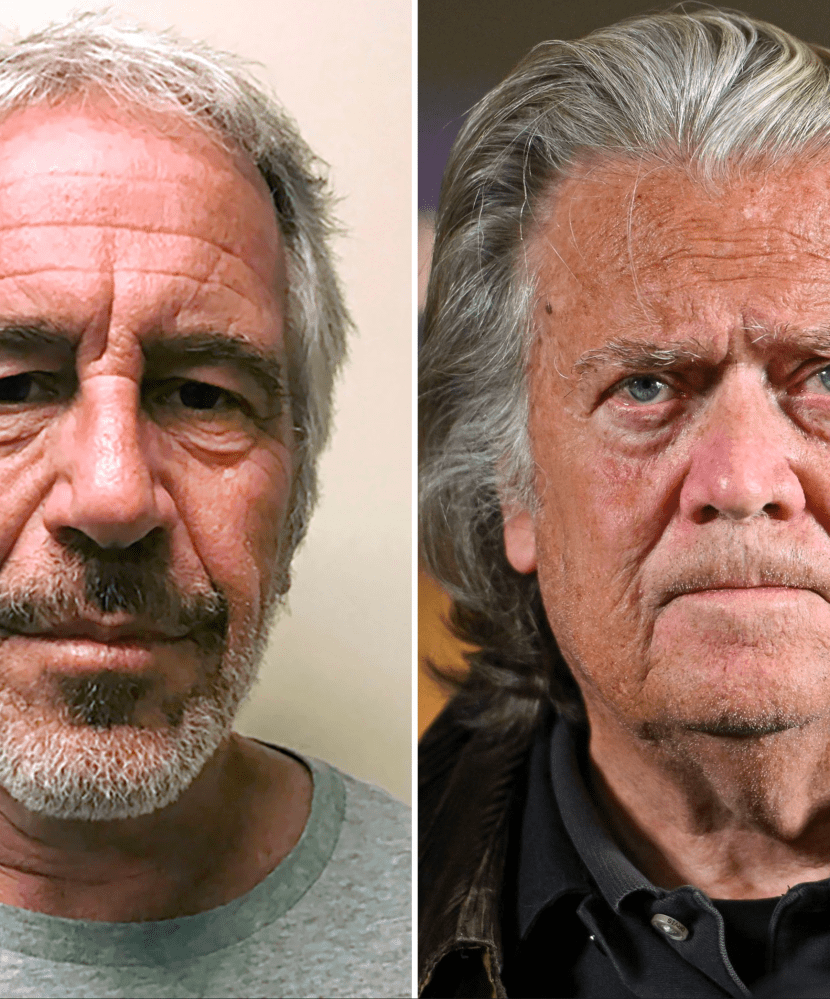
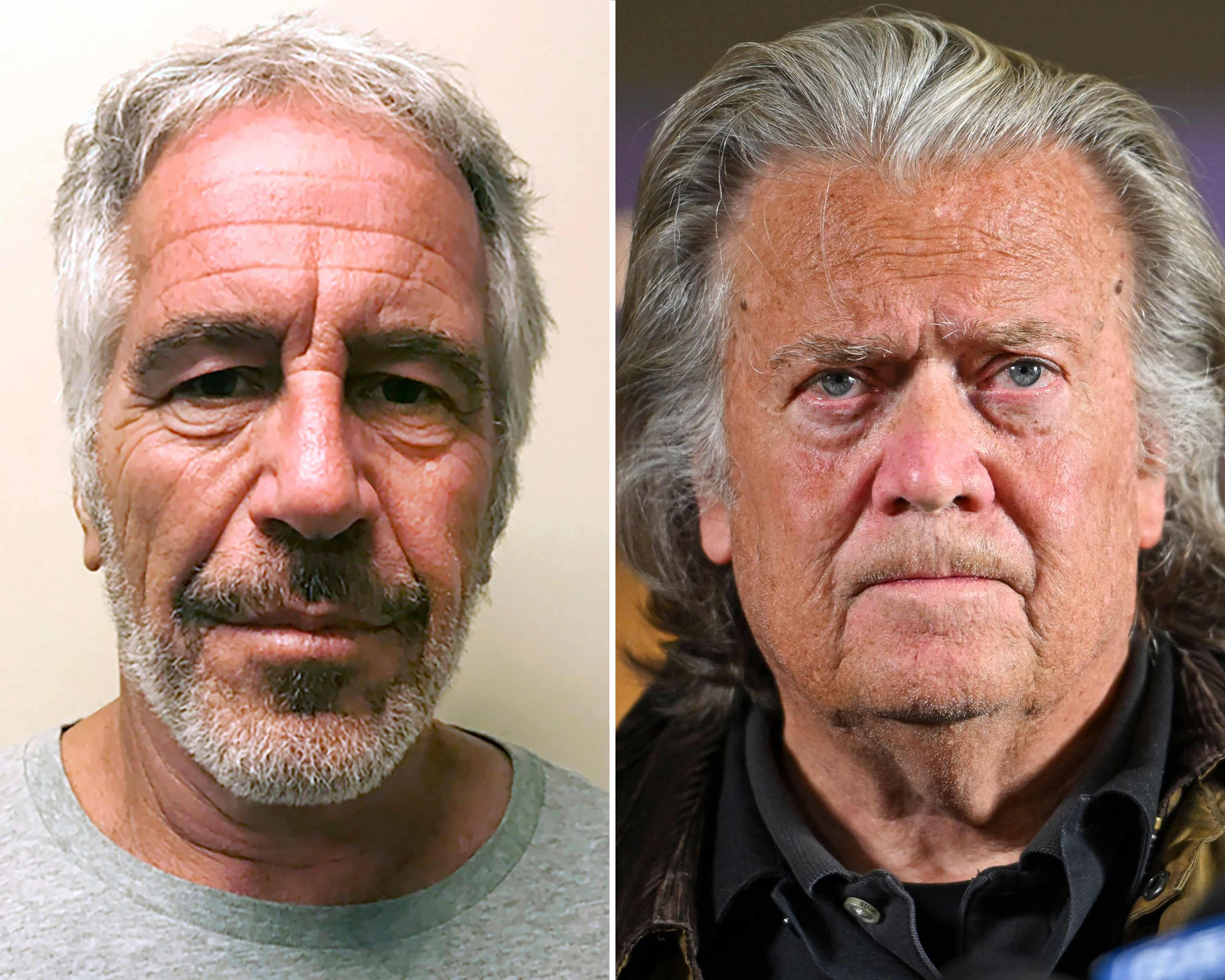
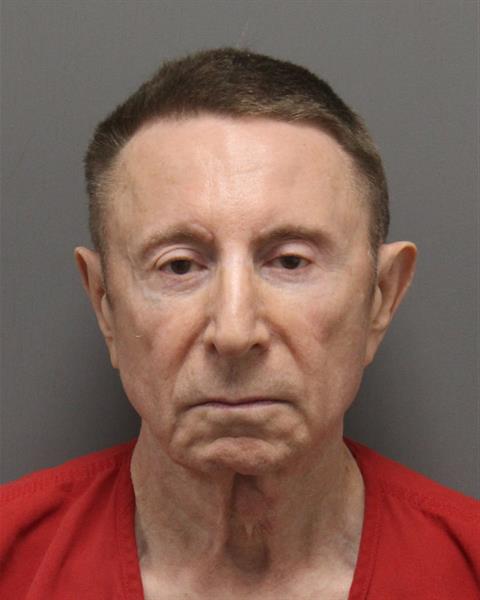
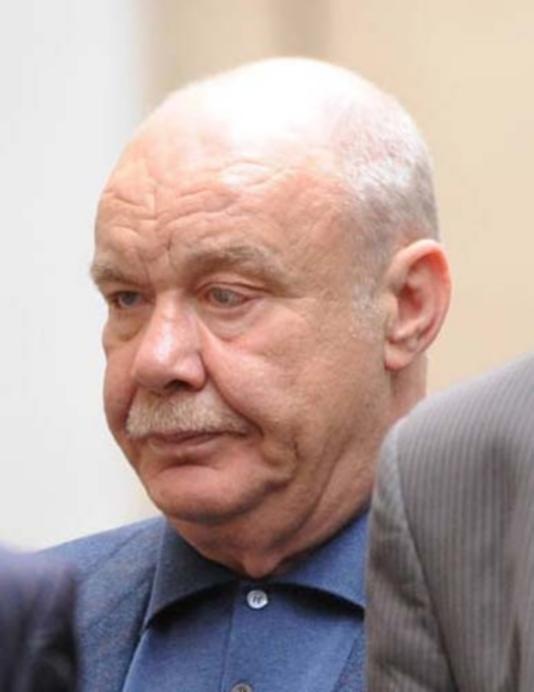
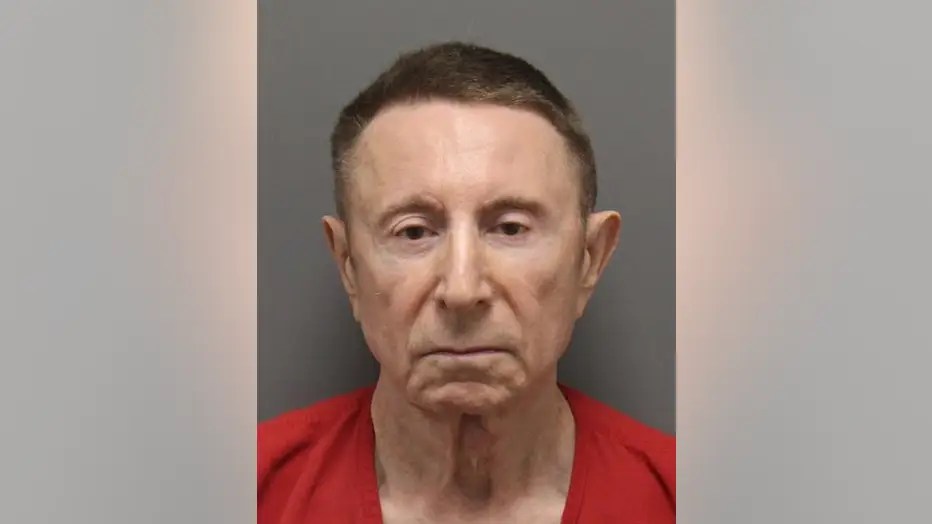
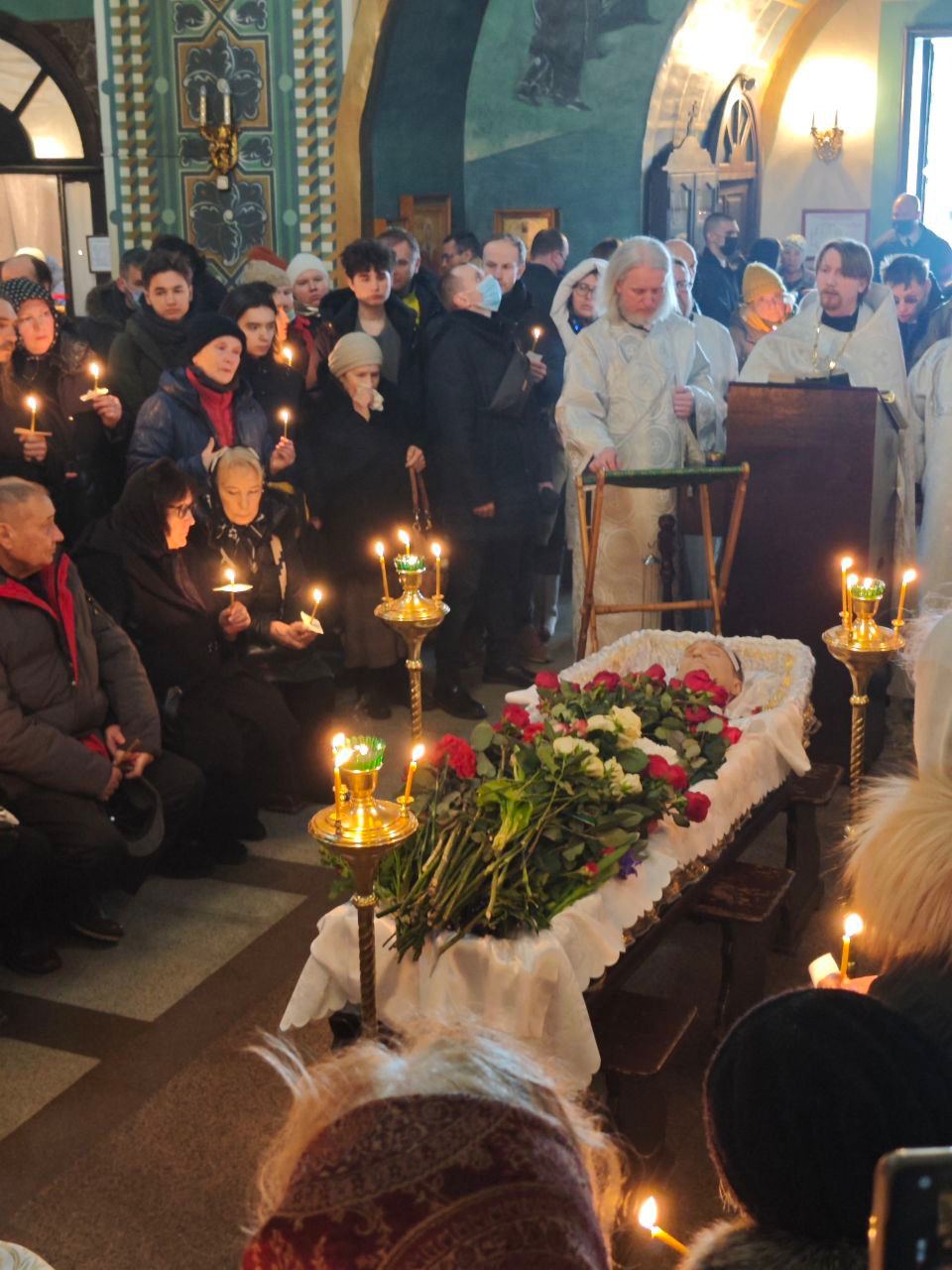
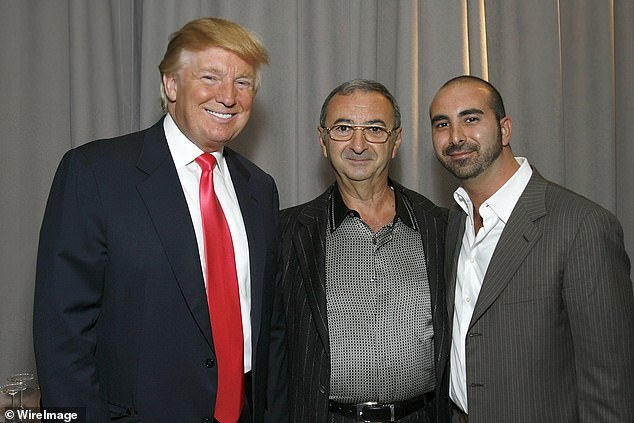
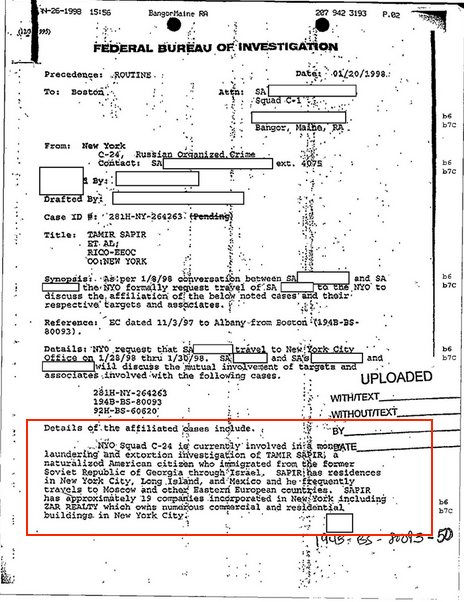
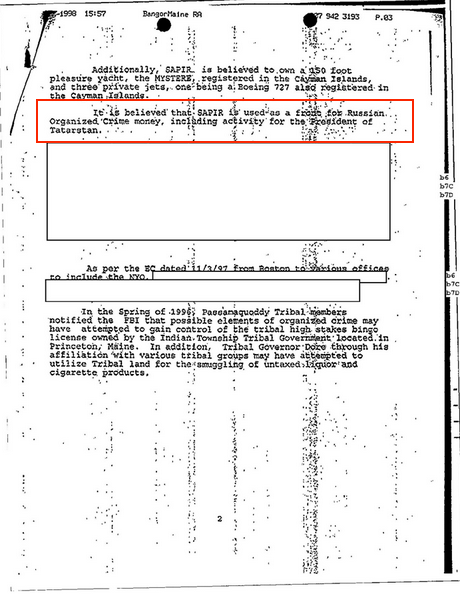
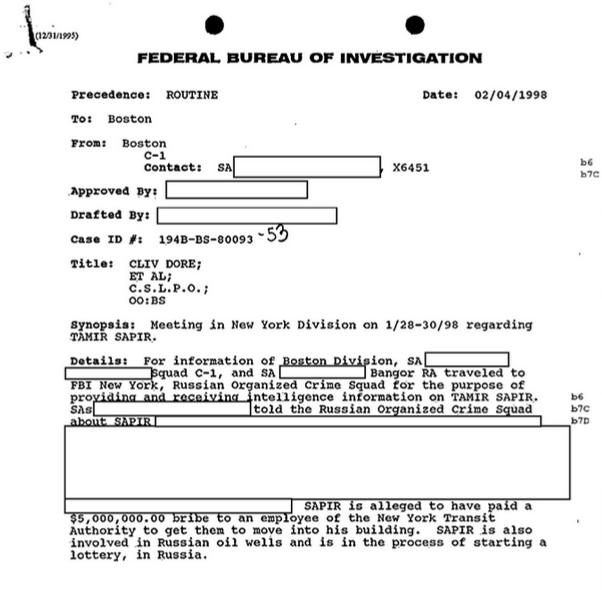
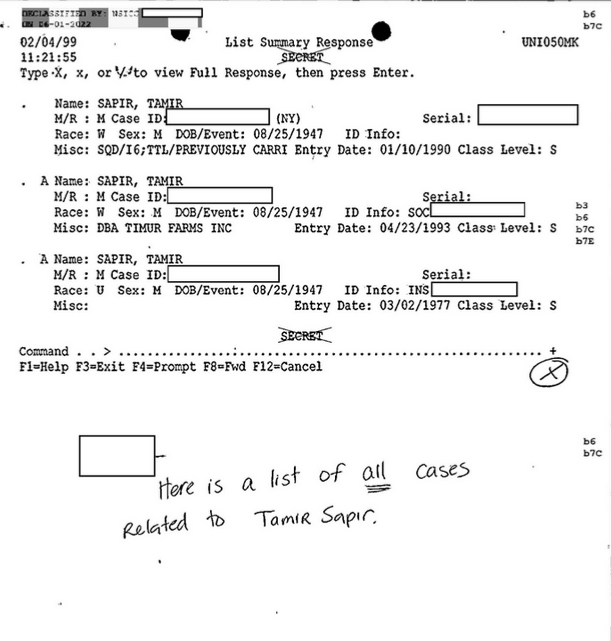
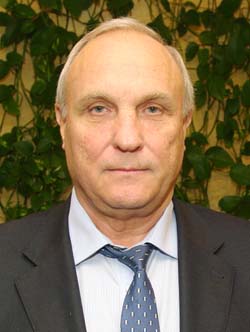
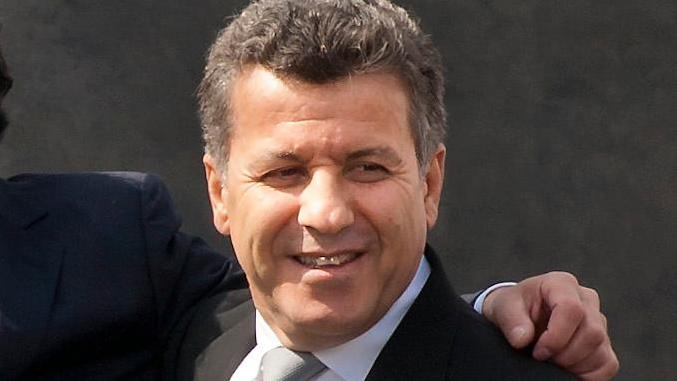

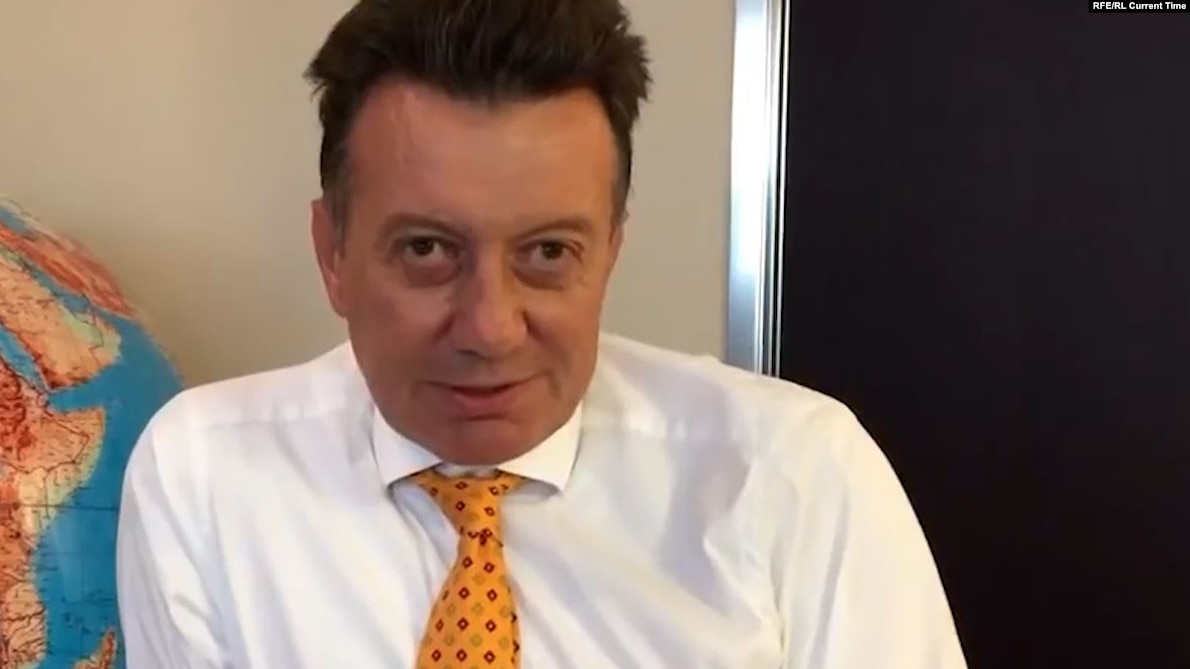
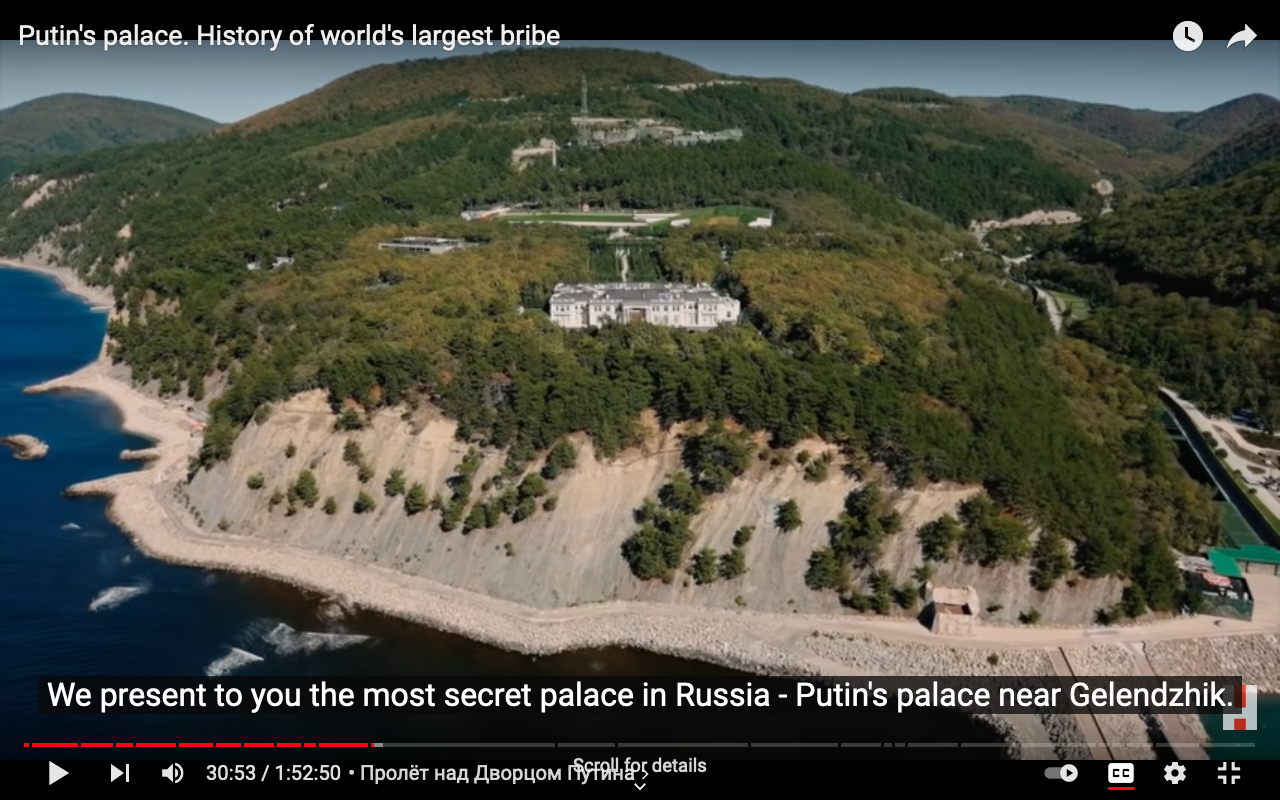
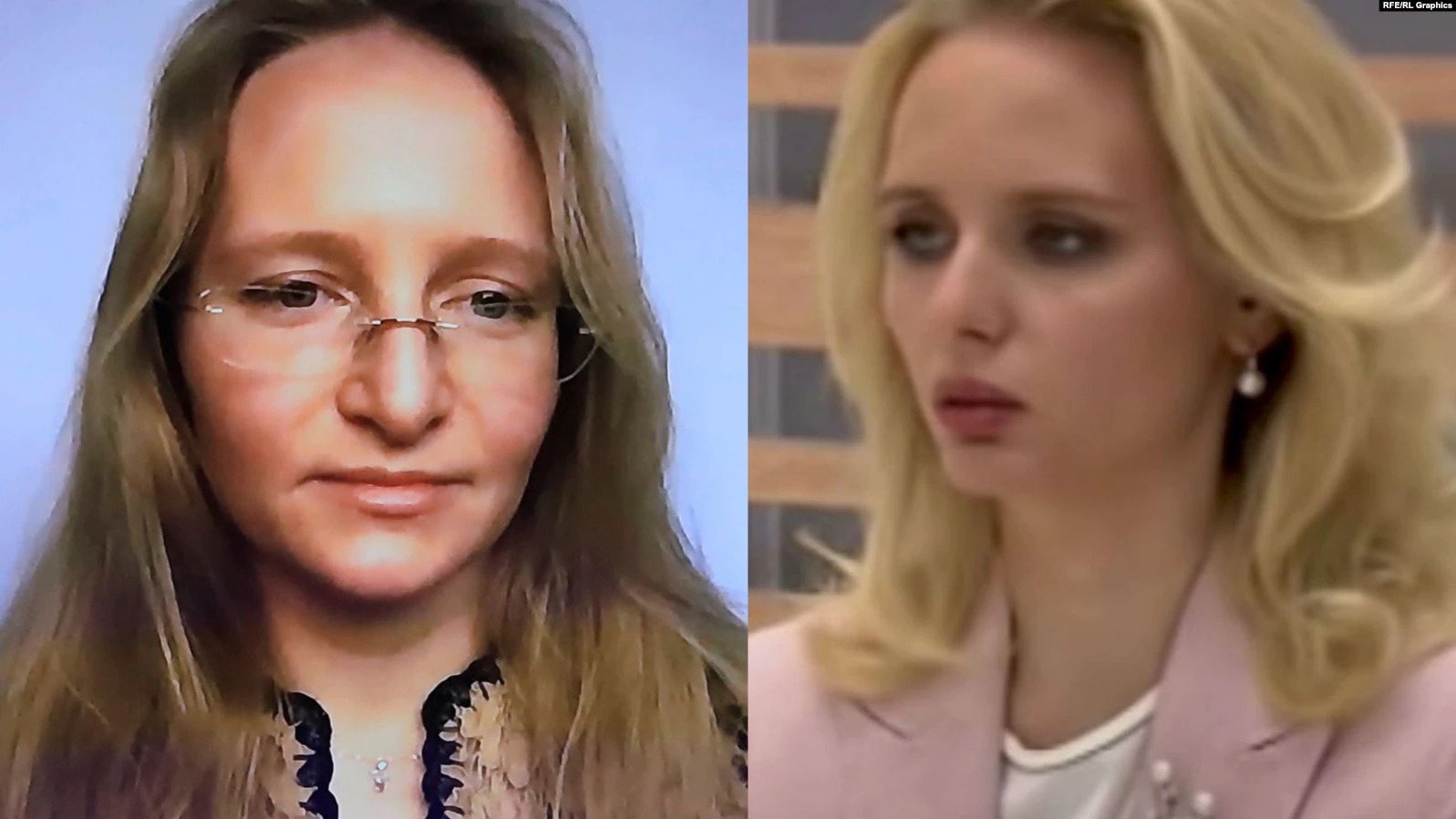

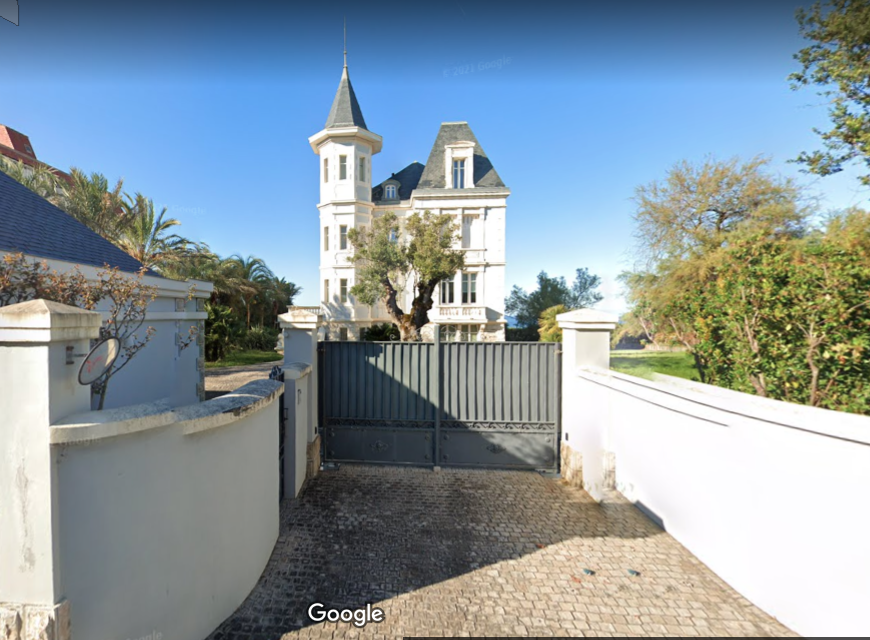
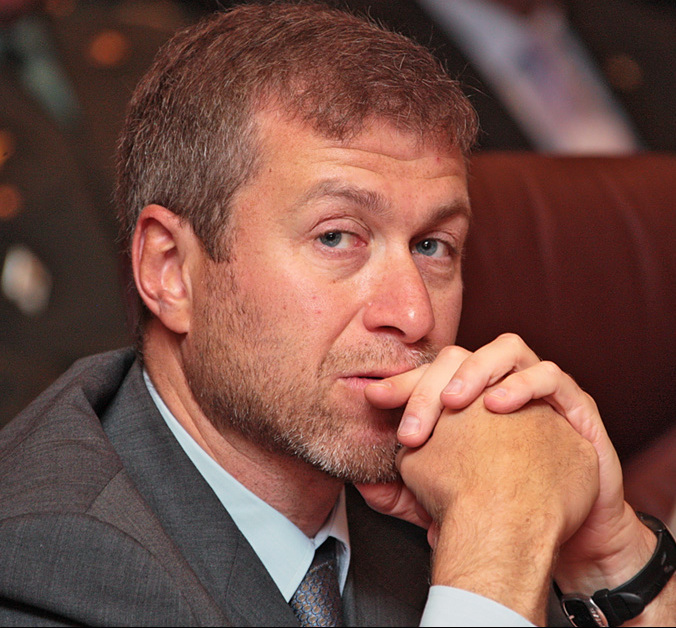
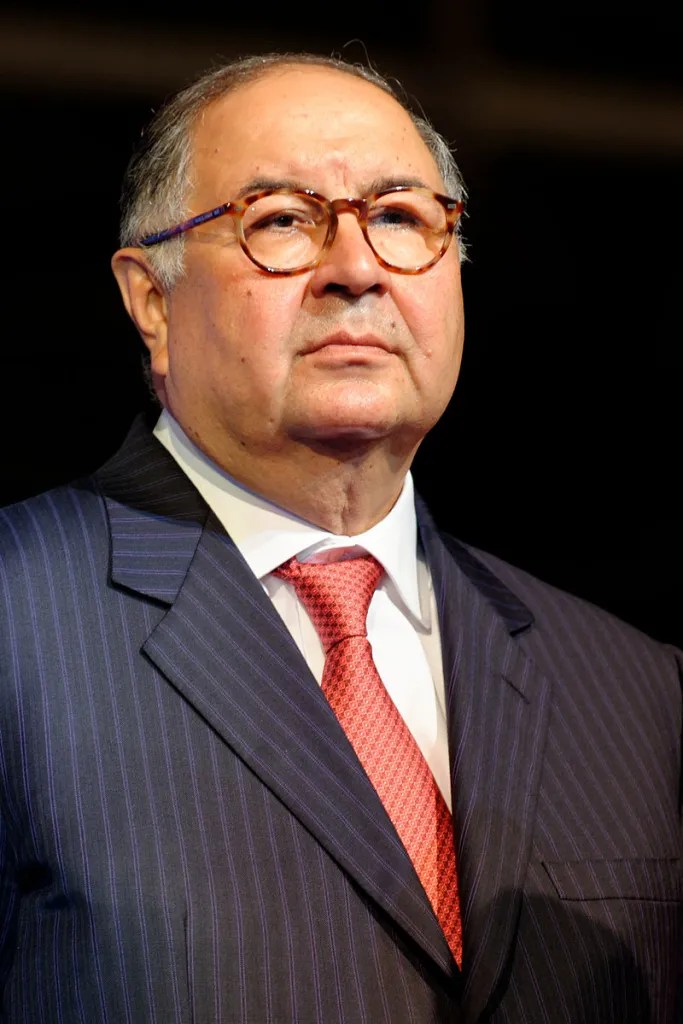
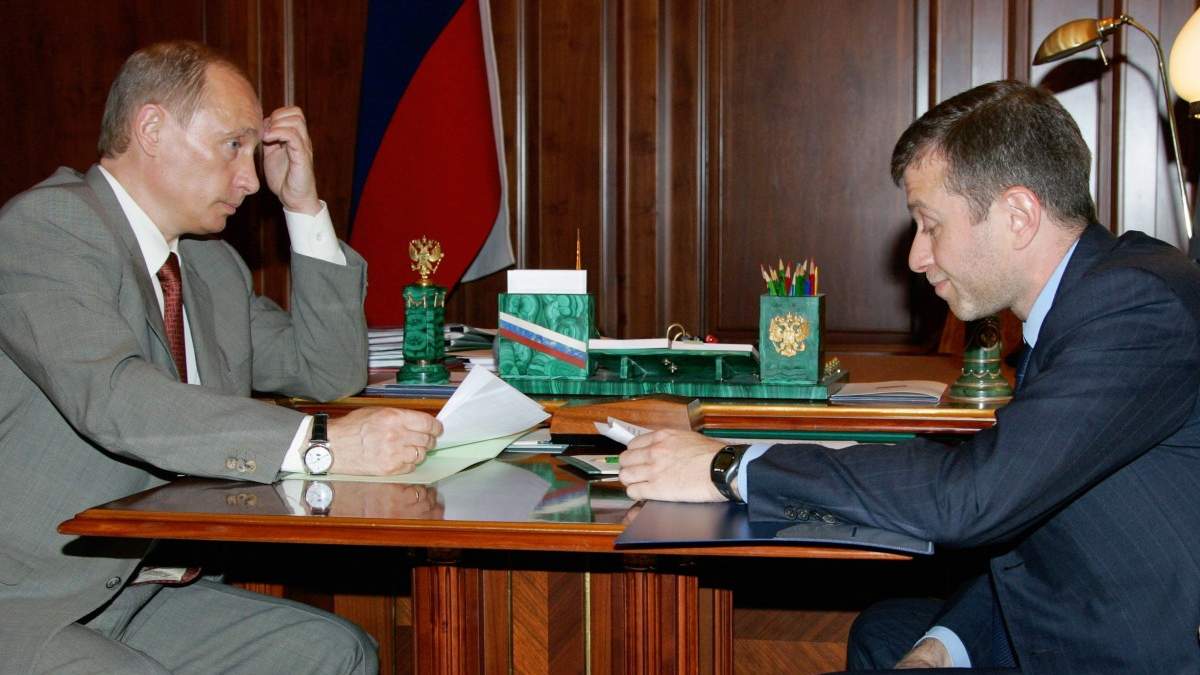

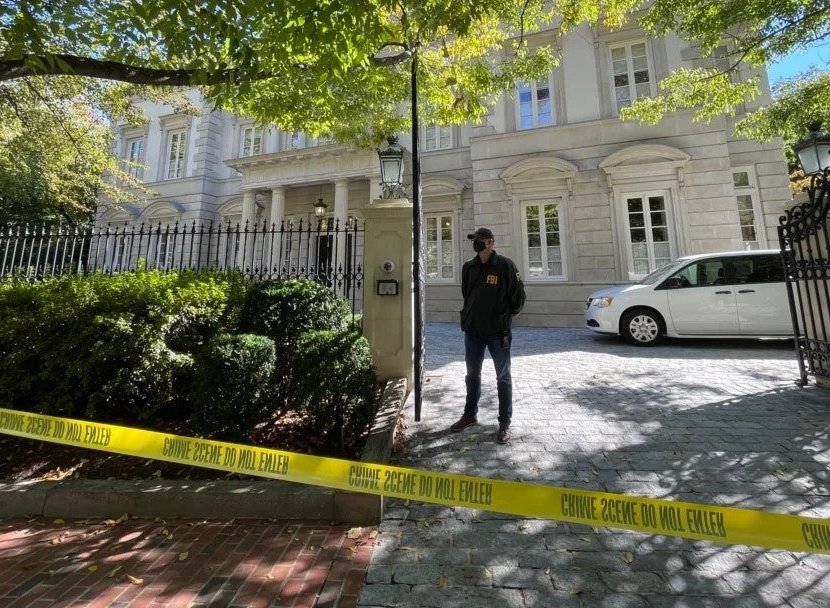

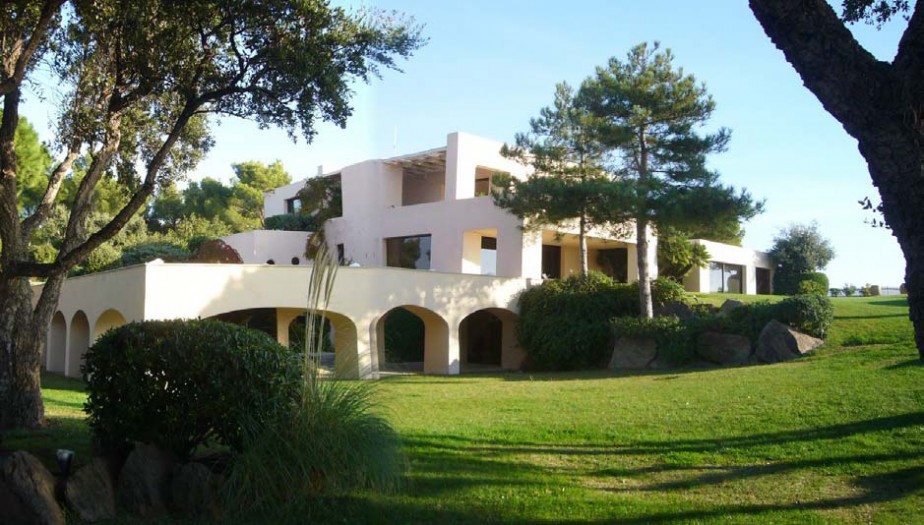
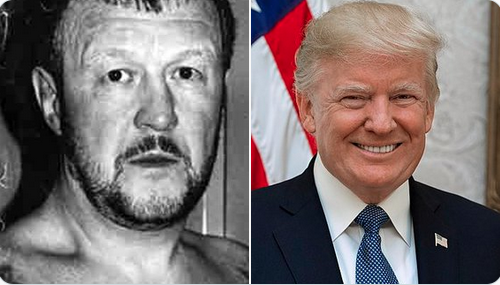


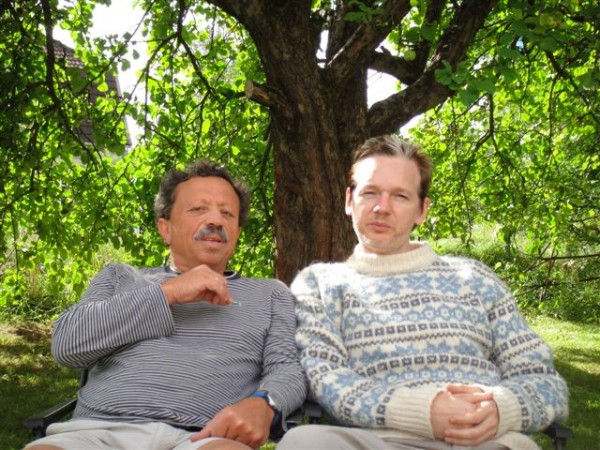
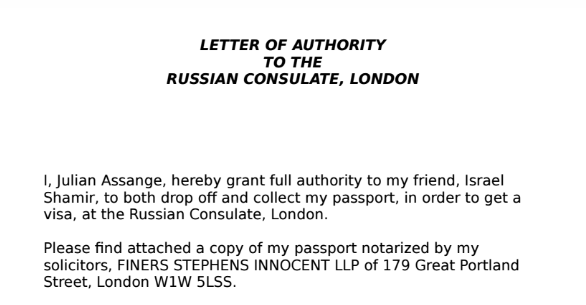
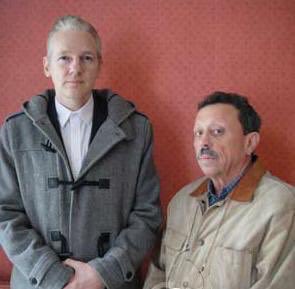
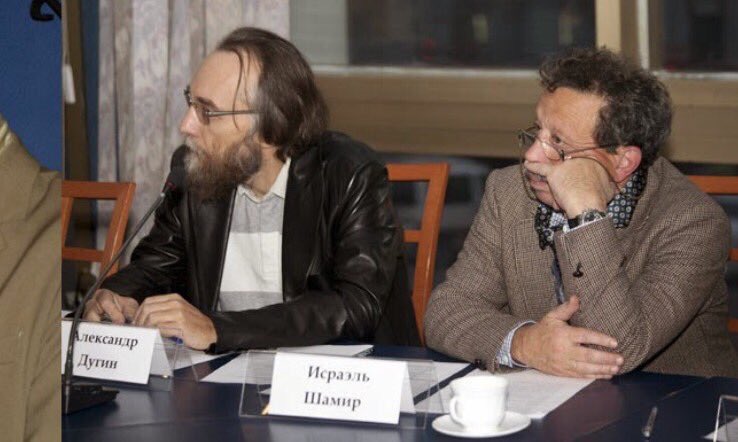
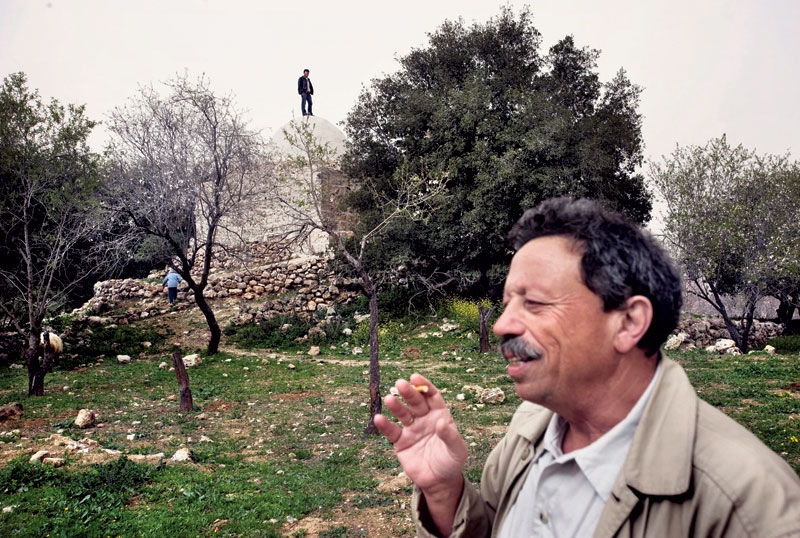
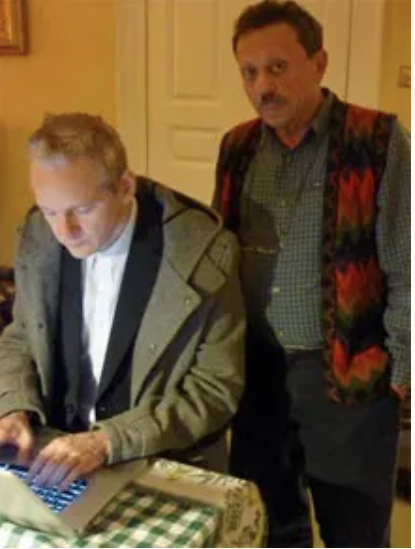
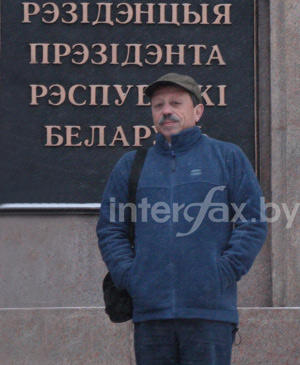
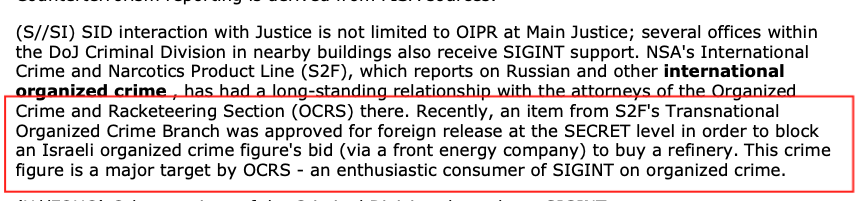
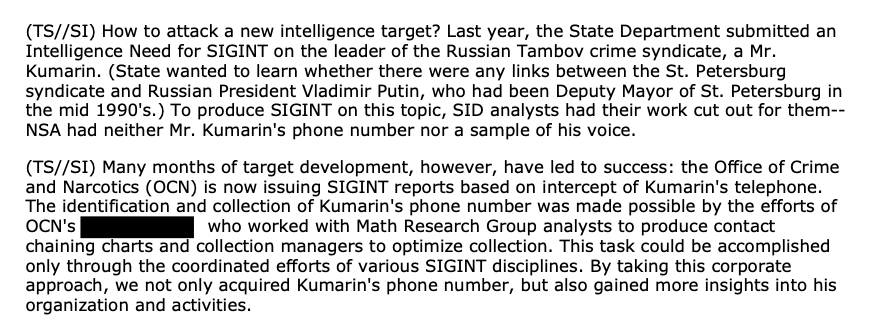
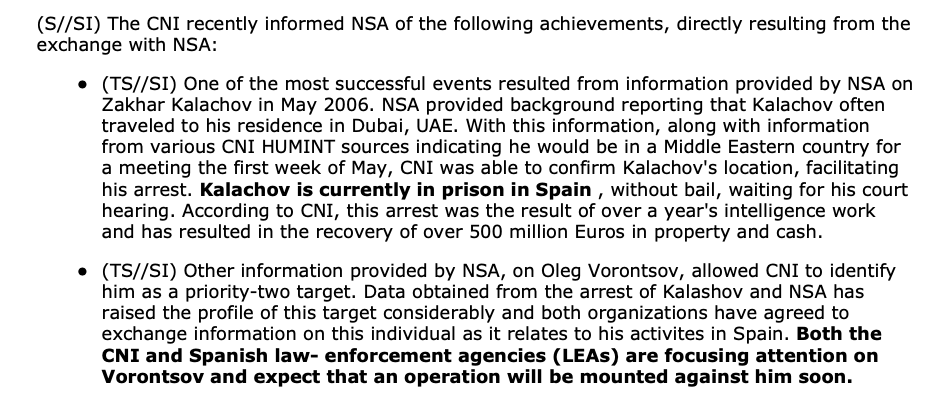

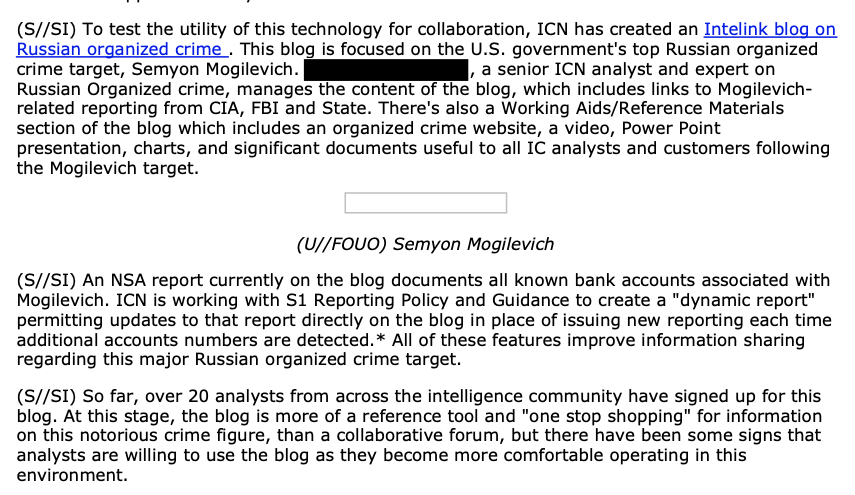
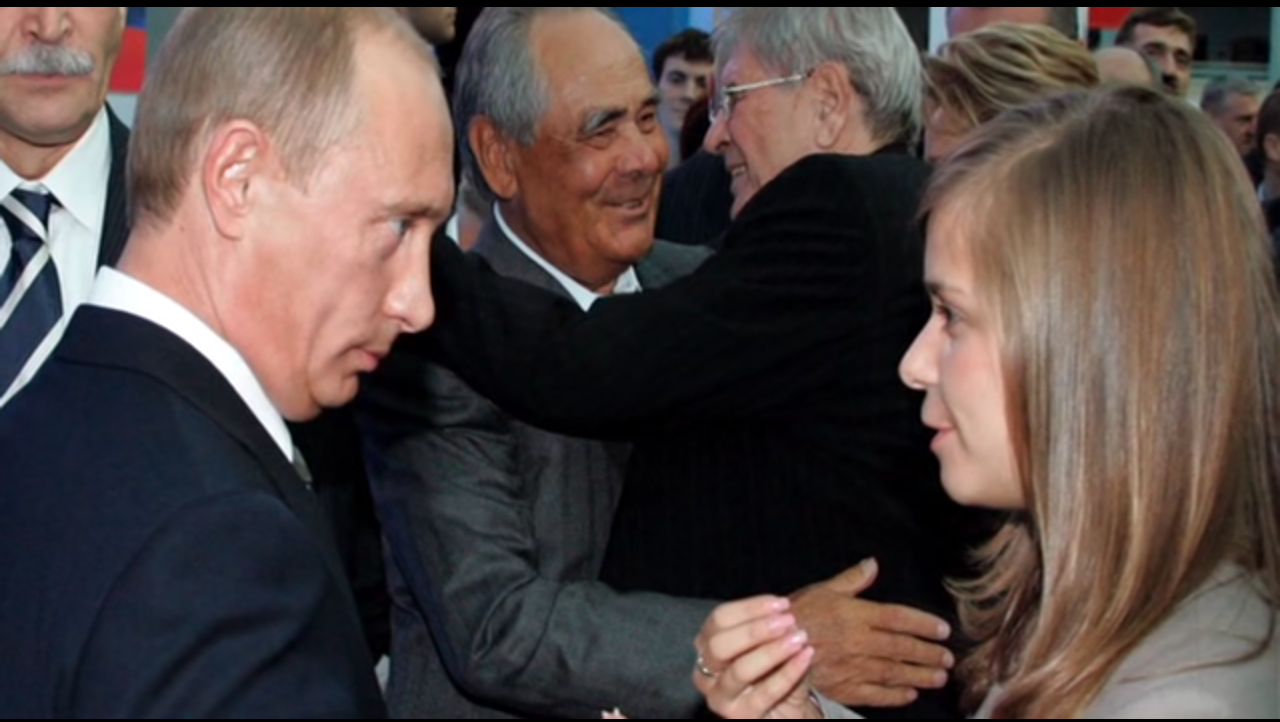
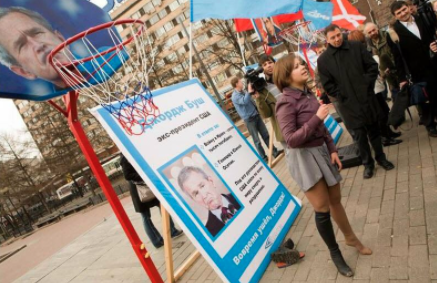

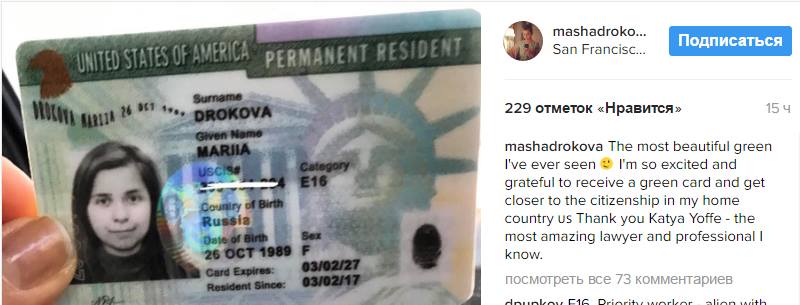
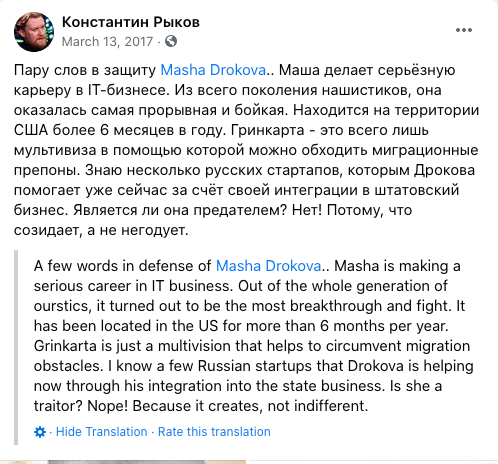


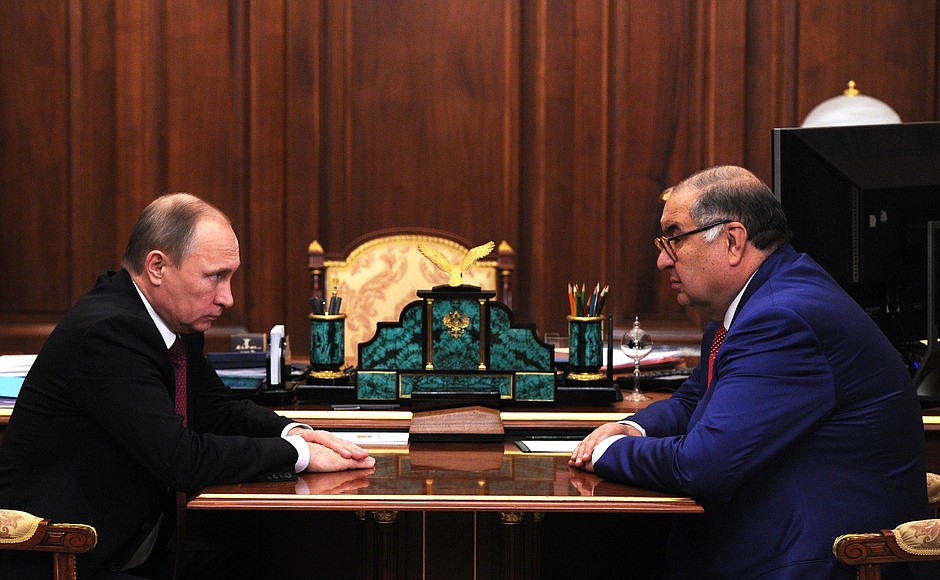
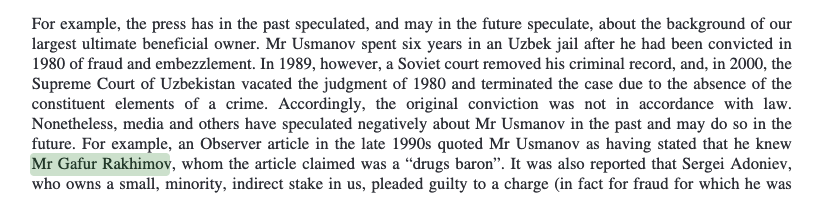
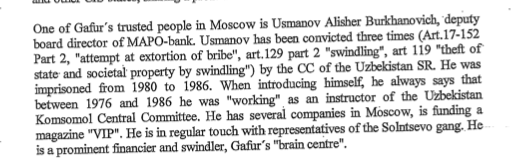
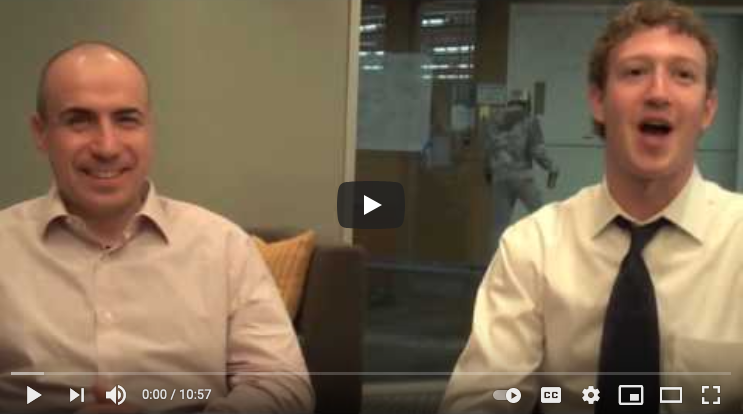
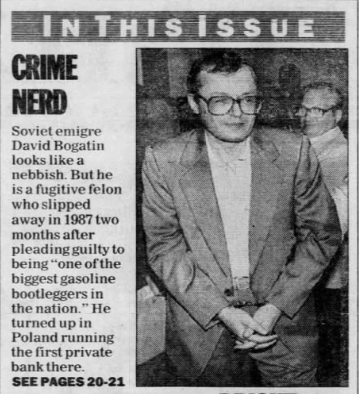
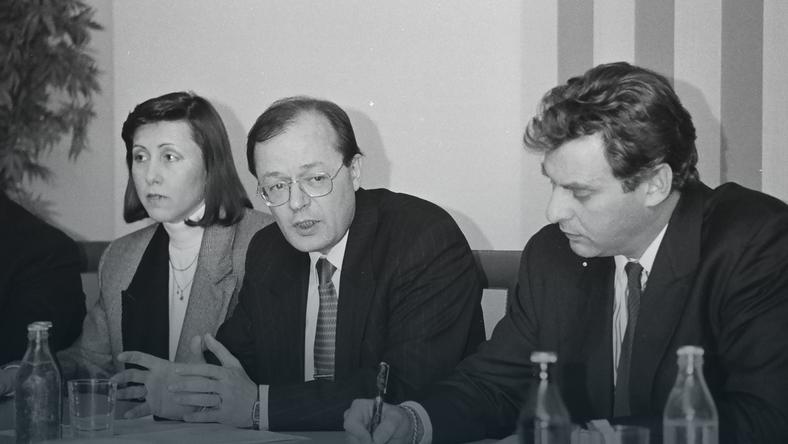

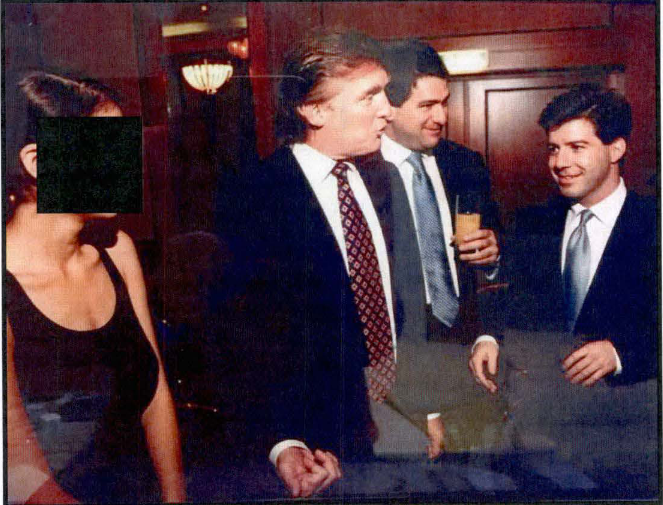


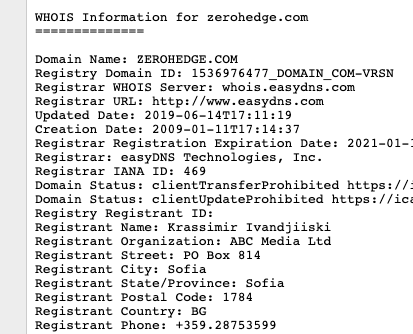

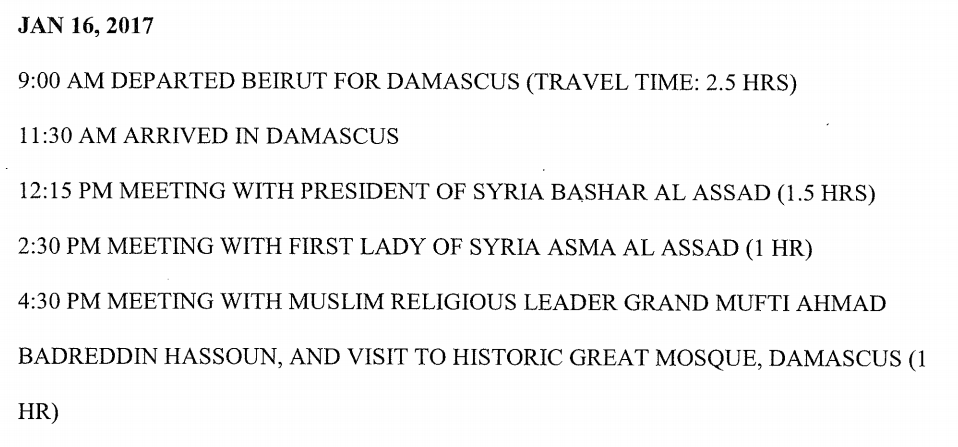

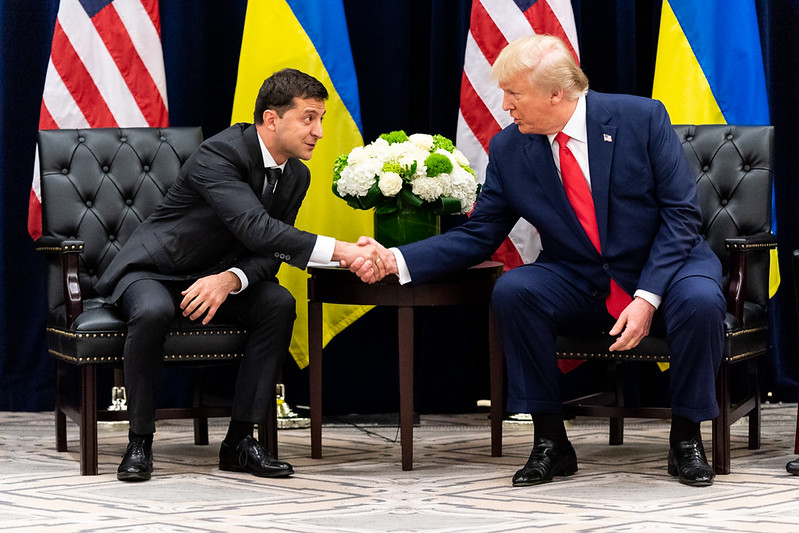

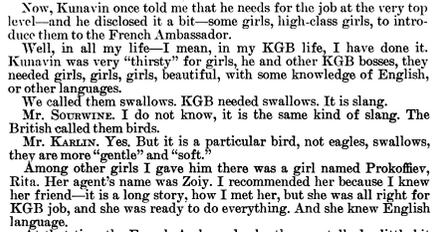
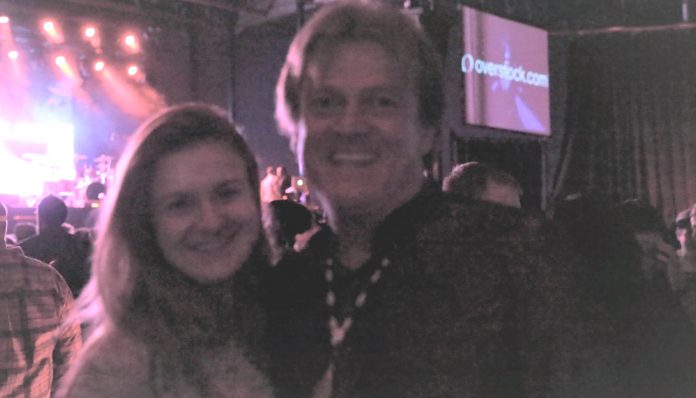
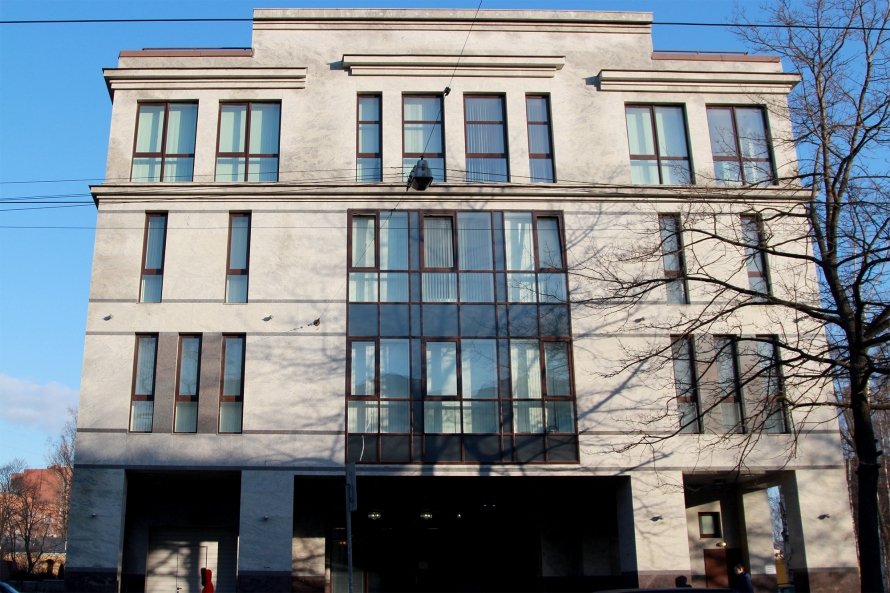
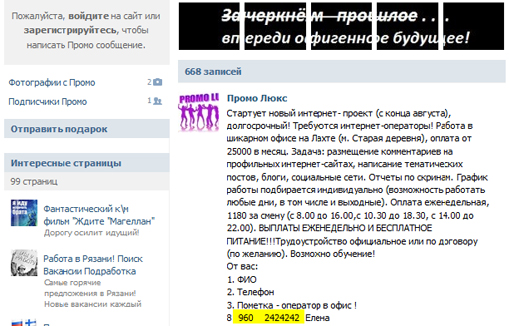


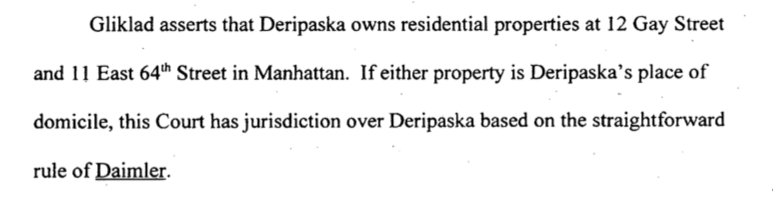
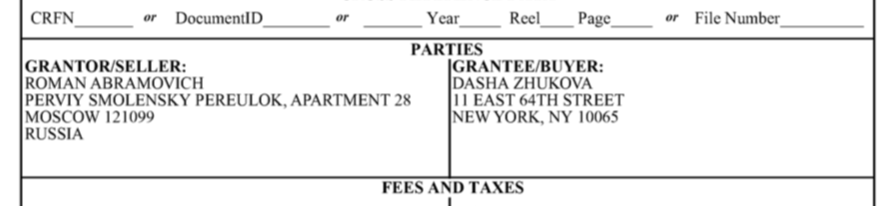
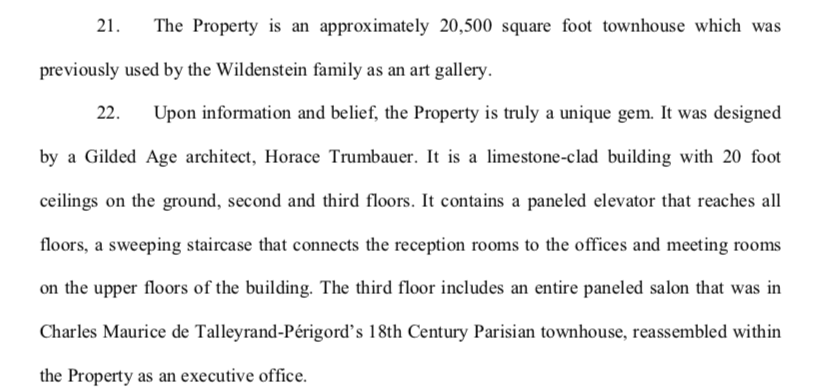
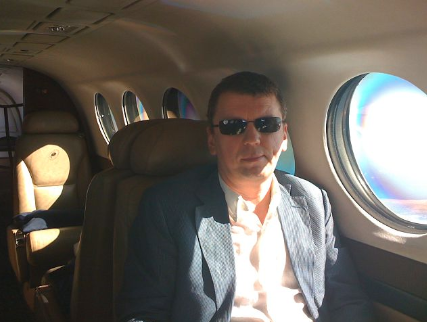


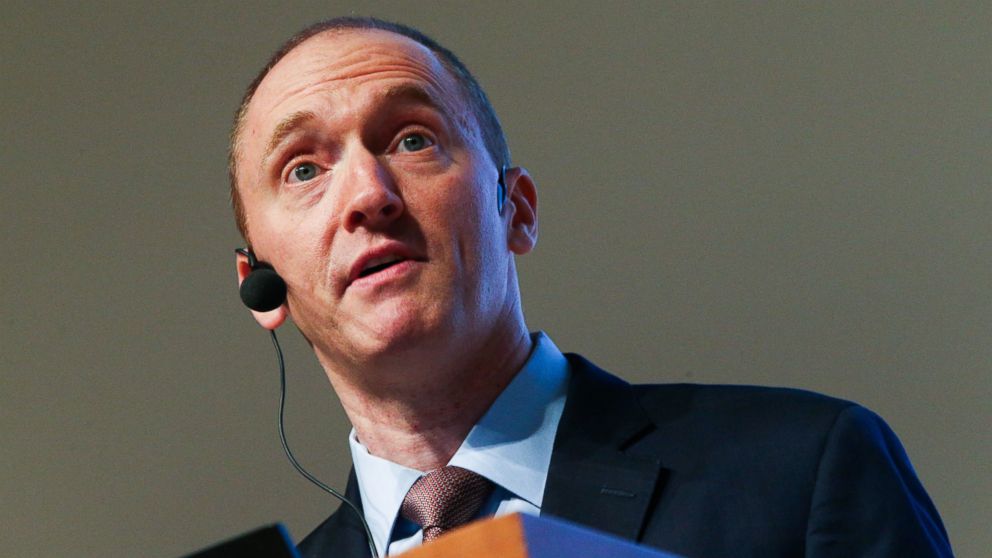
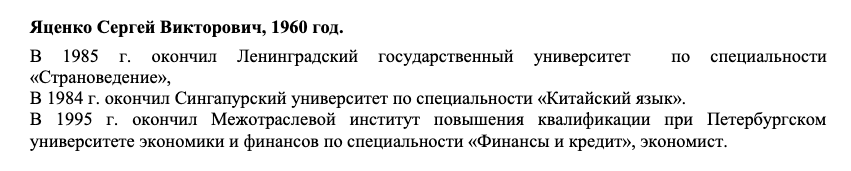

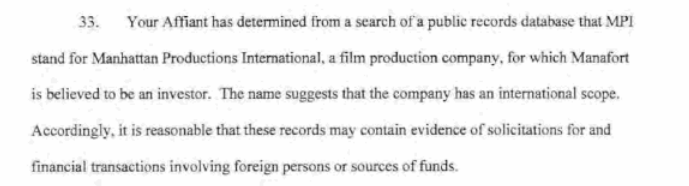
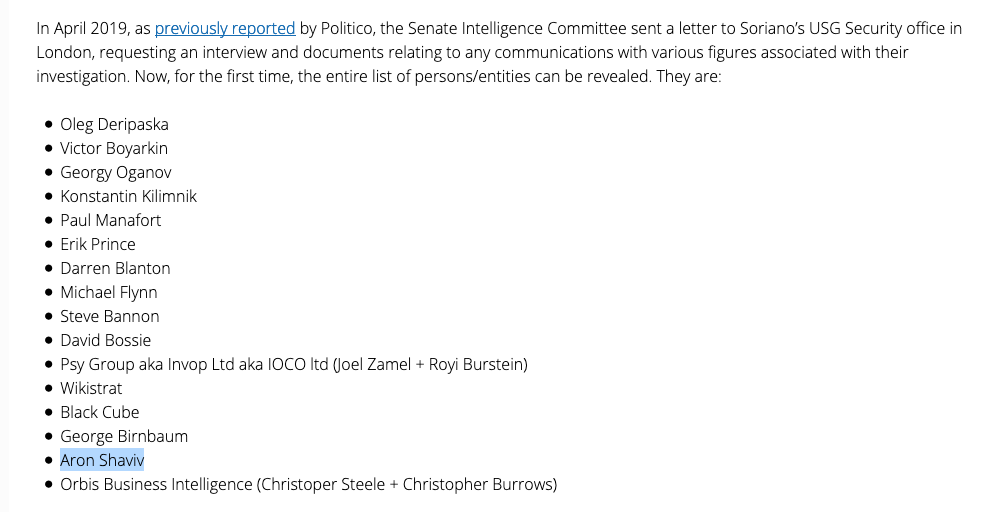

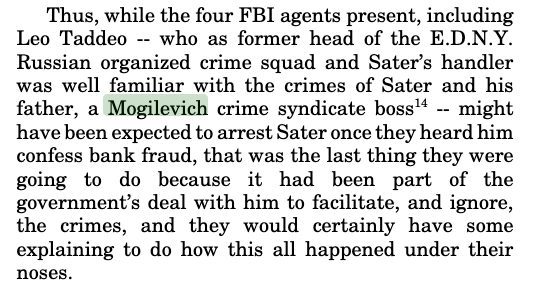
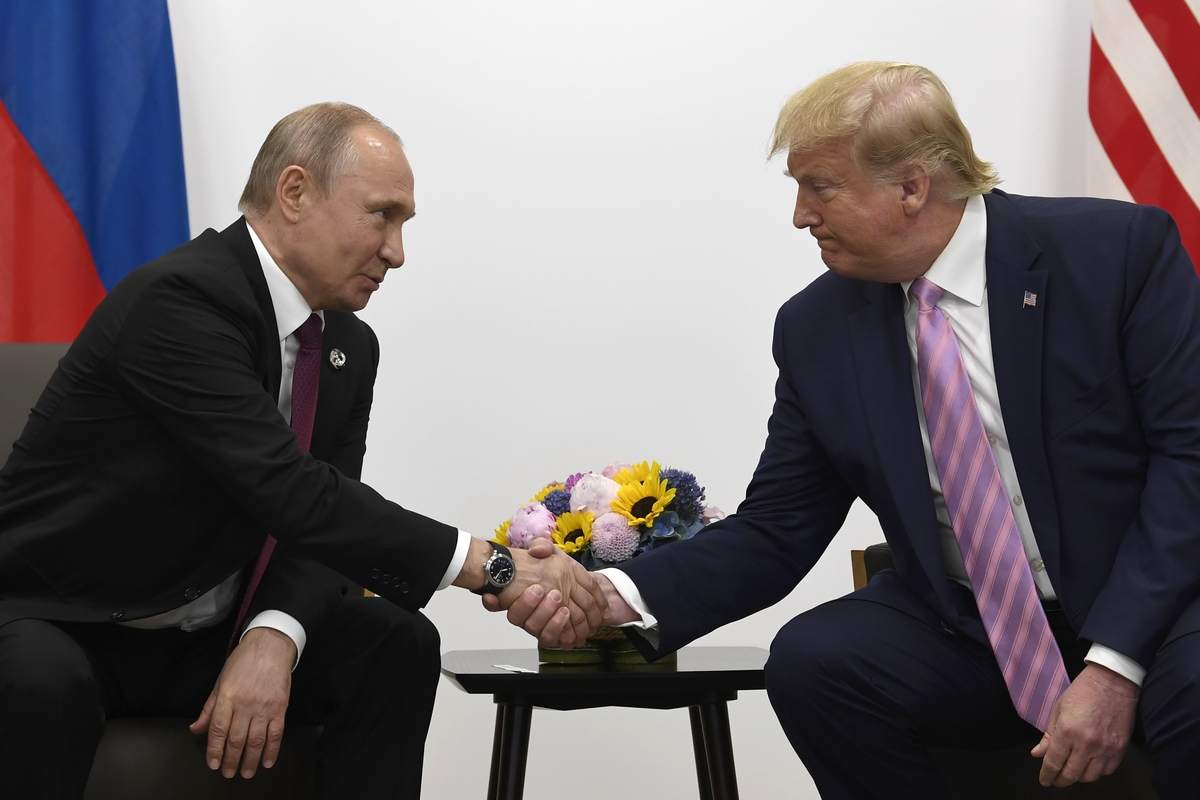
.jpg/1200px-General_Paul_M._Nakasone_(NSA).jpg)


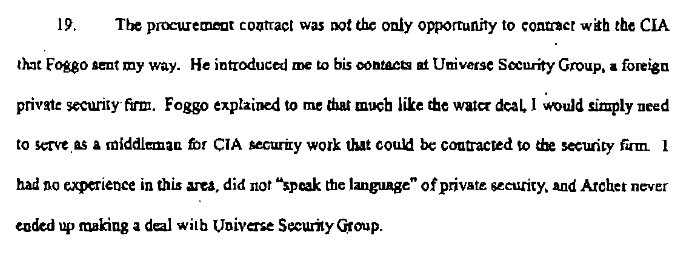
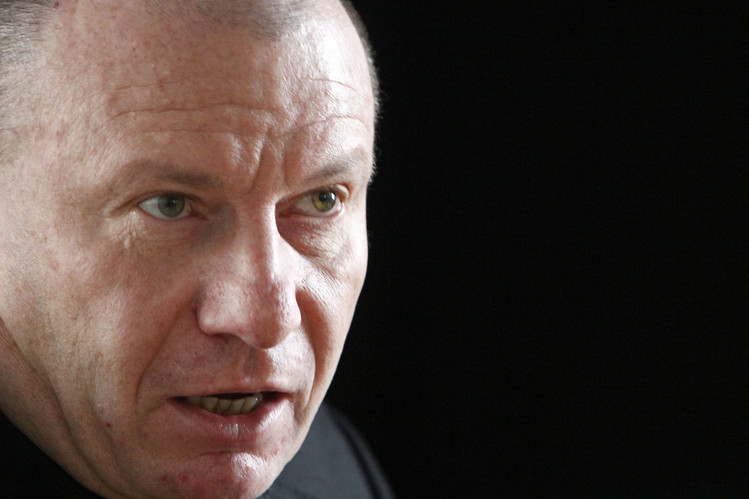


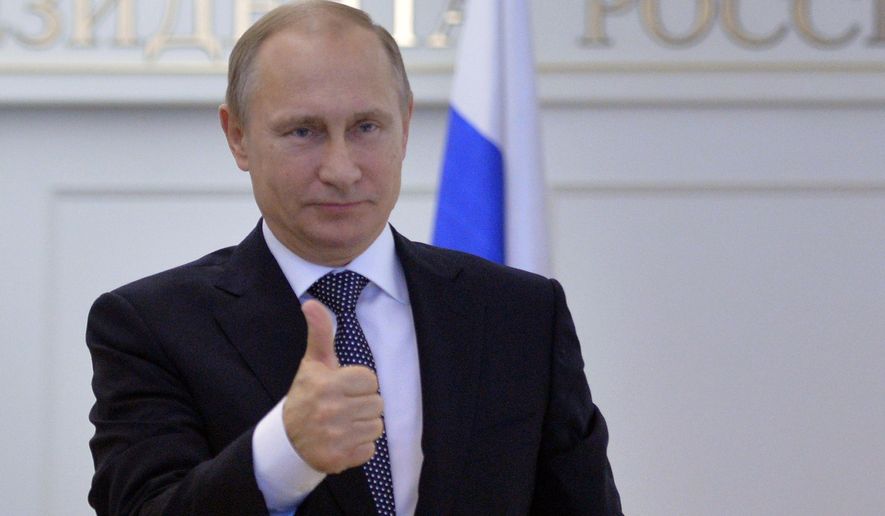
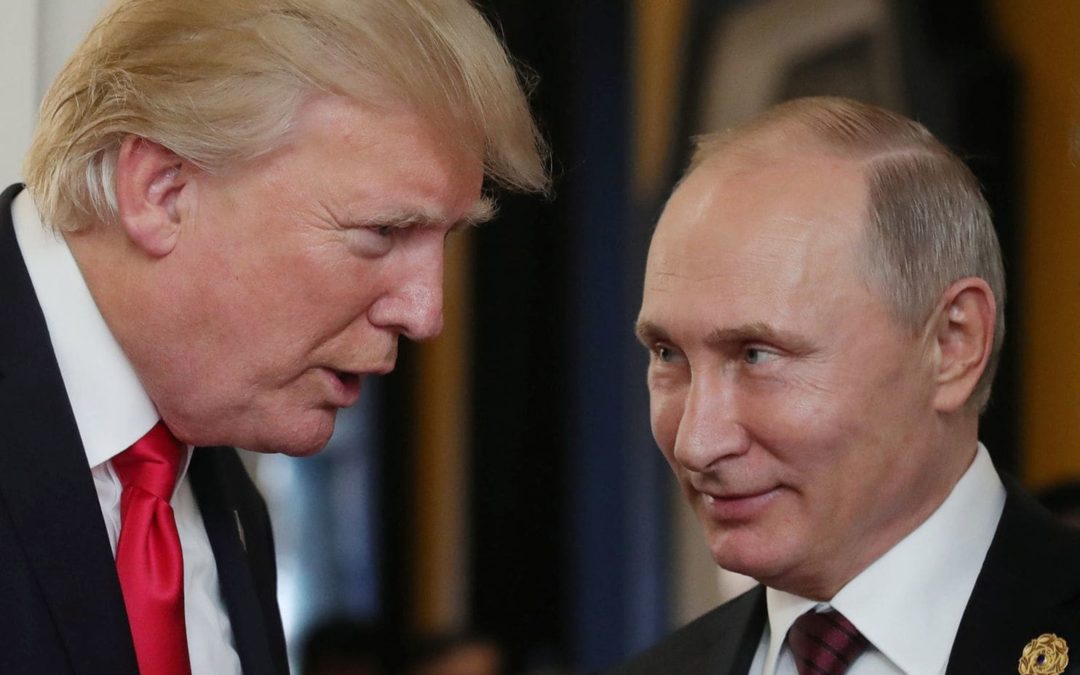




 Russia wasn’t much on the radar when I started researching what became my book,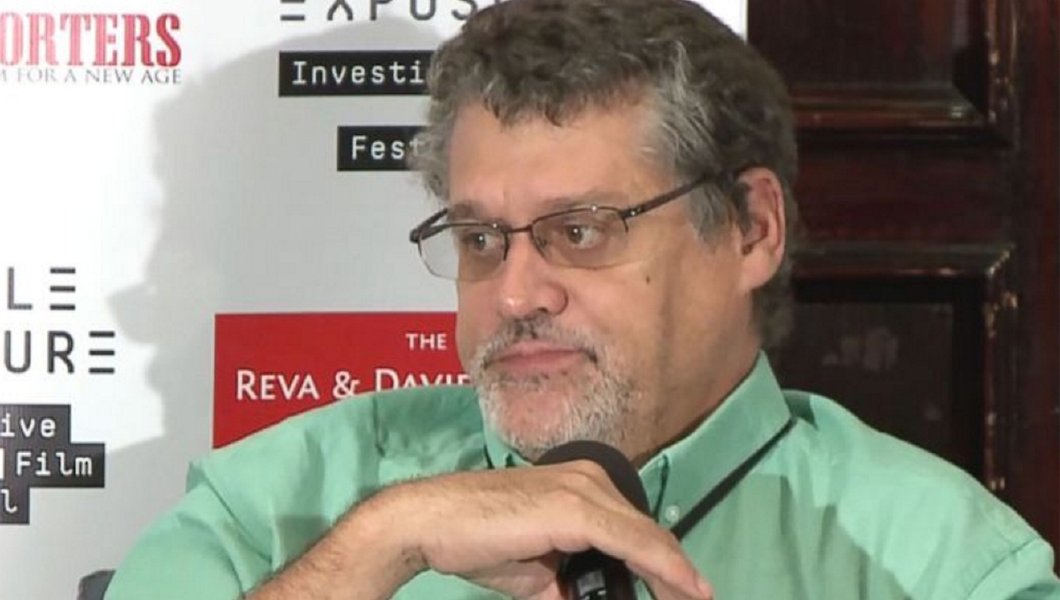


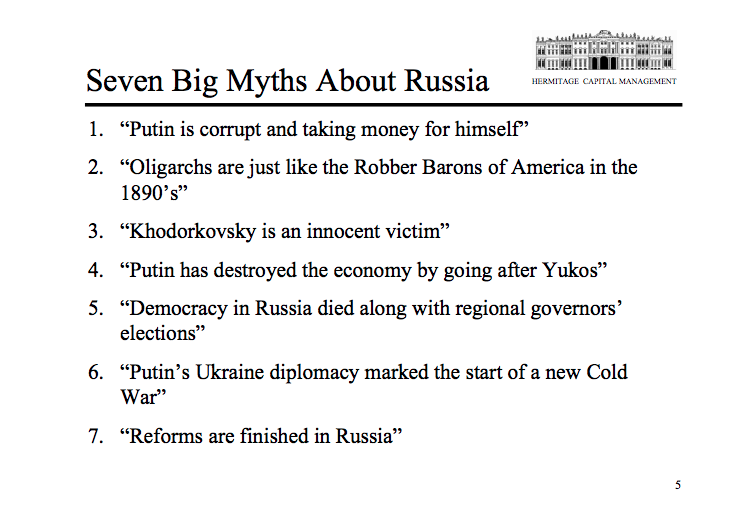


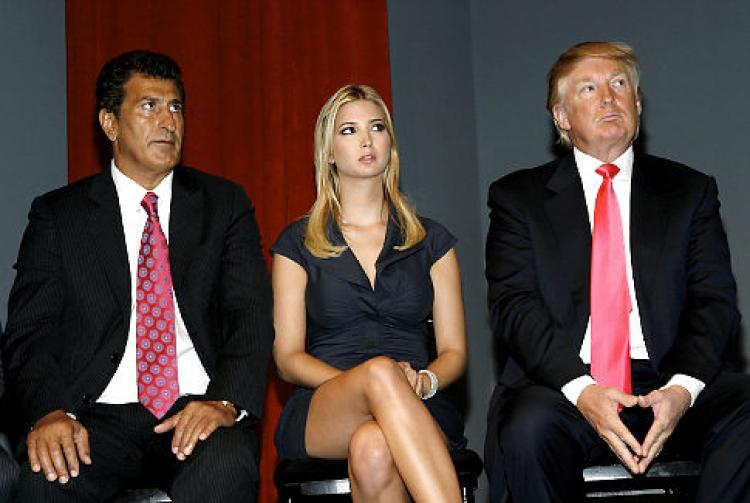
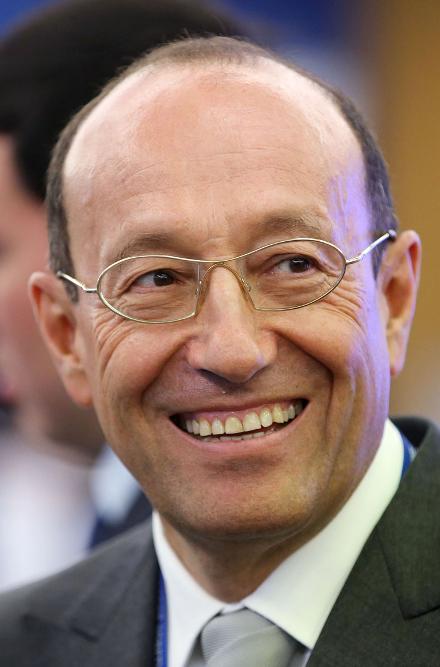



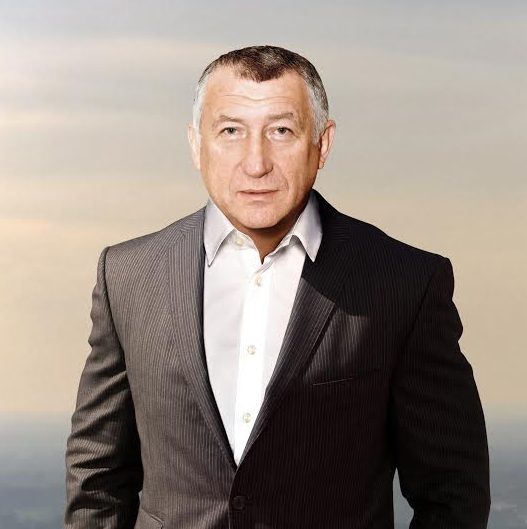
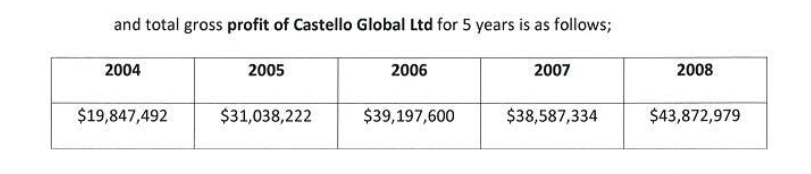
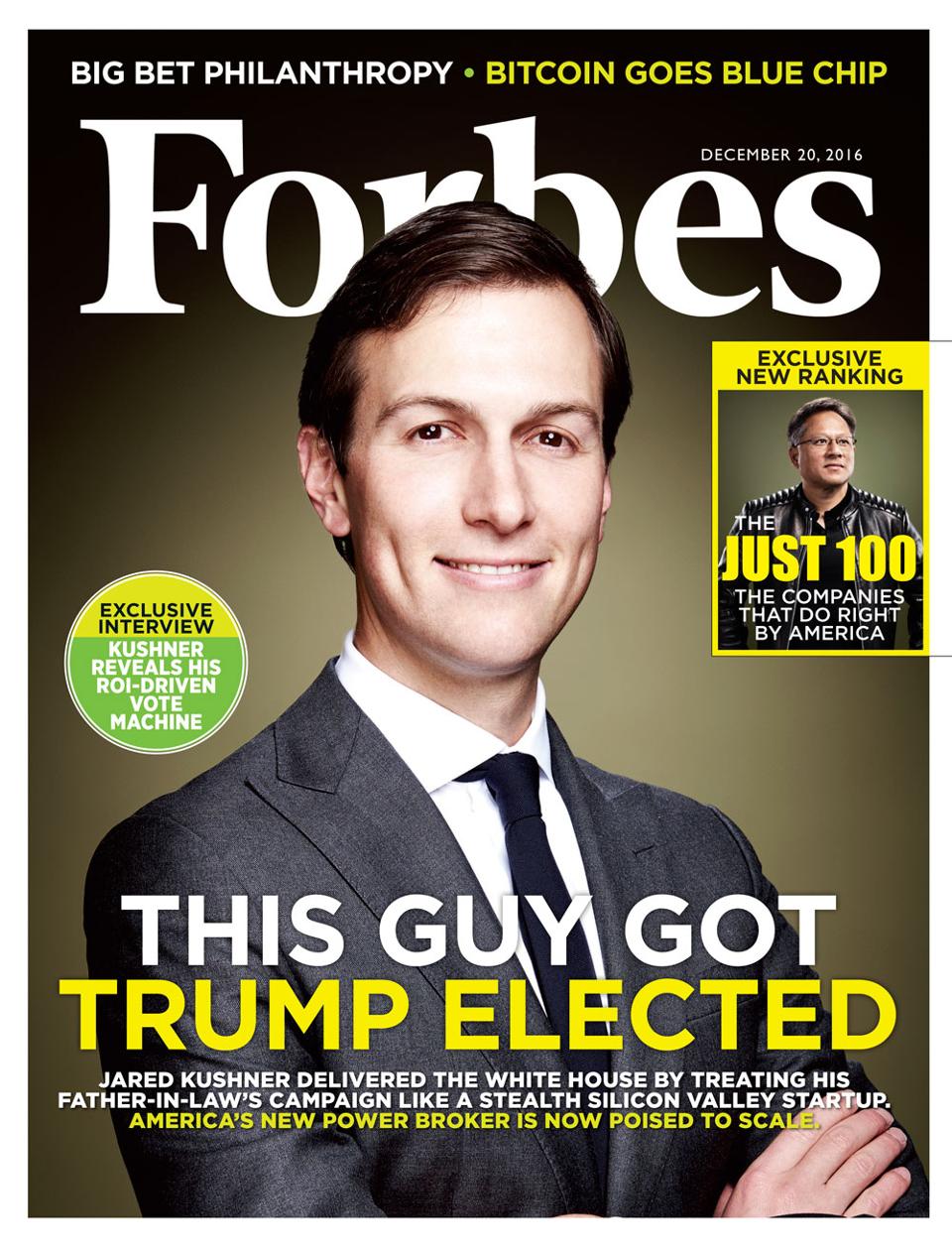 Call me skeptical.
 I just finished reading The Scorpion and the Frog, the book by Felix Sater’s Wall Street pal, Salvatore Lauria.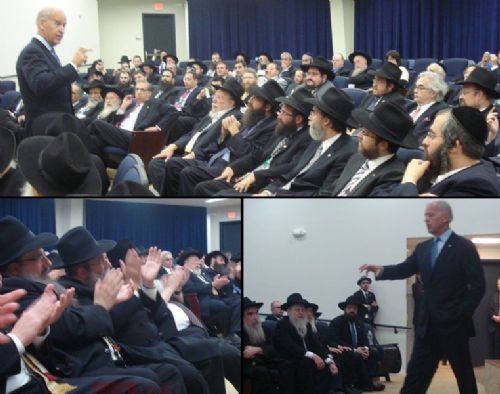
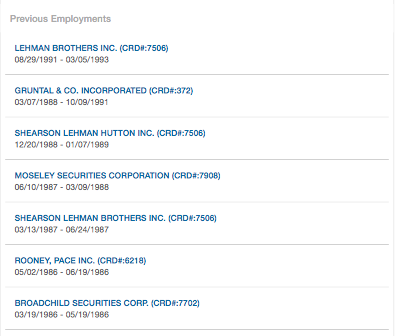


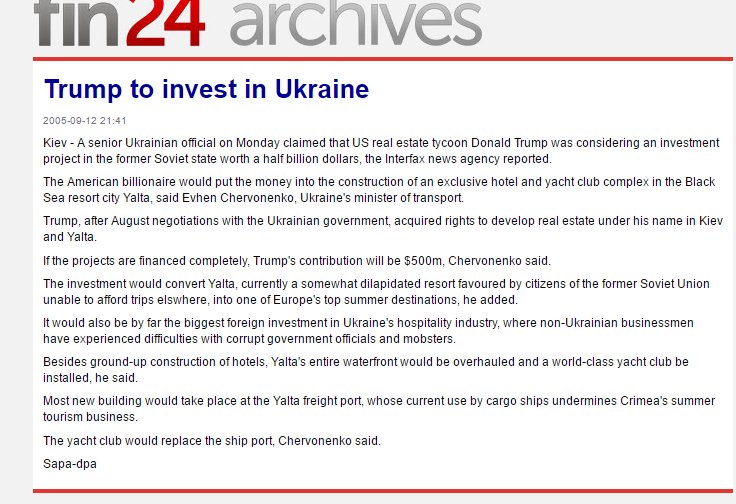 The port of Yalta on the Black Sea has long been a source of controversy.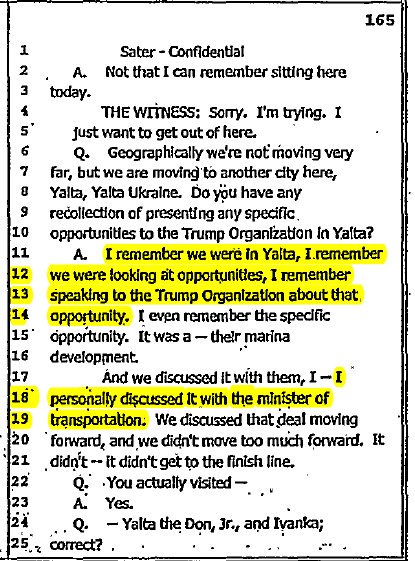
 Deutsche Bank’s London office is an attractive target for investigators looking into Trump ties to Russia because of the bank’s own sordid ties to Russia.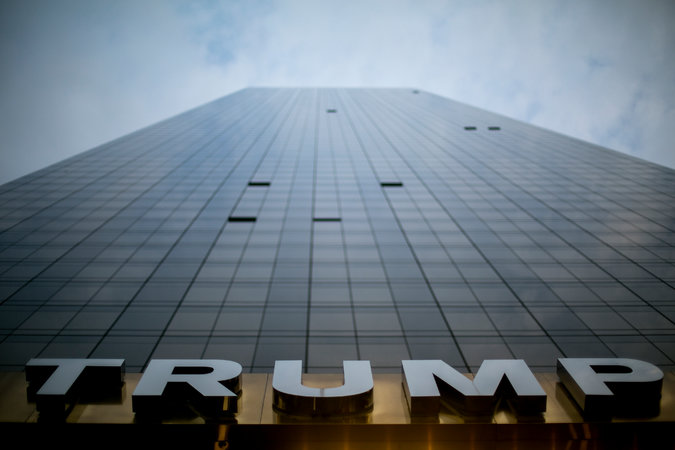
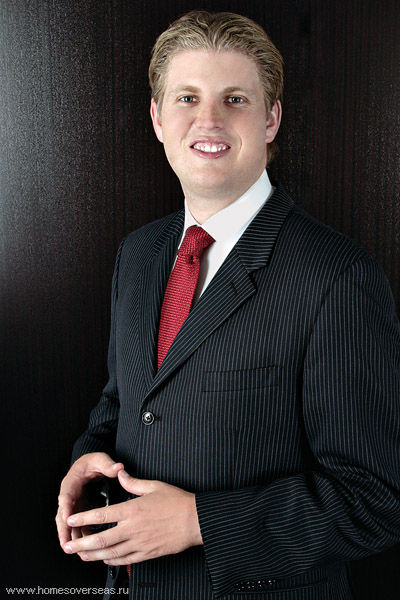
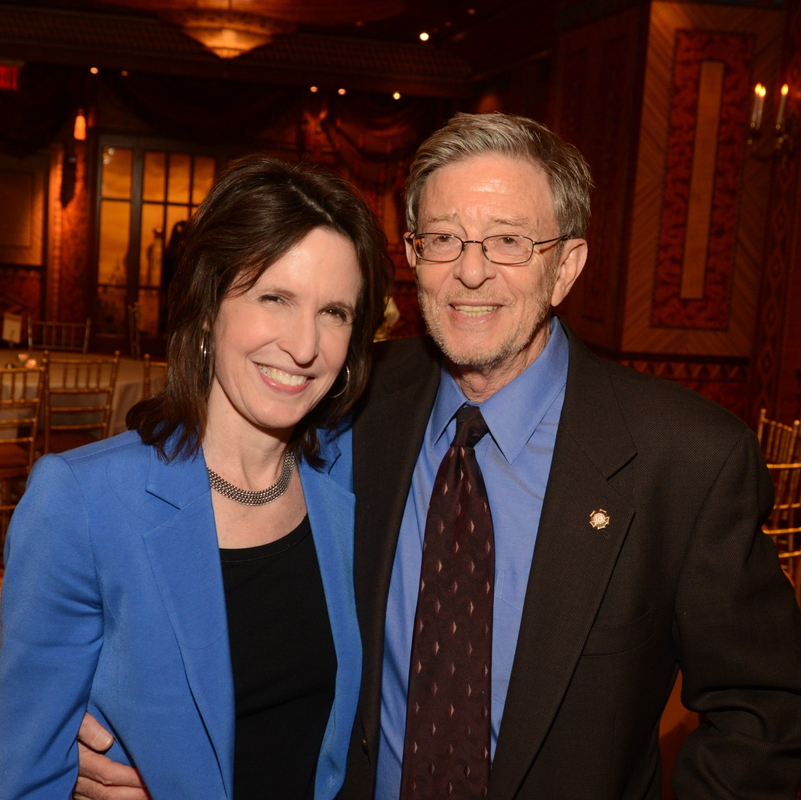





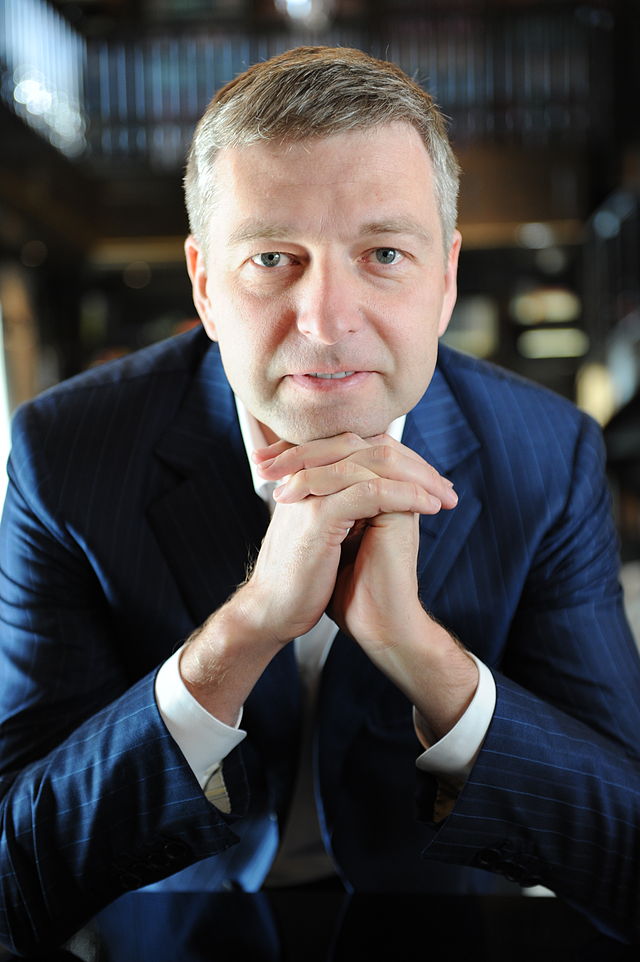
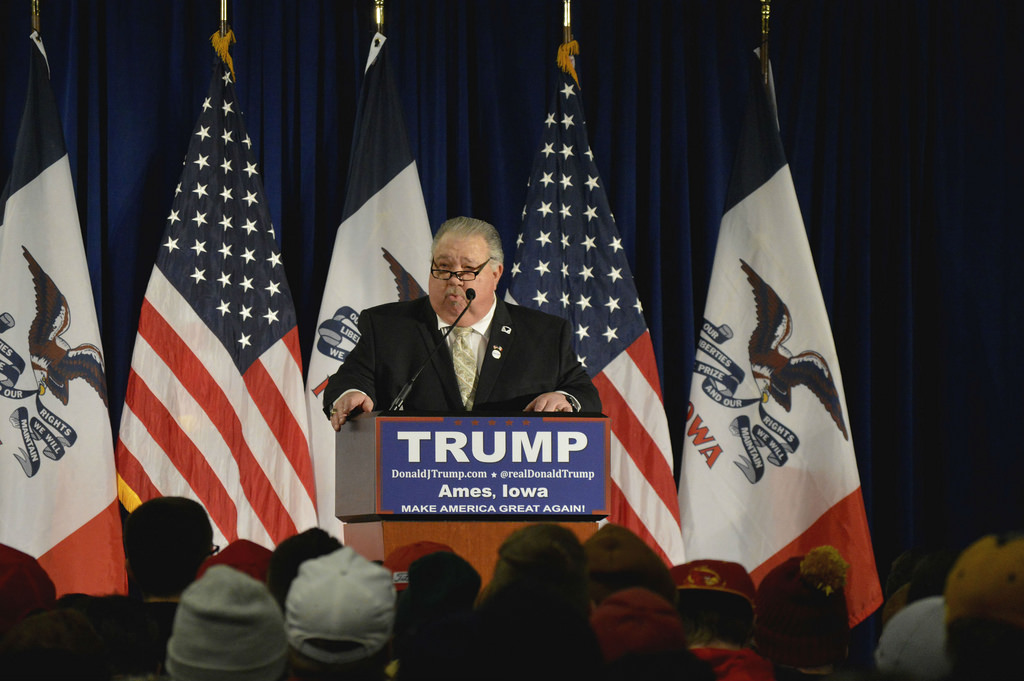
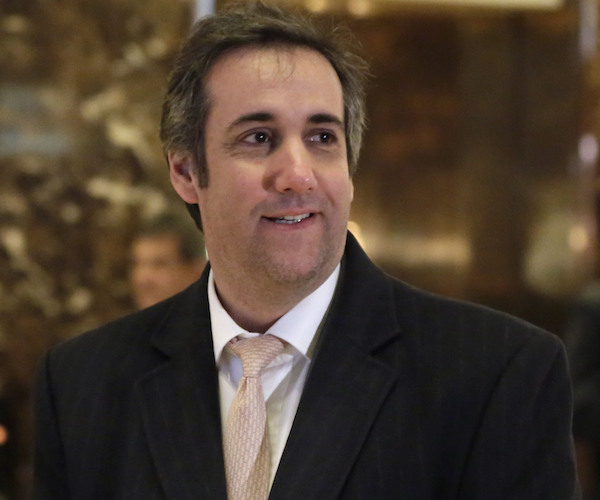
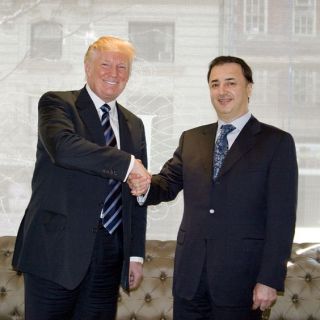
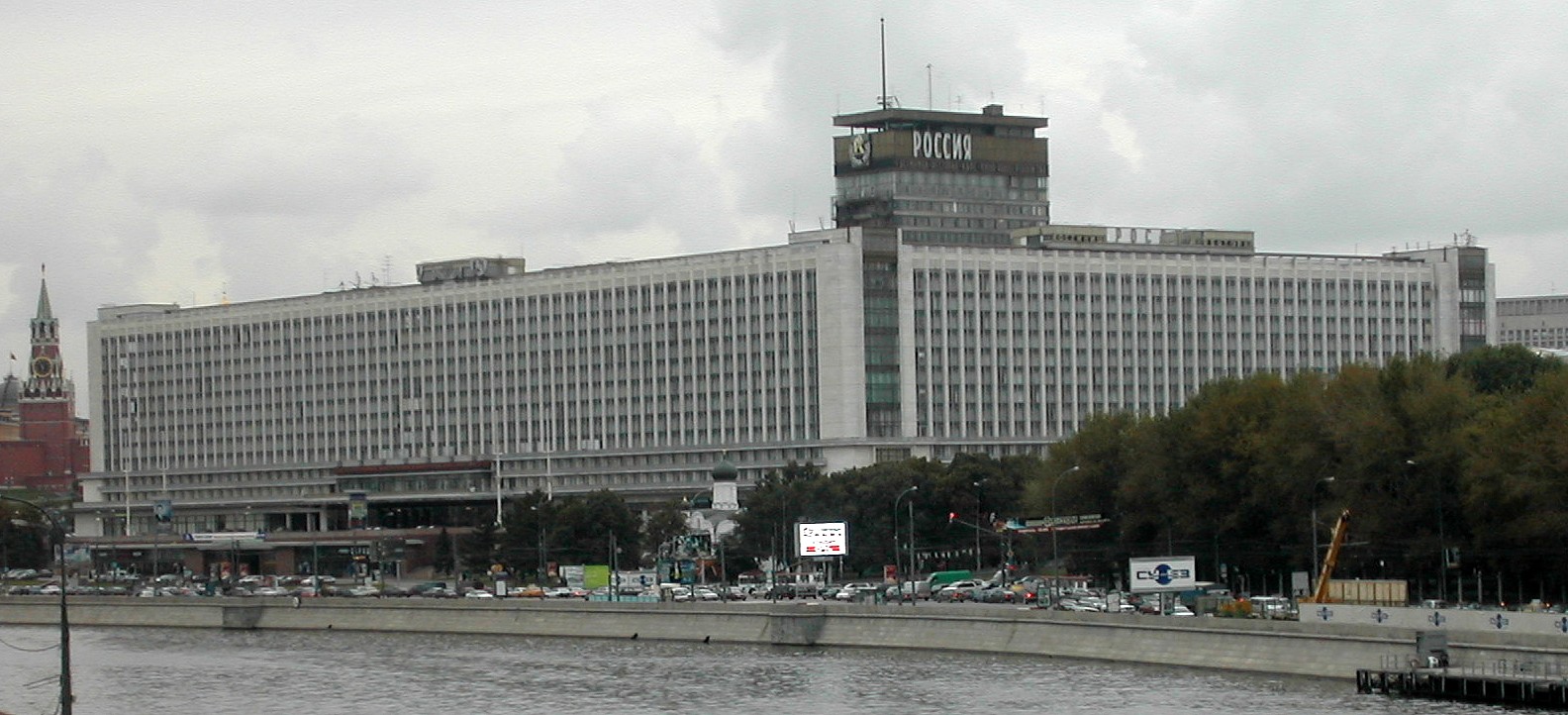

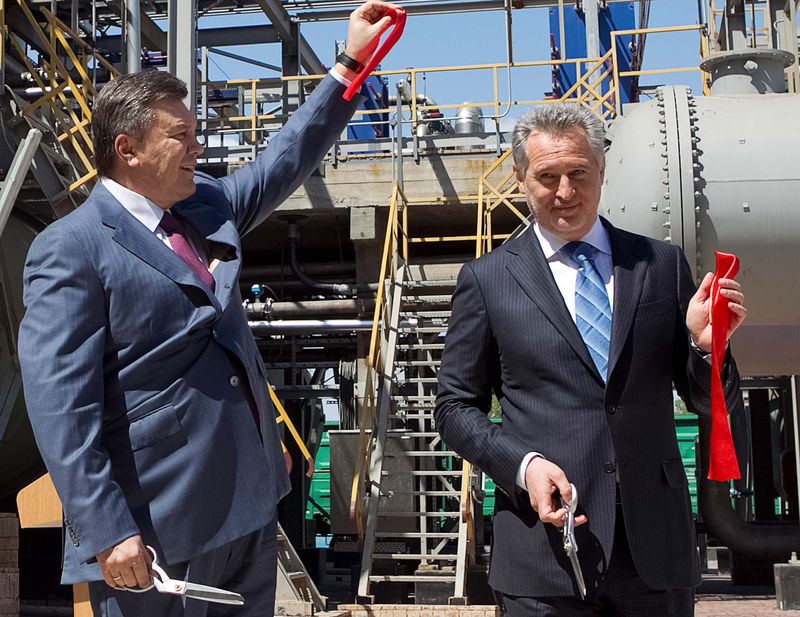
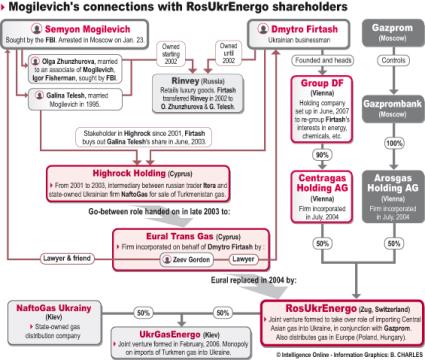
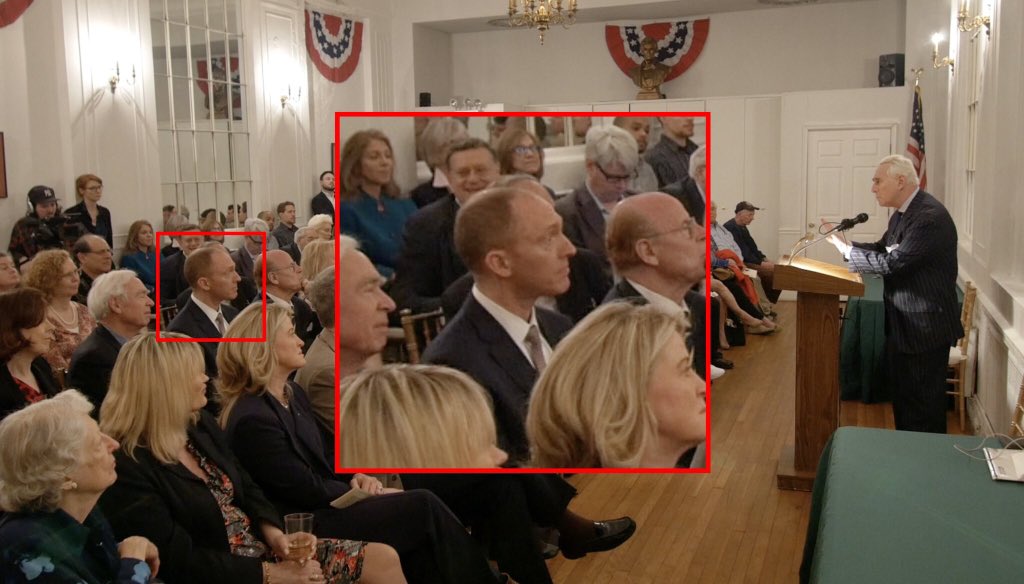
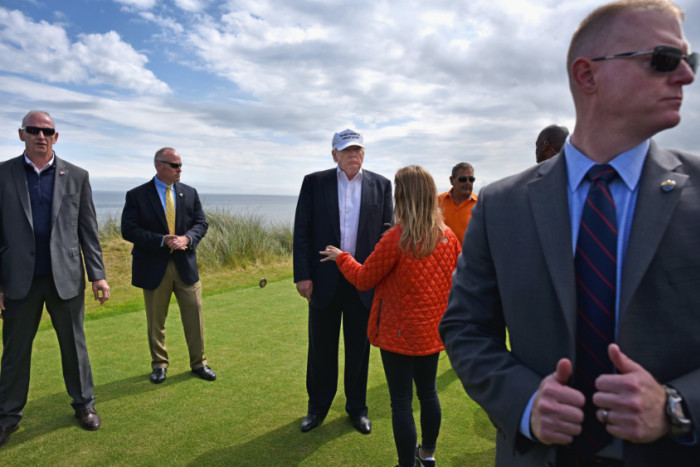
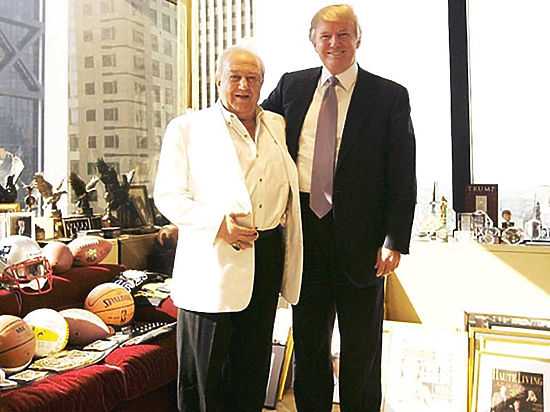
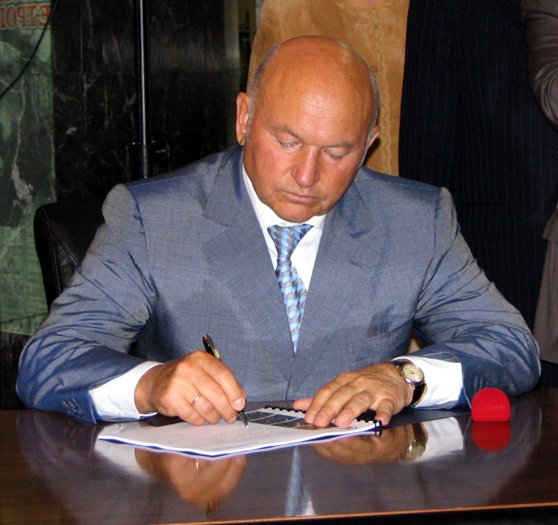

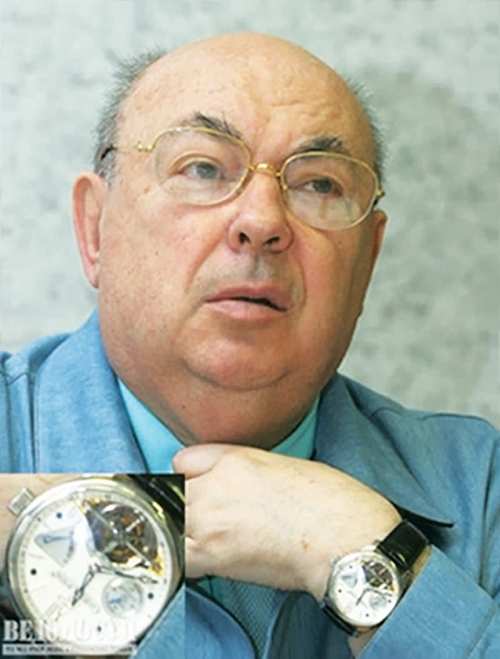
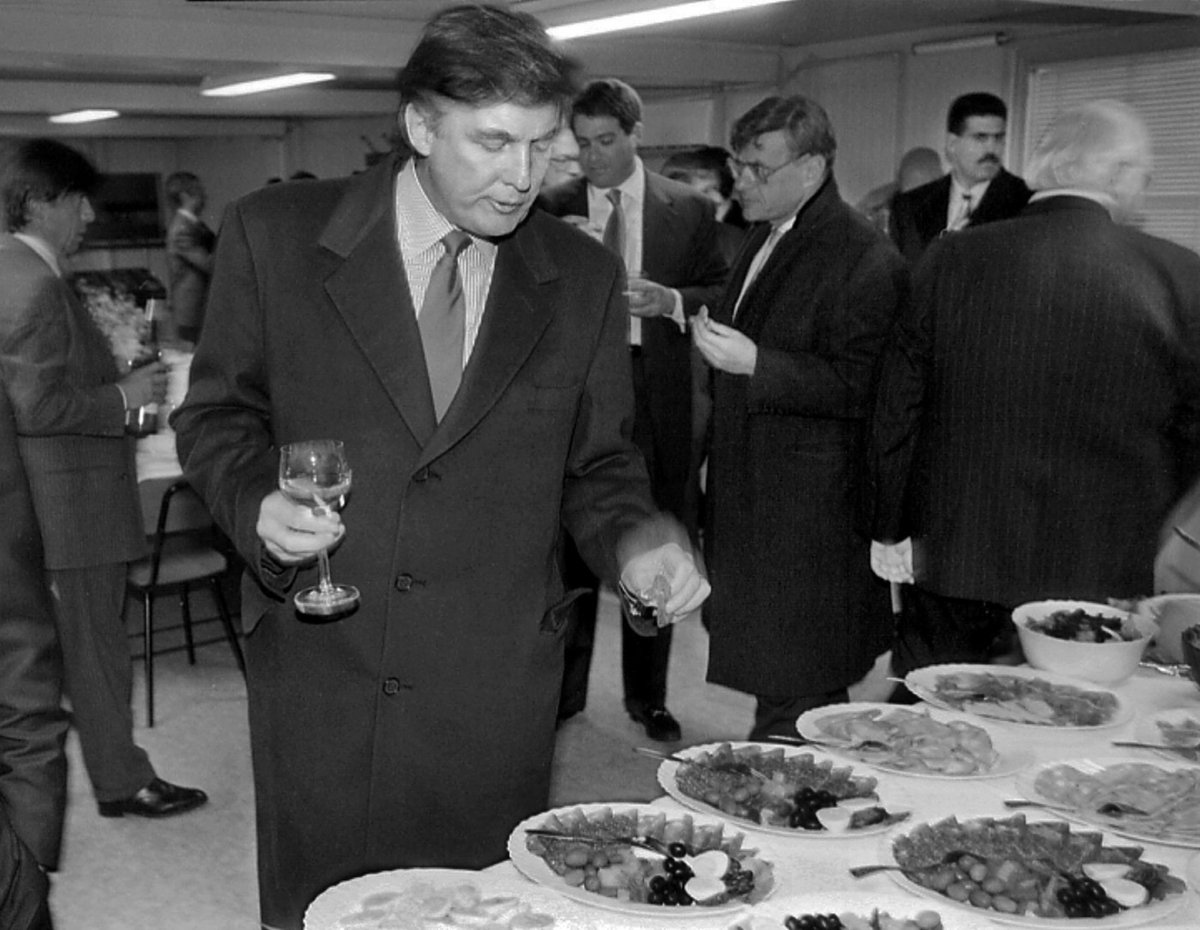
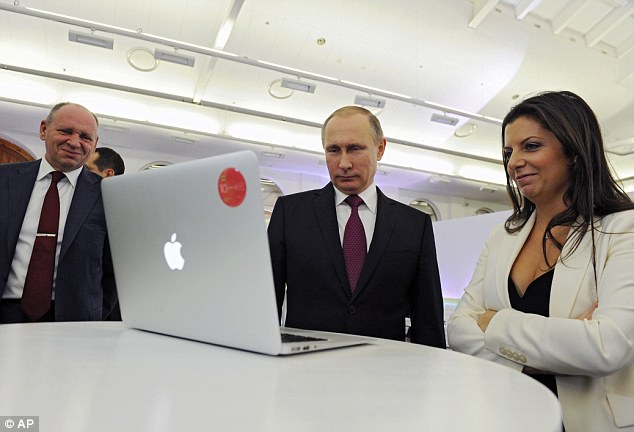
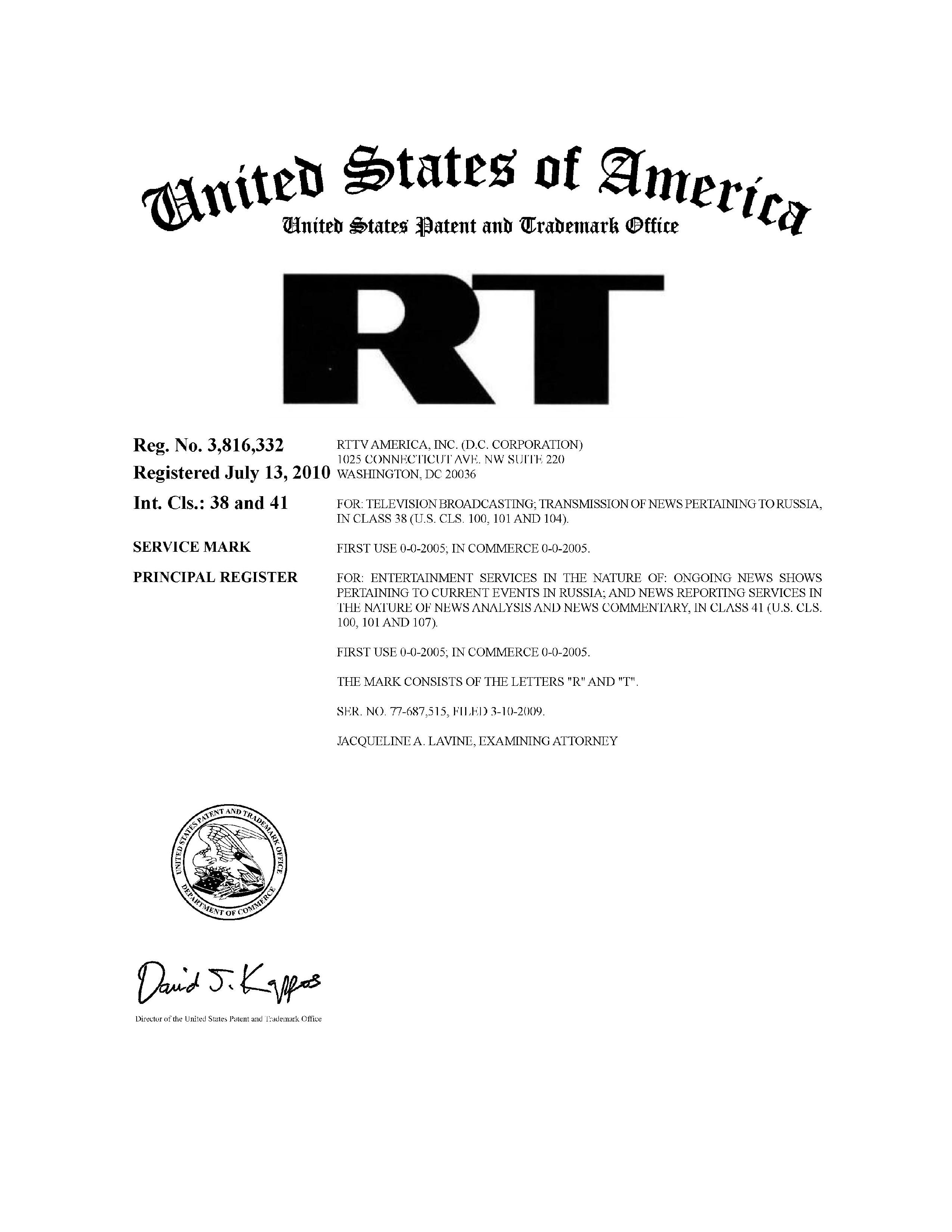
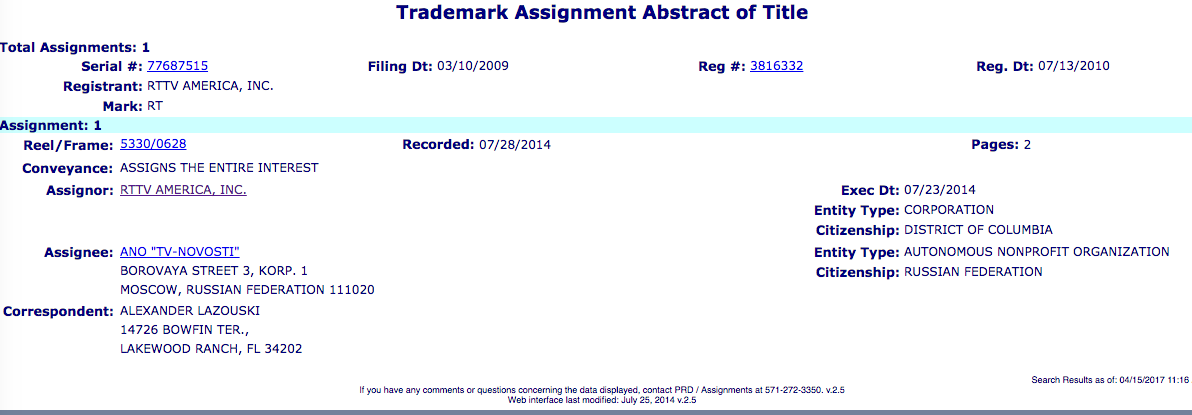


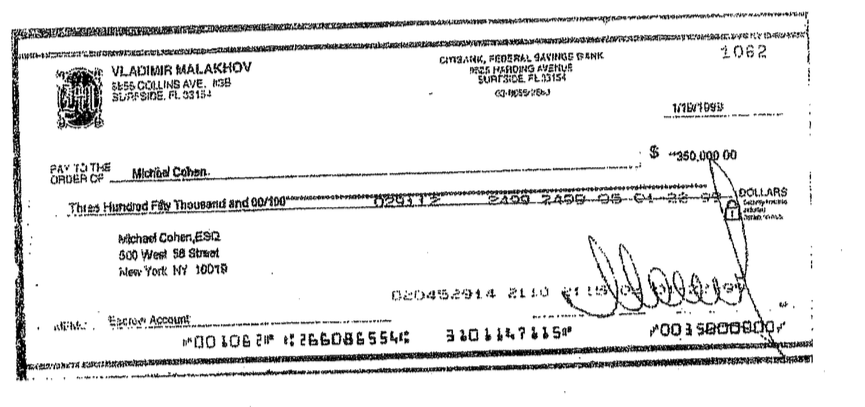
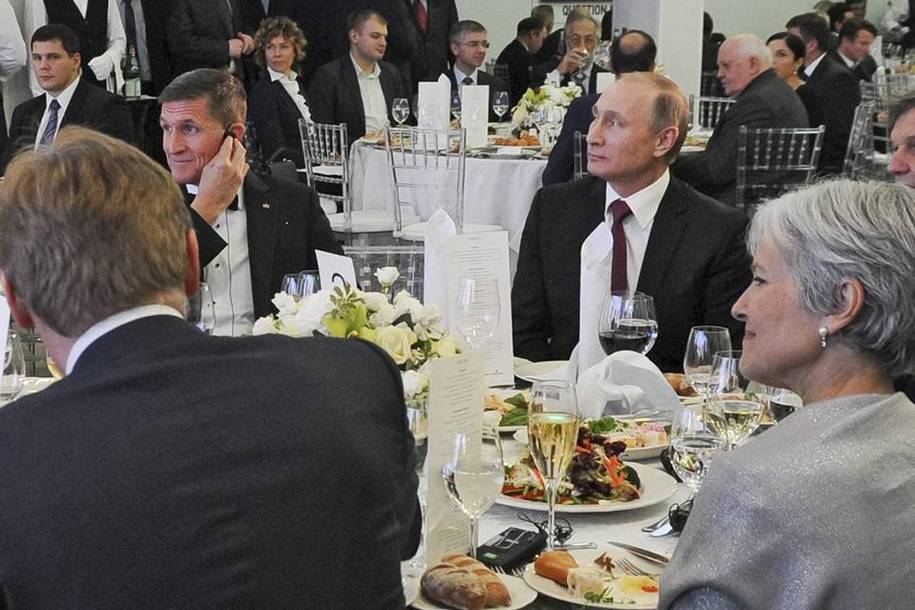

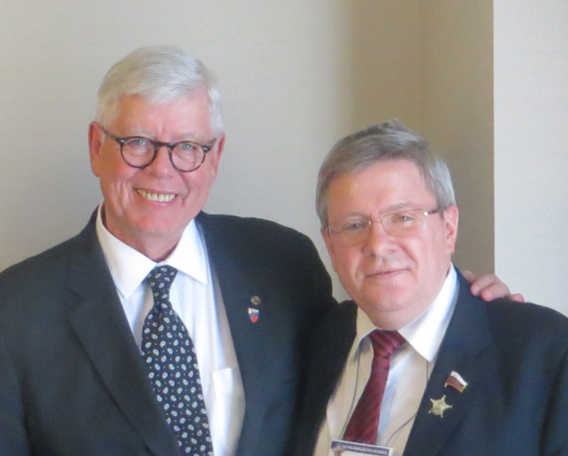
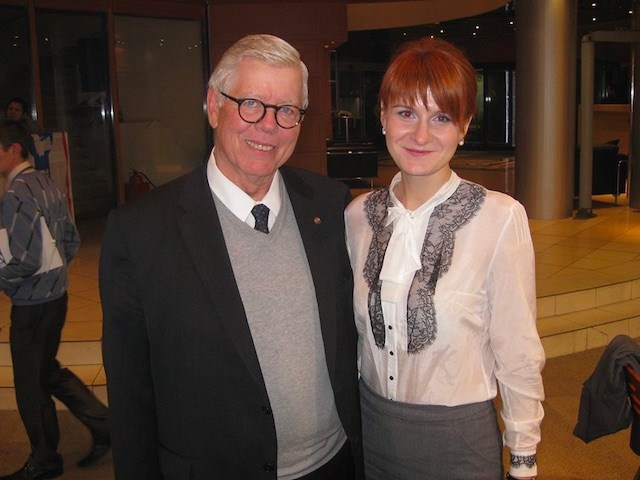
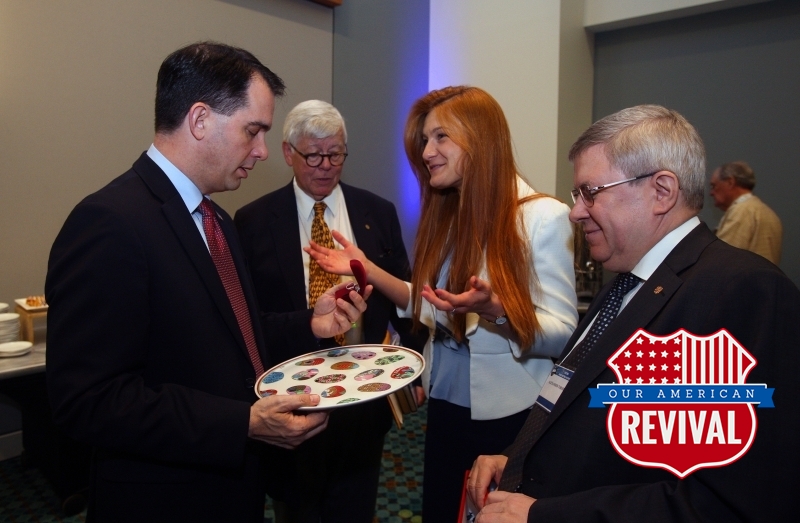
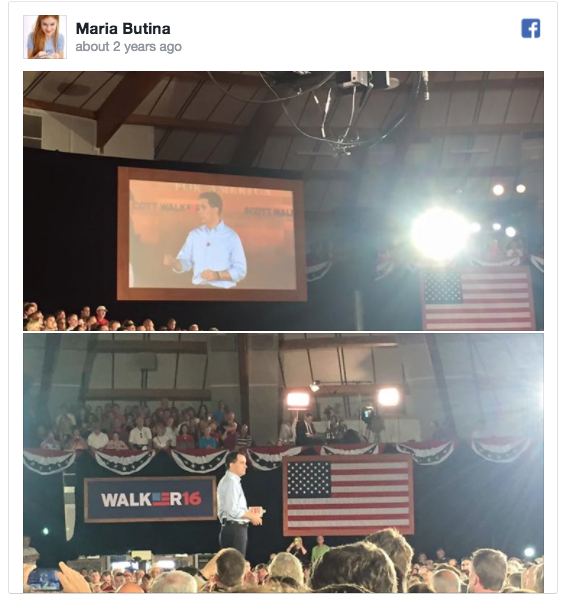
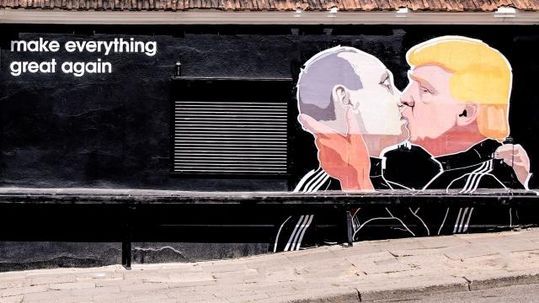
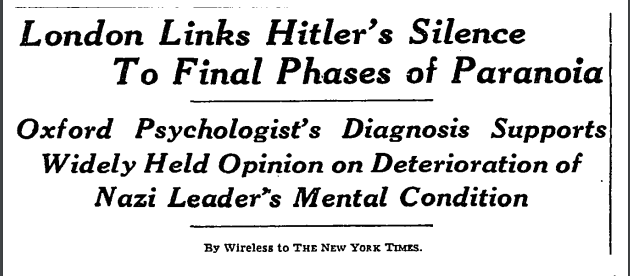

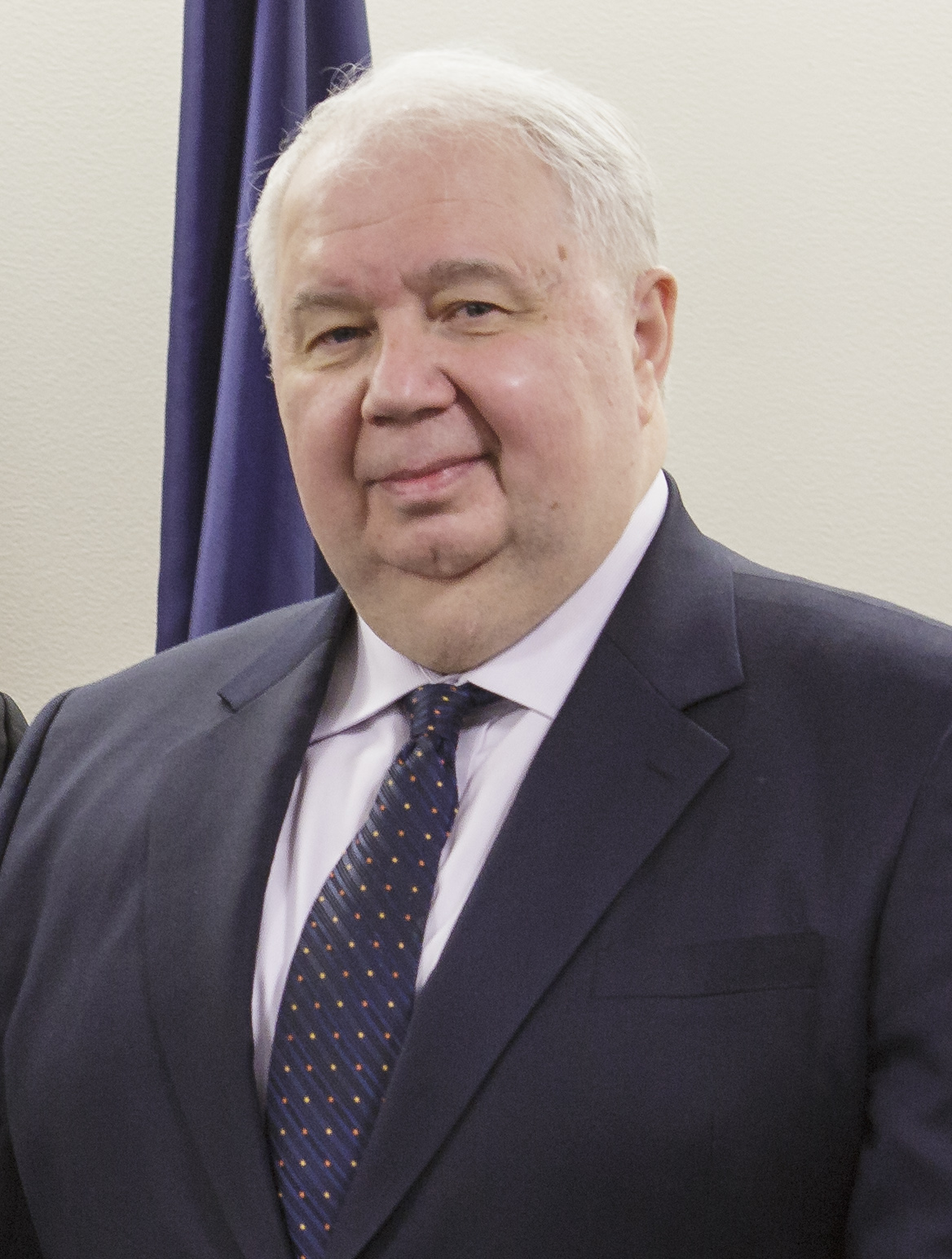
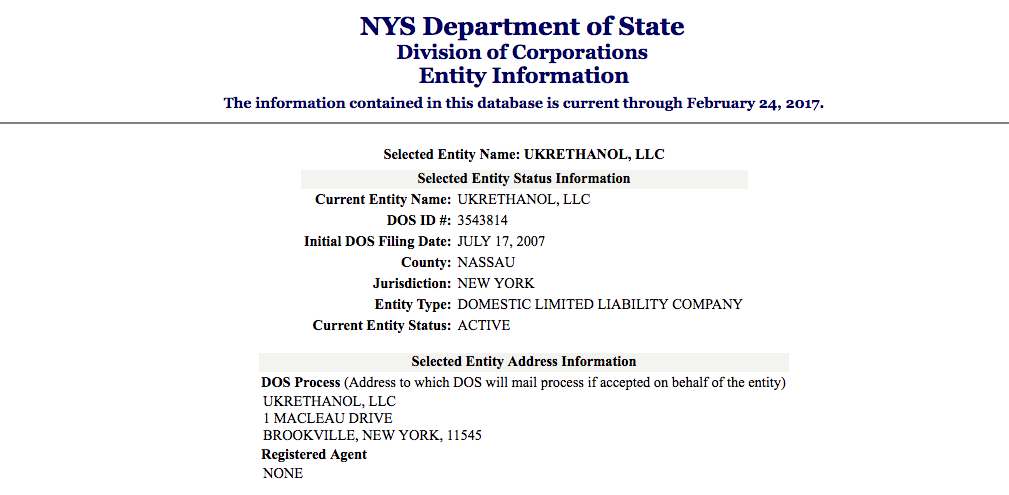 Ukrethanol LLC was founded in July 2007, just months after Michael Cohen joined the Trump Organization. Prior to that Cohen was a partner at the New York law firm of Phillips Nizer.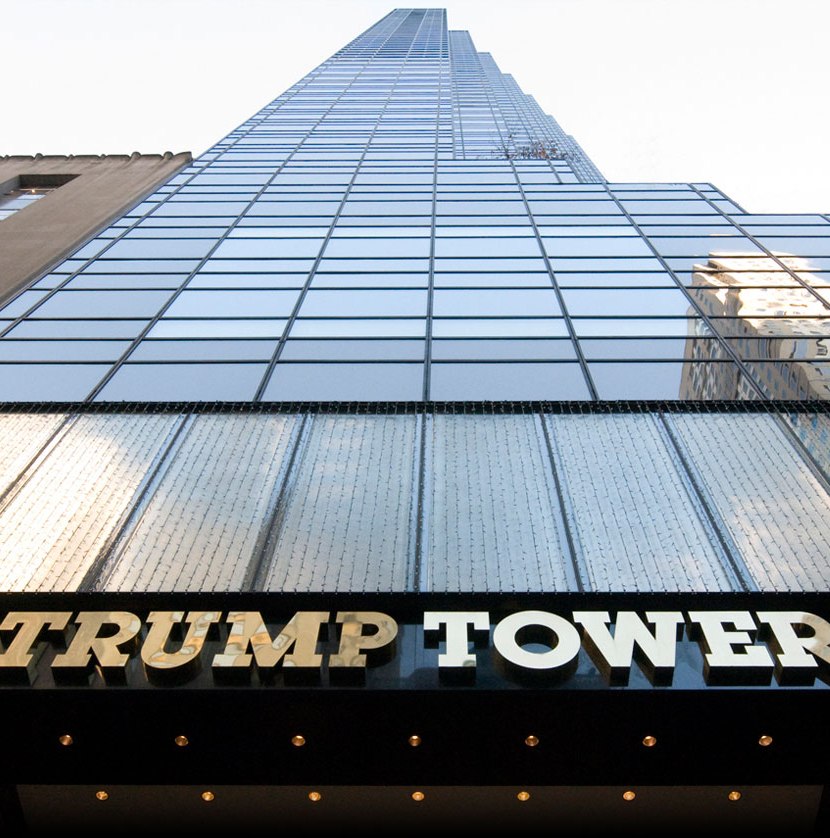
 Alexander Litvinenko, a former Russian secret service operative who became a outspoken Putin, was famously poisoned in 2006 with radioactive Polonium 210, shortly after he had publicly accused Putin of being
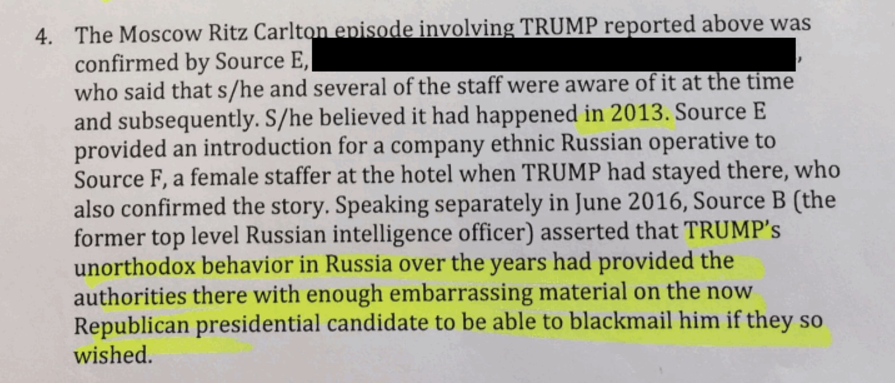 For sourcing click following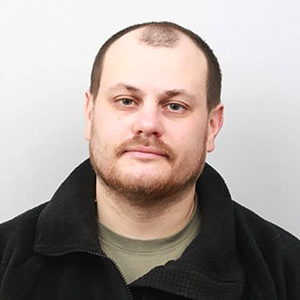
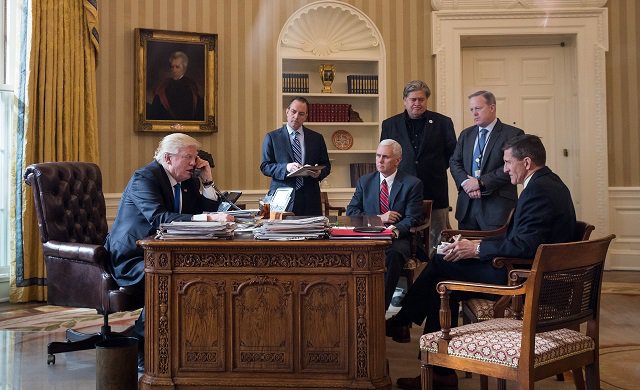
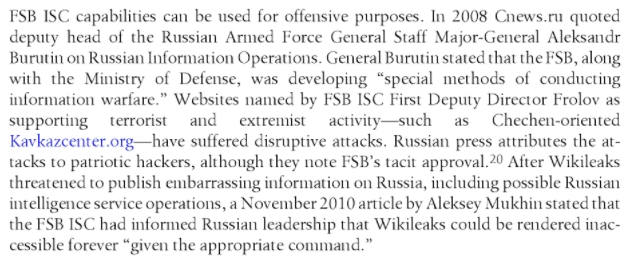


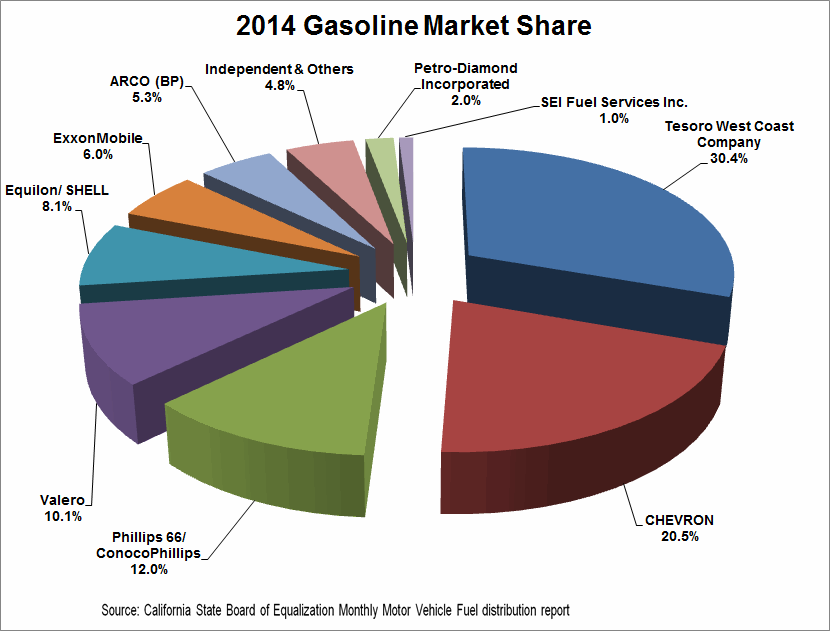
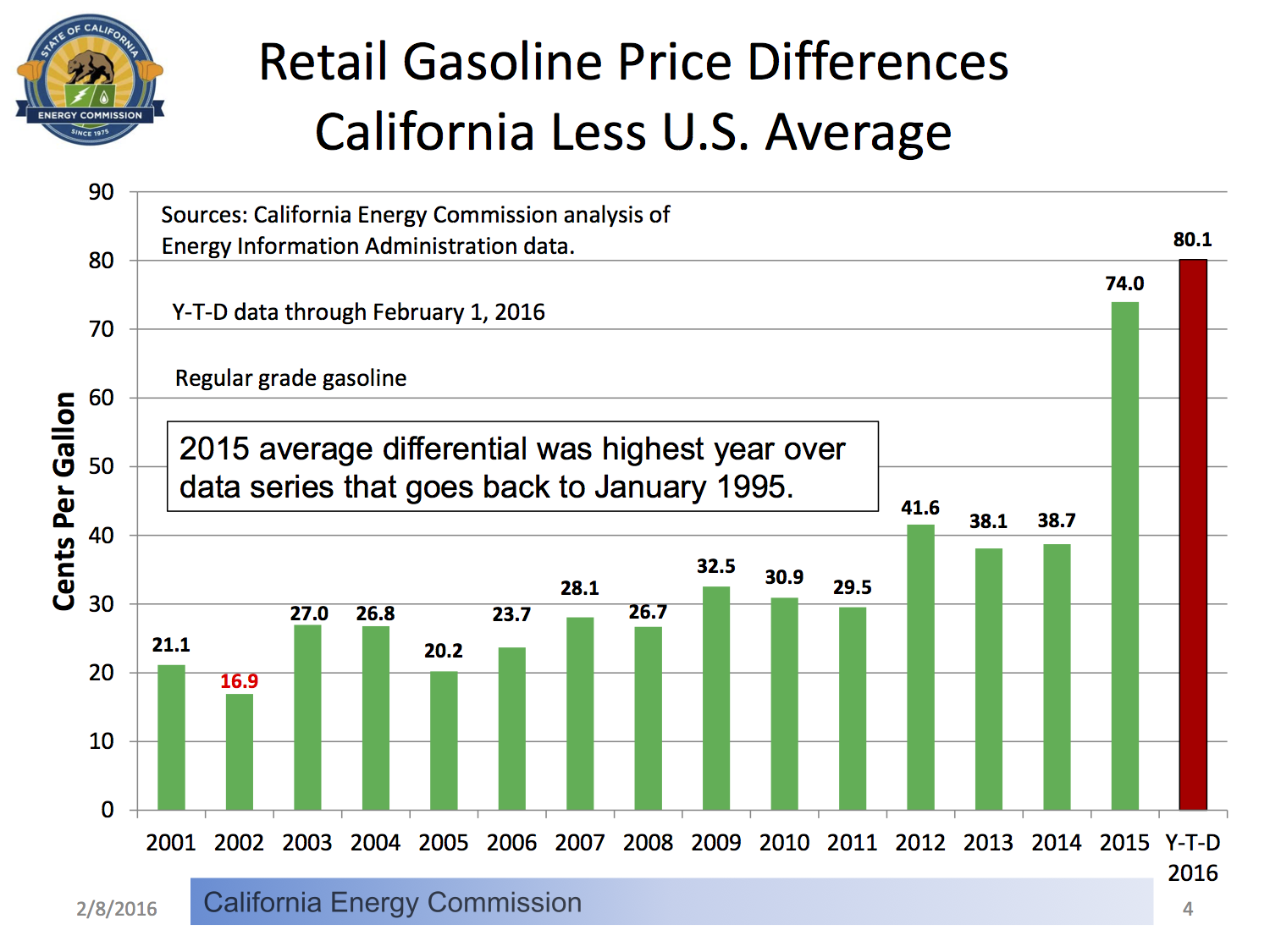
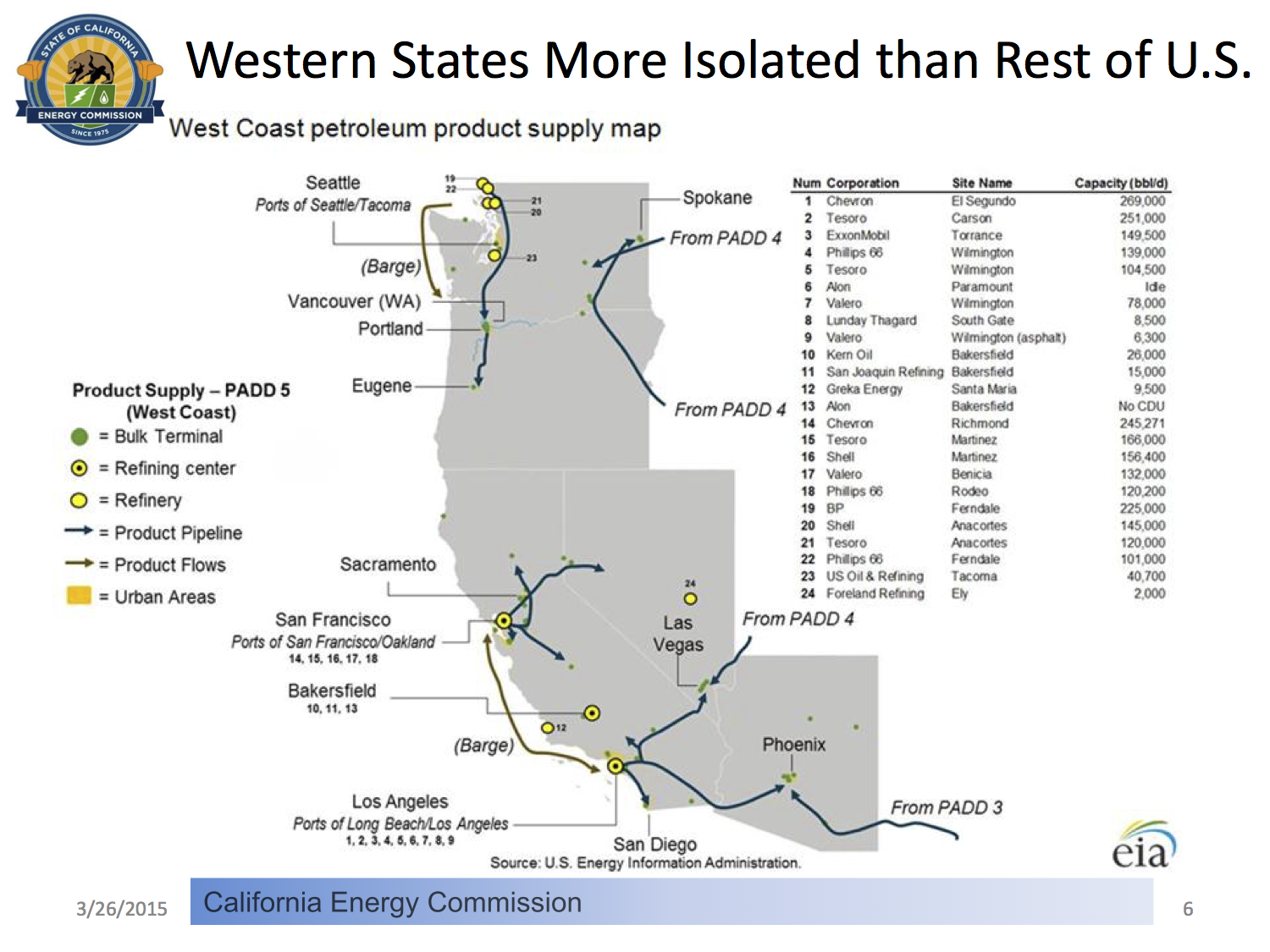

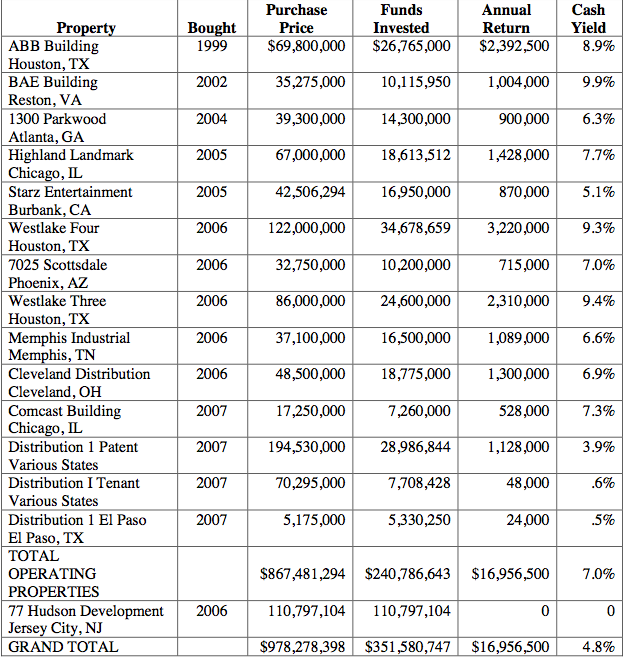
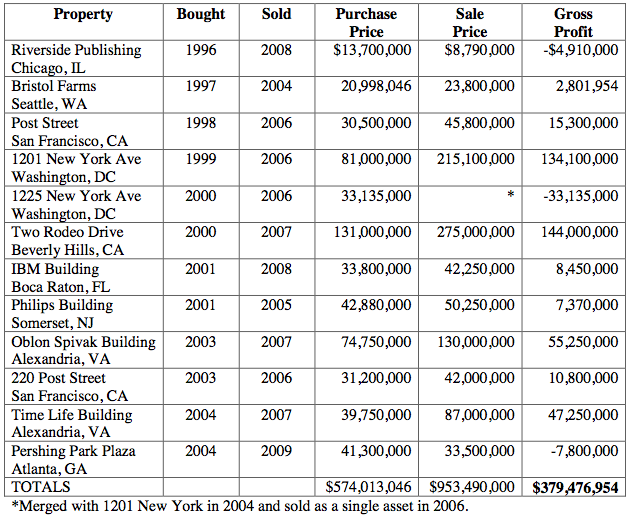



 Yes it’s true: Randy “Duke” Cunningham has written another sad, revealing jailhouse letter to the judge who sentenced him to 100 months in federal prison for low behavior in high office.

 What made Awlaki so dangerous wasn’t his so-called operational abilities, as the U.S. is now claiming, although no one is actually bothering to ask what that means. Awlaki was an intellectual, not a fighter. What made Awlaki so dangerous was his somewhat unique ability to inspire disaffected Muslims in the West to take up arms in the cause of jihad.




 One year into its new ownership under LA billionaire Tom Gores and his Platinum Equity, The San Diego Union-Tribune preparing to roll out its new re-design Tuesday.










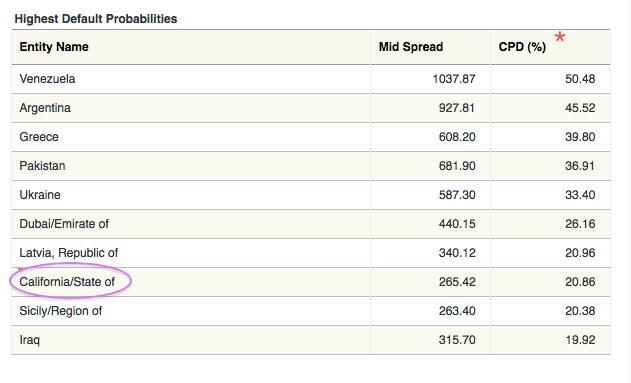
 We may never know what launched the federal investigation of Emperors Club VIP, the New York City call-girl ring. It wasn’t the sort of case that attracted the FBI, which normally wouldn’t have bothered to wiretap the sweaty, Russian-born pimp in his sixties who ran the operation with his much younger girlfriend. The bureau also wasn’t in the habit of busting johns. What is clear is that from day one, the real target of the investigation was Client No. 9, Eliot Spitzer.


 Three former directors of the nation’s customs and border patrol agency say the Senate is taking far too long to confirm Alan Bersin as commissioner.


 Several publications are reporting the passing of a former Russian intelligence officer named Anton Surikov, who died at the age of 48.


 Sales of our M&P 15 rifles were $8,654,385 for the three months ended October 31, 2008, a $6,534,882, or 308.3%, increase over the three months ended October 31, 2007. M&P 15 sales were helped by a consumer promotion as well as what appears to have been speculation on the outcome of the presidential election. On the law enforcement side, 204 police and security agencies to date have either selected the M&P 15 or approved the M&P 15 for on-duty use. The backlog for tactical rifles was $5,988,418 at October 31, 2008. (emphasis added)
 From the