
Category: Uncategorized
Where are the sanctions on Putin’s Children?
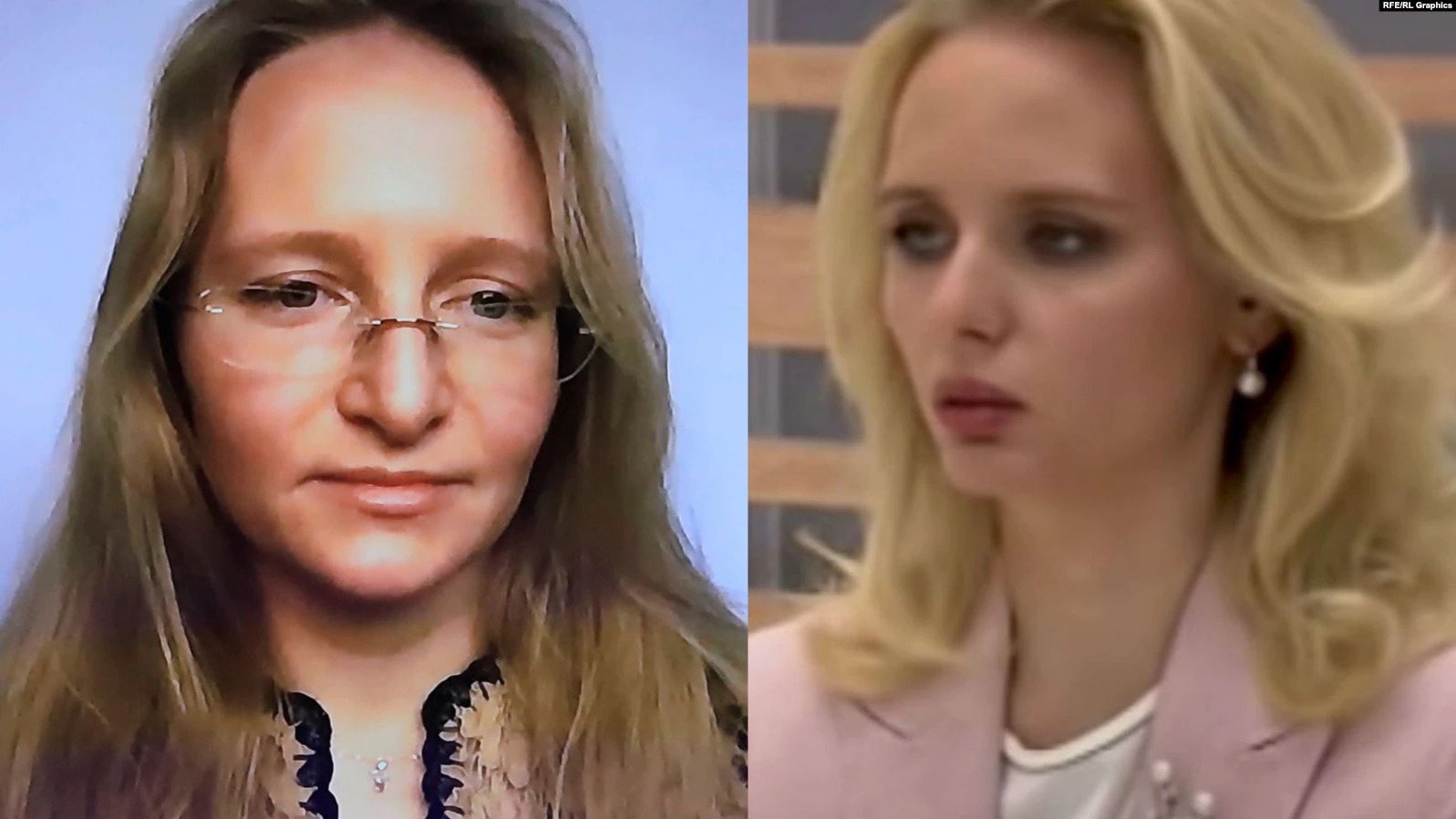
This post has been updated to reflect that neither Putin nor his daughters are listed as partners of a company that owns a Biarritz home where Igor Stravinsky once lived.
The Biden administration is going after the children of Russia’s oligarchs.
Among those sanctioned in recent days were the wealthy sons of Putin’s former judo sparring partner; the son of the Kremlin chief of staff; and the brother and sister whose dad runs the Kremlin-backed Wagner mercenary group.
“The aid of these individuals, their family members, and other key elites allows President Vladimir Putin to continue to wage the ongoing, unprovoked invasion of Ukraine,” the White House said.
But one pair of names is absent from the list: Katerina Tikhonova and Maria Vorontsova. These are the adult daughters of Vladimir Putin.
If the Biden administration is going after the children of the oligarchs, aren’t the children of Putin fair game?
Putin has always been extremely protective of his daughters. “I never discuss my family with anyone,” Putin said in 2015. It’s taken years just to learn the most basic facts about them.
Katerina, a dancer-turned-mathematician, and Maria, a pediatric endocrinologist, have stayed out of the spotlight and taken on different surnames to obscure their connection to the most powerful man in Russia. At the same time, they have reaped the benefits of the corrupt system that keeps their father in power.
Katerina and her former husband, Kirill Shamalov, amassed a corporate portfolio reportedly worth $2 billion before their divorce in 2018. (Shamalov was sanctioned by the US Treasury in 2018; the UK sanctioned him February 24.)
An investigation by Alexei Navalny’s Anti-Corruption Foundation found Katerina headed a foundation that developed lands owned by Moscow State University. Her foundation, Innopraktika, collected $7.8 million from Russian-state owned companies and $7.3 million from unknown sources in 2015-2016.

Her older sister Maria also lived a life of luxury. Photos on social media showed her traveling the world, riding on expensive yachts, and hiring teachers abroad, according to an investigation by the Russian publication New Times.
Maria married a Dutch citizen named Jorrit Faassen, who worked at subsidiary of Gazprom. In 2010, while driving in Moscow, Faassen got into a confrontation with bodyguards of a Russian banker. Seven bodyguards forced Faassen’s BMW to stop, beat him with baseball bats, and damaged his car. The banker, Matvey Urin, had fucked with the wrong person. Faassen, described in media reports as a Putin family friend, remembered the license plate numbers of the bodyguards that attacked him. The next day, police arrested the businessman and the bodyguards. Weapons and drugs were found in their vehicles. Urin was sentenced to prison and his banks went out of business.
There are rumors that Putin had a “secret” third daughter with a cleaning woman-turned-multimillionaire, but Putin has never acknowledged the girl as his child.
Sanctioning the daughters would put Putin family assets in the West under the reach of sanctions.
One place to go looking for Putin’s assets in the West is in the French town of Biarritz, 15 miles up the coast from the Spanish border. This seaside resort town holds a special place in the hearts of the Putin family. In the summer of 1999, Putin was vacationing in Biarritz with his wife and daughters when he learned that President Yeltsin had anointed him as his chosen successor.
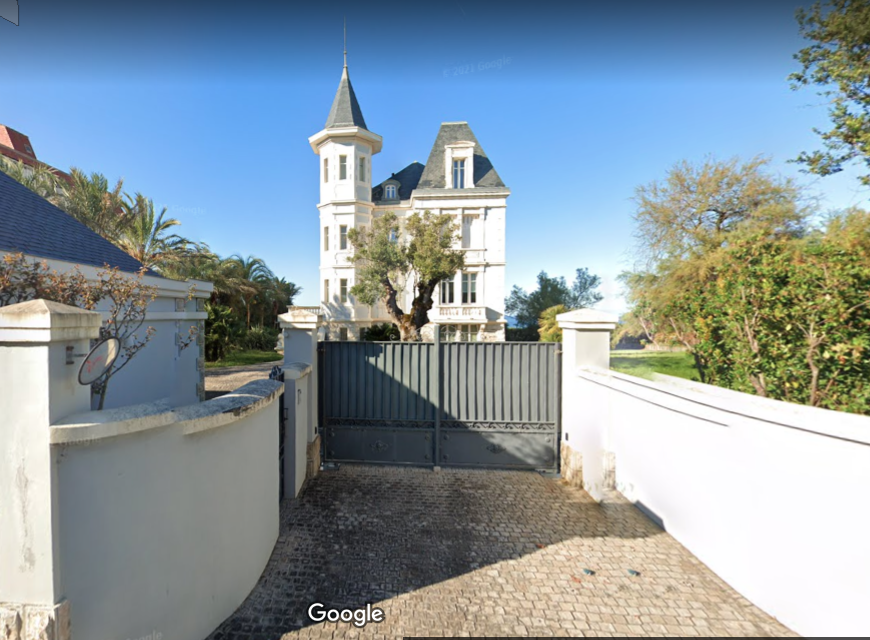
According to a report published February 26 by the French radio station Europe 1, Putin purchased a home on Rue de la Fregate in Biarritz where the Russian composer Igor Stravinsky once lived. Putin reportedly paid around $400,000 for the home in 1996, at which time he worked in the St. Petersburg mayor’s office on a pittance salary. The radio station says the French secret services confirmed the report. Europe 1 says the property is held in the name of one of Putin’s daughters.
Update: I spoke with Michael Anthony, who is listed as an officer of SCI Chalet les Rochers, the French company that controls the property on Rue de la Fregate. Anthony heads Anthony & Cie, a private wealth management advisory firm in France that serves ultra-wealthy clients. Anthony checked his records and tells me that neither Putin nor his daughters are partners of SCI Chalet les Rochers. He declined to name the listed partner(s), citing client confidentiality.
Katerina and her ex-husband, Kirill Shamalov, owned a different home in Biarritz. The seaside house was acquired for 4.5 million Euros in 2012 from one of Putin’s old friends, Gennady Timchenko. It’s not clear who owns the house on Avenue du General MacCroskey today. The French company that owns the house is in turn owned by a Monaco company, SCP Alta Maria, whose beneficiaries cannot be revealed, even on request.
Lyudmila Putin, Katerina’s and Maria’s mother, also spends time in Biarritz. Lyudmila was married to Putin for three decades before they divorced in 2013.
Putin’s ex-wife has come almost every year to Biarritz to “take the waters,” both before and after her divorce, Alexandre de Miller de La Cerda, Russia’s honorary consul in Biarritz, told TIME. “She stops either at the Miramar” – one of the town’s most luxurious hotels – “or in the house that belongs to our mutual friend from Putin’s St. Petersburg circle.”
Lyudmila acquired a $7.46 million home in Anglet, next to Biarritz, six months after divorcing Putin, OCCRP reported. The Anglet home is in the name of her second husband, a St. Petersburg businessman almost 20 years her junior. In recent days, the gate of the Anglet home was marred with graffiti reading ‘Putin suka!’ (a vulgar insult in Russian), ‘Putin’s mafia’ or ‘Slava Ukraíne’ (Glory to Ukraine).
Meanwhile, the US Treasury keeps noting how the Russians it is sanctioning are close to Putin’s daughters. Kirill Dimitriev, the head of Russia’s sovereign wealth fund who was sanctioned last week is close to Katerina and her ex-husband, the US Treasury noted in its release. It’s clear that being close to Putin’s daughters is part of being in the inner, inner Kremlin circle.
So why sanction the oligarchs’ children, and not Putin’s daughters? Is the US worried that it will be too much of a provocation for an already unstable man?
A Tale of Two Oligarchs
This was a bad week for the Russian oligarch Alisher Usmanov.
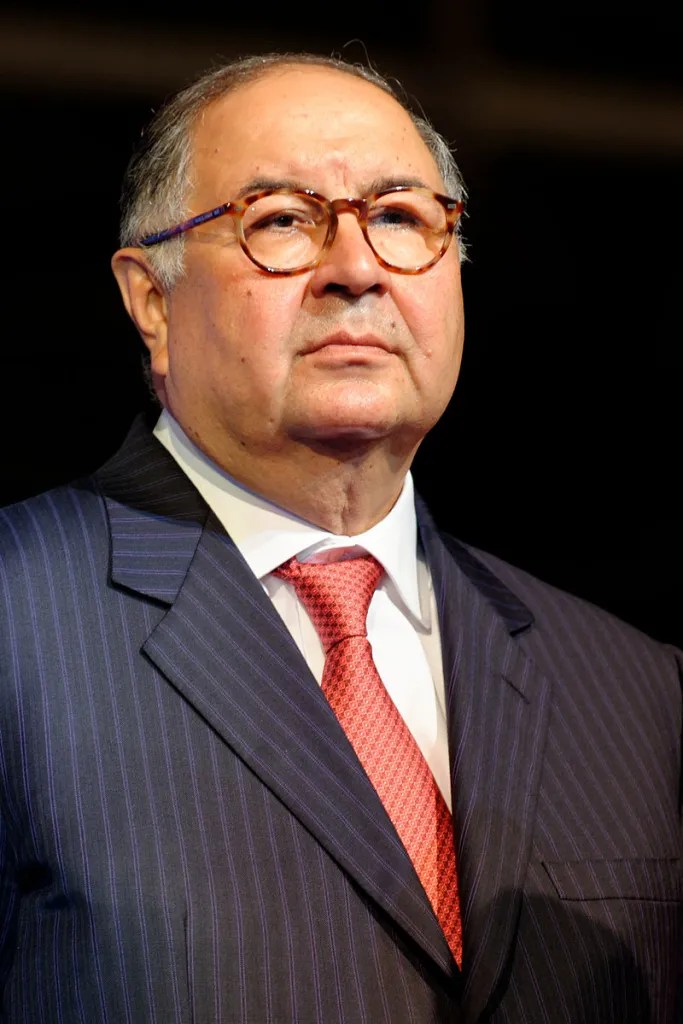
First, Usmanov had his $600 million yacht, the Dilbar, seized by German authorities. Now, Usmanov, a reputed gangster and early Facebook investor, will have to say goodbye to his luxurious English properties after the UK joined the Americans and the European Union in sanctioning him. He will also have to give up his years-long quest to own a British football club. Usmanov ended the week on the sanctions lists of the US, UK, and the European Union.
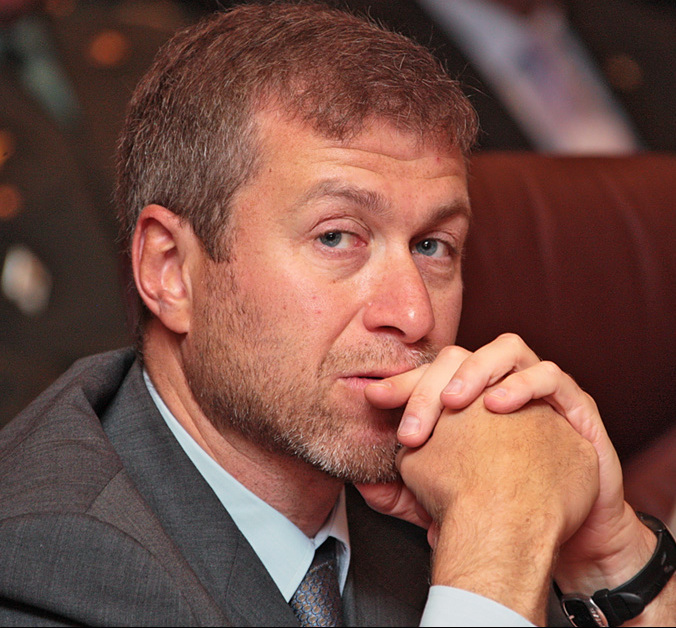
It was a different story his fellow oligarch Roman Abramovich, who shares Usmanov’s taste for megayachts and storied English football franchises. Abramovich has somehow managed to avoid any sanctions at all.
Abramovich describes himself “a successful Israeli-Russian entrepreneur and businessman.” Alexei Navalny, the jailed Russian opposition leader, puts him at the top of the list of 35 kleptocrats and human rights abusers primarily responsible for looting the Russian state and repressing human rights.
“It is a mystery to me why Roman Abramovich has not yet been sanctioned,” remarked British MP Chris Bryant, who has been bringing this issue up every chance he gets. Bryant told the House of Commons that Abramovich “is terrified of being sanctioned.” Rumors are swirling that Abramovich is selling the 15-bedroom mansion in London’s Kensington Palace Gardens he bought for £90m in 2009.
Bryant read earlier from a leaked Home Office document from 2019:
“As part of [Her Majesty’s Government]’s Russia strategy aimed at targeting illicit finance and malign activity, Abramovich remains of interest to HMG due to his links to the Russian state and his public association with corrupt activity and practices. An example of this is Abramovich admitting in court proceedings that he paid for political influence. Therefore, HMG is focused on ensuring individuals linked to illicit finance and malign activity are unable to base themselves in the UK and will use the relevant tools at its disposal (including immigration powers) to prevent this.”
UK Prime Minister Boris Johnson slipped up last month when he told Parliament that Abramovich “is already facing sanctions.” He later said he “misspoke.”
Abramovich earned his massive fortune by acquiring Russian state resources at bargain-basement prices during the vicious “aluminum wars” of the Yeltsin era. He and his partners acquired a majority stake in the oil giant SIbneft in 1995 for $100 million. Abramovich sold Sibneft a decade later to the state-owned gas giant Gazprom for $13 billion in cash. He also acquired a 50 percent stake in the aluminum giant Rusal, which he sold to Oleg Deripaska.
In court papers filed in London, Abramovich admitted agreeing to pay billions of dollars for political favors and protection fees to obtain his stakes in the former Soviet Union’s mineral wealth, the Times of London reported.
Abramovich insists he’s not, as he has been described, “Putin’s cashier.” Journalist Catherine Belton wrote in her indispensable book, Putin’s People, that Putin directed Abramovich to buy England’s Chelsea football club in 2003 for $240 million to build a beachhead into British society. That earned Belton a libel lawsuit from Abramovich. (The case was settled after the book’s publisher agreed to amend the text to include the oligarch’s denials and make clear that the claim that the oligarch bought Chelsea on Putin’s orders was not a statement of fact.) Abramovich announced this week that he will be selling Chelsea FC.
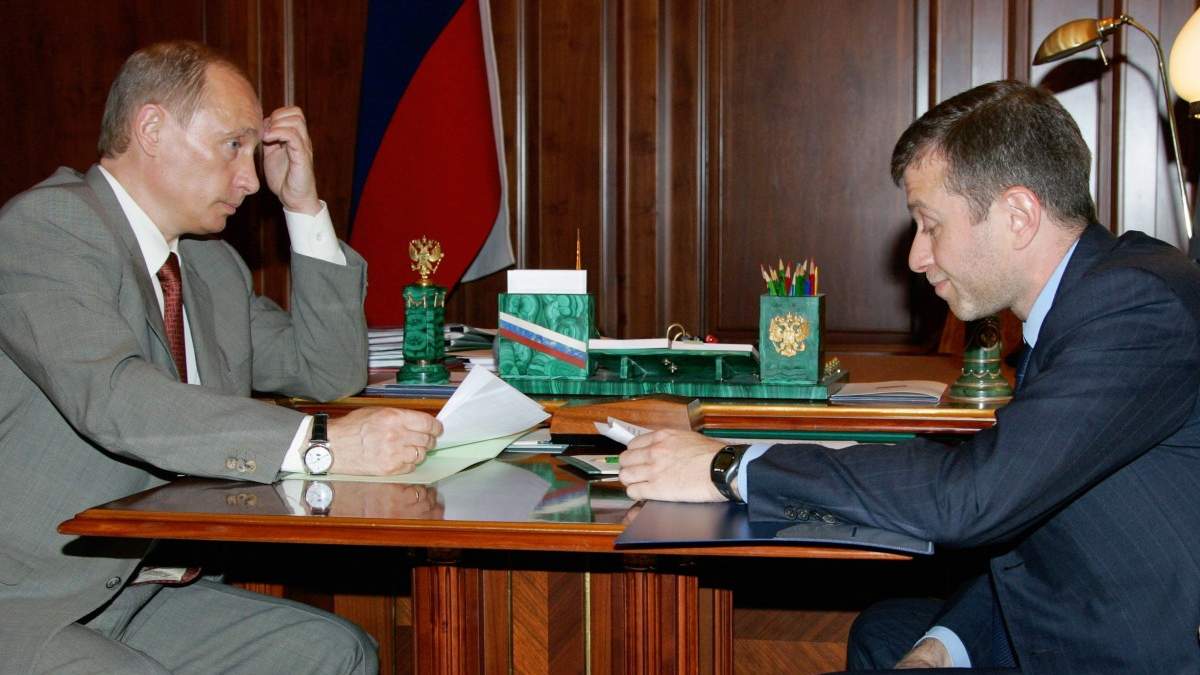
The UK has always been slow to take action against Russian oligarchs. But there’s no sense of urgency in the United States either to sanction such a tempting target.
President Biden, in his State of the Union address Tuesday, warned oligarchs that America was coming for their ill-gotten gains. “We are joining with our European allies to find and seize your yachts your luxury apartments your private jets,” Biden said.
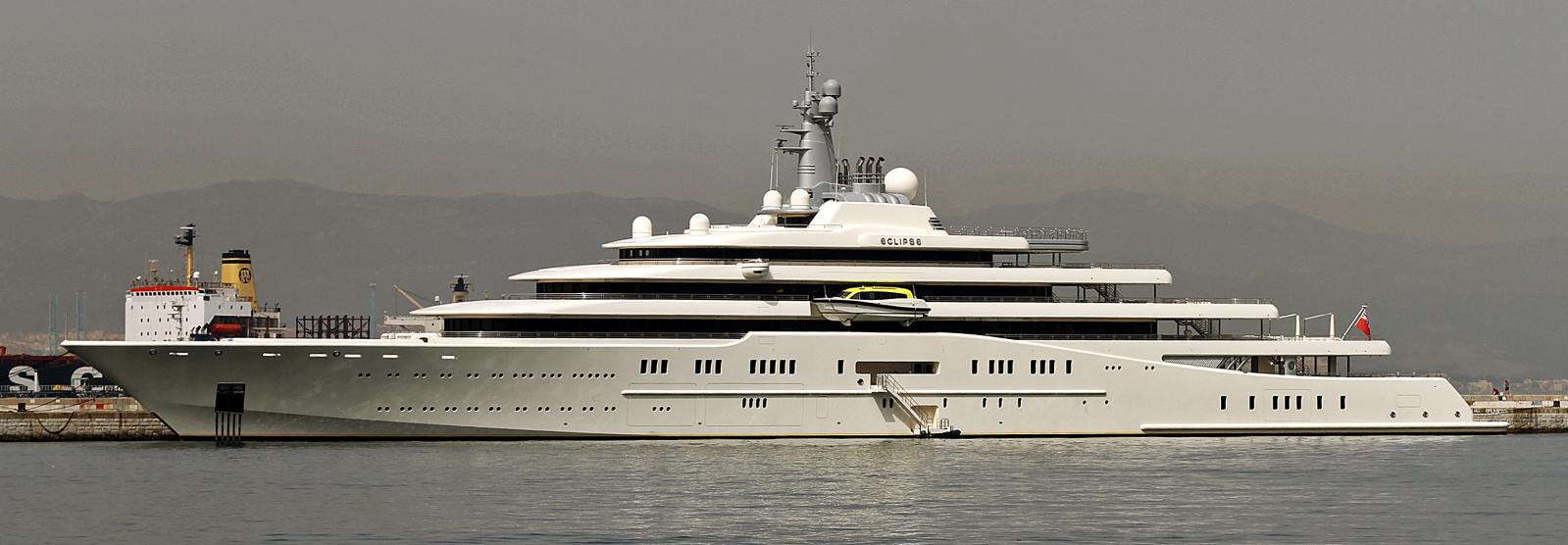
Abramovich owns a fleet of yachts, including the $500 million Eclipse, one of the world’s biggest. The Eclipse has two helicopter pads, 24 guest cabins, two swimming pools, and a disco hall. It also features a German-built missile defense system, which has led to speculation that the yacht really belongs to Putin. But as I write this, the Eclipse is sailing the Caribbean unmolested.
Abramovich also owns a fleet of private plans. His Boeing 787 Dreamliner is in Dubai today.
Nothing is stopping Abramovich from flying to New York where he is combing three adjacent buildings to build the biggest single-family home in Manhattan. Or he can head to Colorado where he owns nearly $50 million worth of properties around Aspen. He has an 11-bedroom house on 200 acres of land in Snowmass purchased in 2008 for $36.375 million, according to property records. Abramovich also purchased a 5,492-square-foot ski-in, ski-out house on 1.8 acres of land in Snowmass Village for $11.8 million.
Wherever he goes, Abramovich smartly gives to charities to buy goodwill. If you stroll past the Jewish Community Center in Aspen, you’ll see Abramovich’s name proudly displayed on the front of the sandstone facade. Israel’s Channel 12 reported that, before Russia invaded Ukraine, the chairman of the Yad Vashem Holocaust Memorial Museum, the Ashkenazi chief rabbi of Israel, and representatives of several other major Israeli organizations and charities appealed to the US ambassador to Israel, urging Washington not to impose sanctions on Abramovich. In late February, Yad Vashem, Israel’s Holocaust authority, announced a donation from Abramovich, said to be in the eight figures. This may be why the sanctions on Abramovich have been slow in coming.
I understand why Israeli charities want to protect a major source of funds. But as the investors now holding worthless shares of Sberbank know all too well, corrupt money should never be trusted.
My four-year effort to find out why Donald Trump’s name was in the FBI file of a Russian Mobster
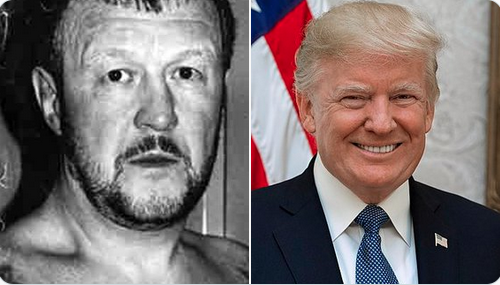
In 2017, while I was writing my book Trump/Russia, I put in a Freedom of Information request for the FBI file of a deceased Russian mobster. I foolishly thought I might be able to get a response in time to include it in my book.
Instead, it turned out to be the start of a four-year odyssey that drew to a close recently.
My FOIA request, which became a FOIA lawsuit, boiled down to a simple question: What was Donald Trump’s name doing in the file of a Russian gangster?
A few weeks ago, a federal judge declined my request to force the FBI to release 150 pages that might have shed some light on that.
The end result will do little to clarify the ongoing debate over Trump and Russia. The Russiagate deniers can continue to claim, correctly, there was no proof of any conspiracy, while those who believe that Trump successfully covered up his ties to Russia remain equally correct when they say we still don’t have all the answers.
Some of those answers may have been in the FBI file I was seeking. It belonged to Vyacheslav Kirillovich Ivankov, a top Russian mobster or vor y zakone (“thief who follows the code”), who arrived in America in 1992. He was arrested three years later and was sentenced to prison for conspiring to extort $3.5 million from two Russian emigres who ran an investment advisory in Manhattan. Ivankov served nine years. Upon release, he was deported to Russia where he was later assassinated.
While researching my book, I learned that during his time in New York, Ivankov kept popping up in Trump’s properties. First, sources told me that agents tracked him to Trump Tower. Next, he turned up at Trump’s new casino, the Taj Mahal.
Upon his arrest, FBI agents seized Ivankov’s phone book. According to author Robert I Friedman, who obtained a copy of Ivankov’s phone book, it included a working number for the Trump Organization’s Trump Tower Residence, and a Trump Organization office fax machine.
In response to my initial 2017 FOIA request, the FBI sent me 875 previously-released pages that confirmed that agents had tracked Ivankov to the Taj Mahal.


I wondered what other secrets might be buried in the file.
The FBI’s file on Ivankov ran to nearly 38,000 pages. Processing that large a file for public release would take years and cost more than $1,000 in duplication fees, so I agreed to reduce the scope of my request.
All I was interested in, I told the FBI, were the portions of the file that dealt with Donald Trump.
In January 2018, an FBI FOIA specialist told me over the phone that what I wanted could be found in a 528-page section of the file. There would be some privacy hurdles to clear first, she told me.
This was progress and it amounted to a confirmation of sorts that Trump’s name was in the file. How many other future U.S. presidents have appeared in the FBI file of a gangster?
But this bit of information, tantalizing as it was, meant little and only raised fresh questions.
Was Trump merely an innocent third-party mentioned in passing? Did Ivankov’s gambling at the Taj Mahal result in scrutiny of Trump? Or, as some have speculated, was Trump providing information to the FBI as a confidential source?
To answer those questions, I filed a FOIA lawsuit in federal court in Washington, DC. Mark Zaid and Bradley Moss, two well-known FOIA and whistleblower attorneys, took on my case pro bono.
The case was assigned to Judge Amy Berman Jackson, who was intimately familiar with Trump and Russia. Judge Jackson had presided over the trials of Paul Manafort and Roger Stone.
This was my first time filing a FOIA lawsuit and I was surprised to see the FBI, after months of no activity, switfly handed over 378 pages. But Trump’s name was not mentioned once anywhere on those pages.
That left the 150 pages the FBI wouldn’t let me see. The Freedom of Information Act allows the government to exempt information from disclosure on a variety of grounds. Some of these exemptions, such as the names of FBI agents involved in the case, were irrelevant.
There were a few exemptions, however, that could potentially be hiding Trump’s name. The most commonly cited exemption on about 90 of the pages withheld in full was one protecting confidential FBI sources. That was followed by names of people of “investigative interest” to the FBI, an exemption cited on 76 of the pages withheld.
Even though Trump was president, he hadn’t surrendered his privacy rights. To force the FBI to disclose any of that information, we needed to show that this information was already in the public domain.
There was a precedent for disclosing this information. An FBI memo released more than 20 years ago under a FOIA request by The Smoking Gun revealed that in 1981, Trump had offered to “fully cooperate” with the bureau over a casino he was trying to build in Atlantic City, New Jersey. “Trump stated in order to show that he was willing to fully cooperate with the FBI, he suggested that they use undercover Agents in the casino,” the memo states.
With that 1981 memo, we argued, the government had already revealed that Trump was willing to cooperate with the FBI to provide information on organized crime at his casino in Atlantic City, so there was no reason to hold back when Vyacheslav Ivankov showed up at the Taj Mahal 12 years later.
The FBI responded with what’s known as a “Glomar response.” What this means is the FBI was telling us it couldn’t confirm or deny whether Trump was a confidential FBI informant but, hypothetically, if he was, the FBI still couldn’t confirm it because “doing otherwise jeopardizes the FBI’s confidential source program.” The FBI couldn’t even tell us if Trump wasn’t a CI because that could potentially reveal who the real informant was.
Furthermore, the government claimed that we couldn’t show that the 1981 FBI memo had been officially released by the bureau’s Record/Information Dissemination Section (RIDS).
RIDS was unable to confirm whether the record was officially placed in the public domain via an authorized FBI records release. The FBI does not routinely release third party informant records to the public. Therefore, RIDS did not consider this record as an authorized official disclosure by the agency that would trigger a FOIA waiver. Second, even if the FBI were to consider the record submitted by plaintiff, which it is not, the record failed to impart informant status to Mr. Trump.
Franz Kafka would have smiled at that one.
And that, pretty much, was that. Judge Jackson was left with no issue of dispute to rule on. On August 20, the case was dismissed.
While the FBI was telling us how carefully it protects the private information of future U.S. presidents, Trump’s former deputy attorney general, Rod Rosenstein admitted that he had made the decision to release the intimate personal texts between FBI agent Peter Strzok and FBI attorney Lisa Page because it would not violate their rights to privacy. Trump used these texts to mock and deride Strzok and “his lover” Page, complete with fake orgasms.
It’s an old story: Where there’s an executive will, there’s a legal way. What the president wants to keep secret stays secret.
Investigators probed Trump’s 40-year-old ties to Russian Mobster
A former New York City Mob underboss says that investigators questioned him in recent years about Trump’s ties to a Russian Mobster who purchased five condos in Trump Tower in the 1980s.
Michael Franzese, who left the Mafia after a stint in prison and became a born-again Christian, made the disclosure in a YouTube video posted to his channel on February 8.
In the video, Franzese says he was questioned — although he wouldn’t say by whom — “during the Mueller investigation.” Franzese says investigators wanted to know about his former business partner, a convicted Russian Mobster named David Bogatin.
In the 1980s, Franzese was a capo in the Colombo crime family when he partnered with Bogatin in a massive gasoline tax scam that generated as much as $9 million in cash, per week, according to Franzese’s 1996 testimony before the Senate.
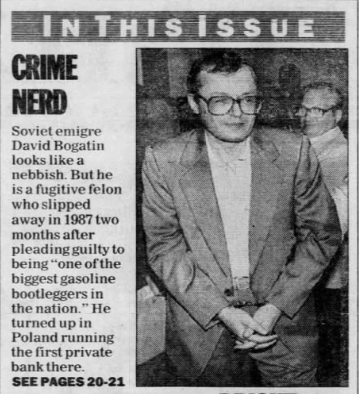
Franzese revealed in his YouTube video that he had been a silent partner with Bogatin when Bogatin purchased the Trump Tower condos for $5.3 million in 1984. Franzese said Bogatin paid for the condos in cash.
“As a result of that, I got questioned — I’m not gonna tell you by who — during the Mueller investigation because it came out that my friend David was the front guy buying them at that time,” Franzese said.
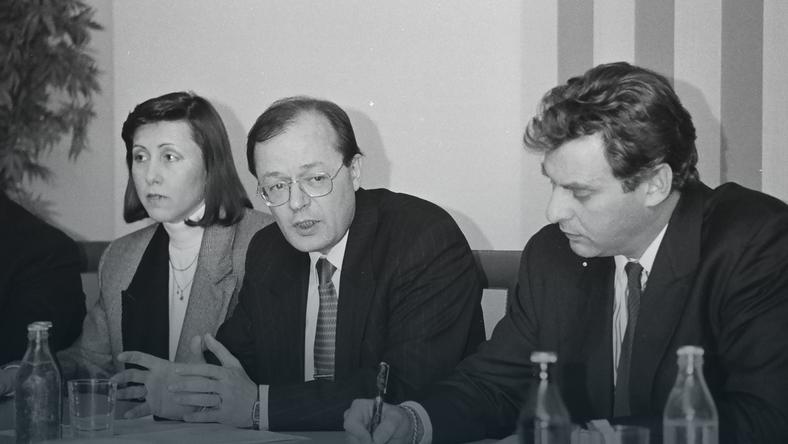
“They came to me and they tried to establish a Trump connection with Russia as a result of him selling those condos to me and David Bogatin,” he continued.
Franzese said the investigators wanted to know why Trump took cash for the apartments. He says he did not know the answer.
I emailed both Franseze and the Department of Justice to to see if I could find out more. If I get a response, I’ll update this post here.
In his YouTube video, Franzese claimed that Bogatin had a family member in the KGB. This is unlikely given that Bogatin was Jewish. Jews were usually targets of Soviet intelligence, not employees.
What is certain is that Bogatin had a brother, Jacob, who got indicted in 2002 in a massive stock fraud along with Russian Mob boss Semion Mogilevich.
Mogilevich remains a fugitive and, as a result, Jacob Bogatin, his co-defendant, was never brought to trial.
Last I checked, both Jacob and David Bogatin continue to live in the United States.
Franzese also doesn’t mention some other facts I uncovered while reporting my book: First, it was Trump who convinced Bogatin to invest in Trump Tower. And second, Trump insisted on attending the condo signing.
But if Franzese is telling the truth about the investigators who questioned him about Bogatin and the Trump Tower condos, it’s a sign that, nearly 40 years later, Trump’s shady dealings with Russian Mobsters still haunt him.
The definition that’s letting Trump off the hook
The new round of reporting with insight from members of Robert Mueller’s notoriously tightlipped team offers very strong support to the view that the special counsel’s report on Russian interference in the 2016 election was more damaging to President Trump — perhaps far more damaging — than the initial impression shaped by Attorney General William Barr.
Mueller may have made the mistake of assuming good faith on the part of an administration where that’s in extremely short supply. Barr’s letter purportedly laying out the special counsel’s principal conclusions now risks looking more like a political whitewash than a genuine effort to inform the people charged with protecting our country and the American people.
It’s been three weeks since Mueller submitted his final report, and all we have seen of it are the roughly 100 words t quoted in Barr’s letter, the most important are actually in a footnote, which defines the terms of Mueller’s criminal “coordination” inquiry. He defined that term as an “agreement — tacit or express — between the Trump Campaign and the Russian government on election interference.”
A definition like that has extraordinary power. It draws a bright line between an abuse of power in pursuit of higher office that would almost certainly set the stage for impeachment and what the president has called a “complete and total exoneration.” Furthermore, in Barr’s legal view, if there was no underlying criminal act, then there can be no obstruction of justice, no matter how damning the evidence may be.
But legal conclusions aren’t the only issue at stake — they might not even be the most important. What we may learn is that even if the Trump campaign didn’t meet a strict, legal definition of coordination, it still presented a national security threat. What’s more, it still might be doing so.
The “coordination” part of Mueller’s investigation assessed evidence through a most narrow frame. The shortcoming with this approach is that the interference effort in the 2016 campaign was deliberately designed to hide the Russian government’s role in the affair. If the line Mueller drew was an agreement of some kind with the “Russian government,” then the chance that anyone connected with the Trump campaign would face criminal conspiracy charges over election interference was exceedingly low. Looking for the Russian government’s unseen hand in the murky contacts between the Trump campaign and Russia is bit a like chasing smoke.
Russia’s vaunted intelligence directorate was never going to send its spies to meet Trump campaign officials on a foggy bridge in Berlin. Russia did, however, send use all manner of cutouts and access agents to deliver messages to the Trump campaign to ensure maximum ambiguity and plausible deniability.
One example is the case of Roger Stone. Even if, say, Stone did coordinate the release of Democratic Party emails with Wikileaks, as he proudly hinted during the campaign, that would still fall outside the narrow scope of Mueller’s definition. Wikileaks wasn’t part of the Russian government, although Russia used it, unwittingly or not, as a cutout to publish Democratic Party emails. And Stone wasn’t officially a member of the Trump campaign.
In their prepared statements to Congress, both Donald Trump Jr. and Jared Kushner issued nearly identical, carefully worded denials that they “did not collude with any foreign government” and know of no one who did. But that doesn’t cover the June 2016 meeting both men attended in Trump Tower with Natalia Veselnitskaya, the lawyer who wasn’t part of the Russian government although an email to the president’s son telling him she was bringing dirt on Hillary Clinton as part of the Russian government’s effort to help his father.
Did Paul Manafort know that the man who ran his Ukraine office, Konstantin Klimnik, had ties to Russian intelligence, as the F.B.I. suspsects? “It’s not like these people wear badges that say, ‘I’m a Russian intelligence officer,’” Manafort once said.
And what about the Trump Tower Moscow deal about which Michael Cohen admitted he lied to Congress? That wasn’t related to election interference. Neither were Kushner’s discussions with Russian officials during the campaign about forming a secret back channel. Mike Flynn pleaded guilty to lying about discussing sanctions, not election interference, with the Russian ambassador.
It’s hard enough to figure out what’s really going on in this through-the-looking-glass world famously likened to a “wilderness of mirrors.” The recently released transcript of George Papadopoulos, the young Trump campaign foreign policy aide convicted of lying to the F.B.I., reveals that he was still confused by Joseph Mifsud, the shadowy professor who told him in April 2016 that he had returned from Moscow and that the Russians had thousands of Clinton’s emails. “Why was he lying, or why would he be masquerading as something he’s not?” Papadopoulos asked during his House testimony.
It was Papadopoulos’s conversation with an Australian diplomat that in July 2016 set in motion the FBI counterintelligence investigation into Russian election interference. The job of FBI counterintelligence officials is primarily to neutralize a threat to national security, which may or not end up in criminal court. Mueller inherited the much-maligned investigation into whether the Trump campaign was a threat to national security. It will likely form part of his nearly 400-page report, along with an explanation of why such a tradition-bound prosecutor decided not to make a traditional prosecutorial judgment about whether President Trump obstructed justice.
We do know that the Trump campaign not only didn’t say a word about that interference to any American charged with protecting our democracy but actually ennabled it — albeit without making a tacit, express agreement — and subsequently lied about it. That may not be criminal, but it is not exculpatory.
Alarming conduct continues: The blooming congressional investigation into White House security clearances revealed that such threats to national security are routinely disregarded by the Trump White House. More than two dozen individuals were granted access to the nation’s deepest secrets over the objections of security professionals for reasons that include foreign influence. Kushner was granted a security clearance reportedly on the personal order of the president.
All we know, based on the definition quoted in the attorney general’s letter, is that Mueller looked at certain events of the 2016 election through a very narrow lens — surely more narrow than the “links and/or coordination” between the Russian government and “individuals associated with campaign of President Donald Trump” he was charged with investigating.
We still have a lot to learn from the report about what happened to the “links” Mueller was charged with investigating, but there’s little doubt there were plenty of them.
This isn’t the first time a definition has determined the fate of a presidency. The definition of “sexual relations” was critical to whether President Clinton could be accused of perjury and impeached by the House. No one accepted Clinton’s definition of sexual relations, which didn’t apply to his actions with Monica Lewinsky. We shouldn’t be so quick to accept a hastily-written letter that may be using a narrow definition to provide political cover and exonerate the president.
 Trump / Russia